Tag Archives: China

image_pdfimage_print

LCQ8: Remuneration packages for senior management of MTRCL

     Following is a question by the Hon Starry Lee and a written reply by the Secretary for Transport and Logistics, Mr Lam Sai-hung, in the Legislative Council today (June 7):

Question:

     â€‹A number of railway incidents occurred in 2022 involving the MTR Corporation Limited (MTRCL), resulting in serious delays in railway services. The Government pointed out in a paper submitted to this Council in March this year that the amount to be shared by the MTRCL for service disruptions that took place in 2022 was $103 million. In addition, according to the MTRCL’s Annual Report 2022, the annual salaries and “variable remuneration related to performance” of a number of its senior management personnel in 2022 increased significantly compared to 2021. There are comments that the remuneration and bonuses of the MTRCL’s senior management should be linked to the performance of railway services, so as to motivate the management personnel to make their best efforts to improve management and service quality. In this connection, will the Government inform this Council:

(1) of the criteria adopted for determining the remuneration and bonuses of the MTRCL’s senior management, and whether they include factors such as “providing safe and reliable railway services” and “quality of railway services meeting public expectations”, etc.; if so, of the details; if not, the reasons for that;

(2) given that the Government is the majority shareholder of the MTRCL, and has appointed official representatives to the Board of Directors of the MTRCL, how such official representatives discharge their duties in monitoring the fare setting, as well as operation and management of the MTRCL, in particular, ensuring that sufficient human resources are made available to the MTRCL’s departments responsible for railway safety and repair and maintenance; and

(3) whether it will consider pushing forward the implementation by the MTRCL of a mechanism that links the remuneration or bonuses of its senior management to factors such as the level of customer satisfaction with railway services, and the frequency and severity of railway incidents, etc.; if so, of the timetable and details; if not, the reasons for that?

Reply:

President,

     The consolidated reply to the question raised by the Hon Starry Lee is as follows.

     Railway is an important part of public transport in Hong Kong. The Government attaches great importance to the development and operation of railways, and fully realises the public’s expectation for the Government to strengthen the monitoring of the service performance of the MTR Corporation Limited (MTRCL). As the major shareholder of the MTRCL, the Government has been ensuring through the Board of Directors (the Board) that the governance and strategies of the MTRCL are up-to-date, as well as strengthening the governance of the MTRCL and monitoring of railway safety through a multi-pronged approach.

     Currently, the Board of the MTRCL comprises 19 members, including four Government directors (Note), while the Chairman is appointed by the Government. Apart from attending Board meetings, each Government director also serves as a member of two Board Committees/Advisory Panel. By actively participating in the Board, they closely monitor the overall strategy and operation of the MTRCL, and reflect public concerns over the MTR’s operation to the Board from time to time. Take the example of MTR fare concessions. The Government directors have been asking the MTRCL to provide various fare concessions as far as possible to cater for the needs of different passengers having regard to the socio-economic conditions and the financial sustainability of the Company.

     On the remuneration of senior management, the “performance-based remuneration” of the MTRCL’s management is determined by the Remuneration Committee of the Board, taking into account various factors such as the performance of the Company and the management as well as the operating and customer service performance. In particular, the Remuneration Committee will consider both financial factors (e.g. operating profit) and non-financial factors (e.g. customer satisfaction and performance requirements for “passenger journeys on time” and “train punctuality”, etc.) when determining the “performance-based remuneration” with adjustments based on the performance of individual employees having regard to the serious railway incidents happened and the safety indicators of passengers and employees, etc.

     In light of the two serious railway incidents last year, the Secretary for Transport and Logistics (STL) earlier wrote to the Chairman of the Board requesting that all factors, including the provision of safe and reliable railway service and fulfillment of public expectations, be taken into serious consideration when assessing the annual performance and remuneration of the MTRCL’s senior management. The Government will continue to follow up on the matters, including requiring the MTRCL to review whether the existing mechanism for performance assessment can suitably meet public expectations and adequately reflect the linkage between the remuneration of senior management and railway service performance, and will monitor such progress through the Remuneration Committee.

     In addition, on the two railway incidents happened last year, the MTRCL announced in last December that a comprehensive review on its asset management and maintenance regime would be conducted. The Government also established an Independent Monitoring Panel (the Panel) to closely monitor the MTRCL’s entire review. Both the MTRCL’s comprehensive review and the Panel’s work have commenced early this year, and are expected to be completed by mid-year. The MTRCL will then report on the review to the Board and submit the review report to the Government while the Panel will also submit a report to the STL. The Government will closely follow up with the MTRCL on the further actions and improvement measures as recommended in the review report through the Board and other working platforms.

     In fact, the relevant government departments, including the Highways Department, the Electrical and Mechanical Services Department and the Transport Department, have been closely monitoring the performance of the MTRCL on the construction of new railway projects and railway operations and maintenance through various working platforms, briefings and reports by the MTRCL as well as on-site inspections. These efforts ensure that the duties performed and services provided by the MTRCL meet the Government’s regulatory requirements.

     The Government fully acknowledges the public’s growing demand and expectations for the MTRCL to fulfill its role as a major transport operator. We will certainly continue to monitor the operation of the MTRCL through the established mechanisms and various channels, urging it to suitably meet the aspirations and expectations of the public as well as proactively fulfilling its social responsibility to keep up the provision of safe, reliable and efficient railway services to the public.

Note: Including the STL, Secretary for Financial Services and the Treasury, Permanent Secretary for Development (Works) and Commissioner for Transport. read more
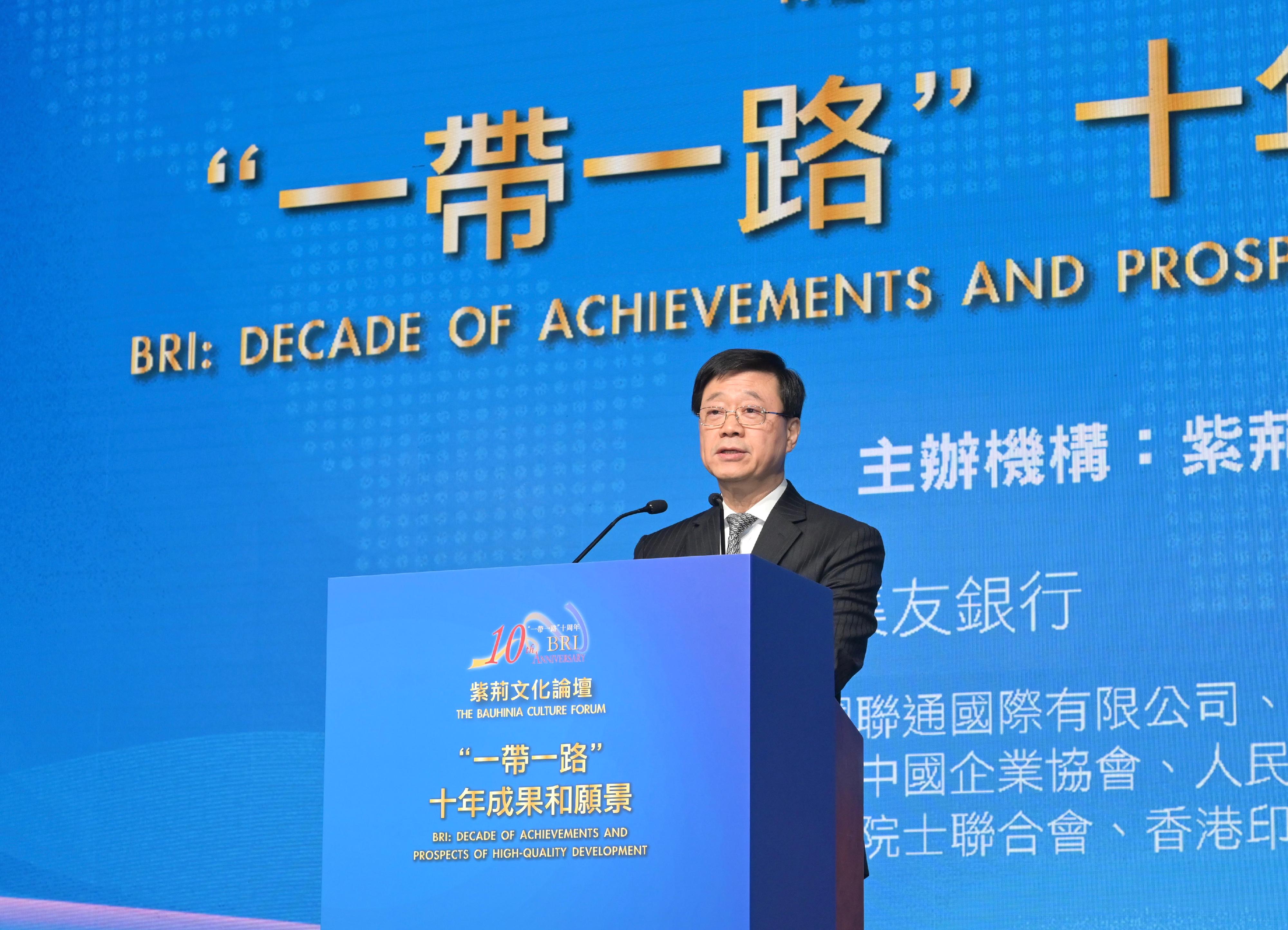
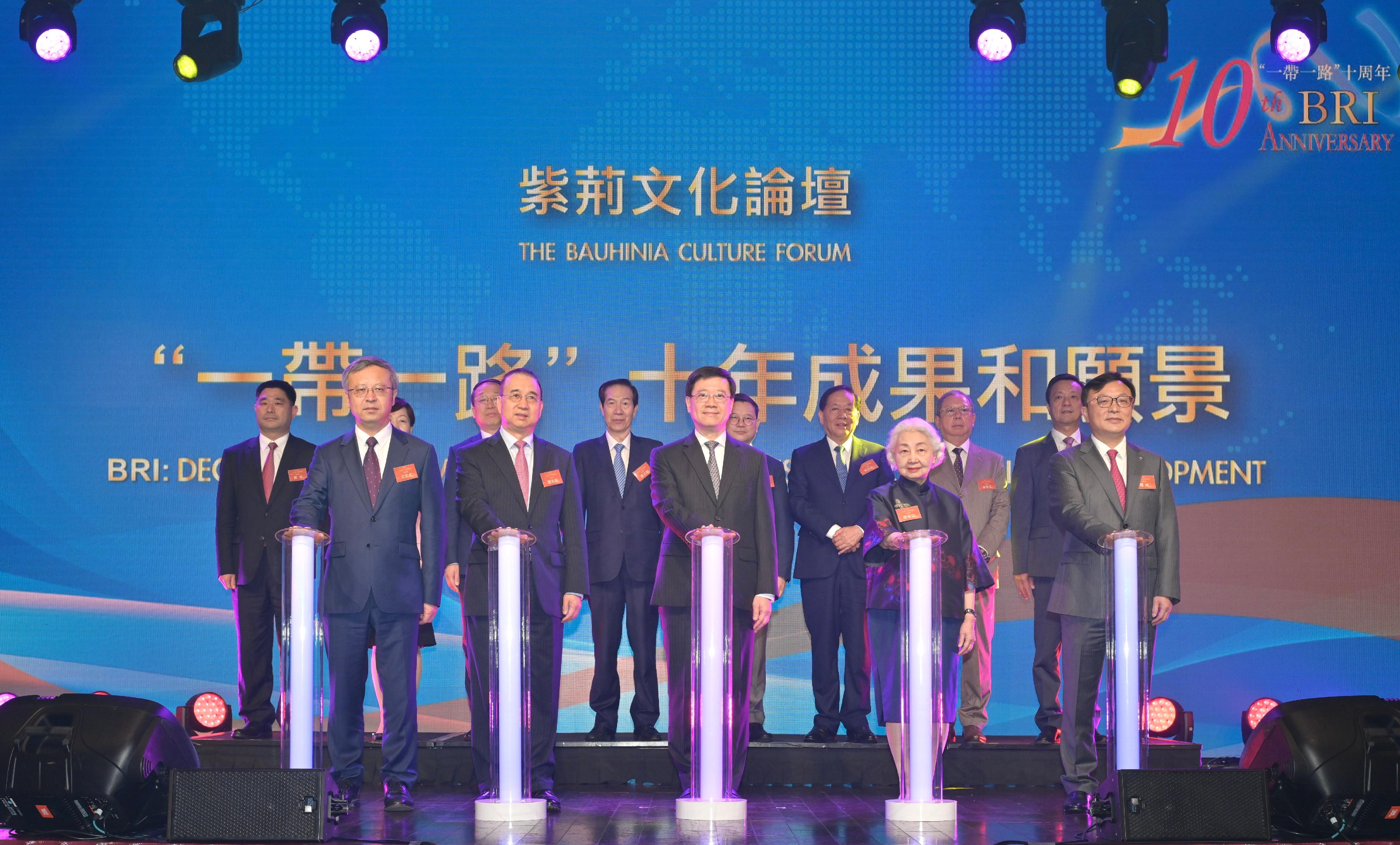
Speech by CE at Bauhinia Culture Forum (English only) (with photos/video)

     Following is the speech by the Chief Executive, Mr John Lee, at the Bauhinia Culture Forum today (June 7):
 
Commissioner Liu Guangyuan (Commissioner of the Ministry of Foreign Affairs of the People’s Republic of China in the Hong Kong Special Administrative Region), Mr Wen Hongwu (General Manager of the Bauhinia Culture Group), distinguished guests, ladies and gentlemen,
 
     Good morning. I’m delighted to have this welcome opportunity to speak to you today at the Bauhinia Culture Forum.
 
     As some of you may recall, I addressed this high-profile international gathering last June, in my capacity then as Chief Executive-elect.
 
     A year ago, we were celebrating the 25th anniversary of both the establishment of the Hong Kong Special Administrative Region and the implementation of “one country, two systems”, the unique principle that has been guiding our progress since Hong Kong’s return to the motherland in 1997. The principle has bestowed upon us the strong support of national strategies, as well as an unparalleled connectivity with the world.
 
     On this day, thanks to our organiser, the Bauhinia Culture Group, I’m pleased to speak to you on the occasion of the Belt and Road Initiative’s 10th anniversary.
 
     Since President Xi Jinping announced the vision of the Belt and Road in 2013, this all-embracing global initiative has inspired regional and international collaboration in policy, infrastructure, trade, finance, people-to-people bonds and much more. 
 
     Today, more than 150 countries and over 30 international organisations have signed Belt and Road agreements with our country. Together, they account for about 40 per cent of global GDP (gross domestic product) and 45 per cent of the world’s merchandise trade.
 
     The Belt and Road has now become a big, important impetus in forging ties among countries, regions and peoples. It has enabled co-operation with numerous regional and country-based development strategies, including Indonesia’s Global Maritime Fulcrum, Saudi Vision 2030, and the African Union Agenda 2063, to name but a few.
 
     Over the last decade, trade has expanded tremendously along the Belt and Road. The Mainland’s trade in goods with Belt and Road-related countries has doubled, from just over US$1 trillion in 2013 to more than US$2 trillion in 2022, with an enviable average annual growth rate of 8 per cent. By the end of 2022, Chinese enterprises had invested more than US$57 billion in the economic and trade co-operation zones of Belt and Road-related countries.
 
     With the pandemic easing, and the world largely back to normal, the future of the Belt and Road is all the more promising.
 
     And that, ladies and gentlemen, is good news for Hong Kong, a functional platform for the Belt and Road Initiative. With our many compelling advantages under the “one country, two systems” principle, we are the Belt and Road’s pivotal gateway. We make things happen.
 
     At last year’s Belt and Road Summit held here in Hong Kong, the then Vice Premier Han Zheng reaffirmed Hong Kong’s role as a participant, contributor and beneficiary of the Belt and Road.
 
     As a leading international financial centre, and the world’s largest offshore Renminbi business hub, Hong Kong is committed to supporting the financing needs of Belt and Road companies and their wide-ranging projects and investments. 
 
     Beyond capital, Hong Kong is blessed with world-class professional services – from feasibility studies, project management and architectural and engineering design, to risk management, insurance, legal and arbitration services and more. Everything, in short, the Belt and Road needs to flourish.
 
     And, of course, as the business bridge between the Mainland and the rest of the world, Hong Kong is a natural base from which to expand into thriving markets throughout the Asian region and beyond.
 
     To seize the vast opportunities ahead, the Hong Kong SAR Government is busy renewing, and building, our links with Belt and Road countries and regions.
 
     I am determined to pursue rewarding collaboration, between Hong Kong and economies along the Belt and Road, in trade and investment, innovation and technology, infrastructure development and a whole lot more. 
 
     In February, I led a high-level business delegation to Saudi Arabia and the United Arab Emirates (UAE). The Middle East region is important to the Belt and Road and its future. And I’m confident it will become increasingly important to Hong Kong and our future.
 
     During our visit, a total of 13 MOUs (memoranda of understanding) and co-operation letters of intent were signed between Hong Kong and Middle East organisations. We also learnt the encouraging news that the Dubai International Chamber would open a new representative office in Hong Kong. Different Hong Kong companies that accompanied me on the visit are now closing in on business deals in the Middle East.
 
     I would say that it was a great start. And we haven’t stopped since then, not for a moment. A number of potential investors from the Middle East have visited Hong Kong since our February trip, and I personally met a lot of them. They include key decision makers from family offices. Many of them have shown keen interest in investing in Hong Kong during our meetings.
 
     Just over a week ago, the Hong Kong Monetary Authority, led by its Chief Executive Eddie Yue, and the Central Bank of the UAE, met in Abu Dhabi. The two central banks came away agreeing to boost co-operation in three significant areas: financial infrastructure, financial market connectivity, and virtual asset regulations and development.
 
     They also held a seminar focused on key opportunities between Hong Kong and the UAE, and a panel discussion attended by some 80 senior representatives from more than 50 UAE financial institutions and corporations. The heads of major Hong Kong banks also took part.
 
     I am pleased to note, as well, that different Hong Kong business delegations have visited the Middle East to boost our economic co-operation, and explored opportunities with some of the first countries to join the Belt and Road Initiative.
 
     Ladies and gentlemen, when I spoke to you this time last year, I promised that my governing team would be results-driven, with a strong team spirit of collaboration and unity.
 
     A year on, we remain committed to realising our goal – of making a decidedly positive difference for the economy, and the people, of Hong Kong.
 
     My team and I look forward to promoting Hong Kong to other Belt and Road countries and regions. They include our close trading partners, the 10 member states of ASEAN (Association of Southeast Asian Nations). They also include countries in Central Asia, Eastern Europe, Africa and all the other economies looking to do business with Hong Kong, our country and the flourishing Asian region.
 
     For those of you looking for the right partners to capitalise on Belt and Road opportunities, join us here in Hong Kong at the eighth Belt and Road Summit, on September 13 and 14.
 
     Jointly organised by the Hong Kong SAR Government and the Hong Kong Trade Development Council, the Belt and Road Summit is renowned as one of the largest and most important Belt and Road business and investment platforms for enterprises from Hong Kong, the Mainland and overseas. 
 
     The past seven editions of the Summit have attracted over 3 800 business-matching sessions, and attracted around 33 000 participants and sign-ups from over 80 countries and regions.
 
     Connectivity is at the heart of the Belt and Road Initiative.  With the unwavering support of our country, and the manifold advantages we can offer, Hong Kong will continue to do what Hong Kong does best: connecting countries and economies, companies and people everywhere, to drive the high-quality development of our country and the world. 
 
     On that note, I wish you all a rewarding Forum and the best of business, and health, in the coming year. Thank you very much.

Photo  Photo  
read more

LCQ13: Hong Kong Dollar-Renminbi Dual Counter Model

     Following is a question by the Hon Rock Chen and a written reply by the Secretary for Financial Services and the Treasury, Mr Christopher Hui, in the Legislative Council today (June 7):
 
Question:
 
     It has been reported that the Hong Kong Exchanges and Clearing Limited (HKEX) has arranged to conduct testing for the Hong Kong Dollar – Renminbi Dual Counter Model (the Model) between May and June this year, but a number of securities brokers have relayed that the testing was unsatisfactory (e.g. the technical backwardness of the relevant system and its inability to do automatic conversion for day-trade clearing, as well as inadequate support provided by the HKEX). In this connection, will the Government inform this Council if it knows:
 
(1) the latest progress and preliminary results of the aforesaid testing;
 
(2) whether the HKEX has explored solutions to address the aforesaid issues; and
 
(3) the current number of listed companies that have applied for the setting up of an additional Renminbi stock counter under the Model?
 
Reply:
 
President,
 
     To complement the new development paradigm of our country and cater for the escalating demands from global investors for Renminbi (RMB) asset allocation, the Government, together with financial regulators and the Hong Kong Exchanges and Clearing Limited (HKEX), has been actively promoting the issuance and trading of RMB securities in Hong Kong, as well as increasing the use of offshore RMB for investment purposes. This further consolidates Hong Kong’s status as a global offshore RMB business hub, while at the same time contributing to RMB internationalisation in a gradual manner.
 
     The HKEX announced on May 19 this year its plan to launch the “Hong Kong Dollar (HKD)-RMB Dual Counter Model” (dual-counter model) on June 19 for specified securities subject to market readiness, so that investors can trade securities of the same issuer in both HKD and RMB, and transact across HKD and RMB counters. The HKEX will also introduce the “Dual Counter Market Maker” (DCMM) regime on the same day, under which buy and sell quotes will be offered by the RMB counter to promote the liquidity of RMB-denominated stocks. Meanwhile, market makers can also conduct arbitrage transactions across the two currency counters of the same stock, so as to minimise the price discrepancies between the two. The Government has earlier exempted the stamp duty payable for specified transactions by market makers through the Stamp Duty (Amendment) Ordinance 2023. The HKEX is also processing and reviewing applications from market makers.
 
     Having consulted the Securities and Futures Commission (SFC) and the HKEX, the consolidated reply to the various parts of the question is as follows:
 
(1) and (2) The HKEX has since 2010 established the mechanism to allow the trading and settlement of securities at RMB counters. The arrangements are similar to those for the HKD securities counters, and are widely adopted for exchange-traded funds. As regards connecting brokers’ systems to the HKEX’s trading terminal, the dual-counter model does not require new technical upgrades. In other words, if brokers concerned are currently offering trading services for RMB-denominated securities, they should have technically and operationally met the basic requirements to provide dual-counter trading. Some 200 brokers have participated in the trading of RMB-denominated securities over the past 18 months, accounting for about 90 per cent of the market share.
 
     To familiarise the market with dual-counter model trading, the HKEX arranged a one-month voluntary end-to-end testing session for exchange participants from May 2, and completed two market rehearsals (including cross-counter settlement testing) on May 27 and June 3 respectively. A substantial number of brokers, including all institutions interested in becoming market makers, had verified that their systems could operate smoothly under the dual-counter model during the testing. This seeks to ensure the smooth implementation of the dual-counter model and DCMM regime when launched.
 
     Participation in trading at RMB counters, especially cross-counter trading and relevant testing, is not a mandatory requirement. Since market makers will enjoy stamp duty exemption for specified transactions, the HKEX expects that market makers will be the main participants of cross-counter trading at its inception. Brokers yet to activate relevant functions can make appropriate plans and arrange relevant system upgrades according to their individual business needs. The HKEX will continue to support their preparatory work and provide technical support as necessary.
 
(3) At present, more than 20 listed companies stocks are designated as dual-counter securities by the HKEX, accounting for about 40 per cent of the daily turnover for equity securities. Various preparations are being carried out in an orderly manner. The HKEX already announced the first batch of DCMMs, and confirmed the formal launch date. The HKEX, the SFC and the Hong Kong Monetary Authority will continue to maintain close liaison with market participants, and launch a series of market promotion and investor education activities. With the launch of the dual-counter model and DCMM regime, we are confident that investors will be provided with more diversified trading options, thereby further enriching our RMB investment product suite in the offshore market and enhancing the competitiveness of the securities market in Hong Kong. read more

LCQ10: Provision of support for elderly singletons and carers

     Following is a question by the Hon Shang Hailong and a written reply by the Secretary for Labour and Welfare, Mr Chris Sun, in the Legislative Council today (June 7):

Question:

     The editorial of a newspaper has pointed out that recently, tragedies resulting from elderly singletons and carers with disabilities lacking support have happened one after another in Hong Kong. Such situations are worrying and have also highlighted the necessity for the authorities to step up support work. Regarding the provision of support for elderly singletons and carers, will the Government inform this Council:

(1) as there are currently no emergency support services targeted at carers in Hong Kong, and if carers fall ill, they cannot entrust their family members who need to be looked after to the care of others, whether the Government will consider setting up one-stop centres for carers in various districts to provide emergency support services;

(2) whether it will consider, in collaboration with social welfare organisations, encouraging kaifongs to care for their elderly singleton neighbours and motivating elderly singletons to participate more in community activities through work such as organising talks and setting up street counters in different locations, as well as conducting publicity door to door in buildings, thereby strengthening the spirit of neighbourliness, and co-building a harmonious and friendly society;

(3) whether it will strengthen co-operation with social welfare organisations and non-governmental organisations to make every effort to enhance the work of identifying “hidden elderly singletons” and “hidden carers”; and

(4) whether it will leverage district organisations and District Services and Community Care Teams to strengthen the outreach work in support of elderly singletons and carers (e.g. distributing promotional leaflets door to door in public housing estates, and even delivering meals to elderly singletons), so as to build up district networks and assist in finding out more hidden elderly singletons and hidden carers?

Reply:

President,

     My reply to the question raised by the Member is as follows:

(1) The Government provides subsidy for non-governmental organisations (NGOs) to operate respite services to provide short-term residential or day care services for elderly persons and persons with disabilities living in the community who require personal care assistance from family members or relatives and to reduce the pressure of carers. Moreover, the Government provides home-based support services (including home respite service) for elderly persons and persons with disabilities through the Integrated Home Care Services (Frail Cases), the Enhanced Home and Community Care Services, the Home Care Service for Persons with Severe Disabilities and the Integrated Support Service for Persons with Severe Physical Disabilities.

     Respite service users are not required to undergo the Standardised Care Need Assessment Mechanism and may directly approach service units for enquiry and application. Persons in need may also be referred by Integrated Family Service Centres (IFSCs)/Integrated Service Centres (ISCs), Medical Social Services Units (MSSUs), elderly service units, special schools or rehabilitation service units. If elderly persons or persons with disabilities have urgent short-term residential care needs, they or their carers can search for the vacancy situation of the designated respite service places provided by residential care homes (RCHs) under the Enhanced Bought Place Scheme or the Bought Place Scheme for Private Residential Care Homes for Persons with Disabilities through the “Vacancy Enquiry System for Residential Respite Service for Persons with Disabilities, Residential Respite Service for the Elderly and Emergency Placement for the Elderly” of the Social Welfare Department (SWD). They or their carers may approach the relevant RCHs directly to confirm the vacant places and arrange for admission. If they have other service needs, the RCHs will, after admitting the elderly persons or persons with disabilities, refer them to the relevant service units for follow-up.

     Besides, the SWD provides various community support services for elderly persons, persons with disabilities, patients who are chronically ill as well as their carers directly or through subvented NGOs. The service units include IFSCs/ISCs, MSSUs, District Elderly Community Centres (DECCs), Neighbourhood Elderly Centres (NECs), District Support Centres for Persons with Disabilities, Integrated Community Centres for Mental Wellness, Parents/Relatives Resource Centres, Support Centres for Persons with Autism, home care services, etc. These service units provide a series of prevention and support services, such as case management, counselling, outreaching service, referral service, mutual aid groups, carer skills training, stress relieving groups and recreational activities, with a view to providing comprehensive support to carers and enhancing their caregiving abilities and quality of life.

(2) There are currently 213 subvented DECCs and NECs (Elderly Centres) providing a range of support services for elderly persons at the community level, including counselling, referral, assistance in applying for long-term care services, emotional support and carer training, etc to facilitate elderly persons to age in place. The Elderly Centres also collaborate with community support service units in the district to make more effective use of community resources in building an elderly-friendly community.

     The Elderly Centres also organise various activities in the districts, including seminars, carer training courses, volunteer trainings, mobile counter services, outreaching activities, etc, in order to encourage elderly persons to actively participate in community activities.

(3) and (4) The Government has been closely collaborating with various subvented NGOs and welfare organisations to provide support for elderly persons, persons with disabilities and their carers in need. The Government is progressively setting up District Services and Community Care Teams (Care Teams) in 18 districts to rally community resources and efforts. The Labour and Welfare Bureau and the SWD are actively exploring the Care Teams’ participation and assistance in supporting the related work. read more

LCQ15: Measures to support daily lives of persons with disabilities

     Following is a question by the Hon Yung Hoi-yan and a written reply by the Secretary for Labour and Welfare, Mr Chris Sun, in the Legislative Council today (June 7):

Question:

     Some wheelchair-bound people have relayed that the number of restaurants equipped with barrier-free facilities in Hong Kong is inadequate and quite a number of restaurants are unable to receive wheelchair-bound people, making it difficult for them to eat out. Regarding measures to support the daily lives of persons with disabilities (PWDs), will the Government inform this Council:

(1) of the number of complaints received by the Government in the past five years from PWDs about inadequate barrier-free facilities at venues frequented by them in their daily lives (including but not limited to restaurants, shopping malls, supermarkets, markets and banks, etc.);

(2) whether it has compiled statistics on the number of restaurants equipped with barrier-free facilities across the territory (and its proportion in the number of restaurants across the territory) as well as the number of wheelchair-friendly seats provided by such restaurants, together with a breakdown by District Council district;

(3) whether it has plans to formulate policies to encourage restaurants to provide barrier-free facilities; if so, of the details; if not, the reasons for that; and

(4) whether it has plans to allocate more resources to the Integrated Home Care Services under the Social Welfare Department so that eligible persons (including PWDs) can receive meal service expeditiously; if so, of the details and timetable; if not, the reasons for that?

Reply:

President,

     Having consulted the Development Bureau, the Environment and Ecology Bureau, and the Financial Services and the Treasury Bureau, I set out below a consolidated reply to the Member’s question:

(1) and (2) In the past five years, the Food and Environmental Hygiene Department received the following number of complaints from persons with disabilities concerning insufficient barrier-free facilities at restaurants and markets:
 

  2018 2019 2020 2021 2022
Restaurants 0 1 0 0 0
Markets 1 2 1 0 0

     Other than restaurants and markets, the Government does not maintain the complaint figures on insufficient barrier-free facilities in other premises. We also do not have the statistics on the number of restaurants providing barrier-free facilities.

(3) The Government strives to create a barrier-free environment for persons with disabilities, with a view to enabling them to access to premises and make use of the facilities and services therein on an equal basis with others, thereby facilitating their full integration into the community.

     As far as buildings on private land are concerned, to align with the Disability Discrimination Ordinance (Cap. 487), regulation 72 of the Building (Planning) Regulations under the Buildings Ordinance (Cap. 123) prescribes design requirements for barrier-free access and facilities for persons with disabilities to ensure that reasonable barrier-free access and facilities are provided in relevant premises to cater for the needs of persons with disabilities. The regulation came into effect in 1984 and is applicable to new buildings built thereafter. If alterations and additions (A&A) works are to be carried out in existing buildings built before the regulation came into effect, such works must also comply with the requirements of the regulation. The Buildings Department has issued the “Design Manual: Barrier Free Access” to provide guidance on barrier-free access and facilities, which is subject to review from time to time. All new buildings or A&A to existing buildings, including restaurants, must comply with the design standards as set out in the latest editions of the Building (Planning) Regulations and the Design Manual, for example, the provision of appropriate access route and accessible toilet.

(4) At present, there are 61 Integrated Home Care Services (Frail Cases) (IHCS(FC)) and 31 Enhanced Home and Community Care Services (EHCCS) teams providing community care services, including meal services and personal care plans for frail elderly persons. To facilitate ageing in place, the Government increased the number of service places of the IHCS(FC) and EHCCS from about 8 000 in October 2019 to about 13 000, and shortened the average waiting time from about 20 months at the end of October 2019 to about six months at the end of March 2023.

     In addition, the Integrated Home Care Services (Ordinary Cases) (IHCS(OC)) provides home support services for elderly persons and persons with disabilities in need, individuals and families with social needs. The Home Care and Support Services for Elderly Persons with Mild Impairment (HSMI), also implemented by the IHCS teams, was launched in December 2017 on a pilot basis and has been regularised by the Government since January this year. The HSMI aims to provide home care and support services to elderly persons with mild impairment who are waitlisted for IHCS(OC). The two services provide a total of about 20 000 service places, including meal service, escort service and simple nursing care. read more