Tag Archives: China

image_pdfimage_print

CHP reminds public on precautions against heat stroke during very hot weather

     The Centre for Health Protection (CHP) of the Department of Health (DH) today (June 13) reminded members of the public, particularly those undertaking outdoor activities, to take heed of necessary measures against heat stroke and sunburn in very hot weather.

     “The public should carry and drink plenty of water to prevent dehydration while engaging in outdoor activities,” a spokesman for the CHP said.

     “Those engaged in strenuous outdoor activities should avoid beverages containing caffeine, such as coffee and tea, as well as alcohol, as they speed up water loss through the urinary system,” the spokesman explained.

     “Children, the elderly, the obese and those with chronic illnesses, such as heart disease or high blood pressure, are more vulnerable to heat stroke. They should pay special attention,” the spokesman added.

     The public should adopt the following precautions:
 

  • Wear loose and light-coloured clothing to reduce heat absorption and facilitate sweat evaporation and heat dissipation;
  • Avoid vigorous exercise and prolonged activities like hiking or trekking as heat, sweating and exhaustion can place additional demands on the physique;
  • Perform outdoor activities in the morning or the late afternoon;
  • For indoor activities, open all windows, use a fan or use air-conditioning to maintain good ventilation;
  • Do not stay inside a parked vehicle; and
  • Reschedule work to cooler times of the day. If working in a hot environment is inevitable, introduce shade in the workplace where practicable. Start work slowly and pick up the pace gradually. Move to a cool area for rest at regular intervals to allow the body to recuperate.
     
     â€‹The public should also note the latest and the forecast Ultraviolet (UV) Index released by the Hong Kong Observatory (HKO). When the UV Index is high (6 or above):
 
  • Minimise direct exposure of the skin and the eyes to sunlight;
  • Wear long-sleeved and loose-fitting clothes;
  • Wear a wide-brimmed hat or use an umbrella;
  • Seek a shaded area or put on UV-blocking sunglasses;
  • Apply a broad-spectrum sunscreen lotion with a sun protection factor (SPF) of 15 or above. Apply liberally and reapply after swimming, sweating or towelling off; and
  • While using DEET-containing insect repellents for personal protection against mosquito-borne diseases, apply sunscreen first, then insect repellent.

    If symptoms develop, such as dizziness, headache, nausea, shortness of breath or confusion, rest and seek help immediately, and seek medical advice as soon as possible.

     â€‹The public may obtain more information from the DH’s Health Education Infoline (2833 0111), heat stroke page and UV radiation page; the HKO’s Dial-a-Weather (1878 200), latest weather report and forecast, UV Index and weather information for hiking and mountaineering; and press releases of the Labour Department on precautions against heat stroke for outdoor workers and their employers when the Very Hot Weather Warning is in force. read more

Secretary for Health chairs 18th meeting of Cancer Coordinating Committee (with photo)

     The Secretary for Health, Professor Lo Chung-mau chaired the 18th meeting of the Cancer Coordinating Committee (CCC) today (June 12) to review the implementation of the Hong Kong Cancer Strategy (Cancer Strategy) and discuss the response strategies and measures with relevant government departments and organisations.

     Cancer is a global public health issue, and also the top killer in Hong Kong. Over the past five years, cancer claimed over 40 lives every day on average in Hong Kong. Promulgated in July 2019, the Cancer Strategy was Hong Kong’s very first comprehensive plan formulated for cancer prevention and control work, setting out a series of strategies related to cancer prevention and treatment for the period between 2020 and 2025. With the concerted efforts of relevant government departments and organisations in implementing various aspects of the Cancer Strategy in the past few years, the Government is now having a clearer picture of the priorities and direction for cancer prevention and control work. The Government is also further improving cancer patients’ quality of life and increasing their chance of survival, thereby reducing the burden of cancer on the local healthcare system.
 
     At the meeting, members reviewed and discussed the progress of various cancer prevention and control measures, including:
 
Surveillance
————-

     The Hong Kong Cancer Registry is responsible for local cancer surveillance work. Dedicated to recording and consolidating data on various types of cancer, the Registry assists the society in planning, monitoring, and evaluating various cancer services through scientific data analysis. In recent years, the Registry has not only supported the evaluation of the prevailing cancer screening programmes (such as Colorectal Cancer Screening Programme and Breast Cancer Screening Pilot Programme (BCSPP)), but also ramped up the collection and compilation of more comprehensive cancer surveillance data, including the provision of complete and accurate staging data on nine prevalent cancers in Hong Kong and as well as stage-specific survival rates of eight cancers, so as to enable various stakeholders to make accurate judgments and strengthen cancer prevention and control.
 
Cancer Prevention and Screening
—————————————-

     The Department of Health (DH) has all along been promoting a healthy lifestyle as the primary strategy for cancer prevention. The DH makes every effort in stepping up public education related to cancers with a view to raising public awareness of cancer prevention and screening, including rolling out new Announcements in the Public Interest in May last year and January this year respectively to promote cervical cancer and colorectal cancer screening.
 
     The Colorectal Cancer Screening Programme was fully implemented since January 2020 to subsidise asymptomatic Hong Kong residents aged 50 to 75 to undergo screening. As of December last year, more than 354 000 eligible individuals joined the Screening Programme. About 27 000 and 2 400 of these participants were diagnosed with colorectal adenoma and colorectal cancers respectively. Among the colorectal cancers detected under the Screening Programme, about 57 per cent were of the early stage (i.e. stage II or below).
 
     The Maternal and Child Health Centres under the DH also offer subsidised cervical cancer screening to eligible women aged 25 to 64. Since April this year, the DH has adopted the human papillomavirus (HPV) testing with higher sensitivity in the cervical cancer screening services for eligible women. Moreover, as of December 31 last year, about 540 000 women aged 25 to 64 have registered with the DH’s Cervical Screening Information System through which they can review their screening results and receive recommendations for further screening.
 
     Separately, the DH launched the two-year BCSPP in the latter half of 2021 to provide breast cancer screening services for eligible women in a risk-based approach at its three Woman Health Centres and 18 Elderly Health Centres. The Government is currently gearing up for the next phase breast cancer screening work and will announce the details in due course.

Diagnosis, Treatment and Survivorship Care
————————————————-

     The Hospital Authority (HA) will continue to enhance the cancer diagnostic procedures, strengthen check-up and management of services as well as provide cross-disciplinary support. On cancer treatment, the HA ushers in advanced and brand new medical technology and equipment based on clinical needs and in an evidence-based approach, including the introduction of the Magnetic Resonance simulator and Smart Treatment Planning System to enhance the planning and treatment quality of radiotherapy, and the acquisition of Computed Tomography and Magnetic Resonance Imaging scanners, in addition to getting prepared for the installation of advanced linear accelerators in different hospitals. The HA also regularly reviews and enhances the subsidised area of the HA Drug Formulary and the safety net through the prevailing mechanism, with a view to enhancing cancer treatment services. With regard to the support for cancer survivors, the HA will proactively develop individual cancer-based care programmes according to the service framework formulated earlier, explore the deepening of collaboration with different community partners and take forward telehealth services to help cancer survivors live a healthy life in the community.
 
Research
———–

     The Health Bureau (HHB) has all along been supporting cancer researches related to cancer prevention, diagnosis, treatment and survivorship through the Health and Medical Research Fund (HMRF), so as to formulate evidence-based health policies in a bid to reduce morbidity and mortality of cancer and to improve the patients’ conditions and their quality of life. Since the Government’s promulgation of the Cancer Strategy, the HMRF has supported 188 investigator-initiated research projects, 10 health promotion projects and 16 Research Fellowship Scheme projects as well as a multiple commissioned research related to cancer and its risk factors, such as commissioned researches in evaluating BCSPP.
 
     The CCC also reviewed the city-wide population-based cancer data for 2020, as well as the incidence, mortality and survival rates of major cancers in Hong Kong. In particular, a total of 34 179 newly diagnosed cancer cases were recorded in Hong Kong in 2020, involving 16 703 males and 17 476 females. While the number of newly diagnosed cancer cases dropped by 903 (a fall of 2.6 per cent) from 2019 to 2020, cases involving women outnumbered that of men for the first time on record. In addition, lung cancer remains the most prevalent cancer in Hong Kong for the second consecutive year. As shown by the stage-specific survival rates of multiple cancers, the survival rate will be much higher if the cancer is detected at an early stage and the patient can undergo treatment as soon as possible. The five-year relative survival rates for patients whose cancers were diagnosed at an early stage in Hong Kong are 90 per cent or higher, with those for breast, prostate and thyroid cancers almost reaching 100 per cent. This implies that the ratio of early-stage cancer patients surviving for more than five years is comparable to that of the general population. The CCC noted that the current data reflected the burden and prevalence of cancer in Hong Kong, and considered that cohorts with cancers which exhibited an increasing incidence with significant mortality warrant special attention. These surveillance data can help the Government plan future cancer prevention and control work as well as relevant strategies better.

     Established in 2001 and chaired by the Secretary for Health, the CCC comprises cancer experts and doctors from the public and private sectors, academics and public health professionals. The CCC makes recommendations on the formulation of strategies on cancer prevention and control, while steering the direction of work in relation to cancer prevention and screening, treatment, surveillance and research. The Cancer Expert Working Group on Cancer Prevention and Screening under the CCC regularly reviews international and local evidence and makes recommendations on cancer prevention and screening applicable to the local setting. In addition, the Hong Kong Cancer Registry, the HA and the Research Office of the HHB oversee cancer surveillance, treatment and research respectively.

Photo  
read more

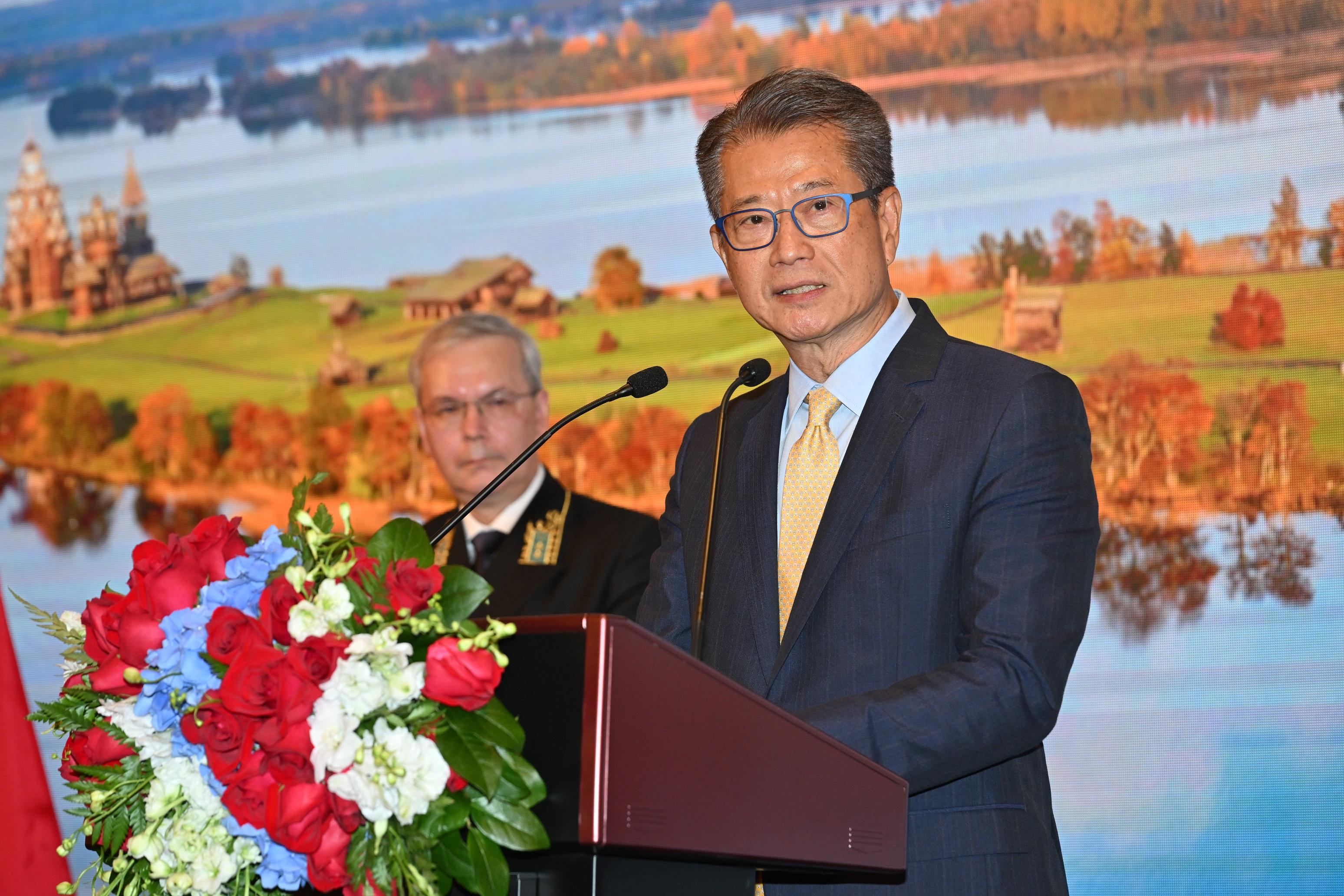
Speech by FS at Reception on Occasion of National Day of Russia (with photo)

     Following is the speech by the Financial Secretary, Mr Paul Chan, at the Reception on the Occasion of the National Day of Russia (June 12):

Consul General Sagitov (Consul General of the Russian Federation in the Hong Kong Special Administrative Region (SAR) and the Macao SAR, Mr Igor I. Sagitov), Deputy Commissioner Pan Yundong (Deputy Commissioner of the Office of the Commissioner of the Ministry of Foreign Affairs of the People’s Republic of China in the Hong Kong SAR Mr Pan Yundong), Consuls General, honoured guests, ladies and gentlemen,

     Good evening.

     It is my pleasure and privilege to attend the Russia Day reception. This is a significant occasion for the Russian Federation. 

     I’m pleased to note that there are currently over 1,000 Russians living in Hong Kong. Occasions such as this give us an opportunity to meet some of you in person. 

     As Hong Kong has resumed full normalcy and is open to the world – to people and to business – we welcome more visitors from Russia, and we look forward to more face-to-face exchanges in the future. 

     We also look forward to strengthening our bilateral trade and commercial ties. 

     In March this year, President Xi Jinping paid a State Visit to Russia. That visit is an important step towards raising investment and economic cooperation between the two nations. In particular, both nations see promising synergies between the Belt and Road Initiative and the Eurasian Economic Union. 

     In fact, this year marks the 10th anniversary of the Belt and Road Initiative, which was first proposed by President Xi in 2013. Deeply rooted in the Initiative is the spirit of openness, inclusiveness, peace, development, cooperation, and mutual benefit. The annual trade volume between China and Belt and Road countries has doubled – from around US$1 trillion in 2013 to more than US$2 trillion in 2022. With our world-class fund-raising platform and professional services expertise, Hong Kong is the key link in this great endeavor. We stand ready to contribute to common prosperity and better serve the needs of the economies involved. 

     Business aside, as we press ahead with innovation and technology development at full steam, we welcome more Russian scientists, professionals and entrepreneurs to come and explore the tremendous opportunities together with us. As you may know, the Government of this term has been very aggressive in attracting talent. To this end, we rolled out the Top Talent Pass Scheme and upgraded several other immigration schemes last December. As at the end of May this year, the schemes together attracted around 84,000 applications, of which around 49,000 had been approved. 

     Ladies and gentlemen, we are also keen to foster more cultural exchanges between Hong Kong and Russia. As a city that understands both the East and the West, we have been designated by our country as a centre for international cultural exchange. 

     Russian culture is deeply appreciated by Hong Kong people, ranging from Russian ballet to Russian films, and from Tchaikovsky to Tolstoy. I believe Russian composers and artists are indeed one of the favourites of the Hong Kong Philharmonic Orchestra.

     And of course, food would be an important part of our cultural exchange. Not to mention Vodka! 

     Last December, we welcomed Russia’s Minister of Culture, Mrs Olga Lyubimova to our Asia Cultural Co-operation Forum. The Minister’s visit was very successful and fruitful and would certainly spur more cultural cooperation between Hong Kong and Russia.

     With more magnificent new cultural venues like those in the West Kowloon Cultural District, I am sure we will host more Russian artistes to showcase their talents here, Asia’s leading cultural hub.

     Ladies and gentlemen, I am confident that the long-standing business and cultural links between Hong Kong and Russia will grow from strength to strength, riding on the back of new opportunities for closer ties between us. 

     Thank you all, and I wish you a Happy Russia Day.

     Last but not least, please join me in proposing a toast: “To the people of the Russian Federation”.

Photo  
read more

DH conducts joint operation with Police against smoking in no smoking areas

     To echo the Quit in June campaign launched by the Department of Health (DH) to call on smokers to attempt to quit smoking in order to reduce their risk of tobacco-related diseases and death, the DH’s Tobacco and Alcohol Control Office (TACO) conducted a joint operation in plain clothes with the Police against smoking offence in no smoking areas in different places across the territory for three consecutive days from June 9 to 11.

     Under the Smoking (Public Health) Ordinance (Cap.371) (the Ordinance), conducting a smoking act in statutory no smoking areas (such as indoor areas of bar or restaurants) is prohibited. Any person doing a smoking act in statutory no smoking areas commits an offence and is liable to a fixed penalty of $1,500.  Venue managers of statutory no smoking areas are empowered by the Ordinance to request the smoking offender to cease the act; and if the offender is not co-operative, he/she may contact the Police for assistance.
  
     During the operation, 83 places of public entertainment were visited by inspectors from the DH and the Police in plain clothes, and 64 fixed penalty notices were issued to persons smoking in no smoking areas. 

     A DH spokesman stressed that the TACO will follow up and investigate every complaint about illegal smoking and will conduct inspections and take enforcement actions in the venue concerned. It will also conduct joint inspections and enforcement actions (including plain-clothes operation) with other law enforcement agencies from time to time with a view to enhancing the effectiveness of law enforcement. The DH will continue to closely monitor and to take stringent enforcement actions to tackle illegal smoking.

     “The Government appeals to smokers to quit smoking as early as possible for their own health and that of others. They are encouraged to call the DH’s Integrated Smoking Cessation Hotline on 1833 183. The hotline is operated by registered nurses, providing professional counselling services on smoking cessation,” the spokesman said.

     Smokers can visit the smoking cessation thematic website www.livetobaccofree.hk for more information on quitting and the available supporting tools and services. They can also download the “Quit Smoking App” to keep track of their progress in quitting and get tips to deal with cravings so as to stay tobacco-free. read more