Tag Archives: China

image_pdfimage_print

CHP investigates confirmed Mpox case

     The Centre for Health Protection (CHP) of the Department of Health (DH) said today (June 21) that it is investigating a confirmed Mpox (also known as Monkeypox) case, and urged the public to heighten vigilance and avoid close physical contact with persons suspected of contracting Mpox. Meanwhile, high-risk target groups are advised to receive Mpox vaccination.

     The case involves a 54-year-old male patient with underlying illness. He had developed localised rash since June 15 and visited Yau Ma Tei Male Social Hygiene Clinic of the DH on June 19. The CHP’s Public Health Laboratory Services Branch confirmed that his samples tested positive for the virus yesterday evening (June 20). Arrangements were made for him to be admitted to Princess Margaret Hospital and he is now in stable condition.

     An initial investigation revealed that he had high-risk exposure during the incubation period. No epidemiological linkages between this case and other confirmed cases recorded in Hong Kong earlier are found so far. The CHP’s epidemiological investigations of the case are ongoing, including contact tracing and infection source investigation.

     The CHP will report the case to the World Health Organization. In view of the recent locally acquired confirmed Mpox cases, which involved men who have sex with men (MSM) conducting high-risk sexual practices, the CHP has earlier set up an Mpox telephone hotline (2125 2373). The hotline operates from Monday to Friday (excluding public holidays) from 9am to 5pm, which enables those who suspect or are concerned they have had high-risk contact with confirmed patients, in particular MSM or those who have sexual practices with strangers, to make enquiries and receive relevant health advice. Meanwhile, the CHP reminds the public, especially those subject to high risks of exposure, to take precautions and avoid close physical contact with persons or animals suspected of infection. They should seek medical attention as soon as possible if they experience relevant symptoms, including rash, fever, chills, swollen lymph nodes, exhaustion, muscle pain, and severe headaches.

     The CHP reminds members of the public that Mpox is not transmitted through respiratory droplets or aerosols in general and transmission would not occur through social contact. Proper personal and hand hygiene can help prevent getting infected via contact.

     The Government has activated the Alert level of the preparedness and response plan for the disease in September last year and would continue to assess the risk in view of the latest scientific evidence and situation, and implement corresponding control measures.

     The Mpox vaccination programme for high-risk groups commenced on October 5 last year. Under the programme, the following high-risk target groups can receive Mpox vaccination on a voluntary basis:
 

  1. Individuals with high-risk sexual practices, e.g. having multiple sexual partners, sex workers, or having a history of sexually transmitted infection within the past 12 months;
  2. Healthcare workers responsible for caring of patients with confirmed Mpox;
  3. Laboratory personnel working with zoonotic pox viruses; and
  4. Animal care personnel with high risk of exposure in case of Mpox occurrence in animals in Hong Kong.

     Currently, high-risk target groups can receive Mpox walk-in vaccination at any one of the DH’s six Social Hygiene Service Clinics (SocHS) (namely Wan Chai Male SocHS, Wan Chai Female SocHS, Yau Ma Tei Male SocHS, Yung Fung Shee SocHS, Fanling SocHS and Tuen Mun SocHS). Further information of the clinics including their locations is available at www.dh.gov.hk/english/tele/tele_chc/tele_chc_shcf.html and www.dh.gov.hk/english/tele/tele_chc/tele_chc_shcm.html.

     Meanwhile, the DH’s Integrated Treatment Centre in Kowloon Bay, and the Hospital Authority’s Special Medical Clinics at Queen Elizabeth Hospital and Princess Margaret Hospital will continue to provide Mpox vaccination service for their clients.

     For more details, please visit the CHP’s page on Mpox. read more

LCQ12: Improving mental health of members of public

     Following is a question by the Hon Tang Fei and a written reply by the Secretary for Health, Professor Lo Chung-mau, in the Legislative Council today (June 21):

Question:

     A survey has found that the mental health of Hong Kong people has fallen below the passing level for five consecutive years since 2018. In addition, it has been reported that a number of suicide or suspected suicide cases have occurred one after another in Hong Kong in recent months, involving people of different ages and strata. There are views that the Government and the authorities concerned should expeditiously review the strategies for improving the mental health of members of the public and enhance various measures and support services. In this connection, will the Government inform this Council:

(1) (i) of the number of cases since 2022 in which a verdict of suicide has been returned, together with a breakdown by the age group to which the deceased belonged, gender and reason for suicide, and (ii) how the suicide rates in Hong Kong compare with those in the neighbouring regions in Asia;

(2) whether it knows the respective government departments and community organisations which currently provide suicide prevention and mental health support services;

(3) whether the Government will strengthen the relevant measures or support services targeting the groups with higher suicide rates in the cases mentioned in (1), so as to reduce their chances of committing suicide; if so, of the details; if not, the reasons for that; and

(4) whether it has assessed if there is an increase in the demand of members of the public for mental health services with the full resumption to normalcy of society; if it has assessed and the outcome is in the affirmative, whether the Government will allocate additional resources to increase the relevant services and manpower?

Reply:

President,

     In consultation with the Department of Health, the Education Bureau (EDB), the Hospital Authority (HA), the Labour and Welfare Bureau (LWB) and the Security Bureau, the consolidated reply to the question raised by the Hon Tang Fei is as follows:

     Suicide is a complicated issue with multi-faceted causes. Reasons leading to one making this extreme decision are complex. In addition to mental health issues, it could also be caused by a combination of factors including biological, social and interpersonal relationships that interact with one another.

     At the mental health level, the Government attaches great importance to the mental health of the public and recognises that mental health goes beyond medical care, but also covers support in various aspects. The Government adopts an integrated and multi-disciplinary service approach towards mental health, including promotion, prevention, early identification, as well as timely intervention, treatment and rehabilitation services for persons in need so as to enhance the overall mental health of the public and encourage them to take a positive outlook on life. The specific response to the question raised by the Member is as follows:

(1) From 2022 to the first quarter of 2023, according to the preliminary classification of cases by the Hong Kong Police Force (HKPF), the number of suicide cases in Hong Kong was 880. The HKPF does not maintain statistics on other breakdowns (including the age group to which the deceased belonged as well as gender and reason for suicide).

     The Government does not maintain statistics on the suicide rates of Hong Kong and neighbouring regions in Asia. However, according to the analysis conducted by the Hong Kong Jockey Club Centre for Suicide Research and Prevention (CSRP) of the University of Hong Kong (HKU) based on data provided by the Coroner’s Court, the suicide rate of Hong Kong in the five years from 2017 to 2021 was steady at large (Note), and Hong Kong’s suicide rate was not higher than that at international level.

(2) and (3) Different government bureaux and departments, the HA and government-subsidised non-governmental organisations (NGOs) have been providing mental health support, including services on suicide prevention.

     On mental health promotion and education:

(a) the Government has earmarked a recurrent annual funding of $50 million to embark on an ongoing mental health promotion and public education initiative, so as to enhance public knowledge about mental health and encourage members of the public in need to seek help and intervention in a timely manner. The “Shall We Talk” initiative provides mental health-related information, including information on knowledge and skills in suicide prevention and relevant information on ways to seek help provided in support of the “World Suicide Prevention Day”, through an array of channels, such as its one-stop website (shallwetalk.hk), social media pages, TV and radio programmes, offline events;

(b) in support of the World Mental Health Day initiated by the World Federation for Mental Health, the LWB has since 1995 organised annually the “Mental Health Month” in collaboration with various Government departments, public organisations and NGOs providing mental health services. Different types of public education activities including radio programmes, mental health index survey, district-based publicity campaigns and newspaper advertorials have been organised to promote to the public messages of mental wellness and encourage public acceptance of persons in mental recovery; and

(c) the Social Welfare Department (SWD) has deployed Mobile Vans for Publicity Service on Mental Wellness in five designated regions of Hong Kong (i.e. Hong Kong Island, Kowloon East, Kowloon West, New Territories East and New Territories West) to step up community education and at the same time promote awareness of the public (including those with suicidal risks) on mental wellness and develop positive help-seeking attitude / behaviour in order to achieve the objectives of early prevention, early identification and early intervention.

     On community support:

(a) the SWD subvented NGOs to set up a total of 24 Integrated Community Centres for Mental Wellness (ICCMWs) to provide one-stop and district-based community mental health support services, ranging from early prevention to risk management, including services related to the suicide prevention, such as casework counselling, outreaching services and public education programmes;

(b) the SWD has also provided suicide prevention services through its subvented NGOs, such as subventing the Suicide Crisis Intervention Centre (SCIC) of the Samaritan Befrienders Hong Kong to provide outreaching, immediate risk intervention and intensive counselling services for persons in need, including relatives and friends of persons who committed suicide. The SCIC also proactively engages internet users with suicide ideations with a view to calming their negative emotions and rendering timely support;

(c) to address the impacts brought to the public’s mental health by the epidemic, the Government earmarked $300 million to launch the Mental Health Initiatives Funding Scheme (Funding Scheme) in 2021 to provide better support to the needy in the community and raise public awareness of mental health. The Funding Scheme was implemented in two phases, with a total of 172 projects approved and implemented in phases since February 2022 and March 2023 respectively; and

(d) Announced in the 2022 Policy Address, the Health Bureau (HHB) would set up a mental health support hotline to provide immediate support and referral services; and establish a service centre on a trial basis to provide emotional support and counselling for ethnic minorities. The target implementation timeline of both proposals is within 2023.

     On school support: 

(a) the EDB has all along attached great importance to the mental health of students and is committed to assisting schools in adopting the Whole School Approach to promote mental health of students and enhance support for those with mental health needs at three levels, namely the Universal, Selective and Indicated Levels. The EDB promotes positive values education and diversified development programmes on an ongoing basis and encourages schools to provide diverse learning experiences for students, so as to enhance their resilience, help them engage in school life and build a caring campus.

     The EDB disseminates a wide range of information to schools and parents about students’ mental health and support to student’s physical and mental development through the one-stop information websites on student mental health “Mental Health@School” and parent education “Smart Parent Net”. It also shares the latest information and related resources to facilitate teachers in promoting student mental health in schools via the “Mental Health@School” Teacher Professional Network;

(b) the EDB is committed to providing “gatekeeper” training for teachers, parents and students to enable their early identification and support for students with mental health needs (including those with suicidal risks);

(c) there are professionals in schools, including guidance personnel, school social workers and school-based educational psychologists who have been providing appropriate support and referral services to students with mental health needs; and

(d) the HHB, in collaboration with the EDB, the HA and the SWD, has launched the Student Mental Health Support Scheme to provide appropriate support services for students with mental health needs.

     On psychiatric services:

(a) the HA’s multi-disciplinary teams, comprising doctors, nurses, clinical psychologists, occupational therapists and medical social workers, etc, will provide patients with appropriate medical services depending on their medical conditions and clinical needs, including inpatient, specialist outpatient, day rehabilitation training and community support services; and

(b) the HA has implemented the Elderly Suicide Prevention Programme (ESPP) since 2002 to provide timely and appropriate psychiatric diagnosis and treatments for elderly suspected to have suicidal tendency, with a view to reducing the suicidal risk of the elderly concerned. Under the ESPP, elderly identified with suicidal risks will be immediately referred to the HA’s psychiatric services by the SWD, NGOs, social workers or doctors for further diagnosis and treatment.

(4) The Government has been mindful of the impact of the full resumption to normalcy of society on the mental health of the public.

     The Government has noted that some groups in the community may, in order to adapt to the resumption to normalcy, have their mental health put under pressure. The Government has taken corresponding measures to address the situation. For instance, to help students adjust to the resumption of whole-day face-to-face classes and social life, the EDB adopted specific measures, such as launching a designated webpage titled “Resuming Vibrant Life@School” and conducting online seminars in January this year with a view to helping students resume normal learning and social life as early as possible; releasing a variety of practical resources, such as school resource kits, parent tips and videos, through a designated webpage to assist parents and teachers in enhancing adaptability of students; and providing advice of professionals for parents and teachers in February this year to assist students in adapting to the cancellation of mask-wearing requirement so as to welcome the life under resumption of normalcy with a positive attitude. 

     On the other hand, the Government has all along been dedicated to enhancing mental health services and related manpower, including: 

(a) the HA has earmarked additional funding of over $18 million in 2023-24 to enhance mental health services. Relevant measures include enhancing community psychiatric services by recruiting additional case managers; strengthening nursing manpower and allied health support for psychiatric inpatient and day hospital services; and strengthening psychiatric consultation liaison service;

(b) in 2023-24, the SWD will increase the manpower of clinical psychologists in 24 ICCMWs to strengthen professional support and training, and provide additional funding to assist ICCMWs in enhancing the application of information technology in service delivery so as to strengthen the support for persons in mental recovery and their carers. The estimated annual recurrent expenditure for these enhancement measures is about $23 million; and

(c) apart from the aforementioned measures, the Government announced 10 measures in June 2023 to enhance support for persons in mental recovery and those with mental health needs, including enhancing HA’s manpower with an aim to optimising the ratio of case manager under the Case Management Programme to patients with severe mental illness to no higher than 1:40 by the fourth quarter of this year; exploring the introduction of a pilot scheme in individual District Health Centres to provide mental health assessment for members of the public in need; and enhancing the services of ICCMWs. 

Note: The most recent announcement of estimated suicide rate in Hong Kong by the CSRP of the HKU is in September 2022 when figures on the estimated suicide rate of Hong Kong in 2021 were announced. read more

HAD opens temporary heat shelters

     â€‹The Home Affairs Department is opening 19 community halls/community centres as temporary heat shelters today (June 21).

     The temporary heat shelters will remain open for people to take refuge from the heat when the Very Hot Weather Warning is in force. From 10.30pm to 8am the next day, the temporary heat shelters will also provide bedding and a sleeping place for people in need. The shelters are manned by duty attendants.

     For further information, please call the department’s hotline before midnight on 2572 8427.

     The heat shelters are located at:

Hong Kong Island:
———————

Central and Western –

Sai Ying Pun Community Complex Community Hall
3/F, Sai Ying Pun Community Complex
2 High Street, Sai Ying Pun

Eastern –
Causeway Bay Community Centre
3/F, 7 Fook Yum Road, Causeway Bay

Southern –
Wah Kwai Community Centre
Wah Kwai Estate, Kellett Bay

Wan Chai –
Wan Chai Activities Centre
LG/F, Wan Chai Market, 258 Queen’s Road East, Wan Chai

Kowloon Districts:
——————

Kowloon City –
Hung Hom Community Hall
1/F, Kowloon City Government Offices
42 Bailey Street, Hung Hom

Kwun Tong –
Lam Tin (West) Estate Community Centre
71 Kai Tin Road, Lam Tin

Sham Shui Po –
Shek Kip Mei Community Hall
G/F, Block 42, Shek Kip Mei Estate, Sham Shui Po

Wong Tai Sin –
Tsz Wan Shan (South) Estate Community Centre
45 Wan Wah Street, Tsz Wan Shan

Yau Tsim Mong –
Henry G Leong Yaumatei Community Centre
60 Public Square Street, Yau Ma Tei

New Territories Districts:
————————–

Islands –
Tung Chung Community Hall
G/F, Tung Chung Municipal Services Building, 39 Man Tung Road, Tung Chung

Kwai Tsing –
Kwai Shing Community Hall
Podium, Block 6, Kwai Shing West Estate, Kwai Chung

North –
Cheung Wah Community Hall
Cheung Wah Estate, Fanling

Sai Kung –
Hang Hau Community Hall
G/F, Sai Kung Tseung Kwan O Government Complex, 38 Pui Shing Road, Hang Hau, Tseung Kwan O

Sha Tin –
Lung Hang Estate Community Centre
Lung Hang Estate, Sha Tin

Tai Po –
Tai Po Community Centre
2 Heung Sze Wui Street, Tai Po

Tsuen Wan –
Lei Muk Shue Community Hall
G/F, Hong Shue House, Lei Muk Shue Estate, Tsuen Wan

Tuen Mun –
Wu Shan Road Community Hall
101 Wu Shan Road, Tuen Mun

Yuen Long –
Long Ping Community Hall
Long Ping Estate, Yuen Long

Yuen Long –
Tin Yiu Community Centre
Tin Yiu Estate, Tin Shui Wai

     In addition to the above heat shelters, a number of community halls/community centres can also be used for taking refuge from the heat during their operating hours. For their address details, please browse the following document: www.had.gov.hk/file_manager/en/documents/public_services/emergency_services/List_CH_CC_Day_E.pdf. read more

Hong Kong Customs detects two dangerous drugs cases and seizes suspected ketamine and suspected cannabis buds worth about $14.7 million (with photos)

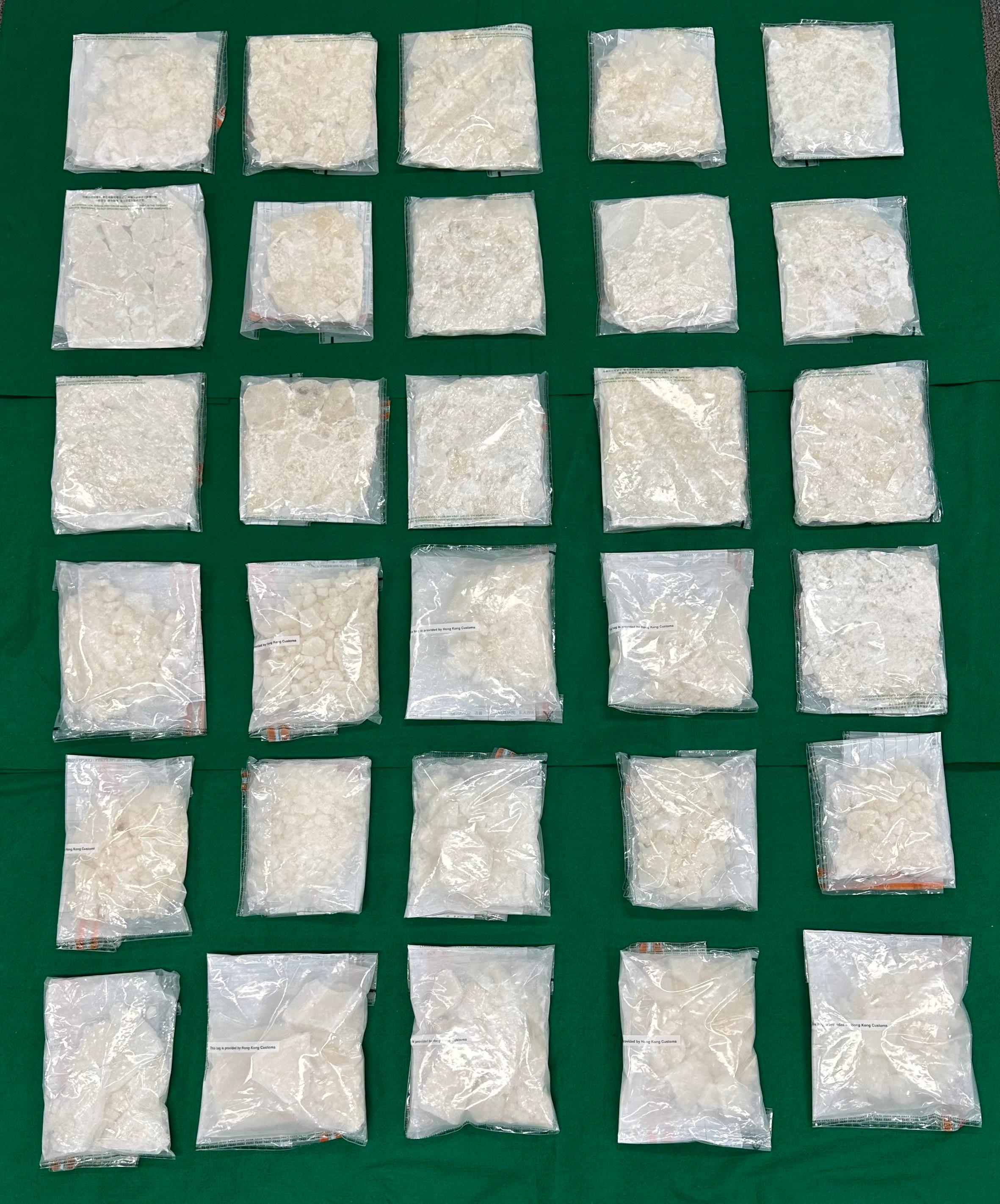
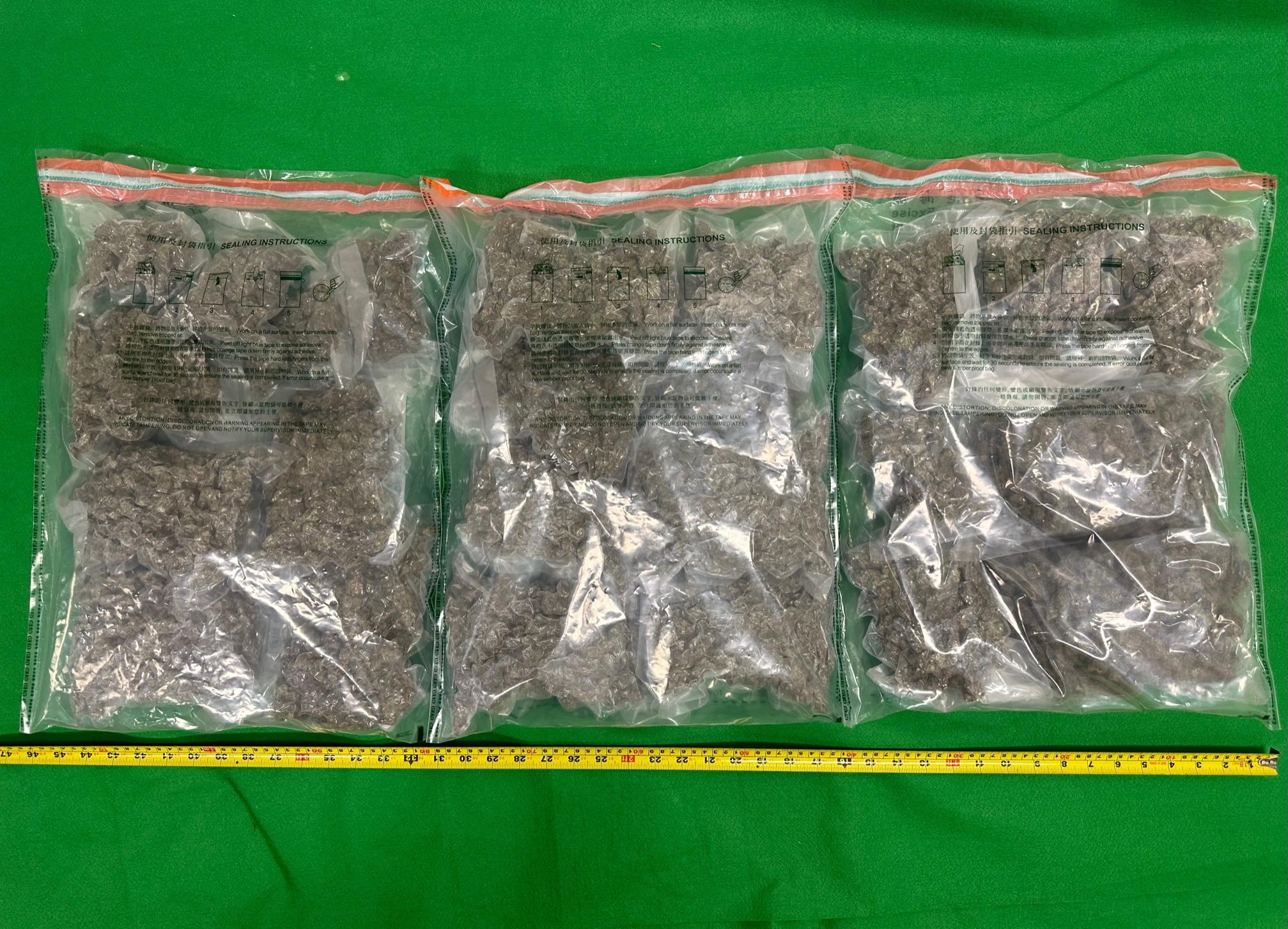
     â€‹Hong Kong Customs detected two dangerous drugs cases in Yuen Long and Tuen Mun on June 16 and yesterday (June 20) respectively and seized about 32 kilograms of suspected ketamine and about 3.5kg of suspected cannabis buds. The total estimated market value was about $14.7 million.

     In the first case, through risk assessment, Customs officers on June 16 inspected a seaborne consignment, declared as carrying wooden furniture and arriving in Hong Kong from the Netherlands, at a logistics warehouse in Yuen Long. About 32kg of suspected ketamine were seized from the false compartments of three wooden tables. The estimated market value of the drugs was about $14 million. 

     After a follow-up investigation, Customs officers conducted a controlled delivery operation in Yuen Long on June 19 and arrested three men, aged 30, 40 and 52, suspected to be connected with the case. The 30-year-old man and the 52-year-old man were each laid with a holding charge with one count of trafficking in a dangerous drug while the 40-year-old man has been released on bailing pending further investigation.

     In the second case, Customs officers intercepted a man while conducting an anti-narcotics operation in Tuen Mun yesterday afternoon. About 3.5kg of suspected cannabis buds, with an estimated market value of about $700,000, were seized from his rucksack and a recycling bag carried by him. The 23-year-old man, who claimed to be a bartender, was subsequently arrested.

     Investigations of the two above-mentioned cases are ongoing.

     Customs reminds members of the public to stay alert and not to participate in drug trafficking activities for monetary return. They must not accept hiring or delegation from another party to carry controlled items into and out of Hong Kong. They are also reminded not to carry unknown items for other people, nor to release their personal data or home address to others for receiving parcels or goods.

     Under the Dangerous Drugs Ordinance, trafficking in a dangerous drug is a serious offence. The maximum penalty upon conviction is a fine of $5 million and life imprisonment.

     Members of the public may report any suspected drug trafficking activities to Customs’ 24-hour hotline 2545 6182 or its dedicated crime reporting email account (crimereport@customs.gov.hk).

Photo  Photo  Photo  
read more

Hong Kong’s Balance of Payments and International Investment Position statistics for first quarter of 2023

     The Census and Statistics Department (C&SD) released today (June 21) the preliminary Balance of Payments (BoP) and International Investment Position (IIP) statistics of Hong Kong for the first quarter of 2023. This release also included the preliminary External Debt (ED) statistics of Hong Kong for the same period.

I.    Balance of Payments

     Hong Kong recorded a BoP surplus of $3.6 billion (0.5% of Gross Domestic Product (GDP)) in the first quarter of 2023. Reserve assets correspondingly increased by the same amount. This was against a BoP deficit of $16.5 billion (2.2% of GDP) in the fourth quarter of 2022.

Current account

     The current account recorded a surplus of $41.3 billion (5.8% of GDP) in the first quarter of 2023. This reflects that Hong Kong’s savings was greater than its investment, enabling Hong Kong to accumulate external financial assets (such as equity securities or debt securities) as a buffer against global financial volatilities. Compared with the current account surplus of $86.3 billion (12.6% of GDP) in the first quarter of 2022, the decrease in surplus was mainly due to the switch in goods balance from surplus to deficit and the decrease in services surplus, partly offset by the increase in net inflow of primary income.

     The goods account recorded a deficit of $38.7 billion in the first quarter of 2023, as against a surplus of $16.4 billion in the same quarter of 2022. Over the same period, the services surplus decreased from $49.4 billion to $44.2 billion. The primary income inflow and outflow amounted to $434.1 billion and $394.7 billion respectively, thus yielding a net inflow of $39.4 billion in the first quarter of 2023, compared with a net inflow of $23.2 billion in the same quarter of 2022.

Financial account

     An overall increase in financial non-reserve assets amounting to $4.6 billion (0.6% of GDP) was recorded in the first quarter of 2023, compared with an overall increase of $49.5 billion (6.7% of GDP) in the fourth quarter of 2022. The overall increase recorded in the first quarter of 2023 was due to the net increase in direct investment, largely offset by the net decreases in other investment, portfolio investment and financial derivatives.

     In the first quarter of 2023, reserve assets increased by $3.6 billion, as against a decrease of $16.5 billion in the fourth quarter of 2022.

II.   International Investment Position

     At the end of the first quarter of 2023, both Hong Kong’s external financial assets and liabilities stood at a very high level, amounting to $48,263.5 billion (16.9 times of GDP) and $34,272.0 billion (12.0 times of GDP) respectively, a typical feature of a prominent international financial centre.

     Hong Kong’s net external financial assets (i.e. assets minus liabilities) amounted to $13,991.5 billion (4.9 times of GDP) at the end of the first quarter of 2023, compared with $13,752.0 billion (also 4.9 times of GDP) at the end of the fourth quarter of 2022. Hong Kong’s net external financial assets to GDP ratio is one of the largest in the world, which provides the economy with a strong cushion against sudden external shocks.

III.  External Debt

     At the end of the first quarter of 2023, Hong Kong’s gross ED amounted to $14,044.2 billion (4.9 times of GDP). Compared with $14,196.4 billion (5.0 times of GDP) at the end of the fourth quarter of 2022, gross ED decreased by $152.2 billion. This was mainly attributable to the decreases in ED of the banking sector and debt liabilities in direct investment (intercompany lending), partly offset by the increase in ED of the general government.

     As one of the world’s major financial centres, Hong Kong has a significant amount of ED held against the local banking sector arising through normal banking businesses. At the end of the first quarter of 2023, 57.2% of Hong Kong’s ED was attributable to the banking sector. Other ED mainly consisted of ED of other sectors (25.7%) and debt liabilities in direct investment (intercompany lending) (16.3%).

Further information

     BoP is a statistical statement that systematically summarises, for a specific time period (typically a year or a quarter), the economic transactions of an economy with the rest of the world (i.e. between residents and non-residents).

     IIP is a balance sheet showing the stock of external financial assets and liabilities of an economy at a particular time point. The difference between the external financial assets and liabilities is the net IIP of the economy, which represents either its net claim on or net liability to the rest of the world.

     Gross ED, at a particular time point, is the outstanding amount of those actual current, and not contingent, liabilities that are owed to non-residents by residents of an economy and that require payment of principals and/or interests by the debtors at some time points in the future.

     Table 1 presents Hong Kong’s BoP. Table 2 presents the detailed current account and capital account, while Table 3 presents the detailed financial account. Table 4 shows Hong Kong’s IIP, and Table 5 shows Hong Kong’s ED.
 
     Statistics on BoP, IIP and ED for the first quarter of 2023 are preliminary figures, which are subject to revision upon the availability of more data. 
 
     A new sign convention has been adopted for BoP statistics since June 2023. From then on: (i) debit entries in the current account and the capital account are switched from negative to positive figures; (ii) increases in assets and liabilities in the financial account are both indicated by positive figures; and (iii) the capital account and the financial account are no longer presented as a combined account. This sign convention complies with the international standards set out in the Sixth Edition of the Balance of Payments and International Investment Position Manual. It ensures consistency with national accounts and IIP statistics, and provides a simpler interpretation for BoP statistics.

     The latest statistical tables of BoP (including seasonally adjusted current account), IIP and ED can be downloaded at the website of the C&SD (www.censtatd.gov.hk/en/scode260.html). Analysis of the statistics, together with the conceptual and methodological details, are presented in the publication Balance of Payments, International Investment Position and External Debt Statistics of Hong Kong, First Quarter 2023 published by the C&SD. Users can download the publication at the website of the C&SD (www.censtatd.gov.hk/en/EIndexbySubject.html?pcode=B1040001&scode=260).

     For enquiries about the BoP, IIP and ED statistics, please contact the Balance of Payments Section of the C&SD (Tel: 3903 6979 or email: bop@censtatd.gov.hk). read more