Tag Archives: China

image_pdfimage_print

Speech by STL at “Cathay Cargo – We know How” brand launch ceremony (English only)

     Following is the speech by the Secretary for Transport and Logistics, Mr Lam Sai-hung, at the “Cathay Cargo – We know How” brand launch ceremony today (June 21):
 
Ronald (Chief Executive Officer of Cathay Pacific Group, Mr Ronald Lam), Rebecca (Chief Financial Officer of Cathay Pacific Group, Ms Rebecca Sharpe), Tom (Director Cargo of Cathay Pacific, Mr Tom Owen), Victor (Director-General of Civil Aviation, Mr Victor Liu), Fred (Chief Executive Officer of Airport Authority Hong Kong, Mr Fred Lam), distinguished guests, ladies and gentlemen,
 
     Good evening. I am most happy to be with you all this evening to witness this remarkable moment of Cathay Cargo, which is set to embark on an exciting journey to “Move Beyond”, as the Cathay’s ambition says, by offering more and more leading-edge services to customers under a new brand. 
 
     This commitment of Cathay Cargo echoes our ambition to make Hong Kong not only the busiest, but also the best, international air cargo hub that serves shippers and markets around the world.
 
     Action speaks louder than words. While our airport managed to retain the top spot as the world’s busiest cargo airport in 2021 and 2022 during the pandemic, we have never slowed down in making continuous enhancements of our airport’s infrastructure and systems, with a view to enhancing our capability in handling e-commerce-related and high-value and high-growth cargo.
 
     On this front, Hong Kong International Airport (HKIA) has made remarkable achievements, with our airport community being among the first to have attained the International Air Transport Association’s Centre of Excellence certifications for various high-value air cargo, including pharmaceuticals, fresh produce, live animals and lithium batteries. Cathay has been at the forefront of this exciting development. Your world-class capability in handling temperature-controlled cargo was more than recognised, when Cathay Cargo became one of the few preferred airlines to transport vaccines and medicine for COVID-19 during the depth of the pandemic. As this air cargo segment continues to see respectable growth, I am sure Cathay Cargo will maintain your edge as a world leader in handling related shipments.
 
     Looking further ahead, capacity building will be critical for the continual development of air cargo business in Hong Kong, especially in face of land shortage. Apart from the expansion of HKIA into a Three-Runway System, which upon completion and commissioning in 2024 will significantly increase HKIA’s handling capacity, we are also introducing a new sea-air intermodal cargo transshipment mode between HKIA and Dongguan, whereby air cargo that has gone through upstream security screening can be shipped to HKIA by sea for direct transshipment. With the collaborative efforts of stakeholders in the airport community, the pilot scheme has been running smoothly, and we aim to migrate it to a permanent facility from 2025.
 
     We appreciate a lot Cathay’s unwavering support for this project, with Cathay Cargo and Cathay’s cargo terminal being the first carrier and the first cargo terminal operator respectively to handle cargo shipments under this innovative model. We trust that this additional mode will open up tremendous opportunities for both Cathay Cargo and our airport, helping both to enlarge catchment in the huge market of the Greater Bay Area and reinforcing our strength as the leading air cargo and logistics hub.
 
     As we emerge from the pandemic, it is time for us to “Move Beyond” and seize the numerous opportunities that await us in the air cargo industry. Let us all work hand in hand to make Hong Kong the best air cargo hub in the region and the world.
 
     I would like to once again congratulate Cathay Cargo on this special occasion, and wish your company every success in the years to come. Thank you. read more

Heightened vigilance urged amid increase in acute gastroenteritis activity

     The Centre for Health Protection (CHP) of the Department of Health today (June 21) called on members of the public to heighten vigilance against acute gastroenteritis (AGE), as the local activity of AGE has been increasing recently.
 
      According to the CHP’s latest surveillance data, the number of institutional AGE outbreaks increased in the past few weeks, from nine in the week ending June 3, to 17 (affecting 130 persons) last week (ending June 17). As of yesterday (June 20), 13 outbreaks (affecting 124 persons) had been reported in the past three days of this week. From the week ending June 3 to yesterday, the majority of the outbreaks occurred in child care centres or kindergartens, and at least 13 outbreaks (affecting 232 persons) were confirmed to be related to norovirus during the above-mentioned period. The CHP’s epidemiological investigations revealed that the above AGE outbreaks had a higher chance of being caused by person-to-person transmission or environmental contamination, and the CHP has ruled out that the outbreaks involved food poisoning.
 
     AGEs are usually caused by viruses, most commonly norovirus, rotavirus, and adenovirus, and occur more frequently in winter. The modes of transmission include contact with vomitus or faeces from infected persons, contact with contaminated environments or objects, and aerosol spread with contaminated droplets of splashed vomitus.

    To prevent AGE outbreaks, strict personal, food and environmental hygiene, with particular attention to handling of vomitus and faecal matter, are very important. A spokesman for the CHP reminded that alcohol-based handrub should not substitute hand hygiene with liquid soap and water, as alcohol does not effectively kill some viruses frequently causing AGE, for example, norovirus. Members of the public are advised to take heed of the following preventive measures against gastroenteritis:
 

  • Ensure proper personal hygiene;
  • Wash hands thoroughly before handling food and eating, after using the toilet or after changing diapers;
  • Wear gloves and a surgical mask while disposing of or handling vomitus and faeces, and wash hands thoroughly afterwards;
  • Clean and disinfect contaminated areas or items promptly and thoroughly with diluted household bleach (by adding one part of bleach containing 5.25 per cent sodium hypochlorite to 49 parts of water). Wash hands thoroughly afterwards;
  • Ensure the household bleach used has not expired. For effective disinfection, diluted bleach should be used within 24 hours after preparation as effectiveness would decrease with time if left unused;
  • Maintain good indoor ventilation;
  • Pay attention to food hygiene;
  • Use separate utensils to handle raw and cooked food;
  • Avoid food that is not thoroughly cooked;
  • Drink boiled water; and
  • Refrain from work or attending school, and seek medical advice if suffering from vomiting or diarrhoea.
 
     The spokesman reminded management of schools and institutions to follow the Guidelines on Prevention of Communicable Diseases on preventive and control measures as well as management of outbreaks, which should be reported to the CHP for prompt follow-up.

     The public may visit the CHP’s pages on acute diarrhoeal diseases and norovirus infection for more information. read more

Man arrested for illegal sale and possession of unregistered pharmaceutical products, Part 1 poisons and antibiotics (with photo)

     The Department of Health (DH) today (June 21) conducted an operation against the suspected illegal sale and possession of unregistered pharmaceutical products, Part 1 poisons and antibiotics. A 45-year-old man was arrested during the operation.

     Upon intelligence, a shop in Cheung Sha Wan was found selling various unregistered pharmaceutical products, including pain killers, cough and cold medicines, anti-dizziness and antiemetic drugs, as well as external preparations. All the products did not bear Hong Kong registration numbers for pharmaceutical products, while most of them are labelled in foreign languages (including Japanese, Korean and English).

     A preliminary investigation indicated that, among the relevant medicines seized during today’s enforcement operation, 13 types of products (see photo) contain Part 1 poisons under the Pharmacy and Poisons Ordinance (Cap. 138) (including ibuprofen, dihydrocodeine, methylephedrine, fluocinolone, triamcinolone acetonide, hydrocortisone, difluprednate, diclofenac, felbinac and hyoscine) and/or antibiotic substances under the Antibiotics Ordinance (Cap. 137) (including bacitracin and neomycin). A 45-year-old man was arrested by the Police for illegal sale and possession of unregistered pharmaceutical products, Part 1 poisons and antibiotics.

     The DH’s investigation is ongoing.

     Ibuprofen is a non-steroidal anti-inflammatory pain killer and its side effects include nausea, gastrointestinal discomfort and peptic ulcers. Dihydrocodeine is an opioid analgesic and may cause nausea, vomiting and constipation. Side effects of methylephedrine include tachycardia, anxiety, restlessness and insomnia. Fluocinolone, triamcinolone acetonide, hydrocortisone and difluprednate are steroid substances for treating inflammation. Inappropriate application of steroids could cause skin problems and systemic side effects such as moon face, high blood pressure, high blood sugar, adrenal insufficiency and osteoporosis. Diclofenac and felbinac are non-steroidal anti-inflammatory drugs which could be used topically to relieve pain. Inappropriate use of diclofenac and felbinac may cause erythema and dermatitis. Common side effects of hyoscine include dry mouth, blurred vision and constipation. Inappropriate or excessive use of antibiotics can lead to antibiotic resistance.

     Products containing the above ingredients should only be supplied by a pharmacy under the supervision of a registered pharmacist, among which those containing fluocinolone, triamcinolone acetonide, difluprednate, bacitracin or neomycin also require a doctor’s prescription.

     According to the Pharmacy and Poisons Ordinance, all pharmaceutical products must be registered with the Pharmacy and Poisons Board of Hong Kong before they can be legally sold in the market. Illegal sale or possession of unregistered pharmaceutical products or Part 1 poisons are criminal offences. The maximum penalty for each offence is a fine of $100,000 and two years’ imprisonment. Moreover, according to the Antibiotics Ordinance, the maximum penalty for illegal sale or possession of antibiotics is a fine of $50,000 and 12 months’ imprisonment.

     The DH strongly urges members of the public not to buy or use unregistered pharmaceutical products as their safety, efficacy and quality are not guaranteed. All registered pharmaceutical products should carry a Hong Kong registration number on the package in the format of “HK-XXXXX”.

     â€‹Members of the public should not self-medicate without advice from healthcare professionals. People who have purchased and used the above products should stop using them and consult healthcare professionals if they are in doubt or feeling unwell after use. They may submit the product to the Drug Office of the DH at Room 1801, Wu Chung House, 213 Queen’s Road East, Wan Chai, during office hours for disposal.

Photo  
read more

Hong Kong Customs publicises Dealers in Precious Metals and Stones Regulatory Regime at jewellery exhibition (with photo)

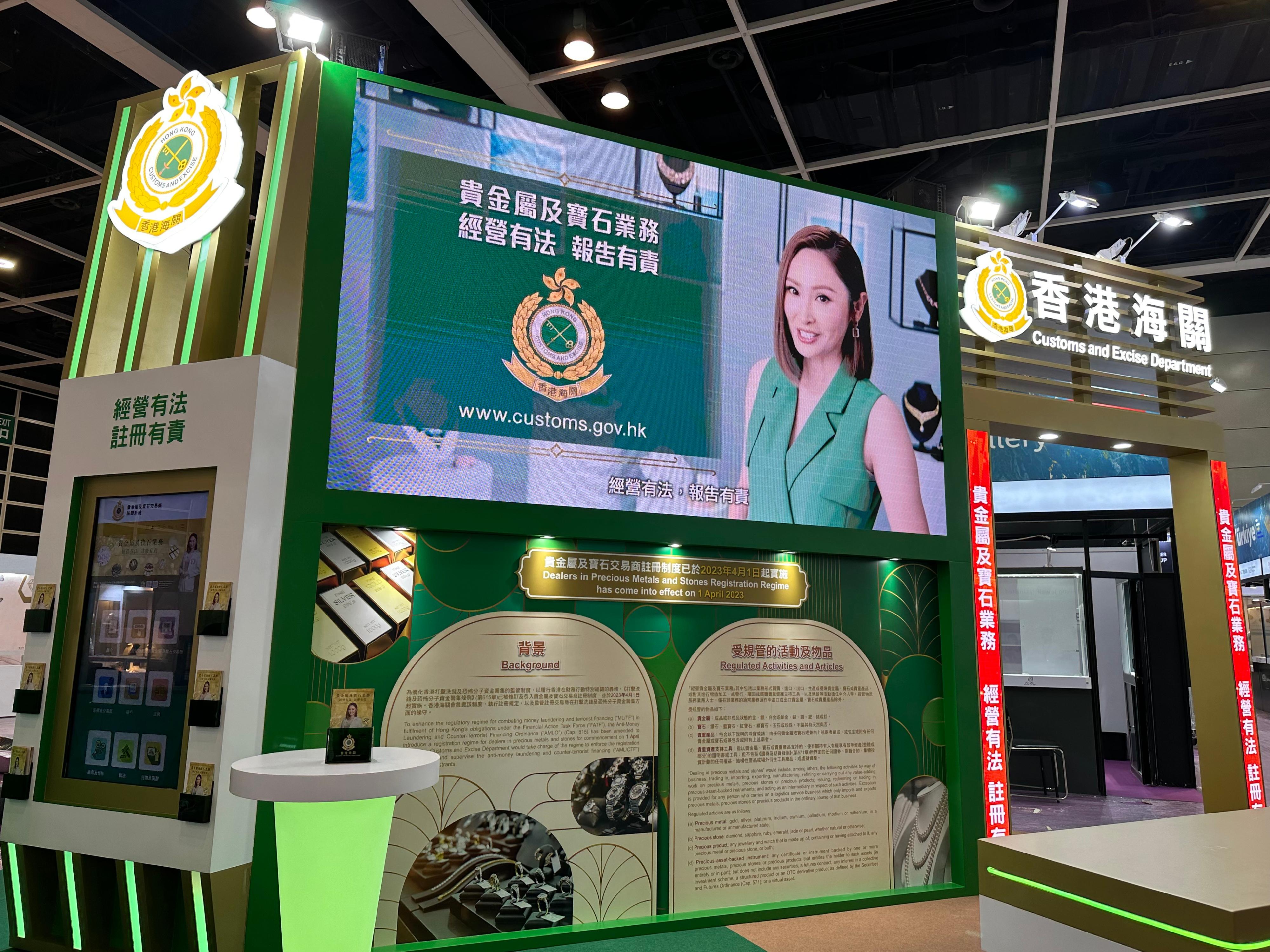
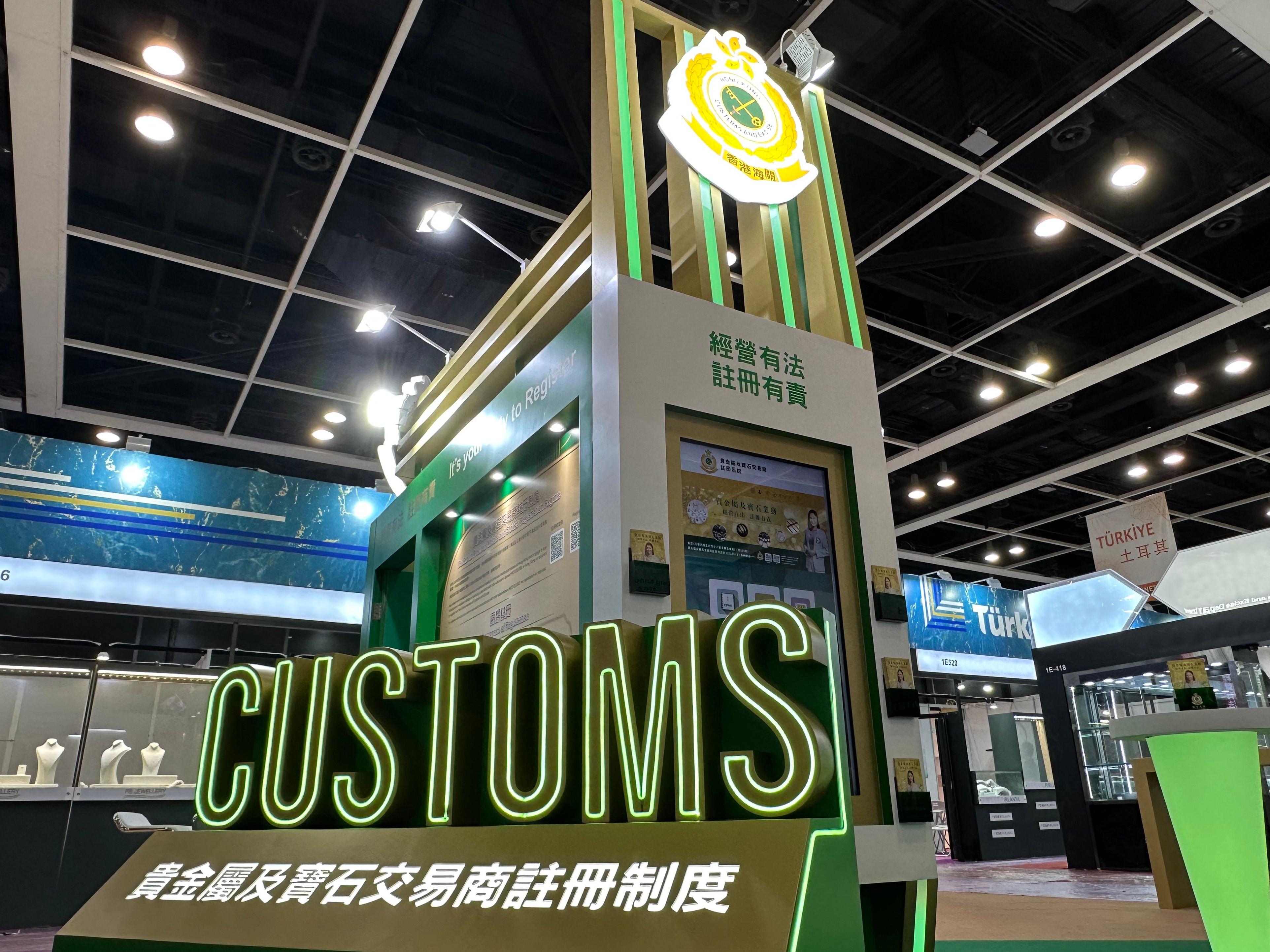
     â€‹Hong Kong Customs will set up a booth at the Jewellery & Gem Asia Hong Kong (JGA), to be held at the Hong Kong Convention and Exhibition Centre (HKCEC), from tomorrow (June 22) for four consecutive days to publicise the Dealers in Precious Metals and Stones Regulatory Regime (the Regime), and for the first time, will provide on-site counter services to provide facilitation for non-Hong Kong dealers to submit a cash transaction report during their participation in the exhibition.

     According to the Anti-Money Laundering and Counter-Terrorist Financing Ordinance (Cap. 615), the Regime has come into effect since April 1 this year. Local precious metals and stones dealers are required to apply for registration between April and December this year in order to carry out transaction(s) (whether making or receiving a payment) with a total value at or above HK$120,000. They are also required to fulfil their anti-money laundering and counter-terrorist financing obligations as appropriate.

     For non-Hong Kong dealers fulfilling the prescribed conditions (including those who come to Hong Kong to participate in jewellery exhibitions), although they are exempt from registration, they are required to submit to Hong Kong Customs a cash transaction report for any cash transaction(s) (whether making or receiving a payment) with total value at or above HK$120,000 carried out in Hong Kong within one day after the transaction, or before the dealer or the person acting on behalf of the dealer leaves Hong Kong, whichever is earlier.

     Non-Hong Kong dealers can make an online submission of a cash transaction report via the Regime’s webpage at www.drs.customs.gov.hk by accessing the Dealers in Precious Metals and Stones Registration System. They can also download the related form at www.drs.customs.gov.hk/download/drsform/CED418_Form%208_Cash%20transaction%20report.pdf and then submit the report in person at Hong Kong Customs’ booth at the JGA.  

     Hong Kong Customs’ booth (Booth 1E422) is located at HKCEC Hall 1E and will be open from 10am to 6pm between June 22 and June 24, and from 10am to 5pm on June 25.

     Dealers can visit the website (www.customs.gov.hk/en/service-enforcement-information/anti-money-laundering/supervision-of-dealers-in-precious-metals-and-ston/index.html) for more information about the Regime.

Photo  Photo  
read more