Red flag hoisted at Clear Water Bay Second Beach
Attention TV/radio announcers: Please broadcast the following as soon as possible: Here is an item of interest to swimmers. The Leisure and Cultural Services Department announced toda… read more


Attention TV/radio announcers: Please broadcast the following as soon as possible: Here is an item of interest to swimmers. The Leisure and Cultural Services Department announced toda… read more
The following is issued on behalf of the Hospital Authority: The spokesperson for United Christian Hospital (UCH) made the following announcement today (May 12): At around 6.20am today, the hospital was not… read more
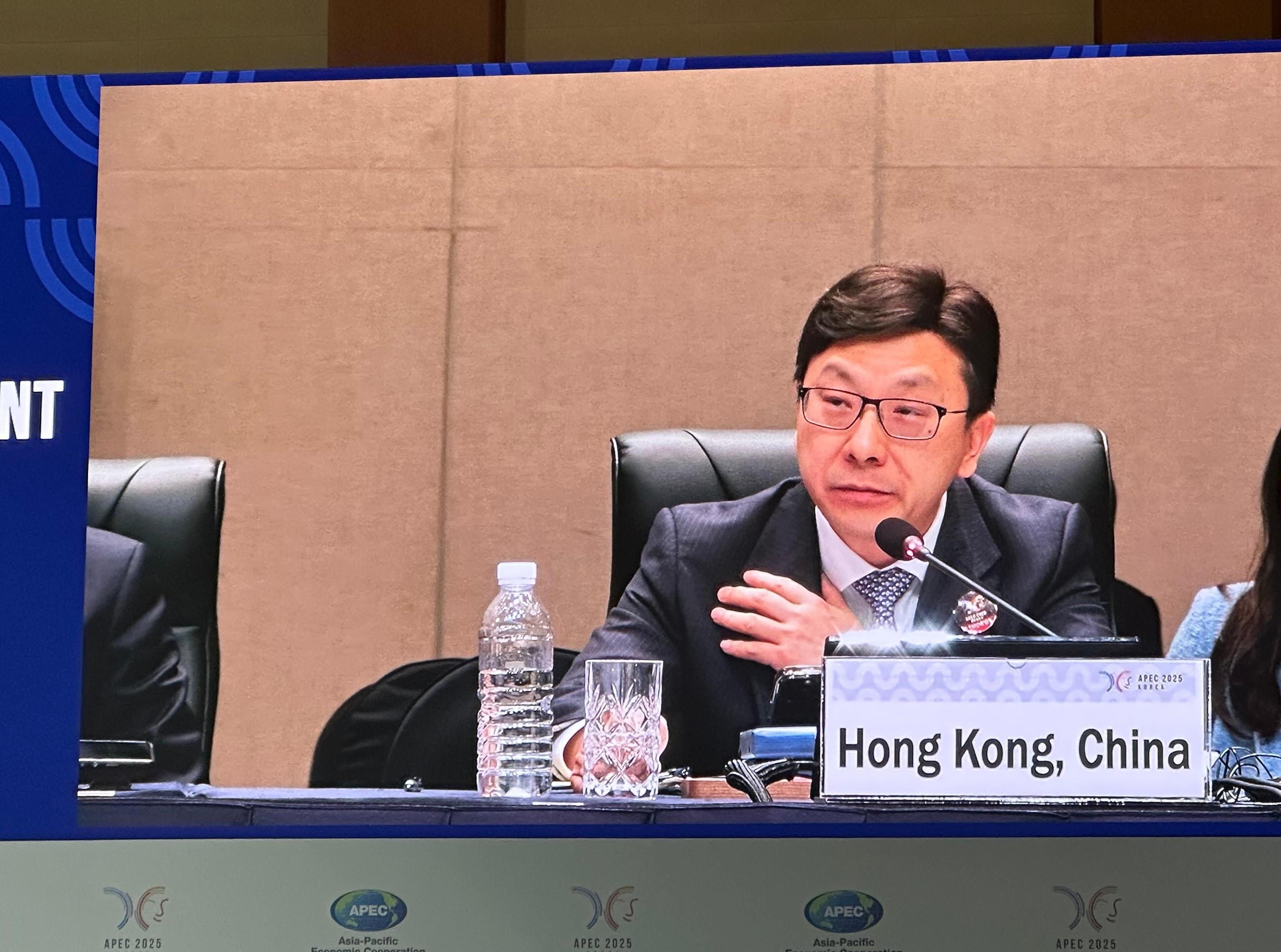
Following is the speech by the Secretary for Labour and Welfare, Mr Chris Sun, at the plenary session themed “Flexible and Vibrant Labour Market” at the Seventh Asia-Pacific Economic Cooperation (APEC) Human Resources Development Ministerial Meeting in Jeju, Korea, today (May 12):
Good morning, chair and distinguished fellow Ministers.
Let me start off first of all by expressing my heartfelt gratitude to Korea for your warm hospitality and the very thoughtful arrangement over every detail this meeting. Flexibility and vibrancy have long been embedded in the DNA of Hong Kong, China. However, in the face of changing landscapes, we cannot stand still and must evolve and improve.
In a world where social media and artificial intelligence keep on reshaping the scope and meaning of work, it is all the more important for policymakers to focus on making employment more flexible, boosting labour productivity, and putting in place sustainable protection for workers. Today I will highlight Hong Kong, China’s initiatives to address the challenges posed by the platform economy, and our efforts to enhance protection for employees across various sectors.
The platform economy is developing rapidly around the world. In Hong Kong, China, platform workers engaging in food and goods delivery services are common. Similar to other economies, their mode of co-operation with platform providers involves complex and various modes of work, which are not entirely akin to the traditional employment relationship.
Hong Kong, China attaches great importance to protecting the rights and benefits of platform workers. We have set up a tripartite liaison group to explore possible measures for strengthening protection for platform workers in collaboration with platform companies and labour organisations. We are glad to see that members of the liaison group are working together to forge consensus. The general directions are to enhance communication between platform companies and workers, increase the level of compensation for work-related accidents, and crack down on illegal workers. The aim is to enhance protection for platform workers through tripartite consultation while at the same time facilitating the sustainable development of the industry to achieve win-win outcome.
In parallel, the Government of Hong Kong, China has conducted a thematic household survey to collect major data of local platform workers. We have also conducted an opinion survey and focus groups among platform workers. Platform workers in Hong Kong, China are mostly concerned about the protection for work-related accidents and urged platform providers to provide them with protection comparable to the work injury compensation offered to employees in general. Capitalising on the work of the liaison group and the survey findings, we will map out the way forward within this year and enact necessary legislation once we have decided on the direction.
At the same time, we are addressing broad concerns through refining the scope of the Employment Ordinance in Hong Kong, China. At present, all employees covered by the Employment Ordinance are entitled to basic protection, including wage payment and granting of statutory holidays. Employees who are employed under a continuous contract are further entitled to benefits such as holiday pay, paid annual leave, sickness allowance, maternity leave, etc.
Under the current law, an employee is required to work at least 18 hours a week for four weeks in a row so as to remain engaged in continuous contract. This means an employee who occasionally works less than 18 hours in a week will fall short of the continuous contract requirement.
We have recently introduced legislative amendment to revise the threshold of the continuous contract requirement. First of all, we lower the weekly work hour threshold from 18 to 17 hours. More importantly, we make it clear that even if an employee works less than 17 hours a week, the continuous contract still remains valid if the aggregate work hours reach 68 hours or more in a designated four week period including the week in issue.
We expect that the legislative amendment will soon be passed into law. The expanded coverage of continuous contract will enable more employees with shorter and flexible work hours to enjoy full employment benefits. We believe the relaxation will also encourage more people to join the labour market.
Hong Kong, China is facing a shrinking workforce against our ageing population. To sustain the development of our workforce, we have been incentivising older people to rejoin the labour market and employers to hire older people.
First of all, we have introduced a Re-employment Allowance Pilot Scheme for three years. The aim is to encourage persons aged 40 or above who have not been employed for three months or more to work again. Eligible participants will be given an allowance of HK$10,000, which is equivalent to around US$1,300, if they remain employed for six months in a row. If they remain employed for a full year, they will receive an additional allowance of HK$10,000. Up to March this year we have received 38 000 participants with 16 000 placements recorded.
Turning to employers, we are rewarding those who hire and provide on-the-job training to older people. Eligible employers will receive a monthly allowance of HK$5,000 per employee per month for six to 12 months if they hire persons aged 60 or above. A smaller allowance and shorter period will be given to those employing persons aged 40 to 59.
To conclude, Hong Kong, China remains steadfast in its commitment to enhance the protection for the workforce and raise labour productivity. We will continue to explore innovative solutions and engage in meaningful and pragmatic dialogue with all stakeholders to create a fair and equitable labour market that empowers all individuals to thrive.
Thank you.
Following is the pre-recorded video speech by the Secretary for Financial Services and the Treasury, Mr Christopher Hui, at the HKQAA International Sustainability Forum – Hong Kong 2025 today (May 12):
Chairman Ho (Chairman of the Hong Kong Quality Assurance Agency (HKQAA), Mr Ho Chi-shing), Chin-wan (Secretary for Environment and Ecology, Mr Tse Chin-wan), distinguished guests, ladies and gentlemen,
Good morning. It is my great pleasure to address you at the HKQAA’s annual international sustainability forum, a platform gathering relevant stakeholders from both the public and private sectors to discuss important issues of sustainability. This year’s theme, “Seizing Green Finance Opportunities in the Low-Carbon Transition of the Belt and Road Initiative and the Greater Bay Area (GBA)”, is highly relevant and timely amid the global shift and increasing awareness towards sustainability, and the rising importance of green and sustainable finance in supporting green transition and achieving carbon neutrality for the world. Pursuing the vision of a community with a shared future for mankind, both our country and our city look beyond the current geopolitical environment and the instability it brings, and are committed to promoting a low-carbon economy, green finance, and supporting green development in the Belt and Road region.
Hong Kong as a premier international financial centre
Being a premier international financial centre, Hong Kong also plays a part in supporting green development and transition in the region by mobilising cross-border investments to address climate and sustainability challenges. The Government, along with financial regulators and stakeholders, has been making efforts in enhancing the ecosystem of the green and sustainable finance market through a multipronged approach, namely (i) providing diversified green investment products; (ii) aligning with international standards; and (iii) supporting market development.
Providing diversified green investment products
Our capital market provides a wide range of green and sustainable investment products. In 2024, the volume of green and sustainable bonds arranged in Hong Kong amounted to around US$43 billion, ranking first in the Asian market for seven consecutive years since 2018 and capturing around 45 per cent of the regional total. As of March this year, the number of ESG (environmental, social and governance) funds authorised by the Securities and Futures Commission (SFC) was around 220 with assets under management of around HK$1.1 trillion – an increase of 80 per cent over the past three years.
The Government Sustainable Bond Programme, formerly known as the Green Bond Programme, continues to play a leading role in funding local green initiatives. Since 2019, we have issued an equivalent of over HK$220 billion in green bonds across multiple currencies and tenors, including institutional, retail and tokenised tranches. Last year, we expanded the programme to include sustainable projects, reinforcing our commitment to broader environmental and social goals while setting important benchmarks for the market.
We are also building the market infrastructure needed to connect capital with carbon-related products in Hong Kong, the Mainland, Asia and beyond. In 2022, Hong Kong Exchanges and Clearing Limited (HKEX) launched the Core Climate, an international carbon marketplace. It facilitates transparent, efficient trading of high-quality carbon credits from certified projects across Asia, South America, and West Africa. Sectors such as forestry, wind, solar, and biomass are represented, offering opportunities for enterprises in the GBA and Belt and Road economies to support their own Net Zero transitions.
Alignment with international standards
Sustainability reporting
As global awareness of sustainability grows, consistent and reliable information becomes essential for investors and businesses to manage risk and allocate capital effectively. We launched in December last year the Roadmap on Sustainability Disclosure in Hong Kong. This provides a clear path for large publicly accountable entities to adopt the International Financial Reporting Standards (IFRS) – Sustainability Disclosure Standards (ISSB Standards) by 2028. This move places Hong Kong among the first jurisdictions to align local reporting requirements with the global baseline, enhancing transparency and comparability in sustainable finance. The roadmap not only reflects our commitment to the global green transition but also offers clarity and guidance to market participants.
Taxonomy
A shared understanding of what constitutes “green” is vital. In May 2024, the Hong Kong Monetary Authority (HKMA) published the Hong Kong Taxonomy for Sustainable Finance. This important tool supports the market by offering a standardised classification of green activities, aligned with the Common Ground Taxonomy to ensure interoperability with taxonomies in Mainland China and the European Union. The initial phase of the taxonomy covers 12 activities across four key sectors: power generation, transportation, construction, and water and waste management. As a living framework, the taxonomy will continue to evolve. The HKMA has embarked on the next phase development to expand the scope of sectors and economic activities, including transition activities.
Supporting market development
To promote the green financing activity in Hong Kong, we launched the Green and Sustainable Finance Grant Scheme in 2021. The scheme offers subsidies to eligible bond issuers and loan borrowers to help cover issuance and external review costs. Extended to 2027, its scope now also includes transition bonds and loans. This expansion will help encourage industries across the GBA and Belt and Road economies to leverage Hong Kong’s platform to finance their low-carbon transitions and contribute to global sustainability goals.
We are also investing in innovation. Green fintech is an important enabler of scalable sustainability solutions. We launched the Green and Sustainable Fintech Proof-of-Concept Funding Support Scheme in June last year to provide early-stage funding to support technology companies or research institutes conducting green fintech activities to collaborate with local enterprises, and to co-develop new projects in the market addressing industry pain points. So far, 60 projects have been approved, reflecting the vibrant potential of Hong Kong’s green fintech ecosystem.
Hong Kong’s unique position to support countries of the Belt and Road Initiative
Hong Kong continues to serve as a bridge between Mainland China and the wider Belt and Road region. We actively promote regional co-operation through strategic platforms and exchanges. In April this year, the HKEX and the SFC co-hosted the inaugural International Carbon Markets Summit. The event brought together more than 200 global participants, including regulators, carbon trading platforms, corporates, and investors. The Summit marked a step forward in building trusted, effective carbon market ecosystems that support the sustainable development goals of Belt and Road economies.
We also continue to convene the annual Asian Financial Forum (AFF) to foster international dialogue. In January this year, the 18th AFF featured a new milestone: the launch of a dedicated chapter co-hosted with the Gulf Cooperation Council (GCC). This marked an important milestone in fostering collaboration in financial services such as investments in green energy between Hong Kong and GCC member states.
Climate change presents one of the greatest risks to our global economy. The increasing frequency and severity of natural disasters require new financial tools to build resilience. Hong Kong is taking a leading role in this area by developing the insurance-linked securities (ILS) and catastrophe bonds market.
Since the launch of our ILS framework in 2021, seven catastrophe bonds have been issued in Hong Kong, raising over US$800 million in coverage against risks such as typhoons and earthquakes. These instruments provide critical risk mitigation solutions for both corporates and governments. To further support this market, we extended our Pilot ILS Grant Scheme to 2028, providing subsidies to issuers of ILS and supporting the growth of Hong Kong-based service providers. These efforts reinforce Hong Kong’s position as a centre for innovative risk management in the face of climate change.
HKQAA’s contributions
I would also like to take this opportunity to thank the HKQAA for its contributions to the development of green finance in Hong Kong. The HKQAA has been participating in the development of international standards for sustainable finance and launched the Green and Sustainable Finance Certification Scheme (formerly called Green Finance Certification Scheme) in 2018.
I am delighted to know that the HKQAA also supports the development of a roadmap for sustainability disclosure in our country by contributing to the Beijing Municipal Bureau of Finance and Economy’s pilot project for sustainability disclosure and talent development. At home, it has supported Hong Kong’s own disclosure roadmap by establishing industry-specific climate risk tools to help local businesses prepare for future reporting requirements.
The HKQAA has also forged partnerships with the Belt and Road International Green Development Alliance, helping regional partners access global capital markets and implement green financing solutions. Its work exemplifies the kind of cross-sector, cross-border collaboration that is essential for sustainable growth.
Closing
Looking forward, I am confident that the opportunities in green finance – particularly in supporting the low-carbon transition of the Belt and Road region and the GBA – will continue to expand. Today’s forum offers valuable insights into the path toward sustainability, a journey that calls for steadfast commitment, continuous innovation, and deep cross-regional collaboration. As we move forward, the Government remains committed to working hand in hand with the industry and all stakeholders to build a greener, more resilient future for Hong Kong and the wider region. Thank you. read more
Attention TV/radio announcers: Please broadcast the following as soon as possible: Here is an item of interest to swimmers. The Leisure and Cultural Services Department announced toda… read more