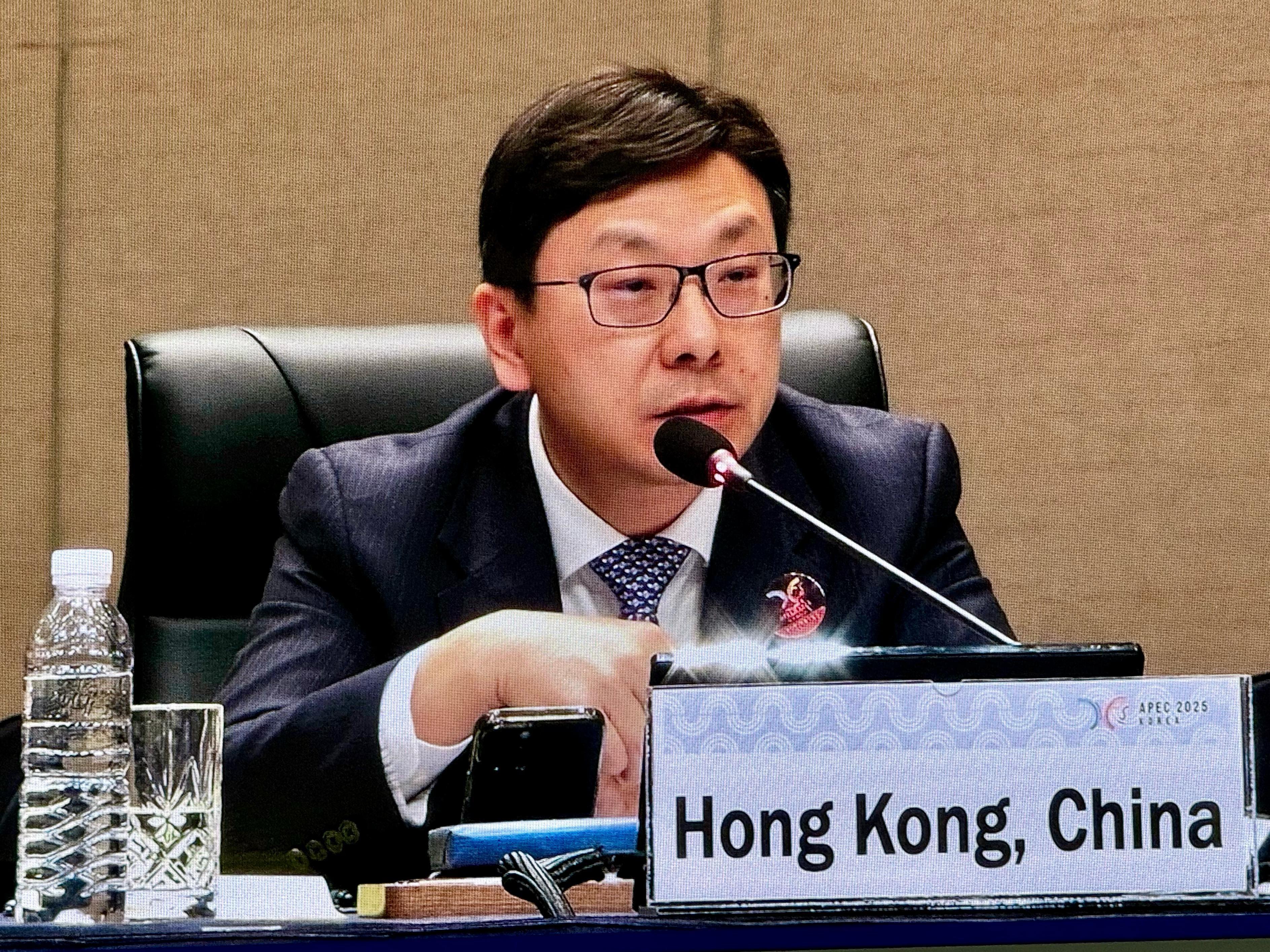
Following is the speech by the Secretary for Labour and Welfare, Mr Chris Sun, at the plenary session themed “Responding to Future Jobs and Active Labour Market Policies” at the Seventh Asia-Pacific Economic Cooperation Human Resources Development Ministerial Meeting in Jeju, Korea, today (May 12):
Good afternoon, chair and distinguished fellow ministers.
It is a privilege to speak before this distinguished assembly on a topic of paramount importance to the continued success of every economy. That is talent and manpower. In our fast-paced and ever-changing world, an economy’s ability to adapt and succeed hinges on the dynamism and resilience of its workforce and how well it responds to the demands of future jobs.
Based on our forecast, Hong Kong, China would face an overall manpower shortage of 180 000 in 2028, with over one-third being skilled technical workers. Broader trends such as economic restructuring, technology advancement, business automation and digitalisation across industries would alter demand for job roles and skills in the market. According to a study by the IMF (International Monetary Fund), nearly 40 per cent of jobs globally are likely to be impacted by AI, in particular in high-skill sectors.
It is necessary for our workforce to continuously equip themselves with new and relevant skills to stay competitive in the evolving job market. This includes acquiring AI-related competencies, digital skills and other technical expertise that are increasingly in demand. At the same time, workers must also strengthen their adaptability, embrace lifelong learning and be open to change.
Hong Kong, China makes significant investment in education to provide our young people with diversified and quality education and promote whole-person development. The huge investment we make in education allows the young to choose their own articulation pathways and join different industries according to their interests and abilities.
To further elevate the status of vocational and professional education and training, we are pressing ahead with the establishment of universities of applied sciences (UAS), providing a pathway to success for young people who aspire to pursue a career in professional skilled sectors. The Hong Kong Metropolitan University and Saint Francis University were qualified as the first two UAS in Hong Kong, China.
We have also supported the Vocational Training Council to provide a comprehensive system of vocational education and training services. The council offers more than 1 000 in-service training short courses annually to upgrade skills and knowledge with over a hundred thousand of student enrolments every year. Furthermore, the Employees Retraining Board provides eligible trainees with market-driven and employment-oriented courses to assist them in joining or rejoining the labour market. The Board currently offers more than 700 training courses straddling 28 industry areas.
To address the challenges of the ageing population and shortage of manpower supply, Hong Kong, China has implemented various well-received talent attraction measures since end-2022. The statistics of admission applications prove that Hong Kong, China is the preferred destination for outside talent. As at end-March 2025, we received over 460 000 new applications and approved over 300 000 cases.
To build a quality talent pool for future development, we are reforming various aspects of our talent admission regime. We will shortly invite top and leading talent to come to Hong Kong, China for development so as to better realise our role as an international hub for high calibre talent. We will also allow young non-degree talent with professional and technical qualifications and experience to come to Hong Kong, China to join trades facing manpower shortage.
Looking ahead, Hong Kong, China will closely monitor the employment market, continuously review manpower policies, strengthen training and employment support and encourage employers to provide a favourable work environment with a view to facilitating greater participation in the labour market and fostering sustainable economic development.
Thank you.