Tag Archives: China

image_pdfimage_print

DH signs service agreements with medical institutions newly included in Elderly Health Care Voucher Greater Bay Area Pilot Scheme (with photos)

     The Department of Health (DH) today (May 14) signed service agreements with 12 Mainland medical institutions newly included in the Elderly Health Care Voucher Greater Bay Area Pilot Scheme. It serves as a curtain raiser for the commencement of services at these medical institutions within this year, as announced in the Chief Executive’s 2024 Policy Address on the extension of the Pilot Scheme to cover nine Mainland cities in the Guangdong-Hong Kong-Macao Greater Bay Area (GBA).

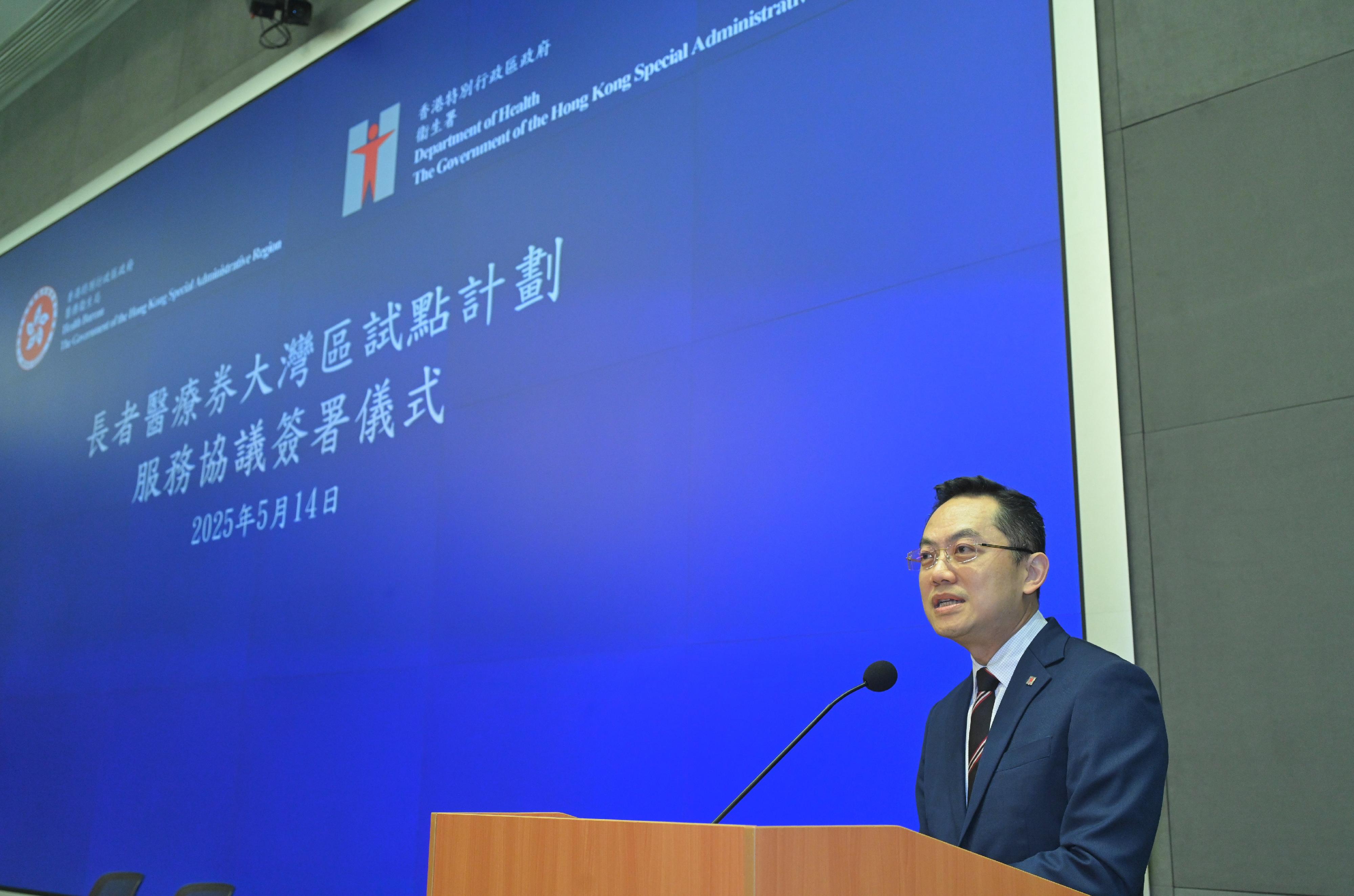
     The signing ceremony was held at the Central Government Offices. Addressing the ceremony, the Director of Health, Dr Ronald Lam, said, “On behalf of the HKSAR Government, I would like to express my gratitude to the Health Commission of Guangdong Province and the health authorities of relevant cities for their continuous support and assistance to the HKSAR Government in further extending the Pilot Scheme to cover all nine Mainland cities in the GBA. It will not only provide greater convenience and flexibility to the eligible Hong Kong elderly persons to safeguard and address their medical needs for a happy and healthy ageing life, but also further promote medical co-operation in the GBA to jointly build a ‘Healthy Bay Area’.”

     â€‹The 12 medical institutions newly included in the Pilot Scheme are:
 

GBA city Name of medical institution
Guangzhou Guangdong Provincial Hospital of Chinese Medicine
Guangdong Clifford Hospital
Shenzhen
(including the Qianhai Shenzhen-Hong Kong Modern Service Industry Co-operation Zone)
Shenzhen Hospital of Southern Medical University
Peking University Shenzhen Hospital
Zhuhai The Fifth Affiliated Hospital, Sun Yat-sen University
Zhuhai People’s Hospital
Foshan The First People’s Hospital of Foshan
The Eighth Affiliated Hospital of Southern Medical University
(Previously: Shunde Hospital of Southern Medical University)
Huizhou Huizhou Central People’s Hospital
Zhongshan Zhongshan Hospital of Traditional Chinese Medicine
Jiangmen Jiangmen Central Hospital
Zhaoqing The First People’s Hospital of Zhaoqing
 
     With the expansion of the number of pilot medical institutions from the current seven to 19 in total, together with the two existing service points operated by the University of Hong Kong-Shenzhen Hospital, eligible Hong Kong elderly persons will be able to use the Elderly Health Care Voucher (EHCV) for outpatient healthcare services at a total of 21 service points in the GBA.

     “The DH will continue to actively collaborate with the newly included pilot medical institutions to finalise the follow-up arrangements in accordance with the service agreements, such as personnel training, financial arrangements and system configuration. We will strive for the newly included pilot medical institutions to launch the relevant arrangements gradually by the fourth quarter of this year, so as to enable eligible Hong Kong elderly persons to use EHCVs at more service points as soon as possible, and to make better use of the primary healthcare services to improve their health and gain a greater sense of happiness. Co-operation on medical and health issues is an important component of the development of the GBA and is vital to promoting the well-being of the people in the region,” said Dr Lam.

     Launched by the Government in 2009, the Elderly Health Care Voucher Scheme (EHVS) currently subsidises eligible Hong Kong elderly persons aged 65 and above with an annual voucher amount of $2,000 (with the accumulation limit set at $8,000) for them to choose in their own community private primary healthcare services that best suit their health needs. The Government launched the Pilot Scheme last year to extend the coverage of EHCVs to suitable medical institutions in the GBA. As of September of the same year, the coverage of EHCVs has been extended to seven integrated medical/dental institutions located in Guangzhou, Zhongshan, Dongguan and Shenzhen.
      
     Upon the launch of the Pilot Scheme last year, as of end-March 2025, about 13 350 eligible elderly persons have used EHCVs to pay for the fees of outpatient healthcare services received at medical institutions under the Pilot Scheme, involving 24 645 voucher claim transactions and a total claimed amount at approximately $32.16 million. 
      
     In addition, the “Cross-boundary Health Record” and “Personal Folder” functions of the eHealth mobile application will also be applicable to the medical institutions under the Pilot Scheme, with a view to offering convenience for Hong Kong citizens to self-carry their electronic health records for cross-boundary uses.

     Members of the public may refer to the EHVS website (www.hcv.gov.hk) or call the hotline (2838 2311) for more information on the EHVS.
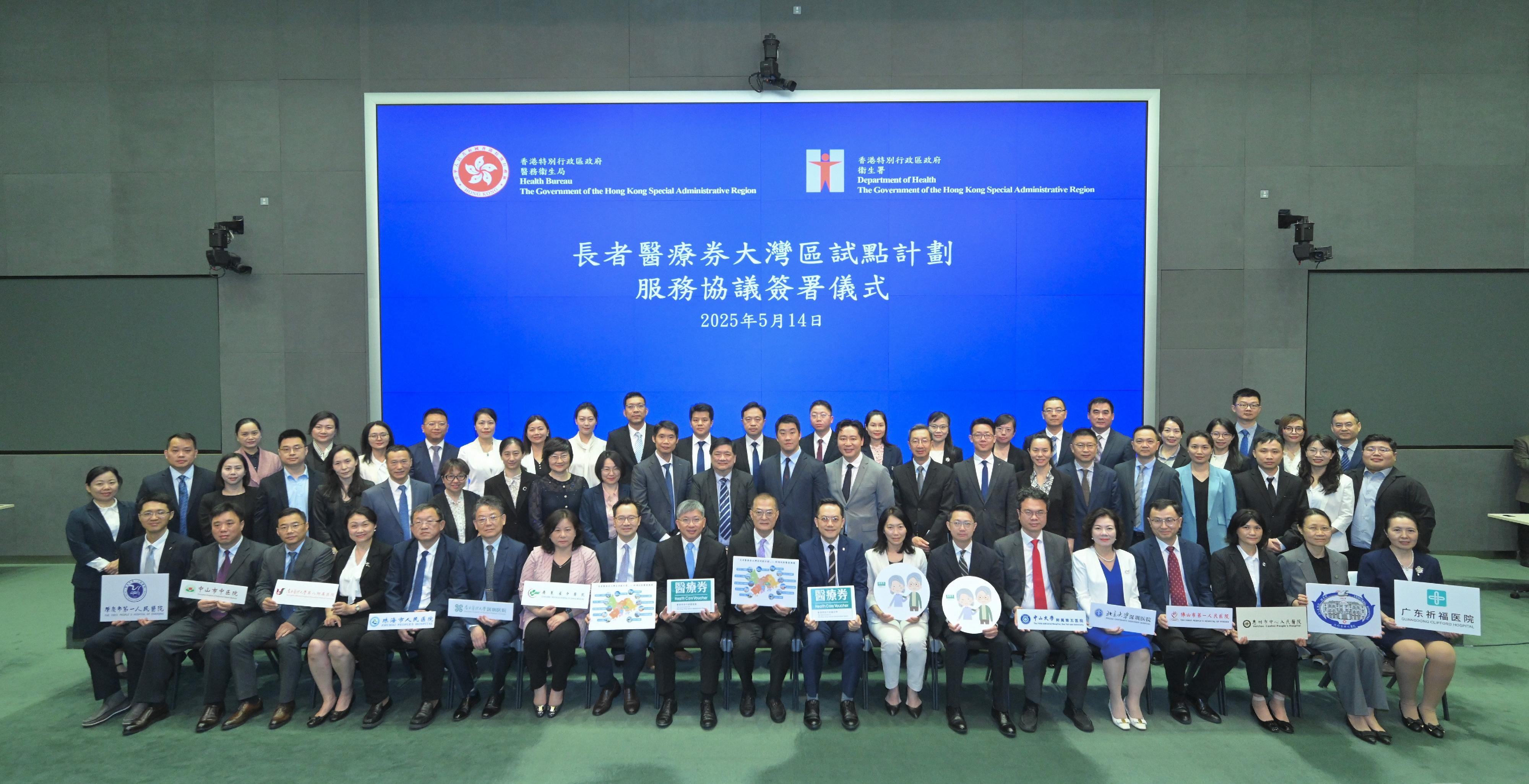
Photo  Photo  
read more

Analytical Accounts of Exchange Fund

The following is issued on behalf of the Hong Kong Monetary Authority:

     The Hong Kong Monetary Authority (HKMA) released today (May 14) the key analytical accounts of the Exchange Fund at the end of April 2025.

     Foreign assets, representing the external assets of the Exchange Fund, decreased during the month by HK$30.6 billion to HK$3,385.3 billion.

     The Monetary Base, comprising Certificates of Indebtedness, Government‑issued currency notes and coins in circulation, the balance of the banking system and Exchange Fund Bills and Notes issued, amounted to HK$1,982.8 billion.

     Claims on the private sector in Hong Kong amounted to HK$358.0 billion.

     Foreign liabilities amounted to HK$28.5 billion.

     The analytical accounts of the Exchange Fund are released in accordance with the International Monetary Fund’s Special Data Dissemination Standard (SDDS) and are referred to as the Analytical Accounts of the Central Bank under SDDS (Annex).

*********************************************************

     At present, four press releases relating to the Exchange Fund’s data are issued by the HKMA each month. Three of these releases are issued to disseminate monetary data in accordance with the International Monetary Fund’s SDDS. The fourth press release, on the Exchange Fund’s Abridged Balance Sheet and Currency Board Account, is made in accordance with the HKMA’s policy of maintaining a high level of transparency. For the month of May 2025, the scheduled dates for issuing the press releases are as follows:
 

May 8
(Issued)
SDDS International Reserves
(Hong Kong’s Latest Foreign Currency Reserve Assets Figures)
May 14 SDDS Analytical Accounts of the Central Bank
(Analytical Accounts of the Exchange Fund)
May 30 SDDS Template on International Reserves and
Foreign Currency Liquidity
May 30 Exchange Fund Abridged Balance Sheet and
Currency Board Account
read more

Applications for over 16 000 new niches at Wo Hop Shek, Cape Collinson-San Ha and Shek Mun Columbariums to open from May 19

     The Food and Environmental Hygiene Department (FEHD) announced today (May 14) that more than 16 000 new extendable niches at Wo Hop Shek Columbarium in Fanling, Cape Collinson-San Ha Columbarium in Eastern District and Shek Mun Columbarium in Sha Tin will be open for applications from May 19 to June 18.

     An FEHD spokesman said, “Under the new round of niche allocation exercise, the FEHD will allocate a total of 16 150 extendable niches, including 4 000 standard niches and 50 large niches at Wo Hop Shek Columbarium Phase VI, 6 000 standard niches and 50 large niches at Cape Collinson-San Ha Columbarium, as well as 6 000 standard niches and 50 large niches at Shek Mun Columbarium. The initial ash interment period for the allocated public niches is 20 years and can be extended at 10-year intervals thereafter. Upon expiry of the interment period, the persons concerned may continue to use the allocated niche provided that he/she extends the interment period and pays the prevailing prescribed fee.”

     Taking into account the views of residents in the vicinity, Shek Mun Columbarium and Garden of Remembrance will be a smoke-free columbarium project, i.e. the columbarium will not provide any facilities for burning joss sticks and offerings.  Burning of joss sticks and incense offerings will be banned completely within the columbarium area, including all floors and common areas. 

     Applicants should only file one application form to apply for either a large or standard niche for the same deceased person. When applying for a large niche, applicants have to fill in the particulars of at least three deceased people. For a standard niche, applicants must fill in at least one deceased person’s particulars.

     The spokesman said, “The FEHD will allocate niches by open drawing of lots and computer random balloting, which is expected to be held in the third quarter of this year, with the exact date to be announced later. After the drawing of lots and computer random balloting, the FEHD will inform applicants of the results of their applications and provide serial numbers of the designated niches allocated to successful applicants. The niches will not be chosen by applicants themselves.”

     Starting from May 19, members of the public can apply online or download the application form from the FEHD website (www.fehd.gov.hk) or the Platform for Cemeteries and Crematoria Services (app.fehd.gov.hk/ccsp). They can also obtain the application form in person from the Hong Kong or Kowloon Cemeteries and Crematoria Office, District Environmental Hygiene Offices of the FEHD, or Home Affairs Enquiry Centres of the Home Affairs Department, or by fax via hotline 2841 9111.  

     The spokesman advises applicants to submit their applications online to avoid any postal delay. Upon submission, applicants will promptly receive an acknowledgement receipt with a case number, thus facilitating the follow-up of the application in the future. If the applicant is the same person who has applied for cremation service for the deceased, it is more convenient to submit the application online by exempting the need to attach copies of the required documents and having the application online granted automatically. Successful applicants can pay the prescribed fees to complete the required niche allocation formalities through the “Single Portal with Token for Online Services and Payment” on the Platform for Cemeteries and Crematoria Services, without visiting the Public Niche Allocation Office in person. If not submitting their application online, applicants shall submit the completed application form together with copies of the required documents by fax (2333 1716), by email (apply_newniche@fehd.gov.hk), by post or in person to the Hong Kong or Kowloon Cemeteries and Crematoria Offices within the application period.

     The School of Life Event Series – Talk on After-death Arrangements will be held at 10.30am on May 24 (Saturday) at Yuen Chau Kok Community Hall (No. 35 Ngan Shing Street, Sha Tin, New Territories) to provide the public with more information on the coming public niche allocation, green burial facilities/services and regulation of private columbaria. The talk is free of charge and no prior registration is required. 

     For details of the arrangements of the niche allocation exercise and the information seminar, please visit the FEHD website (www.fehd.gov.hk). read more

LCQ9: Construction or redevelopment of small houses

     â€‹Following is a question by the Hon Chan Yuet-ming and a written reply by the Secretary for Development, Ms Bernadette Linn, in the Legislative Council today (May 14):
 
Question:
 
     Some residents of the New Territories have reflected that the pace of processing applications for the construction or redevelopment of small houses in the North District of the New Territories is slower compared to other districts. In this connection, will the Government inform this Council:
 
(1) given that in its reply to a question raised by a Member of this Council on the Estimates of Expenditure 2025-2026, the Government indicated that, as at the end of last year, there were as many as 3 686 small house applications under processing in the North District, with only 95 applications being approved last year, and that the Islands District and the Sai Kung District also faced a similar situation of a low number of approved applications and a high proportion of backlogged cases, whether the Government has put in place targeted improvement measures to enhance the efficiency of processing applications for the construction or redevelopment of small houses in these three districts; if so, of the details; if not, the reasons for that;
 
(2) given that according to government information, only around 100 staff members of the Lands Department are currently involved in processing of the small house applications, and that the respective numbers of small house applications and small house redevelopment applications under processing as at the end of last year were 10 513 and 1 664, how the Government will redeploy its manpower to expedite the processing of these backlogged cases; and
 
(3) given that the Government is implementing an arrangement that allows applications for a Certificate of Compliance (i.e. a Certificate of Compliance or “No Objection to Occupy”) by self-certification of compliance for New Territories Exempted Houses, and that this arrangement has been first implemented as a pilot scheme by the District Lands Office, Yuen Long, whether the Government will consider extending this pilot scheme to villages under all rural committees in the Northern Metropolis; if so, of the details; if not, the reasons for that?
 
Reply:
 
President,
 
     The New Territories Small House Policy has been implemented since December 1972 to allow an indigenous villager to apply for permission to, for once in his lifetime, erect a small house on a suitable site within his own village (Note 1). According to the performance pledge, the Lands Department (LandsD) will process (Note 2) not less than 2 300 small house applications per year. For redevelopment applications, as archaic leases and houses are generally involved, the cases are more complicated and considerable time may be spent on checking the records. LandsD in general completes the processing of around 600 redevelopment applications per year.
      
     The reply to various parts of the question raised by the Hon Chan is as follows:
 
(1) and (2) To streamline the processing of small house and redevelopment applications and speed up the approval process, LandsD enhanced the processing procedures in October 2021 and January 2023, including:
 
(i) To commence the procedures under various aspects in parallel, such as verification of land ownership and lot boundaries, and consultation with the relevant departments;
(ii) To simplify the procedures for handling objections;
(iii) To conduct face-to-face meetings with applicants for direct discussion;
(iv) To delegate the approval of relatively straightforward cases to officers under the District Lands Officer, and only non-straightforward cases will be submitted to the District Lands Officer or District Lands Office (DLO) Conference for approval;
(v) To enhance the supervision by LandsD on DLOs, including regular follow-up on the progress of processing applications.
 
     The implementation of the above procedures has achieved results in terms of expediting the processing of small house and redevelopment applications. The average number of small house applications processed by LandsD each year increased to more than 2 500 cases in the years from 2022 to 2024, surpassing the department’s performance pledge of 2 300 cases, while the number of redevelopment applications completed by LandsD per year also increased from around 480 in 2022 to around 650 in 2024.
      
     While it is mentioned in the question that the proportion of small house applications approved in 2024 as compared to the cases pending completion of processing in certain districts (including the North District, the Islands District, and the Sai Kung District) is relatively lower, we believe this is mainly due to the fact that applications involve relatively complex geographical features (such as remote locations or proximity to slopes, which require more rigorous technical assessments) and a larger amount of applications received in these respective districts.
 
     In fact, a total of about 360 small house applications were received on average per year from 2022 to 2024 in the North District, the Islands District and the Sai Kung District, with an average of over 800 cases (Note 3) processed each year; the number of applications pending completion of processing also decreased from a total of over 6 100 at the end of 2021 to about 5 270 by the end of March 2025, representing an overall decrease of approximately 14 per cent. As for redevelopment applications, a total of about 100 and 150 applications were received and processed respectively on average per year from 2022 to 2024 in the three districts. The number of applications pending completion of processing decreased from a total of over 840 at the end of 2021 to about 710 by the end of March 2025, representing an overall decrease of approximately 16 per cent.
      
     At present, around 100 staff of LandsD, mainly deployed to the eight DLOs in the New Territories, are involved in processing small house and redevelopment applications. As these staff are also responsible for other land administration duties within the DLOs, the above figure is provided for general reference only. LandsD will continue to review and enhance the procedures for processing small house and redevelopment applications (including the introduction of the self-certification of compliance scheme mentioned below) to expedite the approval. In addition, LandsD will strengthen the role of its headquarters in monitoring the processing and approval of applications in various districts and more flexibly allocate resources across districts to accelerate the processing of applications.
 
(3) After a DLO approves an application to build a small house, the applicant has to apply to LandsD for and obtain the Certificates of Exemption in accordance with the Building Ordinance (Application to the New Territories) Ordinance (Cap. 121) before commencing the construction works. After the works are completed, the applicant has to submit a construction completion report to the DLO. The DLO will issue a Certificate of Compliance (CoC) if, having conducted on-site checking, it is satisfied that the applicant has complied with all the relevant conditions, requirements and obligations.
 
     To expedite the development of small houses, LandsD implemented a self-certification scheme of CoCs on a pilot basis in January this year, which allows lot owners to appoint registered professionals at their own expense to prepare and submit a self-certification of compliance, thereby optimising the use of resources in the industry and expediting the approval process. LandsD will conduct detailed inspection checks on randomly selected cases. At the same time, LandsD will also streamline and expedite the approval process for applications submitted under the scheme, with the target of completing the processing of cases within 10 weeks upon receipt of all required documents, and within 14 weeks for cases subject to random checking.
 
     To ensure the orderly implementation of the self-certification scheme, a pilot scheme was first implemented at the DLO, Yuen Long. In view of the very positive response from Heung Yee Kuk and various stakeholders, and their wish for LandsD to extend the scheme to other DLOs as soon as possible, after taking into account factors such as the processing status of applications for CoCs by various DLOs, demand and manpower resources, LandsD plans to extend the coverage of the scheme to the DLO, North in the third quarter of this year. Details will be announced in due course. With the operational experience gained from the pilot scheme, LandsD will then decide whether and how to regularise the arrangement.
 
Note 1: The small house shall neither contain more than three storeys nor exceed a height of 8.23 metres (27 feet); and the roofed-over area shall not exceed 65.03 square metres (700 square feet).
 
Note 2: The number of small house applications processed by LandsD annually according to its performance pledge covers the applications which LandsD approves, rejects or classifies as non-straightforward cases for further processing in a particular year.
 
Note 3: As the processing of applications received during a year may not be completed within the same year, the applications processed in a particular year and its number may not correspond with the applications received in the same year and its number. read more

LCQ17: Prevention of skin diseases among elderly people in residential care homes

     Following is a question by the Hon Holden Chow and a written reply by the Secretary for Health, Professor Lo Chung-mau, in the Legislative Council today (May 14):

Question:

     It has been reported that there were outbreaks of scabies infection in residential care homes for the elderly (RCHEs) in the past, and the Centre for Health Protection has indicated that people with weaker immunity or the elderly are more susceptible to infection. Regarding the prevention of skin diseases among elderly people in RCHEs, will the Government inform this Council:

(1) whether it has compiled statistics on the number of cases of elderly people in RCHEs suffering from the following skin diseases across the territory in each of the past five years: (i) pruritus, (ii) scabies, and (iii) herpes zoster (set out in a table);

(2) of the measures the authorities have put in place to support RCHEs in enhancing their cleanliness and hygiene, so as to prevent as early as possible outbreaks of the skin diseases mentioned in (1) in RCHEs; and

(3) whether the authorities will consider introducing artificial intelligence tools to assist in the early detection and prevention of the infection and outbreak of the skin diseases mentioned in (1) in RCHEs?

Reply:

President,

     The Residential Care Homes for the Elderly (RCHEs) are regulated by the Residential Care Homes (Elderly Persons) Ordinance (Cap. 459), the Residential Care Homes (Elderly Persons) Regulation (Cap. 459A) and the Code of Practice for Residential Care Homes (Elderly Persons)/ the Code of Practice for Residential Care Homes (Nursing Homes) for the Elderly (the Code of Practice), oversighted by the Social Welfare Department (SWD). Infectious diseases can spread rapidly in communal living environments, and residents of the RCHEs are generally more susceptible and at high risk. As the health advisor of the Government, the Department of Health (DH) provides guidelines on infection control for the residential care homes (RCHs) to prevent infectious diseases, and collaborates with the SWD in promoting these guidelines to effectively prevent occurrence of infectious diseases in the RCHs and reduce the health risks and hazards posed by infectious diseases.

     The reply, in consultation with the Labour and Welfare Bureau and the DH, to the question raised by the Hon Holden Chow is as follows:

(1) Scabies is a skin disease caused by the mite Sarcoptes scabiei var. hominis, which is a parasite that burrows into, resides and reproduces in human skin. It affects people of all ages, but the elderly or people with weakened immunity are more susceptible. Scabies can spread rapidly in communal living environments; hence outbreaks of scabies have been reported from time to time in institutional settings (such as the RCHEs).

     Although scabies is not a statutorily notifiable infectious disease, it can spread rapidly in crowded environments and may lead to large-scale outbreaks. Therefore, the Centre for Health Protection (CHP) of the DH encourages institutional settings to report scabies outbreaks. This enables early treatment of patients and their contacts, as well as the implementation of appropriate infection control measures to reduce the number of affected individuals. From 2020 to April 30, 2025, the number of scabies outbreaks in the RCHEs as recorded by the CHP is as follows:
 

Year Number of Outbreaks
2020 41
2021 35
2022 27
2023 37
2024 40
2025 (up to April 30) 16

     Herpes Zoster (also known as Shingles) is an infectious disease that causes belt-like, painful skin rash with blisters. It is caused by varicella-zoster virus which is responsible for varicella (also known as Chickenpox). The virus resides in the nervous system of patients recovered from Chickenpox. Years later, in times of weakened immune system, such as due to ageing or stress, the virus may induce Herpes Zoster. A person with Herpes Zoster cannot pass this disease to others. However, individuals who have never had Chickenpox and have not received the Chickenpox vaccine may be infected and develop Chickenpox if they have contact with the sores of a Herpes Zoster patient.

     As regards pruritus (itchy skin), since there are many possible reasons (including causes relating to non-communicable diseases), confirmation of the cause(s) of the relevant symptom should be diagnosed by a medical practitioner.

     Herpes Zoster is not a statutorily notifiable infectious disease and neither is pruritis. Therefore, the CHP does not have statistics on Herpes Zoster and pruritis in the RCHEs. Nevertheless, the CHP also encourages the RCHEs to report suspected outbreaks of infectious diseases (such as respiratory tract infections, acute gastroenteritis and scabies) in their institutions to facilitate investigation and provision of appropriate control measures recommendation according to situation.

(2) and (3) The Guidelines on Prevention of Communicable Diseases in Residential Care Homes for the Elderly published by the CHP provides infection control advice for the RCHEs to prevent communicable diseases, including those transmitted by contact such as scabies, and measures to prevent skin or subcutaneous tissue infections. Specific measures include taking contact transmission-based precaution measures, such as wearing gloves when contacting patients; arranging early medical consultation for the patients; special disinfection of bedding and clothing used by scabies patients; and isolating infected residents until completion of treatment. The Guidelines will be updated in a timely manner having regard to prevailing situation and scientific evidence.

     The Code of Practice issued by the SWD sets out detailed requirements and guidelines on infection control, including requesting the RCHEs to assist residents in maintaining good personal hygiene and to keep the RCHE environment clean, as well as to prevent infectious diseases with reference to the Guidelines on Prevention of Communicable Diseases in Residential Care Homes for the Elderly issued by the CHP. The home manager of an RCHE shall appoint either a nurse or a health worker as an Infection Control Officer to handle matters related to infection control and the prevention of infectious diseases in the RCHE.

     The Licensing Office of Residential Care Homes for the Elderly of the SWD, in collaboration with the DH, also regularly organises training courses, thematic talks and workshops for RCHE staff on infection control measures and latest prevention and control information. On-site observations are also conducted at the RCHEs with advice rendered to enhance their infection control capabilities and skills.

     In addition, the Government makes use of technology to help monitor and follow up on infection-related situations in RCHs. For instance, the SWD launched the “e-platform for infection control in RCHs” in June 2024 to facilitate RCHs’ one-stop submission of various information concerning infection prevention and control. This enables the DH and the SWD to keep abreast of the latest situation of infectious disease outbreak cases and infection control in RCHs in a timely and accurate manner for continuous monitoring and appropriate follow-up actions whilst assessing and arranging timely vaccination for RCH residents in prevention of infectious diseases. The Government will continue to monitor the development in relevant technology (including Artificial Intelligence tools). read more