Tag Archives: China

image_pdfimage_print

LCQ21: Promoting student mental health

     Following is a question by the Hon Elizabeth Quat and a written reply by the Secretary for Education, Dr Choi Yuk-lin, in the Legislative Council today (May 21):
 
Question:
 
     It has been reported that according to a survey, more than half of the students surveyed consider that the mental health of young people in Hong Kong is unsatisfactory, and about 14 per cent even consider the situation very unsatisfactory. In addition, between 2013 and 2023, the number of suicide deaths among students in Hong Kong increased from about 10 to 32 per year. Regarding the promotion of students’ mental health, will the Government inform this Council:
 
(1) as a study has pointed out that 80 per cent of the students who experienced psychological crises had no record of attending psychiatric specialist services, of the authorities’ plans in place to strengthen the training of teachers and school personnel, so as to increase their sensitivity to identifying students in need of support at an early stage;
 
(2) as some members of the education sector have pointed out that quite a number of students do not have a proper understanding of death, and that work related to life and death education is inadequate, of the authorities’ plans in place to strengthen life education in schools, so as to enable students to treasure life and further cultivate positive values and qualities;
 
(3) whether it will study the establishment of additional School Life Co-ordinators and two task forces on “suicide prevention” and “bullying prevention” in schools, as well as the implementation of the “one counsellor for each school” measure to complement the work of existing school social workers by identifying high-risk students at an early stage and intervening immediately to provide comprehensive support;
 
(4) as a survey has pointed out that most students do not take the initiative to seek help from others when faced with negative emotions and difficulties, of the authorities’ plans in place to step up the promotion of a “help-seeking culture”, reduce the labelling of help-seekers, and encourage students to take the initiative to care for others and help one another;
 
(5) given that the Quality Education Fund Thematic Network on “Promoting Wellness in School” aims to help participating schools (including secondary schools, primary schools and nursery schools) develop into schools where the well-being of students is the top priority, and incorporate mental wellbeing education into the school curriculum, so as to nurture resilience of students, whether the authorities have assessed the effectiveness of such programme, and whether they will study extending similar programmes to all schools in the territory;
 
(6) as a study has pointed out that more than half of the students with emotional problems come from single-parent or divorced families, whether the authorities will conduct a study on strengthening support for such students in schools and establishing a mechanism for community collaboration, so as to prevent the marginalisation of students with emotional problems; and
 
(7) as there are views pointing out that the pressure of education progression is one of the major factors affecting students’ mental health, whether the authorities will study reforming the vocational and professional education and training system and promoting the relevant programmes, so as to provide students with diversified pathways, thereby alleviating their pressure of education progression; if so, of the details; if not, the reasons for that?
 
Reply:
 
President,
 
     The Education Bureau (EDB) attaches great importance to the mental health of students, and has been proactively providing support for schools in adopting the Whole School Approach (WSA) at three levels, namely Universal, Selective and Indicated, to promote student mental health and enhance support for students with mental health needs (including those with suicidal risks). The EDB also collaborates with other bureaux/departments and different stakeholders to take care of students with mental health needs and provide them with support in different aspects through cross-departmental, multi-disciplinary and cross-sector collaboration. In consultation with the Social Welfare Department (SWD), our reply to the question raised by the Hon Elizabeth Quat is as follows:
 
(1) The EDB has been continuously enhancing training to strengthen school personnel’s knowledge and skills in early identification and support for students with mental health needs. The core elements of the Guiding Framework for Teacher Education Programmes formulated since 2023 have included supporting students with various learning and developmental needs. The programmes have also enriched the content relating to special education, which includes knowledge and skills for supporting students’ mental health. Regarding in-service teacher training, the EDB provides teachers with structured programmes, i.e. basic, advanced and thematic courses to enhance teachers’ professional capacity in catering for students with special educational needs, including those with mental health needs. One of the thematic courses focuses on delving deeply into the characteristics of students with mental illness, practical strategies and skills, as well as effective support measures and practices. Moreover, the EDB also organises thematic teacher training for school personnel from time to time, and provides gatekeeper training for teachers on a regular basis so as to strengthen their ability to identify and support students with mental health needs.

     In addition, the EDB has launched parent gatekeeper training and the Peer Power – Student Gatekeeper Training Programme to enhance parents and students’ knowledge, confidence and practical skills as gatekeepers, thereby assisting in early identification and support for students with emotional distress, enabling them to seek help when encountering difficulties. Schools also organise various mental health promotion activities to enhance all teachers and students’ understanding and awareness of mental health.
 
(2) Life education (including life and death education) is an indispensable part of values education in schools. The Values Education Curriculum Framework (Pilot Version) published in 2021 has identified “enhancing life education” as one of the key emphases of the curriculum. It sets out the expected learning outcomes related to life education at different key learning stages, including understanding of the life cycle – birth, ageing, illness and death. The EDB has all along supported schools in integrating the learning context and content of life education into various subjects and life-wide learning activities through the approaches of organic integration, natural connection, diversified strategies, mutual co-ordination, learning within and beyond the classroom and whole-school participation. These help students cultivate proper values, understand the finiteness of life and learn to face challenges in life with a positive and optimistic attitude, as well as perseverance from an early age. Many schools have developed school-based life education curriculum and organised various thematic experiential learning activities. For instance, rearing small animals on campus, or, where appropriate, arranging for students to visit hospitals or to learn about the funeral industry. These activities help students understand the nature, values and meaning of life from the cognitive and affective perspectives with first-hand experiences, thereby learning to respect and cherish their own lives and those of others. Through these activities, students may learn to face loss and separation and handle the emotions that arise from such experiences.

     The EDB seeks to understand the implementation of life education in schools and identify their needs through means such as school visits and inspections. Appropriate ongoing support is rendered to schools by providing them with learning and teaching resources, and organising professional development programmes for teachers, aiming to enhance students’ understanding of the life journey and help them develop an optimistic attitude towards cherishing life so as to lead a meaningful and healthy life.
 
(3) The EDB cultivates a healthy, harmonious and safe school environment through the implementation of the WSA, multi-disciplinary collaboration (including teachers, student guidance personnel (SGP), school social workers and school-based educational psychologists) and home-school co-operation. Currently, public sector primary schools and secondary schools implement the measures of “one school social worker for each school” and “two school social workers for each school” respectively. According to students’ needs, schools may also flexibly deploy grants provided by the Government or pool together other school resources to employ appropriate SGP outside the regular staff establishment (such as employing teachers or professionals with qualifications in guidance or other equivalent qualifications) to provide additional guidance services or procure related services from organisations. 
 
     Prevention of school bullying and student suicide are both important components in cultivating a healthy, harmonious and safe school environment. The EDB has all along been adopting a “zero tolerance” policy, requiring all public sector schools to implement proactive measures and adopt the WSA in formulating and implementing anti-bullying policies, as well as handle and follow up cases in accordance with the School Administration Guide and EDB circulars. In addition, the EDB adopts a multi-pronged approach, including school curriculum, teaching materials, diversified activities, teacher training and sharing of successful experiences, to assist schools in implementing their anti-bullying measures more effectively. 
 
     Regarding the prevention of student suicide, the EDB has all along been encouraging schools to adopt the WSA in taking care of students’ mental health at three levels, namely Universal, Selective and Indicated. In addition, the Government has implemented the Three-tier School-based Emergency Mechanism in all secondary schools in Hong Kong since December 2023. By working together with schools, parents and other stakeholders in the community as well as pooling together the schools’ multi-disciplinary teams, the off-campus support network organised by the SWD and medical services provided by the Hospital Authority, relevant support measures are enhanced with a view to preventing suicide more effectively. In addition, the EDB has been implementing the 4Rs Mental Health Charter” (the 4Rs Charter) to promote mental health in schools in a more comprehensive and systematic manner since the 2024/25 school year. The 4Rs Charter encourages schools to take concrete actions to implement measures and organise activities to help students develop healthy habits and positive interpersonal relationships, strengthen their resilience, thereby improving their physical and psychological well-being.
 
     As the WSA and multi-disciplinary collaboration can provide comprehensive student counselling and support services, and each school has its own multi-disciplinary team, together with the establishment of social workers, off-campus support, and provision of grants, the existing arrangement enables schools to provide professional services on the one hand, and also provides schools with sufficient resources and flexibility to hire or procure additional guidance services. Thus, the EDB has no plans to create posts of “school life co-ordinators”, “suicide prevention” and “bullying prevention” task forces, or implement the “one school counsellor for each school” measure in schools.
 
(4) Starting from the 2023/24 school year, the EDB has launched the Mental Health Literacy Resource Packages suitable for students at different key learning stages. Two important themes in the resource packages are reducing the stigmas attached to people with mental illness and encouraging peers to seek help when they have mental health needs. With reference to the resource packages, schools and parents can promote mental health literacy to students in a systematic manner, guiding students to learn about help-seeking knowledge, attitude and methods, which includes getting to know the resources available in school, community and on the internet. In addition, the EDB has collaborated with the SWD to arrange for non-governmental organisations to visit secondary schools in need and organise mental health activities since February 2024, so as to enhance students’ awareness of mental health and help-seeking.
 
(5) The Quality Education Fund (QEF) has all along been establishing professional sharing platforms for schools to share their good practices with a view to promoting the professional exchange amongst teachers, by implementing the QEF Thematic Networks (QTNs). The QTN on “Promoting Wellness in School” was one of them. Its aim was to develop and strengthen students’ resilience and promote their mental wellness. According to the evaluation data collected from surveys, observation forms, teacher and student focus group interviews, etc, the project had been well received by the participating schools. The QEF will continue to implement a variety of QTNs to dovetail with the latest curriculum development and the needs of students.
 
(6) The Government attaches great importance to supporting children, young people and their families (including single-parent/separated families) and adopts an integrated approach to provide those in need with prevention, early identification, as well as timely intervention and rehabilitation services to enhance their mental health. Relevant bureaux/departments (including the EDB and the SWD), non-governmental organisations and other community stakeholders provide support services for children and young people with mental health needs through multi-disciplinary and cross-sector collaboration. School social workers will also collaborate closely with relevant service units in the community, such as Integrated Children and Youth Services Centres and Integrated Family Service Centres and refer students and their families to appropriate support services having regard to their needs.
 
(7) The Government has been promoting the development of Vocational and Professional Education and Training (VPET) through the strategy of fostering industry‑institution collaboration and diversified development under a multi-pronged approach to provide a high-quality and diversified pathway with multiple entry and exit points to young people. Amongst others, to enhance the VPET articulation pathway and strengthen the status of VPET at degree level, the Government has been promoting the establishment of universities of applied sciences (UAS), to provide applied degree programmes with an applied focus blending theory and practice, and closely collaborate with professional skills sectors to incorporate substantial internship and work-based learning opportunities in other degree programmes to help students develop applied skills. The Government announced in March and November 2024, respectively, that Hong Kong Metropolitan University and Saint Francis University had become the first two UAS in Hong Kong after having gone through stringent procedures and reviews. The Government has also allocated $100 million to support UAS and VPET institutions to establish the Alliance of UAS in November 2024 to embark on joint promotion with the supporting organisations and stakeholders, in order to elevate the recognition of VPET and promote its development. read more

Inspection of aquatic products imported from Japan

     In response to the Japanese Government’s plan to discharge nuclear-contaminated water at the Fukushima Nuclear Power Station, the Director of Food and Environmental Hygiene issued a Food Safety Order which prohibits all aquatic products, sea salt and seaweeds originating from the 10 metropolis/prefectures, namely Tokyo, Fukushima, Ibaraki, Miyagi, Chiba, Gunma, Tochigi, Niigata, Nagano and Saitama, from being imported into and supplied in Hong Kong.
 
     For other Japanese aquatic products, sea salt and seaweeds that are not prohibited from being imported into Hong Kong, the Centre for Food Safety (CFS) of the Food and Environmental Hygiene Department is conducting comprehensive radiological tests to verify that the radiation levels of these products do not exceed the guideline levels before they are allowed to be supplied in the market.
 
     As the discharge of nuclear-contaminated water is unprecedented and will continue for 30 years or more, the Government will closely monitor the situation and continue to implement the enhanced testing arrangements. Should anomalies be detected, the Government does not preclude further tightening the scope of the import ban.
 
     From noon on May 20 to noon today (May 21), the CFS conducted tests on the radiological levels of 355 food samples imported from Japan, which were of the “aquatic and related products, seaweeds and sea salt” category. No sample was found to have exceeded the safety limit. Details can be found on the CFS’s thematic website titled “Control Measures on Foods Imported from Japan” (www.cfs.gov.hk/english/programme/programme_rafs/programme_rafs_fc_01_30_Nuclear_Event_and_Food_Safety.html).

     In parallel, the Agriculture, Fisheries and Conservation Department (AFCD) has also tested 50 samples of local catch for radiological levels. All the samples passed the tests. Details can be found on the AFCD’s website (www.afcd.gov.hk/english/fisheries/Radiological_testing/Radiological_Test.html).
 
     The Hong Kong Observatory (HKO) has also enhanced the environmental monitoring of the local waters. No anomaly has been detected so far. For details, please refer to the HKO’s website
(www.hko.gov.hk/en/radiation/monitoring/seawater.html).
 
     From August 24, 2023, to noon today, the CFS and the AFCD have conducted tests on the radiological levels of 137 656 samples of food imported from Japan (including 90 630 samples of aquatic and related products, seaweeds and sea salt) and 31 636 samples of local catch respectively. All the samples passed the tests. read more

LCQ8: Dental care services for elderly

     Following is a question by the Hon Joephy Chan and a written reply by the Acting Secretary for Health, Dr Libby Lee, in the Legislative Council today (May 21):

Question:

     In recent years, I have received from time to time requests for assistance regarding the failure of effective interface and co-ordination among different dental support services for the elderly, including cases where some elderly persons, after participating in the Outreach Dental Care Programme for the Elderly (Outreach Programme) under the Department of Health (DH) and receiving free oral check-up, were not being treated on site and only referred to other services due to the nature of their dental problems; but when they subsequently applied for the Elderly Dental Assistance Programme of the Community Care Fund (CCF Programme) for treatments such as the fitting of dentures, they were rejected due to a restriction in the eligibility criteria (i.e. applicants should not have benefited from the Outreach Programme), thus leaving them in the predicament of “no treatment after check-ups”. In this connection, will the Government inform this Council:

(1) as there are views that the current situation where elderly persons who have participated in the Outreach Programme but not being treated on site were unable to apply for the CCF Programme has prejudiced their rights and interests, and the gradual enhancement of services provided under the CCF Programme last year has yet to deal with the aforesaid situation, whether the Government will introduce further enhancement measures to put in place a relevant waiver mechanism and approve applications of special cases in the light of the actual situation; if so, of the details; if not, the reasons for that;

(2) of the existing monitoring mechanism for the Outreach Programme, including how the Government ensures that the service quality and follow-up workflow can effectively respond to the actual needs of elderly persons, and whether it has inspected the service records of the outreach teams on a regular basis (e.g. the interface and follow-up of referrals after door-to-door inspection, the level of satisfaction and rate of complaint);

(3) whether at present, elderly persons will be clearly informed by the relevant government departments that they will not be able to apply for CCF when they participate in the Outreach Programme and be required to sign a written statement to confirm their acknowledgement; if not, whether additional measures will be put in place to ensure that elderly persons participating in the Outreach Programme are well-informed, so as to avoid misunderstanding;

(4) whether, in the long run, the Government will promote cross-departmental collaboration among the DH, Social Welfare Department and CCF, so as to consolidate resources for outreach check-ups and subsidised treatments, e.g. establishing one-stop services from check-up, referral to treatment, so as to achieve seamless interface and avoid repetitive examination, thereby enhancing policy efficiency and users’ experience; and

(5) as some elderly persons have relayed that while the Government had emphasised the wider scope of treatments under the Outreach Programme than the CCF Programme, the treatment resources under the Outreach Programme might not be able to meet the demand for on-site treatment in a timely manner, whether the Government will allocate resources to expand the scope of treatment services provided by the outreach teams and provide additional on-site treatment items?

Reply:

President,

     In response to the Hon Joephy Chan’s question, the Bureau’s consolidated reply is as follows:

     Elderly persons residing in residential care homes for the elderly (RCHEs) or receiving services at day care centres for the elderly (DEs) are generally frail or have cognitive deficiencies and therefore have difficulties in accessing conventional dental care services. The Government implemented a three-year pilot project in 2011 to provide free outreach dental services to these elderly persons. The pilot project was regularised in 2014 and named the Outreach Dental Care Programme for the Elderly (ODCP). The ODCP provides free annual oral care services for elderly persons of RCHEs, DEs and similar facilities in the 18 districts of Hong Kong through outreach dental teams set up by non-governmental organisations (NGOs) engaged by the Department of Health (DH). It must be pointed out that these services are not limited to oral check-ups but its scope includes the following examinations and treatment services:

(1) oral check-ups; 

(2) scaling, personalised oral care plans for the elderly persons and provision of medication for dental pain relief (if necessary); 

(3) free and comprehensive dental treatments will be provided to the elderly persons on-site at RCHEs/DEs if further curative treatments are necessary. The treatments include tooth fillings, tooth extractions, X-ray examinations, denture, removal of dental bridges or crowns, root canal treatment, and the provision of dental bridges or crowns; 

(4) if further curative treatments cannot be provided on-site at the RCHEs/DEs due to practical constraints (such as limitations in venue space of the RCHEs or DEs, or unable to meet infection control requirements), the outreach dental team will arrange the elderly persons to receive the required treatment at NGOs’ dental clinics; and 

(5) provision of oral care training to caregivers of RCHEs/DEs, and promotion of the oral hygiene information to the elderly persons, their family members and caregivers. 

     Besides, for treatments that could not be carried out on-site, the Government will subsidise the NGOs to provide transport and escort services to facilitate the elderly persons to receive treatments at NGOs’ dental clinics. In case the oral health conditions of an elderly person change and require further dental treatments after oral check-up, arrangements can be made with the respective NGO through liaison by RCHE/DE.

     Regarding the monitoring of the ODCP, the DH reviews the implementation and effectiveness of the ODCP through surveys, which include verification of eligibility of service users, satisfaction level of services provided by the NGOs, and suggestions on improvements of the ODCP services. The results of the past interview surveys indicated that the RCHEs/DEs interviewed are satisfied with the ODCP. In addition, the DH also arranges on-site inspections by professionals (including dentists) and examines the oral conditions of elderly persons randomly selected to ensure that the services provided by the NGOs meet the standard.

     The Government has increased the resources and been promoting and encouraging RCHEs/DEs to participate in the ODCP. In 2024-25 service year, nearly 90 per cent of RCHEs/DEs participated in the ODCP. From 2024-25, the number of NGOs participating in the ODCP has increased to 11 and a total of 25 outreach dental teams have been set up, and over 50 000 elderly persons residing in RCHEs or receiving services at DEs received the aforementioned dental care services within the year.

     The ODCP and the Elderly Dental Assistance Programme (EDAP) funded by the Community Care Fund (CCF) are two completely different programmes designed for different target groups. The ODCP is a programme designed to provide comprehensive examination and treatment services to frail elderly persons residing in RCHEs or receiving services at DEs who have difficulty in accessing conventional dental care services. The EDAP with funding from the CCF, mainly provided free removable dentures and related dental treatments to low-income elderly persons when launched in 2012. It was subsequently enhanced in the third quarter of 2024 to allow eligible elderly persons to receive dental services stipulated under the EDAP, i.e. dental examinations, scaling and polishing, tooth extractions, tooth fillings, etc, even they are unfit for denture fitting. 

     The objective of establishing the CCF is to provide assistance in a more focused manner to people facing financial difficulties, in particular those who fall outside the social safety net or those who are unable to benefit from other assistance programmes. In view of the objective of establishing the CCF and along with the principle of effective use of public resources, since the EDAP was launched in 2012, the beneficiaries have all along excluded the elderly persons who have benefited from the ODCP or those currently receiving Comprehensive Social Security Assistance (CSSA) under the Social Welfare Department. These requirements have been clearly stated in the EDAP promotional pamphlets and the application forms.

     It must be pointed out that aside from targeting different groups, the EDAP limits on the number of subsidised services and the services provided are not continuous in nature. Under the EDAP, eligible elderly persons can receive services at a maximum of two times. To receive the service for the second time, the elderly persons must have reached the age of 75 and have not received the dental service under the EDAP within the past five years. In contrast, the ODCP is a regularised programme with a broader treatment scope, which includes all service items under the EDAP, and eligible elderly persons can receive ODCP services annually. As such, elderly persons who received ODCP services will not be referred to the EDAP and the issue of “no treatment after check-up” as raised in the question does not exist.

     To safeguard the oral health of the public, the Chief Executive announced in the 2022 Policy Address to conduct a comprehensive review of the dental services provided or subsidised by the Government. The Working Group on Oral Health and Dental Care (Working Group) was set up in end-2022. In response to the final report of the Working Group published in end-2024, the Government has adopted the oral health policies that:

(1) Oral health is an integral component of general health. The Government’s oral health policies aim to enable all Hong Kong citizens to improve their oral hygiene and lifestyles conducive to both oral and overall health levels;

(2) Through publicity, education, promotion and development of primary oral health and dental care, the Government facilitates all Hong Kong citizens to manage their oral health, and put prevention, early identification and timely intervention of dental diseases into action with the objective of tooth retention; and

(3) The Government provides appropriate oral health and dental care services targeting underprivileged groups with financial difficulties and special needs, ensuring these groups have access to essential dental care services.

     Under the Government’s Oral Health Action Plan, the ODCP, the EDAP together with the dental grants under the current CSSA Scheme all play a role in focusing the provision of dental care services to underprivileged groups who have difficulties in accessing dental services. To further strengthen the relevant services, in addition to the continuation of the provision of the free emergency dental treatment to the general public through allocation of a fraction of the existing service capacity of the DH’s government dental clinics (generally referred to as General Public sessions), the DH will implement the Community Dental Support Programme on May 26 this year to enhance dental services to the underprivileged groups including the elderly persons with financial hardship, and it will supplant the EDAP within 2026. With the major premise of optimising the use of public resources, the Government will consider various factors in providing dental services to different underprivileged groups as appropriate and to tie in with the oral health policies. read more

Legislative amendments on air transport of dangerous goods to be gazetted on Friday

     Legislative amendments which seek to implement the latest requirements of the International Civil Aviation Organization (ICAO) for the safe transport of dangerous goods (DG) by air will be gazetted on Friday (May 23) for tabling in the Legislative Council on May 28, and targeted for commencement on July 18, 2025.

     The Air Navigation (Hong Kong) Order 1995 (Amendment of Schedule 16) Order 2025 and the Dangerous Goods (Consignment by Air) (Safety) Regulations (Amendment of Schedule) Order 2025 serve to incorporate the ICAO’s latest requirements in the local legislation. Such requirements are set out in a new edition (i.e. the 2025-2026 edition) of the ICAO’s Technical Instructions for the Safe Transport of Dangerous Goods by Air (Technical Instructions).

     Some of the updated provisions introduced by the new edition of the Technical Instructions include:

(a) A requirement to indicate on the DG transport document the dimensions of packages containing certain radioactive materials has been added to facilitate cargo loading procedures;

(b) A note specifying DG allowed for carriage by passengers has been relocated to better reflect its applicability; and

(c) Some changes to the technical requirements on the classification, packing, marking and labelling of certain kinds of DG for carriage by air have been incorporated.

     “The aviation industry is supportive to the legislative amendments which aim to enhance the safe carriage of DG by air,” a spokesperson for the Transport and Logistics Bureau said.

     DG, in the context of air transport, include explosives, compressed gas, flammable liquids, flammable solids, oxidising substances, toxic substances, infectious substances, radioactive materials and corrosives. read more

HKMoA welcomes its 5 000 000th visitor (with photos)

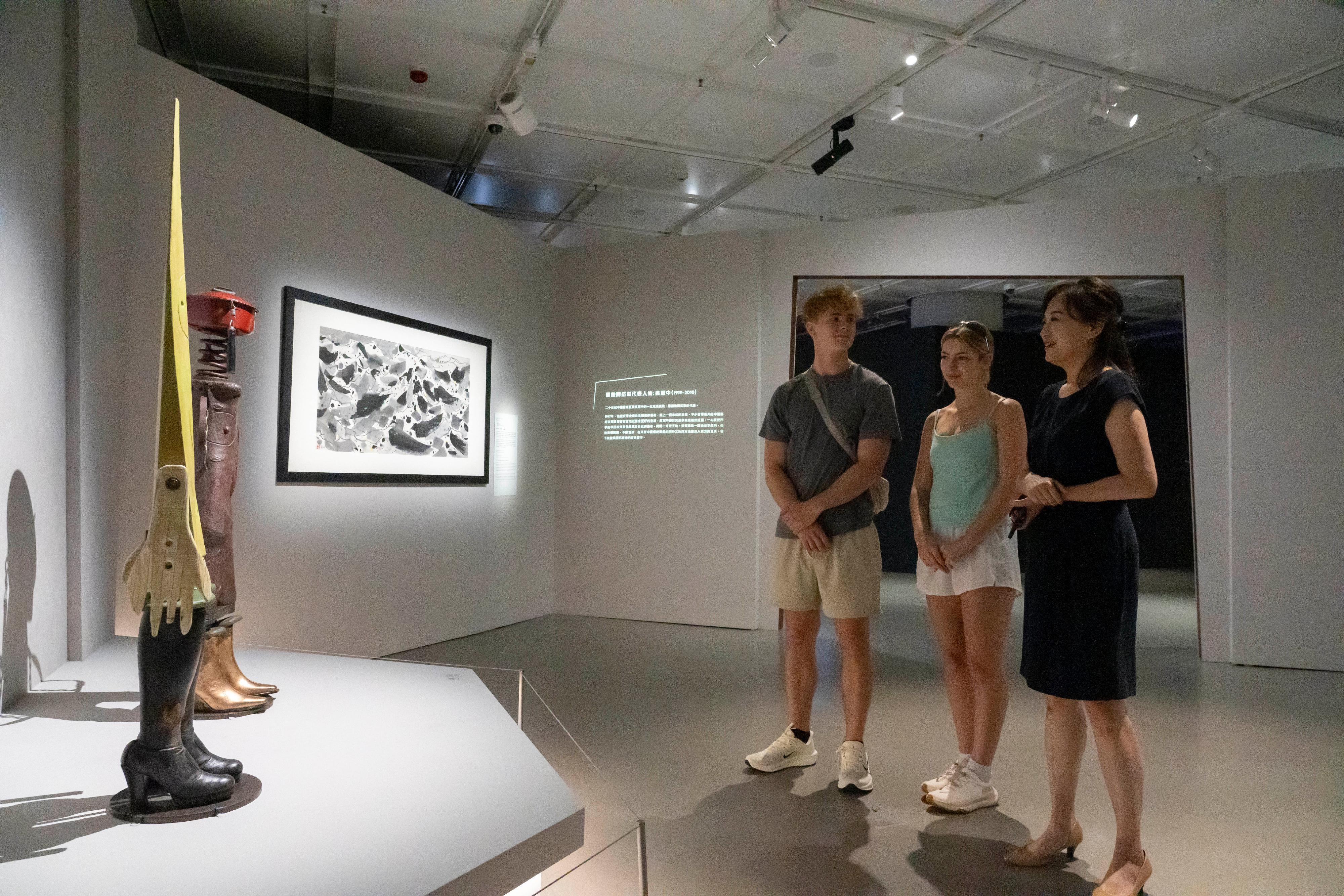
     The Hong Kong Museum of Art (HKMoA) of the Leisure and Cultural Services Department has been well received by the local public and tourists. Today (May 21), the museum welcomed its 5 000 000th visitor since its expansion and reopening in 2019.
 
     To mark this extraordinary moment, the HKMoA arranged a special souvenir – a porcelain plate designed from the museum’s collection – which was presented by the Director of Leisure and Cultural Services, Ms Manda Chan, and an exclusive guided tour by the Museum Director of the HKMoA, Dr Maria Mok, for the 5 000 000th visitor. The visitor is Anabelle Champagne, a university student and tourist from Canada. It is the first time she and her friend have visited the HKMoA. She is interested in traditional art and she thinks the HKMoA has rich and diverse collections.
 
     With its modern architectural features and rich collections, the HKMoA has become one of Hong Kong’s cultural landmarks and a popular tourist attraction. It has been listed three times among the 100 most popular art museums in the world by the international art publication “The Art Newspaper” in 2022, 2024 and 2025. In 2024, the HKMoA recorded a total of over 1.76 million visitors, with an increase of over 40 per cent compared to 2023. Local visitors, as well as visitors from Mainland China and overseas, each accounted for one-third of the total audience. Among them, one-third had visited the museum more than once, reflecting the HKMoA’s strong appeal as a destination worth revisiting. More than 60 per cent were young visitors under the age of 30.
 
     Established in 1962, the HKMoA is the first public art museum in Hong Kong and the custodian of an art collection of over 19 500 sets of items, representing the unique cultural legacy of Hong Kong’s connections across the globe. By curating a wide world of contrasts, from old to new, Chinese to Western, local to international, with a Hong Kong viewpoint, the museum aspires to refreshing ways of looking at tradition and making art relevant to everyone, creating new experiences and understanding.
 
     The HKMoA will continue to spare no effort in fulfilling its mission, serving as a bridge between Chinese and Western cultures to facilitate Hong Kong’s fulfilment of its positioning as an East-meets-West centre for international cultural exchanges under the National 14th Five-Year Plan. For details of the HKMoA’s new exhibitions, please visit the museum’s websites (hk.art.museum/en/web/ma/home.html), Instagram page (www.instagram.com/hkmoa) and Facebook page (www.facebook.com/hkmoa).

Photo  Photo  
read more