Tag Archives: China

image_pdfimage_print

Greater Bay Area International Clinical Trial Institute signs MOU on clinical trial collaboration with HKU and CUHK medical faculties (with photos)

     The Greater Bay Area International Clinical Trial Institute (GBAICTI) today (May 21) held a collaboration meeting with the LKS Faculty of Medicine of the University of Hong Kong (HKUMed) and the Faculty of Medicine of the Chinese University of Hong Kong (CU Medicine) to have an in-depth exchange on advancing clinical trial collaboration. The three parties signed a Memorandum of Understanding (MOU) on clinical trial collaboration after the meeting, marking a significant milestone in the development of clinical research in Hong Kong.

     During the meeting, the GBAICTI Chief Executive Officer, Professor Bernard Cheung, had in-depth discussions with representatives of the two medical faculties on clinical trial collaboration. The two medical faculties are expected to launch more than 70 clinical trial projects in the coming year, covering innovative therapies in key areas including cancer, liver diseases, cardiovascular diseases, endocrine diseases, and rare diseases. The GBAICTI will provide comprehensive support, particularly in aspects such as co-ordinating multicentre cross-boundary clinical trials, connecting healthcare institutions across the Guangdong-Hong Kong-Macao Greater Bay Area (GBA), and streamlining processes, to facilitate efficient implementation and execution of cross-boundary clinical trials. Moreover, the three parties will also strengthen talent training co-operation to further enhance Hong Kong’s overall capability in clinical research.

     After the meeting, Deputy Secretary for Health Ms Elaine Mak witnessed the signing of the MOU on clinical trial collaboration by representatives of the three parties. The MOU aims to establish a long-term, stable, and strategic partnership among the three parties, with a view to enabling the GBAICTI to better integrate Hong Kong’s clinical trial resources and further enhance the city’s international competitiveness in biomedical innovation, positioning Hong Kong as a clinical trial hub connecting the world and the Mainland.

     Hong Kong possesses the advantages of internationally recognised clinical research institutions, professional teams, international experience and systems, extensive and standardised medical datasets, and more. Among these, both HKUMed and CU Medicine operate dedicated centres to co-ordinate clinical trial work, with extensive international collaboration experience, robust clinical research management systems, and comprehensive facilities and technology platforms to support clinical trials across different areas and development stages, playing a vital role in advancing the research and development (R&D) of novel drugs and translational medicine. The GBAICTI will continue to deepen co-operation with other healthcare institutions, including the two medical faculties, to give full play to its function as a co-ordinating platform to consolidate clinical research resources, with a view to enhancing scientific research collaboration and accelerating the R&D and translation of innovative drugs, medical devices and technologies, thereby enabling R&D results to benefit patients and the public more rapidly, while promoting high-quality development of the life and health industry.

     Established and wholly owned by the Hong Kong Special Administrative Region Government, the GBAICTI officially commenced operation on November 21 last year in the Hong Kong Park of the Hetao Shenzhen-Hong Kong Science and Technology Innovation Co-operation Zone, with the GBA International Clinical Trials Center in the Shenzhen Park also opening on the same day. Under the co-ordinated development of the “one zone, two parks” model, the “one institute, one center” will jointly establish the GBA Clinical Trial Collaboration Platform to provide support to medical research institutions within and outside Hong Kong and actively promote cross-boundary clinical trial network co-operation, in particular in the GBA, with a view to co-ordinating Hong Kong and the Mainland to commence multicentre cross-boundary clinical trials that can meet both national and international standards.
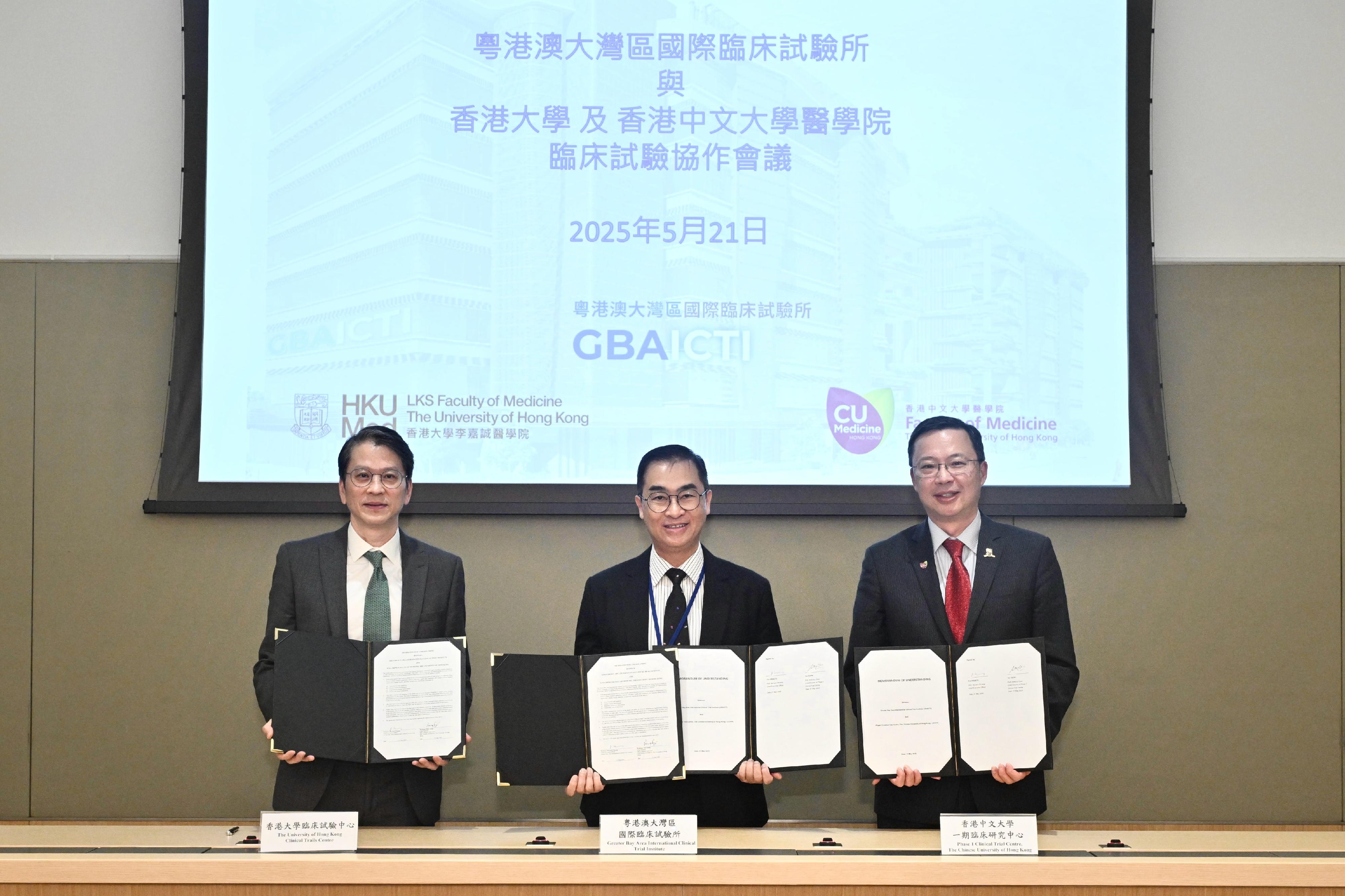
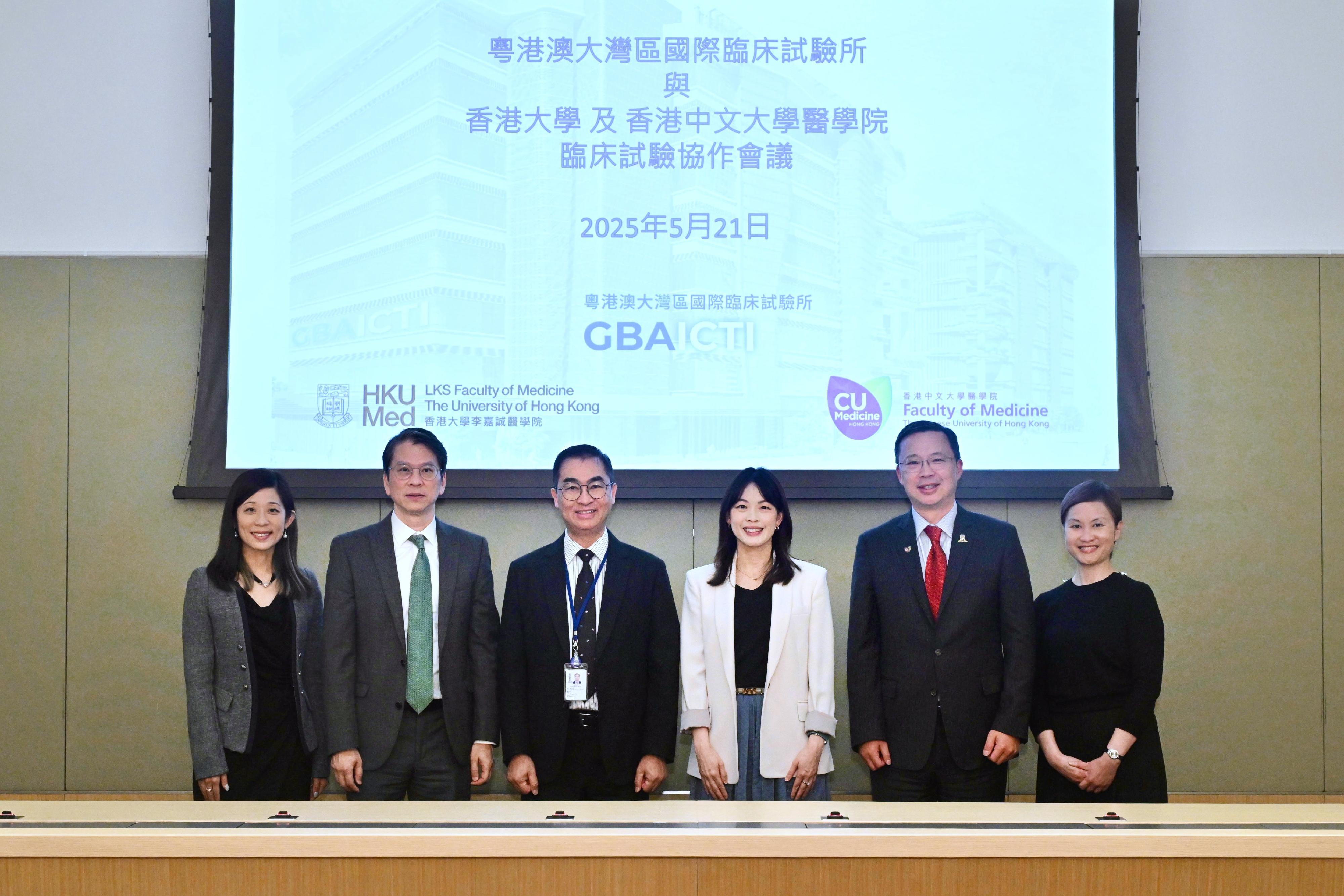
Photo  Photo  
read more

LCQ9: Asbestos cement pipes

     Following is a question by the Hon Lam San-keung and a written reply by the Secretary for Development, Ms Bernadette Linn, in the Legislative Council today (May 21):
 
Question:
 
     According to government information, the use of asbestos cement pipes in Hong Kong has been discontinued since January 1986, but such pipes still exist in the existing water supply systems. In this connection, will the Government inform this Council:
 
(1) of the length of asbestos cement pipes in Hong Kong’s water supply systems at present and the districts in which such pipes are mainly located;
 
(2) given the potential danger of asbestos to human health, whether the authorities will consider giving priority to replacing the existing asbestos cement pipes; if so, of their plans; if not, the reasons for that; and
 
(3) as it is learnt that the authorities need to carry out works involving asbestos-containing materials in a safe manner pursuant to the law, whether the authorities engage outsourced contractors to handle works involving asbestos cement pipes; of the costs incurred by the Government in handling works involving asbestos cement pipes in the past three years?
 
Reply:
 
President,
 
     When designing the water supply network, the Water Supplies Department (WSD) would use various types of pipe materials according to the needs at the material time. Among them, asbestos cement (AC) pipes has been widely used in Hong Kong and other countries in the past because they could withstand greater internal water pressure and have good heat resistance and chemical corrosion resistance. Asbestos containing materials pose no health risk as long as they remain intact and undisturbed. The WSD later found that pipes made of this materials were relatively more brittle when serving as external wall and were more likely to burst or leak when impacted by external forces (such as arising from nearby road excavation works). Therefore, the WSD has discontinued to use AC pipes in pipe laying and maintenance since January 1986, and progressively replaced them with more durable ductile iron pipes or steel pipes under the relevant water main improvement programmes or during repairing works for water main burst incidents, with a view to reducing the risk of water main bursts or leaks.
 
     The replies to various parts of the Hon Lam’s question are as follows:  

(1) As of now, there are about 130 kilometres long AC pipes still in service, accounting for about 1.5 per cent of Hong Kong’s 8 500 km long water supply network. They are distributed in different districts in Hong Kong as follows:
 

District Length of AC pipe (km) (approximate)
Central and Western 11
Eastern 7
Islands 3
Southern 7
Wan Chai 6
Kowloon City 7
Kwun Tong 6
Sham Shui Po 4
Wong Tai Sin 4
Yau Tsim Mong 4
North 3
Sai Kung 14
Sha Tin 11
Tai Po 2
Kwai Tsing 13
Tuen Mun 10
Tsuen Wan 6
Yuen Long 12
Total 130

(2) According to the Health Information about Asbestos published by the Centre for Health Protection of the Department of Health, asbestos fibres are generally bound into the base material matrix. Under normal circumstances, only extremely small quantity of asbestos fibres, if any, can be released.
 
     The use of asbestos-containing cement pipes has been more common in earlier decades. The World Health Organization (WHO) reported in 2021 that there was no evidence to support that ingesting asbestos in drinking water poses potential risk to human health. Therefore, the WHO has not established a guideline value for asbestos fibres in drinking water, and considers such standards to be neither appropriate nor necessary.
 
     The WSD is implementing a risk-based asset management programme for water mains by introducing factors such as age of use, materials, past records of bursts or leaks, surrounding environment, consequences of bursts or leaks, for assessing the risk of water main bursts or leaks so as to accord priority to improving specific sections of water mains with higher risk, including replacement or rehabilitation of them, with a view to reducing the risk of water main bursts or leaks for the water supply network overall. As mentioned above, since AC pipes are relatively brittle and more likely to burst or leak when impacted by external forces, the WSD has increased the risk weighting factor for AC pipes in order to speed up the replacement or rehabilitation of these water mains, aiming to reducing the risk of water main bursts and the impact on the community. The above improvement measures are based on considering the risk of pipe bursting rather than health or drinking water safety risks posed by AC pipes.
 
     Those AC pipes currently assessed as higher-risk are mainly located on busy traffic routes. To expedite the replacement of ageing water mains, including AC pipes, the WSD has set up an inter-departmental task force headed by the Director of Water Supplies and composed of representatives from departments including the Development Bureau, the Transport Department, the Highways Department, the Hong Kong Police Force, the Environmental Protection Department, the Home Affairs Department, etc, to discuss and formulate temporary traffic arrangements and implementation programme for the replacement of water mains, so as to formulate plans as early as possible to minimise the impacts of the projects on traffic and the public.

(3) The handling, removal, transportation and disposal of AC pipes in the water supply network are regulated under relevant ordinances, including the Factories and Industrial Undertakings Ordinance (Cap. 59) and the Air Pollution Control Ordinance (Cap. 311), to safeguard the occupational safety and health of workers engaged in asbestos-related works. The WSD mandates through works contract provisions that contractors must fully comply with all asbestos-related legislation and codes of practice, ensuring the AC pipes are safely handled, removed, transported, and disposed of in accordance with statutory requirements. All contractors and their workers must comply with the requirements of the relevant ordinances and the safety and health codes of practice and practical guidelines issued by the Labour Department when carrying out the works related to asbestos. This includes requiring the contractors to adopt control measures and provide personal protective equipment at the workplace, and employing competent persons to supervise the effective implementation of these measures.
 
     During the implementation of the above works, the WSD will monitor the contractor’s construction procedures to ensure that the relevant ordinances and codes in carrying out AC pipe works are followed.
 
     Over the past three years, the project cost of the WSD in handling AC pipes (including the costs of handling, removal, transportation and disposal, etc) was about $31.7 million per year on average. read more

HAD opens temporary heat shelters

     The Home Affairs Department is opening 19 community halls/community centres as temporary heat shelters today (May 21).
      
     The temporary heat shelters will remain open for people to take refuge from the heat when the Very Hot Weather Warning is in force. From 10.30pm to 8am the next day, the temporary heat shelters will also provide bedding and a sleeping place for people in need. The shelters are manned by duty attendants.
 
     For further information, please call the department’s hotline before midnight on 2572 8427.
 
     The heat shelters are located at:
 
Hong Kong Island:
———————
 
Central and Western –
Kennedy Town Community Complex
1/F, 12 Rock Hill Street, Kennedy Town
 
Eastern –
Causeway Bay Community Centre
3/F, 7 Fook Yum Road, Causeway Bay
 
Southern –
Lei Tung Community Hall
Lei Tung Estate, Ap Lei Chau
 
Wan Chai –
Wan Chai Activities Centre
LG/F, Wan Chai Market, 258 Queen’s Road East, Wan Chai
 
Kowloon:
——————
 
Kowloon City –
Hung Hom Community Hall
1/F, Kowloon City Government Offices
42 Bailey Street, Hung Hom
 
Kwun Tong –
Lam Tin (West) Estate Community Centre
71 Kai Tin Road, Lam Tin
 
Sham Shui Po –
Shek Kip Mei Community Hall
G/F, Block 42, Shek Kip Mei Estate
 
Wong Tai Sin –
Tsz Wan Shan (South) Estate Community Centre
45 Wan Wah Street, Tsz Wan Shan
 
Yau Tsim Mong –
Henry G Leong Yaumatei Community Centre
60 Public Square Street, Yau Ma Tei
 
New Territories:
————————–
 
Islands –
Tung Chung Community Hall
G/F, Tung Chung Municipal Services Building, 39 Man Tung Road, Tung Chung
 
Kwai Tsing –
Kwai Shing Community Hall
Podium, Block 6, Kwai Shing West Estate, Kwai Chung
 
North –
Cheung Wah Community Hall
Cheung Wah Estate, Fanling
 
Sai Kung –
Hang Hau Community Hall
G/F, Sai Kung Tseung Kwan O Government Complex, 38 Pui Shing Road, Hang Hau, Tseung Kwan O
 
Sha Tin –
Lung Hang Estate Community Centre
Lung Hang Estate, Sha Tin
 
Tai Po –
Tai Po Community Centre
2 Heung Sze Wui Street, Tai Po
 
Tsuen Wan –
Lei Muk Shue Community Hall
G/F, Hong Shue House, Lei Muk Shue Estate, Tsuen Wan
 
Tuen Mun –
Butterfly Bay Community Centre
Butterfly Estate (near Tip Sum House), Tuen Mun
 
Yuen Long –
Long Ping Community Hall
Long Ping Estate, Yuen Long
 
Yuen Long –
Tin Yiu Community Centre
Tin Yiu Estate, Tin Shui Wai
 
     In addition to the above heat shelters, a number of community halls/community centres can also be used for taking refuge from the heat during their operating hours. For their address details, please browse the following document: www.had.gov.hk/file_manager/en/documents/public_services/emergency_services/List_CH_CC_Day_E.pdf. read more

Government welcomes passage of Stablecoins Bill

     The Government welcomed the passage of the Stablecoins Bill by the Legislative Council today (May 21) to establish a licensing regime for fiat-referenced stablecoins (FRS) issuers in Hong Kong, to further enhance Hong Kong’s regulatory framework on virtual-asset (VA) activities, thereby fostering financial stability and encouraging financial innovation.
 
     Upon implementation of the Stablecoins Ordinance, any person who, in the course of business, issues an FRS in Hong Kong, or issues an FRS that purports to maintain a stable value with reference to Hong Kong dollars in or outside Hong Kong will need to obtain a licence from the Monetary Authority (MA). The relevant persons must satisfy the requirements in areas such as reserve asset management and redemption, including proper segregation of client assets, maintaining a robust stabilisation mechanism, and processing stablecoin holders’ requests for redemption at par value with reasonable conditions. The relevant persons must also comply with a range of requirements, including those on anti-money laundering and counter-terrorist financing, risk management, disclosure and auditing, and fitness and propriety. The MA will conduct further consultations on the detailed regulatory requirements of the regime in due course.
 
     The regulatory regime will provide better protection for the general public and investors. Among others, under the Ordinance, only specified licensed institutions may offer an FRS in Hong Kong, and only an FRS issued by a licensed issuer may be offered to a retail investor. Additionally, to prevent fraud and scams, at all times (including the six-month non-contravention period), only advertisements of licensed FRS issuance are allowed. Members of the public are advised to take note of the above and exercise care when receiving FRS-related advertising materials or messages.
 
     The Secretary for Financial Services and the Treasury, Mr Christopher Hui, said, “The Ordinance adheres to the ‘same activity, same risks, same regulation’ principle, with a focus on a risk-based approach to promote a robust regulatory environment. This is not only in line with international regulatory requirements, but also lays a solid foundation for Hong Kong’s virtual asset market, which, in turn, promotes the sustainable development of the industry, protects users’ rights and interests, and strengthens Hong Kong’s status as an international financial centre.” 
 
     The Chief Executive of the Hong Kong Monetary Authority, Mr Eddie Yue, said, “The Ordinance has established a risk-based, pragmatic, and flexible regulatory regime. We believe that a robust and fit-for-purpose regulatory environment would provide favourable conditions to support the healthy, responsible, and sustainable development of Hong Kong’s stablecoin and the broader digital asset ecosystem.”
 
     The Ordinance is expected to come into effect this year, to allow sufficient time for the industry to understand the requirements under the licensing regime. The regime also provides for a transitional arrangement to facilitate the industry in applying for a licence and making suitable business arrangements in accordance with the regulatory regime.
 
     The Government will continue to support the development of the VA sector. Following the implementation of the VA trading platform and stablecoins issuers regulatory regimes, the Government will soon launch consultations on VA over-the-counter and custodian services, and promulgate the second policy statement on the development of VAs.  read more