Tag Archives: China

image_pdfimage_print

SCED promotes Hong Kong’s advantages at Seventh Western China International Fair for Investment and Trade (with photos)

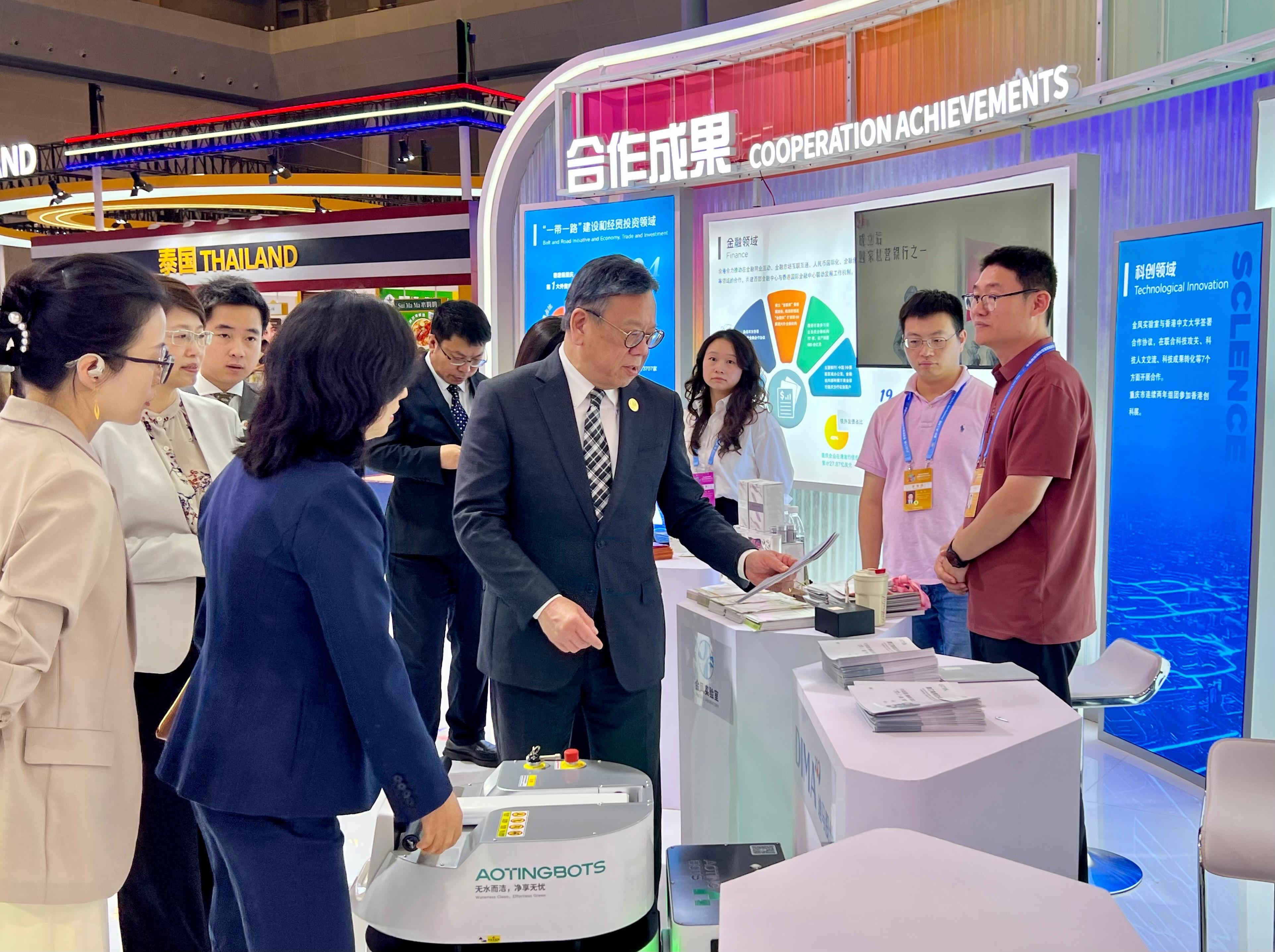
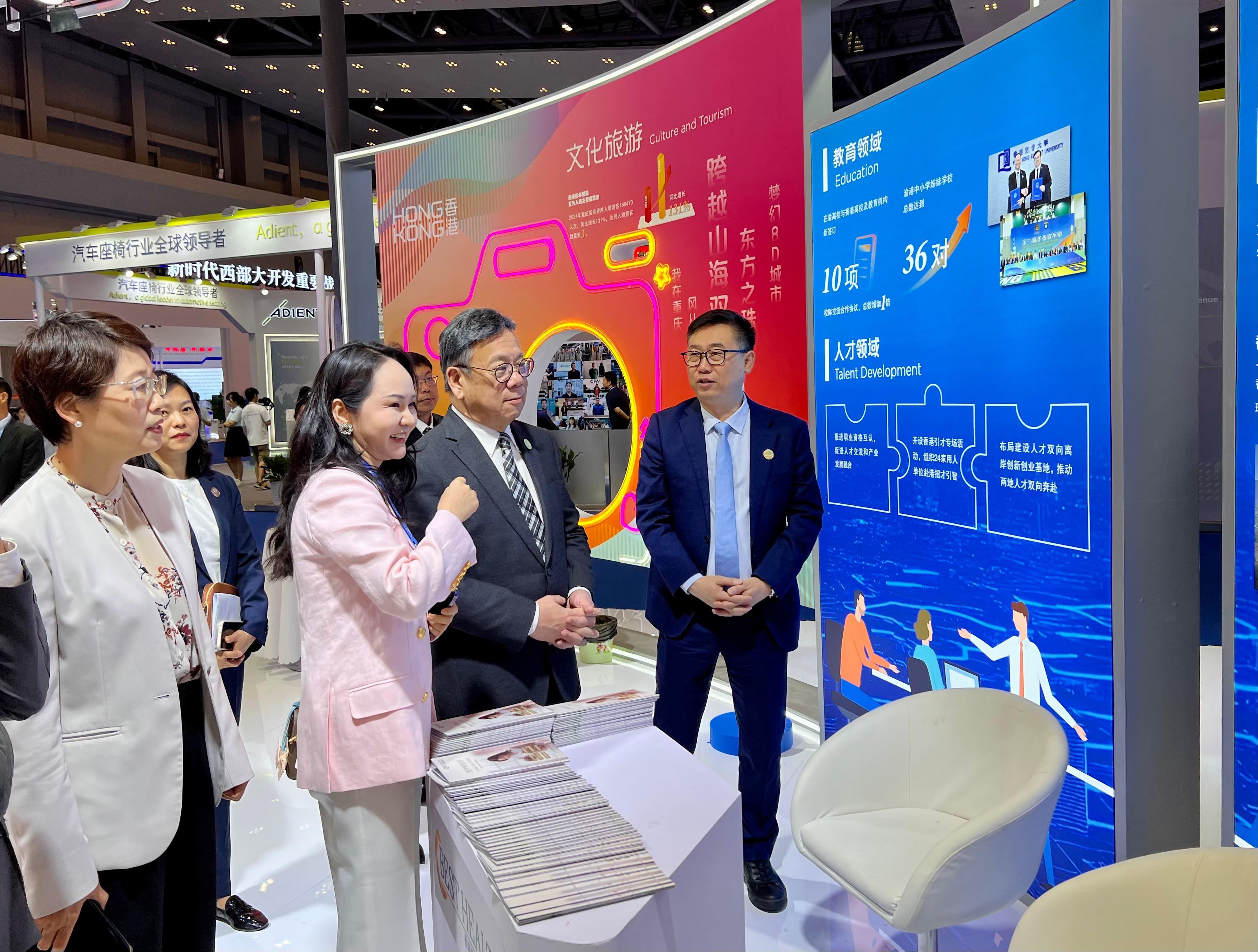
     The Secretary for Commerce and Economic Development, Mr Algernon Yau, attended the Seventh Western China International Fair for Investment and Trade (WCIFIT) in Chongqing today (May 22) to promote Hong Kong’s advantages to Mainland enterprises to further enhance co-operation between Hong Kong and Chongqing.

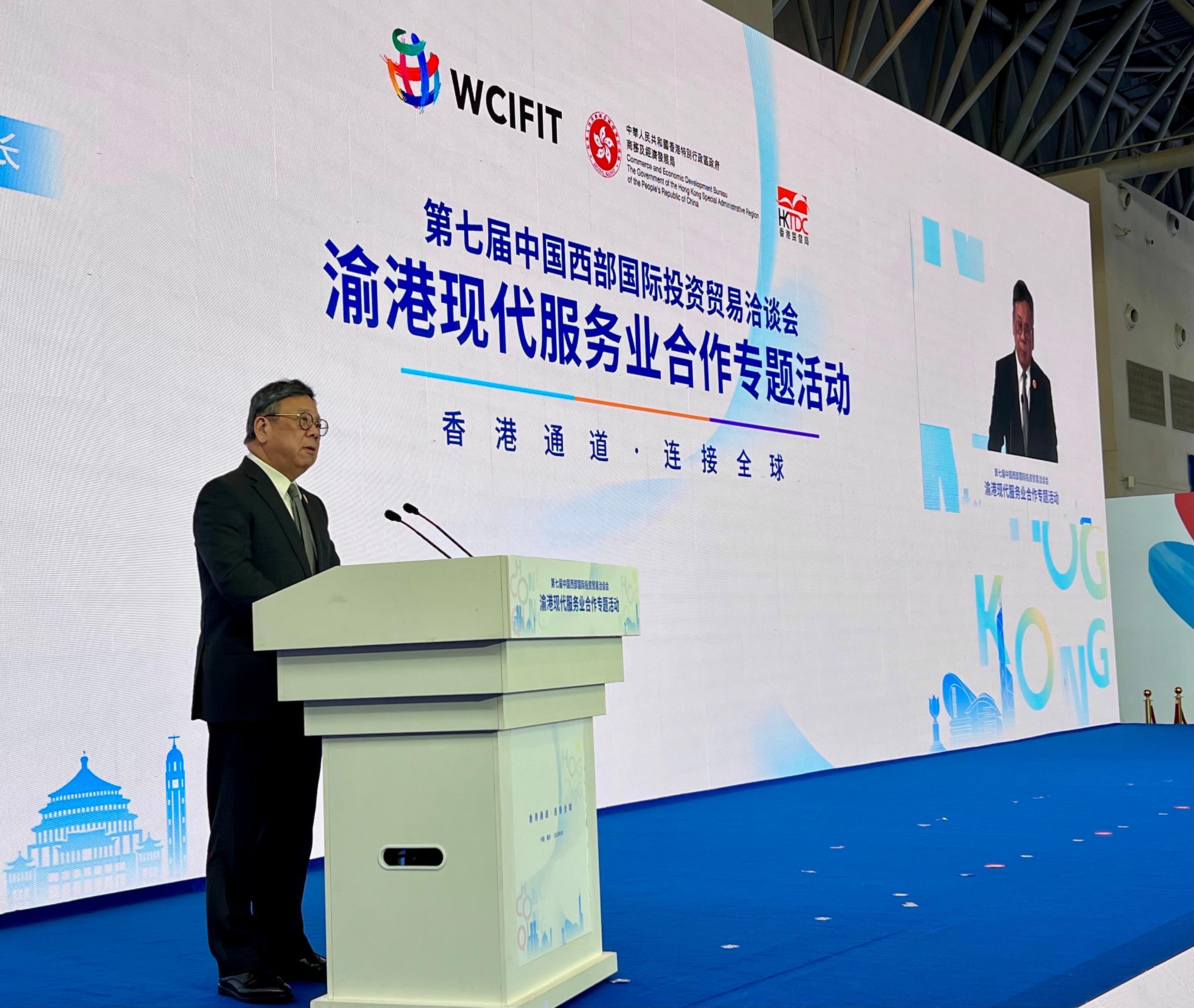
     Organised by the Chongqing Municipal People’s Government, the WCIFIT is an important platform for trade co-operation and investment promotion in the western region of the Mainland. This year, Hong Kong is the guest city of honour of the WCIFIT at which a Hong Kong Pavilion is set up to promote Hong Kong’s strengths and showcase its role as an effective and premium trade and business platform for Mainland enterprises to go global. The Special Event on Chongqing-Hong Kong Co-operation in Modern Service Industry themed “Channelling Global Business through Hong Kong” was also held to foster co-operation and exchanges between the two places in different areas of the modern service industry.

     Addressing the opening ceremony this morning, Mr Yau said that Hong Kong and Chongqing have long maintained close ties, with both places playing their unique roles in the nation’s development. Chongqing serves as an important link between the Belt and Road and the Yangtze River Economic Belt, and is a highly opened-up inland area, while Hong Kong possesses the unique advantages of having strong support of the country while maintaining unparalleled connectivity with the world, and is the country’s southern gateway and a key platform connecting the Guangdong-Hong Kong-Macao Greater Bay Area with international markets. Since the establishment of the Hong Kong/Chongqing Co-operation Conference mechanism in 2023, Hong Kong and Chongqing have been actively promoting co-operation on different fronts to leverage the complementarity of the two places and achieve mutual benefits, jointly contributing to the high-quality development of the country and creating unlimited opportunities for enterprises in both places.

     Mr Yau said that Hong Kong is the connecting platform under the national dual circulation strategy, actively serving as a “super connector” and “super value-adder” and as a two-way springboard for Mainland enterprises to go global and for attracting overseas enterprises. He looked forward to more Chongqing enterprises coming to Hong Kong for further development.

     The Secretary of the Chongqing Municipal Committee of the Communist Party of China (CPC), Mr Yuan Jiajun, and Deputy Secretary of the Chongqing Municipal Committee of the CPC and the Mayor of Chongqing, Mr Hu Henghua, also attended the opening ceremony.

     Mr Yau then toured the Hong Kong Pavilion, which covers 600 square metres and showcases Hong Kong’s strengths in areas such as finance, shipping and innovation and technology, as well as the development and achievements of co-operation between Hong Kong and Chongqing.

     Speaking at the Special Event jointly organised by the Commerce and Economic Development Bureau and the Hong Kong Trade Development Council (HKTDC) this afternoon, Mr Yau said that Hong Kong has a mature modern service industry system, while Chongqing is a major economic centre in the western region of the country with a strong manufacturing base and actively promoting the development of the producer services sector, demonstrating strong complementarity with Hong Kong. He added that Hong Kong and Chongqing present enormous potential for co-operation in the services sector. Hong Kong can provide solid support for Chongqing’s development of modern services, while Chongqing’s sizeable market and industrial base offer extensive room for development of Hong Kong enterprises.

     The Special Event brought together government officials, enterprises and experts in the services sector of the two places, as well as a representative from the HKTDC to introduce Hong Kong’s advantages and opportunities, the development of Chongqing’s modern producer services sector, and the unlimited business opportunities under Hong Kong-Chongqing co-operation.
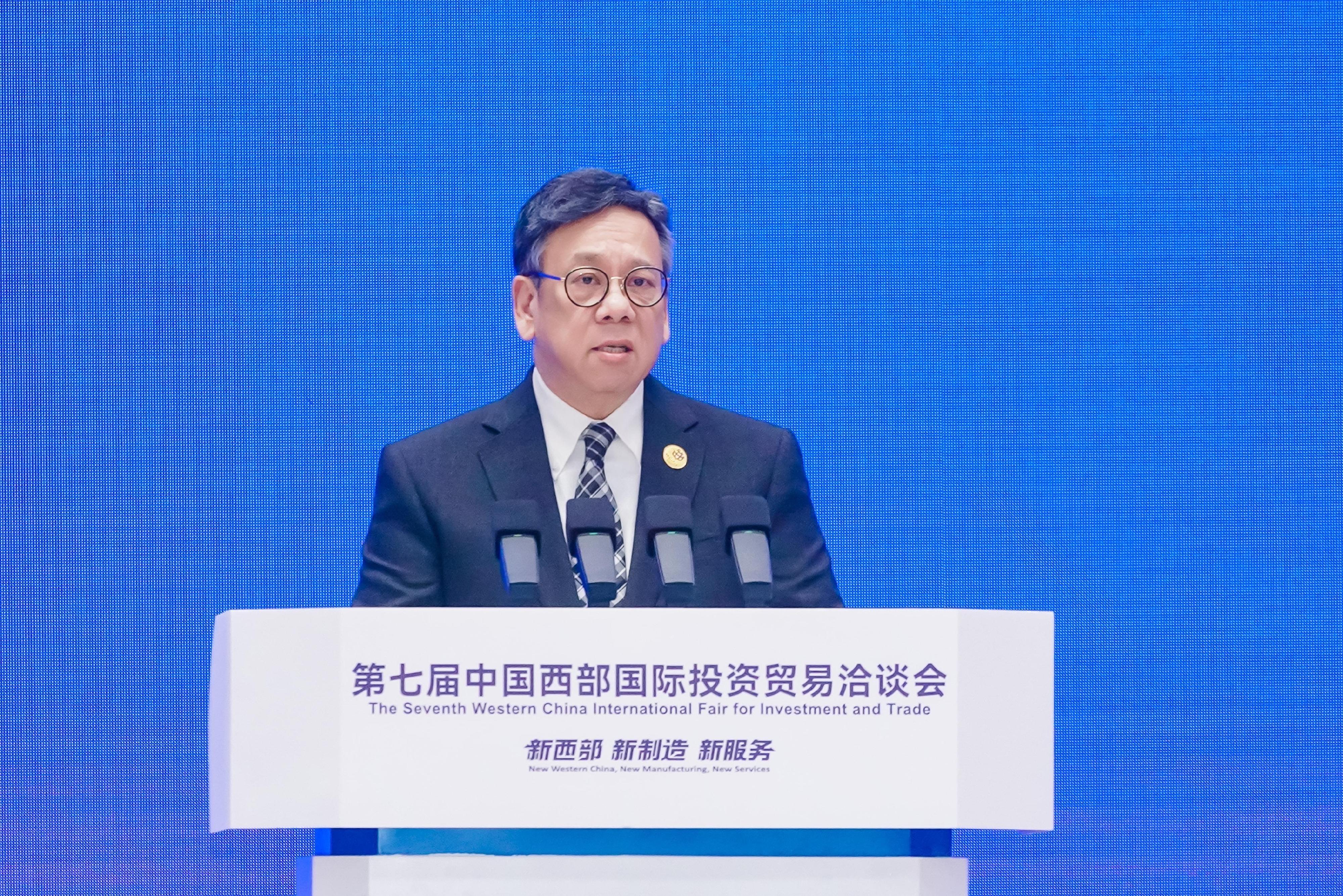
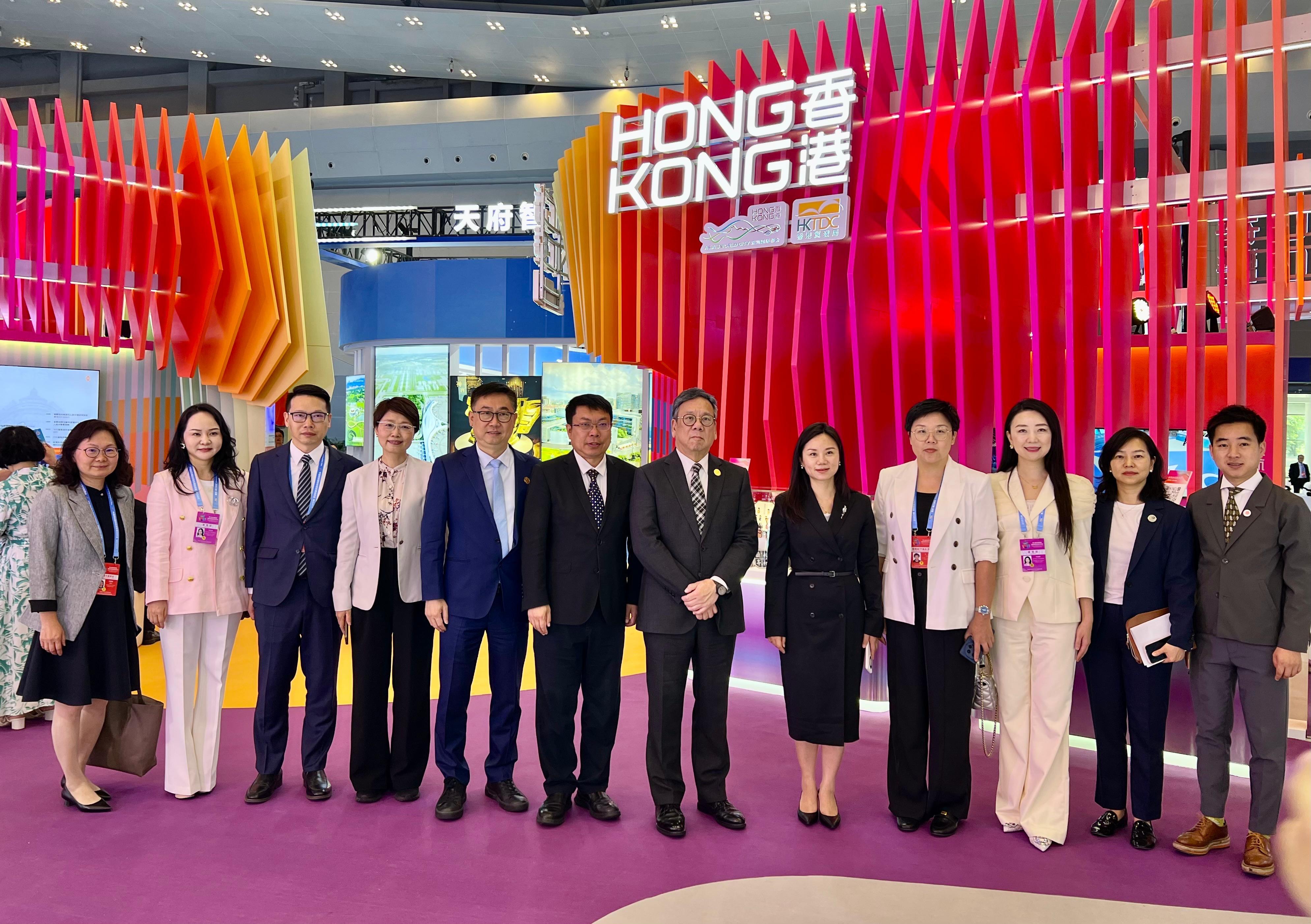
Photo  Photo  Photo  Photo  Photo  
read more

Consumer Price Indices for April 2025

     The Census and Statistics Department (C&SD) released today (May 22) the Consumer Price Index (CPI) figures for April 2025. According to the Composite CPI, overall consumer prices rose by 2.0% in April 2025 over the same month a year earlier, larger than the corresponding increase (1.4%) in March 2025. The larger increase was mainly attributable to the lower ceiling of rates concession in April 2025 when compared with the same month last year. Netting out the effects of all Government’s one-off relief measures, the year-on-year rate of increase in the Composite CPI (i.e. the underlying inflation rate) in April 2025 was 1.3%, also larger than that in March 2025 (1.0%). The larger increase was mainly due to the increases in the charges for package tours as well as inbound and outbound transport fares.  

     On a seasonally adjusted basis, the average monthly rate of change in the Composite CPI for the 3-month period ending April 2025 was -0.1%, and that for the 3-month period ending March 2025 was 0.0%. Netting out the effects of all Government’s one-off relief measures, the corresponding rates of change were both 0.0%.   

     Analysed by sub-index, the year-on-year rates of increase in the CPI(A), CPI(B) and CPI(C) were 2.6%, 1.8% and 1.6% respectively in April 2025, as compared to 2.0%, 1.2% and 1.0% respectively in March 2025. Netting out the effects of all Government’s one-off relief measures, the year-on-year rates of increase in the CPI(A), CPI(B) and CPI(C) were 1.4%, 1.1% and 1.2% respectively in April 2025, as compared to 1.4%, 0.9% and 0.8% respectively in March 2025.   

     On a seasonally adjusted basis, for the 3-month period ending April 2025, the average monthly rates of change in the CPI(A), CPI(B) and CPI(C) were -0.2%, -0.1% and -0.1% respectively. The corresponding rates of change for the 3-month period ending March 2025 were 0.1%, 0.0% and 0.0% respectively. Netting out the effects of all Government’s one-off relief measures, the average monthly rates of change in the seasonally adjusted CPI(A), CPI(B) and CPI(C) for the 3-month period ending April 2025 were all 0.0%, and the corresponding rates of change for the 3-month period ending March 2025 were -0.1%, 0.0% and 0.0% respectively.   

     Amongst the various components of the Composite CPI, year-on-year increases in prices were recorded in April 2025 for electricity, gas and water (13.2%), transport (3.8%), housing (2.8%), miscellaneous services (2.1%), meals out and takeaway food (1.3%), miscellaneous goods (1.0%), and alcoholic drinks and tobacco (0.4%).   

     On the other hand, year-on-year decreases in the components of the Composite CPI were recorded in April 2025 for clothing and footwear (-4.1%), durable goods (-1.6%), and basic food (-1.3%).   

     Taking the first 4 months of 2025 together, the Composite CPI rose by 1.7% over a year earlier. The respective increases in the CPI(A), CPI(B) and CPI(C) were 2.3%, 1.5% and 1.3% respectively. The corresponding increases after netting out the effects of all Government’s one-off relief measures were 1.3%, 1.5%, 1.1% and 1.1% respectively.   

     For the 3 months ending April 2025, the Composite CPI rose by 1.6% over a year earlier, while the CPI(A), CPI(B) and CPI(C) rose by 2.2%, 1.4% and 1.2% respectively. The corresponding increases after netting out the effects of all Government’s one-off relief measures were 1.1%, 1.4%, 1.0% and 1.0% respectively.   

     For the 12 months ending April 2025, the Composite CPI was on average 1.7% higher than that in the preceding 12-month period. The respective increases in the CPI(A), CPI(B) and CPI(C) were 2.2%, 1.6% and 1.4% respectively. The corresponding increases after netting out the effects of all Government’s one-off relief measures were 1.2%, 1.3%, 1.1% and 1.1% respectively. 

Commentary

     A Government spokesman said that inflation pressure remained largely moderate in recent months. The underlying consumer price inflation rate went up somewhat in April, mainly reflecting the visible year-on-year increases in the travel-related charges amid the late arrival of the Easter holidays (which started in April this year but in late March last year). The underlying Composite CPI increased by 1.3% over a year earlier, compared to the increase of 1.0% in the preceding month. Price pressures on various major components stayed contained in general.

     Looking ahead, overall inflation should remain modest in the near term. Pressures from domestic costs and external prices should stay broadly in check. The Government will monitor the situation closely.

Further information

     The CPIs and year-on-year rates of change at section level for April 2025 are shown in Table 1. The time series on the year-on-year rates of change in the CPIs before and after netting out the effects of all Government’s one-off relief measures are shown in Table 2. For discerning the latest trend in consumer prices, it is also useful to look at the changes in the seasonally adjusted CPIs. The time series on the average monthly rates of change during the latest 3 months for the seasonally adjusted CPIs are shown in Table 3. The rates of change in the original and the seasonally adjusted Composite CPI and the underlying inflation rate are presented graphically in Chart 1.

     More detailed statistics are given in the “Monthly Report on the Consumer Price Index”. Users can browse and download this publication at the website of the C&SD (www.censtatd.gov.hk/en/EIndexbySubject.html?pcode=B1060001&scode=270).

     Following established practice, the C&SD reviews and updates the expenditure weights of the CPIs annually. Starting from the reference month of April 2025, the C&SD has used the updated 2024 expenditure weights in the compilation of the CPIs. This update aims to better reflect recent changes in household consumption patterns, ensuring that the CPIs can more accurately reflect the inflation experienced by consumers, and fully aligns with international recommendations.

     For enquiries about the CPIs, please contact the Consumer Price Index Section of the C&SD (Tel: 3903 7374 or email: cpi@censtatd.gov.hk). read more

Hong Kong Customs seizes suspected counterfeit goods and alternative smoking products worth about $1.5 million (with photo)

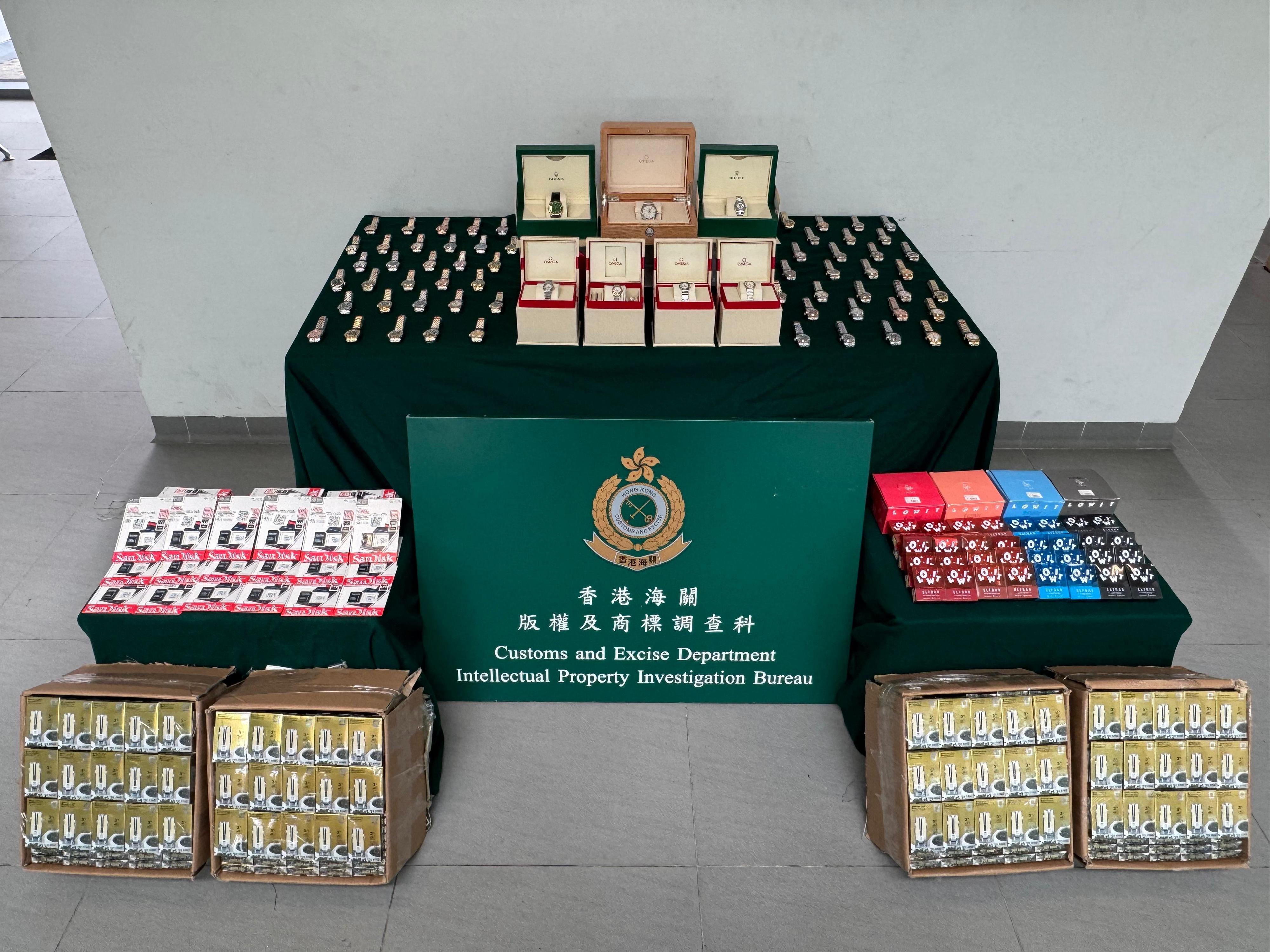
     Hong Kong Customs on May 6 seized about 1 300 suspected counterfeit goods and about 2 400 alternative smoking products with a total estimated market value of about $1.5 million at the Hong Kong-Zhuhai-Macao Bridge (HZMB) Hong Kong Port.
      
     Through risk assessment, Customs on that day intercepted an incoming lorry at the HZMB Hong Kong Port. After inspection, Customs officers found the batch of suspected counterfeit goods, including watches and memory cards, and the batch of alternative smoking products inside the cargo compartment of the lorry. A 55-year-old male driver was subsequently arrested.
      
     An initial investigation revealed that the batch of suspected counterfeit goods and alternative smoking products would have been transhipped to overseas regions.
      
     The investigation is ongoing, and the arrested man has been released on bail pending further investigation.
      
     Customs will continue to take stringent enforcement action against counterfeit goods and smuggling activities through risk assessment and intelligence analysis.
      
     Under the Trade Descriptions Ordinance, any person who imports or exports any goods to which a forged trademark is applied commits an offence. The maximum penalty upon conviction is a fine of $500,000 and imprisonment for five years.
      
     Under the Import and Export Ordinance, any person found guilty of importing or exporting unmanifested cargo is liable to a maximum fine of $2 million and imprisonment for seven years upon conviction.
      
     Members of the public may report any suspected violation of the above-mentioned Ordinances to Customs’ 24-hour hotline 182 8080 or its dedicated crime-reporting email account (crimereport@customs.gov.hk) or online form (eform.cefs.gov.hk/form/ced002).

Photo  
read more

SFST’s closing remarks at FSDC-HKSI Capacity Building Programme for ASEAN Financial Executives (English only)

     Following are the closing remarks by the Secretary for Financial Services and the Treasury, Mr Christopher Hui, at FSDC-HKSI Capacity Building Programme for ASEAN Financial Executives today (May 22):
 
Daryl (Convenor of FSDC’s ASEAN Advisory Group, Mr Daryl Ng), distinguished guests, ladies and gentlemen,
 
     Good afternoon. It is a great pleasure to join you today at the conclusion of this meaningful three-day capacity building programme, co-organised by the Financial Services Development Council (FSDC) and the Hong Kong Securities and Investment Institute. As part of our ongoing efforts to deepen engagement between Hong Kong and ASEAN (Association of Southeast Asian Nations), this initiative has brought together senior financial executives from across the region to explore Hong Kong’s financial ecosystem, exchange insights, and strengthen professional ties. I would like to extend my sincere thanks to all participants and partners who contributed to the success of this programme.
 
ASEAN and Hong Kong: A deepening partnership
 
     Over the past decade, we have witnessed a remarkable evolution in the relationship between Hong Kong and ASEAN. Since 2019, ASEAN has become Hong Kong’s second-largest goods export market, following only the Mainland. The deepening co-operation among the Mainland, Hong Kong, and ASEAN reflects a broader shift in global economic gravity from West to East, and highlights the growing importance of regional integration and collaboration.
      
     With sustained growth, a young demographic, and expanding capital markets, ASEAN is one of the most dynamic economic regions in the world. As an international financial centre, Hong Kong welcomes ASEAN enterprises to make use of our capital formation strengths to raise funds and expand their global footprint.
      
     Indeed, Hong Kong is uniquely positioned as the only place in the world where the global advantage and China advantage converge. Under the “one country, two systems” principle, we serve as China’s gateway to the world’s financial markets and investors. This convergence makes Hong Kong a natural partner for ASEAN enterprises seeking to access global capital and explore new markets.
 
Strategic engagement and institutional support
 
     We are not standing still. The Hong Kong Government has been actively strengthening ties with ASEAN member states across multiple fronts. Just last month, I had the pleasure of meeting with the ASEAN-China Joint Cooperation Committee delegation, where we explored opportunities to promote greater connectivity between ASEAN, the Greater Bay Area, and Hong Kong.
      
     In alignment with this strategic direction, the FSDC has adopted a targeted outreach strategy to deepen bilateral relations with ASEAN economies. Since 2024, the FSDC has conducted four strategic visits to ASEAN member states, engaging in high-level dialogues with regulators, meeting with industry leaders, and participating in key roundtables to promote Hong Kong’s financial capabilities.
      
     To support structured, long-term engagement, the FSDC also established an ASEAN Advisory Group in September last year. This brings together seasoned experts from the financial and professional services sectors to provide strategic advice on market promotion, partnership models, and opportunity assessment. It is a clear signal of our commitment to building enduring financial bridges across the region.
 
Institutional connectivity and market access
 
     The growing collaboration between Hong Kong and ASEAN is also reflected in the institutional and regulatory frameworks we have jointly developed. Hong Kong has signed Comprehensive Avoidance of Double Taxation Agreements (CDTAs) with six ASEAN member states – including Thailand, Brunei, Indonesia, Malaysia, Vietnam, and Cambodia – fostering greater tax certainty and investment flows.
      
     On the capital markets front, the Securities and Futures Commission (SFC) has established mutual recognition of funds (MRF) arrangements with Malaysia and Thailand. These arrangements streamline the cross-border offering of investment products, enabling eligible funds to gain access to each other’s markets through a simplified process. This not only enhances financial inclusion but also promotes the development of regional asset management ecosystems.
      
     In August 2024 during the visit of the Hong Kong SAR delegation led by the Chief Executive to Vietnam, a Memorandum of Understanding was signed between the HKSAR Government and Vietnam, further institutionalising financial co-operation and knowledge exchange between our two markets in the field of fintech, green and sustainable finance, and professional accounting.
 
Hong Kong as a capital formation centre
 
     As one of the world’s top three international financial centres, Hong Kong is proud to be a global fundraising hub. Through the Hong Kong Stock Exchange (HKEX), we offer a deep, liquid, and well-regulated capital market that supports a diverse range of issuers.
      
     Since 2022, the HKEX has implemented a series of enhancement reforms to provide greater flexibility to dual primary listed issuers and to establish a set of core shareholder protection standards. These enhancements provide greater convenience for companies, including ASEAN enterprises, to list in Hong Kong while meeting international governance standards.
      
     We are also expanding our market connectivity. In November 2023, the Indonesia Stock Exchange was added to the HKEX’s list of recognised exchanges, followed by the Stock Exchange of Thailand in March 2025. These developments now allow companies listed on the Indonesian and Thai main boards to apply for secondary listings in Hong Kong, creating new channels for capital raising and investor engagement.
      
     We welcome ASEAN companies to seize these opportunities and make Hong Kong their choice for financing and international expansion.
 
Looking ahead: a shared future
 
     As this capacity building programme concludes, I hope the past three days have provided not only insights into Hong Kong’s financial system, but also new perspectives on collaboration, innovation, and shared opportunity.
      
     This initiative is part of a broader commitment to building long-term partnerships that span institutions, industries, and borders. The connections you’ve made here, across sectors and jurisdictions, are the foundation upon which we can build a more integrated and resilient regional financial ecosystem.
      
     Before I close, I would also like to take this opportunity to invite you to the Asian Financial Forum (AFF) – our flagship financial event held every January in Hong Kong. The AFF is a premier platform for public and private sector leaders to exchange views on global finance, investment trends, and cross-border collaboration. Your active participation in the next edition would be immensely valuable, and we look forward to welcoming you again soon.
      
     Ladies and gentlemen, as Asia continues to rise, so too does the importance of regional connectivity and mutual understanding. The partnership between Hong Kong and ASEAN is more than economic; it is strategic, dynamic, and full of promise. Let us continue to build bridges, foster innovation, and unlock the full potential of regional co-operation. I would like to thank you once again for being part of this journey, and I look forward to deepening our collaboration in the months and years ahead. Thank you. read more