Tag Archives: China

image_pdfimage_print

SFST urges Toronto companies to re-domicile (with photos)

     The Secretary for Financial Services and the Treasury, Mr Christopher Hui, continued his visit to Toronto, Canada, on May 27 (Toronto Time).
      
     He visited two Canada-based insurance companies that have extended their business to Hong Kong. Mr Hui met separately with the President and Chief Executive Officer, Mr Phil Witherington, and the Chief Financial Officer, Mr Colin Simpson, of Manulife; as well as the Executive Vice-President and Chief Financial Officer, Mr Tim Deacon, and the Executive Vice-President and Chief Strategy and Enablement Officer, Ms Linda Doughety, of SunLife. He introduced them to the newly enacted legislation on re-domiciliation of companies, encouraging them to consider re-domiciling their companies to Hong Kong to enjoy the relevant legal and taxation convenience, as well as to lower their compliance costs for satisfying two sets of regulatory requirements. He also mentioned that on the very first day the company re-domiciliation regime came into effect last Friday, an international insurance group immediately announced its plan to re-domicile its company to Hong Kong. This news was the best testament to the regime’s effectiveness in enhancing companies’ operational efficiency, thereby consolidating Hong Kong’s position as a leading international financial centre.
      
     Under the new regime, non-Hong Kong-incorporated companies may apply to re-domicile to Hong Kong if they fulfil requirements concerning company background, integrity, member and creditor protection, solvency, etc, while maintaining their legal identity as a body corporate to ensure business continuity. If the company’s actual similar profits are also taxed in Hong Kong after re-domiciliation, the Government will provide the company with unilateral tax credits to eliminate double taxation.
      
     Mr Hui pointed out that Hong Kong has a strong foundation in investment and trade, making it an ideal location for global enterprises to access insurance, reinsurance and risk management services, as well as to establish captive insurers. There are vast opportunities for insurance companies in Hong Kong. 
      
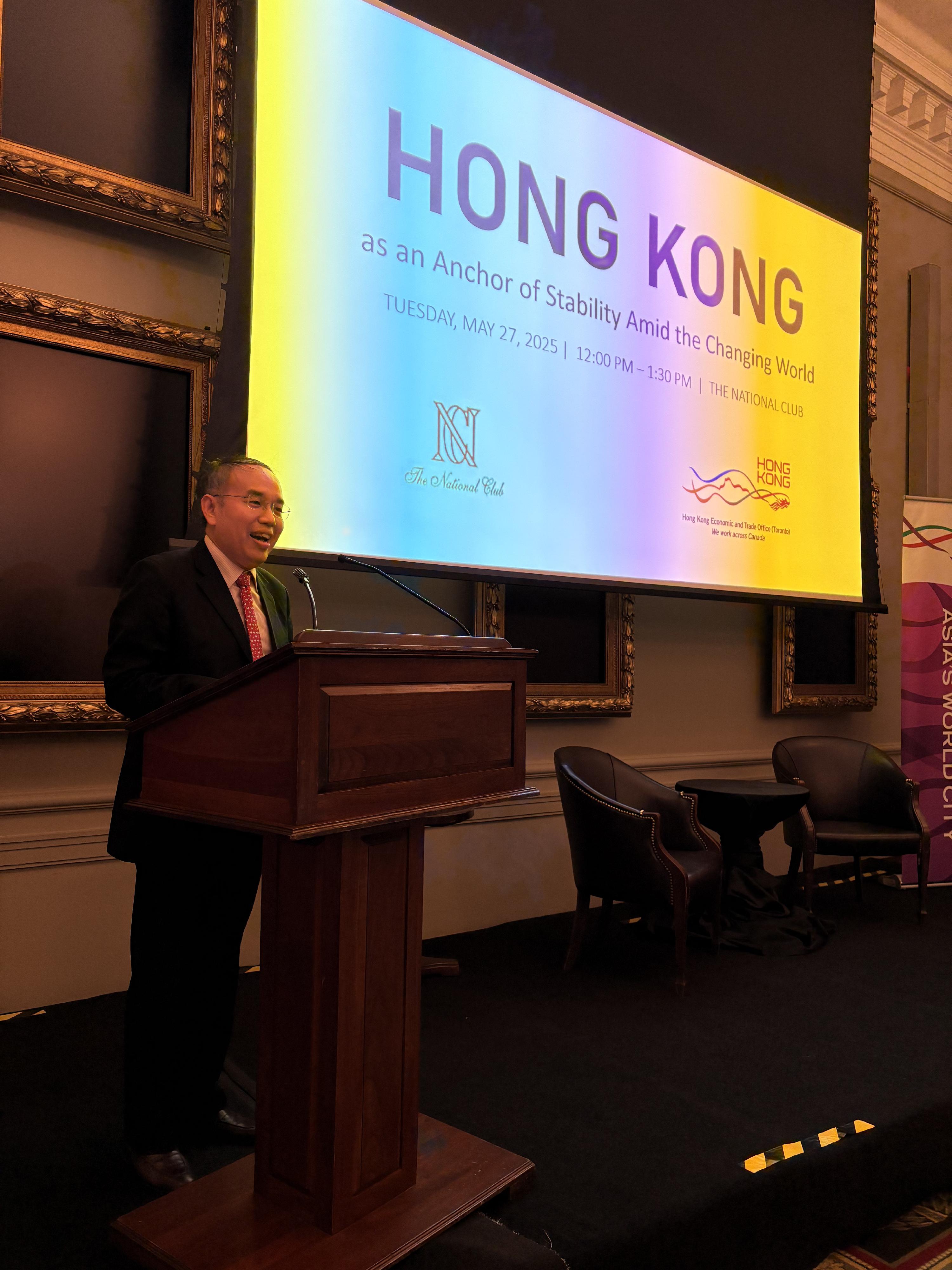
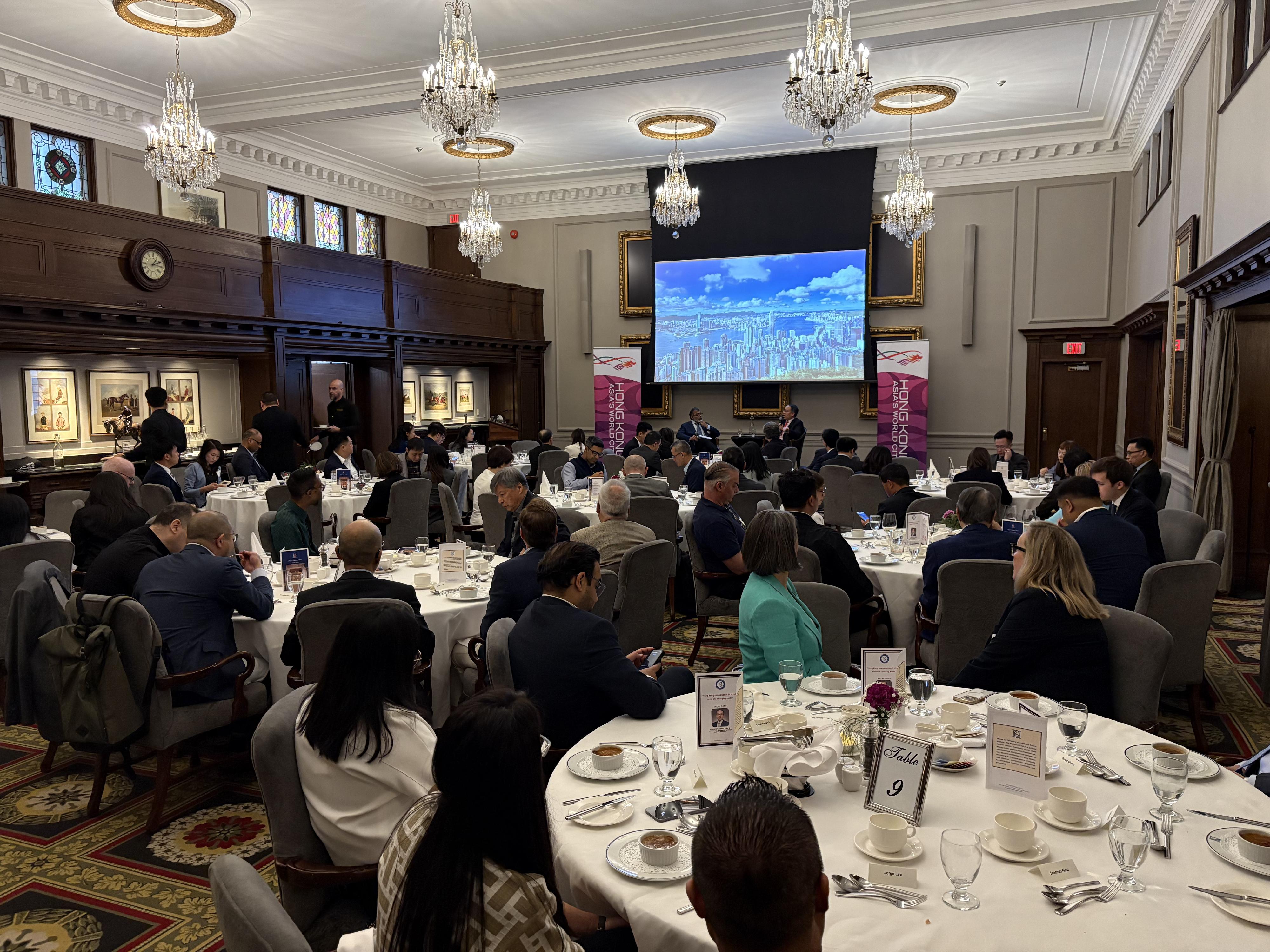
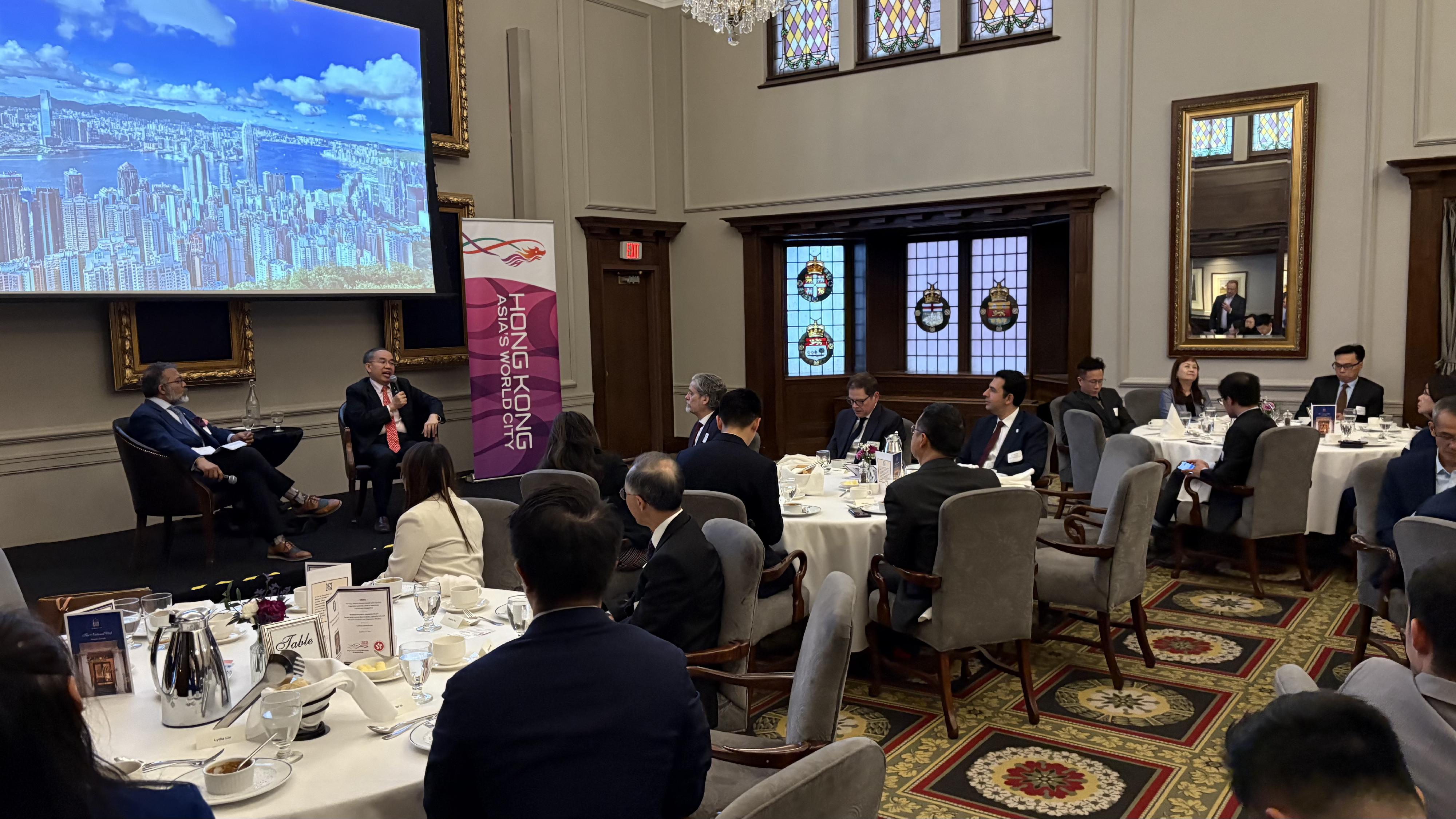
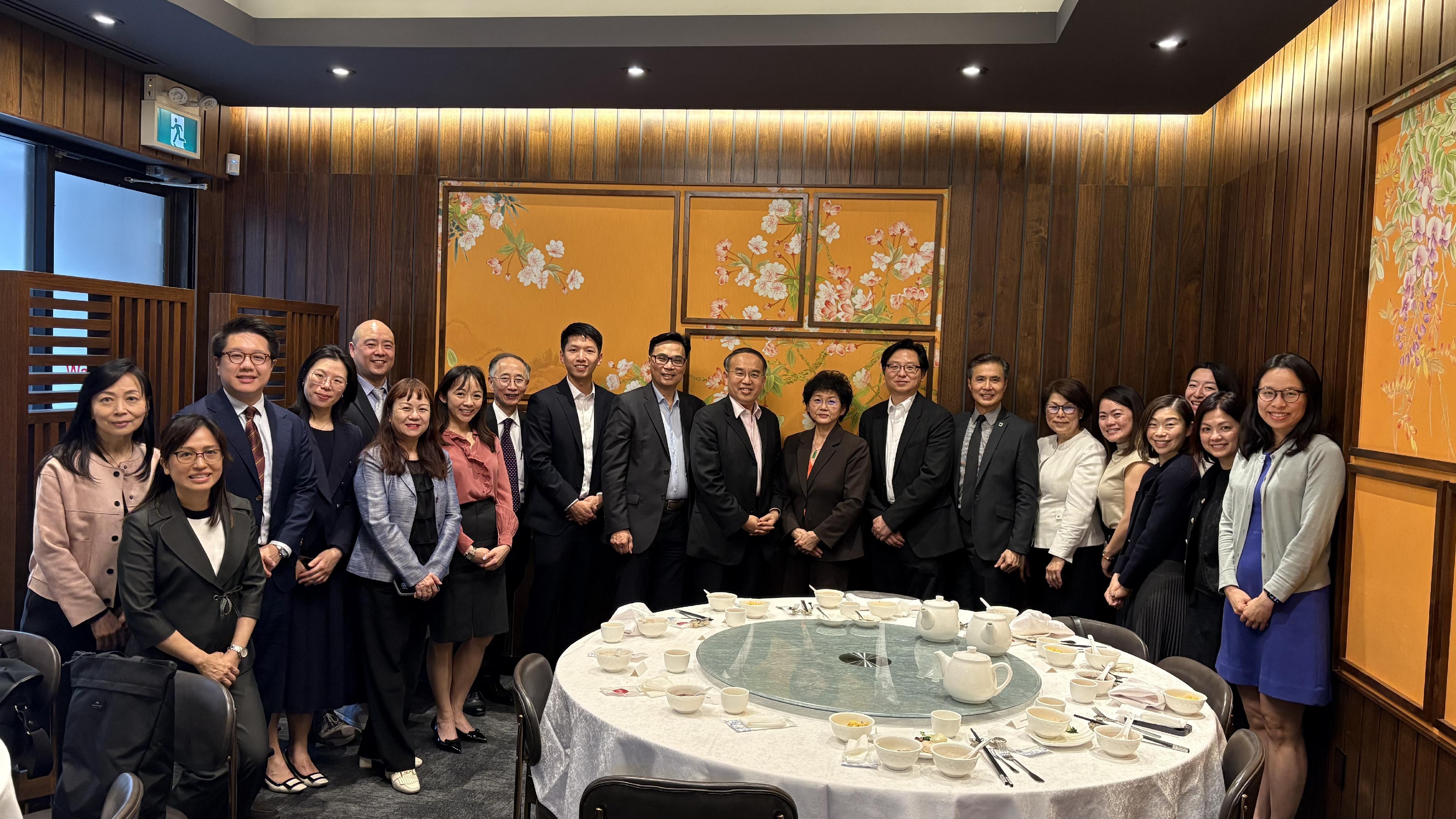
     At noon, Mr Hui attended a business luncheon organised by the Hong Kong Economic and Trade Office (Toronto), Invest Hong Kong (Canada) and the National Club. He gave a presentation themed “Hong Kong as an anchor of stability amid the changing world” to showcase to the attending financial leaders the stellar figures recorded in the financial market, and banking and monetary markets. He also talked about the Government’s efforts in aligning with international standards and boosting the development of green and sustainable finance and the virtual asset market. He said that, with its competitive advantages and proactive measures, as well as the stability and predictability of its financial market, Hong Kong has been earning the confidence of global investors. Mr Hui also had a fireside chat with the President of the National Club, Mr Arnie Guha, and answered questions from the floor. The luncheon was well received. Participants were attracted by the various new developments in Hong Kong’s financial markets introduced by Mr Hui.
      
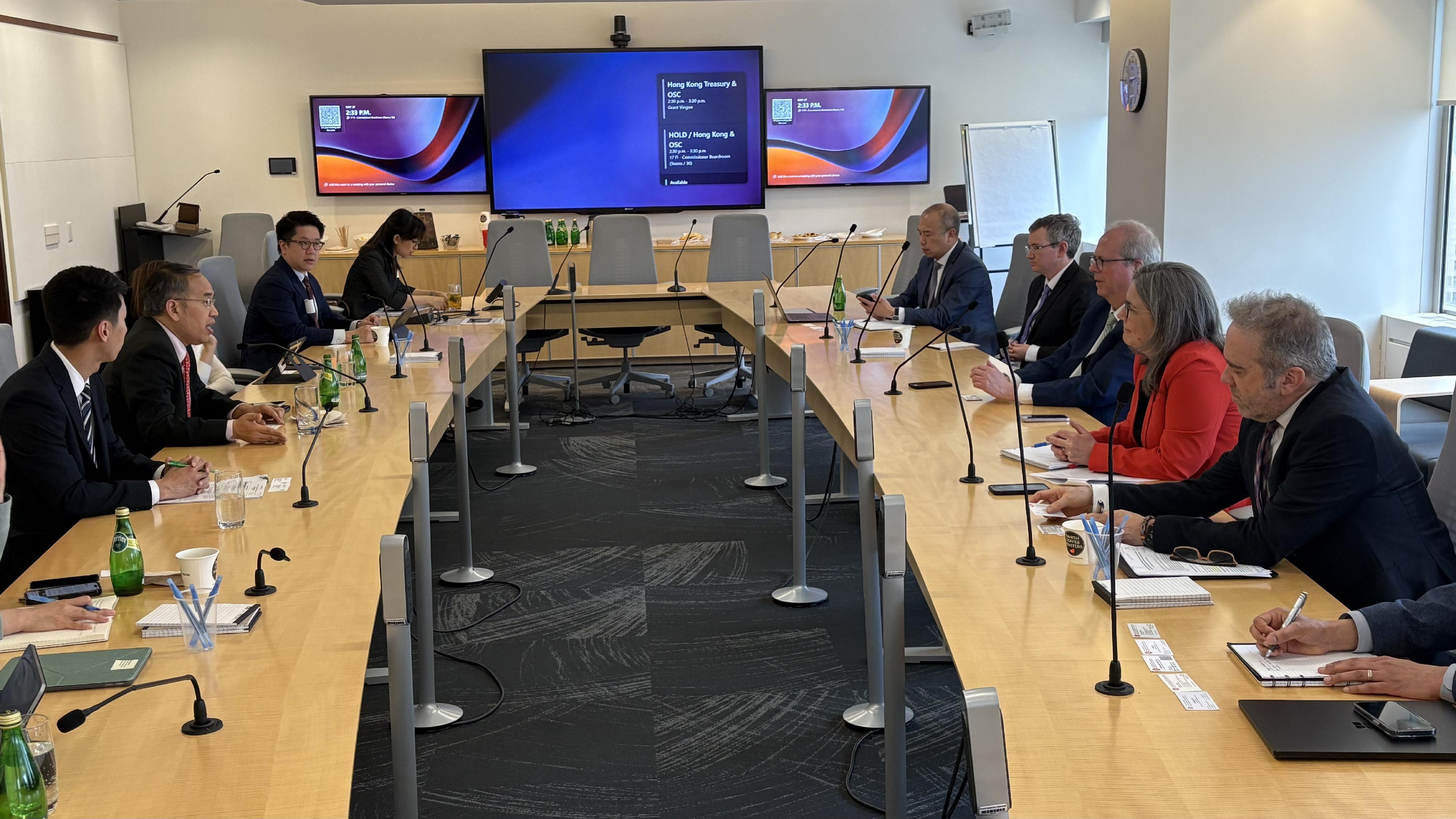
     In the afternoon, Mr Hui met with the Chief Executive Officer of the Ontario Securities Commission (OSC), Mr Grant Vingoe, and OSC representatives. The Securities and Futures Commission of Hong Kong entered into a Memorandum of Understanding with the OSC in mid-May to include Ontario of Canada in its list of acceptable inspection regimes for strengthening the regulatory collaboration and exchange of information between the two regulators. Both Mr Hui and Mr Vingoe agreed that in today’s shifting global landscape, collaboration with trusted allies would ensure capital markets remain robust and resilient.
      
     In the evening, Mr Hui had a dinner meeting with the President of the Hong Kong-Canada Business Association (HKCBA) (Toronto Chapter), Mr Joseph Chaung, and board members to brief them on the latest developments and future direction of Hong Kong’s financial market. The HKCBA has members in eight Canadian cities to foster bilateral trade.
      
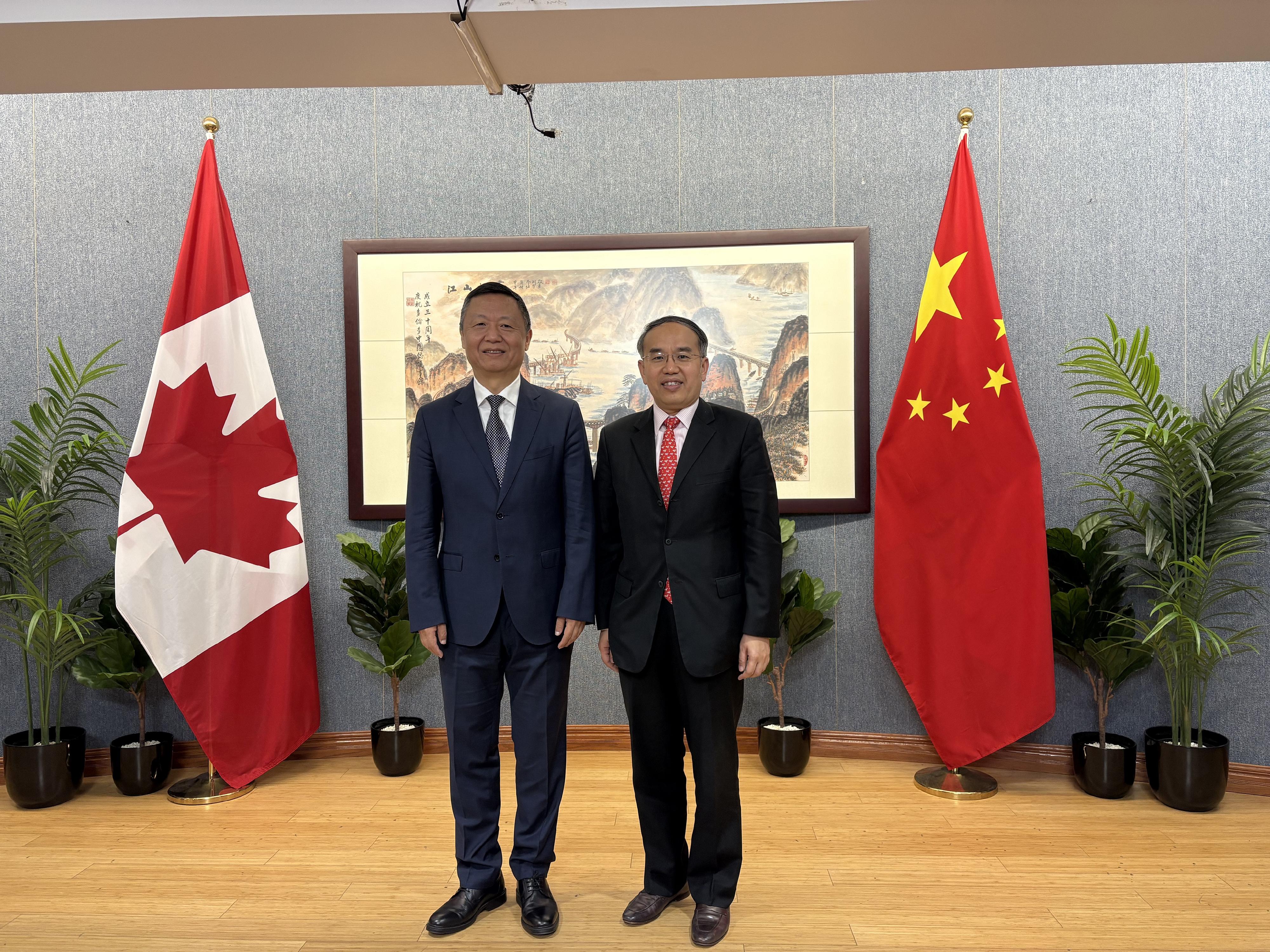
     Mr Hui also paid a courtesy call to the Consul-General of the People’s Republic of China in Toronto, Mr Luo Weidong. Both expressed their anticipation that Hong Kong, with the support of the nation and its solid foundation and forward-looking measures in financial areas, will engage in more co-operation with Canada.
      
     On May 28 (Toronto Time), Mr Hui will travel to Ottawa to meet with government financial officials.
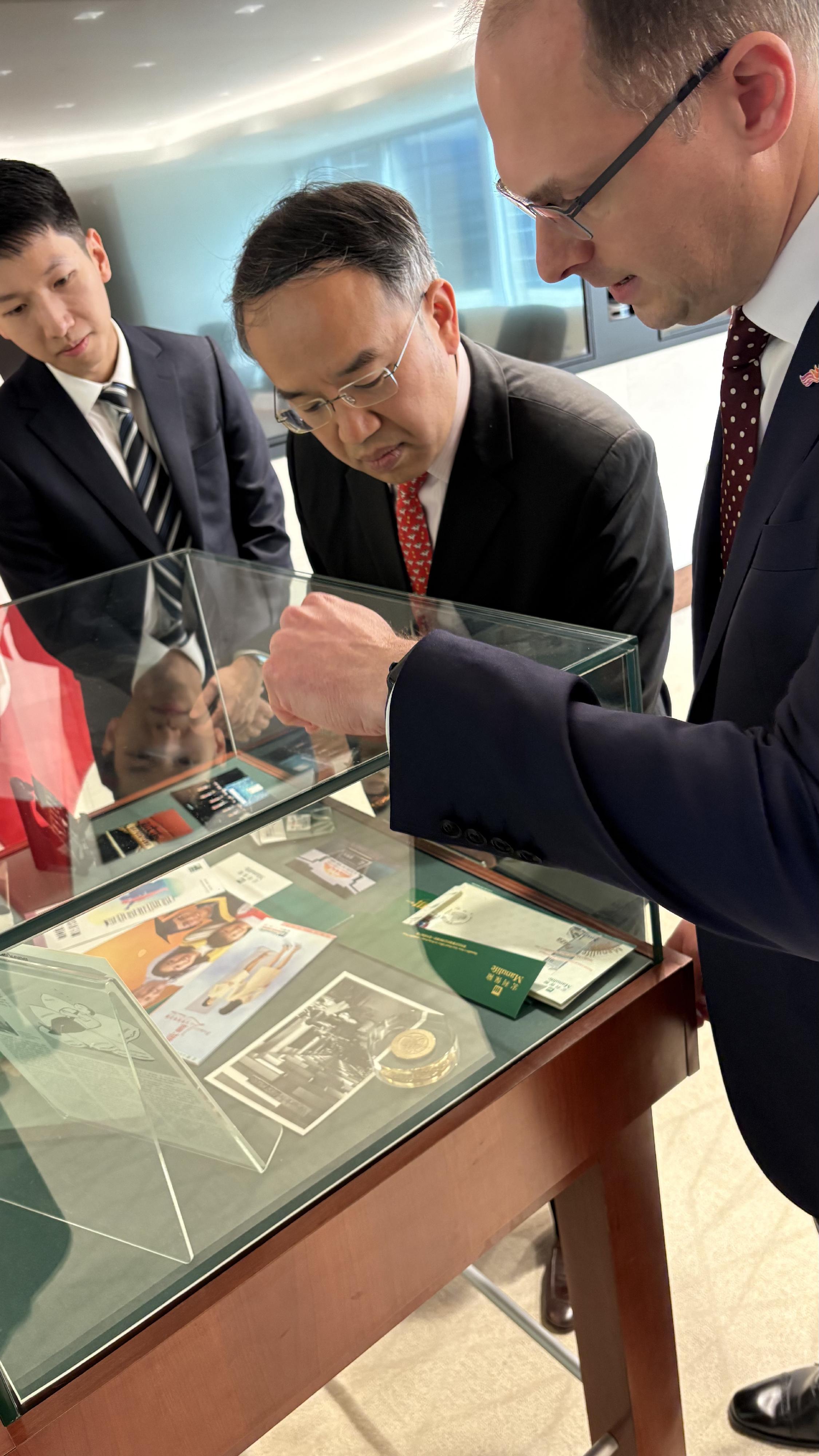
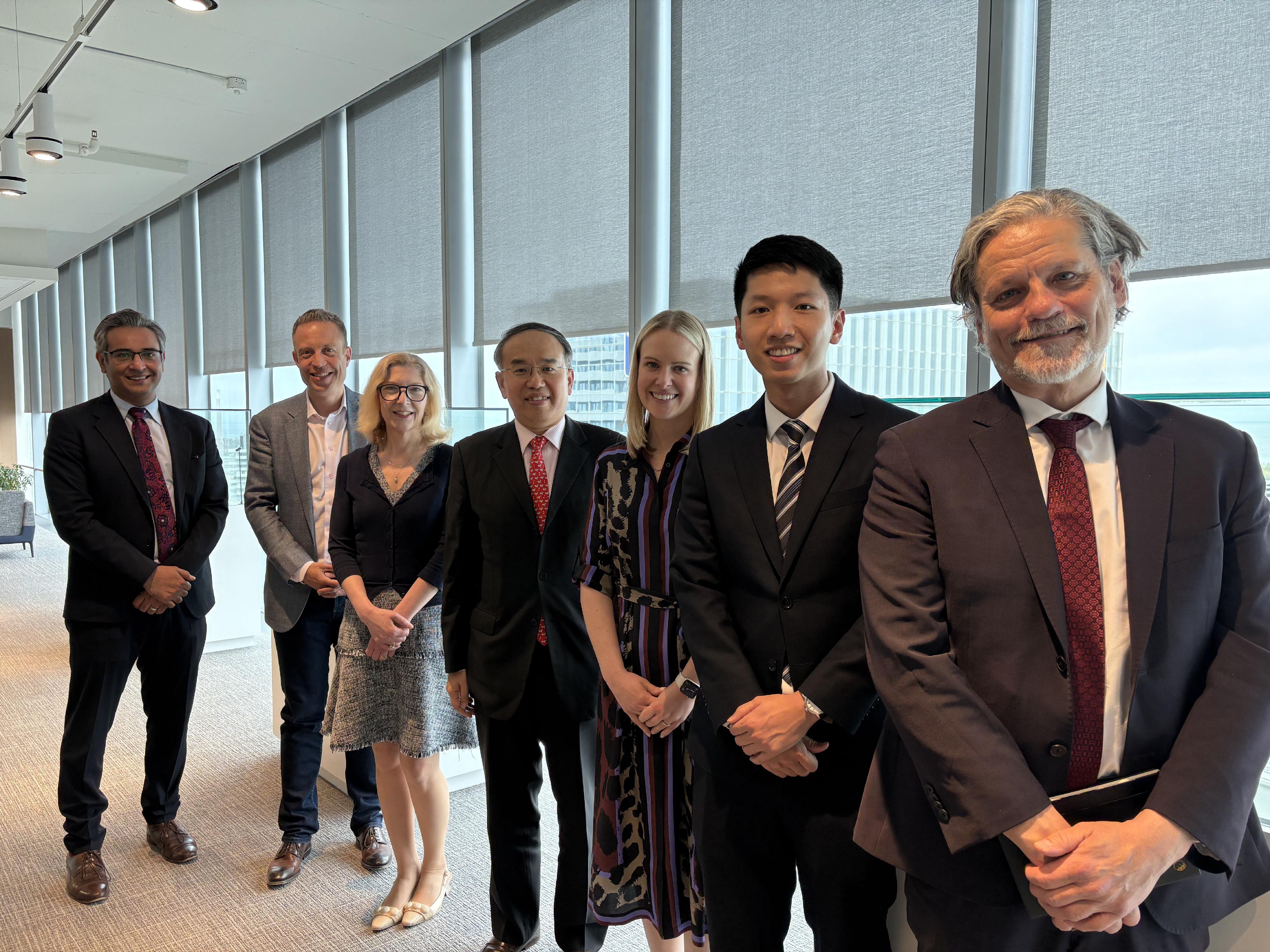
Photo  Photo  Photo  Photo  Photo  Photo  Photo  Photo  
read more

LCQ13: Public housing estates with supply of centralised liquefied petroleum gas

     Following is a question by the Hon Chan Hok-fung and a written reply by the Secretary for Housing, Ms Winnie Ho, in the Legislative Council today (May 28):
 
Question:

     It is learnt that there are 15 public housing estates (PHEs) under the Hong Kong Housing Authority (HA) that are installed with centralised liquefied petroleum gas (LPG) supply. The previous arrangements for renewal of LPG suppliers were such that existing suppliers with satisfactory performance would be eligible for renewal. Subsequently, with reference to the experience in private housing developments, and taking into account public views and the Competition Commission’s recommendations, the HA decided in August 2017 that tenders should be invited for awarding new contracts for the supply of centralised LPG to PHEs upon expiry of the existing contracts. In this connection, will the Government inform this Council:

(1) of the information on current contracts for the centralised LPG supply systems of the 15 PHEs and the Home Ownership Scheme (HOS) estates sharing the same LPG compound (shared HOS estate) (set ‍out in the table below); whether such contracts were awarded by tender; if not, of the reasons for that;
 

PHE Shared HOS estate Current contract information
LPG supplier Start date Expiry date Whether the contract was awarded by tender
Tai Yuen Estate, Tai Po Ting Nga Court        
Yau Oi Estate, Tuen Mun /        
On Ting Estate, Tuen Mun Siu On Court        
Choi Yuen Estate, North District Yuk Po Court        
Butterfly Estate, Tuen Mun Siu Shan Court        
Wu King Estate, Tuen Mun Siu Shan Court        
Lung Tin Estate, Lantau Island Lung Hin Court        
Oi Man Estate, Kowloon /        
Kwong Fuk Estate, Tai Po Wang Fuk Court        
Kam Peng Estate, Peng Chau Peng Lai Court        
Ngan Wan Estate, Lantau Island /        
Sam Shing Estate, Tuen Mun /        
Shui Pin Wai Estate, Yuen Long /        
Wah Fu (II) Estate, Hong Kong Island /        
Nga Ning Court, Cheung Chau /        
 
(2) whether it has compiled statistics on the total annual supply of domestic piped LPG to the PHEs and shared HOS estates mentioned in (1) over the past five years, as well as the annual average price of LPG in such PHEs and HOS estates; of the comparison between such average LPG prices and the corresponding town gas prices during the same period; and

(3) whether the owners’ committees or residents of the PHEs mentioned in (1) have requested the HA to replace the gas supply system (e.g. ‍natural gas)?

Reply:

President,
 
     Our reply to the question raised by the Hon Chan Hok-fung is as follows:
 
(1) At present, 15 public rental housing (PRH) estates under the Hong Kong Housing Authority (HA) are equipped with centralised liquefied petroleum gas (LPG) supply systems. According to the past policy, prior to 2017, on the premise of ensuring that residents of the estates could enjoy safe and stable centralised LPG supply services, the HA would renew the contract with the existing supplier upon expiry of the contract if the supplier’s performance had been satisfactory during the contract period. In the light of public views and the Competition Commission’s advice of 2016, the Commercial Properties Committee of the HA approved in 2017 that new contracts would be awarded by tender instead for centralised LPG supply upon expiry of the existing contracts. Accordingly, the HA arranged bundled tendering for the LPG supply contracts for two PRH estates (i.e. Wah Fu (II) Estate and Nga Ning Court) as a trial in 2018. The new contracts were successfully awarded and the handover work was completed smoothly. Since 2019, the new supplier has commenced the supply of LPG for the two estates for a contract term of 10 years.

     After consolidating the experience gained from the tendering exercise for the above-mentioned two PRH estates, the HA endorsed in 2019 that new contracts for centralised LPG supply for the remaining PRH estates would also be awarded by tender upon expiry of the existing contracts. The HA has further enhanced the relevant tendering arrangements. Apart from retaining concessionary measures welcomed by residents, including the requirement for suppliers to provide residents with free annual inspection of gas appliances and to waive the minimum charge, suppliers were required to waive the monthly fee for the maintenance service plan so as to provide more comprehensive concessions for residents. At the same time, for the protection of consumers, we continue to require in the tender documents that the LPG prices charged by suppliers should not be higher than the market rate. The suppliers are also required under the enhanced tendering arrangements to strengthen customer service such as shortening the response time for handling emergency calls and providing a variety of payment channels to provide convenience to residents. Suppliers are required to enhance safety of the LPG supply system and introduce measures to promote environmental protection and energy saving as well in order to further enhance their services to the residents.

     As most of the LPG storage tanks located in PRH estates also serve the adjoining Home Ownership Scheme (HOS) estates, the HA has to liaise with the Incorporated Owners (IOs) of the relevant HOS estates on the new arrangement of joint tendering. As the IOs concerned may not be aware of the necessity of joint tendering, it takes time for the HA to negotiate with the IOs. The IOs also have to reserve time to convene owners’ meetings to explain the joint tendering arrangements to the owners. Some of the individual HOS estates involve a large number of households, for example, Wang Fuk Court in Tai Po involves near 2 000 units. It takes time to explain to the owners about the shared LPG storage tanks and the required joint tendering arrangements so as to obtain the consensus and necessary approval from the owners for the joint tendering. Once the relevant approvals are obtained, the HA and the concerned IOs will have to seek legal advice on the documents for joint tendering separately, and the tendering exercise can only be formally launched after securing agreement by both parties. 

     In addition, as the centralised LPG storage tanks in some PRH estates were due for replacement in 2022 and 2023, tendering exercises for the centralised LPG supply contracts of these estates could only be arranged after completion of the replacement of LPG storage tanks. As such, the tendering schedule for these estates during the said period is also affected by the replacement of LPG storage tanks. In formulating the tendering schedule, the HA also needs to take into account a range of factors, such as the expiry dates of respective LPG supply contracts, the geographical location of different estates, economy of scale, as well as the views of the industry on the tendering arrangements.

     In early 2024, the HA conducted the first joint tendering exercise for the LPG supply contracts for a PRH estate and an HOS estate (Kwong Fuk Estate and Wang Fuk Court) as a trial and the contracts were successfully awarded. We have planned to progressively arrange tendering exercises for the remaining PRH estates and HOS estates with shared LPG storage tanks in an orderly manner, including the tendering exercises for Choi Yuen Estate/Yuk Po Court and Shui Pin Wai Estate within 2025. Pending the commencement of the new contracts, the existing suppliers would continue to operate with a temporary licence to maintain the provision of centralised LPG services. The existing centralised LPG suppliers for the 15 relevant PRH estates concerned is tabulated as follows:
 
PRH estates HOS estate sharing the same LPG storage tanks Existing contract information
    LPG supplier Remarks
Wah Fu (II) Estate,
Hong Kong Island
/ ExxonMobil
Hong Kong Limited
Tender exercises were completed
Nga Ning Court,
Cheung Chau
/ ExxonMobil
Hong Kong Limited
Kwong Fuk Estate,
Tai Po
Wang Fuk Court Sinopec (Hong Kong) Petroleum Holding Company Limited
Tai Yuen Estate,
Tai Po
Ting Nga Court ExxonMobil
Hong Kong Limited
Tender exercises are being conducted in a progressive and orderly manner
Yau Oi Estate,
Tuen Mun
/ ExxonMobil
Hong Kong Limited
On Ting Estate,
Tuen Mun
Siu On Court ExxonMobil
Hong Kong Limited
Choi Yuen Estate,
North District
Yuk Po Court ExxonMobil
Hong Kong Limited
Butterfly Estate,
Tuen Mun
Siu Shan Court ExxonMobil
Hong Kong Limited
Wu King Estate,
Tuen Mun
Siu Shan Court ExxonMobil
Hong Kong Limited
Lung Tin Estate,
Lantau Island
Lung Hin Court ExxonMobil
Hong Kong Limited
Oi Man Estate,
Kowloon
/ Shell Hong Kong Limited
Kam Peng Estate,
Peng Chau
Peng Lai Court Shell Hong Kong Limited
Ngan Wan Estate,
Lantau Island
/ Shell Hong Kong Limited
Sam Shing Estate,
Tuen Mun
/ ExxonMobil
Hong Kong Limited
Shui Pin Wai Estate,
Yuen Long
/ Shell Hong Kong Limited
 
(2) and (3) As for the amount of supply of domestic centralised LPG to the PRH estates and HOS estates with shared LPG storage tanks, the concerned LPG suppliers indicated that the relevant information was commercially confidential and therefore could not be disclosed. Moreover, the LPG consumption varies depending on a number of factors such as the number of occupants in the household, seasons, the living style of the residents and the efficiency of the gas appliances. The estimated average LPG consumption for a 3-person household is around seven cubic metre per month.
 
     To protect the interests of the centralised LPG consumers in the PRH estates and HOS estates with shared LPG storage tanks, the HA has stipulated in the centralised LPG supply contracts that the LPG prices charged by the suppliers shall not be higher than the market rate. For the benefit of residents, the HA will also require in the tender documents for LPG supply that LPG suppliers must provide free annual inspection of gas appliances and waive the minimum charge and the monthly fee for the maintenance service plan provided to domestic tenants/occupiers using the LPG supply service. We have meetings with LPG suppliers every six months and will review the relevant LPG prices by making reference to the domestic centralised LPG prices published by local LPG suppliers to ensure compliance with the relevant requirements. In April 2025, the latest average price of domestic centralised LPG published by LPG suppliers in April 2025 was $47.34 per cubic metre.
 
     As for the town gas price for household customers for the same period, with effect from August 1, 2024, the charge ranges from 27.60 cents to 28.55 cents per megajoule, plus a fuel cost adjustment. In addition, the minimum basic charge for each household customer is $20 and the monthly maintenance charge is $10. Town gas is charged based on the energy unit of megajoule, while LPG is generally charged per cubic metre for consumption. As the unit of measurements, basis of calculation and charging scheme of these two gas types are different; the heat efficiency of LPG and town gas appliances are different; and these two gas types vary in aspects such as calorific value, it is not possible to make a direct comparison of their prices.

     So far, there is no request for the replacement of LPG supply systems from the tenants of PRH estates or IO’s committees of the HOS estates. read more

Acting SFST’s speech at HKVCA Greater China Private Equity Summit 2025 (English only)

     Following is the speech by the Acting Secretary for Financial Services and the Treasury, Mr Joseph Chan, at the HKVCA (Hong Kong Venture Capital and Private Equity Association) Greater China Private Equity Summit 2025 today (May 28):
 
Rebecca (Co-Founder and Managing Director of Asia Alternatives, Ms Rebecca Xu), Conrad (Founder and Chairman of Strategic Year Holdings, Mr Conrad Tsang), distinguished guests, ladies and gentlemen,
 
     Good morning. It is my great pleasure to join you at the HKVCA’s flagship event – the Greater China Private Equity Summit – a global gathering of professionals and industry leaders of the private equity and venture capital sector.
 
     Today, the global economy is confronted by geopolitical tensions and economic fragmentation, and threatened by the rise of unilateralism and protectionism. Against this backdrop, it is all the more necessary to have a stable and predictable “super connector” with an overall conducive business environment.
 
     This is exactly what Hong Kong stands to provide. Earlier this year, the International Monetary Fund has reaffirmed Hong Kong’s position as an international financial centre and recognised Hong Kong’s resilient financial system, as supported by robust institutional frameworks, ample policy buffers, and the smooth functioning of the Linked Exchange Rate System. Indeed, Hong Kong ranked third in the world and first in Asia in the latest Global Financial Centers Index, whilst topping its “investment management” and “finance” matrix globally.
 
China connectivity
 
     One unique advantage of Hong Kong is our preferential access to the Mainland China market. Last year (2024) marked the 10th anniversary of the mutual market access programmes between the Mainland and Hong Kong financial markets. Various mutual access programmes have been introduced one after another and have thrived over the past few years. The Connect Schemes allow international investors to conveniently invest in the Mainland China market through Hong Kong. At the same time, they enable Mainland investors to diversify their asset allocation through Hong Kong, facilitating the two-way flow of capital between the Mainland market and international markets, as well as the internationalisation of the Renminbi.
 
     The content and scope of mutual access have continued to deepen and expand, now encompassing a wide range of offerings, including stocks, bonds, exchange-traded funds, derivatives for risk management, and more. Real estate investment trusts will also soon be included in the Connect Schemes.
 
     Meanwhile, the Guangdong-Hong Kong-Macao Greater Bay Area (GBA) is fast emerging as a young and massive consumer market that is increasingly affluent, and has a growing demand for quality financial products and services, and a need for diversified asset allocation. Home to 87 million people with a GDP (Gross Domestic Product) per capita of US$40,000 on a purchasing power parity basis, the GBA presents immense potential in driving the synergistic development of Hong Kong and other GBA cities.
 
     Tapping into the potential of this market, the GBA Cross-boundary Wealth Management Connect (WMC) was launched in 2021 and enhanced in February last year. The WMC provides GBA residents with a formal, direct and convenient channel for cross-boundary investment in diversified wealth management products. As of the end of April this year, about 154 000 individual investors in the GBA participated in the WMC, and cross-boundary fund remittances totalled close to RMB112 billion.
 
     Another recent case of our continued endeavour to deepen the mutual access and strengthen financial market development is the enhancements to the Mainland-Hong Kong Mutual Recognition of Funds (MRF) arrangement in January this year. By relaxing sales restrictions and allowing Hong Kong funds to delegate investment management functions overseas, the measures significantly increased the diversity of fund products, enhanced the scale of funds, and brought a positive effect to the distribution of MRF funds.
 
Asset and wealth management hub
 
     With the your staunch support, we are solidifying Hong Kong’s role as an international asset and wealth management centre. As at the end of 2023, the assets under management (AUM) of the Hong Kong’s asset and wealth management business reached about US$4 trillion, registering a growth of about 30 per cent over five years, and 64 per cent of the capital was sourced from non-Hong Kong investors, underscoring our city’s role as a trusted gateway for global capital seeking access to opportunities across Asia and beyond. Our leadership is further evidenced by our standing as Asia’s largest hedge fund hub and Asia’s largest cross-border wealth management centre.
 
     As of the end of April this year, there were 1 125 limited partnership funds registered in Hong Kong, representing a growth of over 30 per cent on a year-on-year basis. According to an industry report, as of the end of first quarter this year, the AUM of Hong Kong’s private equity business amounted to about US$230 billion, ranked second in Asia, just trailing the Mainland China market.
 
     To drive development on this front, we are welcoming alternative asset funds to list in Hong Kong. The Securities and Futures Commission has recently issued a circular to clarify the regulatory requirements for authorising closed-ended funds that invest mainly in private and less liquid assets, thereby encouraging sizeable alternative asset funds, including those investing in private equity, private credit, and infrastructure equity or debt, to list in Hong Kong.
 
     I am sure this is a move welcomed by the industry, with benefits to investors that are multifold. On one hand, investors have broadened investment choices for diversification. On the other hand, investors may tap into opportunities previously only available to institutional and professional investors. Those with a long-term investment horizon may potentially achieve higher returns and a more stable valuation.
 
     Another welcome move, I believe, is our proposal to enhance the tax incentives for funds, single family offices and carried interest. These proposals aim to expand the scope of qualifying funds to include vehicles such as pension and endowment funds, while also increasing the range of eligible asset classes for tax concessions including emerging instruments like carbon credits, emission derivatives, insurance-linked securities, private credit investments, and virtual assets. In addition, we plan to enhance the tax concession arrangement on the distribution of carried interest by private equity funds by removing the existing HKMA (The Hong Kong Monetary Authority)’s certification requirement and eliminating the reference to a hurdle rate. We have completed the industry consultation and we are now formulating the relevant enhancement measures with financial regulators based on the feedback received. We target to work out the details of the proposals this year and submit the legislative proposals to the Legislative Council for consideration next year. If approved, the relevant measures will take effect from the year of assessment 2025/26, which begins on April 1 this year.
 
     Another focus area of ours is the family office sector. The growth of family offices has been particularly noteworthy, with over 2 700 single family offices operating in Hong Kong as of the end of 2023. More than half of them are managing portfolios exceeding US$50 million, and in particular, over 30 percent are managing portfolios over US$100 million, reflecting Hong Kong’s appeal to ultra-high-net-worth individuals (UHNWIs) and institutional investors alike. Backing this claim is a market report last year that ranked Hong Kong first in Asia and second in the world in terms of the population size of UHNWIs in 2023 among global cities. This is a testament to our city’s potential and capacity to attract and nurture wealth, further solidifying our position as a global wealth management and family office hub.
 
     Targeting this segment with promising growth potential, we have been implementing a series of policy measures to support the development of the family office business after we issued the Policy Statement on Developing Family Office Businesses in Hong Kong in 2023. Among others, we are fostering collaboration, networking and knowledge sharing across the family offices from around the world via the Hong Kong Academy for Wealth Legacy for the current and next generation of wealth owners.
 
     We also launched the New Capital Investment Entrant Scheme in March 2024 where Limited Partnership Funds are included as Permissible Investment Assets. As of the end of April this year, 1 257 applications have been received, potentially bringing in an investment amount of over HK$37 billion to Hong Kong.
 
Closing
 
     Ladies, and gentlemen, Hong Kong is well-positioned to maintain and enhance its status as a leading international financial centre, notable for our certainty, transparency, and predictability. Our ongoing efforts to establish new ties, attract new capital and foster innovation will ensure our continued strength as a “super connector” in an ever-changing world.
 
     As we continue to bridge global investors with opportunities in the international and Mainland markets, we look to the HKVCA and other professionals alike to foster industry development through leveraging on our distinct advantages.
 
     On this note, I would like to thank the HKVCA again for hosting today’s event and your continued contribution to the industry. I wish you all an enjoyable and rewarding summit today. Thank you. read more

LCQ19: Traffic incidents involving animals

     Following is a question by the Hon Chan Hak-kan and a written reply by the Secretary for Environment and Ecology, Mr Tse Chin-wan, in the Legislative Council today (May 28):
 
Question:
 
     Under the Road Traffic Ordinance (Cap. 374), the driver of a vehicle shall stop if an accident involving that vehicle occurs whereby damage is caused to animals not in the vehicle, and the Government included cats and dogs in the definition of “animal” under the Ordinance in 2021. In this connection, will the Government inform this Council:
 
(1) of the following information in respect of traffic accidents involving vehicles hitting animals in each of the past five years: (i) the number of animals being hit (set out in the table below a breakdown by the type of animals (i.e. (a) horses, (b) cattle, (c) ass, (d) mules, (e) ‍sheep, (f) pigs, (g) goats, (h) cats and (i) dogs)), (ii) the number of reports received by the Government on such accidents, and (iii) ‍among these accidents, the number and percentage of cases involving hit-and-run drivers, (iv) the number of such accidents investigated by the Government under the Prevention of Cruelty to Animals Ordinance (Cap. 169), and (v) among them, the number of prosecutions instituted;
 

Year (a) …… (i)
2021      
……      
2025 (This year to date)      

(2) of the current handling procedures adopted by the government departments concerned upon receipt of cases of animals being hit by vehicles; the number of such cases in which animal carcasses were handled directly by the Food and Environmental Hygiene Department in each of the past five years, and their percentage in the total number of cases involving animals being hit by vehicles;
 
(3) as there are views that the deterrent effect of the existing legislation on accidents involving vehicles hitting animals is inadequate, whether the authorities will introduce fixed penalty or incorporate a demerit point system; if so, of the details; if not, the reasons for that;
 
(4) whether the Government will allocate additional resources to assist in rescuing animals hit and injured by vehicles; and
 
(5) whether the Government will review the legislation to include more local wild animals (including but not limited to monkeys and wild pigs) in the definition of “animal” under Cap. 374; if so, of the details; if not, the reasons for that?
 
Reply:     
 
President,
 
     The Road Traffic Ordinance (Cap. 374) (the Ordinance) provides that the driver of a vehicle shall stop if an accident involving that vehicle occurs whereby damage is caused to specified animals not in the vehicle. Drivers are also required to provide particulars, including name and address, to any police officer or any person having reasonable grounds for requiring the information. Otherwise, the driver must report the accident to the Police as soon as possible and in any case no later than 24 hours after the accident. The Government amended the definition of specified animals under the Ordinance on November 7, 2021 to include cats and dogs. Currently, specified animals include horse, cattle, ass, mule, sheep, pig, goat, cat and dog.
      
     Having consulted the Transport and Logistics Bureau and the Hong Kong Police Force (HKPF), the reply to the question from the Hon Chan Hak-kan is as follows:
 
(1) In the past five years, the HKPF has received a total of 933 reports of vehicle hitting the specified animals (details set out at the Table below), 147 of them involved driver failing to stop after hitting the animals. The HKPF does not maintain breakdown of statistics by the type of animals, cases investigated under the Prevention of Cruelty to Animals Ordinance (Cap. 169), and the prosecution number.
 
Year Number of reports of vehicle hitting animals received
2021* 35
2022 144
2023 319
2024 314
2025
(as at April 30)
121
*The HKPF does not maintain the statistics prior to the amendment to the Ordinance.

(2) and (4) In general, upon receipt of reports of animals injured in traffic accidents, the Police will contact the Society for the Prevention of Cruelty to Animals (SPCA). The SPCA will inspect the animals at the scene and send the injured animals without keepers at the scene to the SPCA’s clinics for further treatment. If the injured animal is large in size and cannot be removed from the scene by the SPCA, the Agriculture, Fisheries and Conservation Department (AFCD) will provide rescue services at the scene, and send the injured animal to the AFCD’s Animal Management Centres for further examination and observation as necessary. If the animal has been implanted with a microchip, the AFCD will also contact the animal owner based on the information of the microchip. The Government will, having regard to the implementation of the above mechanism, timely consider whether there is a need to allocate additional resources for the rescue of animals hit by vehicles.
 
     For the drivers involved, if such person did not stop after the accident, or provide particulars to police officers or report to the Police in accordance with the requirements of the Ordinance, the HKPF will investigate and follow up according to the established mechanism; and will instigate prosecution if there is sufficient evidence.
      
     As regards the disposal of animal carcasses, upon receipt of referrals from departments or reports from the public, the Food and Environmental Hygiene Department (FEHD) will arrange for contractors to collect animal carcasses at the scene and deliver them to the landfills of the Environmental Protection Department for disposal. The FEHD does not maintain a breakdown of animal carcasses collected in traffic accidents.
 
(3) Under the Ordinance, a driver failing to stop upon a relevant accident is liable to a fine at level 3 ($10,000) and imprisonment for 12 months, whereas failing to provide particulars and report to the Police according to the requirements of the Ordinance is liable to a fine at level 4 ($25,000) and imprisonment for six months. In general, enforcement by fixed penalty notices is targeted at cases which are simple, straightforward, clear-cut and capable of being easily established, but whether a driver has complied with the Ordinance requires further investigation of the Police, hence it is more appropriate to prosecute by issuing summonses. As regards demerit point system, considering the existing penalties have a certain deterrent effect, we do not intend to include the above offences in demerit point system at this stage, but will timely review them as necessary.
 
(5) The Ordinance requires drivers to stop if they hit a specified animal, with the intent of facilitating livestock owners to seek compensation from the drivers concerned for the loss incurred. The Government’s inclusion of cats and dogs as specified animals under the Ordinance in 2021 aimed to enable cats and dogs injured in traffic accidents to receive timely treatment. As regards whether other wild animals will be included, making reference to the legislation in some overseas jurisdictions, similar stopping and reporting requirements generally only cover animals that are commonly kept by people but not wild animals. In fact, a number of stakeholders raised at the public consultation for amending the Ordinance in 2021 that if monkeys and wild pigs are to be included as specified animals, the drivers may suddenly stop their vehicles and lead to road traffic safety problems. The Government will closely monitor the implementation of the Ordinance and strive to strike a balance between safeguarding animal welfare and the safety of road users, and will timely review whether there is room to further enhance the Ordinance. read more