Tag Archives: China

image_pdfimage_print

HA staff commended for outstanding performance

The following is issued on behalf of the Hospital Authority:

     The Hospital Authority (HA) today (May 28) announced the results of the HA Outstanding Staff and Teams Award and Young Achievers Award for 2025. This year, seven outstanding staff, six outstanding teams and 14 young achievers (the list of awardees is appended) from 13 hospitals in all seven clusters and the Head Office have been awarded for their outstanding performances, provision of quality service, enhancing team spirit and improving the overall operational effectiveness of the organisation. The awardees are from different grades, including medical, nursing, allied health, administration and supporting staff groups.
      
     Since 1993, the HA has been organising this staff reward and recognition programme annually to commend outstanding staff members and teams. To encourage the young generation, the HA added a new category, the Young Achievers Award, since 2018 to recognise the good performance of the new workforce generation.
      
     The Outstanding Staff and Teams and Young Achievers Award Selection Panel was chaired by HA Board Member Ms Margaret Cheng, who noted that the awardees contributed to patient services or the development of the HA in different aspects. They demonstrated professionalism, dedication and perseverance in protecting the health of citizens across various areas, while fully embracing the HA’s core values of “People-centred Care, Professional Service, Committed Staff and Teamwork”. Their contributions are truly commendable, she said.
      
     Other members of the Selection Panel included HA Board ex-Member Professor Chan Wai-yee; awardee of the HA Outstanding Staff Award 2024, Dr Axel Siu; the HA Chief Executive, Dr Tony Ko; the Hong Kong West Cluster Chief Executive, Dr Theresa Li; and the Head of Human Resources, Mr David Mak.
      
     The awards received an overwhelming number of nominations this year, with a total of 94 submissions received. Contributions of participants to the following core values of the HA were adopted as the selection criteria for the Outstanding Staff and Teams by the Selection Panel:
      

  1. People-centred Care
  2. Professional Service
  3. Committed Staff
  4. Teamwork

     As for the Young Achievers Award, awardees were able to demonstrate HA core values, possess the attributes of being an advocate for his/her profession and could always energise the team, think out of the box and be a good communicator. read more

Government welcomes passage of Inland Revenue (Amendment) (Minimum Tax for Multinational Enterprise Groups) Bill 2024

     The Government welcomed the passage of the Inland Revenue (Amendment) (Minimum Tax for Multinational Enterprise Groups) Bill 2024 by the Legislative Council today (May 28). It enables the implementation of the global minimum tax (GMT) and the Hong Kong minimum top-up tax (HKMTT) in Hong Kong from January 1, 2025, onwards in accordance with the Base Erosion and Profit Shifting (BEPS) 2.0 package promulgated by the Organisation for Economic Co-operation and Development (OECD) for tackling tax evasion risks arising from the digitalisation of the economy.
      
     The Secretary for Financial Services and the Treasury, Mr Christopher Hui, said, “The implementation of the GMT and the HKMTT highlights Hong Kong’s staunch support to international co-operation in tackling cross-border tax evasion, and safeguards Hong Kong’s taxing rights. With the 15 per cent GMT for in-scope multinational enterprise (MNE) groups in place, countries and regions can no longer compete for capital and investment by simply lowering their corporate income tax rates. With a fairer global taxation environment, our unique advantages such as the ‘one country, two systems’, excellent connectivity, first-class infrastructure, mature financial markets, quality talent pools, East-meets-West vibes, etc will become even more accentuated to showcase Hong Kong as a premier destination for doing business.”
      
     Under BEPS 2.0, MNE groups with an annual consolidated revenue of 750 million euros or above in at least two of the four fiscal years immediately preceding the current fiscal year (in-scope MNE groups) will need to pay the GMT of at least 15 per cent on profits derived from every jurisdiction in which they operate. With the implementation of the HKMTT, the Government of the Hong Kong Special Administrative Region (HKSARG) will have the first priority in collecting top-up tax from entities of in-scope MNE groups with an effective tax rate (ETR) in Hong Kong below 15 per cent to raise it to 15 per cent. Otherwise, the relevant top-up tax may be collected by other BEPS 2.0-implementing jurisdictions in which the group also operates. Hong Kong’s taxing rights would then be ceded to other jurisdictions. It is estimated that the new regimes will bring in an additional revenue of about $15 billion per year from 2027-28 to the HKSARG.
      
     To facilitate compliance by in-scope MNE groups, taking account of stakeholders’ views, the GMT and HKMTT regimes have incorporated various features, including:

  • safe harbours developed by the OECD, which are provided to reduce compliance burden;
  • the proposed record-keeping period is shortened, and the proposed time limit for filing a Global Anti-Base Erosion information return, if exchange mechanisms fail, is extended to reduce the compliance burden;
  • the “sole or dominant purpose test”, instead of the “main purpose test” originally proposed, is adopted as the general anti-avoidance provision to maintain consistency with the existing mechanism;
  • the qualified domestic minimum top-up tax payable in other jurisdictions is allowable as a tax credit against profits tax charged under Part 4 of the Inland Revenue Ordinance (Cap. 112) (IRO) where appropriate; and
  • the top-up tax to be collected in Hong Kong will be deemed as profits tax so that the relevant existing tax administration mechanisms in the IRO can be applied. Where applicable, taxpayers can ride on Hong Kong’s Comprehensive Avoidance of Double Taxation Agreements or Arrangements signed with other countries or regions for resolving cross-border disputes.

     The Inland Revenue Department (IRD) has set up a dedicated team to provide technical support and answer enquiries with regard to BEPS 2.0. They will also publish online guidance addressing common concerns.
      
     More details on the GMT and the HKMTT are available at the IRD’s dedicated webpage (www.ird.gov.hk/eng/tax/bus_beps.htm). read more

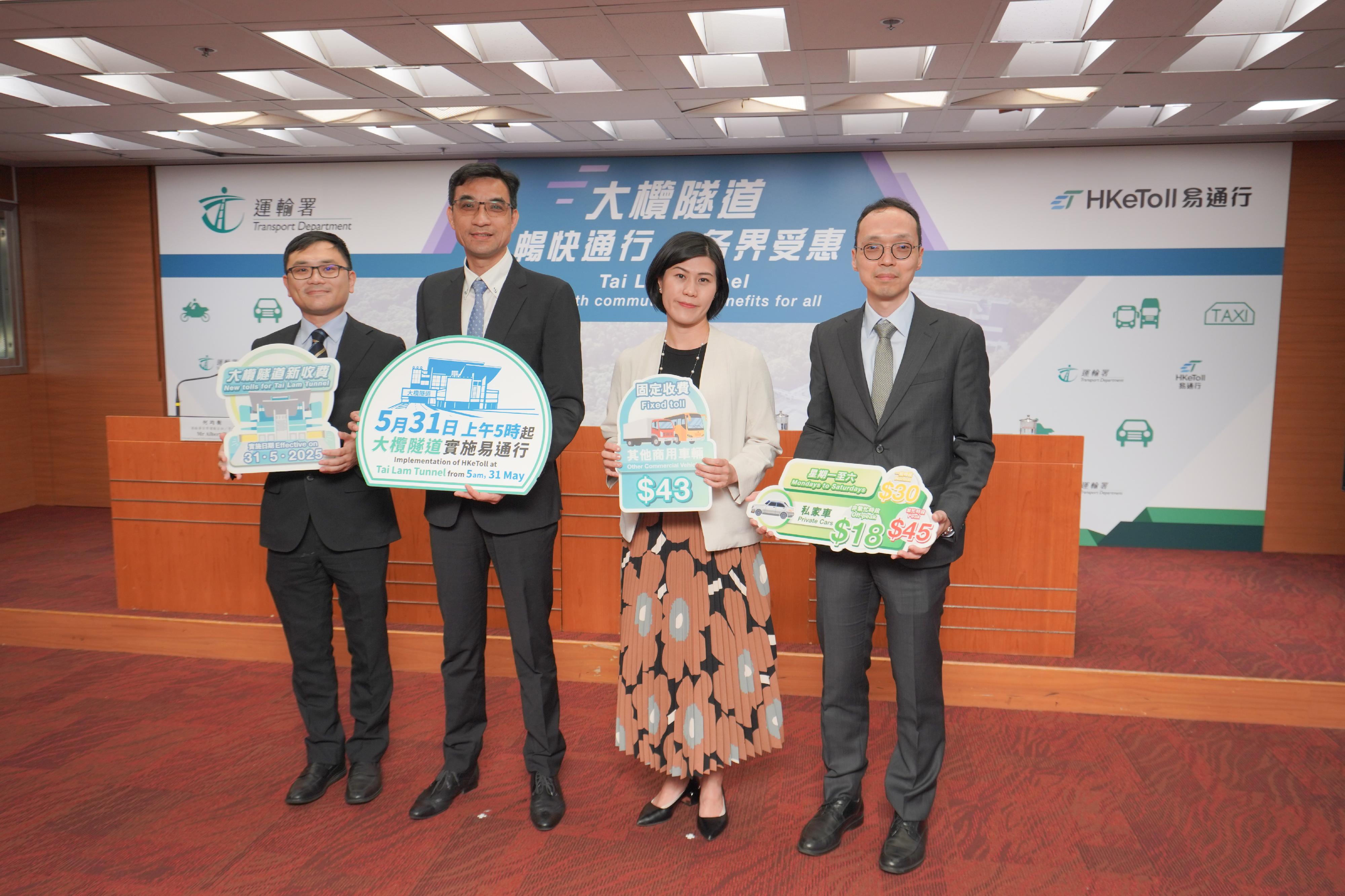
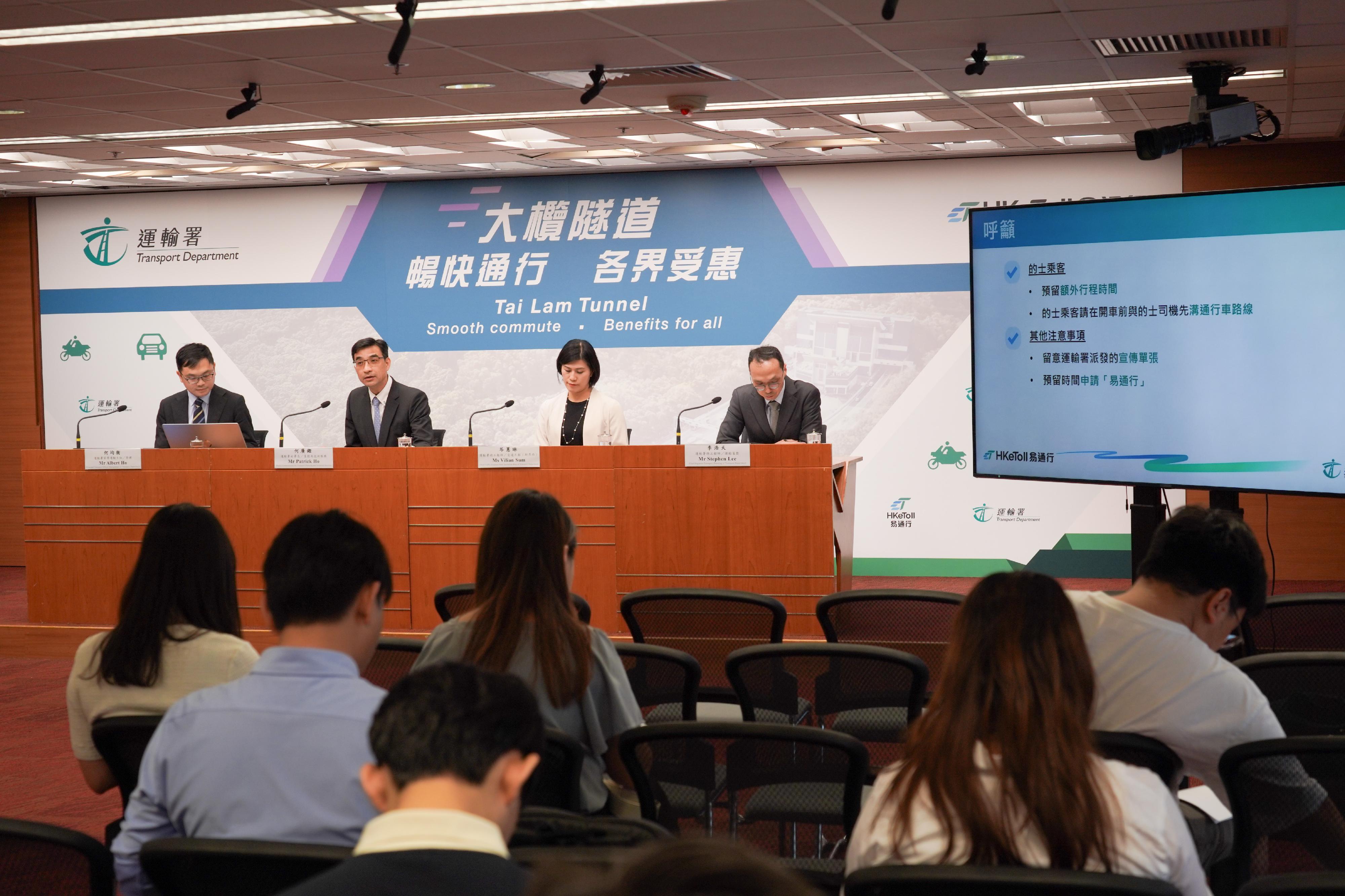
Government to take over Tai Lam Tunnel and substantially reduce its tolls on May 31, followed by HKeToll to be implemented from 5am (with photos/video)

     The Transport Department (TD) today (May 28) announced that the Government will take over the Tai Lam Tunnel (TLT) at 0.00am on May 31 (this Saturday) and substantially reduce its tolls for all vehicle types upon the takeover, followed by the implementation of the HKeToll free-flow tolling service from 5am on the same day. Motorists and members of the public should take heed of relevant temporary traffic and transport arrangements.

New tolls for TLT

     Starting from 0.00am on May 31, time-varying tolls will be applied to private cars and motorcycles at the TLT. Tolls for private cars in the peak, normal and off-peak time slots from Monday to Saturday will be $45, $30 and $18 respectively, with a fixed toll of $18 throughout the day for Sunday and general holidays. For motorcycles, their toll for all time slots is set at 40 per cent of the private car toll, i.e. between $7.2 and $18. Taxis and other commercial vehicles (such as goods vehicles and buses) will continue to have a fixed toll on all days: $28 for taxis and $43 for other commercial vehicles. Motorists may refer to the toll displays added at the TLT or the TD’s HKeMobility mobile application for real-time toll information.

     A spokesman for the TD said, “The Government devised the new tolls for the TLT according to four major principles, namely traffic management needs, ‘user pays’, public transport first and efficiency first. New tolls for all vehicle types will be lower than current tolls by 22 to 80 per cent. Among them, private cars will be charged $13 to $40 less in different time slots. Taxis will be charged $30 less. Commercial vehicles such as goods vehicles and buses will even be charged $21 to $170 less. New tolls will optimise the TLT’s spare capacity while ensuring smooth tunnel flow and alleviating congestion on alternative routes, such as Tuen Mun Road, and promote the flow of people and goods between New Territories West/North and urban areas, thereby bringing benefits to the public at large and all sectors of the community. Upon the takeover of the TLT, the HKeToll will be implemented at all government-tolled tunnels, providing motorists with a smoother road experience.”

     At 0.00am on May 31, the TLT will briefly stop operation for about five minutes to facilitate the updating of toll collection facilities. Manual or Autotoll toll collection will temporarily remain until 3am. From 3am to 5am, the TLT will be fully closed for the switchover works, and it will reopen at 5am with the implementation of the HKeToll without having to stop or queue for payment.

     The TD reminds motorists who have yet to apply for an HKeToll vehicle tag and account to do so as soon as possible. Of note, all toll tickets, promotion and coupons provided by the franchisee now will be terminated upon the expiry of its franchise. Further, disabled drivers will be temporarily required to show their letter issued by the TD to toll collectors from 0.00am to 3am on that day for toll exemption, while their identity will be automatically recognised by the HKeToll after its implementation.

Traffic and transport arrangements

     Following the implementation of the HKeToll, all manual and Autotoll toll lanes will be cancelled. The urban bound of the toll plaza will be adjusted to three lanes, the same as the upstream road sections, whereas the Yuen Long bound will be adjusted to four lanes. Relevant departments will remove all toll booths and toll islands later and adjust the arrangement of traffic lanes.

     To tie in with the launch of the HKeToll, temporary traffic and transport arrangements will be implemented in phases in the vicinity of the TLT from 1am on May 31. From 1am to 3am, part of the lanes of the toll plaza and all slip roads to the TLT via Tsing Long Highway will be closed in phases. From 3am to 5am, the TLT and all slip road entrances will be fully closed, and motorists should opt for Tuen Mun Road:

Yuen Long entrances

  • Two lanes on the left of Yuen Long Highway northbound near Pok Oi Interchange to Tsing Long Highway will be closed. Motorists should keep to the right on Yuen Long Highway to the Fairview Park Boulevard Roundabout and turn around to Tuen Mun Road for the urban area;
  • Two lanes on the right of San Tin Highway southbound connecting to Tsing Long Highway will be closed. Motorists should turn left to Yuen Long Highway and Tuen Mun Road for the urban area;
  • The slip road of Kam Tin Road westbound connecting to Tsing Long Highway will be closed. Motorists should use Kam Tin Road, Yuen Long Highway and Tuen Mun Road for the urban area; and
  • The slip road of Pat Heung Road to the TLT toll plaza will be closed. Motorists should use Pat Heung Road and turn around to Route Twisk for the urban area.

Urban entrances
  • The three lanes on the right of Ting Kau Bridge northbound connecting to the TLT will be closed. Motorists should keep to the left to Tuen Mun Road for Yuen Long; and
  • The link road on the left of Tuen Mun Road westbound near Ting Kau Bridge to the TLT will be closed. Motorists should keep to the right of Tuen Mun Road for Yuen Long.

     During the temporary closure of the TLT, the bus stops at the toll plaza will be temporarily suspended, affecting a total of three overnight bus routes: KMB Route Nos. N269 (Tin Tsz Estate – Mei Foo) and N368 (Yuen Long (West) – Central (Macau Ferry)) as well as Long Win Bus Route No. NA43 (Fanling (Luen Wo Hui) – Hong Kong Port of Hong Kong-Zhuhai-Macao Bridge Public Transport Interchange). They will be diverted via Yuen Long Highway and Tuen Mun Road, and temporary bus stops will be set up at the Tuen Mun Road Bus-Bus Interchange. The TD has informed the bus companies concerned of the arrangements, and passengers should refer to the notices issued by the operators for details.

Appeal

     Motorists and members of the public are urged to pay heed to the above traffic and transport arrangements, plan their journeys in advance by using alternative routes such as Tuen Mun Road or Route Twisk, and allow sufficient travelling time.

     The TD has stepped up publicity since May to introduce the implementation of new tolls and the HKeToll to motorists and the transport trades via TV and radio Announcements in the Public Interest, website (www.td.gov.hk), the Agent T Facebook page (www.facebook.com/AgentT.hk), the HKeMobility and HKeToll mobile applications, variable message signs on major roads, tunnel broadcasts, posters and leaflets in phases. Relevant departments will also put up adequate traffic signs and make road markings to remind motorists of the arrangements.

     Relevant departments and the TD are well prepared for the takeover of the TLT, including the completion of the condition survey and inspection of tunnel facilities. In case of inclement weather or on-site conditions that prevent the necessary works from commencing or being completed as scheduled, the TD will make an announcement accordingly. Motorists and members of the public are advised to keep abreast of the latest traffic news through radio and television broadcasts, the TD’s website and the HKeMobility.
Photo  Photo  
read more

LCQ20: Borrowing on the part of foreign domestic helpers

     Following is a question by the Hon Judy Chan and a written reply by the Acting Secretary for Financial Services and the Treasury, Mr Joseph Chan, in the Legislative Council today (May 28):
 
Question:
 
     The Government has indicated that the borrowing problems of foreign domestic helpers (FDHs) not only affect their own financial well-being, but also bring much trouble to their employers. It has been reported that in recent years, there have been instances where employers or former employers of FDHs are harassed by money lenders or financial intermediaries as FDHs default on loans. In this connection, will the Government inform this Council:
 
(1) of the annual number of cases received by the Companies Registry from FDH employers, in 2024 and this year to date, in which harassment was allegedly inflicted on them by licensed money lenders during debt recovery from their FDHs;
 
(2) given that in reply to a question raised by a Member of this Council on November 27 last year, the Government indicated that it was formulating specific measures for public consultation along such directions as reviewing the existing regulations on money lenders and enhancing publicity and education, and it planned to commence such consultation in the first half of this year, of the progress of the public consultation on such new measures and the actual implementation timetable;
 
(3) as the revised Code of Practice for Employment Agencies (CoP) promulgated by the Labour Department (LD) in May last year requires employment agencies to, when making an application for a licence and renewal of a licence, inform the LD of whether they are associated with any financial institution, of the number of employment agencies that have made such declarations to LD since the revision of CoP;
 
(4) given that in reply to a question raised by a Member of this Council on January 8 this year, the Government indicated that only about 90 licensed money lenders had joined or were in the process of joining “Credit Data Smart” (CDS), a Credit Reference Platform, how the authorities plan to encourage the remaining licensed money lenders to join CDS so that the affordability of borrowers (including FDHs) for unsecured personal loans can be more accurately assessed by the industry; and
 
(5) as it is learnt that some FDHs have successfully applied for loans using their former employers’ addresses despite the completion of their agreements, whether the authorities have plans to address this issue, such as requiring financial institutions to verify with the authorities whether the FDH has an employment relationship with the employer declared by him or her before approving the loan?
 
Reply:
 
President,
 
     The Government is very concerned about the borrowing issue of foreign domestic helpers (FDHs) and will strictly regulate licensed money lenders (money lenders) and step up publicity and education etc, to better protect the interests of FDHs and their employers. In consultation with the Labour and Welfare Bureau, Companies Registry (CR) and the Hong Kong Monetary Authority (HKMA), the reply to various parts of the question is as follows:
 
(1) In 2024 and 2025 (as at April), the CR received 11 and four complaints respectively on the alleged harassment of employers of FDHs by licensed money lenders due to debt collection in relation to the FDHs. The CR referred the cases concerned to the Police for handling.
 
(2) The Government has been closely monitoring the market situation in the money lending sector to continuously review and enhance the prevailing regulatory measures. In 2021, we enhanced the licensing conditions of money lenders, including requiring money lenders, before entering into a loan agreement for an unsecured personal loan, to undertake an assessment of the borrower’s repayment ability and have due regard to the assessment outcome, and requiring money lenders to immediately cease to use a referee’s information after they are informed or aware that the written consent was in fact not signed by the referee. In 2022, we lowered the statutory interest rate cap and the threshold of extortionate rate from 60 per cent to 48 per cent and from 48 per cent to 36 per cent respectively.
 
     To step up efforts in addressing the issue of excessive borrowing, we will commence a public consultation this June on enhancing regulation of unsecured personal loans and strengthen protection for loan referees etc, and will consult the Legislative Council Panel on Financial Affairs in July. After the consultation period, we will collate and summarise the views to be received to finalise relevant measures and formulate relevant legislative proposals.
 
(3) To enhance the protection for job seekers and employers, the Labour Department (LD) promulgated the revised Code of Practice (CoP) for Employment Agencies on May 9, 2024. The revised CoP requires employment agencies (EAs) to declare, when applying for a licence or licence renewal, whether they operate any financial institution on the same premises as EAs, and whether the EA licensee or the person intending to be the licensee is at the same time the responsible person of any financial institution.
 
     As at April 2025, the LD received and processed declarations from 3 362 EAs during applications for a licence or licence renewal in accordance with the aforementioned requirement. Among the 3 362 EAs, 41 EAs declared affiliations with financial institutions.
 
(4) To encourage more money lenders to join the Credit Data Smart (CDS), the Government and the HKMA have been working closely with the Hong Kong Association of Banks, the Hong Kong Association of Restricted Licence Banks and Deposit-taking Companies, and the Hong Kong S.A.R. Licensed Money Lenders Association Limited to research into and provide different solutions, as well as to organise briefing sessions on the CDS and proactively invite money lenders that have not joined the CDS to meetings.
 
     Furthermore, under the strong support and promotion of the HKMA, the platform operator (i.e. Hong Kong Interbank Clearing Limited) has developed an interface, namely the “Common Module”, which provides an effective, lower-cost, and more convenient way for money lenders to connect to the CDS, saving the need to establish their own application programming interfaces (API).
 
     The Government and the HKMA will continue to co-operate with the industry to develop enhancement measures to assist more money lenders in joining the CDS, so as to build a more comprehensive database.
 
(5) To address situation of employers or former employers being harassed due to borrowing of their FDHs, the licensing conditions of the current money lenders licence have clearly set out the relevant regulatory requirements. According to licensing condition 10 of the money lenders licence, a money lender and his debt collector shall only recover debts from the person who is in law indebted to him. A money lender and his debt collector shall not, while trying to locate the whereabouts of debtors, harass anyone, adopt unlawful or improper debt collection practices. Therefore, if a FDH employer or former employer discovers that his/her residential address is used improperly and feels harassed, he/she may lodge a complaint with the money lender concerned and request immediate cessation of his improper debt collection behaviours.
 
     Money lenders should strictly comply with the licensing conditions in carrying on their business. Any breach of the licensing conditions during the course of business is an offence under the Money Lenders Ordinance. Upon conviction, offenders are subject to a maximum fine of $100,000 and imprisonment for two years. If the Registrar of Money Lenders (Registrar) and the Police consider that a money lender has ceased to be a fit and proper person to carry on business as such, they may apply to the Licensing Court for revocation of his licence or refusal of his licence renewal application. Therefore, if there is any complaint against a money lender for improperly harassing a FDH employer or former employer, the complaint may serve as a ground for the Registrar or the Police to apply to the Licensing Court for revocation of his licence, or make an objection against his licence renewal application.
 
     In addition, we will step up promotional and educational efforts targeting the FDH community, reminding FDHs that they could not provide their employers’ or former employers’ addresses as the borrower’s contact address without seeking their prior consent. We will also strengthen co-operation with the LD and non-governmental organisations to ensure that the relevant messages are effectively conveyed. read more