The following is issued on behalf of the Office of The Ombudsman:
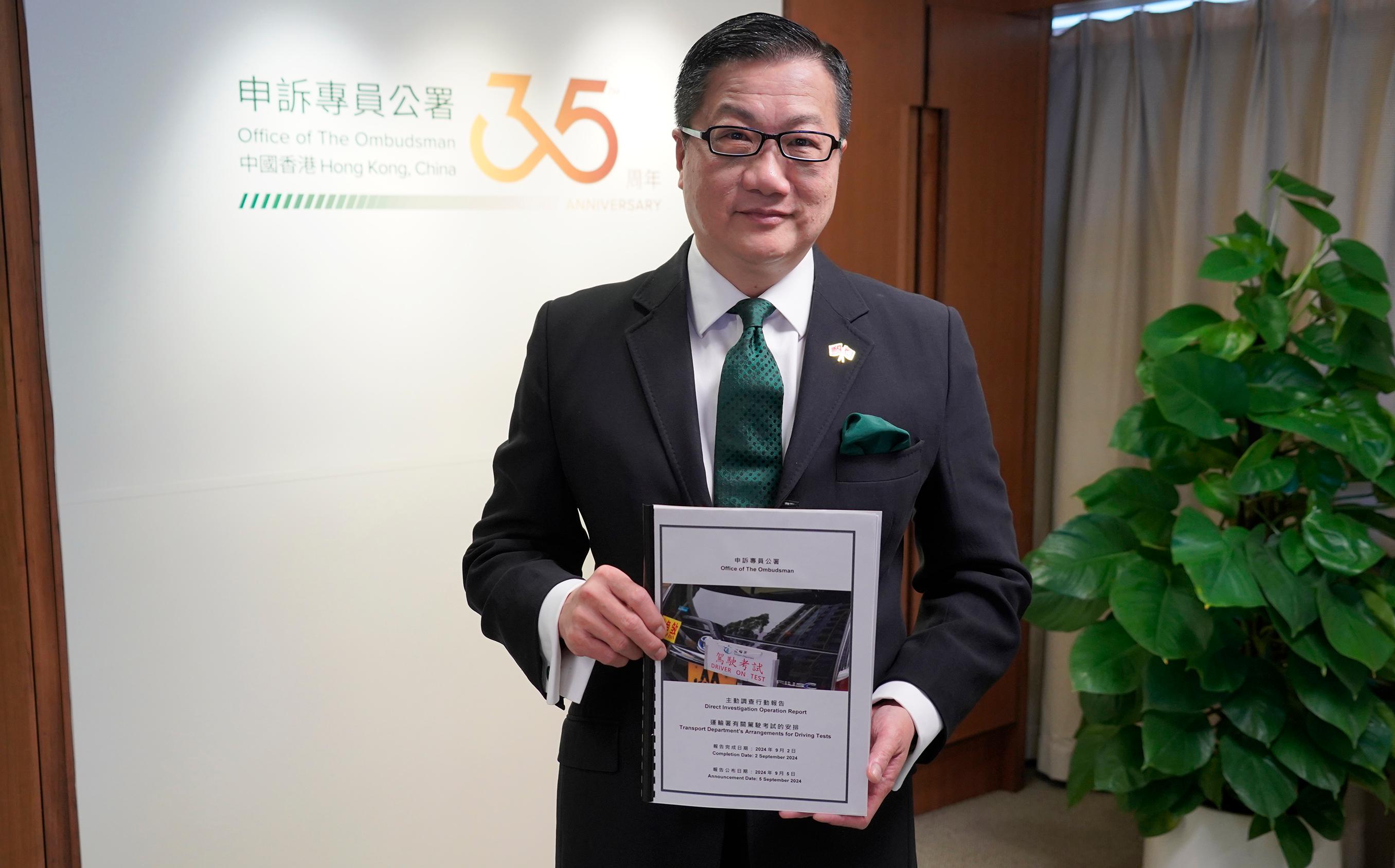
The Ombudsman, Mr Jack Chan, today (September 5) announced the completion of a direct investigation operation into the arrangements for driving tests by the Transport Department (TD), and made 12 major recommendations to the Department.
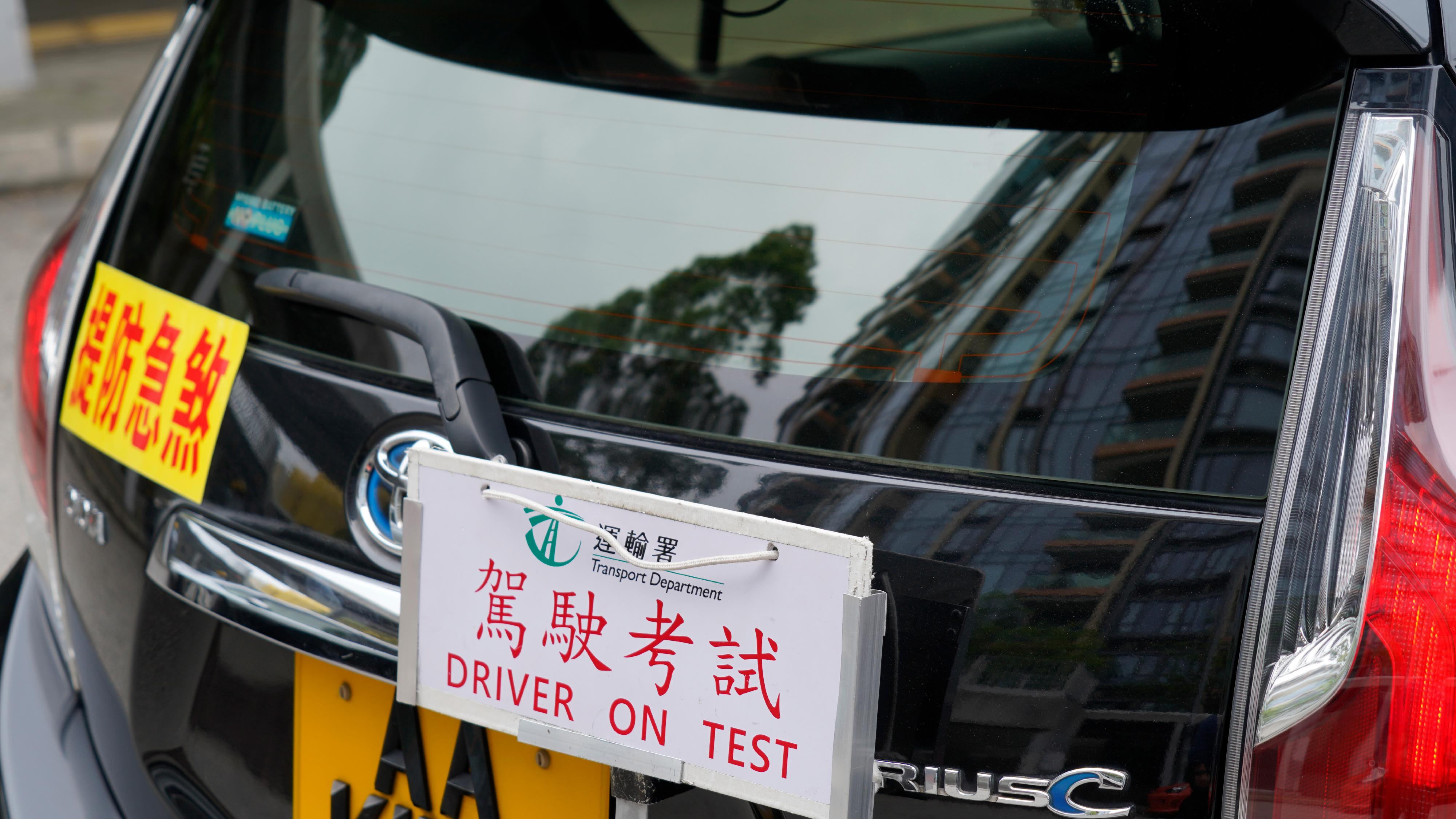
In recent years, there has been an increasing public demand for driving tests and the average waiting time of driving tests is very long. During the COVID-19 pandemic, the TD suspended the written tests and road tests on six occasions, resulting in a backlog of driving test applications. In November 2022, the waiting time for road tests for private cars and light goods vehicles had once been more than 340 days.
On the other hand, the Office of The Ombudsman’s investigation found a rising number of appeals against road test results in recent years. The number of appeals had doubled from 192 cases in 2017 to 380 cases in 2023, reflecting an increase in the public’s discontent with the TD’s road test arrangements.
The Office also noticed that since the pandemic ended, the TD had recruited more Driving Examiners (DEs) and made use of technology to increase road test output. The waiting time for road tests for private cars and light goods vehicles has now shrunk to around 200 days.
While recognising the efforts made by the Department, the Office considers that there is still room for improvement in the arrangements for driving tests.
Mr Chan said, “In addition to proactively exploring how to increase road test output by redeploying manpower resources and designating new test venues, the TD should also review the Duty Reporting Arrangement. Before our investigation, DEs are required to arrive at the TD Headquarters in Ho Man Tin, Kowloon, every day for ballot-drawing to determine the test centres they are responsible for, and then proceed to the various driving test centres to discharge their duties. We are pleased to learn that in response to our investigation, the TD has since mid-June this year implemented the Direct Reporting Arrangement on a trial basis at four driving test centres. We recommend that the TD review the Arrangement. If the trial is positively received, the Department should proactively study the feasibility of extending the Arrangement to other driving test centres. It is estimated that if the Direct Reporting Arrangement is implemented, about 5 500 additional road tests for non-commercial vehicles can be conducted each year, meaning that an additional 5 500 candidates can be benefited. We consider that this recommendation, which does not require additional manpower, man hour or test venues but only a change of the reporting arrangement for the DEs, is worth pursuing.
“With the growing popularity of dashboard cameras and the rapid technological development, installing video recording equipment in test vehicles is the prevailing trend, and it actually has certain practical benefits. The Office opines that the TD should seriously review its current practice of prohibiting video recording of road tests. We agree that protecting personal privacy is of paramount importance. If it is concluded that video recording is feasible, the TD should examine measures to protect personal privacy and continuously communicate with the stakeholders in the course of introducing video-recording equipment specifically for road tests. I understand that the TD is conducting a relevant feasibility study, which covers technical requirements, privacy issues and legal liabilities. We consider it the right direction to take.”
The Ombudsman has made the following improvement recommendations to the TD:
- to proactively explore ways to further increase road test output through flexible manpower deployment. For instance, it can consider arranging for the DEs to work extra hours on weekends;
- to study proactively the feasibility of increasing road test output by designating more driving test centres at locations farther away from the city centre or residential areas in various parts of Hong Kong;
- to conscientiously review the trial run of the Direct Reporting Arrangement at the four driving test centres;
- if the above trial arrangement is positively received, the TD should proactively examine the possibility of extending the Arrangement to other driving test centres;
- to review and consider resuming the practice of setting service standards and achievement targets in terms of waiting time for road tests for non-commercial vehicles;
- to promulgate guidelines to DEs as soon as possible on the making of instant remarks during road tests;
- to review its current practice of prohibiting video recording of road tests;
- if video recording is feasible upon review, the TD should examine measures to protect personal privacy and communicate with the stakeholders continuously in the course of introducing video-recording equipment specifically for road tests;
- in the long run, to consider whether advanced technology (such as electronic assessment systems) should be employed to help DEs evaluate candidates’ performance in driving tests;
- to seriously review the validity periods of the learner’s driving licence and the driving test form;
- to implement suitable measures as soon as possible to prevent the situation where more than one candidate registers the same test vehicle for their road tests during the same time slot because the private driving instructor has to provide his/her vehicle for use by several candidates under a tight road test schedule; and
- to step up management at driving test centres and keep in constant communication with the driving instructor sector with respect to the monitoring of the operations of their staff so as to ensure that road tests are conducted in a fair and orderly manner.
Regarding the way forward, Mr Chan indicated that the overriding objective of the Office is to help resolve the difficulties faced by members of the public so as to improve people’s livelihood and foster social harmony.
Mr Chan stated that the Office has three strategic focuses. First of all, in the coming years, the Office will go full steam ahead with the use of mediation to resolve complaints from the public, respond to public demands promptly, and reduce conflicts in society to bring about social cohesion, with a view to revitalising the economy and improving people’s livelihood.
“In fact, the Office’s investigation and mediation work are complementary. The Office will continue to carry out comprehensive and proactive investigations into cases of maladministration, especially those contain systemic issues. In such instances, the Office will firmly point out the problems to the relevant departments or agencies, provide practical improvement suggestions and monitor the implementation of these recommendations. Furthermore, the Office will inform the public and the media about the investigation results in a timely manner. Where the Office determines that a case does not involve maladministration, it may choose to handle the case through mediation so as to clear the doubts and discontent of those seeking our help. I believe the collaboration of investigation and mediation is the best way to address the everyday issues faced by the public. Mediation would not weaken the investigative functions of the Office; on the contrary, it enhances its role in promoting social harmony.”
To foster the strategic goals on mediation and interdepartmental collaboration, the Office will use mediation as the default handling mode in complaint cases involving minor or no maladministration. Moreover, the Office has recently recommended other departments and agencies consider promoting mediation within their offices to resolve complaints efficiently. The Office has also invited other departments and agencies to appoint a Mediation Coordinator in their offices for handling minor complaints lodged with the Office that can be handled through mediation.
Another strategic focus of the Office is to promote interdepartmental collaboration. By handling cases involving interdepartmental collaboration and through organising seminars and exchange forums from time to time, the Office encourages various government departments and public organisations to work together to enhance administrative arrangements for better public services and a stronger sense of gain and happiness among members of the public.
The third strategic focus is to continue instilling a “positive complaint culture” in society and encouraging members of the public (especially the younger generation) to express views in a positive and constructive manner with the aim of improving public administration.
The full investigation report has been uploaded to the website of the Office of The Ombudsman at
www.ombudsman.hk for public information.
read more