Tag Archives: China

image_pdfimage_print

CHP investigates case of severe paediatric COVID-19 infection

     The Centre for Health Protection (CHP) of the Department of Health today (May 28) received a report of a severe paediatric case of COVID-19 infection. Although the rate of increase in the COVID-19 activity level in Hong Kong has begun to slow down, the CHP expected the COVID-19 activity level to remain at a relatively high level in a short period of time. Therefore, high-risk individuals are reminded to receive a COVID-19 vaccination as soon as possible and receive booster doses at appropriate times to minimise the risk of serious complications and death after infection.
     
     The case involves a 1-year-old girl who has good past health. She has developed fever and runny nose since yesterday (May 27) and was brought to the Accident and Emergency Department of Pamela Youde Nethersole Eastern Hospital today for treatment after having convulsion. She was admitted to the paediatric intensive care unit. Her respiratory specimen tested positive for the SARS-CoV-2 virus upon laboratory testing. The clinical diagnosis was COVID-19 infection complicated with encephalitis. She remains hospitalised and is in critical condition.

     A preliminary investigation revealed that the patient had not received COVID-19 vaccine and had no travel history during the incubation period. Three of her household contacts were symptomatic. Two of them tested positive for COVID-19 by rapid antigen tests and had recovered.

     The CHP believes that COVID-19 has become an endemic disease with cyclical patterns. The overall activity of COVID-19 in the local community has continued to rise since mid-March of this year. According to the latest surveillance data as of the week ending May 17, the increase in the viral load of the SARS-CoV-2 virus from sewage surveillance and the test positivity rate of respiratory samples have slowed down compared to the past week. Genetic analysis showed that XDV and its descendent lineages have become the dominating variant strains in Hong Kong. As XDV is a JN.1-related variant, the COVID-19 vaccines currently used in Hong Kong are still effective in preventing it. Latest information does not suggest XDV will cause a more severe disease than JN.1.

    The CHP reminded the public who have not received the initial dose of the COVID-19 vaccine (including infants and children) that they should get vaccinated as soon as possible. Those at high risk (particularly the elderly and persons with underlying comorbidities) should receive a booster dose as soon as possible for effective prevention against COVID-19 to minimise the risk of serious complications and death after infection.

     Apart from vaccination, in order to prevent COVID-19, influenza, and other respiratory illnesses as well as transmission in the community, the public should maintain strict personal and environmental hygiene at all times and note the following:
      

  • Patients can wear surgical masks to prevent transmission of respiratory viruses. Therefore, it is essential for persons who are symptomatic (even if having mild symptoms) to wear a surgical mask;
  • High-risk persons (e.g. persons with underlying medical conditions or persons who are immunocompromised) should wear surgical masks when visiting public places. The general public should also wear a surgical mask when taking public transport or staying in crowded places. It is important to wear a mask properly, including performing hand hygiene before wearing and after removing a mask;
  • Avoid touching one’s eyes, mouth and nose;
  • Practise hand hygiene frequently, wash hands with liquid soap and water properly whenever possibly contaminated;
  • When hands are not visibly soiled, clean them with 70 to 80 per cent alcohol-based handrub;
  • Cover the mouth and nose with tissue paper when sneezing or coughing. Dispose of soiled tissue paper properly into a lidded rubbish bin, and wash hands thoroughly afterwards;
  • Maintain good indoor ventilation;
  • Avoid sharing personal items;
  • When having respiratory symptoms, wear a surgical mask, consider refraining from going to work or school, avoid going to crowded places and seek medical advice promptly; and
  • Maintain a balanced diet, perform physical activity regularly, take adequate rest, do not smoke and avoid overstress.

     For more information on the COVID-19 Vaccination Programme and the latest recommendations on vaccine use, please refer to the CHP’s website. read more
Government welcomes passage of Air Passenger Departure Tax (Amendment) Bill 2025

     The Government welcomed the passage of the Air Passenger Departure Tax (Amendment) Bill 2025 by the Legislative Council today (May 28) to implement the proposal in the 2025-26 Budget to increase the air passenger departure tax (APDT) from $120 to $200 per passenger. It is anticipated that government revenue will increase by about $1.6 billion per year. The new tax rate will be applicable to air tickets purchased on or after October 1, 2025.

     A Government spokesperson said, “The Government has struck a balance between increasing revenue and minimising the impact on passengers when considering increasing the APDT. The impact of the increase on the overall cost of travelling for air passengers (including tourists) is minimal.”

     The Bill also streamlines the Government’s financial arrangement for paying administrative fees to the airlines and helicopter company. It empowers the Financial Secretary to approve their retention of part of the APDT collected for offsetting the administration fees payable by the Government to them, and provides that the retained fees do not form part of the general revenue under the Public Finance Ordinance (Cap. 2).

     The Bill passed will be gazetted on June 6. read more

Legislation for implementing Registered Fire Engineer Scheme submitted to Legislative Council

     The Fire Services (Registered Fire Engineers) Regulation (the Regulation) was submitted by the Security Bureau to the Legislative Council (LegCo) today (May 28) with a view to implementing the Registered Fire Engineer (RFE) Scheme.

     A spokesperson for the Security Bureau said, “Currently, a person who intends to run various types of licensed premises can only rely on the services of the Fire Services Department (FSD) in making a fire safety risk assessment of the relevant premises and certifying compliance with the relevant fire safety requirements.

     “To facilitate business operations and make good use of professional and qualified human resources in the market, we propose to introduce the RFE Scheme to leverage professional engineers and qualified persons in the market for the provision of fire safety risk assessment and certification services. The FSD will continue to deliver fire safety risk assessment and certification services to members of the public if they so choose. The Scheme will thus offer an additional option to the market for completing the fire safety risk assessment and certification procedures, providing facilitation to both the public and businesses. The implementation of the Scheme could promote the development of the fire engineering profession. The fees of services provided by RFEs would be determined by the market forces of supply and demand.”

     The Scheme requires legislative backing. In this connection, the Government has been carrying out the legislative work in phases. The Fire Services (Amendment) Ordinance 2017 was enacted by the LegCo to provide a basis for the making of new regulations for the RFE Scheme.

     The spokesperson added, “One of the key considerations for the Government in introducing the RFE Scheme is that it must not compromise fire safety and public safety. Hence, the making of the Regulation by the Government aims to regulate the registration of RFEs and to set out the regulatory regime of their professional activities. The provisions of this new Regulation will cover the implementation details of the Scheme, including the registration mechanism and duties of RFEs, the disciplinary and appeal mechanisms, as well as the issue of the code of practice in relation to the Scheme. The above principles of the regulatory regime were supported by the relevant Bills Committees of the LegCo when the Fire Services (Amendment) Bill was scrutinised.”

     The Regulation is subject to LegCo’s scrutiny by the positive vetting procedures. The Government will introduce into the LegCo at a later stage the other three pieces of subsidiary legislation which are relevant to the implementation of the RFE Scheme for negative vetting procedures. Separately, the Secretary for Security will specify November 1, 2025, as the commencement date by notice in the Gazette, thereby enabling the implementation of the Scheme on that day.

     The spokesperson added, “In terms of implementation, the RFE Scheme will apply to licensed premises. The FSD proposes a phased implementation, starting with licensed food premises regulated under the Food Business Regulation. The FSD will conduct a review to evaluate the effectiveness of the Scheme after the first phase has been implemented for a period of time and, subject to the evaluation results, consider extending the Scheme to other licensed premises.”

     The implementation of the RFE Scheme will facilitate business operations on the one hand, and promote the development of the fire engineering profession of Hong Kong on the other, assisting the industry in exploring new opportunities while not compromising fire safety, making it a win-win scheme. read more

Hong Kong Customs seizes suspected methamphetamine and suspected cannabis buds at airport (with photos)

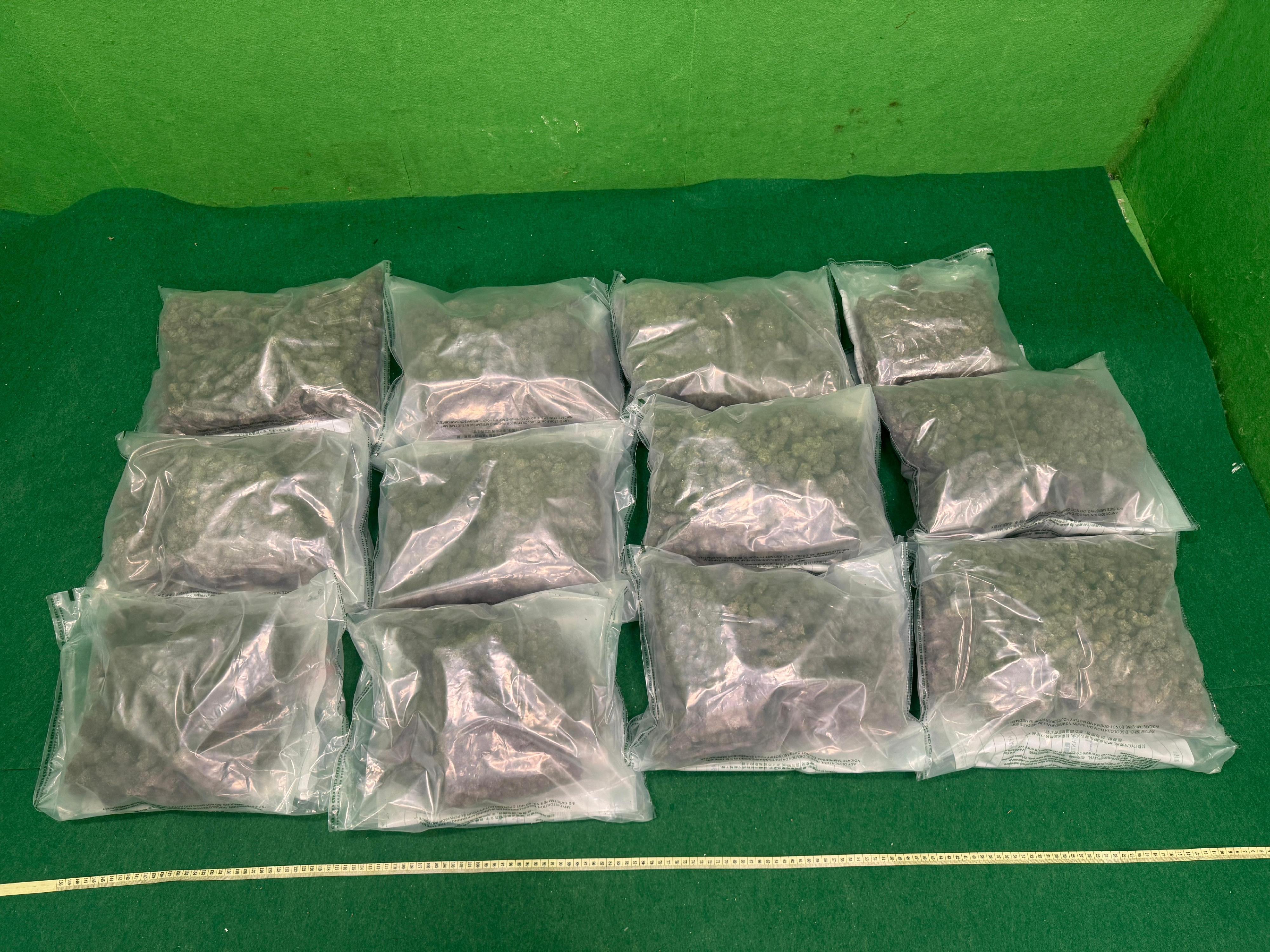
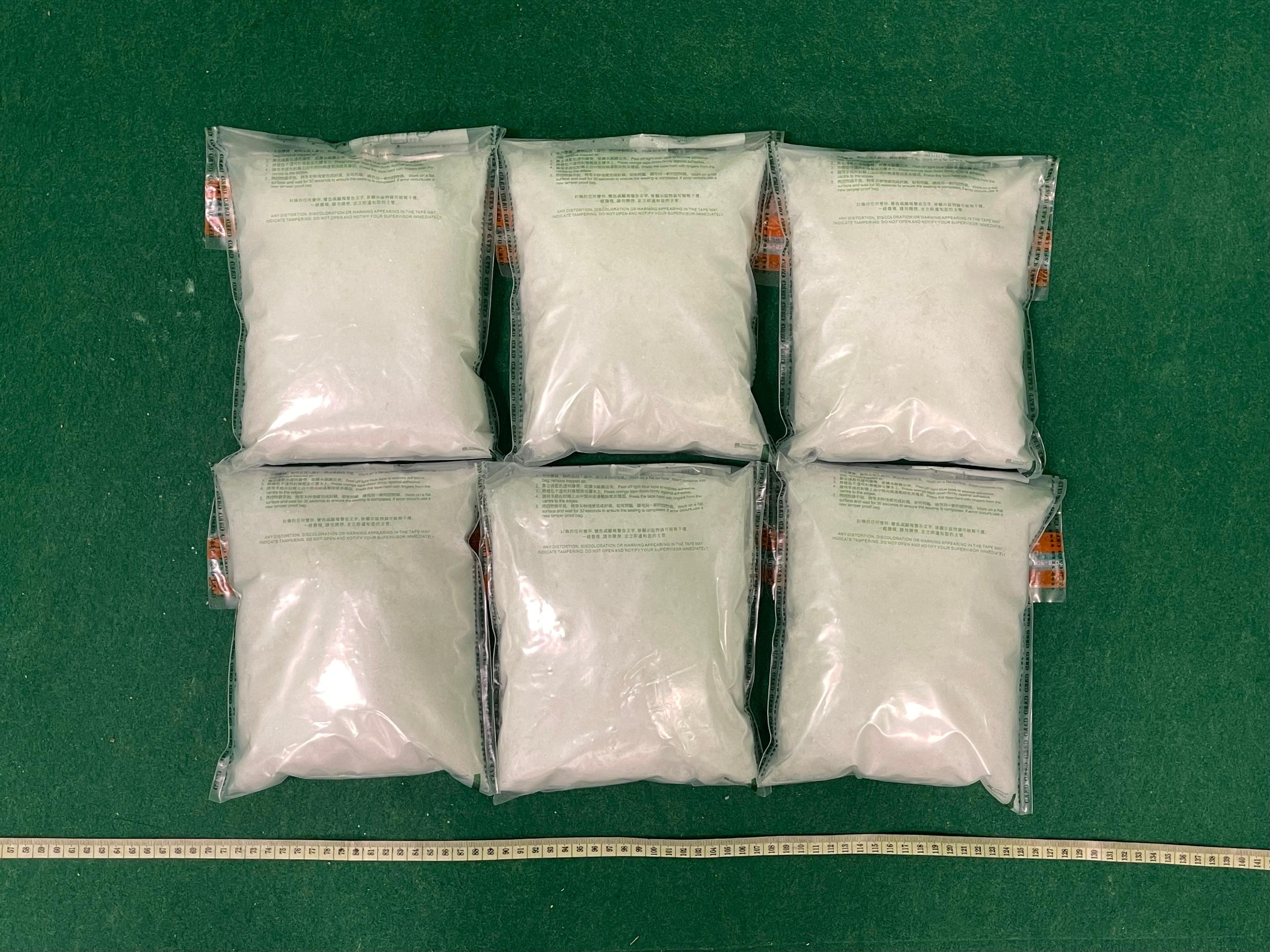
     Hong Kong Customs yesterday (May 27) and today (May 28) detected two drug trafficking cases involving baggage concealment at Hong Kong International Airport. A total of about 6 kilograms of suspected methamphetamine and about 12kg of suspected cannabis buds with a total estimated market value of about $5.6 million were seized.
      
     The first case involved a 37-year-old woman who arrived in Hong Kong from Kuala Lumpur, Malaysia, yesterday. During customs clearance, Customs officers found a batch of suspected methamphetamine, weighing about 6kg, concealed inside some tea leaf packaging bags in her check-in suitcase. She was subsequently arrested.
      
     After an investigation, the arrested person has been charged with one count of trafficking in a dangerous drug. The case will be brought up at the West Kowloon Magistrates’ Courts tomorrow (May 29).
      
     The second case involved a 21-year-old male passenger who arrived in Hong Kong from Bangkok, Thailand, this morning. During customs clearance, about 12kg of suspected cannabis buds were seized from his check-in suitcase. The man was subsequently arrested. The dangerous drugs were packed in plastic bags and vacuum bags and were mix-loaded with personal belongings.
      
     The investigation of the second case is ongoing.
      
     Customs will continue to step up enforcement against drug trafficking activities through intelligence analysis. The department also reminds members of the public to stay alert and not participate in drug trafficking activities for monetary return. They must not accept hiring or delegation from another party to carry controlled items into and out of Hong Kong. They are also reminded not to carry unknown items for other people.
      
     Customs will continue to apply a risk assessment approach and focus on selecting passengers from high-risk regions for clearance to combat transnational drug trafficking activities.
      
     Under the Dangerous Drugs Ordinance, trafficking in a dangerous drug is a serious offence. The maximum penalty upon conviction is a fine of $5 million and life imprisonment.
      
     Members of the public may report any suspected drug trafficking activities to Customs’ 24-hour hotline 182 8080 or its dedicated crime-reporting email account (crimereport@customs.gov.hk) or online form (eform.cefs.gov.hk/form/ced002).

Photo  Photo  
read more

DH organises International Medical Device Regulatory Forum to promote advancement of health through research and technology (with photos)

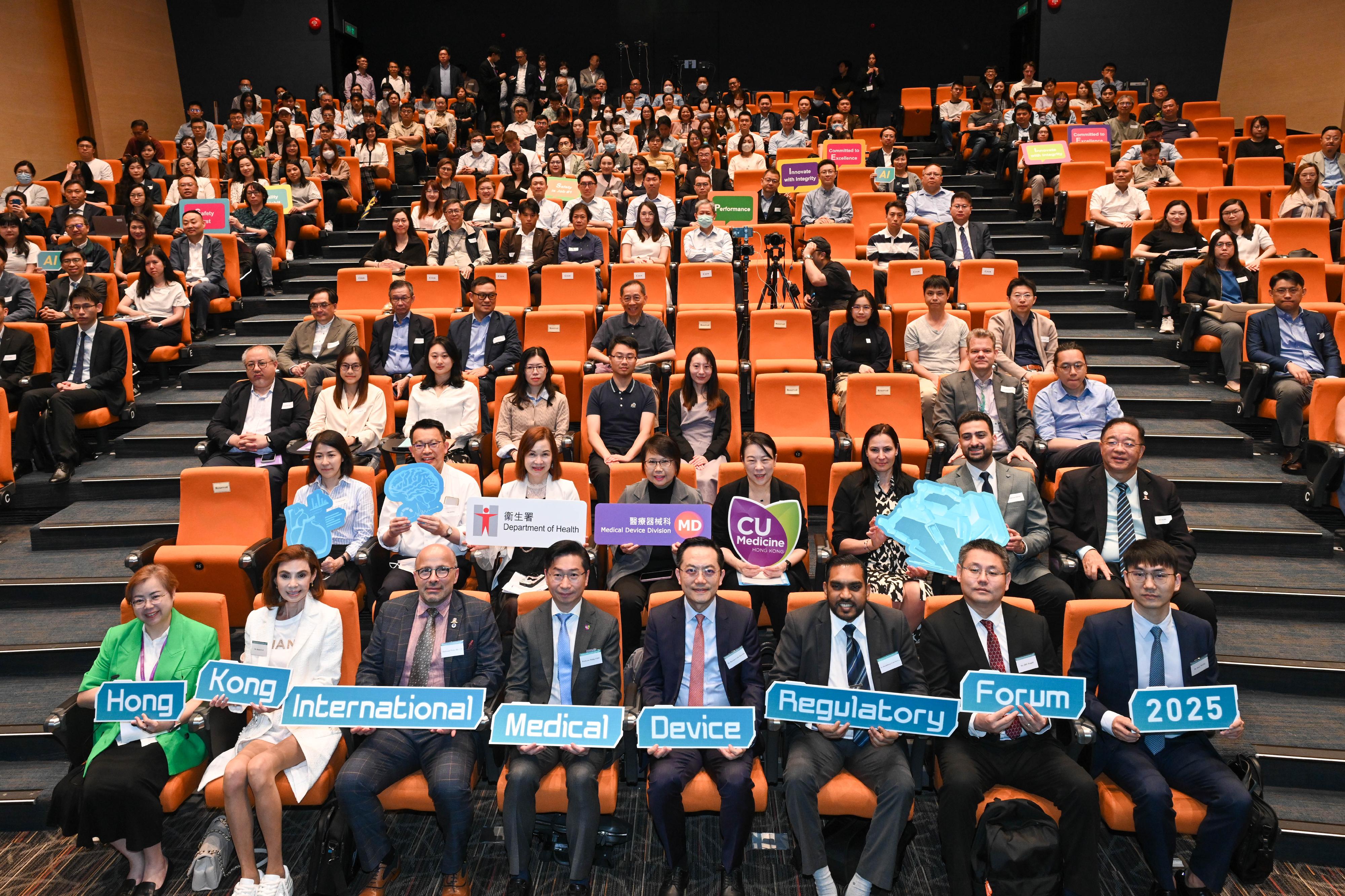
     The Department of Health (DH) and the Faculty of Medicine of the Chinese University of Hong Kong (CUHK) today (May 28) jointly organised the Hong Kong International Medical Device Regulatory Forum at the Hong Kong Science Park. The forum brought together about 200 representatives from local, Mainland and overseas medical device regulatory authorities, top academic experts and industry leaders to explore the innovative development of medical devices, as well as the transformative applications and regulation of artificial intelligence (AI). Through experience sharing, forum participants made a concerted effort to promote scientific research and innovation to enhance global public health security and the standards for the medical industry.
      
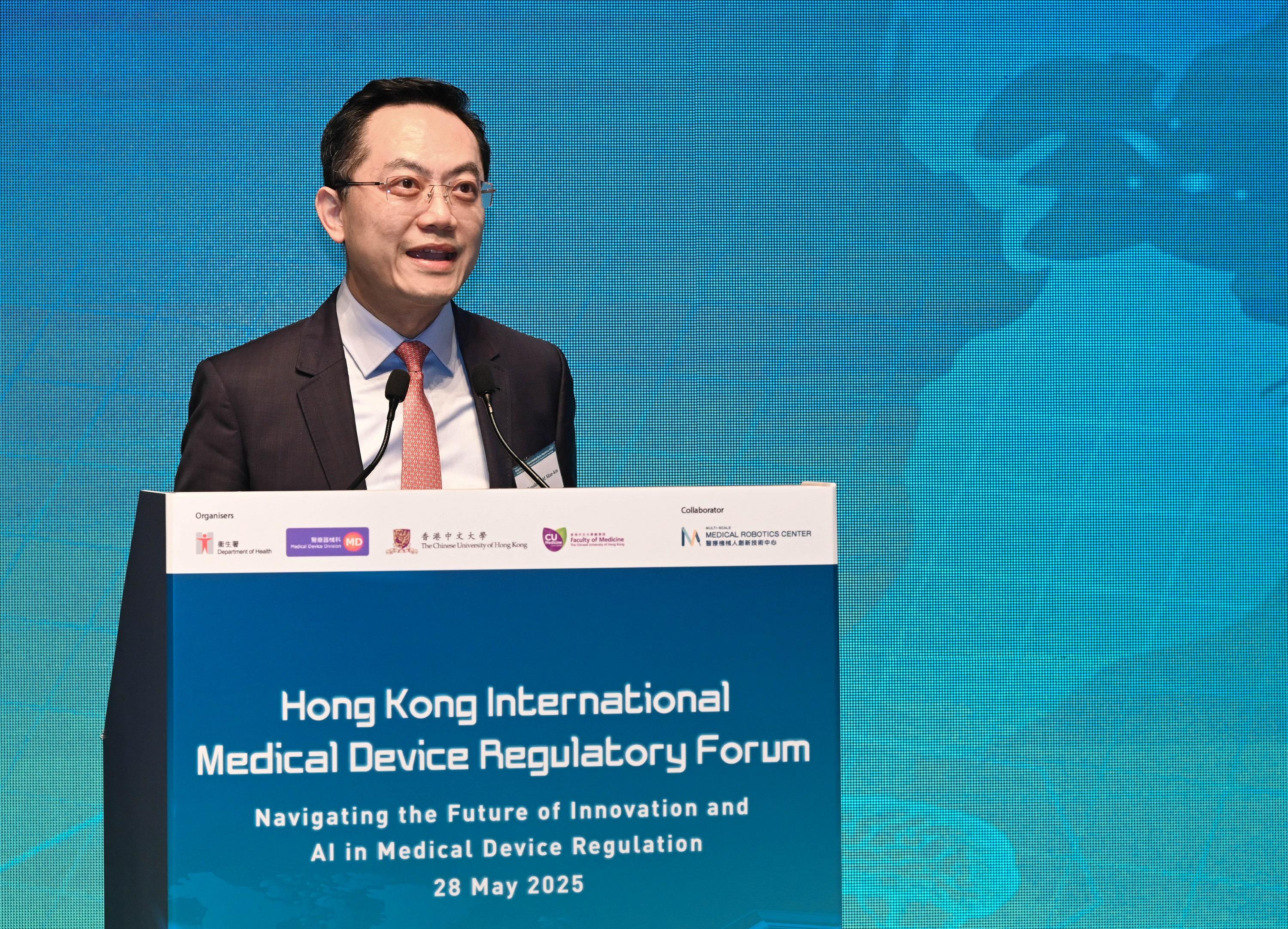
     Addressing the opening ceremony, the Director of Health, Dr Ronald Lam, said, “Given the rapid development of AI technology, the DH is committed to developing a regulatory framework in Hong Kong to help healthcare workers and members of the public choose safe and reliable medical devices. The DH has issued guidance on cybersecurity and AI medical devices in 2023 and 2024 to help manufacturers navigate and follow the voluntary Medical Device Administrative Control System (MDACS), which was introduced by the DH. To date, 22 AI medical devices have been listed in the MDACS, including magnetic resonance imaging (MRI) and electrocardiography (ECG) systems.
      
     “The HKSAR Government is committed to developing Hong Kong as a hub for health and medical innovation. The soon-to-be-established Hong Kong Centre for Medical Products Regulation will conduct independent evaluations on the safety, quality, and efficacy of medical products based on clinical data. In addition, with the development of the Hetao Shenzhen-Hong Kong Science and Technology Innovation Co-operation Zone, Hong Kong will leverage its unique advantages under the ‘one country, two systems’ principle and serve as a ‘super connector’, linking Mainland China and the global market. This will create opportunities for entrepreneurs to thrive while supporting our country in enhancing its new quality productive forces in the health field,” said Dr Lam.
      
     “The emergence of innovative medical devices is bringing revolutionary changes to the healthcare industry. Multinational and cross-border collaborations are required to enable the development of a regulatory system that aligns with the rapid advancement in medical technology. The CUHK is delighted to partner with the DH in hosting the first forum to strengthen co-operation in medical innovation. The goal is to enhance health and medical industry standards by engaging leaders and pioneers in the field,” said the Dean of the Faculty of Medicine of the CUHK, Professor Philip Chiu.
      
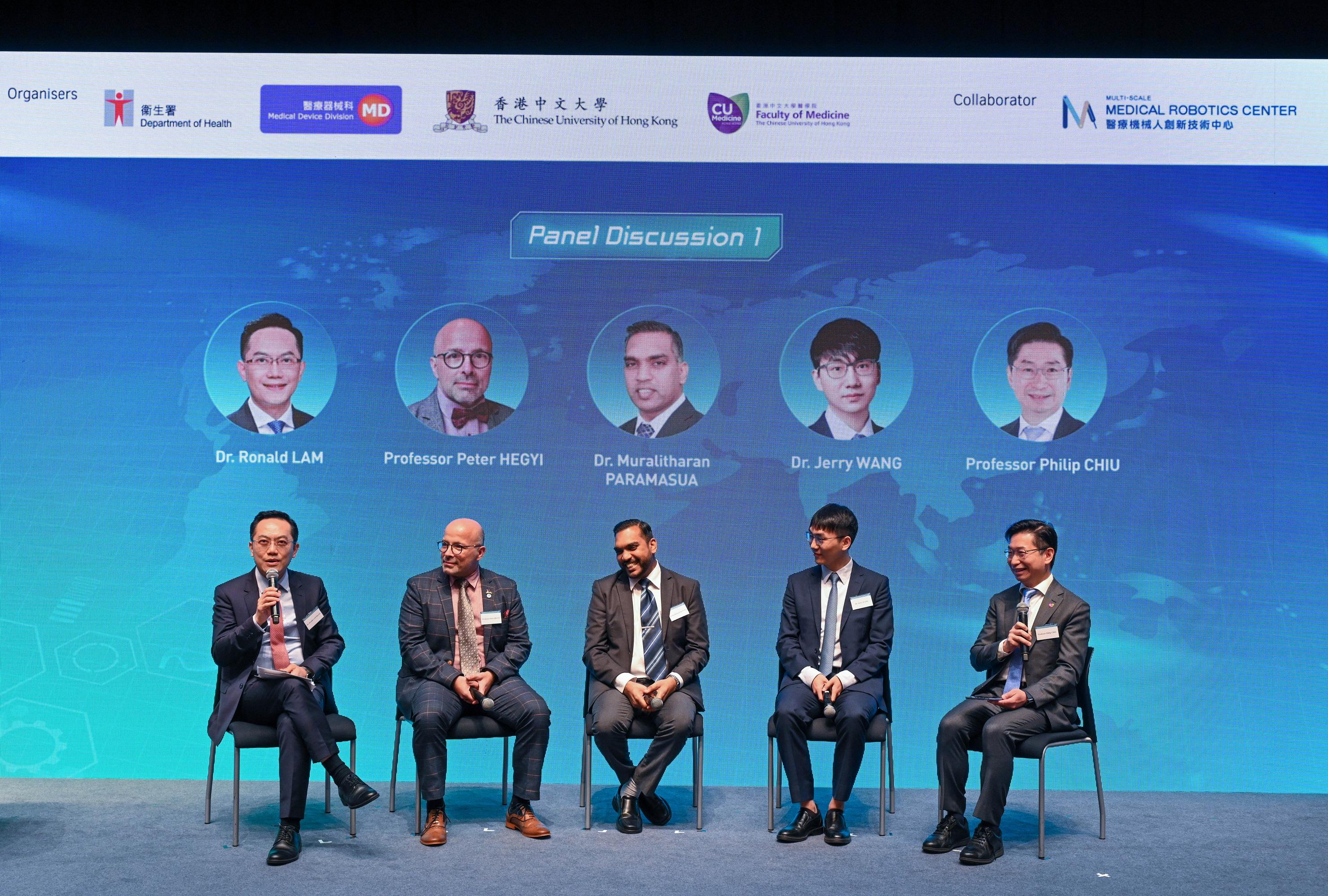
     Today’s forum featured keynote speeches by representatives of medical device regulatory authorities from Hong Kong, the Mainland, Malaysia and Saudi Arabia, as well as local and Hungarian academia. The forum focused on trends in the medical device industry, international regulatory co-ordination mechanisms and breakthroughs in AI technology in the healthcare sector. Participants proactively engaged in discussions, sharing their insights and experiences.
      
     The DH will continue to promote exchanges between governments, industry, and academia through various means to strengthen international collaboration networks, and lay a solid foundation for Hong Kong to develop into an international medical innovation hub.

Photo  Photo  Photo  
read more