Tag Archives: China

image_pdfimage_print

Speech by FS at Hong Kong Association Luncheon in London (English only)

     Following is the speech by the Financial Secretary, Mr Paul Chan, at the Hong Kong Association Luncheon in London, the United Kingdom, today (September 27, London time):
 
Adrian (Chairman of the Hong Kong Association, Mr Adrian Cartwright), members of the Hong Kong Association, ladies and gentlemen, friends of Hong Kong all,

     Good afternoon. I’m delighted to join you, once again, over a welcome lunch.

     The one consistent theme of my trip, first to Spain, now in London, has been the many speaking occasions.
 
     Last night’s Hong Kong Dinner was truly splendid and savory, and now I’m pleased to speak to the Hong Kong Association – thank you for the privilege – because you are very much invested in Hong Kong.
 
     I’m always pleased to speak at such times, especially when the topic is Hong Kong, and particularly to an audience as invested in Hong Kong as you are.

The state of Hong Kong’s economy
 
     I have much to share, but let me start with a quick update on Hong Kong’s economy. 

     â€‹Last year, our GDP grew by 3.3 per cent as we recovered from the pandemic, and we achieved 3 per cent growth in the first half of this year. 

     The three main drivers fueling our economic growth are: exports, investments, and private consumption. Goods exports have seen significant growth, with Hong Kong serving as a major re-export hub for the Mainland, rising by over 7 per cent in the first half of the year. 

     â€‹For exports of services, tourism remains a key component. It is steadily recovering, with around 30 million visitors in the first eight months of this year, an increase of 44 per cent compared to last year. We expect 46 million visitors for the whole of 2024. 

     With improving economic and business prospects, but amid complex external environment, investment, from both the public and private sectors, expanded by more than 3 per cent in the first half of this year. 

     â€‹Private consumption has been bumpy. It is challenging given changes to the spending patterns of tourists and our residents. 

     Our stock market remains one of Asia’s leading exchanges, with a capitalisation in excess of 3 trillion pounds – 11 times our GDP. The measures announced, earlier this week by the Central Authorities to cut rates, reduce reserve requirement ratios and provide more support to the property sector – is boosting market confidence. The effects are already visible on Hong Kong’s stock market, with record high transactions! Before that, the China Securities Regulatory Commission announced measures in April 2024 that would encourage leading Mainland enterprises to list in Hong Kong. 

     Residential property market prices have fallen by over 6 per cent from the end of last year to August this year – and more than 25 per cent compared to its peak in September 2021. We know property market is an important pillar to any economy, so we remain vigilant, and has been monitoring the market closely. So far, our assessment is that it has been an orderly adjustment. 

     This February, we removed all the demand-side management measures for the residential property market. Overall, the property market is now stabilising. 

     The commencement of the monetary easing cycle by the Federal Reserve will provide support to both the economy and the property sector. 
     
     Currently, inflation is at around 1 per cent, and unemployment is lying low, at just 3 per cent. 

     â€‹Overall, we expect Hong Kong to grow between 2.5 per cent to 3.5 per cent this year. 

     Looking into the future, our economic development will be heading in eight discrete directions: internationally, as finance, trade, shipping, aviation and innovation and technology centres; and, regionally, as Asia Pacific’s legal and dispute resolution centre and intellectual property trading centre. We are committed, too, to becoming the East-meets-West centre for international cultural exchange. 

     Allow me now to highlight two of them: financial services and innovation and technology. 

     Let me start with financial services. Besides traditional areas that we are good at, we are working to become an international green finance and green technology hub. 

Green and Sustainable Finance
 
     Green transition is a global agenda, bringing along responsibilities and opportunities. 
     â€‹
     Hong Kong has established a clear roadmap to achieve carbon neutrality by 2050, while reducing emissions by 50 per cent by 2035 from our 2005 levels. 

     â€‹We are taking a multi-pronged approach to realise this goal by addressing emission sources: first, achieving net-zero electricity generation by phases; second, enhancing energy efficiency in buildings through the promotion of green building practices; third, promoting green transport, particularly electric vehicles; and fourth, reducing waste. 

     Indeed, the Hong Kong SAR Government (Hong Kong Special Administrative Region Government) will invest more than 20 billion pounds in the next 15 to 20 years to implement climate change mitigation and adaptation measures. 

     However, the International Energy Agency has projected that the global energy transition finance gap will reach $3 trillion a year by 2030 and rise to $4.5 trillion a year by 2040. 

     â€‹Hong Kong is Asia’s No. 1 for green finance: for instance, we issue, over the past three years, 48 billion pounds of green bonds and debts per year on average, accounting for one-third of Asia’s market. But there is much more that we can achieve. 

     One is on green standards. Earlier this year, the Hong Kong Monetary Authority released the Hong Kong Green Taxonomy (Hong Kong Taxonomy for Sustainable Finance), which is compatible with the Common Ground Taxonomy developed by China and the EU (European Union), to assist the financial sector in assessing the “greenness” of projects. 

     Similarly, the Hong Kong Stock Exchange also impose ESG (environmental, social and governance) disclosure requirements for listed entities. 

     â€‹Just a few days ago, the Hong Kong Institute of Certified Public Accountants released the draft financial reporting standards which it plans to implement in August next year. The proposed Hong Kong standards follow those issued by the International Sustainability Standards Board, ISSB. 

     In the realm of green tech, start-ups are a powerhouse for many green innovative solutions, fully reflecting our younger generation’s passion for the environment and a sustainable future. 

     You might have met the delegation of start-ups from the Hong Kong Science Park and Cyberport who are with me on this trip to the United Kingdom. Some of them are engaged in green tech, and while others are engaged in different fields, but they share a common goal: to change people’s lives for the better. 

     We are working to attract more green start-ups in our innovation ecosystem. 

     By the way, our Science Park annually organises an elevator pitch competition where the start-ups have to sell their ideas in just 60 seconds in the lift of Hong Kong’s tallest skyscraper. The winner this year is from Munich seeking to establish a lithium battery recycle plant. 
 
Innovation and Technology
 
     Let me now turn to innovation and technology. Our focus areas are: AI and big data analytics, biotech and health sciences, fintech and new energy and new materials. 

     The key success factor for the development of AI are algorithms, computing capabilities, data and use case scenarios. Under the “one country, two systems” arrangements, Hong Kong has unique advantages because we are the hub converging the Mainland and international data, and the Greater Bay Area provides us with ample use case scenarios. 

     In order to expedite the development of the eco-system of the aforementioned industries, we have set up the Hong Kong Investment Corporation, HKIC. 

     With six billion pounds at its disposal, the HKIC has a dual mandate. While it seeks financial returns, it also promotes the development of target industries that are crucial for the long-term competitiveness and economic vitality of Hong Kong. The HKIC serves as a tool for the Hong Kong SAR Government to invest and/or co-invest in enterprises, start-ups and important projects. 

     The ​HKIC is “patient capital”. It has already initiated several strategic partnerships in the areas of hard tech, biotech and new energy. 

     What distinguishes the HKIC from other sovereign funds is its investment approach to channel private capital into strategic industries through a collaborative approach, by bringing together like-minded private equity funds, venture capitalists, investors, and even entrepreneurs.

     This is particularly important for start-ups, especially those with original and disruptive technologies because their development cycles are often long, and patient capital is crucial for their success.

     Going forward, the HKIC will expand its collaboration with overseas partners to maximise impact. Next January, the HKIC will host a Roundtable for International Sovereign Wealth Funds, inviting sovereign wealth funds and financial leaders to explore investment opportunities and develop collaborative partnerships. In fact, this September, the HKIC also staged a Hong Kong Start-up Investment and Development Summit. 

     Ladies and gentlemen, I hope to leave ample time for questions, so I will conclude my remarks here. My sincere thanks, once again, to the Hong Kong Association for this welcome opportunity to speak to you. 

     I’m happy now to take your questions. 

     â€‹Thank you. read more

Government invites proposals for Haw Par Mansion at 15A Tai Hang Road, Wan Chai, Hong Kong for arts and culture use

     The Culture, Sports and Tourism Bureau (CSTB) today (September 27) invites non-profit-making organisations to submit proposals for operating, managing, conserving and revitalising Haw Par Mansion (Premises), which is situated at 15A Tai Hang Road, Wan Chai, Hong Kong, for a period of three years for arts and culture use.
      
     This Invitation for Proposal (IFP) exercise will identify the most suitable non-profit-making operator of the Premises. All non-profit-making organisations may submit proposals in this exercise. The selected organisation will operate, manage, conserve and revitalise the Premises as a unique icon of international arts and cultural exchange in Hong Kong. The development of the Premises should complement the Government’s policies on arts and culture, as well as heritage conservation.
      
     Interested organisations must submit a proposal in response to this IFP exercise before 5.30pm on January 27, 2025. All proposals must be delivered to the CSTB (Culture Division (2), Culture Branch, Culture, Sports and Tourism Bureau, 13/F, West Wing, Central Government Office, 2 Tim Mei Avenue, Tamar, Hong Kong) by hand.
 
      The CSTB will arrange a site visit for interested organisations on October 17, 2024, and a briefing session will be held on October 24, 2024, for attendees to learn about the application procedure, assessment criteria as well as expectations and requirements of this IFP. 

     For details of this IFP exercise, the application form and the reply slip for registration of the site visit and/or briefing session, please visit the CSTB’s website at www.cstb.gov.hk/en/other-information/ifphpm.html or call 3509 8080 or 3509 8091. read more

CHP updates on latest situation of invasive Group B Streptococcus infection

     The Centre for Health Protection (CHP) of the Department of Health today (September 27) continued its investigation into the latest situation of invasive Group B Streptococcus infection. While the number of confirmed cases has started to decrease since late September, the CHP continued to appeal to members of the public for heightened vigilance and in particular, to pay attention when touching or handling raw freshwater fish. One should wear gloves, as well as not consume undercooked freshwater fish.

     The CHP has been closely monitoring the invasive Group B Streptococcus infection cases over the past few weeks and conducted genetic sequencing analysis for patients’ specimens to confirm infection number of serotype III sequence type 283 (ST283). The recent surveillance data of hospitals show that the daily number of hospitalised patients confirmed to have invasive Group B Streptococcus infection has started to decrease since late September. For ST283 cases, since the announcements on September 13September 16 and September 20, the CHP today confirmed nine additional ST283 cases involving patients previously admitted to the hospitals. The patients involved seven males and two females, aged between 49 and 92. The patients mainly presented with sepsis and joint abscess. Together with the 70 cases of ST283 infection announced earlier, this cluster involved a cumulative total of 79 patients residing in 18 districts throughout the territory. The onset date of the disease for all 79 patients was before September 10, 62 of them have underlying illnesses, 33 have been discharged, 39 hospitalised patients are in stable condition, four are in serious condition and the other three with underlying illnesses have passed away.

     The CHP’s epidemiological investigations revealed that 66 patients have had contact with or handled raw freshwater fish before the onset of symptoms (six of them reported that they had wounds on their hands when handling raw freshwater fish). Ten patients cannot rule out that they have consumed undercooked freshwater fish (not freshwater fish sashimi), and the exposure history of the remaining three patients is under investigation.

     While none of the 79 patients were fishmongers or engaged in fish culture-related jobs, two of them are cooks who have handled raw freshwater fish. The patients resided in various districts throughout the territory, and the freshwater fishes concerned were bought from 40 markets in 17 districts respectively. Apart from five freshwater fish and environmental samples collected from a retail fish stall in Shek Wu Hui Market which were tested positive for ST283 announced earlier, all 27 environmental samples collected from the Freshwater Fish Market under Cheung Sha Wan Wholesale Food Market were tested negative for ST283. So far, no relevant workers was found symptomatic by the CHP and other investigations on other environments and freshwater fish are still in progress.

     “Members of the public should wear gloves when touching or handling raw freshwater fish. If symptoms such as an inflamed wound and fever develop, they should seek medical attention promptly. Meanwhile, the public should refrain from consuming undercooked freshwater fish,” a spokesman for the CHP reminded.

     To prevent Group B Streptococcus (ST283) infection, members of the public are reminded to maintain personal, food and environmental hygiene, and should keep their hands clean and practice good wound care at all times, especially:
 

  • To minimise the infection risks, workers of aquatic products or restaurants must wear gloves when handling aquatic products and avoid direct contact with aquatic products or dirty water with bare hands;
  • When buying aquatic products, the public must avoid direct contact with the aquatic products or use any towel provided by the stalls. They should wash hands with liquid soap and water as soon as possible if having contact with aquatic products which are not fully cooked. When handling aquatic products at home, the public should also wear gloves and wash hands thoroughly afterwards;
  • Members of the public must not eat any freshwater fish sashimi, raw or undercooked freshwater aquatic products. When consuming hot pot food or congee items which consist of aquatic products, they should ensure that the food is thoroughly cooked in which the centre of the food should reach a temperature of at least 75 degrees Celsius so as to destroy pathogen; and
  • People must not touch aquatic products directly whenever there is a wound on hands. If a wound is sustained during handling aquatic products, the wound must be cleaned immediately and properly covered with waterproof adhesive dressings. Individuals should seek medical advice promptly when a wound infection is found.
 
     The public may visit the CHP’s Invasive Group B Streptococcus Infection associated with Sequence Type 283 (ST283) page for more information. read more

CHP investigates case of human infection of rat Hepatitis E virus

     The Centre for Health Protection (CHP) of the Department of Health today (September 27) said that it is investigating a case of human infection of rat Hepatitis E virus (HEV) and urged members of the public to be vigilant against Hepatitis E infection and to strictly observe good personal, food and environmental hygiene. If the public developed compatible symptoms, they should consult a doctor early.

     The case involves a 61-year-old woman with underlying illnesses and immunosuppression. She had dark urine since early September and was found to have a persistently deranged liver function during her follow-up consultation in Union Hospital. Her blood sample tested positive for rat HEV upon laboratory testing. The patient is now in stable condition.

     The CHP’s epidemiological investigations revealed that the patient resides in Hung Hom. She claimed that she did not have direct contact with rodents or rats, and had no travel history during the incubation period, indicating that this is a locally acquired infection. The CHP does not rule out the possibility that the patient may have been indirectly exposed to places or food contaminated by rodents or their excreta during the incubation period, leading to the infection.

     Investigating personnel of the CHP and the Food and Environmental Hygiene Department (FEHD) conducted a site visit to the place where the patient lives to inspect the rodent infestation and environmental hygiene. Some traces of rodents were found during the inspection. The property management of the patient’s residence will set up thermal imaging cameras at the concerned places to conduct rodent activity survey. The Pest Control Advisory Section of the FEHD will carry out rodent control measures as appropriate and necessary. The CHP’s investigation is still ongoing.

     Possible routes of transmission of rat HEV to humans include ingestion of food or water contaminated by rodents or their excreta, exposure to environments or objects contaminated by rodents or their excreta and direct contact with rodents or their excreta. The usual HEV causing human infection is transmitted mainly through the faecal-oral route.

     To prevent Hepatitis E infection, members of the public should maintain good personal, food and environmental hygiene. For example, they should wash hands thoroughly before eating, store food properly or in the refrigerator, not leave food at room temperature for a long time, and use 1:99 diluted household bleach for general household cleaning and disinfection as household detergent may not be able to kill HEV. High-risk individuals, such as elderly persons with a major underlying illness (especially those who have undergone organ transplantation), pregnant women, patients with chronic liver disease and patients with Glucose-6-Phosphate Dehydrogenase Deficiency (also known as G6PD Deficiency), who are infected with HEV may develop a serious illness, so they should exercise extra caution.

     The Five Keys to Food Safety should be adopted when handling food, i.e. Choose (choose safe raw materials), Clean (keep hands and utensils clean), Separate (separate raw and cooked food), Cook (cook thoroughly) and Safe Temperature (keep food at a safe temperature), to prevent food-borne diseases.
 

  • Drink only boiled water from the mains or bottled drinks from reliable sources.
  • Avoid drinks with ice of unknown origin.
  • Purchase fresh food from hygienic and reliable sources. Do not patronise illegal hawkers.
  • Clean and wash food thoroughly. Cook food, especially seafood (e.g. shellfish), pork and pig offal, thoroughly before consumption. Avoid raw food or undercooked food.
  • Slice raw meat and offal into thin strips to allow thorough cooking, especially during hotpot or congee cooking.
  • For sliced pig liver, depending on the thickness and quantity, boil at 100 degrees Celsius or stir-fry in a hot skillet/wok for at least three to five minutes.
  • Heating to an internal temperature of 90 degrees C for 90 seconds is required for cooking of molluscan shellfish. If possible, remove the shells before cooking as they impede heat penetration. Otherwise, boil at 100 degrees C until their shells open; boil for a further three to five minutes afterwards. Discard any shellfish that do not open during cooking.
  • For meat and offal, make sure that juices are clear, not red, and blood is not visible when cutting the cooked meat and offal.
  • When having hotpot, use separate chopsticks and utensils for handling raw and cooked foods to prevent cross-contamination.
     
     â€‹In general, rodents (such as rats) can transmit multiple diseases to humans directly and indirectly. The public are advised to adopt the following measures:
     
  • Eliminate sources of food and nesting places for rodents in the living environment. Store food in covered containers and handle pet food properly to prevent it from becoming food for rodents;
  • Store all refuse and food remnants in dustbins with well-fitted covers. Dustbins must be emptied at least once a day;
  • Keep premises, especially refuse rooms and stairways, clean. Avoid accumulation of articles;
  • Inspect all flower beds and pavements for rodent infestation regularly; and
  • Avoid the high-risk activities below to reduce rodent contact:
     – Avoid rodent contact and places dirtied with rodent excreta;
     – Avoid handling rodents with bare hands;
     – Wash hands with liquid soap and water immediately after handling animals, and disinfect contaminated areas; and
     – If a wound appears, clean the broken skin immediately and cover it properly with waterproof adhesive dressings. read more

“iAM Smart” as default registration method for Hong Kong identity card holders in completing real-name registration for pre-paid SIM cards from October 1 (with photos)

     The Office of the Communications Authority (OFCA) announced today (September 27) the latest enhanced arrangement of the Real-name Registration Programme for SIM Cards (Real-name Registration Programme). Starting from October 1, Hong Kong identity (HKID) card holders completing real-name registration for pre-paid cards (PPS cards) via telecommunications service providers’ online registration platforms can by default register and verify their identities through the mobile application “iAM Smart” so that they can instantly complete the registration. The enhancement aims to ensure the effective implementation of the Real-name Registration Programme and enable members of the public to activate their PPS cards more conveniently.
 
     According to the Telecommunications (Registration of SIM Cards) Regulation (the Regulation), Hong Kong residents must use HKID cards for real-name registration. If members of the public choose not to use “iAM Smart” for real-name registration for PPS cards, telecommunications service providers will manually verify the registration information submitted upon receipt of the relevant registration requests, and the relevant PPS cards will be activated after completing the real-name registration procedures. OFCA has already requested telecommunications service providers to deploy additional resources and manpower to process such verification work. Users in need may contact their respective telecommunications service providers for details.
 
     “To assist the enforcement agencies in combating fraudsters exploiting false information for registrations, OFCA has been maintaining close contact with telecommunications service providers and the Police, and has constantly requested telecommunications service providers to enhance their registration platforms, taking into account the operational experience since the full implementation of the Real-name Registration Programme in February last year. The digital identity authentication function of “iAM Smart” can help verify the identities of those who complete real-name registration with their HKID cards, thereby further ensuring the effective implementation of the Real-name Registration Programme. We urge members of the public to use “iAM Smart” for instant completion of the real-name registration procedures, making it easier to activate their PPS cards,” a spokesman for OFCA said.

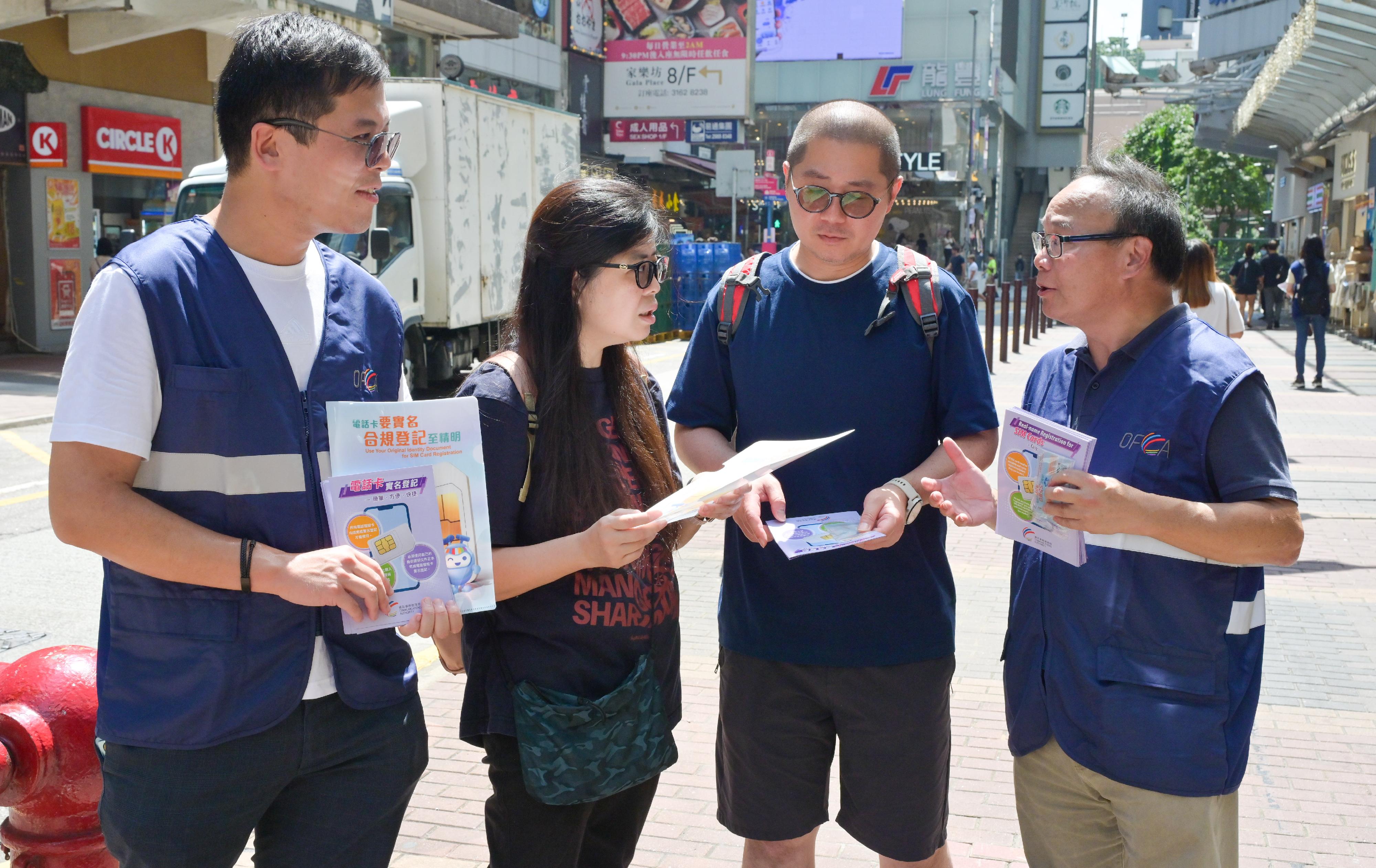
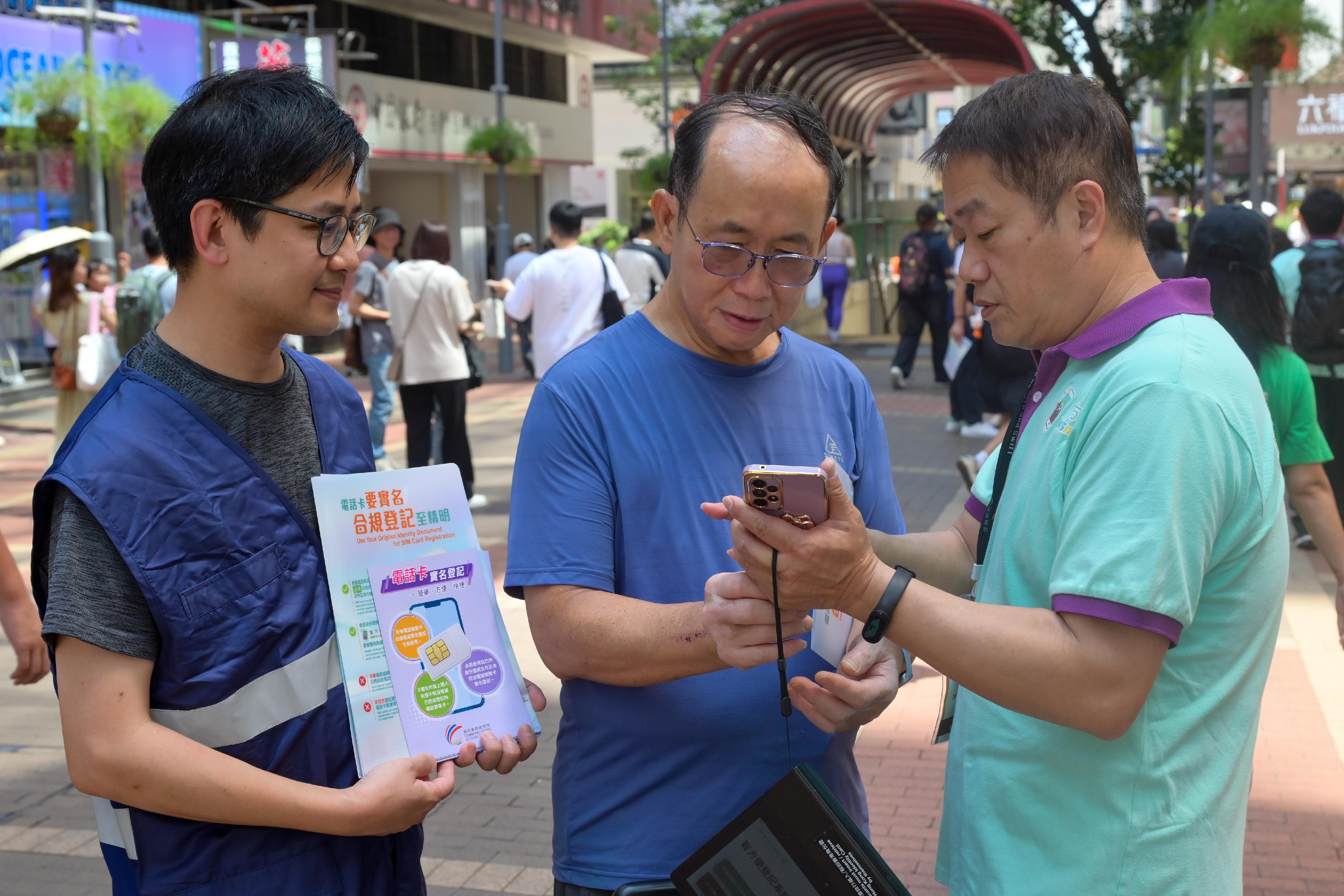
     To help the public understand more about the relevant enhancement, OFCA and the Digital Policy Office (DPO) jointly conducted publicity and education activities in Mong Kok today, and arranged “iAM Smart” mobile registration teams to assist members of the public in registering for “iAM Smart” on-site. Staff members of OFCA also distributed leaflets and souvenirs to remind members of the public not to purchase or resell PPS cards that have allegedly completed real-name registration.  
 
     In addition, OFCA has requested telecommunications service providers to step up their inspection of user information of registered PPS cards and refer suspicious cases to the Police for follow-up to assist in combating phone deception. As of end August this year, telecommunications service providers had rejected around 3 million registration requests as clients failed to provide information that meets the registration requirements, and had deregistered around 2.64 million non-compliant PPS cards. Earlier, based on reports from telecommunications service providers, the Police successfully arrested suspects for using false identity information to register a large number of PPS cards, including the telephone deception case involving a transnational crime syndicate as announced last month.
 
     “To avoid contravening the relevant laws, members of the public must complete real-name registration with their own original identity document, and traders should not assist any persons in using the identity document of a third party in completing the registration. OFCA will continue to carry out a series of monitoring actions to ensure that telecommunications service providers comply with the requirements of the Regulation and the relevant guidelines,” the spokesman added.
 
     Details of the Real-name Registration Programme are available at OFCA’s thematic website (www.ofca.gov.hk/simreg/en). For further information about the “iAM Smart” services, please visit the DPO’s “iAM Smart” thematic website (www.iamsmart.gov.hk/en/).

Photo  Photo  
read more