Tag Archives: China

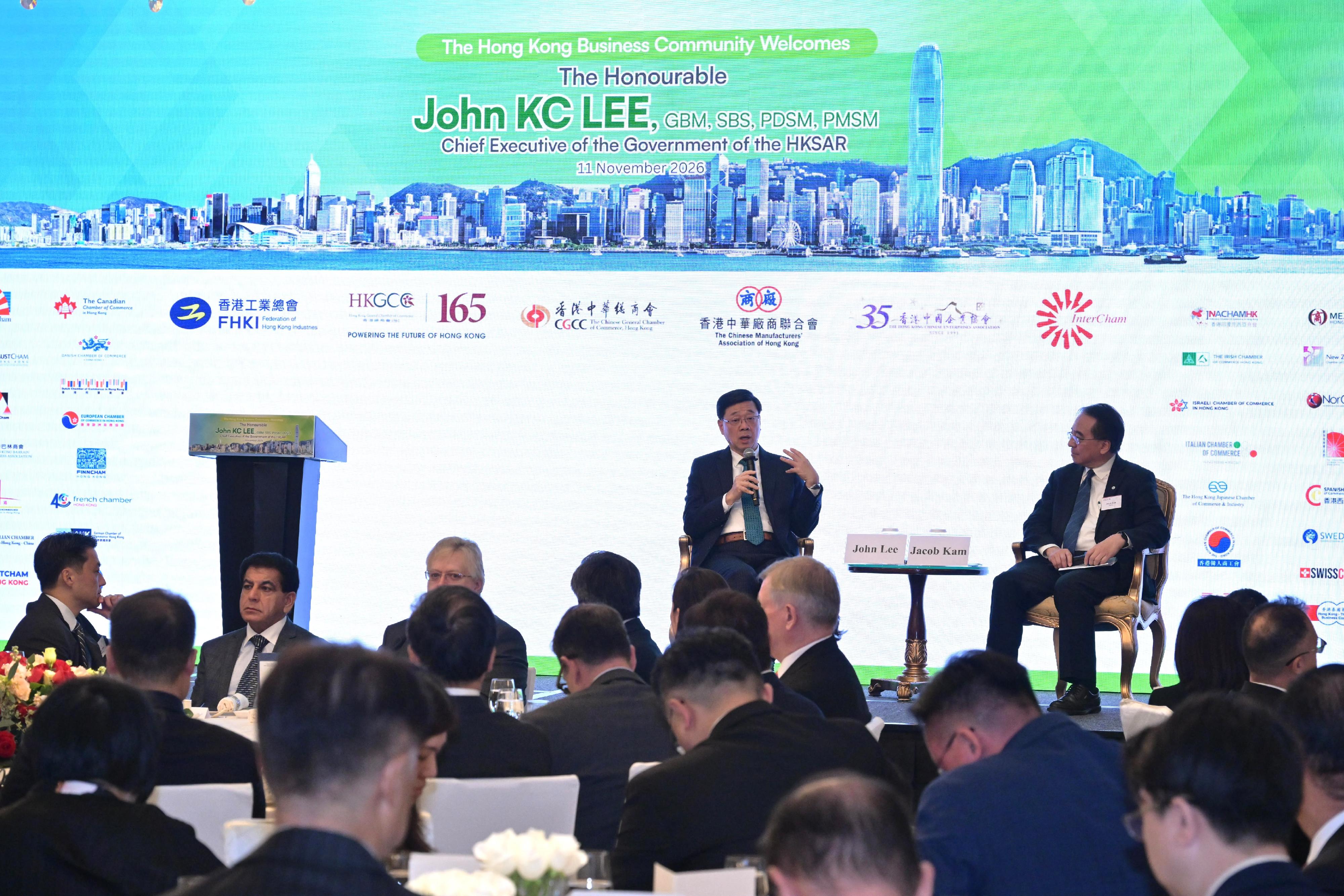
Speech by CE at Joint Business Community Luncheon (English only) (with photos)

     Following is the speech by the Chief Executive, Mr John Lee, at the Joint Business Community Luncheon today (November 11):

Dr Jacob Kam (Chairman of the Hong Kong General Chamber of Commerce), Mr Anthony Lam (Chairman of the Federation of Hong Kong Industries), Mr Ricky Tsang (Chairman of the Chinese General Chamber of Commerce, Hong Kong), Dr Wingco Lo (President of the Chinese Manufacturers’ Association of Hong Kong), Mr Yu Xiao (Vice Chairman and President of the Hong Kong Chinese Enterprises Association), Mr Paul McSheaffrey on behalf of InterCham (Chair of the British Chamber of Commerce in Hong Kong), business leaders, Consuls-General, distinguished guests, ladies and gentlemen, 

     Good afternoon. It is a pleasure to be here today, to join you, once again, for this welcome gathering – the annual Joint Business Community Luncheon. I thank you for this joint business luncheon, held each and every year after the Policy Address has been announced, and for giving me the opportunity to explain as much as possible what the Policy Address can do for the business and industry sector.

     There are some 380 of you here this afternoon. You represent five local chambers and 17 international chambers, as well as consulates-general. And I must say the room radiates business energy and, I trust, business optimism. 

     Like you, I’m very optimistic. And in the next few minutes, I would like to tell you why I’m optimistic about the future of Hong Kong.
      
     The current term of the HKSAR (Hong Kong Special Administrative Region) Government assumed office over four years ago. Over the past four years, the Hong Kong economy has turned around – and then some. Gone from minus 3.7 per cent growth to positive growth, last year, of 3.6 per cent. 

     Our GDP in the first three quarters of this year is up 5.1 per cent, year on year. And that, ladies and gentlemen, is the fastest growth, for the corresponding period, in five years. 

     Over the past four years, our goods exports are up more than 26 per cent, year on year. The number of registered local and non-local companies have hit record highs. Median monthly employment earnings climbed a cumulative 20 per cent over the past four years.

     Our international achievements are also noteworthy. We continue to be the world No.1 in economic freedom, while ranking fourth, globally, in talent competitiveness.

     If money could choose a postcode, it would choose Hong Kong – and increasingly, it does. This year, we became the largest cross-boundary wealth management centre in the world, and climbed to second place in global competitiveness. We also continue to be one of the world’s top three global financial centres.

     And there’s more cheering news in Hong Kong’s rankings. But then there’s also more, and more, uncertainty in the global economy. More geopolitical complexities. And technology, led by AI, is reshaping companies, economies and competition around the world.

     Which is why, in mid-September, we unveiled Hong Kong’s First Five-Year Plan. We believe that in creating a long-term blueprint detailing Hong Kong’s development priorities, business benefits. You benefit. 

     The Plan, designed to align with our country’s National 15th Five-Year Plan, minimises the volatility that defines today’s global economy, and the world at large. It does so by giving you confidence. The confidence to do business and invest your future in Hong Kong.
      
     Hong Kong’s First Five-Year Plan is built on the concept of “four centres and one hub”:
     • international financial centre,
     • international shipping centre,
     • international trade centre,
     • international innovation and technology centre, and
     • international hub for high-calibre talent.

     I would now like to touch on each of these policy priorities in turn.

     Let me start with finance. Finance is Hong Kong’s pivotal sector, playing an irreplaceable role in our high-quality development.

     In finance, Hong Kong’s First Five-Year Plan focuses on five core areas:
 

  • First, strengthening our roles as a global offshore Renminbi business hub and international asset and wealth management centre and risk management centre;
 
  • second, enhancing equity and bond markets, while helping Mainland enterprises go global and bringing in international capital;
 
  • third, developing a commodity trading ecosystem with gold as an entry point;
 
  • fourth, pursuing “Finance+” to serve the broader economy; and
 
  • fifth, strengthening financial risk prevention.

     On “Finance+”, it can help us better integrate our financial strengths with the rest of the economy. “Finance + Trade”, for example, is focused on strengthening trade finance, supply chain finance and risk management services to expand our support for SMEs (Small and Medium-Sized Enterprises).

     In “Finance + Technological Innovation”, the possibilities are as boundless as I&T itself. To name a few, we will encourage patient capital and venture capital investments in industry and technological innovations. We will support the expansion of financing services for I&T enterprises through the acceleration of fintech development. 

     We will expedite green and sustainable finance, advancing the international carbon market and contributing to our country’s low-carbon transition.

     Let me now turn to the next centre, shipping. As an international shipping centre, Hong Kong has ranked fourth, globally, in its comprehensive maritime strengths over the past seven years. 

     Yes, the Hong Kong port is busy. But our real edge, with our world-class service industry, is what happens when the ship leaves for business – the contracts, the insurance, the arbitration, and more. To boost our status, we will promote a “volume to value” transformation of the Hong Kong port and strengthen our high value-added maritime services.

     We are planning a network of Hong Kong-centred green energy corridors, with Mainland cities supplying green maritime fuel for bunkering and trading in Hong Kong. 

     We will deepen our co-operation with Mainland and international shipping ports, strengthening our standing as an international transhipment hub and integrating into the country’s logistics network. 

     Now I’ll come to the third centre, trading. Hong Kong has long been in the international trade arena as a trade centre. In merchandise trade last year, Hong Kong was ranked the world’s fifth-largest.

     In Hong Kong, the door always stays open – and we don’t charge those walking through it. We will continue to uphold free trade, support the rules-based multilateral trading system and maintain zero customs tariffs. In doing so, we give businesses the confidence to trade with us, to look to Hong Kong for their future. 

     Alongside our strong ties with traditional markets, we will expand Hong Kong’s interests in ASEAN and the Middle East, while exploring Central Asia, Africa and other emerging markets. 

     And we will expand our GoGlobal Task Force, established just over a year ago. To date, we have helped some 360 Mainland enterprises through GoGlobal, assisting them with listing and raising capital, aligning with overseas standards, acquiring industry certifications and fulfilling compliance requirements.

     And we are committed to two-way flow, enabling overseas companies to find business opportunities in the Mainland as well. 

     Now let me talk about the fourth and most promising centre, innovation and technology. Hong Kong is a rising international I&T centre. The Five-Year Plan outlines six main directions in I&T:

     First, improving the institutional framework for I&T development. That includes supporting the development of aerospace technology. The Innovation and Technology Commission will launch a new round of Special Call on Aerospace Technology. It will emphasise technology research related to national space missions, covering satellite technology, space exploration instruments aerospace materials and other related areas. 

     Second, developing three major I&T parks and five key R&D institutions. The three parks are Cyberport, Science Park, and the Hong Kong Park in the Hetao co-operation zone and San Tin Technopole. The five key R&D institutions cover productivity, applied science, microelectronics, artificial intelligence, and life and health technology.

     Third, advancing new industrialisation and expediting I&T industry development, including establishing Hong Kong’s first national manufacturing innovation centre. 

     Fourth, developing an international hub for science and technology co-operation. We’re off to a fine start. The United Nations Industrial Development Organization has chosen Hong Kong to launch its first centre of excellence on global advanced manufacturing in the Asia-Pacific region. It’s expected to begin operation in the first half of next year.

     Fifth, deepening development of the Greater Bay Area; and 

     Sixth, adopting a holistic approach to development and security.

     I was in Beijing and Shanghai last week. We worked to build on the close co-operation we enjoy with our country. There, I encouraged strategic Mainland enterprises to consider the Northern Metropolis and its planned research institutions, and told them about the opportunities in the three university towns of the Northern Metropolis. And I’m here today to invite you, the Hong Kong business community, to help us reap the boundless promise of the Northern Metropolis. 

     Just last week, Hong Kong held the World Class University Presidents Forum. It attracted more than 130 academic leaders from some 50 universities. Several expressed an interest in establishing a presence in Hong Kong, in the university towns, clearly attracted by the concept – the integrated development of education, technology and talent.

     We need a world of high-calibre talent to realise our ambitions, to realise also our very ambitious Five-Year Plan. It helps that Hong Kong is home to five universities among the world’s top 100, and three universities among Asia’s top five.

     Our Top Talent Pass Scheme, as of September, had approved over 145 000 applicants, many of whom from the commerce, finance and innovation sectors. 

     We are committed to developing Hong Kong into an international hub for post-secondary education and talent. To that end, we will promote the Study in Hong Kong and Study Tour in Hong Kong brands internationally. 

     We’ll be talking about the Five-Year Plan for the next five years. More important is how all of us could bring it to rewarding and inclusive life.

     Government can make plans of all shapes, sizes and promised payoffs. But without the support of business, and the community at large, they will surely remain plans and promises only. 

     I look forward to your continuous co-operation with the Government in making Hong Kong a better business hub, and a better home for all of us.

     Ladies and gentlemen, we do it all for the economy, the community and the people of Hong Kong. Enjoy your lunch and the afternoon. Thank you.
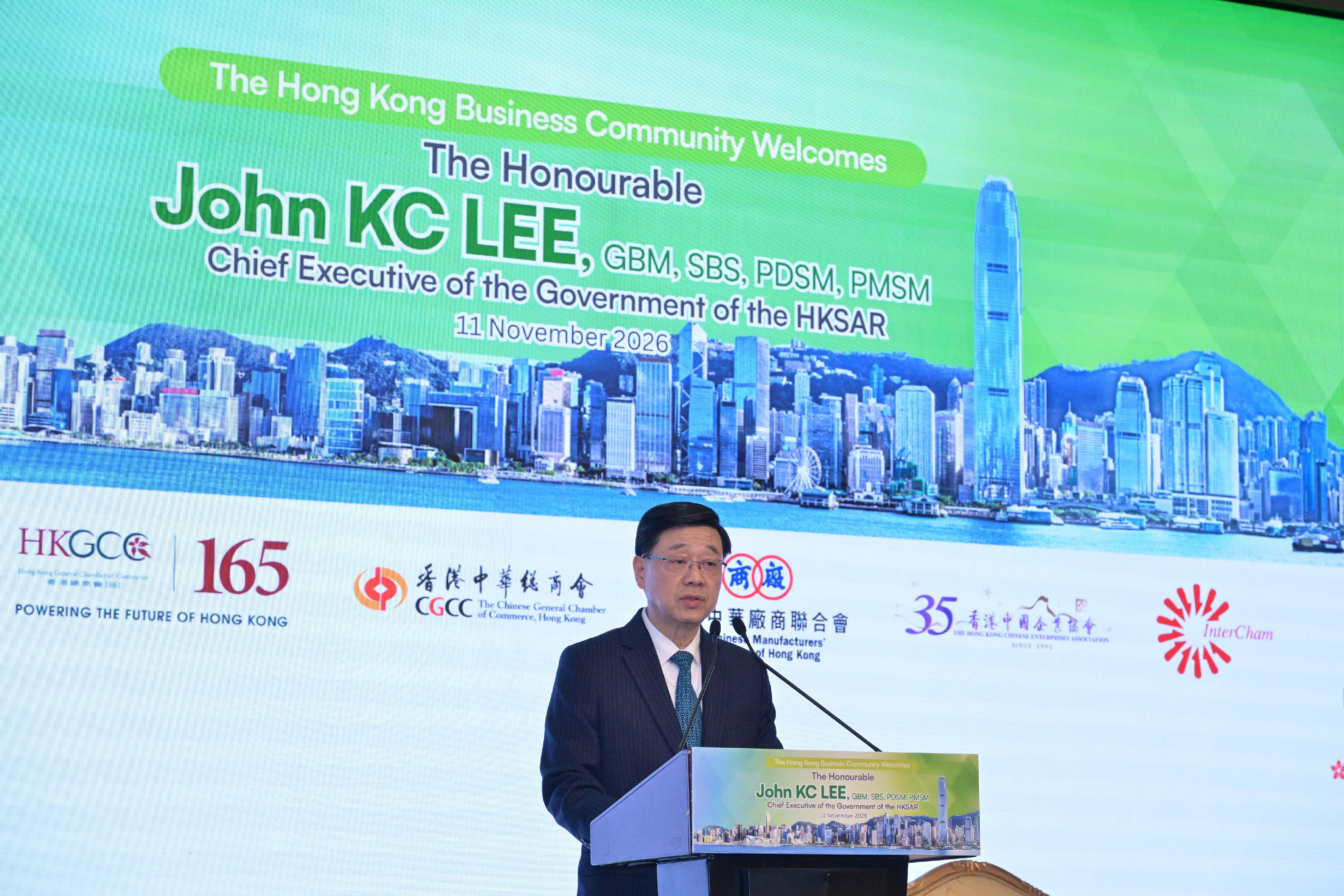
Photo  Photo  
read more

Sexual Offences Legislation (Amendment) Bill 2026 to be gazetted on Friday

     The Government will publish the Sexual Offences Legislation (Amendment) Bill 2026 (the Bill) in the Gazette on Friday (November 13).
      
     A spokesperson for the Security Bureau today (November 11) said, “The Bill aims to achieve two policy objectives, namely, strengthening protection for victims of sexual offences, and modernising the laws on sexual offences in Hong Kong to keep pace with the times.
      
     “At present, many of the sexual offences in Hong Kong are based on similar provisions in the laws of England enacted in 1956. Over the years, social perceptions related to sexual offences have been evolving. We also notice that there are inadequacies in the existing sexual offence provisions. For instance, some offences are gender-specific, resulting in a narrow scope; some provisions carry distinctions based on sexual orientation; some offences lack consistency on treatments across genders; the provisions and penalties of some sexual offences are not fully commensurate with the gravity of relevant acts; and some terminology used in some provisions is outdated. The Government considers it necessary to review and improve the laws on sexual offences in Hong Kong, so as to address the inadequacies of the current provisions and respond to changes in social perceptions related to sexual offences.”
      
     The spokesperson said, “The range of legislative amendment proposals is based on the coverage and recommendations of the Law Reform Commission in its review of relevant legislation, and on the study of developments in relevant legislation in other major common law jurisdictions (including Australia, Canada, England and Wales, New Zealand, Scotland and Singapore), covering different areas including non-consensual sexual offences, sexual offences involving children and persons with mental impairment, miscellaneous sexual offences, and other related amendments proposed to strengthen protection for victims of sexual offences.
      
     “We consulted the Panel on Security of the Legislative Council (LegCo) on July 7 on the Government’s legislative amendment proposal, and received its full support. We also conducted a one-month public consultation exercise from July 7 to August 5, with a total of 6 228 written submissions received. Among them, 99.3 per cent (6 182 written submissions) showed support and made positive comments, fully reflecting that the legislative amendment proposal has gained wide support from the community.”
      
     The spokesperson added, “Our legislative amendment proposal has also incorporated suggestions received by the Government during the public consultation exercise, including the creation of a new offence to deal with perpetrators’ criminal acts of prolonged and repeated sexual abuse against children. We will also criminalise the cybercrime of ‘cyberflashing’ through the refinement of provisions.”
      
     The spokesperson emphasised, “We hope to improve the laws on sexual offences in Hong Kong, the earlier the better, to strengthen protection for victims of sexual offences while ensuring that the laws on sexual offences can keep pace with the times.”
      
     The Government will introduce the Bill into the LegCo on November 25 for First Reading and Second Reading, with the target of completing the legislative exercise within the current term of Government. read more

LCQ16: Out-of-hospital cardiac arrest cases and rescue and assistance measures

     Following is a question by the Hon Maggie Chan and a written reply by the Secretary for Security, Mr Tang Ping-keung, in the Legislative Council today (November 11):
 
Question:
 
     It has been reported that in 2025, the Hong Kong Fire Services Department (FSD) handled approximately 8 000 out-of-hospital cardiac arrest (OHCA) cases (i.e. an average of 22 cases per day). In addition, the number of publicly accessible automated external defibrillators (AED) across Hong Kong increased to 4 038, while more than 280 000 members of the public had completed training offered by the Resuscitation Alliance (RA). In this connection, will the Government inform this Council:
 
(1) over the past three years, of the respective numbers and percentages of patients who showed signs of life upon arrival at hospital and who survived to hospital discharge among the OHCA cases handled by the FSD; whether statistics have been compiled on the number of cases in which cardiopulmonary resuscitation (CPR) was administered or an AED was used by bystanders before the arrival of ambulance personnel;
 
(2) as the information on the “Centralized AED Registry for Emergency” platform is provided voluntarily by various sectors of the society, whether the authorities have complied, on their own, statistics on the actual number of publicly accessible AED across Hong Kong and the provision rate per 1 000 population; if not, of the reasons for that;

(3) as the current annual training target under the Secondary School Student Digital AED and CPR Experiential Programme (Experiential Programme) is not fewer than 5 000 students, whether the authorities have assessed the proportion that such number represents of the total secondary student population in Hong Kong; and whether they have plans to extend systematic first-aid training to primary school students, elderly persons and family carers; if so, of the details; if not, the reasons for that; and
 
(4) apart from the performance indicators for the FSD’s ambulance service at present, which primarily measure the percentage of calls responded within the target response time of 12 minutes, whether the authorities have plans to compile and publish statistics on OHCA treatment outcomes and to conduct an overall assessment of the effectiveness of programmes such as the Experiential Programme and programmes organised by the RA; if so, of the details and the timetable; if not, the reasons for that?
 
Reply:
 
President,
 
     To enhance public awareness and capabilities in respect of emergency preparedness, the Fire Services Department (FSD) has been making vigorous efforts to formulate and implement strategies for community emergency preparedness, as well as organising educational and promotional activities. It endeavours to increase the survival rate of patients by getting the public to know about automated external defibrillators (AEDs) and fostering a culture of “self-help and help others”. Initiatives such as the “AED Anywhere for Anyone” (AAA) Programme, the Resuscitation Alliance (RA) and the “Secondary School Student Digital AED and CPR Experiential” Programme have been launched to improve AED accessibility and enhance training on cardiopulmonary resuscitation (CPR) and AED use. Coupled with the provision of post-dispatch advice, it is hoped that the best use of the “golden hour” can be made before the arrival of ambulance personnel, thereby increasing patients’ chances of survival.
      
     A reply to the questions raised by the Member is as follows:
 
(1) The statistics of out-of-hospital cardiac arrest (OHCA) cases handled by the FSD in the past three years are as follows:
 

Year Number of OHCA cases handled by the FSD# Cases in which CPR was administered or an AED was used by bystanders before the arrival of ambulance personnel Cases with signs of life upon arrival at hospital
Number Percentage Number Percentage
2023 7 917 2 634 33.3% 524 6.6%
2024 7 348 2 517 34.3% 614 8.4%
2025 7 153 2 483 34.7% 687 9.6%
# The Hospital Authority does not maintain statistics on the number of cases that survived to hospital discharge.

(2) The FSD launched the AAA Programme in June 2021 in a bid to gradually increase the number of AEDs readily accessible to the public across the territory, enabling the public to locate and use an AED as quickly as possible when necessary, and enhancing people’s awareness of using an AED. Relevant information about AEDs (including their locations) is available at the FSD’s online information platform “Centralized AED Registry for Emergency” to facilitate public access. Since the launch of the programme, over 380 public and private organisations have voluntarily uploaded the details of a total of 4 617 AEDs. Currently, the FSD only maintains data on the voluntary participants of the programme and does not have the statutory power to require all organisations and individuals to register the details of their AEDs. Therefore, statistics on the actual total number of publicly accessible AEDs across Hong Kong or the provision rate per 1 000 population are not available.
 
(3) The FSD launched the “Secondary School Student Digital AED and CPR Experiential” Programme in May 2024, teaching secondary school students how to perform CPR and use AEDs on cardiac arrest patients. As of October 2026, about 24 000 secondary school students from over 120 schools had completed the training. Besides, the FSD, in close collaboration with the Education Bureau, runs the “School-based Education Programme”, which targets students at kindergarten, primary and secondary levels, to strengthen their grasp of the critical situations in the community and teach them methods to deal with such situations by means of a series of courses and activities. Topics covered in the training include survival skills to employ in the event of fires and emergencies, and practical knowledge of handling emergencies such as the administration of CPR and the use of an AED. The programme enables the students to acquire basic survival and first-aid skills at an early stage.
 
     As for the general public, the FSD also enhances their emergency response knowledge and skills through various programmes. Since 1999, the FSD has organised community CPR training courses from time to time, covering basic CPR and an introduction to the use of an AED. Launched in 2017, the “Press to shock – Save a life” course has provided free CPR and AED training to 53 000 members of the public by September 2026. The “Press to shock – Save a life” course is open to all Hong Kong citizens, including elderly and family carers. Members of the public may enrol individually or apply to arrange group sessions. The FSD also provides online learning resources to facilitate the acquisition of relevant first aid knowledge by the public.
      
     In addition, the FSD launched the “Community Emergency Responder” Scheme in 2024 to equip members of the public (including primary and secondary school students) with knowledge in fire prevention, emergency response and first aid. More than 18 000 members of the public have already completed the course. The FSD also holds community education activities and talks targeting various groups to promote emergency response knowledge, and has reached over 680 000 participants over the past three years. The FSD will continue to enhance emergency education and will explore ways to strengthen targeted training arrangements tailored to the needs of different groups (including primary and secondary school students, elderly and family carers), so as to further consolidate community resilience.
 
(4) The primary mission of the FSD’s ambulance service is to deploy appropriate ambulance resources to scenes as soon as possible and to provide emergency ambulance and transport service to convey patients to hospitals. Therefore, the FSD has all along adopted the response time as a key performance indicator (i.e. arrival at the street address within 12 minutes for at least 92.5 per cent of emergency ambulance calls). The subsequent clinical results of patients (e.g. the survival rate) are, however, affected by a lot of factors and should not be taken as the performance indicator of ambulance service.
 
     As for OHCA cases, the percentage of cases in which CPR was administered or an AED was used by bystanders before the arrival of ambulance personnel ranged between 33.3 per cent and 34.7 per cent for the period from 2023 to 2025 (see Part (1) above). To further raise the effectiveness of treatment for OHCA cases, the FSD rolled out the enhanced post-dispatch advice service in October 2018. Whenever a call for emergency ambulance service is received, personnel of the Fire Services Communications Centre (FSCC) will provide immediate advice to callers over the phone as appropriate. The callers will be instructed to stabilise the patients’ injury or condition before the arrival of the ambulance crew, including how to administer CPR or how to use an AED in cardiac arrest cases to make good use of the “golden hour”.
      
     For programmes such as the “Secondary School Student Digital AED and CPR Experiential” Programme and the RA, they aim to enhance the general public’s knowledge and skills in first aid and the consciousness “to offer aid”. The impact of these programmes is reflected in the change in behaviour and social ambience, the effectiveness of which cannot be simply evaluated by quantitative indicators. The FSD will continue reviewing the implementation of the programmes and the number of participants, so as to adjust the strategy as needed. Public education and publicity activities will remain in place to encourage more people to become rescuers, to enhance the “Dare to Do, Save a life” ambience, and to promote the message of “Anyone can use an AED”. read more

LCQ17: Sewerage systems in rural areas

     Following is a question by the Hon Chan Cho-kwong and a written reply by the Acting Secretary for Environment and Ecology, Miss Diane Wong, in the Legislative Council today (November 11):

Question:

     There are views that with the ongoing development and population growth in Hong Kong’s rural areas, comprehensive supporting infrastructure is of paramount importance. However, the sewerage systems in many rural areas are currently still relatively outdated. Some villages still have to rely on septic tanks or old-fashioned methods to treat domestic sewage, which not only poses a threat to the surrounding environmental hygiene and natural water quality, but also hinders the long-term development of rural areas. In this connection, will the Government inform this Council:

(1) of the current number of villages, village houses or population across the territory that have yet to be connected to public sewerage systems and have to rely on septic tanks; the overall coverage rate of the village sewerage projects taken forward in the past five years; and

(2) in respect of the villages not yet provided with public sewerage systems, whether the authorities will develop a blueprint for comprehensive upgrading in future public works projects or improvement programmes; if so, of the details; given that the authorities are progressively improving these village sewerage systems, whether a clear phased timetable has been drawn up to thoroughly resolve the problem of obsolete sewerage facilities in villages; if so, of the details?

Reply:

President,

     The Government has all along maintained close liaison with the stakeholders, including District Councils, Rural Committees, and village representatives, to plan and expand sewerage infrastructure in an orderly manner, thereby continuously improving the public hygiene environment, as well as the water quality of rivers and coastal waters. In response to the question raised by the Hon Chan Cho-kwong, and having consulted the Development Bureau (DEVB), the consolidated reply is as follows:

(1) At present, sewage from over 94 per cent of Hong Kong’s population is properly treated by the public sewerage systems, placing Hong Kong at the forefront of advanced regions worldwide. The Government has been allocating resources to implement the Village Sewerage Programme (the Programme) to progressively provide public sewerage facilities to rural areas and expand the public sewerage collection network, with a view to improving the rural environmental hygiene and enhancing the water quality of rivers and coastal waters. In taking forward village sewerage projects, the Government will take into account a host of factors, including the extent of environment improvement brought about by the projects, village population density, preference of residents, technical feasibility, cost-effectiveness and financial position. The Government is taking forward the relevant preliminary studies, planning and construction works progressively and in a timely manner, having regard to the actual circumstances and priorities, so as to ensure the optimal use of resources. At present, about 586 villages or areas can be included in the Programme.

     As at September 2026, sewerage projects for 319 villages under the Programme with higher resident populations and closer proximity to the public sewerage network have been completed, benefitting around 240 000 residents. Among these, the projects for 60 villages were completed in the past five years, while the relevant projects for another 21 villages are currently in progress.

(2) Taking forward village sewerage projects requires preliminary works involving multiple procedures, including planning, feasibility studies, detailed design, public consultation, gazettal and land resumption. Furthermore, given the complex land ownership issues in some villages, the sewerage proposals and land resumption arrangements must be fully deliberated with relevant stakeholders to reach a consensus before the projects can be taken forward progressively. As such, it is difficult at this stage to formulate a concrete implementation timetable for the remaining rural areas not yet covered by public sewers. The Government will continue to strengthen communication and co-ordination with relevant stakeholders to plan and implement the village sewerage projects in an orderly manner. For villages or areas currently not covered by sewers, residents therein may continue to use on-site sewage treatment facilities, such as septic tanks and soakaway systems (septic tank systems), for sewage treatment. The Environmental Protection Department will continue to promote to the residents concerned the correct usage and proper maintenance of the septic tank systems, ensuing the effective functioning of the facilities and the maintenance of environmental hygiene.

     In addition, infrastructures will be substantially upgraded by the works projects of the new development areas (NDAs) in the Northern Metropolis (NM). These upgraded infrastructures will not only support the NDAs, but also bring about improvements to infrastructures of the nearby villages. To further seize the opportunities of the NM development and promote urban-rural integration in the NM, while carrying out land formation and infrastructure works for the NDAs, the DEVB will connect the sewerage systems of nearby villages, which have not yet been included in the Programme, to the public sewerage system in batches, thus expediting improvements to the living conditions of these villages. The DEVB is finalising the implementation details with relevant departments. At the current stage, priority will be given to approximately 40 to 50 villages located near existing or planned public sewerage networks. As a start, this arrangement will apply to the works projects of Hung Shui Kiu / Ha Tsuen and San Tin Technopole. read more

LCQ2: Supporting youth employment in era of artificial intelligence

     Following is a question by the Hon Cheung Pui-kong and a reply by the Secretary for Labour and Welfare, Mr Chris Sun, in the Legislative Council today (November 11):

Question:

     According to the latest report on the Mid-term Update of Manpower Projection, the widespread adoption of artificial intelligence (AI) by companies will result in a manpower surplus of clerical support workers and a reduction in entry-level administrative and clerical positions suitable for fresh graduates. On the other hand, both the Mainland and the international community are vigorously promoting the concept of “purple-collar” talent, which combines traditional professional skills with AI operational capability. In this connection, will the Government inform this Council:

(1) whether it will arrange more company visits, career experience activities and workshops on the practical AI applications during the senior secondary subject selection stage, so that students can better grasp the market’s requirements for positions combining practical skills and AI, thereby enabling them to select subjects precisely and equip themselves accordingly;

(2) whether it will consider having the Digital Policy Office take the lead in coordinating various government departments and statutory bodies to establish a database on AI’s impact on manpower demand trends in the labour market and publish data regularly, so as to precisely and dynamically monitor changes in purple-collar positions and their technical requirements; and

(3) in light of the risk that AI may replace highly repetitive elementary-level positions, how the Government will review and optimise various youth internship programmes to expand the scope of high-skill and “purple-collar-related” internship places, so as to assist young people in continuously enhancing their competitiveness in the era of AI and achieving high-quality employment?

Reply:

President,

     The Government attaches great importance to and is committed to promoting youth employment and development. In consultation with the Education Bureau (EDB), the Innovation, Technology and Industry Bureau, and the Home and Youth Affairs Bureau (HYAB), a consolidated reply to the Member’s question is as follows:

(1) The EDB has all along been attaching great importance to the implementation of life planning education. Through the Business-School Partnership Programme (BSPP), the EDB provides students with career exploration activities, including those related to emerging and innovative technology industries, such as career talks, workplace visits, workshops, competitions and work experience opportunities, to help them understand the relevant industries, with a view to widening students’ exposure and getting them well prepared for further studies or career pursuits.

     The BSPP partners from innovative technology-related industries include those engaged in areas such as artificial intelligence (AI), three-dimensional printing, biotechnology, testing and certification, metaverse gaming as well as digital arts. Furthermore, the Life Planning Information Website of the EDB provides students, teachers and parents with comprehensive information on life planning and multiple pathways. The website features the latest career information, such as job duties, career ladder, entry requirements as well as examples of related training and courses, of over 300 types of work from different industries, including emerging and innovative technology industries, to enhance students’ understanding of relevant industries.

(2) The Government has been closely monitoring the impact of emerging technologies, including AI, on manpower demand and skill structures in the local labour market.

     The manpower projection (MP) conducted by the Labour and Welfare Bureau (LWB) serves as an important reference for the Government in assessing macro-level manpower trends. Under the current mechanism, a full projection exercise is conducted once every five years with a mid-term update in between, to assess the implications of macroeconomic environment and technological advancements for the labour market. Data relevant to the projection results have been uploaded to the websites of the LWB and the Census and Statistics Department. The mid-term update report published in September 2026 has specifically examined the impact of rapid adoption of AI on the labour market in recent years.

     The Government monitors the labour market (including the impact of AI). Apart from conducting periodic MPs, the Government will also continue to keep a close watch on the latest market developments by referencing the monthly and quarterly employment and job vacancy statistics, and the latest employment data across various industries released by the Census and Statistics Department, as well as various thematic research reports published by local and overseas organisations. The Digital Policy Office will actively render support for the relevant work under the existing mechanism, including providing advice on the manpower supply and demand in the relevant industries.

(3) To facilitate youth employment and development, the 2026 Policy Address announced that the Government will, in collaboration with the business sector, launch the two-year 30 000 Youth Employment and Internship Programme. The Programme includes four employment and internship initiatives covering the business sector, innovation and technology, construction industry and financial services, and will be jointly implemented by various policy bureaux and departments. The LWB and the Labour Department will be responsible for the Graduate Employment Launch under the Programme, and support major employer organisations to provide a total of 10 000 additional full-time posts lasting six months or more within a two-year period starting from the first quarter of 2027, on top of the participating enterprises’ existing manpower and regular recruitment plans. These posts will be offered to young people newly entering the workforce, i.e. those with no or limited work experience, enabling them to gain hands-on work experience, and enhancing their competitiveness and adaptability in the workplace.

     In addition, the HYAB will enhance the HYAB Youth Start-up Internship Programme, and will also launch new AI experiential activities under the HYAB JC Scheme for Youth Life Planning to enhance secondary students’ understanding of AI application and the industry. Moreover, the HYAB has been continuously providing young people with diverse internship opportunities, enabling young people to acquire work experience and build interpersonal networks, thereby bolstering their employability. Many of these internship placements cover emerging industries of key national development, such as AI, new energy technology and digital economy, which help young people gain hands-on experience in relevant fields and seize the new opportunities arising from national development and technological advancement.

     The Government will continue to provide appropriate internship and employment support for young people in light of Hong Kong’s economic and employment market conditions. read more