Not only a means of transport, the train has long been a location for filmmaking with many movie scenes set above the two rails. For “Critics’ Choice 2018 – From Rails to Reels”, film critics Lam Kee-to, Stephanie Ng, Ernest Chan, Lam Kam-po, Thomas Shin and Joyce Yang have selected six train movies, taking film buffs on a big-screen rail journey.
The series is presented by the Film Programmes Office of the Leisure and Cultural Services Department in collaboration with the Hong Kong Arts Centre and organised by the Hong Kong Film Critics Society. Films will be screened from October 7 to December 30 at the Lecture Hall of the Hong Kong Science Museum and the Louis Koo Cinema of the Hong Kong Arts Centre.
In addition, post-screening seminars will be arranged for all the screenings with free admission, and will be hosted by the six aforementioned film critics and guests, namely Tong Ching-siu, Winnie Fu, Lau Yam, Cheng Chuen-wai, John Chong and Gina Marchetti.
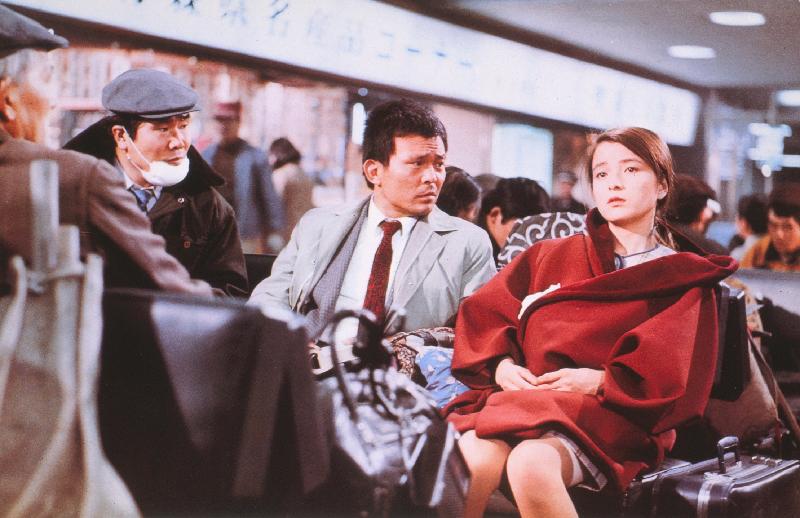
Critic Lam Kee-to wrote on Yoji Yamada’s “Where Spring Comes Late” (1970), “Railroad as the path to happiness and family bliss. Witness the rejuvenating power of classic cinema.” A classic work of the Japanese shomin-geki, a genre focused on common people, the film follows a family from Kyushu travelling by train across Japan to start a new life in Hokkaido. Regarded as a norm-setting film of the railroad genre, the film reflects the changing economy and way of life in Japan during the 1970s while featuring the Japanese train culture and presenting snapshots of various parts of Japan. The film won the No. 1 Film Award of the Kinema Junpo Top 10 in 1971.
On Lars von Trier’s “Europa” (1991), critic Stephanie Ng wrote, “Memory or nightmare? Myth or history? A dark and mystic take on post-war Germany.” In the film, an American young man gets on a train to Germany and makes the acquaintance of a mystery girl. They are then sucked into a whirlpool when the Allies are extensively hunting for members of the defeated Nazis, turning the train into a stage where desire, power and revenge play out. The story is full of mysteries with the blending of expressionism, film noir and existentialism. The film won the Jury Prize, Best Artistic Contribution and the Technical Grand Prize at the Cannes Film Festival 1991.
Critic Ernest Chan described “Trans-Europ-Express” (1966), an anomaly of the train film by French novelist and filmmaker Alain Robbe-Grillet, as follows: “A deconstruction, deboning, digestion and reconstruction of the crime film genre. Film as a struggle on the right to narrate.” The film depicts a director and a producer conceiving a crime movie on a train, in which the characters created by them appear on the same train simultaneously. The film within a film blurs the boundary between reality and abstract imagination, subverting narrative norms.
Commenting on Andrei Konchalovsky’s “Runaway Train” (1985), critic Lam Kam-po said, “Kurosawa’s story reworked by a Soviet master. A most daring escape by train through heavy snow.” Based on a script originally written by Japanese film master Akira Kurosawa, the film tells of an escape of a prisoner from a maximum security prison and a young prisoner. The duo get on a train to Alaska, but it runs out of control when they are about to be free forever. The film earned the male lead, Jon Voight, Best Performance by an Actor in a Motion Picture – Drama at the Golden Globe Awards in 1986.
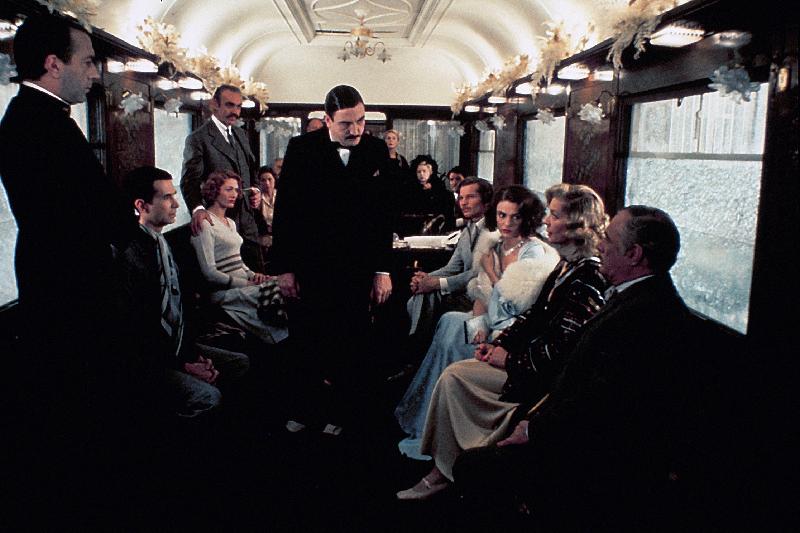
Writing on Sidney Lumet’s “Murder on the Orient Express” (1974), an adaptation of the detective novel of the same title by Agatha Christie, critic Thomas Shin wrote, “A most gorgeous web of mystery, the unsurpassable locked room mystery.” With a star-studded cast including Ingrid Bergman, Albert Finney and Sean Connery, the film follows detective Hercule Poirot, who hops on the Orient Express to London and finds the businessman in the next cabin dead with multiple stab wounds. Poirot then interrogates the 13 suspects onboard to find the murderer. The film earned Ingrid Bergman Best Actress in a Supporting Role at the Academy Awards in 1975.
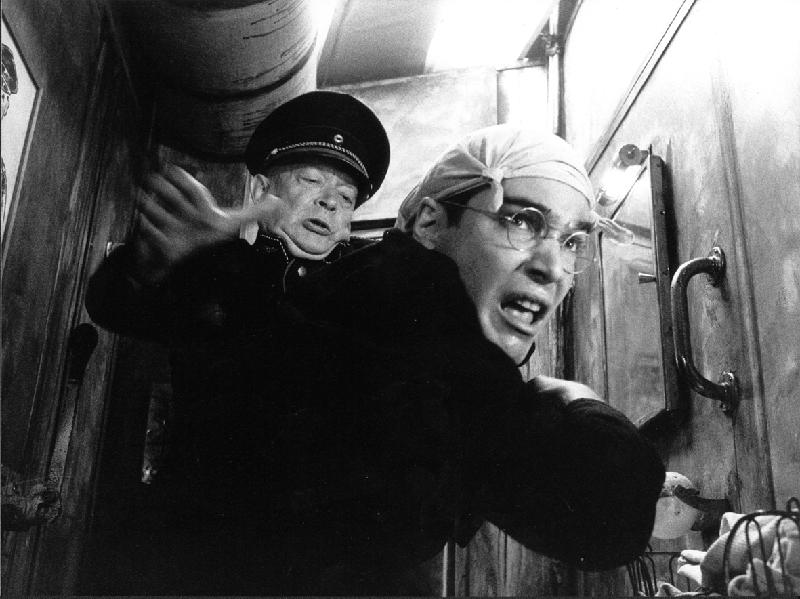
Critic Joyce Yang wrote of JiÅ™í Menzel’s feature film debut “Closely Watched Trains” (1966), a notable work of the Czech new wave, “Adolescent sex frustration caught under train wheels. Menzel’s easygoing approach of a heavy subject makes this an unforgettable Czech classic.” Set in a small town in the German-occupied Czechoslovakia during World War II, the film features Miloš getting his dream as a train dispatcher who can meet his sweetheart, a train conductor, every day. Miloš, however, starts to realise that crises in adolescence and politics are in fact all around him. The film won Best Foreign Language Film at the Academy Awards in 1968.
All films have Chinese and English subtitles.
Tickets for Science Museum screenings are priced at $55 and those for Arts Centre screenings are priced at $65. Tickets are now available at URBTIX (www.urbtix.hk). For credit card telephone bookings, please call 2111 5999. For programme enquiries, please call 2734 2900 or visit www.lcsd.gov.hk/fp/en_US/web/fpo/programmes/ccfrr2018/index.html.
read more