Tag Archives: China

image_pdfimage_print

CHP investigates outbreak of acute gastroenteritis at kindergarten-cum-child care centre in Tin Shui Wai

     The Centre for Health Protection (CHP) of the Department of Health is today (October 15) investigating an outbreak of acute gastroenteritis (AGE) at a kindergarten-cum-child care centre in Tin Shui Wai, and hence reminded the public and management of institutions to maintain personal and environmental hygiene against AGE.

     The outbreak involves 10 boys and 10 girls aged 3 to 5 who developed diarrhoea and vomiting since October 4. Eighteen of them sought medical attention. Among them, two required hospitalisation and were discharged after treatment. All patients have been in a stable condition.
 
     Upon laboratory testing, the stool specimen of one affected child tested positive for norovirus and sapovirus while the stool specimen of another affected child tested positive for norovirus.

     Officers of the CHP conducted a site visit and provided health advice to the staff of the school concerning proper and thorough disinfection, proper disposal of vomitus, and personal and environmental hygiene. The school has been put under medical surveillance.
 
     The CHP’s investigations are ongoing.
 
     A spokesman for the CHP advised members of the public to take heed of the following preventive measures against gastroenteritis:
 

  • Ensure proper personal hygiene;
  • Wash hands thoroughly before handling food and eating, after using the toilet or after changing diapers;
  • Wear gloves when disposing of vomitus or faecal matter, and wash hands afterwards;
  • Clean and disinfect contaminated areas or items promptly and thoroughly with diluted household bleach (by adding one part of bleach containing 5.25 per cent sodium hypochlorite to 49 parts of water). Wash hands thoroughly afterwards;
  • Maintain good indoor ventilation;
  • Pay attention to food hygiene;
  • Use separate utensils to handle raw and cooked food;
  • Avoid food that is not thoroughly cooked;
  • Drink boiled water; and
  • Do not patronise unlicensed food premises or food stalls.
     
     The public may visit the CHP’s website (www.chp.gov.hk) or call the Health Education Hotline (2833 0111) for more information. read more
Joint operation combats illegal handling of hazardous electronic waste by recycling sites in North District and Yuen Long (with photos)

     The Environmental Protection Department (EPD) conducted an inter-departmental enforcement operation on October 12 and detected the illegal handling of hazardous electronic waste (e-waste) by a recycling site at Ping Shan in Yuen Long. The department is still investigating the persons involved and collecting evidence and prosecution will be instigated soon.
      
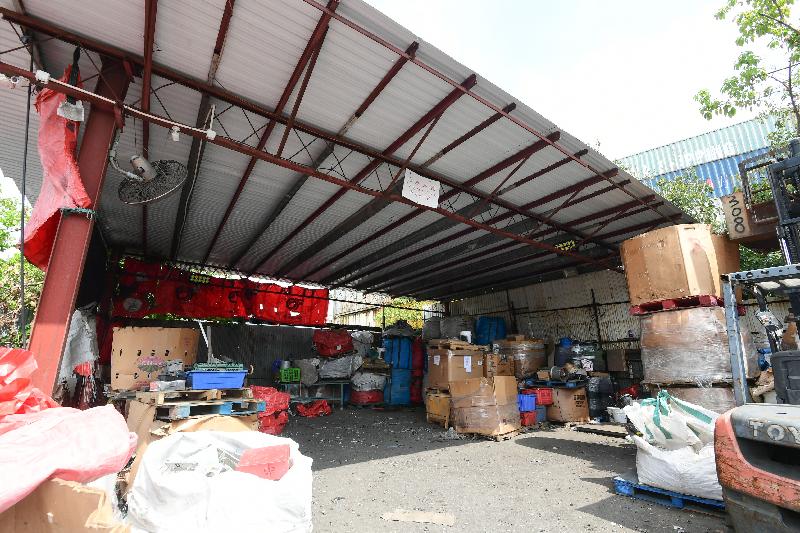
     An EPD spokesman today (October 15) said that the department’s enforcement officers conducted a joint operation with the Fire Services Department (FSD) and Lands Department (LandsD) on October 12. The operation, entitled “Operation Jasmine”, aimed at conducting surprise inspections at open waste recycling yards in North District and Yuen Long in the New Territories to check whether their operations complied with the land lease conditions or legal requirements on pollution control, fire safety and land use.
      
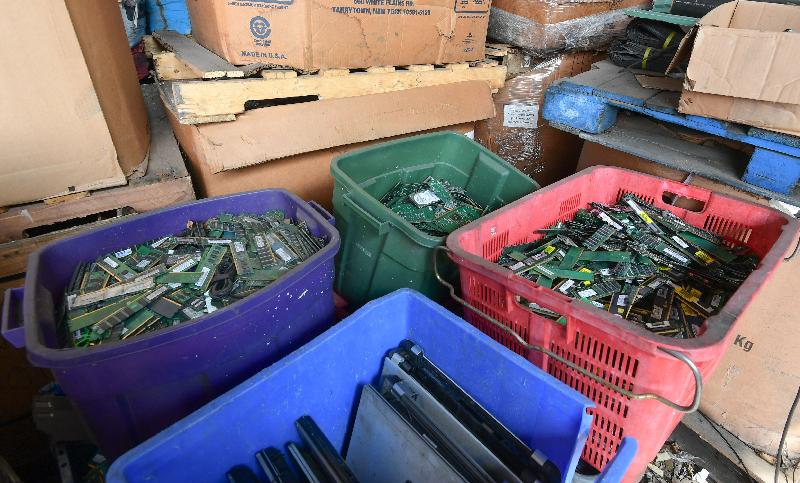
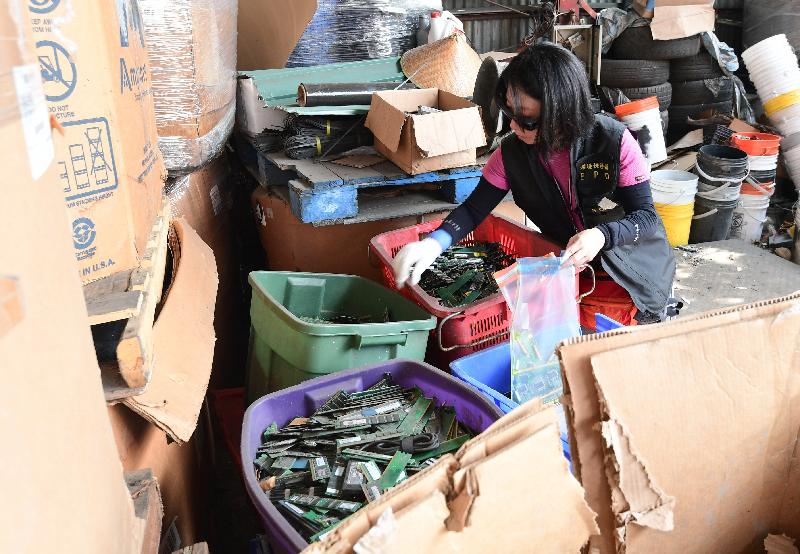
     During the operation, the EPD found that an open waste recycling site located at Ping Shan in Yuen Long was suspected to be involved in illegal collection, storage and handling of large quantities of hazardous e-waste, which is regulated as chemical waste. About 1 ton of hazardous e-waste, mainly waste printed circuit boards (PCBs), was found during the operation, with an estimated export market value of around $100,000. Separately, LandsD is also investigating whether there was any violation of land lease conditions at the above recycling site. The FSD also reminded responsible persons and staff of the recycling sites about fire safety requirements during the operation.
      
     The spokesman stressed that dismantled or destroyed PCBs, LCD monitors and cathode ray tubes are hazardous e-waste, containing heavy metals and other toxic substances. They are classified as chemical waste and are regulated under the existing laws on chemical waste disposal. Chemical waste is hazardous by nature and, if not properly controlled, will pollute the environment and pose a risk to the health of relevant trade practitioners and the general public. Hence, the Government has been applying stringent control of the recycling and handling of hazardous e-waste in accordance with the existing law.

     The EPD reminded recycling operators that they should strictly comply with the law on the control of chemical waste. They should register with the EPD in accordance with the law if they produce chemical waste. Chemical waste must be properly packaged, labelled and stored, as well as collected by licensed chemical waste collectors for delivery to licensed chemical waste disposal facilities for disposal. A permit has to be obtained in advance from the EPD for importing and exporting chemical waste. First-time offenders are liable to a maximum fine of $200,000 and six months’ imprisonment. For subsequent offences, offenders are liable to a maximum fine of $500,000 and two years’ imprisonment.

     Members of the public may visit the EPD’s website for more information about the control of chemical waste: www.epd.gov.hk/epd/english/environmentinhk/waste/guide_ref/guide_cwc.html.

Photo  Photo  Photo  
read more