Tag Archives: China

image_pdfimage_print

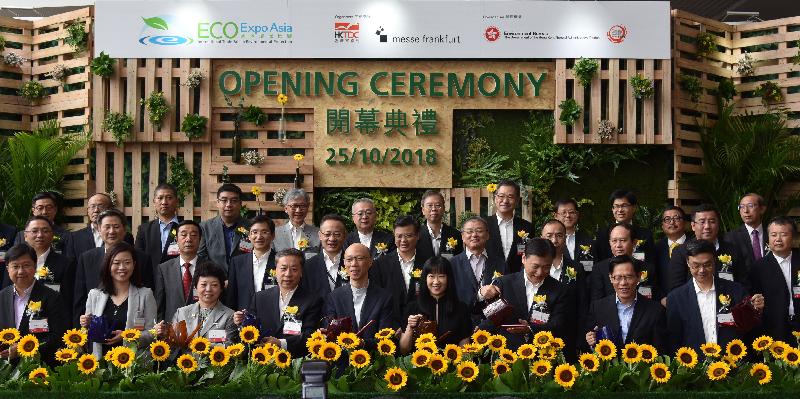
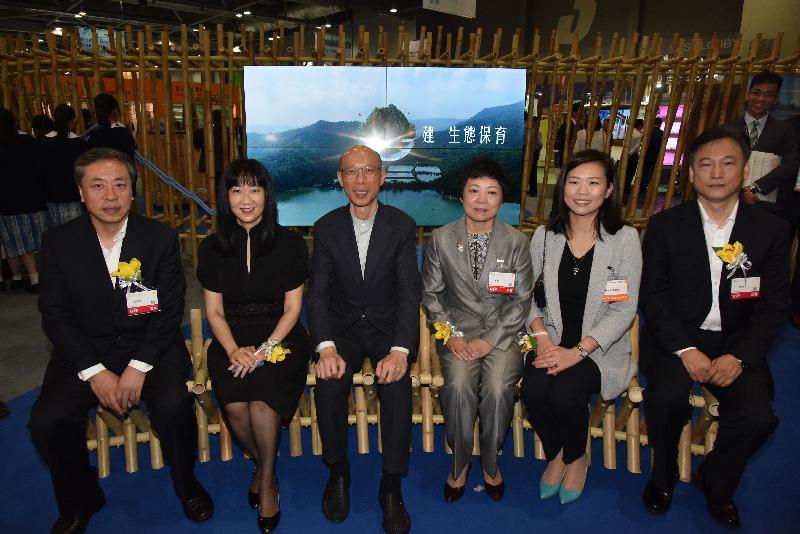
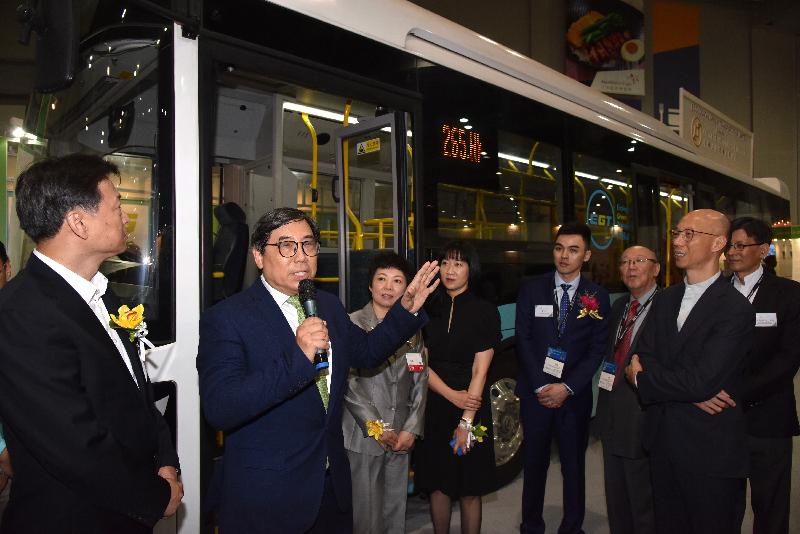
Speech by SEN at opening ceremony of 13th Eco Expo Asia (with photos)

     Following is the speech by the Secretary for the Environment, Mr Wong Kam-sing, at the opening ceremony of the 13th Eco Expo Asia today (October 25):

     Margaret (Executive Director, Hong Kong Trade Development Council (HKTDC), Ms Margaret Fong), Rebecca (Representative of Messe Frankfurt (HK) Limited, Ms Rebecca Zheng), Deputy Director-General Wang (Deputy Director-General of the Department of Resource Conservation and Environmental Protection of the National Development and Reform Commission, Mr Wang Shancheng), Counsel Li (Counsel of the Department of Energy Conservation and Resources Utilization of the Ministry of Industry and Information Technology, Mr Li Li), Counsel Li (Counsel Ms Li Pei, Special Representative of the Minister of Ecology and Environment, Mr Li Ganjie), government colleagues, ladies and gentlemen.

     Good morning.

     I am very delighted to join you this morning for the opening of the 13th Eco Expo Asia. As said by Margaret, this year’s thematic topic is about “waste less, save energy”, in order to have a low-carbon future. Here I would like to tell you two aspects on how to reduce waste and how to lead to a low-carbon future. The recent Policy Address 2018 by Mrs Carrie Lam highlighted what we are doing, more on waste tackling.  

     I want to highlight the hardware I saw at the Environment Bureau’s booth inside the exhibition hall. We are doing a number of the state-of-the-art facilities on waste reduction, turning waste into energy and also waste-to-resources facilities. We are commissioning them one by one, including T·PARK in Tuen Mun, which turns sewage sludge into energy. Secondly, it is the WEEE·PARK, which handles e-waste, such as TV, fridges, air-conditioners and also computers, etc. Commenced about a year ago, it turns e-waste into resources. Thirdly, it is the O·PARK in Lantau, which turns food waste into energy plus compost as by-products. All of these are state-of-the-art advanced technologies which help Hong Kong to reduce waste and landfill, and turn these types of waste into energy and resources. I recommend you to see the Environment Bureau’s exhibition booth inside the hall to learn more about it.

     Here, I am not talking about hardware only, as software is also very important. The highlight is the introduction of producer responsibility schemes, covering the recycling of glass beverage bottles and e-waste, and the forthcoming one will be for plastic beverage bottles. Implementing them one by one helps Hong Kong reduce waste and also turn waste into resources. We hope to have your support.

     Another milestone among the recent Policy Address is the municipal solid waste charging. Other cities of Asia implemented this charging about two decades ago, and this effectively provided incentives to everyone, from recyclers to the trade, to normal citizens, to reduce waste by more than 10 or 20 per cent. We are going to put forward the bill to the lawmakers very soon. We hope to have your support, so that we can transform Hong Kong into a waste less society.
 
     At the same time, as announced in the Policy Address, we would like to provide more public money, ahead of the law. About $300-400 million will be set aside for the forthcoming financial year on waste reduction and recycling, including the outreaching teams to help the community reduce waste and improve clean recycling. We have a pilot scheme on recycling of food waste from commercial and industrial sectors, and turning it into energy and resources. We will also have a pilot scheme to collect plastic from the community from residential and non-commercial sectors to help turn plastic into resources again. Plus, we are about to try out the reverse vending machines to collect the beverage bottles for clean recycling and reuse.
 
     So much on waste. Climate change is very important. Macao, Hong Kong and the region were attacked by the super typhoon, causing severe damage. This is a clear signal, a warning for all of us that we have to strengthen our climate action. Hong Kong released the Climate Action Plan 2030+ earlier to echo the Paris Agreement, so we are having the 2030 target to reduce Hong Kong’s carbon footprint. For instance, the 2030 target is to reduce Hong Kong’s carbon intensity by 65 per cent to 70 per cent by 2030. We are phasing down on coal-fired electricity generation. At the same time, we are supporting more renewable energy in Hong Kong, both by the Government and the community. A milestone starting this October is the introduction of the Feed-in Tariff (FiT) that supports the community and the trade to install and do more on renewable energy at their premises. The Government also wants to do more on renewable energy in our premises, at landfills, at restaurants and also at our buildings. So we hope that moving towards low-carbon and renewable energy can decarbonise Hong Kong. At the same time, we will launch a public engagement to consider possible long-term decarbonising strategy and target for Hong Kong. It would be launched around early next year so that we can gauge views and ideas to help decarbonise Hong Kong. 
 
     Before I conclude, I would like to share some good news. One is the collaboration with Hong Kong Trade Development Council this year. The Hong Kong Government, through the Environmental Protection Department, launched the Green Event Guidebook earlier. We hope more events will follow the Guidebook to reduce waste and to save more. The good news is that this Eco Expo Asia has made reference to the Green Event Guidebook. So I hope this collaboration will set a good example for big events with HKTDC, and to further promulgate and promote the message of waste less in other events in Hong Kong. We also hope that organisers and event participants support and reduce waste and do clean recycling. I would like to present in Putonghua the second good news because this event has been strongly supported by the Mainland officials in half a decade. This time we have more than 160 Mainland officials joining this event including 36 delegations.  

(Please also refer to the Chinese portion of the speech.)
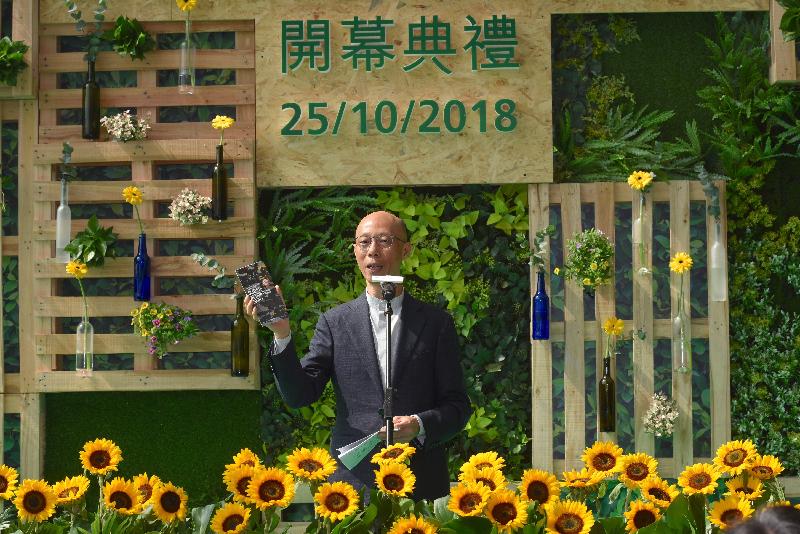
Photo  Photo  Photo  Photo  
read more

“The Beiyang Warlords: War and Politics” exhibition to present history and stories of Beiyang warlords

     The exhibition “The Beiyang Warlords: War and Politics” will open tomorrow (October 26) at the Dr Sun Yat-sen Museum. The exhibition will display about 100 invaluable relics to present the rise and development of the Beiyang warlords, as well as China’s political development in the late Qing and early Republican periods.

     The Beiyang warlords were among the extremely influential military and political powers in modern Chinese history beginning in 1895 with Yuan Shikai training soldiers in Xiaozhan, Tianjin. Over time, the Beiyang warlords headed by Yuan, powerful enough to influence the politics of the late Qing and early Republican periods, were formed. Following Yuan’s death in 1916, the Beiyang warlords split into the Anhui, Zhili and Fengtian cliques. Each clique took turns to rule the north. The Beiyang warlords ceased to exist as a viable political force when the Northern Expedition of the Nationalist Party succeeded in 1928.

     The exhibition will display a variety of valuable artefacts from the Tianjin Museum, as well as items from the collections of the Hong Kong Museum of History, the Tung Wah Group of Hospitals and collectors, allowing visitors to know more about this tumultuous period of political instability and conflicts among warlords.

     Highlight exhibits include a contract for purchase of weapons from Mitsui & Co and Okura & Co of Japan, a letter from Yuan Shikai to his family, a date conversion table for the first year of Hongxian, an officer’s sword decorated with nine lions, a plaque bearing the words “shan yu ren tong” (charity brings happiness to the giver) presented to Tung Wah Hospital by Feng Guozhang, the 1st Order of Golden Grain, and more.

     Officiating at the opening ceremony today (October 25) were the Museum Director of the Hong Kong Museum of History, Ms Belinda Wong; the Vice-Director of the Tianjin Museum, Mr Yao Yang; the Chairman of the Tung Wah Group of Hospitals, Mr Vinci Wong; and the Museum Expert Advisor, Dr Kwong Chi-man.

     The exhibition will run until January 23 next year and admission is free. It is jointly presented by the Leisure and Cultural Services Department and the Tianjin Museum, and organised by the Dr Sun Yat-sen Museum. For details of the exhibition, please visit the museum’s website at hk.drsunyatsen.museum, or call 2367 6373.

     The Dr Sun Yat-sen Museum is located at 7 Castle Road, Mid-Levels, Central. read more

Large-scale campaign Promotion of Traditional Chinese Medicine in China – Hong Kong Programme launched

     A large-scale campaign entitled Promotion of Traditional Chinese Medicine in China – Hong Kong Programme was launched today (October 25). The campaign features a series of almost 100 educational and publicity activities to be held throughout the coming two months to increase public understanding of Chinese medicine and promote its wider use in the community.
 
     Promotion of Traditional Chinese Medicine in China, with the theme of promoting Chinese medicine health culture and enhancing public health literacy, was initiated by some 20 Mainland government bodies including the National Administration of Traditional Chinese Medicine (NATCM). As one of the stops in the tour, the Hong Kong Programme is jointly organised by the NATCM, the Food and Health Bureau (FHB) and the Department of Health (DH).
 
     Officiating at the campaign launch ceremony, Member of the party group of the National Health Commission and Party Secretary and Vice Commissioner of the NATCM Professor Yu Yanhong said she hoped that the series of activities to be held in Hong Kong will enable the local community to gain a better understanding of Chinese medicine, develop a healthy lifestyle with Chinese characteristics and enhance their appreciation of the core values of Chinese medicine, thus creating a social atmosphere conducive to the development of Chinese medicine in the city.

     Also officiating at the ceremony, the Permanent Secretary for Food and Health (Health), Ms Elizabeth Tse, said that by showcasing the long history of Chinese medicine in the large-scale promotional activities, the Hong Kong Special Administrative Region (HKSAR) Government would like the public to experience the appeal and benefits of Chinese medicine and boost its development and provide new momentum through promoting and inheriting the culture of Chinese medicine.
 
     Ms Tse expressed her gratitude to the NATCM, the Liaison Office of the Central People’s Government (LOCPG) in the HKSAR, the Traditional Chinese Medicine Bureau of Guangdong Province and relevant Mainland bodies for their invaluable support. She also thanked the Chinese Medicine Council of Hong Kong, the Hospital Authority, schools of Chinese medicine of local universities and the Chinese medicine sector for their contributions in organising various activities for the public.
 
     Ms Tse said that the past year has marked an important milestone for the development of Chinese medicine in Hong Kong. In May this year, the FHB established the Chinese Medicine Unit and the Chinese Medicine Hospital Project Office to oversee the development of Chinese medicine and the first Chinese Medicine Hospital in Hong Kong respectively. In the Chief Executive’s 2018 Policy Address, it was announced that the Government would incorporate Chinese medicine into the healthcare system in Hong Kong, formulate and implement a holistic Chinese medicine policy, and invest more regular resources with a view to further promoting the development of Chinese medicine in Hong Kong. 
 
     Other officiating guests who attended the launch ceremony today included Deputy Director of the LOCPG in the HKSAR Professor Tan Tieniu; the Director of Health, Dr Constance Chan; the Director of the Traditional Chinese Medicine Bureau of Guangdong Province, Mr Xu Qingfeng; and the Chairman of the Chinese Medicine Council of Hong Kong, Professor Lee Chack-fan.
 
     An exhibition on Chinese medicine, game booths and free Chinese medicine consultation booths were also set up at the launch ceremony. Starting from today, close to 100 Chinese medicine promotional activities will be held by participating organisations in various locations in Hong Kong until December 31. For details of the activities, please visit the website of the Promotion of Traditional Chinese Medicine in China – Hong Kong Programme. read more

External merchandise trade statistics for September 2018

     The Census and Statistics Department (C&SD) released today (October 25) the external merchandise trade statistics for September 2018. In September 2018, the values of Hong Kong’s total exports and imports of goods both recorded year-on-year increases, at 4.5% and 4.8% respectively.

     In September 2018, the value of total exports of goods increased by 4.5% over a year earlier to $375.0 billion, after a year-on-year increase of 13.1% in August 2018. Concurrently, the value of imports of goods increased by 4.8% over a year earlier to $422.7 billion in September 2018, after a year-on-year increase of 16.4% in August 2018. A visible trade deficit of $47.7 billion, equivalent to 11.3% of the value of imports of goods, was recorded in September 2018.

     For the first nine months of 2018 as a whole, the value of total exports of goods rose by 9.2% over the same period in 2017. Concurrently, the value of imports of goods increased by 10.9%. A visible trade deficit of $421.7 billion, equivalent to 12.1% of the value of imports of goods, was recorded in the first nine months of 2018.

     Comparing the third quarter of 2018 with the preceding quarter on a seasonally adjusted basis, the value of total exports of goods increased by 1.5%. Meanwhile, the value of imports of goods increased by 2.5%.
 
Analysis by country/territory
 
     Comparing September 2018 with September 2017, total exports to Asia as a whole grew by 5.4%. In this region, increases were registered in the values of total exports to most major destinations, in particular Thailand (+23.2%), Korea (+9.9%), Malaysia (+9.4%), the Philippines (+7.6%) and the mainland of China (the Mainland) (+7.0%). On the other hand, decreases were recorded in the values of total exports to Japan (-13.9%) and Taiwan (-9.5%).
 
     Apart from destinations in Asia, decreases were registered in the values of total exports to some major destinations in other regions, in particular Germany (-15.5%) and the United Kingdom (-6.9%). Concurrently, an increase was registered in the value of total exports to the USA (+5.6%).
 
     Over the same period of comparison, increases were registered in the values of imports from some major suppliers, in particular Malaysia (+51.4%), Singapore (+18.8%), Korea (+9.8%), the USA (+2.8%) and the Mainland (+2.8%). Concurrently, decreases were recorded in the values of imports from India (-15.2%) and the Philippines (-4.5%).

     For the first nine months of 2018 as a whole, year-on-year increases were registered in the values of total exports to most major destinations, in particular the Mainland (+11.6%), Thailand (+10.2%), Singapore (+10.0%), the USA (+9.6%), the Netherlands (+8.2%) and Vietnam (+7.8%). However, a year-on-year decrease was registered in the value of total exports to India (-11.7%).
 
     Over the same period of comparison, year-on-year increases were registered in the values of imports from most major suppliers, in particular Malaysia (+84.9%), Korea (+20.0%), Taiwan (+10.6%), the Mainland (+8.9%), Singapore (+8.6%) and the USA (+8.6%).  On the other hand, a year-on-year decrease was registered in the value of imports from India (-14.2%).
 
Analysis by major commodity
 
     Comparing September 2018 with September 2017, increases were registered in the values of total exports of some principal commodity divisions, in particular “electrical machinery, apparatus and appliances, and electrical parts thereof” (by $16.8 billion or 12.8%), “miscellaneous manufactured articles (mainly jewellery, goldsmiths’ and silversmiths’ wares)” (by $2.2 billion or 11.2%) and “office machines and automatic data processing machines” (by $1.9 billion or 5.0%). However, a decrease was registered in the value of total exports of “professional, scientific and controlling instruments and apparatus” (by $0.6 billion or -7.0%).
 
     Over the same period of comparison, increases were registered in the values of imports of some principal commodity divisions, in particular “electrical machinery, apparatus and appliances, and electrical parts thereof” (by $12.1 billion or 8.3%), “office machines and automatic data processing machines” (by $3.6 billion or 10.7%) and “petroleum, petroleum products and related materials” (by $3.2 billion or 47.7%). However, a decrease was registered in the value of imports of “professional, scientific and controlling instruments and apparatus” (by $0.6 billion or -7.2%).
 
     For the first nine months of 2018 as a whole, year-on-year increases were registered in the values of total exports of some principal commodity divisions, in particular “electrical machinery, apparatus and appliances, and electrical parts thereof” (by $180.9 billion or 18.0%), “office machines and automatic data processing machines” (by $44.4 billion or 15.3%) and “miscellaneous manufactured articles (mainly jewellery, goldsmiths’ and silversmiths’ wares)” (by $26.0 billion or 17.4%).  However, a year-on-year decrease was registered in the value of total exports of “non-metallic mineral manufactures” (by $15.8 billion or -10.7%).
 
     Over the same period of comparison, year-on-year increases were registered in the values of imports of most principal commodity divisions, in particular “electrical machinery, apparatus and appliances, and electrical parts thereof” (by $184.7 billion or 16.2%), “office machines and automatic data processing machines” (by $60.2 billion or 24.0%) and “petroleum, petroleum products and related materials” (by $19.5 billion or 37.3%).
 
Commentary
 
     A Government spokesman noted that merchandise exports grew further over a year earlier in September, but at a much decelerated pace. While the slower growth was partly due to the impacts of the US-Mainland trade conflicts, the disruption to trading activities by typhoon Mangkhut also contributed.
 
     Looking forward, the impacts of the US-Mainland trade conflicts on Hong Kong’s exports will likely turn more visible in the coming months, particularly so if the trade conflicts are to escalate further. The Government will continue to monitor the situation closely.
 
Further information
 
     Table 1 at the annex presents the analysis of external merchandise trade statistics for September 2018. Table 2 presents the original monthly trade statistics from January 2015 to September 2018, and Table 3 gives the seasonally adjusted series for the same period.
 
     The values of total exports of goods to 10 main destinations for September 2018 are shown in Table 4, whereas the values of imports of goods from 10 main suppliers are given in Table 5.
 
     Tables 6 and 7 show the values of total exports and imports of 10 principal commodity divisions for September 2018.
 
     All the merchandise trade statistics described here are measured at current prices and no account has been taken of changes in prices between the periods of comparison. A separate analysis of the volume and price movements of external merchandise trade for September 2018 will be released in mid-November 2018.
 
     The September 2018 issue of “Hong Kong External Merchandise Trade” contains detailed analysis on the performance of Hong Kong’s external merchandise trade in September 2018 and will be available in mid-November 2018. Users can download the publication free of charge at the website of the C&SD (www.censtatd.gov.hk/hkstat/sub/sp230.jsp).
 
     Enquiries on merchandise trade statistics may be directed to the Trade Analysis Section (2) of the C&SD (Tel: 2582 5042). read more