Tag Archives: China

image_pdfimage_print

LCQ22: Protection of animal rights, interests and welfare

     Following is a question by the Hon Chan Hak-kan and a written reply by the Secretary for Food and Health, Professor Sophia Chan, in the Legislative Council today (November 14):
 
Question:
 
     Regarding the protection of animal rights, interests and welfare, will the Government inform this Council:
 
(1) given that the Police will roll out the “Animal Watchers Scheme” in the next financial year, of the details of the scheme (including the specific work initiatives and timetable, manpower required, estimated expenditure, and what types of persons may take part in the scheme);
 
(2) of the Government’s initiatives for protecting animal rights, interests and welfare as well as the expenditure involved, in each of the past three years and in the coming year (set out by work initiative);
 
(3) as the Government plans to amend to section 56 of the Road Traffic Ordinance (Cap 374) (which provides that where an accident involving a vehicle on a road occurs whereby damage is caused to an animal, the driver of that vehicle shall stop and report the accident to the Police as soon as possible) to bring cats and dogs within the ambit of the section, of the relevant details (including the legislative timetable); whether it will (i) set up a hotline for drivers to report to the Police such accidents or for eyewitnesses to report to the Police hit-and-run drivers involved in such accidents, and (ii) enhance its support for the Society for the Prevention of Cruelty to Animals (Hong Kong) in handling injured animals;
 
(4) as a study report has pointed out that the number of cats and dogs kept as pets in Hong Kong will increase from about 297 100 in 2005 to about 545 600 in 2019, whether the Government will explore the establishment of a public hospital for animals, so as to provide pet owners with an option other than private veterinary clinics;
 
(5) as the Police announced in April this year that dedicated investigation teams had been set up in the 22 Police districts across the territory with criminal investigation teams to handle cases of animal cruelty, of (i) the training received by members of such teams and (ii) the number of cases that such teams have handled so far; and
 
(6) whether it will consider afresh the proposal to establish an animal police team and, by way of amending the relevant legislation, vest in the Police more power to handle cases of animal cruelty; if so, of the details; if not, the reasons for that?
 
Reply:
 
President,
 
     The Government attaches great importance to promoting and safeguarding animal welfare, and has been adopting a multi-pronged approach in this regard. Having consulted the Security Bureau, my reply to various parts of the question is as follows:
 
(1) To enlist public support and assistance in combatting acts of cruelty to animals, the Police will implement the “Animal Watchers” Scheme in the financial year 2019-20, with a view to agglomerating the strengths of animal lovers at the community level in four directions of education, publicity, investigation and intelligence-gathering; raising public awareness on prevention of cruelty to animals; and encouraging the public to report in a timely manner as well as providing information that could help investigations. Participants of the Scheme could disseminate to the community the messages of caring for animals and preventing cruelty to animals through organising and participating in various activities promoting animal welfare. In addition, the Police will co-ordinate and deepen the co-operation among stakeholders, including relevant government departments, animal welfare organisations (AWOs) and animal lovers.
 
     The Police will liaise with stakeholders shortly on the planning and implementation of the Scheme, with a view to finalising the details within next year.
 
(2) The Agriculture, Fisheries and Conservation Department (AFCD) has been implementing measures and work to safeguard and promote animal welfare. In the past three years, AFCD has been:
 
(i) implementing and strengthening public education and publicity programme and enhancing their website to promote responsible pet ownership and proper care of animals, advising against abandonment and needless surrendering of pets to the Government, and championing the need for dog licensing and rabies vaccination as well as the benefits of neutering;
 
(ii) implementing the new licensing regime under the Public Health (Animals and Birds) (Animal Traders) Regulations (Cap 139B) to regulate pet trading and dog breeding and sale;
 
(iii) devising codes of practices for the proper trading, breeding and keeping of pets and other animals;
      
(iv) strengthening enforcement action against pet owners and traders in contravention of relevant legislation;
      
(v) improving the handling of reports or complaints on cruelty to animals through the inter-departmental special working group comprising representatives of the relevant government departments and the Society for the Prevention of Cruelty to Animals (SPCA);
      
(vi) strengthening collaboration with, and providing technical and financial support to, AWOs in animal adoption and carrying out activities relating to animal welfare and management; and
      
(vii) assisting the AWOs concerned in implementing the trap-neuter-return trial programme for stray dogs.
 
     The Government will continue to carry out the work on safeguarding animal welfare in the coming year. In addition, the Government is mapping out the major direction and drawing up preliminary proposals for amending and implementing the legislation related to animal welfare, with a view to consulting the public early next year. The proposals include introducing animal keepers’ responsibility of positive duty of care of animals and exploring raising the penalties for acts of cruelty to animals.
      
     The expenditures and estimates involved for carrying out the above work by AFCD over the past three years and in the financial year 2018-19 are as follows:
 

Financial year Expenditure
($ million)
2015-16 50.5
2016-17 53.7
2017-18
(revised estimate)
57.7
2018-19
(estimate)
57.7
  
     AFCD does not have the breakdowns of expenditures involved for carrying out the above work and measures.
 
(3) AFCD completed in late September 2018 a public consultation on the responsibility requirement for a driver to stop in case of a traffic accident involving injury to an animal. The Government is considering the views received and drafting the legislative amendment proposal, with a view to submitting the proposed amendments to the Legislative Council in the first quarter of next year.
 
     In the event of a traffic accident involving animals, members of the public could report the case to the Police by calling the 999 hotline. After receiving the report, the Police will handle the case in accordance with established procedures, and notify the relevant departments or SPCA to provide assistance as necessary.
 
     The Government has been providing funding to SPCA to carry out work on safeguarding animal welfare, including enhancing the rescue services for handling injured animals.
 
(4) The number of registered veterinary surgeons in Hong Kong has been increasing in recent years, now amounting to 970. Around 140 veterinary clinics are present in Hong Kong, providing general and specialist consultation services. Furthermore, the clinic established by the City University of Hong Kong (CityU) also provides animal emergency services, and CityU is establishing an animal health centre to provide treatment for various animal diseases. Hence, there are currently sufficient clinics in Hong Kong offering various veterinary services. In addition, as mentioned above, AFCD has been providing subventions to AWOs on their work on safeguarding animal welfare, including the provision of veterinary services. Currently, the Government has no plan to establish a public animal hospital.
 
(5) and (6) On case investigation, in the light of public demand for the setting up of dedicated criminal investigation teams in Police districts to handle animal cruelty cases, the Police announced in mid-April this year that dedicated investigation teams, comprising officers with experience and skills in investigating and handling other serious crimes, have been set up in the 22 Police districts with criminal investigation teams across the territory. A platform is in place for dedicated investigation teams of various districts to exchange their experience in investigations. The Police also provide relevant officers with training on handling animal cruelty cases to ensure that they are able to conduct thorough investigations into such cases. In addition, the Police, AFCD and SPCA have established a co-operation mechanism, whereby officers of AFCD and SPCA will provide professional advice and assist in the investigation at the scenes of animal cruelty cases where necessary.
 
     From April to September this year, the dedicated investigation teams in various Police districts handled 57 suspected animal cruelty cases, amongst which 22 have been detected. In the first six months of 2018, the Police initiated prosecution against a total of 11 cases under the Prevention of Cruelty to Animals Ordinance (Cap 169). The convicted persons concerned were sentenced to imprisonment of two months to one year. The Police will continue to monitor the crime trend of animal cruelty and step up enforcement in this respect.
      
     On education and training, the Police from time to time invite officers from AFCD and SPCA to explain the multi-agency approach for the investigation of animal cruelty cases to Police officers participating in foundation training and criminal investigation courses. The handling of animal cruelty has also been incorporated in the training days of various Police districts, so that frontline officers can have a better grasp of the latest situation and trend of animal cruelty.
      
     In addition, the Police invite relevant officers to share their experience at seminars organised from time to time. A veterinary officer from AFCD, an officer from SPCA, a professor from the College of Veterinary Medicine and Life Sciences of CityU and officers from dedicated investigation teams with rich experience in handling relevant cases were invited to share their experience at a large-scale seminar on the handling of animal cruelty cases held at the Police Headquarters in July this year, with a view to enhancing the professionalism and capability of officers in handling such cases. Two overseas experts were also invited to talk about animal welfare and share experience in veterinary forensics at another seminar organised by the Police at the end of October. read more
LCQ3: Measures to increase land supply

     Following is a question by the Dr Hon Kwok Ka-ki and a reply by the Secretary for Development, Mr Michael Wong, in the Legislative Council today (November 14):

Question:
 
     Upon the completion of all the development projects under the “Hong Kong 2030+: Towards a Planning Vision and Strategy Transcending 2030” (Hong Kong 2030+) published in 2016, Hong Kong can accommodate 9 million people. This figure is about 800 000 higher than Hong Kong’s projected peak population of 8 220 000 in 2043, i.e. providing a 10 per cent buffer. One of the proposed development projects in Hong Kong 2030+ is the construction of artificial islands with an area of 1 000 hectares (ha) in the Central Waters to accommodate 400 000 to 700 000 people. On the other hand, the Policy Address delivered last month put forward the Lantau Tomorrow Vision, proposing the construction of artificial islands with an area of about 1 700 ha in the Central Waters to accommodate 700 000 to 1 100 000 people. In this connection, will the Government inform this Council:

(1) of the various items of estimated construction costs in relation to the artificial islands mentioned in the Policy Address, including reclamation, external transport facilities and the public facilities on the islands;

(2) of the rationale for setting the buffer population in Hong Kong 2030+ at 800 000; the reasons why the Government has, after a lapse of two years, proposed to increase the reclamation area in the Central Waters by 700 ha to accommodate additional 300 000 to 400 000 people; and

(3) given that the Government may invoke the Lands Resumption Ordinance to resume private land for “public purposes”, whether the Government will consider, as a replacement for the reclamation plans in the Central Waters, invoking the Ordinance expeditiously to resume sufficient land (including brownfield sites) for the “public purposes” of developing public housing, other public facilities, etc., so that irreversible damage to the environment can be avoided?

Reply:
 
President,
 
     The discussions over “Lantau Tomorrow” in the past few weeks have helped us better understand the community’s concerns on various issues such as costs and benefits of the works, environmental conservation and impact of climate change, reclamation techniques and materials, land use and transport connection. The Government understands these concerns and  plan to seek the funding approval of the Legislative Council in the first or second quarter next year, so as to commence the planning and engineering studies to look into various relevant aspects in a comprehensive and in-depth manner, so that society can discuss and make trade-offs based on objective, scientific and robust findings of the studies.
      
     My reply to various parts of the question raised by Hon Kwok is as follows:

(1) “Lantau Tomorrow” proposed in the Policy Address is a vision spanning two to three decades. At this stage, we are planning to conduct detailed studies and therefore there is yet formal estimate on the costs for reclamation works and transport infrastructures. As the average water-depth of Kau Yi Chau is at about 7 metres, and in light of the recent experience on reclamations in Tung Chung, our preliminary cost estimate on reclamations for the artificial islands is at about $13,000 to $15,000 per square metre (sq m), which is similar to the cost of resuming private agricultural land at $14,500 per sq m. As regards transport infrastructures, as Kau Yi Chau artificial islands would only be about 10 kilometers (km) away from Central/Sheung Wan, whereas New Territories North (NTN) is some 30 km from the metro core, the costs for providing transport infrastructures for the artificial islands should be no more than that for supporting a new development area (NDA) of similar scale in the NTN.
 
     On the other hand, the Kau Yi Chau artificial islands will bring benefits to Hong Kong. Apart from the revenue arising from the sale of private residential and commercial land, developing the artificial islands will also create substantial social and economic benefits, coming mainly from the 105 000 to around 180 000 public housing units; 200 000 diversified, high-end and high value-added job opportunities; business opportunities emanating from the third Core Business District (CBD3) of which the scale is equivalent to 80 per cent of Central; a liveable city in Kau Yi Chau with holistic planning; comprehensive provision of community facilities; and the land development potential to be unleashed by an expanded transport infrastructure network, etc..
      
     In formulating the implementation strategy, the Government will carry out detailed financial assessments and fiscal risk management by taking into account relevant factors like fiscal sustainability to ensure that the project expenditure is financially affordable.

(2) Under the estimate of “Hong Kong 2030+: Towards a Planning Vision and Strategy Transcending 2030” (Hong Kong 2030+), with the full implementation of all planned development projects as well as the two strategic growth areas namely the East Lantau Metropolis (ELM) and NTN, the maximum housing capacity would be about 9 million people. However, this is not our population target. It is just a projection based on a host of assumptions to allow society to grasp more easily the potential development capacity of land in overall terms. In other words, the 800 000 people on top of the population peak of 8.22 million in 2043 is not a buffer population as claimed by Hon Kwok; this figure also does not imply that the Government intends to bring in this amount of additional population. It barely reflects the assumptions under the Hong Kong 2030+ estimation that society needs a certain amount of land as buffer capacity, enabling us to have more room for planning and greater flexibility, so as to prepare for the changing circumstances and to improve the existing planning standards, thereby making Hong Kong more liveable.
 
     Hong Kong 2030+ estimates that we are short of at least 1 200 hectares of land for housing, economic development and various infrastructures and facilities. As pointed out by the Task Force on Land Supply (Task Force), this figure is yet to take into account factors such as public aspiration for improvement in living space and quality of life, upgrading of various community facilities and the need to create a land reserve, etc. Hence, the actual shortage is likely to be under-estimated.  On the other hand, there is considerable uncertainty in the implementation of the planned or ongoing land supply projects; if they cannot be realised timely or fully, the land shortage would be even greater. In other words, 1 200 hectares is just a starting point of the land supply target.
      
     The 1 700-hectare reclamation area proposed under Lantau Tomorrow is part of the “Lantau Tomorrow Vision”, the details of which are subject to further studies and assessments. In the first phase, we will focus on the studies for developing the artificial islands of about 1 000 hectares near Kau Yi Chau. This scale is similar to that of the ELM mentioned in the respective public engagement documents of the Task Force and Hong Kong 2030+. As for the remaining artificial islands of about 700 hectares near Hei Ling Chau and the waters south of Cheung Chau, the studies will collect technical data for future reference in long-term planning, and there is no concrete implementation timetable at the moment. The Government will take into account the findings in the final report to be submitted by the Task Force to the Government tentatively by the end of this year before firming up the details of the proposed studies.
     
(3) If the Government considers that a certain area needs to be developed for a “public purpose” such as public housing or government facilities, and has made public the relevant planning and studies, the Government will continue to invoke the Lands Resumption Ordinance (LRO) (Cap. 124) timely to resume private land for development that meets the “public purpose”. In the coming few years, about 500 hectares of private land will be resumed under a few mega land development projects. In other words, if the Government has already conducted planning studies and confirmed that development that fulfills the “public purpose” test is feasible, the Government will continue to invoke the LRO to resume private land.
 
     On the other hand, I hope the community would appreciate that the Government needs time and is required to comply with relevant regulations and procedures to take forward relevant studies and planning work. Taking the rezoning of the some 210 sites with potential for housing development as an example, we have spent considerable amount of time on handling the technical feasibility studies and local consultation. Starting from 2013, hitherto, we have completed rezoning of about 120 sites, but there are still more than 90 sites for which rezoning work is still ongoing or not yet initiated. Meanwhile, the Government is carrying out other planning and engineering studies, and will soon commence studies to look into the development potential of about 200 hectares of brownfield sites in the NTN as well as another 760 hectares of more scattered brownfield sites. However, the Government has only limited planning resources. It would be unrealistic to assume that the Government can deal with planning and development of all different areas in Hong Kong at the same time, or to expect that resuming private lands alone could resolve the severe land shortage problem in Hong Kong, or that all private lots carry potential for high density development.
      
     “Lantau Tomorrow” is a vision spanning two to three decades and means a lot, in different aspects, to the future development of Hong Kong.  The Central Waters is in proximity with the Hong Kong Island, Lantau and various major infrastructures. Creation of artificial islands at this strategic location can effectively increase land supply and open up spaces for housing and economic activities. In terms of residential units, the Kau Yi Chau artificial islands can provide 150 000 to 260 000 units, 70 per cent of which (105 000 to 182 000 units) are public housing. This quantum suggests huge potential of Kau Yi Chau, when compared with the aggregate of about 130 000 public housing units to be provided by the four NDAs or new town extension projects that are ongoing or being planned. Also, the strategic location of Kau Yi Chau allows us to develop the CBD3 for Hong Kong to strive ahead. The newly proposed major roads and railway network will connect the artificial islands with the Hong Kong Island, Lantau and the coastal areas of Tuen Mun to help divert traffic between North West New Territories and the metro area and relieve congestion at the West Rail. On the other hand, the transport network helps adjust the current uneven distribution of homes and jobs so as to make the territorial spatial planning pattern more balanced. The Kau Yi Chau artificial islands can also provide decanting space for households affected by urban renewal and enable larger-scale urban redevelopment projects, while thinning out the dense population in the urban area.  These multiple strategic benefits cannot be easily replaced by other land supply options.
      
     For Hong Kong to avoid the recurrence of the current dire land shortage, we cannot afford to rely on just one single option to tackle the land supply issue. A multi-pronged approach, as evident from past experiences and backed by the broad support from the Task Force and the general public, is a pragmatic strategy that meets Hong Kong’s overall interest. Based on the above considerations, we believe that conducting detailed studies for developing the Kau Yi Chau artificial islands is a crucial step under the multi-pronged strategy. read more

Hong Kong Customs seizes suspected smuggled smartphones (with photos)

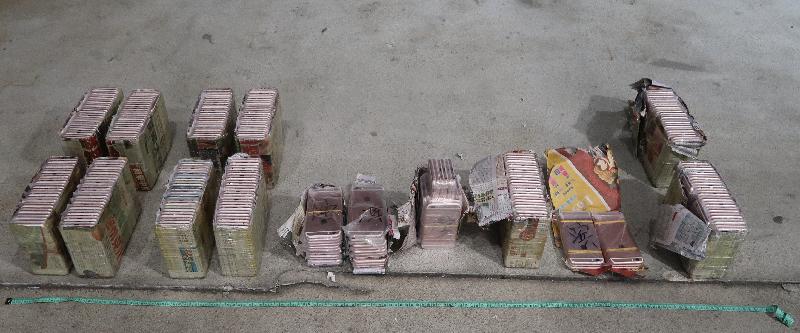
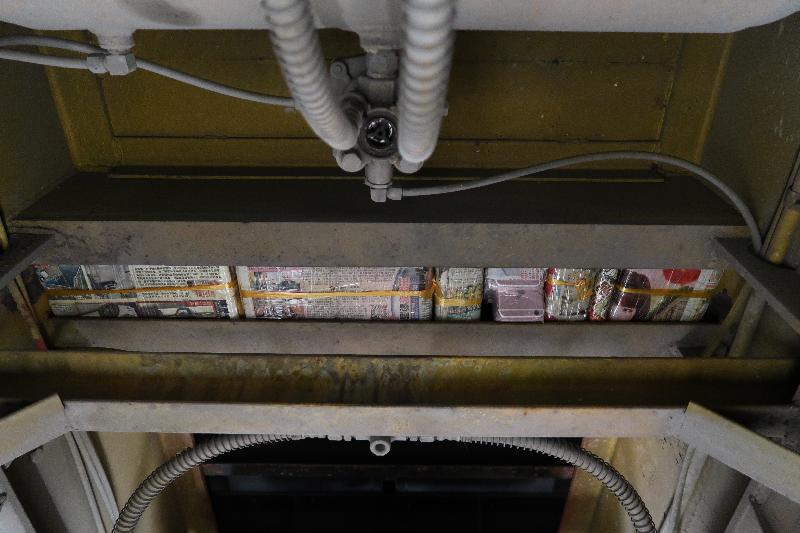
     Hong Kong Customs yesterday (November 13) seized 330 suspected smuggled smartphones with an estimated market value of about $500,000 at Lok Ma Chau Control Point.

     Customs officers yesterday intercepted an outgoing container truck at Lok Ma Chau Control Point and found the batch of smartphones in a false compartment at the bottom of the vehicle.

     The 62-year-old male driver was arrested. Investigation is ongoing.

     Smuggling is a serious offence. Under the Import and Export Ordinance, any person found guilty of importing or exporting unmanifested cargo is liable to a maximum fine of $2 million and imprisonment for seven years.

     Members of the public may report any suspected smuggling activities to Customs’ 24-hour hotline 2545 6182 or its dedicated crime-reporting email account (crimereport@customs.gov.hk).

Photo  Photo  
read more

Hong Kong Customs seizes suspected illicit cigarettes (with photos)

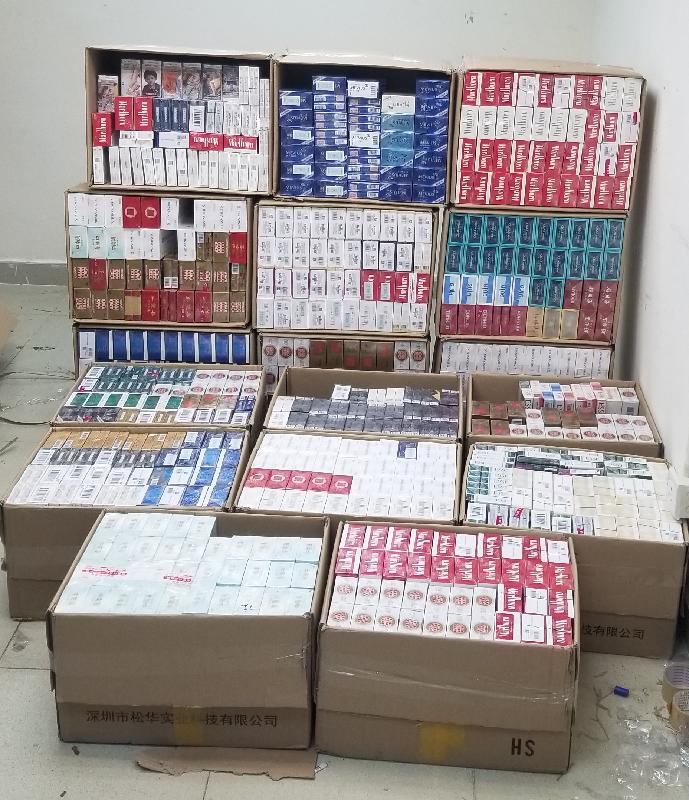
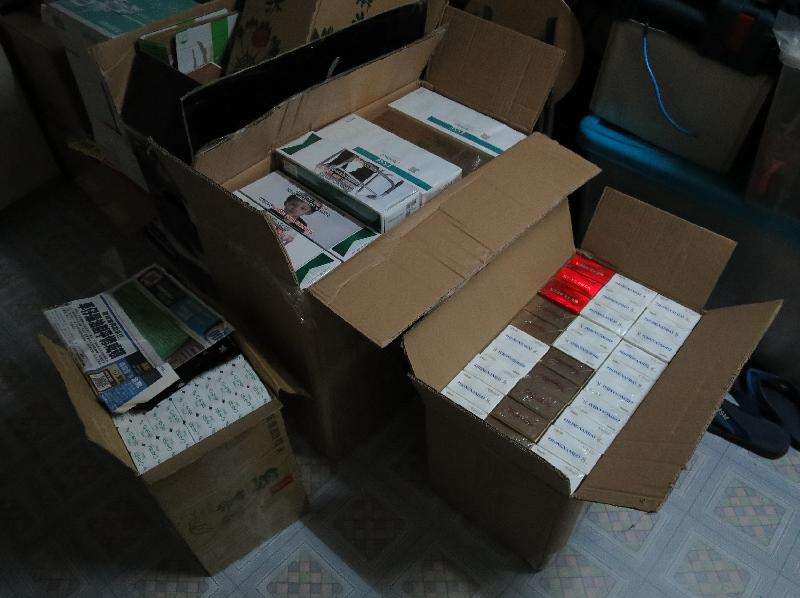
     Hong Kong Customs mounted an anti-illicit cigarette operation in To Kwa Wan and Mong Kok from November 12 to yesterday (November 13). A total of about 180 000 suspected illicit cigarettes with an estimated market value of about $470,000 and a duty potential of about $340,000 were seized.

     Customs officers yesterday intercepted two men in To Kwa Wan and seized about 60 000 suspected illicit cigarettes from a light goods vehicle next to them. The two men, aged 36 and 38, were arrested. Customs officers later escorted one of the arrested men to an industrial unit in Kwun Tong where about 80 000 further suspected illicit cigarettes were seized.

     In addition, Customs officers seized about 40 000 suspected illicit cigarettes from a shop in Mong Kok on November 12. Three men and three women, aged between 26 and 61, were arrested.

     Investigations are ongoing.

     Under the Dutiable Commodities Ordinance, anyone involved in dealing with, possession of, selling or buying illicit cigarettes commits an offence. The maximum penalty upon conviction is a fine of $1 million and imprisonment for two years.

     Members of the public may report any suspected illicit cigarette activities to the Customs’ 24-hour hotline 2545 6182 or its dedicated crime-reporting email account (crimereport@customs.gov.hk).

Photo  Photo  
read more

Analytical Accounts of the Exchange Fund

The following is issued on behalf of the Hong Kong Monetary Authority:

     The Hong Kong Monetary Authority (HKMA) released today (November 14) the key analytical accounts of the Exchange Fund at the end of October 2018.
 
     Foreign assets, representing the external assets of the Exchange Fund, decreased during the month by HK$18.2 billion to HK$3,473.5 billion.
 
     The Monetary Base, comprising Certificates of Indebtedness, Government-issued currency notes and coins in circulation, the balance of the banking system and Exchange Fund Bills and Notes issued, amounted to HK$1,615.1 billion.
 
     Claims on the private sector in Hong Kong amounted to HK$209.2 billion.
 
     The analytical accounts of the Exchange Fund are released in accordance with the International Monetary Fund’s Special Data Dissemination Standard (SDDS) and are referred to as the Analytical Accounts of the Central Bank under SDDS (Annex).
 
*********************************************************
 
     At present, four press releases relating to the Exchange Fund’s data are issued by the HKMA each month. Three of these releases are issued to disseminate monetary data in accordance with the International Monetary Fund’s Special Data Dissemination Standard (SDDS). The fourth press release, on the Exchange Fund’s Abridged Balance Sheet and Currency Board Account, is made in accordance with the HKMA’s policy of maintaining a high level of transparency. For the month of November 2018, the scheduled dates for issuing the press releases are as follows:
 

November 7 
(Issued)
SDDS International Reserves (Hong Kong’s Latest Foreign Currency Reserve Assets Figures)
 
November 14 
 
SDDS Analytical Accounts of the Central Bank (Analytical Accounts of the Exchange Fund)
 
November 30 
 
 
SDDS Template on International Reserves and
Foreign Currency Liquidity
 
November 30 
 
Exchange Fund Abridged Balance Sheet and
Currency Board Account
 
read more