LCQ4: Diagnoses and treatments for eczema patients
Following is a question by the Dr Hon Chiang Lai-wan and a reply by the Secretary for Food and Health, Professor Sophia Chan, in the Legislative Council today (November 28): Question: … read more


Following is a question by the Dr Hon Chiang Lai-wan and a reply by the Secretary for Food and Health, Professor Sophia Chan, in the Legislative Council today (November 28): Question: … read more
Following is a question by the Hon Paul Tse and a written reply by the Secretary for Development, Mr Michael Wong, in the Legislative Council today (November 28):
Question:
There are comments that Hong Kong people’s confidence in government projects has been greatly undermined by incidents ranging from cost overruns and delays of the Hong Kong-Zhuhai-Macao-Bridge Project to structural problems of the Shatin to Central Link Project caused by corner-cutting and improper connection of steel bars. It is difficult to restore public confidence if the Government cannot solve the problems in project supervision. In 2016, the Government established the Project Cost Management Office (PCMO), which is dedicated to the cost management of public works projects. It has been reported that the PCMO has so far scrutinised 130 funding proposals in the pipeline for submission to the Finance Committee of this Council, and the PCMO has trimmed $27 billion from the original project cost estimates totalling $260 billion. Given that the PCMO had effectively reduced project costs amid a spate of infrastructure projects experiencing substantial cost overruns in recent years, and that the PCMO was scheduled to cease operation in April 2019, I raised four questions at this Council during my current term of office, enquiring whether the Government would broaden the functions of the PCMO and upgrade it to a permanent department. The Chief Executive (CE) has announced in this year’s Policy Address the upgrading of the PCMO and the establishment of the Project Strategy and Governance Office (PSGO) on April 1 next year to continue scrutinising the costs of works projects. Moreover, the CE has announced the establishment of a Centre of Excellence for Major Project Leaders (CoE) which aims to equip public officers with innovative minds and world-class leadership skills in the delivery of public works projects. It has been reported that the Development Bureau has earmarked a funding of nearly $70 million for operating the CoE for the first three years. In this connection, will the Government inform this Council:
(1) of the differences between the PSGO and PCMO in areas such as staff establishment, organisational structure and operating expenditure, and the additional annual public expenditure to be brought about by such differences;
(2) given that cost overrun is not uncommon in infrastructure projects in recent years, resulting in some members of the public “turning pale at the mention of infrastructure” and their casting doubt, one after another, on the Government’s ability to control the cost and quality of infrastructure projects, of the measures to be put in place by the PSGO to prevent contractors from using all sorts of pretexts to exaggerate the construction costs, thus causing a substantial increase in costs, so as to rebuild public confidence in the Government’s ability to take forward infrastructure projects;
(3) as it is learnt that when established in 2016, the PCMO focused on scrutinising works projects with a cost estimate between $1 billion and $2 billion, but the cost estimates of district minor works projects in recent years have often been said to be excessively high, and according to the estimations of some media, the “Lantau Tomorrow Vision” may involve the deployment of $1,000 billion of fiscal reserve for the construction of large artificial islands, whether the Government will put all works projects, regardless of the amount of estimated costs, under the scrutiny of the PSGO; if so, whether it has assessed if the manpower of and funding received by the PSGO are sufficient to cope with the huge workload; if it has not, of the reasons for that;
(4) given the press reports that at present, among the contractors eligible for bidding works contracts of a value of more than $300 billion, one third of them have Mainland background and quite a number of members of the management of such contractors are members of think tanks which strongly advocate and support large-scale reclamation works projects, of the measures and policies that the PSGO, other government departments and policy bureaux have put in place to avoid potential conflicts of interests that may be involved in future projects; and
(5) of the progress of the preparation work for the CoE; how it will make use of the CoE to (i) equip public officers with world-class leadership skills and (ii) uplift their work performance, so that members of the public are confident that the Government is capable of managing infrastructure projects properly?
Reply:
President,
The Government has been implementing public works projects in an appropriate and orderly manner with a view to improving people’s quality of living, enhancing the long-term competitiveness and promoting the economic development of Hong Kong. In the next few years, the annual capital works investment is expected to rise to over $100 billion and the annual total construction output will increase to over $300 billion. In addition to this substantial workload, we are facing the challenges of high construction cost and ageing construction work force. Moreover, there have been rising aspirations from the general public for better performance of public works projects in recent years. We need to tackle these challenges to ensure satisfactory delivery of public works projects for the community. We will also need to devise and promote relevant strategies to uplift the construction industry’s delivery capacity as well as improving the overall productivity.
The Chief Executive announced in the 2018 Policy Address that the Government will upgrade the Project Cost Management Office (PCMO) and expand its establishment and functions. We propose to establish the Project Strategy and Governance Office (PSGO) for implementing strategic initiatives and enhancing capabilities in cost surveillance and project governance.
My reply to the five parts of the Hon Tse’s question is as follows:
(1) The PSGO will be a multi-disciplinary office comprising architects, engineers, and quantity surveyors etc. The PSGO will be headed by a Principal Government Engineer (D3 of the Directorate Pay Scale) designated as Head of Project Strategy and Governance Office (H/PSGO) and assisted by a Government Engineer (D2 of the Directorate Pay Scale). H/PSGO will report directly to the Permanent Secretary for Development (Works). We will seek the recommendation of the Establishment Subcommittee and the Finance Committee’s approval to create these two permanent directorate posts as soon as possible.
On top of the above two directorate posts, 12 additional non-directorate posts will be created in the PSGO. The full annual average staff costs of the additional 14 posts, including salaries and staff on-cost, are around $23.3 million. In comparison to the existing seven posts (Note 1) in the PCMO, the full annual average staff costs will increase about $11.5 million.
(2) Notwithstanding that there have been instances of cost overruns in the delivering of certain mega projects in recent years due to unforeseeable circumstances that arose in the course of project implementation, we have maintained good performance (Note 2) for projects under the Capital Works Programme as a whole.
Nevertheless, we understand the public concern on cost control and project performance. The PSGO to be established will implement the following new initiatives for the project cost control and construction expenditure surveillance:
(i) develop a cost benchmarking system for various major types of works, e.g. tunnelling, site formation, buildings, and roadworks etc., in order to have better understanding of the project cost level;
(ii) conduct the project vetting process starting from inception stage with regular reviews and follow-up actions to track the development of projects through detailed design and till funding application stage in order to ensure that the principles of “fitness for purpose” and “no frills” are observed;
(iii) expand the scope of cost control to projects at construction stage, and monitor the performance of the projects using a newly established system, namely the Project Surveillance System (PSS)(Note 3), on a continuous basis until project completion and so on.
(3) Currently, the PCMO conducts vetting on each project with estimate exceeding $30 million. This snap-shot vetting approach before funding application to the Legislative Council is effective, but the room for design optimisation is quite limited and hence less room for project cost saving, as the project design is often maturely developed for funding application. Upon establishment, the PSGO will tighten up project cost management and control throughout the implementation programme of public works projects (each estimate exceeding $30 million) to capitalise on all opportunities for cost saving, step up control on project budget and expenditure to curb cost overrun and programme delay. We will ensure that the staff strength of the PSGO is sufficient to cope with the workload.
(4) The Government has been implementing public works projects for the long-term benefits of Hong Kong. Currently, there are over 100 contractors who are eligible to tender for a public works contract of value exceeding $300 million. Some of them are locally-based while the others are originated from various regions. Last year, we launched new measures to optimise the listing requirements of the procurement system to promote the entry of more Mainland and overseas contractors into the local market in order to enhance healthy market competition and bring in the use of advanced technology. During the project implementation, the PSGO will recommend suitable procurement strategy and contract packaging to the client bureaux and works departments undertaking the projects to enhance tender competition. During tender assessment, the Government will evaluate, other than the tender prices, the technical capability of the tenderers on an objective basis by marking the attributes (Note 4) such as experience, past performance, resources deployed and technical submissions etc. We also review the procurement system from time to time in order to ensure that public works projects are procured through open, fair and impartial procedures.
(5) We engaged an international consultant early this year to study by drawing on overseas experience the establishment of an academy dedicated for training up major project leaders. According to the findings of the study, there are imminent needs for Hong Kong to establish an academy similar to the “Major Projects Leadership Academy” set up by the Infrastructure and Projects Authority of the United Kingdom Government. The academy is dedicated for providing high-level project leadership training. We aim to commence the training programme in June next year. We have also earmarked funding for operating the Centre of Excellence for Major Project Leaders (CoE) for three years. We will appoint a consultant to assist us in conducting tender exercise for engaging eligible professional institution(s) to provide structured, continuous and contemporary high-level project leadership training for 150-200 major project leaders in the next three years starting from 2019. We will also collaborate and exchange with the relevant international organisations to facilitate the officers under the training programme to acquire more overseas experience.
In additional, we will conduct consultancy studies to enhance performance and delivery capability of public works projects. We have earmarked $69.5 million for conducting the associated consultancy studies, as well as establishing and operating the CoE from 2019-2022. As we are going to proceed with the tendering process, detailed breakdown of the estimates cannot be provided at the moment.
Note 1: These seven posts are time-limited and will lapse on April 1, 2019.
Note 2: In retrospect, the Finance Committee (FC) approved a total of about 580 Category A works projects with a total provision of $890 billion in the past 10 years. Among them, about 70 projects required application to the FC for additional funding, which totalled around $64.5 billion. In other words, additional funding was required in approximately 10 per cent of the projects and the amount represented some seven per cent of the total provision. In addition, although there were projects that required additional funding owing to individual circumstances, we generally managed to complete the projects under the Capital Works Programme within the original Approved Project Estimates and even with surplus.
Note 3: The Project Surveillance System is a web-based application. It is established based upon the cashflow data of over 600 projects completed in the past 20 years, and has taken into account all the typical characteristics of the projects under the Capital Works Programme. It is a powerful tool for monitoring project progress and can provide predictive analysis for forecasting the cost and time performance of on-going projects.
Note 4: To ensure that the successful tenderer possesses adequate technical capability and resources to complete the project awarded, the tendering department will generally adopt a “two-envelope two-stage” approach in evaluating tenders. The department will require the tenderer to submit the tender, comprising a Technical Proposal and a Price/Fee Proposal in separate envelopes. The tender assessment panel established by the department will complete the first-stage assessment on the Technical Proposal based on the evaluation criteria specified in the tender documents before reviewing the Price/Fee Proposal, and then determine the overall score by combining the technical and price/fee scores obtained at the two stages. read more
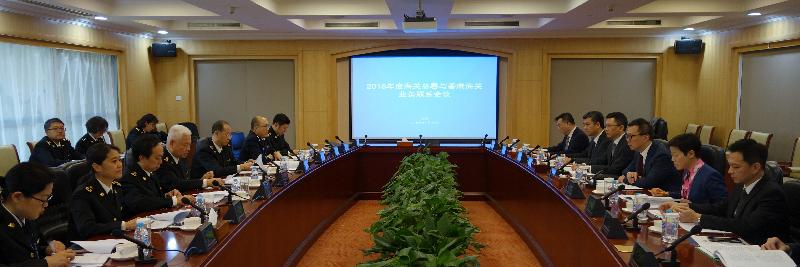
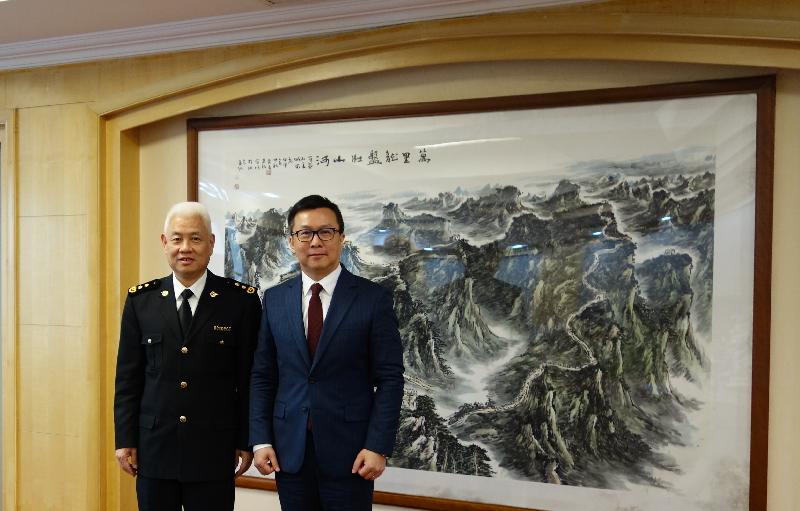
The Commissioner of Customs and Excise, Mr Hermes Tang, led a delegation to attend the 2018 review meeting between the General Administration of Customs of the People’s Republic of China (GACC) and Hong Kong Customs in Beijing today (November 28). Mr Tang and the Vice Minister of the GACC, Mr Li Guo, presided at the meeting.
The meeting reviewed the implementation of the 2016-2018 Co-operation Plan between the two customs administrations for the past two years. Both sides also recognised the remarkable achievements made on customs clearance facilitation, anti-smuggling, intelligence exchange, development of new boundary control points and staff training.
The two administrations also reached consensus on the 2019-2020 Co-operation Plan. Both sides will strengthen co-operation on the areas of information exchange, mutual recognition of regulations and mutual assistance in law enforcement, and support the development of the Guangdong-Hong Kong-Macao Greater Bay Area in order to make greater contributions to the economic development of both places. The salient points of the Co-operation Plan are:
(1) to further enhance business exchanges between both administrations;
(2) to continue taking forward various facilitation measures in order to increase customs clearance efficiency;
(3) to enhance collaboration on information technology;
(4) to strengthen enforcement co-operation to combat cross-boundary smuggling and drug trafficking activities;
(5) to increase dialogue and study over the Rules of Origin under the Mainland and Hong Kong Closer Economic Partnership Arrangement;
(6) to continue carrying out the work relating to the Authorized Economic Operator Programmes of both places with a view to providing more facilitation to the enterprises;
(7) to strengthen customs co-ordination for operations of the Hong Kong-Zhuhai-Macao Bridge;
(8) to enhance product safety co-operation;
(9) to increase co-operation on international customs affairs; and
(10) to continue arranging training programmes for each other.
Following is a question by the Hon Lam Cheuk-ting and a written reply by the Secretary for Food and Health, Professor Sophia Chan, in the Legislative Council today (November 28):
Question:
Regarding the diagnoses and treatments provided by clinical psychologists, will the Government inform this Council:
(1) of the following details of the diagnoses and treatments provided in the past three years by clinical psychologists employed respectively by (i) government departments and (ii) the Hospital Authority:
(a) the respective numbers of full-time and part-time clinical psychologists;
(b) the average waiting time of service targets for the first consultation and follow-up consultations;
(c) the average duration of the first consultation and follow-up consultations attended by service targets;
(d) the average number of consultations and consultation time span for completed cases;
(e) the number of complaints lodged by service targets; and
(f) the number of service targets of uncompleted cases committing suicide; and
(2) as I have learnt that while clinical psychologists need to use the “Wechsler Intelligence Scale for Children – Fourth Edition (Hong Kong)” to conduct intellectual assessment for children, the supplier of the Scale will sell the Scale only to members of the Division of Clinical Psychology of The Hong Kong Psychological Society, rendering clinical psychologists who are non-members but possess practising qualifications in foreign countries being unable to obtain the Scale, whether the Government has assessed if the relevant arrangement constitutes an anti-competitive conduct and how it ensures that all clinical psychologists have access to the Scale for providing service?
Reply:
President,
My reply to the questions raised by the Hon Lam Cheuk-ting is as follows:
(1) Currently, there are clinical psychologist grade posts in the Correctional Services Department (CSD), the Department of Health (DH), the Hong Kong Police Force (HKPF), the Immigration Department (ImmD), the Social Welfare Department (SWD) and the Hospital Authority (HA), providing clinical psychological service for their service targets. Statistics of clinical psychological service provided by the Government and the HA, based on the data provided by relevant departments, are set out in the ensuing paragraphs.
(a) The table below sets out the manpower of the clinical psychologist grade, broken down by full-time and part-time basis, in relevant departments and the HA as at March 31, 2018:
| Department/organisation | Manpower of clinical psychologist grade |
||
| Full-time | Part-time | ||
| CSD | Staff members as service targets |
2 | 0 |
| Persons in custody as service targets |
26 | 0 | |
| DH | 40 | 0 | |
| HKPF | 11 | 0 | |
| ImmD | 1 | 0 | |
| SWD | 59 (See Note 1) | 0 | |
| HA (See Note 2) | 168 | 3 | |
| Department/organisation | Average waiting time | ||
| First consultation | Follow-up consultations | ||
| CSD | Staff members as service targets |
Within 1 week | Within 1-2 weeks |
| Persons in custody as service targets |
3-5 working days | Within 1-2 weeks | |
| DH | See Note 3 | ||
| HKPF | 5 working days | 2 weeks | |
| ImmD | 2 weeks | 6-8 weeks | |
| SWD | 1-2 months (See Note 4) |
3-4 weeks | |
| HA | See Note 5 | ||
| Department/organisation | Average duration of consultation | ||
| First | Follow-up | ||
| CSD | Staff members as service targets |
1-2 hours | 1-2 hours |
| Persons in custody as service targets | 1-2 hours | 1-2 hours | |
| DH | Relevant data not readily available | ||
| HKPF | 1.5 hours | 1 hour | |
| ImmD | About 2 hours | About 1.5 hours | |
| SWD | About 2 hours (See Note 6) |
About 1 hour | |
| HA | Relevant data not readily available | ||
| Department/organisation | Completed case | ||
| Number of consultations | Consultation time span | ||
| CSD | Staff members as service targets |
Relevant data not readily available | Over 10 hours |
| Persons in custody as service targets | Relevant data not readily available | Over 4-8 hours | |
| DH | Relevant data not readily available | ||
| HKPF | 4.5 times | About 5 hours | |
| ImmD | About 4 times | About 6 hours | |
| SWD | About 12 times | About 13 hours | |
| HA | Relevant data not readily available | ||
| Department/organisation | Number of complaints | |||
| 2015-16 | 2016-17 | 2017-18 | ||
| CSD | Staff members as service targets |
0 | 0 | 0 |
| Persons in custody as service targets |
1 | 0 | 0 | |
| DH | 0 | 1 | 2 | |
| HKPF | 1 | 0 | 0 | |
| ImmD | 0 | 0 | 0 | |
| SWD | 2 | 5 | 6 | |
| HA | Breakdown of complaints by service type not available |
|||
| Department/organisation | Number of suicides in uncompleted cases |
|||
| 2015-16 | 2016-17 | 2017-18 | ||
| CSD | Staff members as service targets |
0 | 0 | 0 |
| Persons in custody as service targets |
0 | 0 | 2 | |
| DH | Relevant data not readily available | |||
| HKPF | 0 | 1 | 3 | |
| ImmD | 0 | 1 | 0 | |
| SWD | Relevant data not readily available | |||
| HA | Relevant data not readily available | |||
Hongkong Post announced today (November 28) that, as advised by the postal administration of Canada, mail acceptance has been resumed. All mail delivery services to Canada are subject to serious delay due to a mail backlog. read more