Missing man in Yau Ma Tei located
A man who went missing in Yau Ma Tei has been located. Chiu Yick-biu, aged 60, went missing after he left an elderly home on Reclamation Street on December 16 afternoon. Staff of the … read more


A man who went missing in Yau Ma Tei has been located. Chiu Yick-biu, aged 60, went missing after he left an elderly home on Reclamation Street on December 16 afternoon. Staff of the … read more
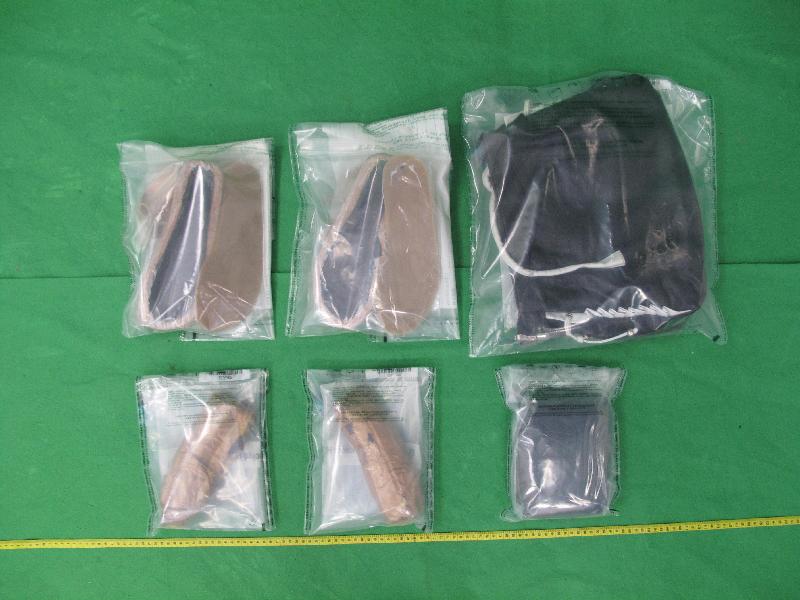
Hong Kong Customs yesterday (December 23) seized about 2.1 kilograms of suspected cocaine with an estimated market value of about $2.4 million at the Hong Kong International Airport.
A female passenger arrived in Hong Kong from Johannesburg, South Africa last night. During customs clearance, a batch of suspected cocaine was found inside her hand-carried handbag and the false compartments in her shoes’ bottom parts.
The woman, aged 43, was then arrested. Investigation is ongoing.
Under the Dangerous Drugs Ordinance, trafficking in a dangerous drug is a serious offence. The maximum penalty upon conviction is a fine of $5 million and life imprisonment.
Members of the public may report any suspected drug trafficking activities to the Customs 24-hour hotline 2545 6182 or dedicated crime-reporting email account (crimereport@customs.gov.hk).
The Centre for Health Protection (CHP) of the Department of Health is today (December 24) investigating a case of severe paediatric influenza A infection.
The 18-day-old baby boy, with good past health, has presented with poor feeding and dullness since December 18. He was admitted to Matilda International Hospital on December 22 and was transferred to the Neonatal Intensive Care Unit of Queen Mary Hospital (QMH) on the same day. He was subsequently transferred to the Intensive Care Unit of Cardiothoracic Surgery in QMH for further management on December 23. He is now in a critical condition.
His nasopharyngeal aspirate tested positive for influenza A virus upon laboratory testing. The clinical diagnosis was influenza A infection complicated with severe pneumonia and respiratory failure.
Initial enquiries revealed that the patient had not yet received seasonal influenza vaccination (SIV) for the current season and had no travel history in the incubation period. His parents had upper respiratory tract infection symptoms recently and are in a stable condition. The CHP’s investigations are ongoing.
“Influenza can cause serious illnesses in high-risk individuals and even healthy persons. Given that influenza vaccines are safe and effective, all persons aged 6 months or above, except those with known contraindications, are recommended to receive SIV for personal protection,” a spokesman for the CHP said.
As it is already December and Hong Kong will soon enter the winter influenza season, eligible persons are urged to receive SIV early for protection against seasonal influenza as it takes about two weeks to develop antibodies. Vaccination among family members is key to protecting their personal and family’s health.”
The public should maintain good personal and environmental hygiene for protection against influenza and other respiratory illnesses:
Police today (December 24) reclassified a suicide case happened in Wan Chai on December 20 as murder. At about 10.48 am that day, Police received a report from a hotel staff that a man and a woman were found collapsed inside a hotel room o… read more
The Centre for Health Protection (CHP) of the Department of Health is today (December 24) investigating a fatal case of invasive pneumococcal disease, and reminded the public to observe hygiene practices against the disease.
The patient was a two-year-old girl with good past health, who has developed fever, cough and shortness of breath since December 18. She was brought to Pamela Youde Nethersole Eastern Hospital for medical attention on December 22 and admitted to the Paediatric Intensive Care Unit there for further management. Her condition deteriorated and she died yesterday (December 23).
Her blood specimen tested positive for Streptococcus pneumoniae upon laboratory testing. The clinical diagnosis was severe pneumonia.
Initial enquiries revealed that the girl had received pneumococcal vaccination. She had no travel history during the incubation period. Her mother, elder sister and elder brother had recent upper respiratory tract infection symptoms and are in stable condition. No other similar cases or outbreaks have been reported so far at the kindergarten-cum-child care centre she attended. Investigations are ongoing.
The case will be referred to the Coroner for investigation.
“Pneumococcal infection is caused by the bacteria Streptococcus pneumoniae (pneumococcus). It causes a wide range of diseases. More common ones include middle ear infection and chest infection. It may also cause various forms of invasive pneumococcal diseases, such as infection of the brain membranes and blood stream. The infection can be serious or even life-threatening,” a spokesman for the CHP said.
Pneumococci are commonly found in the nose and throat of healthy people, particularly in children. Occasionally, these bacteria will cause an infection. They mainly spread through droplets via coughing and sneezing, close contact with the patients or contact with materials soiled with the bacteria.
To prevent pneumococcal infection, the CHP appealed to the public for pneumococcal vaccination and hygiene practices: