EPD convictions in December
Thirty-eight convictions were recorded in December 2018 for breaches of legislation enforced by the Environmental Protection Department. Five of the convictions were under the Air Pollution Control Ordin… read more


Thirty-eight convictions were recorded in December 2018 for breaches of legislation enforced by the Environmental Protection Department. Five of the convictions were under the Air Pollution Control Ordin… read more
The Scientific Committee on Vaccine Preventable Diseases (SCVPD) under the Centre for Health Protection (CHP) of the Department of Health (DH) will convene a meeting this afternoon (January 9). The C… read more
Following is a question by the Hon Andrew Wan and a written reply by the Secretary for Transport and Housing, Mr Frank Chan Fan, in the Legislative Council today (January 9):
Question:
The Railway Development Strategy 2014 released in September 2014 recommended that the Government should implement the projects of the Tuen Mun South Extension of the West Rail (South Extension) and the Northern Link and Kwu Tung Station (Northern Link) in 2019 to 2022 and in 2018 to 2023 respectively. In her Policy Address delivered in 2017, the Chief Executive undertook that the Government would aim to consult the public on these two railway schemes in 2018. In this connection, will the Government inform this Council:
(1) why the Government did not consult the public on the schemes of the South Extension and the Northern Link in 2018 pursuant to the undertaking made in the 2017 Policy Address;
(2) of, in the light of the current progress, the respective anticipated commencement dates of the construction works and the commissioning dates of the South Extension and the Northern Link; if the anticipated commissioning dates will be behind the originally scheduled commissioning dates, of the measures put in place by the Government prior to the completion of those railway projects to improve the traffic arrangements for residents of the New Territories commuting to and from the urban areas; and
(3) given that problems of non-compliant works were uncovered earlier on in the Shatin to Central Link project, which is implemented under the concession approach, whether the Government will continue to adopt the concession approach for implementing the South Extension and the Northern Link; if so, of the reasons for that; if not, the approach(es) it will adopt for implementing those new railway projects?
Reply:
President,
My consolidated reply to the Hon Andrew Wan’s question is as follows:
Having regard to the indicative implementation window recommended in the Railway Development Strategy 2014 (RDS-2014), the Transport and Housing Bureau (THB) had invited the MTR Corporation Limited (MTRCL) to submit proposals for the implementation of the Tuen Mun South Extension and the Northern Link (and Kwu Tung Station). MTRCL submitted proposals for these two railway projects to the Government in end-December 2016 and end-March 2017 respectively. THB, the Highways Department and relevant bureaux/departments have been evaluating the proposals and have requested MTRCL to provide additional information and supplement details. In carrying out the evaluation, our main focus is to ensure that the proposals are practically feasible and can bring maximum benefits to the community.
As clearly stated in the RDS-2014, the taking forward of individual proposed railway projects set out in the Strategy will be subject to the outcome of detailed engineering, environmental and financial studies relating to each project, as well as updated demand assessment and availability of resources. Moreover, for railway projects which are mainly intended to complement new development areas and new housing developments, the implementation timetable for the development areas and new housing developments in question will be an important planning parameter for the railway projects. Therefore, the indicative implementation windows recommended in the RDS-2014 may be adjusted having regard to any change in circumstances. In fact, in MTRCL’s project proposals submitted to the Government, their proposed implementation windows are different from those in the RDS-2014.
Railway projects involve huge capital investment, and the Government has to plan in a prudent manner. The new railway projects proposed in the RDS-2014 have different degrees of complexities. In planning the Tuen Mun South Extension, we need to consider the various impact on nearby residents arising from the proposed alignment and the mitigation schemes. In planning the Northern Link (and Kwu Tung Station), we need to assess in details and mitigate the impact on ecologically-sensitive areas (such as the Mai Po Nature Reserve, fishponds, wetlands, egretries and farmlands) along the railway alignment. Meanwhile, in light of the tight housing supply, the Government is reviewing the potential housing supply that may be brought about by the proposals for the Tuen Mun South Extension and the Northern Link (and Kwu Tung Station), and will strive to undertake public consultation on these proposals as soon as possible.
In line with established procedures, prior to the finalisation of any new railway scheme, we will consult the public, including the Legislative Council and the relevant District Councils, on the details of the scheme including detailed alignment, locations of stations, mode of implementation and cost estimate. We understand that the Tuen Mun District Council and the residents expect an early implementation of the Tuen Mun South Extension. We will strive to undertake public consultation on the proposal as soon as possible. In planning the Northern Link (and Kwu Tung Station), we will also continue to monitor the development of the new development areas (such as the Kwu Tung North New Development Area), to ensure that the implementation of the Northern Link (and Kwu Tung Station) will match the timetable for the development of the new development areas.
The form of funding support for railway projects should be project-specific. We will consider in details and review whether a new railway project shall be implemented under the ownership approach or the concession approach on a case-by-case basis, having regard to the experience of implementing the Hong Kong Section of the Guangzhou-Shenzhen-Hong Kong Express Rail Link and Shatin-to-Central Link projects. read more
Following is a question by the Hon Ho Kai-ming and a written reply by the Secretary for Transport and Housing, Mr Frank Chan Fan, in the Legislative Council today (January 9):
Question:
On November 30 last year, a serious traffic accident involving a non-franchised bus happened on Cheung Tsing Highway in Tsing Yi, causing six deaths and some 30 persons injured as well as arousing public concern. The Transport Department subsequently held a meeting with the trade in respect of the road safety of non-franchised buses. In this connection, will the Government inform this Council:
(1) of the number of traffic accidents involving non-franchised buses in each of the past three years, with a breakdown by type of accidents;
(2) of the progress of the authorities’ work on formulating guidelines on the working hours, rest times and meal breaks for non-franchised bus captains; and
(3) whether the authorities will take measures (e.g. stepping up law enforcement) to improve the road safety of non-franchised buses; if so, of the details; if not, the reasons for that?
Reply:
President,
The Government attaches great importance to road safety and has been adopting a multi-pronged approach to enhancing the road safety of non-franchised buses (NFBs). My reply to the various parts of the Hon Ho Kai-ming’s question is as follows:
(1) The number of traffic accidents involving NFBs each year from 2016 to November 2018 by the degree of severity is tabulated below:
| Number of accidents | |||
| Fatal | Serious | Slight | |
| 2016 | 6 | 43 | 388 |
| 2017 | 8 | 40 | 391 |
| 2018 (January to November)* |
4 | 28 | 338 |
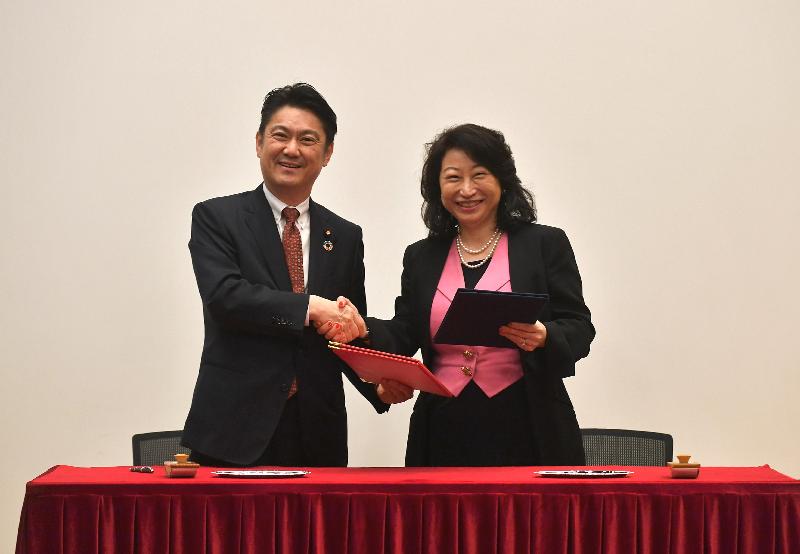
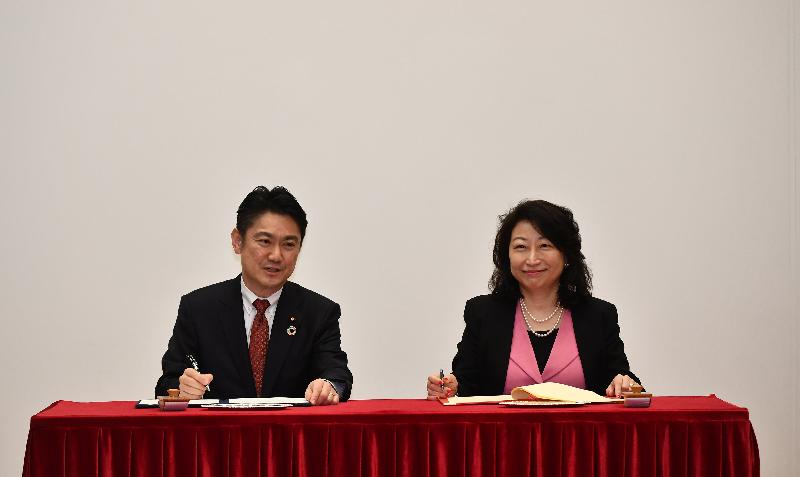
The Department of Justice (DoJ) of the Hong Kong Special Administrative Region (HKSAR) and the Ministry of Justice of Japan signed a Memorandum of Cooperation (MoC) today (January 9) to strengthen their collaboration on issues relating to international arbitration and mediation.
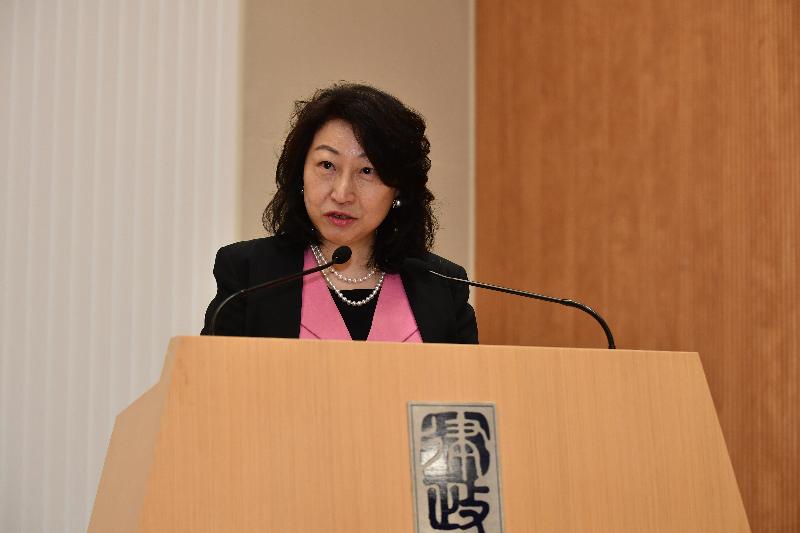
The Secretary for Justice, Ms Teresa Cheng, SC, and the Minister of Justice of Japan, Mr Takashi Yamashita, signed the MoC at a ceremony in the HKSAR.
The MoC provides a framework for Hong Kong and Japan to strengthen their communication, collaboration and co-operation on issues relating to international arbitration and mediation and to facilitate the development of services for international arbitration and mediation in Hong Kong and Japan.
The International Affairs Division of the Minister’s Secretariat of the Ministry of Justice will be the focal point for Japan while the newly established Inclusive Dispute Avoidance and Resolution (IDAR) Office of the DoJ will be the focal point for Hong Kong, to be responsible for implementation of the MoC. The IDAR Office spearheads the co-ordination of initiatives to promote Hong Kong as an ideal hub for deal making and a leading centre for international legal and dispute resolution services. It aims to facilitate access to justice and promote inclusive growth and sustainable development.
The MoC reflects the joint efforts of Hong Kong and Japan in strengthening their co-operation and exchange of information regarding training in international arbitration and mediation, and provides a framework for the DoJ and the Ministry of Justice of Japan to promote collaborative initiatives and exchanges. It is expected that Hong Kong and Japan will benefit greatly from their co-operation in the development and provision of arbitration and mediation services.