Tag Archives: China

image_pdfimage_print

LCQ17: Samaritan Fund and Community Care Fund Medical Assistance Programmes

     Following is a question by the Dr Hon Chiang Lai-wan and a written reply by the Secretary for Food and Health, Professor Sophia Chan, in the Legislative Council today (January 30):
 
Question:
 
     Having considered the findings of a consultancy study carried out by two universities, the Government has agreed to enhance the means test mechanism for the Samaritan Fund and Community Care Fund Medical Assistance Programmes (the two Programmes). The enhancement measures include: (1) taking into account only 50% (previously 100%) of the net disposable capital when calculating the annual disposable financial resources (ADFR) of the household to which a drug subsidy applicant belongs, and (2) amending the definition of “household” adopted for financial assessment. According to the new definition of “household”, (i) for a married non-dependent patient, the assets of his/her parents living under the same roof will not be counted, and (ii) for an unmarried non-dependent patient, the patient will be treated as a single-person household. Regarding the two Programmes, will the Government inform this Council:
 
(1) whether it knows the average, longest and shortest time taken by the authorities in the past three years on vetting and approval of the applications under the two Programmes;
 
(2) whether it knows, in respect of each category of drugs (categorised by type of illness), (i) the total number of patients receiving subsidies under the two Programmes and, among them, the respective numbers of those receiving full and partial subsidies, (ii) the average amount of subsidy received by each subsidised patient, (iii) the average amount of drug cost contributions made by each subsidised patient, and (iv) the total subsidy amount for each category of drugs, in each of the past three years;
 
(3) whether it knows the respective numbers of applications for subsidies for (i) drug items and (ii) non-drug items which were rejected in each of the past three years;
 
(4) given that the school fees of children at secondary level or below are allowable deductions in determining the ADFR of the households to which the applicants under the two Programmes belong, whether the authorities will treat school fees of children at post-secondary level as allowable deductions; if so, of the details; if not, the reasons for that;
 
(5) whether it will set a retrospective period for the two Programmes so as to provide subsidies for covering the expenses incurred by the medical procedures carried out, medical supplies/devices procured or medical treatments commenced within a certain period of time prior to the approval of applications, in order to avoid delays in the treatment of patients with financial needs as their applications for subsidy are pending; if so, of the details; if not, whether it will streamline the application procedure and shorten the processing time; and
 
(6) whether it will regularly review the two Programmes in terms of their scope of subsidies, eligibility criteria and issues relating to vetting and approval of applications, so that the subsidies may better meet the needs of patients; if so, of the timetable; if not, the reasons for that?
 
Reply:
 
President,
 
     My reply to the various parts of the question raised by Dr Hon Chiang Lai-wan is as follows:
 
(1) The Hospital Authority (HA) does not keep statistical records on how long it takes to complete the vetting and approval of an application for subsidies under the Samaritan Fund (SF) or Community Care Fund (CCF) Medical Assistance Programmes upon receipt of the application from the applicants. Yet, all such applications will be processed by medical social workers as soon as possible once doctors’ referrals and the necessary information or documents required from the patients concerned are received so that timely support can be provided for patients in need. As for urgent cases, medical social workers will expedite the processing so as to give support to eligible patients as early as possible.
 
(2) The information on drug subsidies provided under the SF and CCF Medical Assistance Programmes in the past three years is set out at the Annex.
 
(3) The numbers of applications for subsidies not being approved in the past three years are set out in the table below:

Year 2015-16 2016-17 2017-18
Subsidies for drug items 0 1 0
Subsidies for non-drug items 2 1 0
 
(4) Currently, allowable deductions to be counted in the calculation of patients’ household annual disposable income include school fees of children (up to age of 21) who are at secondary level or below, but do not cover school fees of children at post-secondary level. In reviewing the means test mechanism for the SF and CCF Medical Assistance Programmes, the consultant team collected views from various stakeholders, and recommended the Government and the HA to consider increasing the number of allowable deductible items and relaxing the restrictions on the existing allowable deductions. Yet adding school fees of children at post-secondary level as allowable deductions is not among those suggested by the consultant team. The Government and the HA will continue to study these issues taking into account the consultant team’s recommendations, stakeholders’ views and the HA’s capacity on an incremental basis.
 
(5) As mentioned in the reply to Part 1 above, applications for subsidies will be processed by medical social workers as soon as possible once doctors’ referrals and the necessary information or documents required from the patients concerned are received so that timely support can be provided for patients in need.  Under the existing arrangements for applications under the SF and CCF Medical Assistance Programmes, patients are granted subsidies only after the approval of their applications. For cardiac medical items covered by the SF, the HA will make special arrangements where necessary under special clinical circumstances (such as emergency cases) if the means test for a patient has not yet been completed before the surgery.
 
     Furthermore, based on the review findings, the Government and the HA have introduced a number of enhancement measures, including confining the definition of “household” adopted for financial assessment to cover only core family members living under the same roof and having direct financial connection with the patient concerned. If a patient is classified as a dependent patient (i.e. a person who is unmarried and either (i) under 18 years old; or (ii) 18 to 25 years old receiving full-time education), the corresponding “household” definition will only include the patient’s parents/legal guardians, and dependent siblings living under the same roof. As regards non-dependent patients, the corresponding “household” definition will only include the patient’s spouse and dependent children living under the same roof. A non-dependent patient who is unmarried will be treated as a single person household, irrespective of whether the patient’s parents or siblings are living under the same roof.  The refined definition of “household” will reduce the number of household members, and hence the incomes and assets of non-core family members will not be included in the calculation of the annual disposable financial resources (ADFR). This will help further reduce patient contribution to drug expenses and simplify the application procedures.
 
(6) The HA has an established mechanism for reviewing the scope of subsidies under the SF and CCF Medical Assistance Programmes. To provide more timely support for needy patients, the HA has, since 2018, increased the frequency of prioritisation exercise for including self-financed drugs in the safety net of the SF or the scope of subsidies under the CCF Medical Assistance Programmes from once a year to twice a year, so as to shorten the lead time for introducing suitable drugs into the scope of subsidies.
       
     Regarding the means test mechanism, apart from confining the definition of “household” adopted for financial assessment, the enhancement measures also include modifying the calculation of ADFR by counting only 50% of the net assets of a household.  The consultant team expected that these enhancement measures would significantly alleviate the financial burden on patients’ families arising from drug expenditure. The consultant team also studied other related issues such as the financial assessment for patients who are in need of multiple and/or recurrent items. The Government and the HA will continue to study these issues taking into account the consultant team’s recommendations, stakeholders’ views and the HA’s capacity on an incremental basis. read more


Star Parents Programme 2018-19 raises anti-drug awareness of parents (with photos)

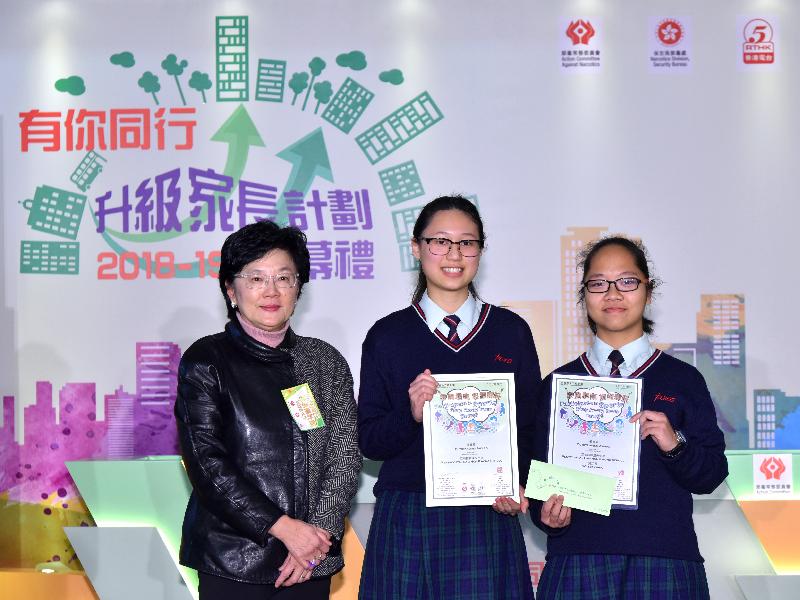
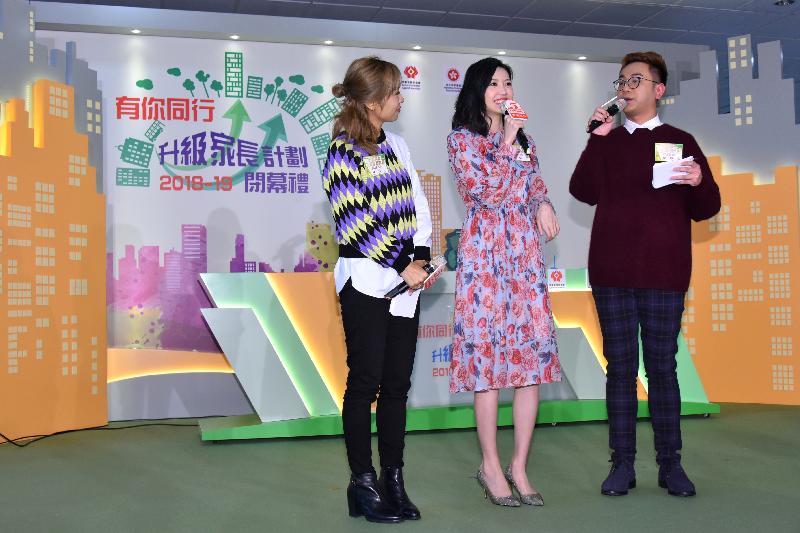
     The closing ceremony of the Star Parents Programme 2018-19, jointly organised by the Narcotics Division (ND) of the Security Bureau, the Action Committee Against Narcotics (ACAN) and Radio Television Hong Kong’s Radio 5 (RTHK-5), was held today (January 30). A series of anti-drug preventive education activities were organised under the Programme in the past year, with a view to enhancing parents’ understanding and awareness of the drug problem as well as strengthening their ability and skills in identifying and handling drug abuse.

     The former Chairman of the ACAN Sub-committee on Preventive Education and Publicity, Dr Tik Chi-yuen, officiated at the ceremony. He shared advice with over 100 parents and students on nurturing good parent-child relationships. He said that family education helped strengthen children’s resilience against adversity, which was crucial to preventing them from trying drugs. Dr Tik also encouraged parents to make good use of the anti-drug knowledge and communication skills acquired in the Programme. If they found that their children might be troubled by drug problems, they would know how to seek help early, he said.

     Also officiating at the ceremony, the Commissioner for Narcotics, Ms Manda Chan, said that the recent legalisation of recreational cannabis in some overseas jurisdictions might mislead young people into believing that cannabis is harmless. Stressing that cannabis is a dangerous drug which is addictive and would cause serious harm to health, she said that any offer to try it should be refused. When facing questions or needing help, relevant information or suitable referral would be provided by professional social workers through the ND’s 24-hour hotline 186 186, or messaging 98 186 186 at WhatsApp or WeChat.

     Three parent-child activities on anti-drug themes were launched under the Programme in the past year with some 100 parents and secondary school students participating, which included experts speaking on topics related to drugs and family relationships. The Programme also invited all primary and secondary school students in Hong Kong to join a short essay writing competition with “family stories” as the main theme. Award-winning students and their parents were invited to share writing tips and heartening stories on RTHK-5’s radio programme “Stand by Me”. In addition, RTHK-5 produced a 26-episode radio programme to promote anti-drug messages through interviewing representatives from anti-drug organisations and rehabilitated drug abusers.

     At the closing ceremony today, the ND also announced the award winners of the “Participate in Sports, Stay Away from Drugs” Programme in the 2017/18 school year. HKUGA College won the Best Project of the Year Award. The Outstanding Awards winners were Pentecostal Lam Hon Kwong School, HKFYG Lee Shau Kee College, Buddhist Wong Fung Ling College, SKH Tang Shiu Kin Secondary School and Bethel High School. The Chairman of the Assessment Panel for Outstanding Projects of the “Participate in Sports, Stay Away from Drugs” Programme in the 2017/18 school year, Dr Tik, and member of the Assessment Panel cum Chairperson of the Hong Kong Schools Sports Federation, Mrs Stella Lau, presented prizes to the winners.

     The “Participate in Sports, Stay Away from Drugs” Programme is funded by the Beat Drugs Fund and encourages secondary school students to establish healthy lifestyles and stay away from drugs by participating in the organisation of sports-related and/or health-related activities, and by supporting student athletes taking part in sports competitions.

     Other officiating guests at today’s closing ceremony included the Head of RTHK-5, Mr Chan Hei, Deputy Head of RTHK-5, Mr Sunny Li, and artistes James Ng, Jinny Ng and Tang Siu-hau. For details of the Programme, please visit the designated webpage.

Photo  Photo  Photo  Photo  
read more

Tender result for Government Sale Site in Kai Tak announced

     The Lands Department today (January 30) announced that the Government had rejected all nine tenders received for the purchase of New Kowloon Inland Lot No. 6547 at Kai Tak Area 4C Site 5, Kai Tak, Kowloon, after the tender closed on January 25, for the reason that the tendered premiums did not meet the Government’s reserved price for the site.
      
     The disposal of sites in the Government’s Land Sale Programmes in the open market follows an established mechanism. The Government will not sell a site if no bid reaches the reserve price as assessed by the Government’s professional valuers.
      
     The tenderers in alphabetical order, with the name of the parent company where provided by the tenderers in brackets, were:

(1) Art Champion Investment Limited (CK Asset Holdings Limited)
(2) Asia Horizon Limited (Sino Land Company Limited)
(3) Dragon Star H.K. Investments Limited (K Wah Properties (Holdings) Limited)
(4) Ease Success Limited (Great Eagle Holdings Limited)
(5) Leading Sea Limited (Astute Max Limited)
(6) One Gold Investment Limited (K&K Property Holdings Limited)
(7) Sanon Limited (Far East Consortium International Limited)
(8) Ultra Keen Holdings Limited (Wharf Real Estate Investment Company Limited)
(9) World Dynasty (H.K.) Limited (Sun Hung Kai Properties Limited)

     It is the Government’s policy objective to provide a steady and sustained land supply to the market to cater for the community’s demand for housing, commercial and business sites. This objective will not be affected by the results of an individual tender exercise. The Government will consider disposal arrangements for this Kai Tak site at an appropriate time.
      
     The Government will not speculate on the reasons accounting for the bids placed by tenderers. In practice, the bids put forward depend on a myriad of factors, such as attractiveness of the individual site to the individual tenderers, as well as how the individual tenderers consider the market conditions, their respective corporate positions and development strategies.
      
     New Kowloon Inland Lot No. 6547 has a site area of about 9,480 square metres and is designated for non-industrial (excluding residential, godown and petrol filling station but including hotel) purposes. The minimum gross floor area and the maximum gross floor area are 34,128 sq m and 56,880 sq m respectively.
      
     For background information, in recent years five tender exercises for Government’s land sales had to be cancelled due to the bids falling below the reserve prices. Other than the Kai Tak site in question, the four other cancelled tender exercises involved a site on the Peak, sites in Yuen Long, Tsing Yi and Pak Shek Kok, which were put to tender in late 2018, early 2016, late 2015 and early 2014 respectively. Three sites in Yuen Long, Tsing Yi and Pak Shek Kok were subsequently successfully re-tendered. As for the site on the Peak, the Government will consider the disposal arrangements at an appropriate time. read more

LCQ18: Support for children with special educational needs

     Following is a question by Dr Hon Elizabeth Quat and a written reply by the Secretary for Education, Mr Kevin Yeung, in the Legislative Council today (January 30):

Question:

     Children with special educational needs (SEN) refer to children with the following conditions: specific learning difficulties, attention deficit/hyperactivity disorder, autism spectrum disorders, speech and language impairment, intellectual disability, hearing impairment, physical disability, visual impairment and mental illness. Regarding the support for children with SEN, will the Government inform this Council:

(1) of the respective numbers of children referred to the Child Assessment Centres (CACs) under the Department of Health (DH) for assessments in each of the past five years by (i) clinics under the DH, (ii) the Hospital Authority (HA), (iii) the Social Welfare Department (SWD) and (iv) the Education Bureau (EDB);

(2) given that at present, children with physical, developmental, behavioural or learning problems are first referred to the Maternal and Child Health Centres of their respective districts for assessment, are then referred, on a need basis, to the CACs for assessment, and are subsequently referred, on a need basis, to the HA for specialty consultation, whether the Government has assessed if the process is too complicated and can be streamlined so as to facilitate early identification of children with SEN and follow up their needs; if it has, of the details; if not, the reasons for that;

(3) given that the “On-site Pre-school Rehabilitation Services” and the “Training Subsidy Programme for Children on the Waiting List of Subvented Pre-school Rehabilitation Services” target at children with SEN who are aged below six, whether the Government will relax the age ceiling so that such children can continue to receive support upon admission to Primary One; if so, of the details; if not, the reasons for that;

(4) given that starting from the current school year, pre-school rehabilitation service units will, before school year begins, forward to the EDB through the SWD the progress reports of children with SEN who are of the right age for admission to Primary One, so that the EDB can transfer the relevant information to the primary schools concerned before the commencement of the school year, whether the Government has (i) received complaints about this arrangement, and (ii) assessed the effectiveness of the arrangement; if so, of the details;

(5) given that under the integrated education policy, children with SEN will attend mainstream schools, and schools will support students facing varying degrees of learning difficulties according to the “3-Tier Support Model”, but there are views that school-based support measures cannot provide support according to the actual situation of individual students, whether the Government will introduce measures which better cater for the individual needs of students; if so, of the details; if not, the reasons for that; and

(6) whether it will consider afresh (i) compiling statistics on the number of children waiting for SEN assessment each year as well as their waiting time, and (ii) setting up a central database for children with SEN to facilitate stakeholders to grasp the demand for services to support children with SEN; if so, of the details; if not, the reasons for that?

Reply:

President,

     Through multi-disciplinary collaborative efforts, relevant government bureaux/departments have been offering various services to support children with special needs or at risk of developmental delay.Specifically, the Food and Health Bureau (FHB) provides assessment and medical services for children in need, while the Labour and Welfare Bureau (LWB) provides rehabilitation and welfare services. The Education Bureau (EDB) is responsible for providing public sector ordinary schools with various additional resources, professional support and teacher training to help them cater for students with special educational needs (SEN). By providing training for teachers, teachers’ professional capacity can be enhanced so that they can identify and provide appropriate support for children with special needs as early as possible.

     Our consolidated reply, prepared in consultation with relevant bureaux and departments, to the question of Dr Hon Elizabeth Quat is as follows:

(1) The Child Assessment Service (CAS) of the Department of Health conducts clinical assessment for children under the age of 12 years with suspected symptoms of developmental problems referred by doctors or psychologists. New cases are referred from various channels, including the Maternal and Child Health Centres (MCHCs), the Hospital Authority (HA), doctors in private practice and psychologists. In the past five years, the number of new cases referred to the CAS from various sources is as follows:
 

  Number of cases
Channels of referral 2014 2015 2016 2017 2018
(Provisional)
The MCHCs and other specialties under the DH 5 731 6 328 6 554 6 812 7 155
Paediatricians, Out-Patient Clinics and other specialties under the HA 1 344 1 368 1 416 1 422 1 233
Doctors in private practice 1 844 1 652 1 611 1 533 1 442
Psychologists (including those from the HA, EDB, SWD, non-governmental organisations and in private practice) 548 505 600 655 630
Others 27 19 7 16 6
Total 9 494 9 872 10 188 10 438 10 466


(2) The MCHCs under the DH provide a comprehensive range of health promotion and disease prevention services for children from birth to five years of age through the Integrated Child Health and Development Programme which covers developmental surveillance.  Through developmental surveillance, healthcare staff of the MCHCs arrange interviews with parents at specific ages of the children and observations of their performance in various developmental areas for early identification of children suspected to have developmental disorder. Apart from the scheduled visits at specific ages, parents can always make appointments with the MCHCs for special follow-up. In addition, under the Comprehensive Child Development Service jointly implemented by the EDB, DH, HA, SWD and non-governmental organisations, pre-school tutors can directly refer children in need to MCHCs of respective districts for preliminary assessment. Subject to assessment results and needs, the MCHCs may refer children to assessment services of the DH or other specialist services of the HA for follow-up. The waiting time for assessments by doctors at the MCHCs generally ranges from four to eight weeks. DH will continue to monitor the service demand and make internal manpower deployment as needed to ensure timely case referral.

(3) On pre-school rehabilitation services, the SWD provides children with special needs from birth to six years of age with early intervention services to enhance their physical, psychological and social development, thereby improving their opportunities for admission to ordinary schools and participation in daily activities, and helping their families to meet their special needs. These services include the On-site Pre-school Rehabilitation Services and the Training Subsidy Programme for Children on the Waiting List of Subvented Pre-school Rehabilitation Services.

     When pre-school children with special needs progress to Primary One, they need to be given various learning support, accommodations and guidance in order to adapt to learning in primary schools which have different requirements in learning, social, emotional and behavioural aspects as compared with those in pre-school stage. Hence, on top of regular subvention, the EDB has been providing public sector ordinary schools with additional resources, professional support and teacher training to assist schools in catering for students (including Primary One students) with SEN so as to enhance their learning effectiveness.  Starting from the 2018/19 school year, the EDB, SWD, HA and DH have strengthened their collaboration and introduced an enhanced mechanism under which the assessment information and progress reports of pre-school children with special needs will be transferred to the primary schools they are going to attend before the new school year begins. This enables schools to learn about the SEN of these children so as to plan and provide appropriate support for them. In parallel, the EDB has all along requested primary schools to implement the “Early Identification and Intervention Programme for Primary One Students with Learning Difficulties” to ensure that students who have received pre-school rehabilitation services can receive further assessment when necessary as well as early support, and also to ensure that students not identified at pre-school stage can be identified and given appropriate support. The EDB will continue to support Primary One students with SEN under the current mode of service.

(4) Starting from the 2018/19 school year, the EDB, SWD, DH and HA have strengthened collaboration and implemented an enhanced mechanism to ensure that when children with special needs proceed to primary schools from pre-school centres/kindergartens, the primary schools can be aware of their special needs earlier and provide them with support.

     Under this mechanism, for each school year, the EDB will send letters and parental consent forms to parents of children who are receiving or waiting for pre-school rehabilitation services subvented by the SWD, and are of the right age for admission to Primary One the next school year. Upon obtaining parental consent, the EDB will send the relevant children information to the Child Assessment Centres (CACs) of the DH and HA so that the CACs will provide the assessment information of these children to the EDB. In June, the EDB will confirm with parents the schools which their children are going to attend, i.e. public sector primary schools or Direct Subsidy Scheme (DSS) primary schools, for transfer of the assessment information to the schools concerned before the new school year begins. This enables schools to learn about the situations of these students as early as possible with a view to planning and providing appropriate support for them.

     Besides, upon obtaining parental consent, the pre-school rehabilitation service units subvented by the SWD will also forward, via the SWD, progress reports of pre-school children to the EDB for transfer to the public sector or DSS primary schools which the children are going to attend before the new school year begins. Professional officers of the EDB will visit the primary schools concerned within the first six to eight weeks upon the commencement of a new school year to understand from the primary schools their support services for the respective Primary One students based on the assessment information from the CACs and progress reports from pre-school rehabilitation units, and will offer advice to schools as appropriate. The enhanced collaborative mechanism, implemented from the current school year, has been running smoothly and we have not received any complaints. We will continue to review the implementation of this enhanced mechanism.

(5) The EDB encourages schools to adopt the Whole School Approach to support students with SEN through the 3-Tier Intervention Model, taking into account their individual circumstances and support needs. Tier-1 support refers to the use of quality teaching in the regular classroom to cater early the diverse learning and adjustment needs of all students, as well as to provide early support to students identified with learning difficulties and adjustment problems. Tier-2 support is additional support, such as after-school small group training, for students to develop learning and/or social-adaptive skills required for regular classroom learning or daily living. Through practice and application in regular classroom, students’ acquisition of knowledge and skills under Tier-2 support can be strengthened. Schools will provide Tier-3 support to students with severe and persistent learning difficulties by setting out individualised support and small group training through devising Individual Education Plans (IEP), and by providing opportunities for students to practise and apply the knowledge and skills acquired in Tier-2 and/or Tier-3 support in the classroom, thus ensuring the effectiveness of the overall support.

     The above-mentioned 3-Tier Intervention Model is underpinned by the Response to Intervention (RTI) approach. The determination of the tier of support for individual students with SEN through the RTI approach is rooted in the consultancy report that the British scholar Dr Rea Reason prepared for the then Education and Manpower Bureau. In the report, Dr Reason suggested that Hong Kong should, drawing on the experience of the United States of America and the United Kingdom, arrange timely and structured intervention for the students, adjust the tier of support according to RTI and review the progress of students regularly in order to evaluate and provide the appropriate tier of support for students under the 3-Tier Intervention Model. The arrangement enables students with diverse needs to receive the most appropriate support and services.

     To provide the appropriate tier of support that matches the needs of students with SEN, student support teams of schools will collect and analyse their students’ information and needs, gauge the views of students and parents, and consult professionals. Schools are also required to record the support and accommodation measures provided, as well as their students’ progress for regular review and adjustment of the tier of support when appropriate. For students who need Tier-3 support, schools must draw up for each of them an IEP which sets out such items as long-term objectives, short-term objectives, specific implementation methods, evaluation criteria and outcomes. Underlying the above measures is the principle of catering for the individual needs of students. We will continue to monitor the effectiveness of these measures and introduce enhancement measures.
 
     From the 2019/20 school year, we will implement various enhanced measures on integrated education including restructuring various funding schemes on integrated education, extending the Learning Support Grant, multiplying the grant rate for Tier-3 support and provision of additional permanent teaching posts; upgrading the post of special educational needs coordinator to a promotion rank in public sector ordinary schools with a comparatively large number of students with SEN; extending further the Enhanced School-based Educational Psychology Service; and enhancing the school-based speech therapy services. On the whole, schools will have a stable teaching force, resources that can be used flexibly and enhanced professional support to cater for students with SEN.

(6) (i) The DH and the HA have expressed that they will continue to maintain close communication with various service providers, with a view to providing more appropriate and effective medical services for the children with SEN.

(ii) At present, there is an established collaborative mechanism in place among the EDB, SWD, DH and HA to ensure that the assessment information and progress reports of pre-school children with special needs will be transferred in a timely manner to the primary schools they will be attending, thereby enabling their schools to provide appropriate support for them upon their admission to Primary One. The Special Education Management Information System (SEMIS) of the EDB also collects the information of students with SEN studying in public sector schools. The EDB has been keeping tabs on the situation of the demand from students with SEN for educational services and support through the information collected by SEMIS, so as to implement corresponding policies and measures to assist public sector schools in supporting these students. Different bureaux and departments can, upon parental consent, transfer the information of children with special needs. Hence, we have no plans to set up a central database for children with SEN at this stage. read more

LCQ10: Applications for Comprehensive Social Security Assistance from persons with less than seven years’ residence in Hong Kong

     Following is a question by the Hon Mrs Regina Ip and a written reply by the Secretary for Labour and Welfare, Dr Law Chi-kwong, in the Legislative Council today (January 30):
 
Question:
 
     On December 17, 2013, the Court of Final Appeal ruled that the requirement for seven-year residence in Hong Kong (residence requirement) stipulated by the Government for the Comprehensive Social Security Assistance (CSSA) Scheme was unconstitutional, and the residence requirement was therefore restored from seven years to one year, which was the requirement before January 1, 2004. In this connection, will the Government inform this Council of the following, since the judgment was handed down:

(1) the respective numbers of CSSA applications received and approved each year which were made by persons with less than seven years’ residence in Hong Kong, as well as the respective percentages of such numbers in the total number of applications for the same year; and 

(2) the total amount of CSSA payment made each year to persons with less than seven years’ residence in Hong Kong and its percentage in the total expenditure on CSSA payments for the same year?

Reply:
 
President,

     Following the judgment handed down by the Court of Final Appeal on the judicial review regarding the residence requirement of the Comprehensive Social Security Assistance (CSSA) Scheme, the Social Welfare Department restored the “one-year residence requirement”, which was in effect before January 1, 2004, on December 17, 2013. As in the past, persons aged below 18 are exempted from the residence requirement of the CSSA Scheme.

     My reply to the Member’s question is set out below:

(1) From the date of the judgment to 2017-18, the number of CSSA applications received and approved involving persons aged 18 or above and had resided in Hong Kong (HK) for less than seven years, and the percentages of the relevant application number in the total CSSA application number are as follows:
 

Year Number of CSSA applications received from persons who had resided in HK for less than seven years Number of approved CSSA applications from persons who had resided in HK for less than seven years Total number of CSSA applications Percentage of CSSA applications from persons who had resided in HK for less than seven years in the total application number
2013-14
(Since
December 17, 2013)
4 007 3 272 39 514 (Note 1) 10.1 per cent
2014-15 5 876 4 677 39 623 14.8 per cent
2015-16 4 380 1 339 38 376 11.4 per cent
2016-17 4 005 1 078 41 111 9.7 per cent
2017-18 3 729 1 191 39 342 9.5 per cent

(2) In 2013-14 to 2017-18, the estimated CSSA expenditures involving recipients who had resided in HK for less than seven years (CSSA is payable on a household basis and the relevant expenditures are rough estimates) and their percentages in total CSSA expenditure are as follows:
 
Year Expenditure (Note 2)
($ million)
Percentage in total
CSSA expenditure
2013-14 582 3.0 per cent
2014-15 823 4.0 per cent
2015-16 949 4.3 per cent
2016-17 933 4.2 per cent
2017-18 885 4.1 per cent

Note 1: Number of applications in year 2013-14.
Note 2: The expenditure for 2015-16 includes the provision for two additional months of CSSA standard rate payment in that year, and the expenditure for 2013-14, 2014-15, 2016-17 and 2017-18 include the provisions for an additional month of CSSA standard rate payment in the respective years. read more