Speech by CE at IPCC Symposium (English only) (with photos/video)
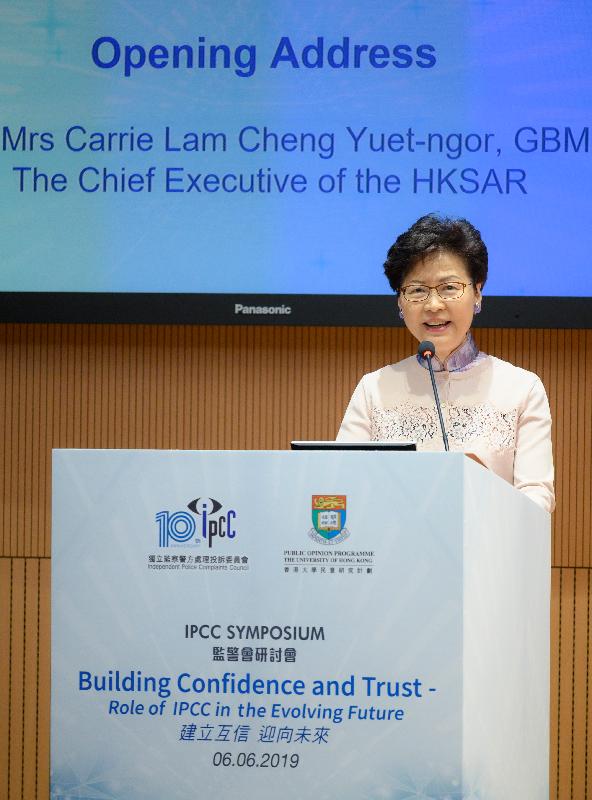
Following is the speech by the Chief Executive, Mrs Carrie Lam, at the IPCC Symposium today (June 6):
Anthony (Chairman of the Independent Police Complaints Council (IPCC), Dr Anthony Neoh), Justice Tang (former Chairman of the IPCC and Non-Permanent Judge of the Court of Final Appeal Mr Justice Robert Tang), Professor Hayward (Dean of Social Sciences at the University of Hong Kong, Professor William Hayward), distinguished guests, speakers, ladies and gentleman,
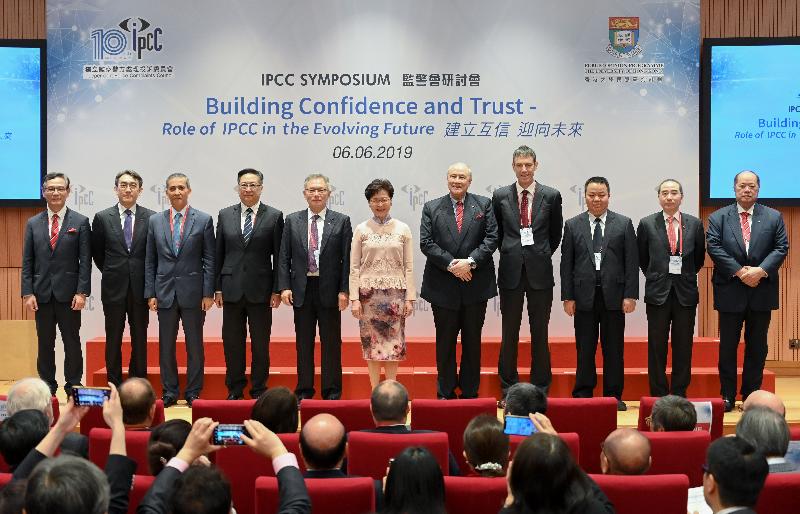
Good morning. It is a great pleasure to join you today for this IPCC Symposium, organised in celebration of the 10th anniversary of the Independent Police Complaints Council.
The Hong Kong Police incidentally is celebrating its 175th anniversary this year and of course, the history of the police complaints system in Hong Kong goes well beyond 10 years; it can be dated back to the 1970s. A significant milestone took place in 2009 when the IPCC was transformed into a statutory body under the IPCC Ordinance. Justice Robert Tang, who chaired the IPCC before the transformation, will give us a keynote address later while three successive chairmen leading the statutory IPCC, namely Mr Jat Sew-tong, Mr Larry Kwok and Dr Anthony Neoh, will also share their experiences. May I take this opportunity to thank them all for their dedicated work, including the members, the observers and the staff, in enhancing public confidence in IPCC by thoroughly handling complaints against Police in an impartial and transparent manner.
Effective handling of complaints against any agency is easier said than done, and in the case of the Police, is particularly delicate and sensitive as very often the complainants are subject to police investigation and enforcement. Particularly in the digital age we live in, information is transmitted to people, communities and the world in a matter of seconds. That reality can transform minor differences into disturbing incidents, public protests and much else. Coupled with threats from extremism and terrorism, it is increasingly difficult today for the Police and other law-enforcement agencies to strike the delicate and essential balance between safeguarding security and protecting personal liberties.
It is against this complex background, one as global as it is local, that the work of monitoring bodies such as the IPCC becomes increasingly vital. The IPCC, I’m pleased to say, has responded commendably. In the decade since it became an independent statutory body, it has played a pivotal role in ensuring that reportable complaints against the Police are dealt with in a proper, fair and just manner. And for that, we are all very grateful.
From 2009 to 2018, the IPCC received on average about 2 400 complaint cases a year. Among these cases of very different nature, I am sure the public would remember the IPCC’s involvement in a number of public order event-related complaints which drew keen public interest. Unfazed by the controversies around those cases, the IPCC demonstrated its determination and ability to uphold the values of independence, impartiality and integrity in complaint handling. In 2015, the IPCC released a special report on a number of such cases, highlighting its meticulous approach in determining the outcome. Such transparency helps members of the public understand the work of the IPCC and boosts public confidence in the police complaints system.
The contribution of the IPCC is not limited to looking into complaint cases. It also makes recommendations on improving police procedures and guidelines on police operations, all of which are made after thorough observation and engagement with stakeholders. For example, the IPCC has been conducting on-site observations at large-scale public order events, and has been meeting police representatives as well as the organisers of the events. These efforts help the IPCC gain a multifaceted perspective on these events without affecting its impartiality. They also help the IPCC make balanced recommendations which can address the needs and concerns of different parties.
Over the past 10 years, the IPCC has made more than 140 recommendations to the Police. In 2017-18 alone, the IPCC made 26 recommendations regarding training for front-line police officers, police guidelines and practices. The majority of the recommendations made by the IPCC have been accepted by the Police and have helped enhance the Police Force’s service quality. They have also worked to reduce reportable complaints, I’m delighted to note. In 2009, the IPCC received about 4 000 complaint cases. In the past couple of years, that number has dropped by 60 per cent to about 1 600 a year. I find it particularly noteworthy that there have been virtually no reportable complaints stemming from major public events over the past two years.
Another key function of the IPCC is to enhance the public understanding and awareness of its statutory duties. Through such activities as the Youth Day held in March this year and the School Programme launched since 2016, the IPCC has been sharing with secondary and primary school students its work and functions, as well as listening to their feedback. I was told that over 50 school visits have already been made under the School Programme, reaching over 6 000 teachers and students. In addition, the IPCC engages other stakeholders and the general public through various means including seminars, website and publications, which is also very well received.
The public clearly appreciates the work done by the IPCC and the performance of our Police Force. Confidence in the IPCC rose 17 per cent between 2016 and 2018, according to a survey done by the University of Hong Kong’s Public Opinion Programme. Findings of the 2018 Police Service Satisfaction Survey and Public Opinion Survey, also conducted by Public Opinion Programme, were even more favourable, with net confidence towards our Police Force up 21 per cent over 2015 results.
Public confidence in the IPCC and our Police Force is also reflected in Hong Kong’s standing as one of the safest cities in the world. Since 2014, the crime rate here has dropped below 1 000 crimes per 100 000 people. The crime rate last year, at 728, is the lowest in nearly half a century. The people of Hong Kong have much to be proud of and much to take confidence in.
The efficiency and effectiveness of our Police is internationally recognised. Last year, Hong Kong ranked sixth in “Reliability of Police Services” out of 140 economies in the World Economic Forum’s Global Competitiveness Report. There is more good news from the Gallup 2018 Global Law and Order Report, which ranked Hong Kong fifth among 142 countries and regions. And in the World Justice Project Rule of Law Index 2017-18, Hong Kong stood fourth in the world in “Order and Security”. These and other outstanding results put a deserved spotlight not only on our Police Force but also on the remarkable job the IPCC does, day in, day out, in enhancing the quality of our Police Force.
If this 10th anniversary is reason for celebration of the excellent work done by the IPCC, it is also an opportune time to take stock, as well as to set new goals and higher standards. As we face new social challenges every day, it is essential for the IPCC, as a monitoring body, to continue to play its vital role in ensuring public confidence and trust in the police complaints system. Indeed, trust is the IPCC’s currency – something it can never have too much of as it strives to live up to rising public expectations for an independent, fair and accountable police complaints system.
The Government will no doubt do our part in supporting the IPCC. The IPCC’s membership has grown by 50 per cent from 18 in 2009 to 27 to date. The size of the Secretariat has also doubled in terms of the number of staff. We will continue to provide the resources and support for the IPCC’s operation and development in the future.
And I am sure that the IPCC can benefit from the experience and insight of local and overseas professionals, practitioners and scholars. That is why I am happy to see the IPCC, together with Public Opinion Programme of the University of Hong Kong, hosts today’s symposium. Under the timely theme of “Building Confidence and Trust – Role of IPCC in the Evolving Future”, today’s event features speakers from Hong Kong as well as Macao, Australia, Canada, New Zealand, the United States and the United Kingdom. I am sure it will be thought-provoking.
My thanks to the organisers for this Symposium. I wish you all a very fruitful discussion and, for our overseas speakers and participants, an enjoyable and memorable stay in Hong Kong.
Ladies and gentlemen, I hereby declare the IPCC Symposium open. Thank you very much.