Tag Archives: China

image_pdfimage_print

Update on dengue fever

     The Centre for Health Protection (CHP) of the Department of Health today (August 16) reported the latest number of cases of dengue fever (DF), and strongly urged the public to maintain strict environmental hygiene, mosquito control and personal protective measures both locally and during travel.

     From August 9 to 15, the CHP recorded eight imported DF cases. The patients had been to Thailand (four cases), Malaysia (two cases), Indonesia (one case) and the Philippines (one case) during the incubation period.

     As of yesterday (August 15), 113 cases had been recorded this year, as compared with 62 cases recorded in the same period last year. All the cases recorded in 2019 were imported, mainly from Thailand (23), Malaysia (20), Cambodia (18) and Indonesia (18).

    The CHP has been closely monitoring the latest DF situation in neighbouring and overseas areas. DF is endemic in many tropical and subtropical areas of the world. According to the World Health Organization, some Asian countries are experiencing unusually high numbers of DF cases for this time of year. Detailed information on the latest DF situation in Hong Kong as well as neighbouring and overseas countries and areas this year has been uploaded to the CHP’s website (www.chp.gov.hk/files/pdf/df_imported_cases_and_overseas_figures_eng.pdf). Members of the public should stay vigilant and carry out effective mosquito prevention and control measures.

     ​”Apart from general measures, travellers returning from areas affected by DF should apply insect repellent for 14 days upon arrival in Hong Kong. If feeling unwell, seek medical advice promptly and provide travel details to the doctor,” a spokesman for the CHP said.

     The public should take heed of the following advice on mosquito control:
 

  • Thoroughly check all gully traps, roof gutters, surface channels and drains to prevent blockage;
  • Scrub and clean drains and surface channels with an alkaline detergent compound at least once a week to remove any deposited mosquito eggs;
  • Properly dispose of refuse, such as soft drink cans, empty bottles and boxes, in covered litter containers;
  • Completely change the water of flowers and plants at least once a week. The use of saucers should be avoided if possible;
  • Level irregular ground surfaces before the rainy season;
  • Avoid staying in shrubby areas; and
  • Take personal protective measures such as wearing light-coloured long-sleeved clothes and trousers and apply insect repellent containing DEET to clothing or uncovered areas of the body when doing outdoor activities.

     DEET-containing insect repellents are effective and the public should take heed of the tips below:
 
  • Read the label instructions carefully first;
  • Apply right before entering an area with risk of mosquito bites;
  • Apply on exposed skin and clothing;
  • Use DEET of up to 30 per cent for pregnant women and up to 10 per cent for children*;
  • Apply sunscreen first, then insect repellent; and
  • Re-apply only when needed and follow the instructions.

* For children who travel to countries or areas where mosquito-borne diseases are endemic or epidemic and where exposure is likely, those aged 2 months or above can use DEET-containing insect repellents with a DEET concentration of up to 30 per cent.

     The public should call 1823 in case of mosquito problems and may visit the following pages for more information: the DF page of the CHP and the Travel Health Service, the latest Travel Health Newstips for using insect repellents, and the CHP Facebook Page and YouTube Channel.   read more

Manager of unlicensed guesthouse fined

     A man was fined $15,000 at the Tuen Mun Magistrates’ Courts today (August 16) for contravening the Hotel and Guesthouse Accommodation Ordinance.

     The courts heard that in December last year, officers of the Office of the Licensing Authority (OLA), under the Home Affairs Department, inspected a suspected unlicensed guesthouse on Tsing Lung Road in Tuen Mun. During the inspection, the OLA officers posed as lodgers and successfully rented a room in the guesthouse on a daily basis.

     According to the OLA’s records, the guesthouse did not possess a licence under the Ordinance on the day of inspection. The man responsible for managing the premises was charged with contravening section 5(1) of the Ordinance.

     A department spokesman stressed that operating or managing an unlicensed guesthouse is a criminal offence and can lead to a criminal record. Upon conviction, the offender is liable to a maximum fine of $200,000 and two years’ imprisonment.

     The spokesman appealed to anyone with information about suspected unlicensed guesthouses to report it to the OLA through the hotline (tel: 2881 7498), by email (hadlaenq@had.gov.hk), by fax (2504 5805) using the report form downloaded from the OLA website (www.hadla.gov.hk), or through the mobile application “Hong Kong Licensed Hotels and Guesthouses”. read more

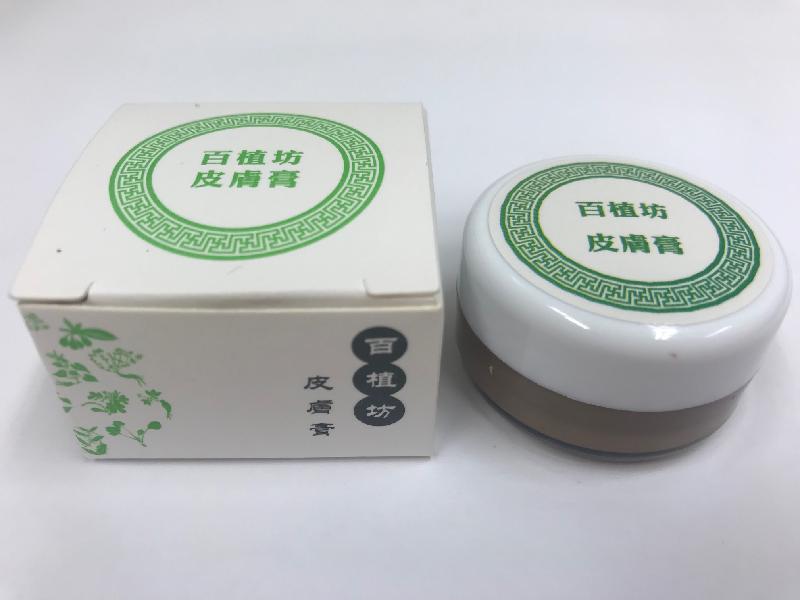
DH urges public not to buy or use topical product with undeclared controlled ingredient (with photo)

     The Department of Health (DH) today (August 16) appealed to the public not to buy or use a topical product (no English name on the package, see photo) as it was found to contain an undeclared controlled drug ingredient.

     Acting on a public complaint, the DH purchased a sample of the above product via a social media platform for analysis. Test results from the Government Laboratory revealed that the product contained betamethasone dipropionate, which is a Part 1 poison controlled under the Pharmacy and Poisons Ordinance (PPO) (Cap 138).

     The DH’s investigation is continuing.

     Betamethasone dipropionate is a steroid substance for treating inflammatory skin disorders. Inappropriate or excessive application of steroids could cause skin problems and body-wide side effects such as moon face (facial swelling), high blood pressure, high blood sugar, skin atrophy, adrenal insufficiency and osteoporosis. Products containing betamethasone dipropionate should only be used under a doctor’s directions and supplied by a pharmacy under the supervision of a registered pharmacist upon a doctor’s prescription.

     According to the PPO, all pharmaceutical products must be registered with the Pharmacy and Poisons Board of Hong Kong before they can be legally sold in the market. Illegal sale or possession of unregistered pharmaceutical products and Part 1 poisons are criminal offences. The maximum penalty for each offence is a fine of $100,000 and two years’ imprisonment.

     The public should not buy or use products of doubtful composition or from unknown sources. All registered pharmaceutical products should carry a Hong Kong registration number on the package in the format of “HK-XXXXX”. The safety, quality and efficacy of unregistered pharmaceutical products are not guaranteed.

     People who have purchased the product should stop using it and consult healthcare professionals if in doubt or feeling unwell after use. They can submit the product to the DH’s Drug Office at Room 1856, Wu Chung House, 213 Queen’s Road East, Wan Chai, during office hours for disposal.

Photo  
read more