Tag Archives: China

image_pdfimage_print

Update on cases of Legionnaires’ disease

     The Centre for Health Protection (CHP) of the Department of Health today (August 26) reported the latest number of cases of Legionnaires’ disease (LD), and stressed the importance of using and maintaining properly designed man-made water systems, adding that susceptible groups should strictly observe relevant precautions.

     From August 18 to 24, three community-acquired LD cases were reported:

1. A male patient, aged 86 with underlying illnesses, who lives in Yee Shun House, Yee Nga Court, 15 On Po Road, Tai Po;
2. A male patient, aged 66 with underlying illnesses, who lives in Wing Lung Building, 20-22 Wing Lung Street, Sham Shui Po; and
3. A female patient, aged 79 with underlying illnesses, who lives in Shin Lun House, Fu Shin Estate, 12 On Po Road, Tai Po.

     “Epidemiological investigations are ongoing to identify potential sources of infection, high-risk exposure and clusters, if any,” a spokesman for the CHP said. 

     As of August 24 this year, 73 LD cases have been reported. In 2018 and 2017, there were 105 and 72 cases respectively. 

     “Men, people aged over 50, smokers, alcoholics and persons with weakened immunity are more susceptible to LD. Some situations may also increase the risk of infection, including poor maintenance of water systems leading to stagnant water; living in areas with old water systems, cooling towers or fountains; using electric water heaters, whirlpools and spas or hot water spring spas; and recent stays in hotels or vessels,” the spokesman said. 

     Legionellae are found in various environmental settings and grow well in warm water (20 to 45 degrees Celsius). They can be found in aqueous environments such as water tanks, hot and cold water systems, cooling towers, whirlpools and spas, water fountains and home apparatus which support breathing. People may become infected when they breathe in contaminated droplets (aerosols) and mist generated by artificial water systems, or when handling garden soil, compost and potting mixes.    

     Immunocompromised persons should:
 

  • Use sterile or boiled water for drinking, tooth brushing and mouth rinsing;
  • Avoid using humidifiers, or other mist- or aerosol-generating devices. A shower may also generate small aerosols; and
  • If using humidifiers, or other mist- or aerosol-generating devices, fill the water tank with only sterile or cooled freshly boiled water, and not water directly from the tap. Also, clean and maintain humidifiers/devices regularly according to manufacturers’ instructions. Never leave stagnant water in a humidifier/device. Empty the water tank, wipe all surfaces dry, and change the water daily.

     The public should observe the health advice below:
 
  • Observe personal hygiene;
  • Do not smoke and avoid alcohol consumption;
  • Strainers in water taps and shower heads should be inspected, cleaned, descaled and disinfected regularly or at a frequency recommended by the manufacturer;
  • If a fresh water plumbing system is properly maintained, it is not necessary to install domestic water filters. Use of water filters is not encouraged as clogging occurs easily, which can promote growth of micro-organisms. In case water filters are used, the pore size should be 0.2 micrometres (µm) and the filter needs to be changed periodically according to the manufacturer’s recommendations;
  • Drain and clean water tanks of buildings at least quarterly;
  • Drain or purge for at least one minute infrequently used water outlets (e.g. water taps, shower heads and hot water outlets) and stagnant points of the pipework weekly or before use;
  • Seek and follow doctors’ professional advice regarding the use and maintenance of home respiratory devices and use only sterile water (not distilled or tap water) to clean and fill the reservoir. Clean and maintain the device regularly according to the manufacturer’s instructions. After cleaning/disinfection, rinse the device with sterile water, cooled freshly boiled water or water filtered with 0.2 µm filters. Never leave stagnant water in the device. Empty the water tank, keep all surfaces dry, and change the water daily; and
  • When handling garden soil, compost and potting mixes:
     1. Wear gloves and a face mask;
     2. Water gardens and compost gently using low pressure;
     3. Open composted potting mixes slowly and make sure the opening is directed away from the face;
     4. Wet the soil to reduce dust when potting plants; and
     5. Avoid working in poorly ventilated places such as enclosed greenhouses.

     The public may visit the CHP’s LD page, the Code of Practice for Prevention of LD and the Housekeeping Guidelines for Cold and Hot Water Systems for Building Management of the Prevention of LD Committee, and the CHP’s risk-based strategy for prevention and control of LD. read more
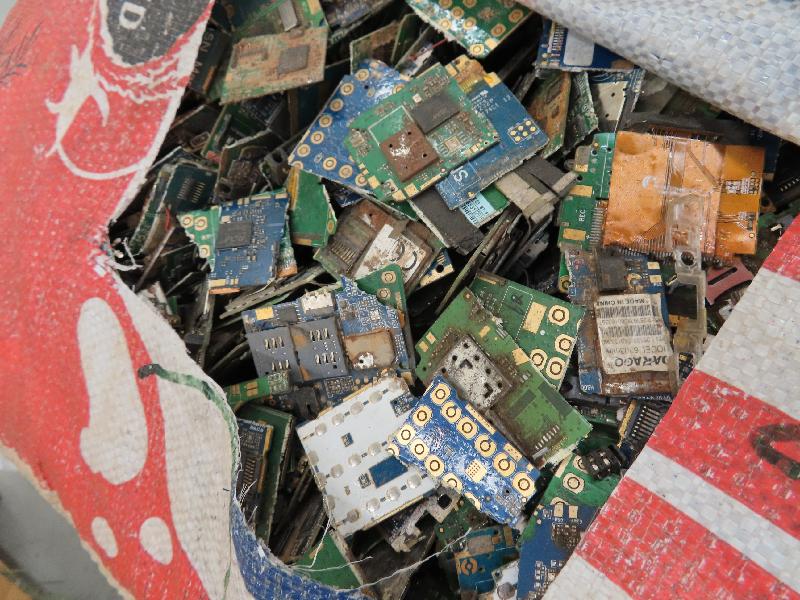
EPD successfully intercepts two cases of import of hazardous electronic waste by air (with photo)

     The Environmental Protection Department (EPD) successfully intercepted two cases of illegal import of hazardous electronic waste from Nigeria at Hong Kong International Airport (HKIA). The two importers involved, namely Success Zone Electronics Limited and Qianhang International Logistics (HK) Co Limited, were convicted at the Eastern Magistrates’ Courts today (August 26) for contravening the Waste Disposal Ordinance (WDO) and fined a total of $25,000.

     A spokesman for the EPD said that in light of the import and export control of electronic waste under the WDO implemented at the end of last year, the department has been closely exchanging intelligence and collaborating with the Customs and Excise Department (C&ED), especially on strengthening interception of hazardous electronic waste entering Hong Kong illegally by air. With the assistance of the C&ED, the EPD intercepted two batches of air cargoes claimed to contain general goods at HKIA in February and March this year. After inspection, they were found to be loaded with hazardous electronic waste, namely waste printed circuit boards, with a total market value of about $200,000. The EPD immediately returned the intercepted hazardous electronic waste to the place of origin and notified the local enforcement authority concerned about the return shipments. The department also initiated prosecutions against the two importers under the WDO.

     The spokesman stressed that waste printed circuit boards are hazardous electronic waste containing various heavy metals and other toxic chemical substances. They are classified as chemical waste and are regulated under the existing laws on chemical waste disposal. The EPD will continue to rigorously combat the illegal import and export of hazardous waste, bring offenders to justice and prevent Hong Kong from becoming a distribution hub for illegally imported and exported waste.

     The spokesman reminded importers of the waste recycling trade not to illegally import (including import into or transshipment through Hong Kong) or export hazardous waste. According to the WDO, it is an offence for anyone to import or export hazardous waste without obtaining a valid permit beforehand. First-time offenders are liable to a maximum fine of $200,000 and six months’ imprisonment. For subsequent offences, offenders are liable to a maximum fine of $500,000 and two years’ imprisonment.

     For more information about the control of chemical waste, please visit the EPD’s website: www.epd.gov.hk/epd/english/environmentinhk/waste/guide_ref/guide_cwc.html.

Photo  
read more

Call for adequate public transport services on first school day

     The Transport Department (TD) today (August 26) said that major public transport operators have been reminded to provide adequate public transport services to cater for transport demand on the first school day (September 2).
 
     “The TD’s Emergency Transport Co-ordination Centre (ETCC) will closely monitor the traffic situation and public transport services on September 2. The department will also maintain close liaison with major public transport operators and relevant government departments. Staff will be deployed at various major locations throughout the territory to observe the traffic conditions and provide on-site information to the ETCC for arranging public transport service enhancement or informing the Police for traffic regulation when necessary,” a department spokesman said.
 
     Students, especially those attending a new school, are reminded to familiarise themselves with the public transport services to schools and allow more travelling time on the first school day. Students living on the outlying islands or attending schools on the outlying islands should check the ferry schedules, the vessel types to be used and journey times of their intended ferry trips beforehand. Students are also reminded to pay attention to road safety when attending school.

     More information may be obtained through the following hotlines and websites of major public transport operators:
 

Operator Hotline Website
MTR Corporation Limited 2881 8888 www.mtr.com.hk
New World First Bus 2136 8888 www.nwstbus.com.hk
Citybus 2873 0818 www.nwstbus.com.hk
Kowloon Motor Bus 2745 4466 www.kmb.hk
Long Win Bus 2261 2791 www.lwb.hk
New Lantao Bus 2984 9848 www.newlantaobus.com
New World First Ferry 2131 8181 www.nwff.com.hk
Hong Kong and Kowloon Ferry 2815 6063 www.hkkf.com.hk
  
     Motorists are advised not to drive to the school areas if possible. Drivers of nanny vans and school buses should not carry excess passengers or leave schoolchildren in vehicles unattended. An escort should be provided on board when serving kindergarten or primary school students. Parents should agree well in advance with schools, operators of nanny vans or school buses on the locations of picking up and dropping off their children.
 
     Members of the public are advised to pay attention to the latest transport and traffic news on radio and television before leaving home. For enquiries, please call the department hotline on 2804 2600 or the 1823 Call Centre. read more