Tag Archives: China

Hong Kong Customs detects drug trafficking case involving incoming passenger at airport (with photos)

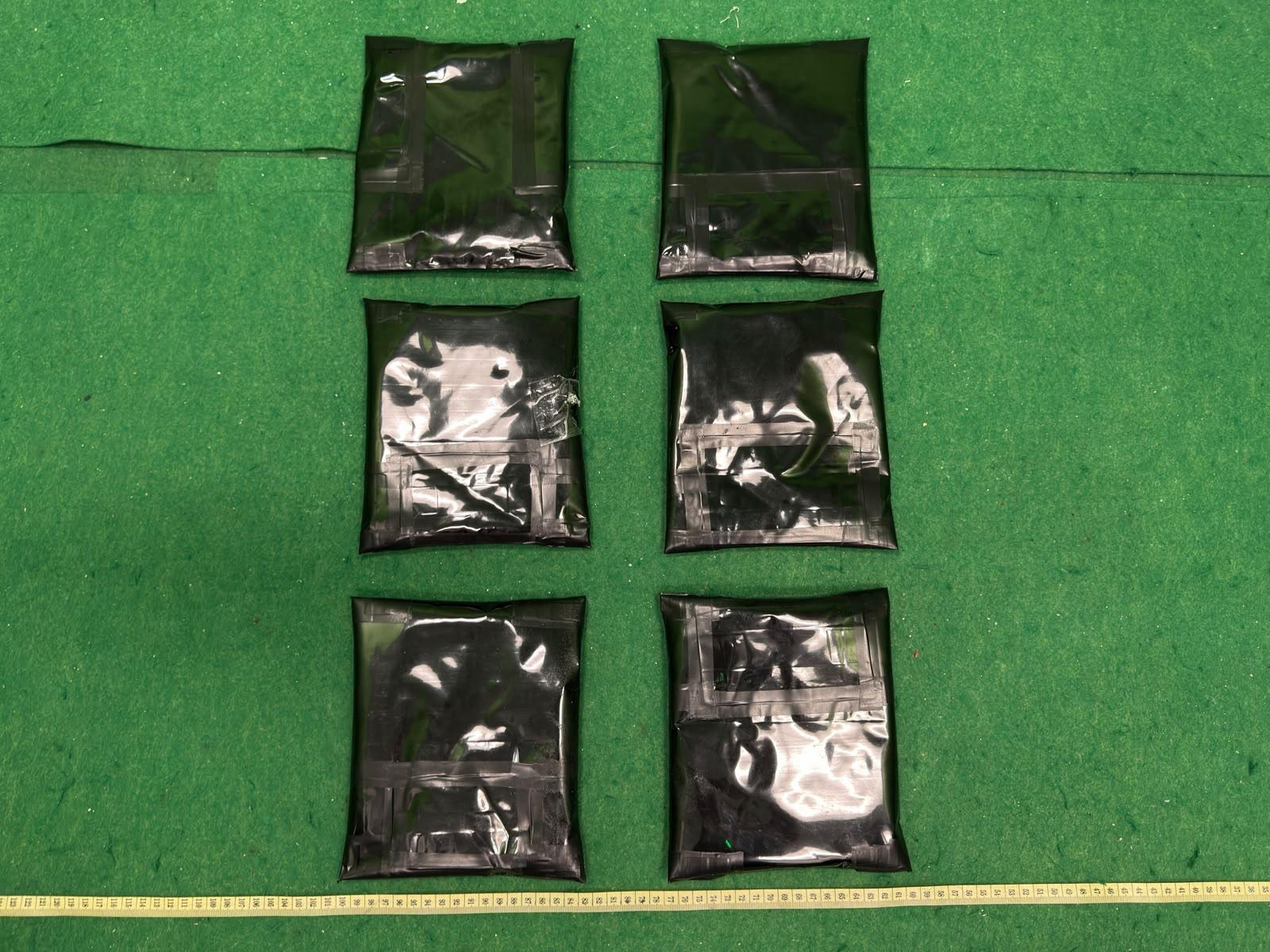
     ​Hong Kong Customs yesterday (November 13) detected one drug trafficking case involving a passenger at Hong Kong International Airport and seized about 3 kilograms of suspected cocaine, with an estimated market value of about $1.8 million. A man was arrested. 
      
     A 57-year-old Indonesian male passenger arrived in Hong Kong from Bogota, Columbia via Sao Paulo, Brazil and Doha, Qatar, yesterday. During customs clearance, Customs officers found the batch of suspected cocaine concealed in the false compartment of his check-in suitcase. The man was subsequently arrested.
      
     Investigation of the case is ongoing.
      
     Customs will continue to step up enforcement against drug trafficking activities through intelligence analysis. The department also reminds members of the public to stay alert and not participate in drug trafficking activities for monetary return. They must not accept hiring or delegation from another party to carry controlled items into and out of Hong Kong. They are also reminded not to carry unknown items for other people.
      
     Customs will continue to apply a risk assessment approach and focus on selecting passengers from high-risk regions for clearance to combat transnational drug trafficking activities.
      
     Under the Dangerous Drugs Ordinance, trafficking in a dangerous drug is a serious offence. The maximum penalty upon conviction is a fine of $5 million and life imprisonment.
      
     Members of the public may report any suspected drug trafficking activities to Customs’ 24-hour hotline 182 8080 or its dedicated crime-reporting email account (crimereport@customs.gov.hk) or online form (eform.cefs.gov.hk/form/ced002).

Photo  Photo  
read more

Organ Donation Day 2026 promotional event held today to sow seeds of selfless love among younger generation (with photos)

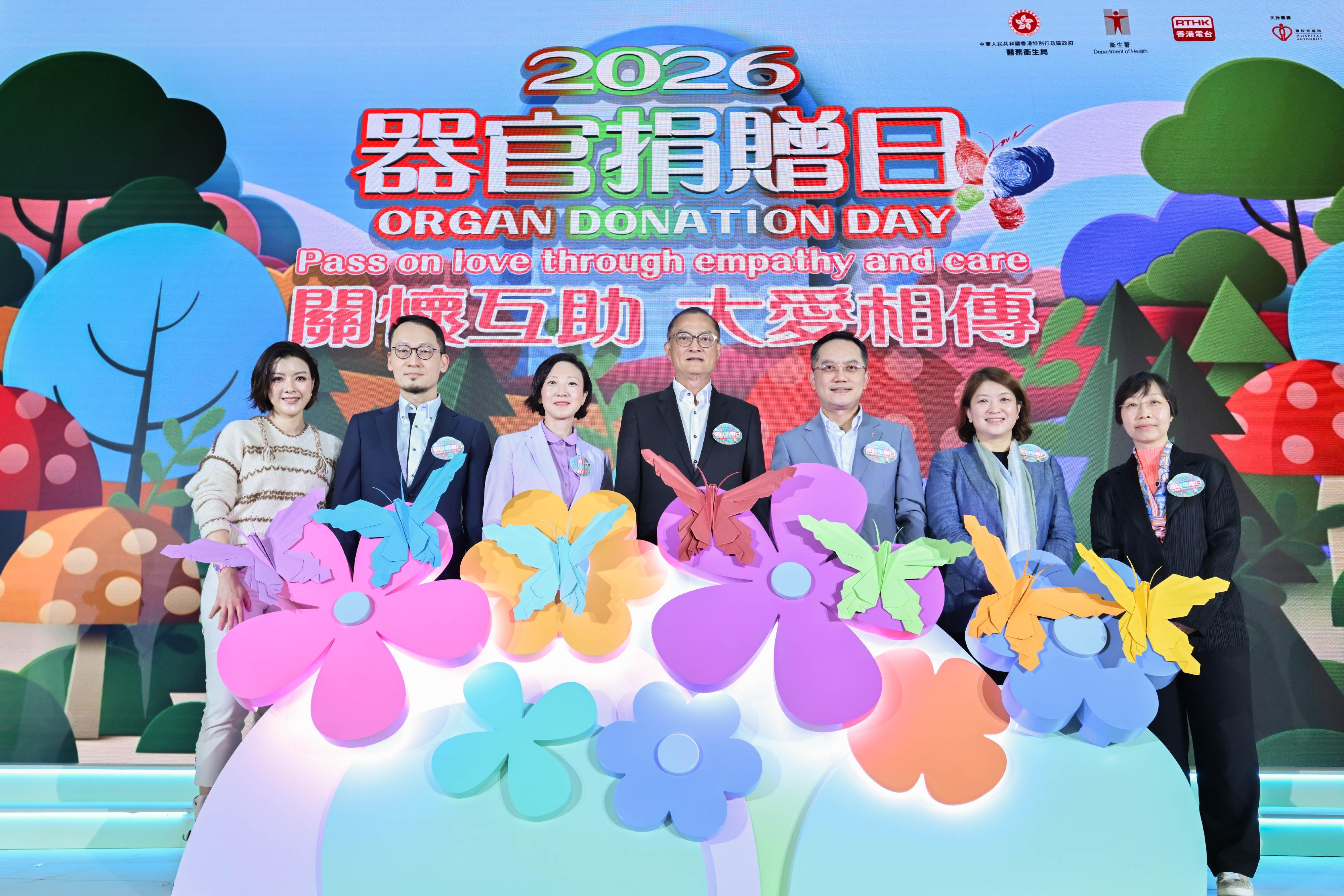
     The Health Bureau, the Department of Health (DH) and Radio Television Hong Kong jointly held a promotional event for Organ Donation Day 2026 today (November 14). Through sharing by organ recipients, performances and storytelling, the event aimed to help the younger generation understand from an early age the significance of organ donation in sustaining lives, and to instil positive values of caring for others and cherishing life. Members of the public were also encouraged to embrace the spirit of selfless giving, support organ donation, register their wish to donate organs and communicate their wish to their families, bringing hope of a new lease of life to patients urgently awaiting organ transplants.

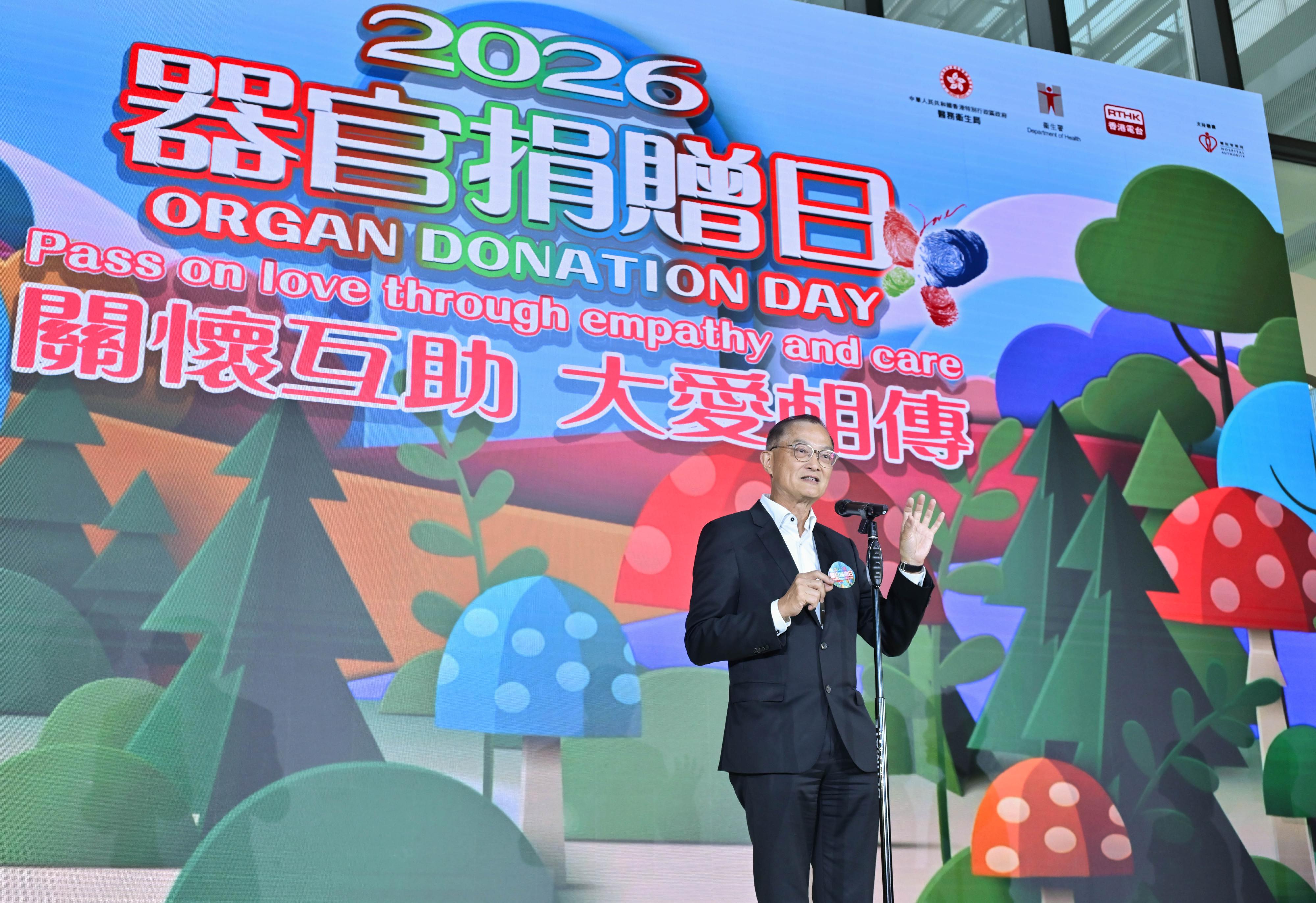
     The Secretary for Health, Professor Lo Chung-mau, officiated at the event. He said, “For patients awaiting an organ transplantation, transplantation is their hope to live on. Every citizen who is willing to donate organs kindles one more spark of hope for them, enabling them to be freed from suffering sooner. To this end, I encourage members of the public who have not yet registered with the Centralised Organ Donation Register (CODR) system to sign up as soon as possible. After registering, please remember to inform your families of your donation wishes and encourage your family members, friends and colleagues to support organ donation. I hope everyone can become an organ donation ambassador, spreading the goodwill of care and mutual help to those around us, so that more people will understand the meaning of organ donation and join the ranks of those who support it.”

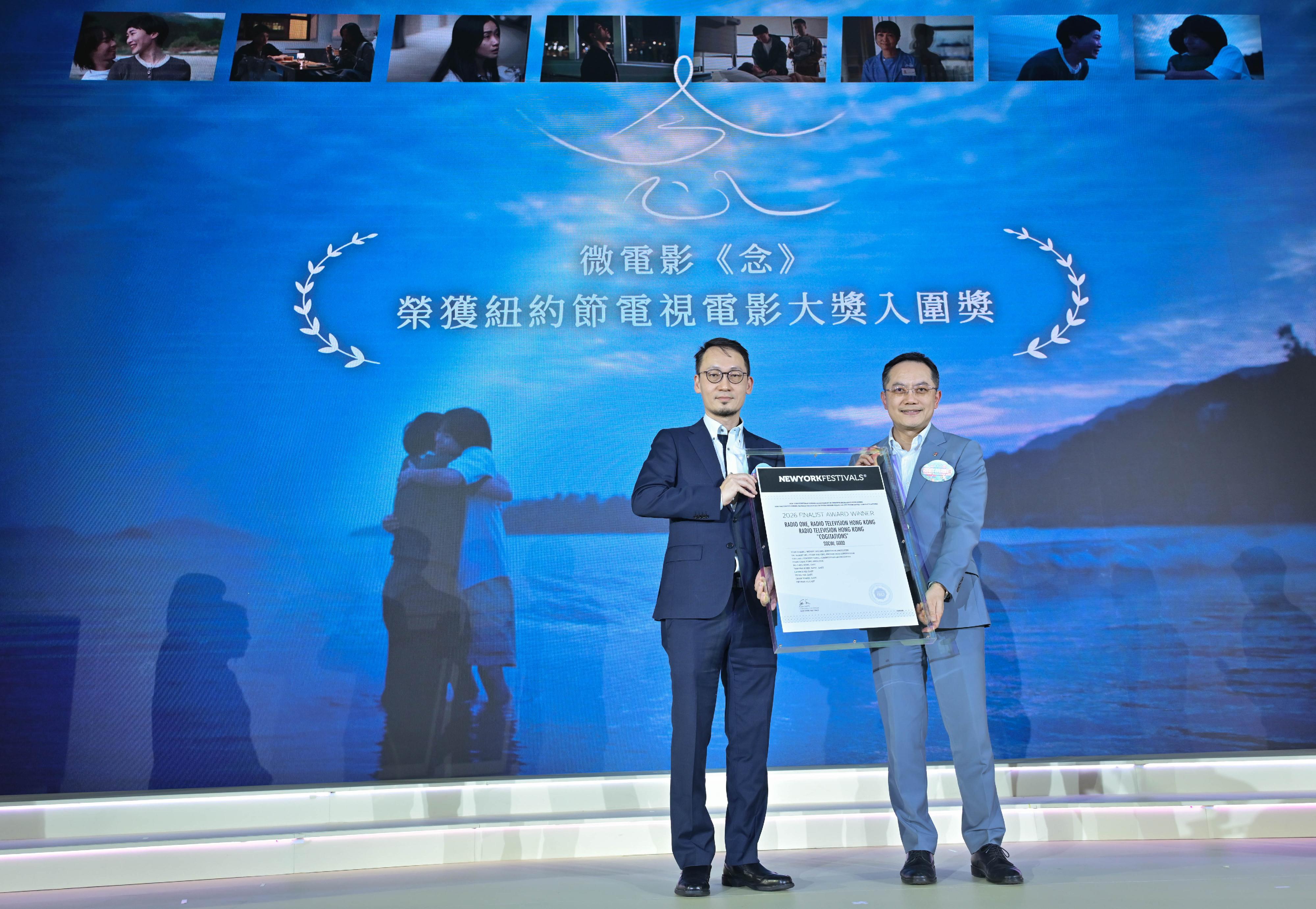
     Other officiating guests included the Under Secretary for Health, Dr Cecilia Fan; the Director of Health, Dr Ronald Lam; the Head of the Health Promotion Branch of the DH, Dr Kellie So; Assistant Director of Broadcasting Mr Jonathan Yip; and the Chief Executive of the Hospital Authority, Dr Libby Lee. Representatives of various organisations actively promoting organ donation, including the Hong Kong Academy of Medicine, the Hong Kong Kidney Foundation, the Hong Kong Medical Association, the Hong Kong Organ Transplant Foundation, the Hong Kong Society of Nephrology, the Hong Kong Society of Transplantation and the Hong Kong, China Transplant Sports Association, also attended to show their support for Organ Donation Day.

     At the event, the KIDS’ Dream Choir sang to convey how organ transplants can transform recipients’ lives and help them regain their health, while paying tribute to organ donors. Two young organ recipients shared their experiences of life after transplantation and how they honoured their donors’ selfless generosity by embracing life with a positive and optimistic attitude. In addition, the Organ Donation Day 2026 ambassador, Aimee Chan, shared a fairy tale with students and parents, sowing the seeds of selfless love and helping positive values take root in their hearts.

     The Government has been committed to working with community partners to promote organ donation and enhance public awareness of and support for it. Since its launch in 2016, the Organ Donation Promotion Charter has attracted the participation of more than 600 companies, organisations and schools. In 2023, the DH also enhanced the CODR system to make it easier for members of the public to register or check their registration status through the “iAM Smart” mobile application, while improving the efficiency of identity verification.

     The DH continues to adopt a multipronged approach to publicity and promotion to enhance public understanding of organ donation and encourage people to register their wish to donate organs. This year, the DH has set up promotional booths on more than 2 000 occasions at locations across all 18 districts, including government or statutory body premises, exhibitions, educational institutions, hospitals and District Health Centres. It has also organised more than 20 health talks and train-the-trainer workshops. The number of registrations in the CODR has also risen, reaching a record high of more than 420 000.

     Nevertheless, more than 2 000 patients in Hong Kong are still waiting for suitable organs for transplantation. The DH has launched a new round of its organ donation promotion campaign. From November 12 to January 20 next year, the organ donation promotion vehicle will visit various locations across the territory, enabling members of the public to register their wish to donate organs on the spot. Details of the vehicle’s parking locations are available on the organ donation thematic webpage (www.organdonation.gov.hk/en/promotional_activities.html).

     The DH appeals to members of the public to keep in mind the “3Ss” motto of organ donation, namely to register their wish in the CODR (Sign up), inform their family members (Speak out), and advocate organ donation among relatives and friends (Spread out). Members of the public may also register on the CODR website (www.codr.gov.hk), or submit registration forms by post or fax to the CODR Office. Looking ahead, the DH will continue to work with relevant stakeholders to regularly review, co-ordinate and take forward the implementation of organ donation publicity and education initiatives.

     For more information on organ donation, please visit the thematic website (www.organdonation.gov.hk), the “Organ Donation in Hong Kong” Facebook page (www.facebook.com/organdonationhk) or Instagram page (www.instagram.com/organdonationhk).

Photo  Photo  Photo  Photo  Photo  Photo  
read more

TD alerts public to fraudulent vehicle airbag safety recall messages

  The Transport Department (TD) today (November 14) alerted the public to fraudulent vehicle airbag safety recall messages purported to be from the TD. Members of the public should not fall prey to fraudulent government messages from unofficial means, nor provide any personal information. The case will be referred to the Police for follow-up.

  A spokesman for the TD clarified that the department has no connection with the fraudulent letters or messages making unauthorised use of the department’s name. At present, the TD only sets out safety recall information provided by authorised dealers of registered vehicle manufacturers on its website (www.td.gov.hk/en/public_services/vehicle_typeapp_examination/safety_recall/index.html). The TD does not issue letters to inform individual vehicle owners of safety recalls for their vehicles. The public should verify information to avoid falling into scam traps. For enquiries, they should contact the relevant authorised agents or dealers directly. 

  Members of the public should stay alert when receiving messages from unknown sources, and must not log in to suspicious websites or provide personal information. Anyone who has provided personal information as such should contact the Police. For enquiries, please call the TD’s hotline at 2804 2600 or email tdenq@td.gov.hk.  read more

In support of World Diabetes Day, public is advised to have regular screening and maintain balanced diet to reduce risks promptly

     The International Diabetes Federation and the World Health Organization have designated November 14 each year as World Diabetes Day. Under this year’s theme “Early Action on Diabetes”, members of the public are urged to take collective action to control diabetes early.
 
     The Centre for Health Protection (CHP) of the Department of Health (DH) today (November 14) reminded the public that diabetes is one of the leading causes of morbidity and mortality in Hong Kong. According to the Population Health Survey 2020-22, 8.5 per cent of non-institutionalised persons aged 15 to 84 had diabetes or raised blood glucose. Among them, the vast majority had Type 2 diabetes (95 per cent). Risk factors for developing Type 2 diabetes include being overweight and obesity, hypertension, dyslipidaemia, a family history of diabetes, or a history of gestational diabetes. Therefore, the best ways to reduce the risk of developing diabetes and associated complications are adopting a healthy lifestyle and undergoing regular screening, which is in line with the Government’s “early prevention, early detection and early treatment” initiative.
 
     “Diabetes is a common chronic condition characterised by high levels of glucose in the blood. Patients usually do not have obvious symptoms in the early stages. As the disease progresses, diabetes may present with symptoms or complications, including excessive thirst, frequent urination, increased appetite, weight loss, lethargy, poor wound healing and infections. Poor control may result in serious complications, such as heart disease, stroke, kidney failure and blindness. People with diabetes are two to four times more likely to develop cardiovascular and cerebrovascular diseases than those without diabetes. Globally, the number of people with diabetes continues to rise, making it one of the fastest-growing health challenges. The CHP’s survey found that many people are unaware they have diabetes, thereby missing the optimal time for controlling the disease and receiving treatment,” said the Controller of the CHP, Dr Edwin Tsui.
 
     District Health Centres and District Health Centre Expresses (collectively referred to as DHCs), as the hubs for co-ordinating and supporting primary healthcare services, provide screening and management services for chronic diseases (including diabetes mellitus), family doctor pairing, health promotion, health risk assessment and community rehabilitation. The Commissioner for Primary Healthcare, Dr Pang Fei-chau, said, “Hong Kong residents aged 45 or above with no known medical history of diabetes mellitus or hypertension can enrol in the DHC’s Primary Healthcare Co-care Network and receive comprehensive cardiovascular disease risk factor screening and management (including high blood pressure, high blood sugar and high cholesterol) in the private healthcare sector on a co-payment basis, through pairing with a family doctor, to delay or prevent diabetes and its complications. A preliminary analysis by a local university research team indicated an overall improvement in Chronic Disease Co-care Pilot Scheme participants’ health conditions. After 12 months in the programme, the average glycated haemoglobin level of patients with diabetes mellitus decreased from 7.8 per cent to 6.7 per cent.”
 
     Diabetes is mainly classified into Type 1 and Type 2. Type 1 diabetes is caused by the dysfunction of insulin-producing cells, which may be related to hereditary factors, autoimmune disorders or some environmental factors. Type 2 diabetes is caused by the body’s resistance to insulin. Apart from hereditary factors, the main factors are related to an unhealthy lifestyle (including poor lifestyle habits, unhealthy diet, lack of physical activity or obesity). To prevent Type 2 diabetes and its complications, the key is to maintain a healthy body weight and a balanced diet; control sugar and saturated fat intake; refrain from alcohol consumption and smoking; and stay physically active. Adults should engage in at least 150 to 300 minutes of moderate-intensity aerobic physical activity, or 75 to 150 minutes of vigorous-intensity aerobic physical activity (or an equivalent combination), per week. A study also found that for every 1 unit (kilogram per square metre) increase in body mass index among adults, the risk of developing Type 2 diabetes rises by 23 per cent.
 
     In March 2026, the Government launched the Action Plan on Weight Management (Action Plan) to raise public awareness regarding personal weight management through multipronged collaboration and participation across the community. Furthermore, the 10 000 Steps a Day Walking Challenge has been regularised. Gamifying physical activity, the scheme encourages citizens to make walking an enjoyable habit. Combined with a balanced diet, this approach aims to reduce the risk of diabetes and other chronic diseases and maintain good health. The Action Plan is steered by an interdepartmental Weight Management Working Group. Co-ordinating policies in healthcare, education, recreation and culture, urban planning, and other areas, the Action Plan will implement five key directions and 15 objectives systematically over three years. With a strategy that spans the entire life cycle, the Action Plan aims to strengthen the role of primary healthcare as the “gatekeeper”, promoting collaboration between Chinese and Western medicine and integrating health data through the eHealth platform to comprehensively support citizens in managing and safeguarding their health.
 
     To promote healthy diet, the DH has launched a number of measures, including the StartSmart@school.hk Campaign for kindergartens and child care centres, the EatSmart@school.hk Campaign for schools, and the EatSmart Restaurant Star+ Campaign, which encourages restaurants to offer healthier dishes.
 
     For details, please visit the Action Plan on Weight Management, 10 000 Steps a Day Walking Challenge and Change4Health web pages of the DH, as well as the Primary Healthcare Commission‘s website. read more