Tag Archives: China

image_pdfimage_print

LCQ 1: IPCC’s work

     Following is a question by the Hon Hui Chi-fung and a reply by the Secretary for Security, Mr John Lee, in the Legislative Council today (November 20) :
      
Question:
 
     The movement of opposition to the proposed legislative amendments (the movement) has not subsided since its eruption in June this year. It has been reported that as revealed by the findings of a number of public opinion surveys, more than 70 per cent of members of the public support the appointment of a commission of inquiry by the Government under the Commissions of Inquiry Ordinance to inquire into issues relating to the movement.  However, the Government has all along merely indicated that the matters relating to the various large-scale public events and the operations conducted by the Police have been referred to the Independent Police Complaints Council (IPCC) for examination, and that IPCC would submit a report together with improvement recommendations.  As all members of IPCC are appointed by the Chief Executive, some members of the public consider that IPCC has a pro-government stance and they have little confidence in the independence of IPCC’s work.  In this connection, will the Government inform this Council:
      
(1)  among the complaints received by the Complaints Against Police Office in each of the past three years, of the number and percentage of substantiated cases, and among the complaints involving accusations of assault, the number and percentage of substantiated cases;
 
(2)  given that IPCC is not empowered to summon witnesses and carry out investigations, how the Government ensures that the report to be published by IPCC in future will provide a comprehensive and an objective analysis of the causes of the movement, and that IPCC will reach an objective and an impartial conclusion about whether or not police officers have used force excessively; and
 
(3)  in respect of conducting inquiries into issues relating to the movement, whether it has assessed the merits and demerits for the relevant work to be taken up by an independent commission of inquiry or by IPCC, whose members’ independence has been called into question; if so, of the outcome?

Reply:
 
President,
 
     Under the Independent Police Complaints Council Ordinance (IPCC Ordinance) (Cap. 604), the statutory functions of the Independent Police Complaints Council (IPCC) include observing, monitoring and reviewing the handling and investigation of reportable complaints by the Complaints Against Police Office (CAPO) and making recommendations on the handling and investigation of complaints. IPCC may also identify any fault or deficiency in any practice or procedure adopted by the Police that has led to or might lead to reportable complaints, and make recommendations to the Police and/or the Chief Executive (CE).  The mechanism of complaint against the Police is a well-established two-tier statutory mechanism, with the first tier being CAPO of the Police which receives and investigates complaints; and the second tier being IPCC which is a statutory body.  The two-tier complaint mechanism operates effectively under IPCC Ordinance, which provides a clear legal basis to ensure that complaints against the Police will be handled in a fair and just manner.
      
     Under the two-tier mechanism, when CAPO, the operation of which is independent of other units of the Police, has completed the investigation of a reportable complaint, it will submit a detailed investigation report for IPCC’s scrutiny.  If IPCC is of the view that there is deficiency in CAPO’s handling and investigation, it may request CAPO to make clarification or further investigation.  Meanwhile, IPCC may convey its views and recommendations to the Commissioner of Police and the CE in respect of any complaint case.
      
     IPCC has been monitoring and scrutinising CAPO’s work in handling and investigating complaints comprehensively along the principles of fairness, justice and impartiality.  IPCC is composed of non-official members from various sectors of the community, including Legislative Council members. With their rich experience in the community and public service, IPCC members directly monitor the Police’s work in complaint investigation in an in-depth and objective manner, and are supported by an independent full-time secretariat.  Doubts about the independence of IPCC are unfair to its members and observers who have been profoundly dedicated to monitoring the Police’s work in complaint investigation.       
      
     Since June 9 this year, more than 800 protests, processions and public assemblies have been staged in Hong Kong.  In response to public concerns regarding law enforcement actions by the Police in major public order events (POEs), IPCC has, pursuant to the powers conferred by IPCC Ordinance, proactively initiated a study on the major POEs in Hong Kong since June 9 and the corresponding actions taken by the Police, and established a Special Task Force and an International Expert Panel to this end.  IPCC will announce the progress of the study by phases, and has stated that it would endeavour to submit the preliminary report of the study to the CE and publish the relevant details within the original timeframe (i.e. early 2020).  The Government will closely monitor and carefully study IPCC’s reports and its recommendations in order to decide on the follow-up action.
      
     Meanwhile, the CE announced on September 4 this year four actions to help Hong Kong move forward.  One of the actions is to invite community leaders, professionals and academics to independently examine and review the society’s deep-seated problems and to advise the Government on the solutions.  The independent review panel will examine the underlying causes of the social incidents in the past few months so as to stocktake and study the different deep-rooted society conflicts, and recommend solutions.  The Government is undertaking the preparatory work and will start work on the independent review panel as soon as practicable after the situation has stabilised somewhat.
      
     My reply to various parts of the Member’s question is as follows:
 
(1)  In 2015/16, 2016/17 and 2017/18, CAPO handled 3,360, 2,807 and 2,872 allegations respectively, of which 81, 49 and 68 allegations were “substantiated”, accounting for 2.4 per cent, 1.7 per cent and 2.4 per cent of the total number of allegations received during the years concerned.  Three hundred and forty-six, 245 and 181 allegations involved “assault” respectively, of which one, zero and one allegations were “substantiated”, accounting for 0.3 per cent, 0 per cent and 0.6 per cent of the total number of allegations involving “assault”.
 
(2) and (3) IPCC operates independently and discharges its statutory functions under IPCC Ordinance.  Regarding the study on recent major POEs, IPCC has set up multiple channels, including those through e-mail, a hotline, mail and an electronic platform, for stakeholders (including the media and members of the public) to provide information relevant to recent major POEs, so as to help IPCC examine and clarify the events concerned.  The Special Task Force established by IPCC has held a number of meetings with the Police, which have all along been providing IPCC with information regarding police operations in the POEs.  IPCC has also invited international experts to provide international experience and advice with a view to enriching its study from another angle.
      
     According to its statement, as at October 4 this year, IPCC had received more than 11,800 submissions containing more than 41,400 items of information.  As at November 18 this year, 372 “Reportable Complaints” and 762 “Notifiable Complaints” stemming from major POEs had been received. The investigation work for each complaint is closely monitored by IPCC and its 120 Observers.
      
     IPCC’s study and monitoring work as aforementioned are arduous and complex, and the relevant events are still evolving.  We need to give IPCC the necessary time and room so that it can focus on completing its work. The Government will cooperate fully with IPCC and ensure that the IPCC Secretariat is provided with adequate resources to carry out its work. The report to be submitted by IPCC to the CE will be made available to the public for examination in detail.
      
     We understand the community’s concerns about the recent major POEs and the proposals put forward for reviewing the underlying causes of the social incidents in the past few months, identifying deficiencies and deep-rooted social conflicts, etc., such as establishing committees of different natures (including the one referred to in part (3) of the question), or a “Riots Communities and Victims Panel” modelling on the experience of the United Kingdom. I should stress that the purpose, nature and scope of the current study of IPCC are different from and cannot be directly compared to those of the different organisations mentioned above. IPCC has the statutory function to identify any fault or deficiency in any practice or procedure of the Police that has led to or might lead to reportable complaints, and make recommendations. It also has sufficient experience to focus on the handling of complaints against the Police.  We are of the view that IPCC should be allowed to perform its functions under the established mechanism, and to report on and publicise its study. The Government will accordingly consider the relevant findings and follow up as appropriate.
      
     Thank you, Mr President. read more
Government to provide one-off extra allowance to recipients of Working Family Allowance and Individual-based Work Incentive Transport Subsidy

     The Government announced today (November 20) that, after the funding approval by the Legislative Council Finance Committee (FC), the Working Family Allowance Office (WFAO) of the Working Family and Student Financial Assistance Agency will disburse a one-off extra allowance to recipients of Working Family Allowance (WFA) and Individual-based Work Incentive Transport Subsidy (I-WITS). This is part of the series of measures to support enterprises, safeguard jobs and relieve people’s burden announced by the Financial Secretary on August 15.

     Recipients eligible for the extra allowance are those whose WFA/I-WITS applications were made in the Applicable Period and eventually approved. The Applicable Period counts from the first day of the month in which the FC approves the funding proposal to the date when funding approval is sought, and the six calendar months preceding that month. For applications submitted by post, the date of the post-stamp will be taken as the application date.

     New applicants or previous recipients of WFA/I-WITS who have yet to submit applications in the Applicable Period should submit applications before the Applicable Period expires (i.e. the date when the FC approves the relevant funding proposal) in order to be eligible for the extra allowance.

     The extra allowance is equal to the average monthly amount of approved months payable to the corresponding recipients in their most recently submitted (and eventually approved) applications in the Applicable Period. The amount varies from case to case.

     In addition, if a WFA household is receiving Comprehensive Social Security Assistance (CSSA) on the date when the FC’s funding approval is sought; or an applicant and household members whose working hours have been aggregated for WFA applications submitted an I-WITS application during the Applicable Period (and is eventually approved), that household is only eligible for one single extra allowance, the amount of which is the highest the household is eligible to receive under the WFA, CSSA or I-WITS Scheme. Non-WFA applicants and household members whose working hours have not been aggregated for WFA applications are not subject to the above arrangement.

     For enquiries, applicants may call the WFAO 24-hour hotline (2558 3000) or visit the WFAO’s enquiry counters at 9/F, 181 Hoi Bun Road, Kwun Tong, or visit the website of the WFAO (www.wfsfaa.gov.hk/wfao). read more

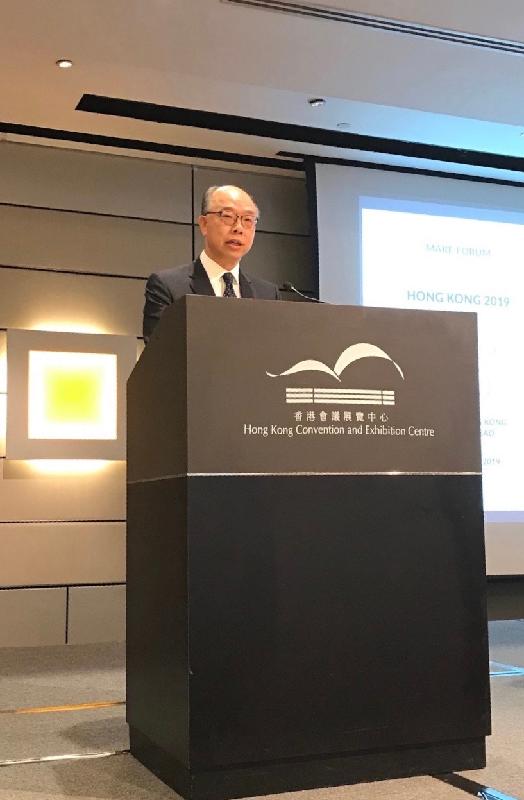
Speech by STH at 3rd Mare Forum Hong Kong 2019 (English only) (with photo)

     Following is the speech by the Secretary for Transport and Housing, Mr Frank Chan Fan, at the 3rd Mare Forum Hong Kong 2019 today (November 20):
      
Georgios (Executive Director of Mare Forum International, Mr Georgios Kostoulas), Arthur (Moderator of the Forum, Mr Arthur Bowring), distinguished guests, ladies and gentlemen,
      
     It is my great pleasure to join the Mare Forum Hong Kong again. It is my third time here. At this very difficult time, please accept my warmest welcome to you all, particularly to those who have travelled all the way to Hong Kong. I am also delighted to welcome back the renowned Mare Forum for the third time since 2017. With a congregation of policy makers and chief executives, the Forum is where great minds meet and shed light on the way forward.
      
     Since late 2018, international trade has been sluggish amid ongoing geopolitical and trade tensions. Last month, the International Monetary Fund forecasted a global economic growth of three per cent in 2019. This is the fourth downward adjustment since January and the lowest since the last decade. While we keep fingers crossed for a positive outcome from the trade negotiation between the United States and China, the outlook remains precarious.
      
     In the face of the rather challenging global environment, we need to find a way out. The world now looks to Asia as the key driver of growth. With the world’s second largest economy, China, together with the fast-growing Southeast Asian countries, the continent alone contributes some 40 per cent of the global merchandise trade value. The estimated growth rate of 5.9 per cent in 2019 for Asia highlights the potential and prospect.
      
     Closer to home, immense opportunities arise from the Guangdong-Hong Kong-Macao Greater Bay Area development. The Greater Bay Area, with a population of 70 million and an aggregate GDP of US$1.5 trillion, has much to offer. Notably, three of the busiest container ports in the world are located within the Greater Bay Area – Shenzhen, Guangzhou and Hong Kong. In 2018, their combined throughput was 67 million TEUs. Under a coordinated and synergised development strategy, the overall competitiveness of the Greater Bay Area is set to rise, and this applies to the maritime and shipping industry.
      
     Hong Kong is a small city, with some 7.4 million people, or less than 0.1 per cent of the global population. But, believe it or not, this tiny little city was the world’s eighth largest trading economy of goods and services in 2018.
      
     Hong Kong’s success doesn’t come by coincidence. Because of a limited domestic market, we have been reaching out to the world all the time. With our strategic location in the heart of Asia and at the doorstep of Mainland China, shipping activities began to grow. Our international trade set sail in the 1960s when the first scheduled container ship berthed at Hong Kong. In 2018, our Kwai Tsing Container Terminals, together with our efficient land transport infrastructures, managed to move some 280 million tonnes of cargoes. Our voyage to economic prominence would not be possible without the invaluable contribution of the maritime and shipping industry.
      
     On the maritime front, over 800 shipping-related companies are now operating in Hong Kong. They provide a wide spectrum of quality maritime services ranging from ship management, ship broking and chartering to ship finance, marine insurance, and maritime arbitration. Recognising Hong Kong’s strengths in talents and services, we are tasked to provide maritime services to the shipping enterprises in the Mainland and Macao. There are ample opportunities for every one of us here today.
      
     I should have stopped here if everything goes fine. But reality is often unforgiving. As an externally oriented economy, we are not immune from the impact of this global economic slowdown. Growth in the first half of 2019 was a marginal 0.5 per cent. For the first nine months of 2019, the Hong Kong Port handled 6.5 per cent less throughput compared with the same period last year. Amidst the external headwinds and domestic social unrest, we have to brace ourselves for the eventuality of an overall negative growth for 2019.
      
      “A smooth sea never made a skilled sailor.” Indeed, Hong Kong has overcome many testing moments, and risen once and again, stronger and more resilient.
      
     In June, Hong Kong was named the world’s second-most competitive economy in the world, according to the World Competitiveness Yearbook. In September, the Global Financial Centres Index once again ranked Hong Kong the third leading financial centre worldwide after New York and London. 
      
     Underlying these international accolades is our belief in free trade and economic freedom. Both the Washington-based Heritage Foundation and the Fraser Institute of Canada recognise that. And they repeatedly named Hong Kong the freest economy worldwide.
      
     We are committed to providing a level playing field for all and remain wide open for businesses. In March, we sealed the Free Trade Agreement (FTA) with Australia. Then, in June, the FTA and related investment agreement we signed with ASEAN came into effect. Through reduced tariffs, enhanced market access, legal certainty and investment protection, we are looking forward to much closer economic collaboration with economies in the region.
      
     As time and tide wait for no man, the maritime industry thus cannot stand still. Innovations and creative solutions are continuously required for not just to stay ahead of the game, but more importantly, as others have just mentioned, to comply with the various international requirements for sustainability and breakthroughs.
      
     Take for example, the International Maritime Organization’s 2020 sulphur cap requirement. With the due date just round the corner, most economies have taken steps to ensure compliance, and we have done that a year ago. The majority have opted to use compliant fuel, the others opted for scrubbers and LNG vessels.
      
     To help combat climate change, IMO targets an average of 40 per cent reduction of carbon dioxide emissions by 2030 and a 50 per cent cut in greenhouse gas emissions by 2050.
      
     To achieve this bold 2050 target, industry experts anticipate that zero emission vessels have to set sail by 2030. This leaves the trade with a ticking clock to design and build greener vessels. It is encouraging that a “Getting to Zero Coalition” has been formed recently by more than 80 shipping companies, commodity traders and banks. This cross-sector partnership manifests the trade’s commitment and determination to identify the best technology, finance and business practices for the 2050 target.
      
     The need for eco-friendly vessels also generates demand for top quality ship finance and ship leasing. As one of the top international financial centres in Asia, Hong Kong is best positioned to serve such needs. We house seven of the world’s top 10 ship finance bookrunners. Over the past decade, our shipping loans and advances have surged by an average of more than nine per cent annually. To better support shipowners and ship-finance companies, we are going to provide tax concessions for ship leasing businesses in Hong Kong.
      
     Apart from using greener vessels, the trade has to find ways to reduce fuel consumption for both cost-efficiency and environmental protection. For instance, with the technological advancement in weather routing and ocean current analytics, many captains are now better equipped to decide the best possible routes from one place to another. Ships are thus able to, on one hand, avoid the rough weather areas, and on the other hand, make use of ocean currents to sail faster with less fuel.
      
     Here at home, shipping-tech businesses are blooming. A local start-up designs and manufactures underwater drone robots for full inspection and cleaning of the hull. The new technology offers a more efficient, cost effective and safer hull maintenance work by robots rather than by divers.
      
     Of course, many more game-changing technologies are out there; autonomous shipping, blockchain and digitalisation just to name a few. While these technologies can help meet regulator and customer expectations better and faster, they also bring disruption to existing business models and operations. Therefore, we need to build consensus across the globe to tackle the challenges together, and that’s why we are here today.
      
     The future starts today, not tomorrow. We have to invest now and invest “smart” for future. To Government, we cannot think of a better investment than on human capital.
      
     Attracting young people to join the maritime industry is by no way easy. As I talked with many delegates when I visited overseas partners in the past few years, we all come to the same conclusion that we need to work harder to attract the younger generation to join the maritime and shipping industry. If you ask university freshmen whether they have heard of Apple or Google, the answer is very simple, as you could have imagined. But if you ask them about Maersk or OOCL or HIT, you would probably meet with blank faces. The maritime and shipping industry has been contributing a lot to the global economy.
      
     We spare no effort in the nurturing of maritime talents. Earlier in May, the Government injected HK$200 million into the Maritime and Aviation Training Fund. The injection enhances on-going initiatives and supports new schemes for students and industry practitioners. The Fund is also conducive to raising awareness of the maritime and shipping industries so that young and talented people are attracted to join the industry.
      
     Ongoing publicity and promotion is another form of “smart” investment. Think about the Hong Kong Maritime Week. To you, it is a golden opportunity to connect, look for potential partners and gain insights on the latest developments. It also enables us to showcase our strengths and potentials, and foster collaboration with partners, both local and overseas.
      
     Ever since its establishment, the Hong Kong Maritime and Port Board, together with the Government have organised many visits to overseas and Mainland maritime cities. The concerted effort between the industry and government has borne many fruits. The decision of the International Chamber of Shipping to establish its first-ever Asian Liaison office in Hong Kong is a vivid demonstration.
      
     Ladies and gentlemen, I have just shared with you my humble observations and thoughts. While 2019 is less gleaming than we would like it to be, we invite you all to set sail together. In closing, I would like to extend my heartfelt appreciation to every one of you for your participation. Amid social unrest and personal anxiety, your presence means a lot to us. May I wish you all an enjoyable and rewarding forum. Thank you.

Photo  
read more

LCQ22: Extension of the service of civil servants

     Following is a question by the Hon Ho Kai-ming and a written reply by the Secretary for the Civil Service, Mr Joshua Law, in the Legislative Council today (November 20):

Question:

     The Government launched in July last year an initiative of extending the service of civil servants. Those civil servants who joined the Government between June 1, 2000 and May 31, 2015 are given two years (i.e. from September 17, 2018 to September 16, 2020) to decide whether or not to apply for raising their retirement age. In this connection, will the Government inform this Council:

(1) of the respective numbers of applications for raising retirement age which have been (i) received, (ii) approved, and (iii) rejected so far, as well as (iv) the number of such applications being processed, together with a breakdown by government department and applicant’s rank (i.e. lower, middle and senior ranks); if some applications were rejected, of the reasons for that; and

(2) whether it will consider afresh extending the aforesaid initiative to cover those serving civil servants who joined the Government before June 1, 2000; if so, of the details; if not, the reasons for that?

Reply:

President,

     To tie in with the goal of expanding the labour force and to respond to the aspirations of our serving colleagues in the civil service, the Government launched in July 2018 the option for serving civil servants who joined the Government between June 1, 2000 and May 31, 2015 to choose to retire at the age of 65 (for civilian grades) or 60 (for disciplined services grades, regardless of ranks). Eligible civil servants can decide whether or not to take the Option within the two-year option period commencing on September 17, 2018.

     The reply to various parts of the question is as follows:

(1) As at September 16, 2019, about 24 000 (or 43 per cent) out of some 56 000 eligible civil servants had taken the Option. Breakdowns of the statistics by bureaux/departments/offices and salary groups are set out at Annexes A and B respectively. It is noteworthy that the statistics only reflect the position as at one year after the commencement of the option period. Since there is still one year’s time before the end of the two-year option period (i.e. September 16, 2020), we believe that many colleagues will make the decision later. The Option taken by eligible civil servants will normally take effect within six months after the option period ends. So far, no eligible civil servant who has opted in has been rejected. Besides, for bureaux/departments which mainly comprise officers belonging to general grades, posting of the officers would cause changes to the statistics (and its components) of the bureaux/departments concerned.

(2) The Pensions Ordinance (Cap 89) and Pension Benefits Ordinance (Cap 99) have stipulated the retirement age applicable to civil servants who were appointed before June 1, 2000 and are serving on pensionable terms (hereafter referred to as “Pre-2000 Officers”). The majority of the Pre-2000 Officers will reach their currently applicable retirement age in the next decade or so, but the overall labour force in Hong Kong is expected to start declining in 2022 and the labour market will only become relatively critical after 2030. Therefore, from the population policy perspective, it is unjustifiable to also allow these officers to choose to retire later. In particular, quite a number of the Pre-2000 Officers will retire soon. If they are allowed to choose to extend their retirement age, departments may not have sufficient time to adjust their manpower planning accordingly, and to address management problems that might arise immediately, such as promotion blockage and hindrance to healthy turnover, and mismatch of human resources. All these will affect the planning and deployment of manpower resources in departments, and such situations should be avoided.

     In the light of the above, from the civil service management’s perspective, the Government has to handle the issue of extending the service of the Pre-2000 Officers in a flexible manner. Although the Pre-2000 Officers cannot choose to retire later at present, departments may, taking into account factors such as their overall manpower situation, genuine and operational needs, and succession arrangement, flexibly employ various initiatives for extending the service of civil servants, including the Post-retirement Service Contract Scheme, final extension of service and the adjusted further employment mechanism, to retain experienced civil servants reaching their retirement age and meet the manpower demand and operational needs. Such measures also provide different avenues for civil servants to serve beyond their retirement age. read more

LCQ14: Measures to alleviate the impacts of African Swine Fever

     Following is a question by the Hon Steven Ho and a written reply by the Secretary for Food and Health, Professor Sophia Chan, in the Legislative Council today (November 20):
 
Question:
 
     African Swine Fever (ASF) broke out on the Mainland in August last year and quickly swept through most parts of the Mainland. Fortunately, it has not spread to the pig farms in Hong Kong. Due to the epidemic, quite a number of registered pig farms on the Mainland for supply to Hong Kong (registered pig farms) have ceased to supply live pigs to Hong Kong, resulting in a substantial decrease in the daily number of live pigs imported from the Mainland from 4 000 heads in the past to below 1 700 heads at present. The wholesale and retail prices of pork have consequently surged and, as a result, the relevant trades and members of the public have been greatly affected. In this connection, will the Government inform this Council:
 
(1) whether it knows the changes in the national monthly figures on (i) the pig rearing capacity, (ii) the quantity of feed consumed and (iii) the number of pig farms, since August last year; if such information is not available, whether it will expeditiously seek such information from the relevant Mainland authorities;
 
(2) of (i) the number of Mainland-registered pig farms, the change in that number and the up-to-date list of the farms, in each quarter, and (ii) the monthly average retail price of local fresh pork, since August last year; if such information is not available, whether it will compile the statistics expeditiously;
 
(3) given that the relief measures introduced recently by the Government (including reducing rental for stalls in public markets and waiving the licence fees for fresh provision shops, slaughterhouses and pig farms) are only short-term in nature, whether the Government will make reference to the practice of the Central Government and introduce more proactive measures to promote live pig production and safeguard market supply, including (i) providing support in the form of subsidies and subsidised interest for loans, (ii) exploring the provision of additional sites for pig rearing and offering loans to pig farm licensees in order to increase the pig rearing capacity, and (iii) providing the live pig-related trades with targeted subsidies for stabilising live pig production, so as to alleviate the problem of rising pig prices and promote the development of the local pig rearing industry in the long run;
 
(4) as the authorities have indicated that they will explore using the unused licensed rearing capacity of local pig farms (about 11 000 heads) to increase live pig rearing capacity, but there are only a few pig farms which have unused capacity and the licensees concerned may not be willing to increase their rearing capacity, whether the Government will consider increasing the licensed rearing capacity prescribed under various licences, so as to increase pig rearing capacity more effectively and comprehensively;
 
(5) as the authorities have undertaken to enhance comprehensively the quarantine and disinfection work covering the various aspects of the transportation chain for live pigs (including converting pig-carrying trucks to half-sealing and considering the installation of additional disinfection facilities at slaughterhouses for vehicles entering and leaving the slaughterhouses), and to provide a timetable of the relevant work, of the progress and timetable of such work;
 
(6) given that although pork supply is still tight on the Mainland at present, the quantity of live pigs supplied to Hong Kong in the past (about 4 000 heads per day) actually accounted for only a tiny proportion of the pig rearing capacity of the whole nation (about hundreds of millions of heads), and that the authorities have also indicated that they will discuss with the relevant Mainland authorities and try their best to bring the supply of live pigs to Hong Kong back to its previous level, of the progress and details of such work;
 
(7) as the authorities have indicated that they will consider importing live pigs from overseas, of the progress and details of such work;
 
(8) of (i) the total quantity of import of chilled and frozen pork, (ii) the top 10 regions that supplied the largest quantities of chilled and frozen pork to Hong Kong, (iii) the changes in the number of fresh provision shops eligible for selling chilled and frozen pork, and (iv) the number of cases uncovered by the authorities of such shops selling chilled and frozen pork disguised as fresh pork, in the past three years; and
 
(9) as it has been reported that some countries and regions have ceased to import chilled and frozen pork from the infected areas in order to prevent the spread of ASF, whether Hong Kong currently imports chilled and frozen pork from the infected areas; if so, of the details, and why the Government does not suspend all import of pork from those areas?
 
Reply:
 
President,
 
(1) and (2) Since the first African Swine Fever (ASF) case was found on the Mainland, the HKSAR Government has been closely monitoring the development in ASF outbreak as well as the supply of live pigs to Hong Kong and their price.  The quarterly figures of registered Mainland pig farms supplying live pigs to Hong Kong (registered pig farms) since the third quarter of 2018 are set out in the following table:
 

Quarter Number of
registered
pig farms
Number increased Number decreased
(Compared with the previous quarter)
3rd quarter of 2018 187    
4th quarter of 2018 154 4 37
1st quarter of 2019 154 2 2
2nd quarter of 2019 144 1 11
3rd quarter of 2019 127 0 17

     The list of registered pig farms is subject to change, as determined by factors such as commercial considerations and the rearing conditions of the registered farms. The latest list is available on the official website of the General Administration of Customs.
 
     The Central Government established a website (www.gov.cn/shuju/shengzhu/xinxi.htm) to publish figures related to live pigs on the Mainland, such as number of pigs slaughtered, number of pigs stocked at farm and price.
 
     As to the retail price of fresh pork in Hong Kong, the Monthly Report on the Consumer Price Index published by the Census and Statistics Department reported the average retail price of “fresh pork lean meat” from August 2018 to September 2019 as follows:
 
  Month Average retail price ($HK/kilogram)
2018 August 72.1
September 72.8
October 73.2
November 74.0
December 74.8
2019 January 75.7
February 80.5
March 78.3
April 76.5
May 85.5
June 137.3
July 142.6
August 156.4
September 159.0

(3) and (4) The Government has been implementing various support measures to facilitate the development of the local pig rearing industry. The Government established the “Sustainable Agricultural Development Fund” (SADF) in 2016 to foster the sustainable development and enhance the overall competitiveness of the agricultural industry. In early 2019, the SADF allocated about $15 million to support the Jockey Club College of Veterinary Medicine and Life Sciences of the City University of Hong Kong for the provision of veterinary services (including disease diagnosis and treatment) to local pig farmers as well as the procurement of necessary vaccines and medications, and formulation of tailor-made disease prevention and management programmes for pig farms, with a view to improving pig productivity, enhancing food safety, and strengthening early warning and monitoring of diseases. In addition, the Hong Kong Productivity Council has received a grant of about $5 million from the SADF and has commenced a demonstration project on advanced sewage treatment technologies in pig farms to enhance the sewage treatment technologies for local pig farms. A “Farm Improvement Scheme” has also been established under the SADF to provide direct grants of a maximum amount of $30,000 to local pig farmers for the acquisition of small farming equipment and materials, such as feed mixers and disease preventive facilities, to enhance rearing techniques, productivity and biosecurity of pig farms.
 
     Apart from SADF, the Agriculture, Fisheries and Conservation Department (AFCD) is also responsible for managing the Agricultural Aid Loan Fund, which offers a low-interest loan to farmers for farm development and working capital to resolve their financial difficulties. There is no financial limit for the agricultural loan and currently the amount of unsecured loan available is up to $130,000. In order to provide targeted assistance for pig farms affected by ASF, a special loan scheme was set up under the J.E. Joseph Trust Fund in November 2018 to provide a low-interest unsecured loan up to $800,000 with an annual interest rate of about 0.1 per cent, subject to the scale of farms. In addition, the Government announced the waiving of licence fee for pig farms for one year in August 2019. 
 
     The Government introduced a voluntary surrender scheme for pig farms and the ex-gratia payment scheme in 2006 to enable pig farmers to voluntarily cease operation. As a corollary, the Government decided to stop the issue of new licences and freeze the rearing capacity of those pig farms that chose not to join the voluntary surrender scheme that year in order to gradually reduce the public health and environmental pollution problems brought by the pig rearing industry in Hong Kong.  Currently, the Government does not have any plan to change the policy of limiting the number of pig farms and the total rearing capacity. There are now 43 licensed pig farms in Hong Kong with the total maximum rearing capacity being 74 640 heads.  These farms are rearing about 61 000 heads of pigs in total.
 
     Regarding the sites for pig rearing, if an existing licensed pig farm is affected by land development, the licensee may consider relocation. The relocation site must be within the livestock waste control area and comply with the Public Health (Animals and Birds)(Licensing of Livestock Keeping) Regulation (Cap. 139L) with regard to livestock keeping control, biosecurity, environmental protection, as well as the relevant legislations relating to planning and lands. On the premise that the public health as well as the disease prevention and control are not affected, the Government is open-minded to explore with the trade the relocation and consolidation of pig farms, provided that there would not be any increase in the maximum rearing capacity, and biosecurity of the farms would be enhanced to minimise the risk of pig infection.
 
(5) In the past year, the Government has enhanced the biosecurity of transportation of live pigs in collaboration with the trade.  For slaughterhouses, Sheung Shui Slaughterhouse (SSSH) and Tsuen Wan Slaughterhouse have stepped up cleansing and disinfection of incoming and outgoing pig conveying vehicles since August last year, and installed pressurised water pumps and high-pressure hot water guns to enhance cleansing efficiency. Since February this year, SSSH has also installed disinfection pools at the entrance and exit to thoroughly disinfect the wheels of the pig conveying vehicles. The Food and Environmental Hygiene Department (FEHD) and the slaughterhouse operators have arranged additional manpower for monitoring to ensure that the vehicles have been thoroughly cleansed and disinfected before leaving.
 
     In the long-term, the Government is exploring to establish a one-stop automatic facility in SSSH to provide quick and comprehensive cleansing and disinfection of live pig conveying vehicles. If the plan is feasible, the new facility is expected to come into operation within two to three years.
 
     At local farms level, the AFCD has been enhancing promotion of preventive measures against ASF with a view to raising the trade’s awareness on disease precautions and ensuring that proper biosecurity measures were implemented at pig farms. At the same time, the AFCD has been deploying staff to inspect local pig farms, and to request pig farmers to strictly control the vehicles and personnel entering pig farms and enhance the cleansing and disinfection of vehicles and personnel entering and leaving pig farms.
 
(6) and (7) The Government is highly concerned about the low level of live pig supply and the increase in price, and has been liaising closely with the Mainland authorities to reflect the desire of the trade and the public for increasing the supply. Nevertheless, the production and supply of live pigs on the Mainland have also been affected by the outbreak of ASF, leading to excess demand for live pigs for local consumption and the continuous increase in price on the Mainland. These affected the supply of live pigs to Hong Kong. We will continue to maintain close liaison with the Mainland authorities on increasing supply of live pigs to Hong Kong.
 
     In regards to the recent proposal from the trade on importing live pigs from other places (such as Thailand, South Korea and Malaysia) in order to increase the source of live pig’s supply, the Government is willing to explore the feasibility with the trade and relevant stakeholders and to coordinate accordingly. Since September this year, the AFCD has been in contact with the relevant authorities or consulate generals in Hong Kong to express the import intentions of the local trade. Subsequently, the AFCD has been actively liaising with the relevant stakeholders and organising meetings to discuss the feasibility and the follow-up work required for importing live pigs from relevant countries. These include the control and prevention plan against ASF in the country and the farms to be provided by the exporting countries and the standard operating procedures and contingency plans to be prepared by the importers for further risk assessment by the AFCD. In addition, the AFCD plans to visit Singapore in December this year to learn about the local regulation of importing live pigs from Malaysia by sea.
 
     However, as importation of live food animals entails public health and food safety considerations and the outbreaks of ASF in the neighboring countries are emerging, we have to exercise caution.
 
(8) According to the information provided by the Census and Statistics Department, a total of 29 800 tonnes of chilled pork and 726 700 tonnes of frozen pork were imported into Hong Kong between 2017 and 2019 (as at September). The top ten places of origin of imported chilled pork were the Mainland, Thailand, Spain, Australia, Canada, the Netherlands, the United States (the US), Japan, the United Kingdom and France. As for imported frozen pork, the top ten places of origin were Brazil, the Mainland, the Netherlands, the US, Vietnam, Poland, Germany, Spain, Canada and Italy.
 
     The number of fresh provision shop licence for sale of chilled and frozen pork has increased slightly this year, from 1 369 in 2017 and 2018 to 1 378 at the end of October this year. The FEHD has set a specific licensing condition to prohibit the sale of chilled meat as fresh meat. Any licensee who contravenes this licensing condition will have the fresh provision shop licence cancelled immediately without any prior warning. In the past three years, a fresh provision shop licence was cancelled due to the breach of the above mentioned licensing condition. In addition to regular inspections of licensed fresh provision shops, FEHD officers will also conduct thematic blitz operations and enforcement actions as necessary to enhance the monitoring of the licensed food premises in compliance with licensing conditions and laws and to ensure the hygiene condition of the premises.
 
(9) As we have pointed out many times, ASF is not a zoonotic disease and would not be transmitted to humans, hence posing no food safety risk to the public. Well-cooked pork and pork products are safe for consumption. However, as ASF can cause massive infection and death in pigs within a short period of time, the current strategy for the prevention and control of ASF in Hong Kong mainly aims at preventing the virus from infecting local pig farms. 
 
     After the occurrence of two ASF cases in Hong Kong in May this year, preventative measures have been further strengthened. Among them, the Government has imposed a daily clearance arrangement, which means all live pigs will be slaughtered within 24 hours upon admittance into the slaughterhouses, having taken into account the views of local and overseas experts and with the support of the trade. Under the new arrangement, lairages in different areas of the slaughterhouses will be cleared out and undergo thorough cleansing and disinfection every day. Given the short stay of pigs in the slaughterhouses, which undergo thorough cleansing and disinfection daily, the risk of spreading ASF has been largely minimised.
 
     In addition, the government departments concerned have implemented a number of measures in the past year to step up biosecurity in local pig farms, including banning the use of food waste as pig feed, and stepping up cleansing and disinfection of slaughterhouses and vehicles entering and leaving pig farms, as well as recommending pig farmers to ban staff from bringing pork and pork products into the farms. We believe that these measures are effective in reducing the possibility of ASF infection in local pig farms. read more