Missing girl in Tin Sum located
A girl who went missing in Tin Sum has been located. Sun Wing-wa, aged 17, went missing after she left a hospital in Tin Sum on November 8. Her family made a report to Police on November 12… read more


A girl who went missing in Tin Sum has been located. Sun Wing-wa, aged 17, went missing after she left a hospital in Tin Sum on November 8. Her family made a report to Police on November 12… read more
The Centre for Food Safety (CFS) of the Food and Environmental Hygiene Department today (December 3) announced the test results of a recently completed surveillance project assessing the food safety of hot pot cuisine. About 31… read more
The following is issued on behalf of the Legislative Council Secretariat:
The Legislative Council (LegCo) will hold a meeting tomorrow (December 4) at 11am in the Chamber of the LegCo Complex. During the meeting, Members will debate two proposed resolutions on appointment of judges.
These two proposed resolutions will be moved by the Chief Secretary for Administration under Article 73(7) of the Basic Law and section 7A of the Hong Kong Court of Final Appeal Ordinance. The proposed resolutions are set out in Appendices 1 and 2 respectively.
On Members’ motions, Mr Vincent Cheng and Mr Wong Ting-kwong will move separate proposed resolutions under section 34(4) of the Interpretation and General Clauses Ordinance to extend the period for amending the Employees Retraining Ordinance (Amendment of Schedule 2) Notice 2019 and the Tax Reserve Certificates (Rate of Interest) (Consolidation) (Amendment) Notice 2019, laid on the table of the Council on November 6, 2019, to the meeting of January 8, 2020. The proposed resolutions are set out in Appendices 3 and 4 respectively.
Meanwhile, Members will debate a motion under Article 73(9) of the Basic Law to form an independent investigation committee to investigate the charges against the Chief Executive for serious breach of law and/or dereliction of duty. The motion, jointly initiated by Mr Alvin Yeung, Mr James To, Mr Leung Yiu-chung, Professor Joseph Lee, Ms Claudia Mo, Mr Wu Chi-wai, Mr Charles Mok, Mr Chan Chi-chuen, Mr Kenneth Leung, Dr Kwok Ka-ki, Mr Dennis Kwok, Dr Fernando Cheung, Dr Helena Wong, Mr Ip Kin-yuen, Mr Andrew Wan, Mr Chu Hoi-dick, Mr Lam Cheuk-ting, Mr Shiu Ka-chun, Ms Tanya Chan, Mr Hui Chi-fung, Dr Cheng Chung-tai, Mr Kwong Chun-yu, Mr Jeremy Tam, Mr Gary Fan and Mr Au Nok-hin (25 Members), is to be moved by Mr Alvin Yeung. The motion is set out in Appendix 5.
Mr Wong Ting-kwong and Mr Wong Kwok-kin will move separate motions under Rule 49B(1) of the Rules of Procedure to relieve Ms Tanya Chan and Mr Shiu Ka-chun of their duties as Members of the Legislative Council. The motions are set out in Appendices 6 and 7 respectively.
Dr Kwok Ka-ki and Ms Claudia Mo will move separate motions under Rule 49B(1A) of the Rules of Procedure to censure Mr Junius Ho. The motions are set out in Appendices 8 and 9 respectively.
Ms Yung Hoi-yan and Mr Junius Ho will also move separate motions under Rule 49B(1A) of the Rules of Procedure to censure Dr Cheng Chung-tai and Mr Lam Cheuk-ting. The motions are set out in Appendices 10 and 11 respectively.
Mr Dennis Kwok, Dr Kwok Ka-ki, Mr Alvin Yeung and Dr Fernando Cheung will move separate motions under Article 73(5) and (10) of the Basic Law to summon persons concerned to produce papers and testify. The motions are set out in Appendices 12-17 respectively.
Mr Au Nok-hin, Mr Andrew Wan, Mr Jeremy Tam, Ms Claudia Mo, Ms Tanya Chan, Dr Kwok Ka-ki, Mr Lam Cheuk-ting, Mr Kwong Chun-yu, Mr Gary Fan and Mr Chung Kwok-pan will move separate motions under the Legislative Council (Powers and Privileges) Ordinance to appoint select committees to conduct inquiries. The motions are set out in Appendices 18-29 respectively.
Dr Priscilla Leung will also move a motion under the Legislative Council (Powers and Privileges) Ordinance to appoint a select committee to conduct an inquiry. The motion is set out in Appendix 30. Mr James To will move an amendment to Dr Priscilla Leung’s motion.
Meanwhile, Mr Dennis Kwok will move a motion on no confidence in the Fifth Term Government of the Hong Kong Special Administrative Region as set out in Appendix 31. Ms Claudia Mo will move an amendment to Mr Dennis Kwok’s motion.
Mr Ho Kai-ming will move a motion on ensuring children’s right to play for them to grow up happily. The motion is set out in Appendix 32. Mr Ip Kin-yuen, Dr Kwok Ka-ki, Dr Fernando Cheung, Dr Chiang Lai-wan and Mr Hui Chi-fung will move separate amendments to Mr Ho Kai-ming’s motion.
On Member’s Bill, the St. John’s College (Amendment) Bill 2019 will be introduced into the Council for the First Reading and the Second Reading. The Second Reading debate on the Bill will be adjourned.
During the meeting, Mr Abraham Shek, Chairman of the LegCo Public Accounts Committee, will present the “Supplemental Report of the Public Accounts Committee on Report No. 72 of the Director of Audit on the Results of Value for Money Audits” and address the Council.
Members will also ask the Government 22 questions on various policy areas, six of which require oral replies.
The agenda of the above meeting can be obtained via the LegCo Website (www.legco.gov.hk). Please note that the agenda is subject to change, and the latest information about the agenda could be found on the LegCo Website.
Members of the public are welcome to observe the proceedings of the meeting from the public galleries of the Chamber of the LegCo Complex. They may reserve seats by calling 3919 3399 during office hours. Members of the public can also watch or listen to the meeting via the “Webcast” system on the LegCo Website. read more
The Land Registry today (December 3) released its statistics for November 2019. Land registration ——————- * The number of sale and purchase agreements for all building units received for registration in… read more
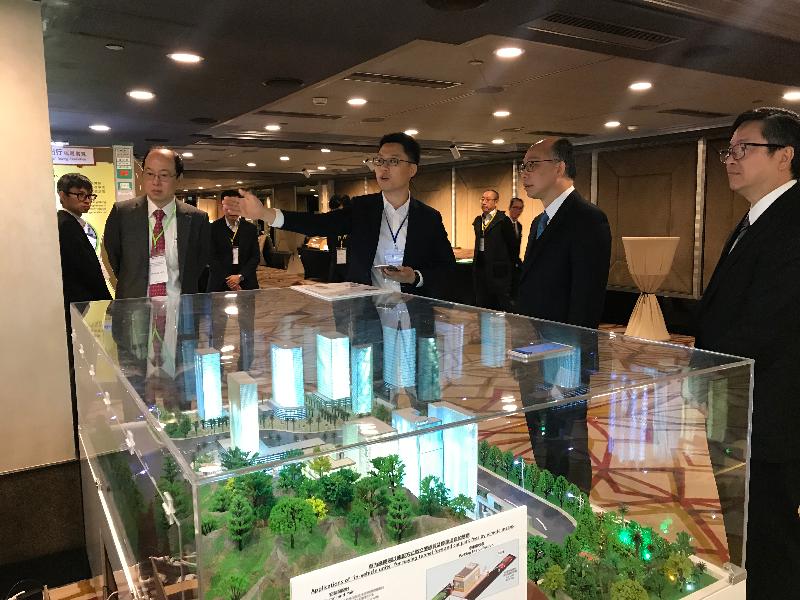
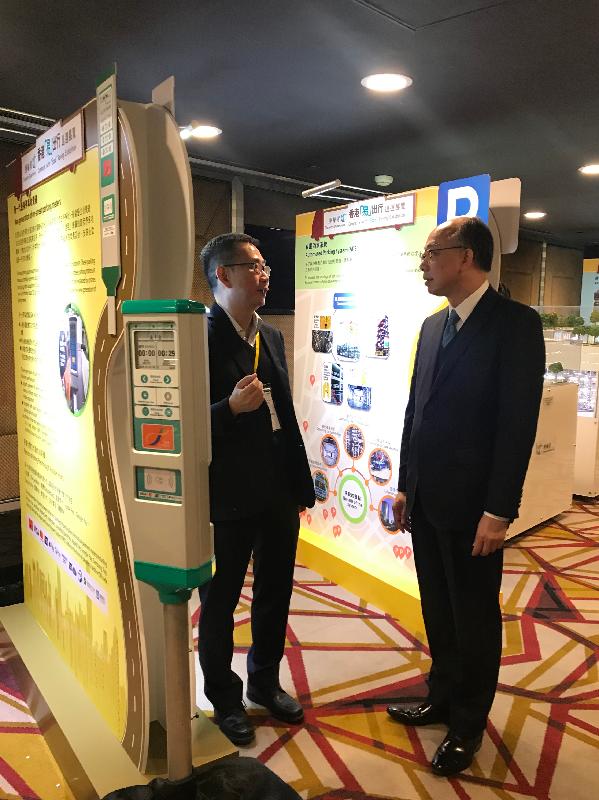
Following is the opening speech by the Secretary for Transport and Housing, Mr Frank Chan Fan, at the International Symposium on Road Congestion Charging today (December 3):
Professor Wong (Deputy Chairman of Hong Kong Institution of Engineers – Logistics and Transportation Division, Professor SC Wong), Commissioner Mable (Commissioner for Transport, Ms Mable Chan), distinguished guests, ladies and gentlemen,
Good morning. It is my great pleasure to join the symposium, where transport experts from home and abroad would share their insight and experience on Road Congestion Charging, an important topic that is probably on the agenda of every transport policy maker.
A transport system plays a pivotal role in facilitating the movement of people, goods and services. As a city develops with its growing population and economic activities, it counts on comprehensive and careful transport planning which, in my humble opinion, is underpinned by six major considerations, namely accessibility, carrying capacity, speed, safety, sustainability and affordability.
One must strike a delicate balance among these considerations in planning any transport network, especially for metropolises like London, Singapore and Tokyo. It is thus not surprising to see mass carriers such as railway topping the hierarchy in land transport systems in these cities, complemented by other transport modes like buses, trams, and taxis.
Similar to other metropolises, railway is the backbone underpinning Hong Kong’s transport system. At present, the mass transit railway serves over 40 per cent of all passengers a day. The vision and planning blueprint of our railway network is expected to serve areas inhabited by 75 per cent of the local population and about 85 per cent of job opportunities. Still, railway cannot reach the doorstep of every household or office, and there comes the road that fills the gap.
As a city’s population and economic activities grow, road congestion becomes commonplace. While a blockage of blood vessels can cause serious damage to bodily health, road congestion wears away a city’s health by undermining its productivity, sustainability and quality of life. According to the INRIX 2018 Global Traffic Scorecard, each American lost roughly 100 hours due to congestion in 2018, costing about US$1,300 on average per driver. This means nearly US$87 billion in total for the entire nation. Time and financial costs aside, traffic jams are one of the culprits behind climate change. The stopping and starting of cars stuck in traffic jams burn fuel at a higher rate than when they are running smoothly on the road, and consequently leads to increases in carbon dioxide emissions and causes health concerns.
As one of the most densely populated metropolises, Hong Kong is not immune to traffic congestion. With an extensive and comprehensive coverage of its railway network, together with other public transport modes, about 90 per cent of commuting trips in Hong Kong involve the use of public transport, which translates into 12.9 million passenger trips every day. Indeed, the use of private vehicles in Hong Kong is more an option than a necessity. Our roads are amongst the most heavily used in the world, with over 360 vehicles per kilometre running during peak hours, compared to some 250 to 270 vehicles per kilometre in other metropolises like London and Singapore. Despite our continued efforts in enhancing our road infrastructure, the expansion of roads fails to catch up with car growth. Over the past decade, the number of licensed cars in Hong Kong has grown by 40 per cent, compared to a mere increase of 4 per cent in road length.
Several stretches of roads in Hong Kong are particularly congested. At peak hours, the vehicular speed in Central, our CBD, is only 10 kilometres per hour on average, slightly faster than walking. Furthermore, motor vehicles are the main source of air pollutants at street level and the second largest source of greenhouse gas emissions in Hong Kong. This is not sustainable and it calls for prompt actions.
In the face of aggravating traffic congestion in Hong Kong, road becomes a scarce utility which has to be optimised for use. One of the amicable solutions is to explore the application of “congestion charging” using a two-pronged approach. First, we charge vehicles based on an “Efficiency First” principle. In other words, we charge less for efficient people carriers such as buses, as well as vehicles that support economic activities such as goods vehicles. The overall goal is to enable more efficient use of our limited road space and to encourage motorists to make use of our efficient public transport service.
Second, we charge more for road sections that are heavily used, thereby encouraging drivers to change their commuting pattern through rethinking their driving need, changing their timing and routing of commuting, or even switching to the use of public transport.
We all appreciate that different cities adopt different measures to tackle congestion problems depending on their own traffic characteristics. Such measures include “car-pooling” schemes; access restrictions, road pricing, charges for polluting vehicles in low-emission zones; prohibition against vehicles with car plates ending with certain numbers from driving in the city centre on certain days, and even vehicle quota systems to name a few.
In Hong Kong, we are already applying the “Efficiency First” principle at government tolled tunnels. We are contemplating electronic road pricing in our CBD. Today, reputable speakers from overseas will share with us their successful experiences in implementing congestion charging at their hometowns. No doubt we all stand to benefit from their wisdom as we chart the way ahead.
Perhaps in a few decades, we will no longer have traffic jams thanks to technological advancements and smart-city solutions like adaptive traffic signals, autonomous vehicles and multi-modal solutions. But before we get there, we have to bite the bullet and look for pragmatic ways to address the problem. It is a daunting challenge but I am confident that we will find the right solution to cure the congestion problem for Hong Kong.
In closing, I would like to express my sincere gratitude to the four institutes which have helped put together such a timely and meaningful event. I would also like to thank the organising committee for making today’s symposium a success. May I wish you all an enlightening and fruitful exchange, and for overseas guests, a pleasant stay in Hong Kong. Thank you.