Tag Archives: China

image_pdfimage_print

LCQ21: Tso/Tong lands

     Following is a question by the Hon Tony Tse and a written reply by the Secretary for Home Affairs, Mr Lau Kong-wah, in the Legislative Council today (January 15):

Question:

     Tso/Tong lands (commonly known as ancestral land) in general refer to the village lands in the New Territories which are collectively owned by traditional organisations (e.g. families or Tongs) and not by individual persons. It is learnt that as the criteria for the sale of Tso/Tong lands are rather stringent, including the requirement that the registered manager of the Tso/Tong concerned must obtain the consent issued by the District Officer (DO) of the relevant district on behalf of the Secretary for Home Affairs, and the DO will issue such consent only when there is unanimous consent of all the stakeholders, coupled with the problem that different villages act according to their own customs, the overall planning and development of Tso/Tong lands and the lands in their vicinity have been restrained. It has been reported that the Heung Yee Kuk and the Home Affairs Department formed a working group last year to study ways to facilitate the sale and development of Tso/Tong lands, so as to promote the development of the New Territories and increase the overall supply of land in Hong Kong for development. In this connection, will the Government inform this Council:

(1) of the existing number and area of Tso/Tong lands across the territory, together with a breakdown by the district in which such lands are situated;

(2) whether it knows the number, area and post-sale uses of the Tso/Tong lands sold in the past five years; and

(3) of the study progress of the aforesaid working group and its concrete recommendations on facilitating the sale and development of Tso/Tong lands?

Reply:

President,

     The consolidated reply to Hon Tony Tse’s question is as follows:

     Section 15 of the New Territories Ordinance (Cap. 97) provides for the registration of Tso/Tong managers and their power to deal with lands held by Tsos/Tongs:

     “Whenever any land is held from the Government under lease or other grant, agreement or licence in the name of a clan, family or t’ong, such clan, family or t’ong shall appoint a manager to represent it. Every such appointment shall be reported at the appropriate New Territories District Office of the Home Affairs Department, and the Secretary for Home Affairs on receiving such proof as he may require of such appointment shall, if he approves thereof, register the name of the said manager who shall, after giving such notices as may be prescribed, have full power to dispose of or in any way deal with the said land as if he were sole owner thereof, subject to the consent of the Secretary for Home Affairs, and shall be personally liable for the payment of all rents and charges and for the observance of all covenants and conditions in respect of the said land. Every instrument relating to land held by a clan, family or t’ong, which is executed or signed by the registered manager thereof in the presence of the Secretary for Home Affairs and is attested by him, shall be as effectual for all purposes as if it had been executed or signed by all the members of the said clan, family or t’ong. The Secretary for Home Affairs may on good cause shown cancel the appointment of any manager and select and register a new manager in his place. If the members of any clan, family or t’ong holding land do not within three months after the acquisition of the land make and prove the appointment of a manager, or within three months after any change of manager prove the appointment of a new manager, it shall be lawful for the Government to re-enter upon the land held by such clan, family or t’ong, which shall thereupon become forfeited. Such re-entry shall be effected by the registration of a memorial thereof in the Land Registry.”

     In fact, section 15 of the New Territories Ordinance does not specify the criteria for the sale of Tso/Tong lands or the Government’s procedures on handling consent to applications for such sale. Despite that District Officers (DOs) have the statutory power to give consent to Tsos/Tongs’ decisions on appointing managers and selling lands, DOs have no role to play in the decision-making process, as Tsos/Tongs are by nature private organisations and it is up to them to decide on the sale of Tso/Tong lands.

     The Government does not have information on the existing number and area of Tso/Tong lands across the territory. According to records, DOs gave consent to over 300 applications for the sale of Tso/Tong lands in the past five years. Information such as the area and post-sale uses of lands involved in these applications is not available either. We would like to reiterate that Tsos/Tongs are by nature private organisations and it is up to them to decide on the sale of Tso/Tong lands.

     To further improve Tso/Tong matters, the Home Affairs Department and the Heung Yee Kuk New Territories (HYK) set up a working group on New Territories Tso/Tong matters (working group) in 2018 to discuss and examine matters on appointment of managers by Tsos/Tongs and their handling of Tso/Tong lands.

     Knowing that individual Tsos/Tongs have internal rules in place, the working group is of the view that if Tsos/Tongs make their internal rules, they could be used as reference when handling appointment of managers and other internal matters in future. Therefore, the working group has recommended that the HYK should examine how to assist Tsos/Tongs in making their internal rules. 

     It is understood that the HYK is proactively following up on the recommendation and discussing relevant matters with Tsos/Tongs. read more
LCQ20: Facilitating the application of information systems and development of autonomous vehicles

     Following is a question by the Hon Charles Peter Mok and a written reply by the Secretary for Transport and Housing, Mr Frank Chan Fan, in the Legislative Council today (January 15):

Question:

     It is learnt that the mainstream design of new-generation telematics is to connect smart devices and cloud platforms through radio waves for drivers to access driving information, communicate and browse the Internet for information, as well as to provide features that help enhance driving safety and efficiency.  However, the existing legislation imposes stringent restrictions on the contents of the information or the view given by a visual display unit visible to the driver whilst in the driver’s seat (visual display unit).  As such, it is required to disable some features of new-generation telematics and even remove some accessories from them prior to vehicle registration.  On the other hand, the Government indicated in April last year that the Policy Innovation and Co-ordination Office (PICO) would review the Road Traffic Ordinance (Cap. 374) and relevant subsidiary legislation to see whether the relevant legislation was capable of supporting the development and application of autonomous vehicles and telematics.  In this connection, will the Government inform this Council:

(1) of the progress of the review of Cap. 374 and relevant subsidiary legislation conducted by PICO as well as the outcome so far;

(2) given that the new-generation telematics operable in an interactive mode have gradually become mainstream and standard devices for vehicles and are widely used in other places, whether the authorities will, in the light of technological advancement, amend the Road Traffic (Construction and Maintenance of Vehicles) Regulations (Cap. 374A) to the effect that all of the features of such type of systems are permitted to be used in Hong Kong; if so, of the details; if not, the reasons for that;

(3) whether it will consider, before all of the features of new-generation telematics are permitted to be used in Hong Kong, amending section 37 of Cap. 374A to impose different requirements on the respective applicable features of telematics when a vehicle is moving or parked, to the effect that telematics with the following features are permitted to be installed in vehicles: display of restricted information (e.g. television programmes and stored visual images which are not for the purpose of navigating the vehicle) for viewing by the driver whilst in the driver’s seat when the vehicle is parked; and

(4) of the expected date on which the legislation will be amended to allow the application of autonomous driving technology (e.g. the automated car-hailing feature) in Hong Kong?

Reply:

President,

     Upon consultation with the Policy Innovation and Co-ordination Office (PICO), my reply to the various parts of the Hon Charles Peter Mok’s question is as follows:

(1) Reviewing the legislation and regulations that impede innovation and technology (I&T) and economic development is one of the Government’s eight major directions for I&T development.  PICO’s work in this respect includes a review of the Road Traffic Ordinance (Cap. 374) and its subsidiary legislation to see whether the legislation is capable of supporting the development and application of autonomous vehicle (AV) technology and telematics in Hong Kong. During the course of the study, PICO maintained liaison with the Transport and Housing Bureau and the Transport Department (TD) to better understand the local situation. PICO also conducted research on the development of and facilitation measures for relevant technologies in other cities; as well as the applicability of other jurisdictions’ experience in the local context.  

     In brief, in respect of the application of visual display units, PICO has noted that the current Road Traffic (Construction and Maintenance of Vehicles) Regulations (Cap. 374A) (the Regulations) already allow a driver to view driving-related information whilst in the driver’s seat, including the required navigation and driving information. As for AV technology, PICO considers that a clear legal framework will be conducive to the development of the technology in the long run.  In this regard, TD has commenced studying relevant legislative amendments.

(2) and (3) As mentioned in Part (1) of the reply above, the Regulations already allow a driver to view the following information on a visual display unit whilst in the driver’s seat:
 (i) the current state of the vehicle or its equipment;
 (ii) the current closed-circuit view of any part of the vehicle or the area surrounding the vehicle;
 (iii) the current location of the vehicle; or
 (iv) any other information for the only purpose of navigating the vehicle.

     The above provisions governing the use of visual display units are intended to ensure road safety through enabling drivers to drive attentively without being distracted by visual images not relevant to driving. As compared with other cities, Hong Kong is densely populated with heavy traffic; high level of concentration is required on the part of drivers when driving. If the Government allows drivers to view information that is currently restricted (e.g. television programmes and stored visual images) whilst their vehicles are stationary, it will jeopardise road safety as the drivers could be distracted by the information displayed.

     Overall speaking, apart from allowing telematics to provide drivers with information in compliance with the requirements of the Regulations (e.g. driving-related information), the Regulations could cater for the development of today’s advanced driver assistance systems (e.g. Lane Keep Assist alert system), thereby facilitating the application of such systems on vehicles in Hong Kong for safer driving.

(4) On promoting AV technology, TD set up the Technical Advisory Committee on the Application of Autonomous Vehicle Technologies in Hong Kong in November 2019. The Committee, comprising representatives and experts from the trade and relevant research and development institutes, will explore how best to draw up an appropriate regulatory framework for AVs. TD will work in close collaboration and liaison with the trade and make reference to local experience of trials of AV technology when contemplating the long term regulatory framework with necessary legal backing.  Besides, TD published a new set of “Guidance Notes on the Trials of Autonomous Vehicles” in December 2019 to stipulate safety guidelines on the trials of AVs so that the trade could have a firmer grasp of the requirements for conducting AV trials on roads under the existing legislation.

     Separately, TD has commenced studying the necessary legislative amendments with a view to allowing the trade to conduct trials of innovative technologies through a “regulatory sandbox” approach, and is working in close collaboration with the trade to jointly stipulate the regulatory model for AVs as well as the conditions and supporting measures required for trials of AVs. The objective is to create a suitable and safe road environment for such trials. We will conduct relevant research in full swing and report our findings to the relevant Panel of the Legislative Council in due course. read more

LCQ3: Proposal to hand out consumption vouchers

     Following is a question by the Hon Mrs Regina Ip and a reply by the Acting Secretary for Financial Services and the Treasury, Mr Joseph Chan, in the Legislative Council today (January 15):

Question:

     Since June last year, the ongoing demonstrations and violent acts have dealt a heavy blow to Hong Kong’s economy and various sectors, especially the tourism, catering and retail industries. The real Gross Domestic Product for the whole of last year is expected to see a drop of 1.3 per cent, and the unemployment rate may rise continuously. In this connection, will the Government inform this Council, in order to stimulate consumer spending for boosting economic recovery and employment, whether it will consider the following proposal put forward earlier on by the New People’s Party: handing out to each of the Hong Kong residents aged above 18 a local consumption voucher, with a six-month validity period and a total value of $10,000 (of which the amounts to be spent on catering and retail services are both $4,000 and the amount on tourism services is $2,000); if not, of the reasons for that?

Reply:

President,

     The social incidents over the past seven months have dealt a heavy blow to Hong Kong’s economy, with the tourism, catering and retail industries bearing the brunt. Retail sales volume fell visibly by nearly 20 per cent year-on-year in the third quarter of last year and the decline widened further to about 26 per cent in October and November combined, which was the biggest drop on record. Total restaurant receipts registered a year-on-year decline of 13.7 per cent in real terms in the third quarter. Observations from the trade suggested that the business situation of the catering industry would be even more difficult in the fourth quarter. With lingering social unrest, the business of these industries will hardly improve in the near future, giving cause for grave concern. To boost consumer sentiment, revitalise the economy and safeguard employment, we must, first and foremost, stop violence, so as to bring the city back to normal, thereby allowing citizens to go out shopping with peace of mind, tourists to resume visiting Hong Kong and investors to be willing to conduct business activities here.

     The Government understands the pressure that enterprises and citizens face in the current economic environment. We have been paying close attention to the impacts of social incidents and violent clashes on various trades and industries, maintaining close communication with them and offering appropriate assistance. In light of the evolving economic situation, the Government has, since August last year, announced a series of measures to “support enterprises, safeguard jobs and relieve people’s burden”, with total financial implications exceeding $25 billion.

     The Government has received views from individuals and organisations proposing the handing out of consumption vouchers or, more directly, cash to citizens to boost consumption, help the affected trades and industries as well as stabilise the economy and the employment market.

     There are views that issuing consumption vouchers is more effective in boosting consumption and promoting local economic activities than handing out cash. However, issuing consumption vouchers involves additional and more complicated administrative arrangements, including determining the scope of coverage, the terms of usage, the redemption arrangements, the control and anti-counterfeiting measures, etc. which may result in relatively high administrative costs.

     Moreover, the effectiveness of issuing consumption vouchers may be undermined by the “substitution effect”. For example, if some people use consumption vouchers mainly for meeting their basic living expenses rather than on additional consumption, the effect on boosting consumption and stimulating the economy may not meet the expectation.

     According to the experience of Taiwan and Japan in issuing consumption vouchers, such measure did not achieve the projected effect of stimulating spending and economic growth. Hit by the financial tsunami in 2008, Taiwan issued consumption vouchers worth NT$3,600 (equivalent to around HK$840) each to its citizens in 2009 as a short-term stimulus to the economy. Subsequent assessment reports showed that the measure only raised its Gross Domestic Product (GDP) by about 0.28 per cent to 0.43 per cent, lower than the original estimation of 0.66 per cent. Japan also issued consumption coupons, as akin to consumption vouchers in nature, worth JPY20,000 (equivalent to around HK$1,300) each to target recipients in 1999. Survey results showed that the consumption stimulated by the consumption coupons only accounted for 32 per cent of the value of the coupons, or about 0.1 per cent of the country’s GDP. There has not been other large-scale overseas consumption voucher programmes in recent years for our reference.

     In formulating budget measures, the Government has to take into account the long-term fiscal position in addition to the effectiveness of the measures. As pointed out by the Financial Secretary earlier, we will likely have a deficit for the current financial year. Issuing consumption vouchers or hand out cash to the public will lead to an increase in the fiscal deficit. We should carefully consider public acceptance of a large deficit and assess the reaction of international rating agencies. The Government must therefore be very prudent in this regard. read more

LCQ14: Services of the accident and emergency departments of public hospitals

     Following is a question by Dr the Hon Pierre Chan and a written reply by the Secretary for Food and Health, Professor Sophia Chan, in the Legislative Council today (January 15):
 
Question:
 
     On June 18, 2017, the Hospital Authority (HA) raised the charge payable by eligible persons for using the services of the accident and emergency (A&E) departments of public hospitals from $100 to $180, so as to encourage A&E patients whose conditions are not the most urgent to switch to using outpatient services. In this connection, will the Government inform this Council if it knows:
 
(1) the attendances of the A&E departments of public hospitals in each month of the past three financial years and the current financial year (up to December 31, 2019), with a breakdown by the triage category to which the patients belonged (set out in tables of the same format as the table below);
 
Financial year:           

Year and month Attendances of A&E departments
Category I
(Critical)
Category II
(Emergency)
Category III
(Urgent)
Category IV
(Semi-urgent)
Category V
(Non-urgent)
           
 
(2) whether HA has reviewed the effectiveness of raising the charge for using the services of the A&E departments on reducing those A&E attendances of patients belonging to triage Categories IV and V; if HA has, of the outcome (including the duration for which the effect has lasted); if not, the reasons for that; and
 
(3) (i) the average cost per attendance and (ii) the average waiting time of patients of each triage category in respect of the services of the A&E departments of public hospitals in each of the past three financial years and the current financial year (up to December 31, 2019)?
 
Reply:
 
President,
 
     In consultation with the Hospital Authority (HA), I provide a reply to the various parts of the question raised by Dr the Hon Pierre Chan as follows:
 
(1) The tables below set out the numbers of accident and emergency (A&E) attendances of HA hospitals by triage category in the recent four financial years:
 
2016-17
Month Number of A&E attendances
Triage 1
(Critical)
Triage 2
(Emergency)
Triage 3
(Urgent)
Triage 4
(Semi-urgent)
Triage 5
(Non-urgent)
April 2016 1 567 3 954 60 798 109 451 10 746
May 2016 1 618 3 970 63 080 115 918 11 039
June 2016 1 498 3 665 57 776 105 442 8 360
July 2016 1 528 3 816 59 094 106 604 8 803
August 2016 1 488 3 780 59 302 103 678 8 491
September 2016 1 551 3 884 59 190 108 121 8 883
October 2016 1 569 3 831 60 937 111 283 9 257
November 2016 1 690 3 810 58 883 103 052 8 278
December 2016 1 913 4 079 60 690 101 591 8 914
January 2017 2 004 4 322 60 197 98 624 7 834
February 2017 1 867 3 956 57 639 91 755 7 628
March 2017 1 917 4 424 65 145 109 849 9 412
 
2017-18
Month Number of A&E attendances
Triage 1
(Critical)
Triage 2
(Emergency)
Triage 3
(Urgent)
Triage 4
(Semi-urgent)
Triage 5
(Non-urgent)
April 2017 1 693 4 093 62 334 107 161 9 839
May 2017 1 661 4 198 65 435 112 939 10 005
June 2017 1 711 4 253 64 429 106 330 8 216
July 2017 1 873 4 361 65 887 104 965 8 471
August 2017 1 634 4 194 59 193 93 461 7 046
September 2017 1 590 4 123 58 529 93 995 7 065
October 2017 1 726 4 172 61 341 101 731 7 786
November 2017 1 718 4 081 61 050 97 361 7 005
December 2017 2 042 4 621 63 620 97 224 7 757
January 2018 2 262 4 858 66 364 102 374 7 730
February 2018 2 370 4 572 58 140 88 828 6 666
March 2018 1 864 4 585 62 857 99 052 7 089

2018-19
Month Number of A&E attendances
Triage 1
(Critical)
Triage 2
(Emergency)
Triage 3
(Urgent)
Triage 4
(Semi-urgent)
Triage 5
(Non-urgent)
April 2018 1 674 4 278 59 506 96 679 7 216
May 2018 1 690 4 273 62 959 102 583 7 117
June 2018 1 600 3 939 59 094 95 680 6 019
July 2018 1 670 4 195 62 916 98 873 6 329
August 2018 1 813 4 268 62 567 96 504 6 175
September 2018 1 596 4 177 59 526 94 963 6 175
October 2018 1 812 4 350 63 840 103 051 6 831
November 2018 1 828 4 166 62 644 100 337 6 475
December 2018 2 161 4 542 64 804 100 102 6 717
January 2019 2 411 4 909 67 445 105 497 7 002
February 2019 1 919 4 134 56 398 88 061 6 042
March 2019 2 056 4 785 66 944 105 803 7 161
 
2019-20 (as at November 30, 2019) [provisional figures]
Month Number of A&E attendances
Triage 1
 (Critical)
Triage 2
(Emergency)
Triage 3
 (Urgent)
Triage 4
(Semi-urgent)
Triage 5
(Non-urgent)
April 2019 1 777 4 392 64 761 106 111 7 192
May 2019 1 760 4 582 66 535 109 892 7 272
June 2019 1 737 4 420 63 870 105 284 6 168
July 2019 1 769 4 396 65 577 105 694 5 564
August 2019 1 780 4 382 61 264 95 862 5 141
September 2019 1 718 4 387 61 390 99 702 5 558
October 2019 1 804 4 421 61 847 100 508 5 667
November 2019 1 808 4 511 60 807 94 945 5 265
 
(2) The fee for A&E services at public hospitals was revised from $100 to $180 on June 18, 2017.  According to the HA’s information, the overall number of A&E attendances between July 2017 and June 2018 had decreased by about 4.4 per cent when compared with the corresponding period before the fee revision.  The numbers of Triage 4 (Semi-urgent) and Triage 5 (Non-urgent) attendances had decreased by 6.9 per cent and 17.6 per cent respectively, while the total number of Triage 1 (Critical), Triage 2 (Emergency) and Triage 3 (Urgent) attendances had increased by 1.3 per cent.
 
     As for the period from July 2018 to June 2019, the numbers of Triage 4 (Semi-urgent) and Triage 5 (Non-urgent) attendances had decreased by 3.7 per cent and 24.7 per cent respectively, while the total number of Triage 1 (Critical), Triage 2 (Emergency) and Triage 3 (Urgent) attendances had increased by 4.4 per cent when compared with the corresponding period before the fee revision two years ago.
 
     The number of attendances before and after the fee revision may, to some extent, show that the fee revision has led to certain behavioural change of patients with less urgent conditions (i.e. Triage 4 and 5) in seeking medical consultation.  Nonetheless, it is likely that the fee revision does not have much impact on the behavior of patients with more urgent conditions (i.e. Triage 1, 2 and 3) in seeking medical consultation.
 
     The Government and the HA will continue to monitor the utilisation and quality of A&E services to ensure timely treatment for patients in need.
 
(3) The table below sets out the average cost per attendance of A&E services provided by the HA from 2016-17 to 2018-19.  The average cost per attendance of A&E services provided by the HA for 2019-20 is not yet available.
Year Average cost per attendance ($)
2016-17 1,300
2017-18 1,390
2018-19 1,530
 
     The HA’s service costs include direct staff costs (such as salary expenditure on doctors and nurses) for providing services to patients; expenditure incurred for various clinical support services (such as pharmacy, diagnostic radiology and pathology tests); and other operating costs (such as utility expenses and repair and maintenance costs of medical equipment).  The average cost per attendance represents an average computed with reference to the total A&E service costs and the corresponding activities (in terms of attendances) provided.
 
     The table below sets out the average waiting time for HA’s A&E services under each triage category in the recent four financial years:
Year Average waiting time (minute) for A&E services
 Triage 1
(Critical)
 Triage 2 (Emergency) Triage 3 (Urgent) Triage 4 (Semi-urgent) Triage 15 (Non-urgent)
2016-17 0 8 24 103 126
2017-18 0 8 26 114 127
2018-19 0 8 26 111 125
2019-20
(as at November 30, 2019)
[provisional figures]
0 7 26 121 134
read more

HK Public Libraries launches third self-service library station in Tai Wai (with photos)

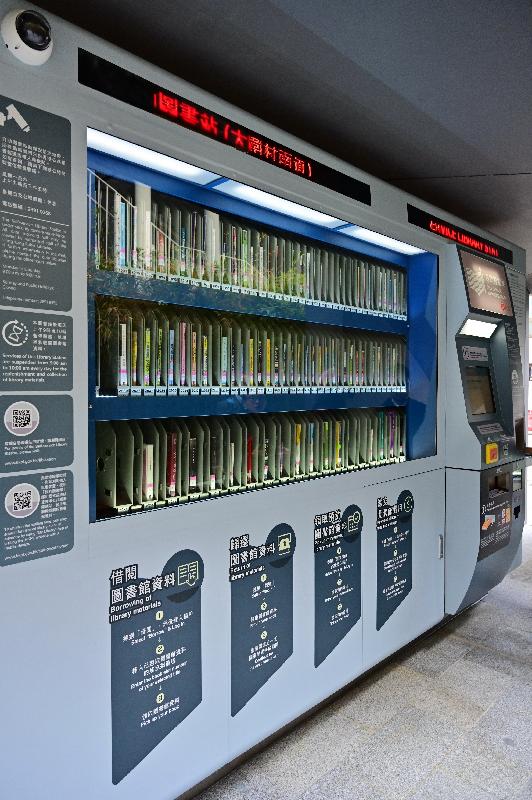
     The Hong Kong Public Libraries (HKPL) of the Leisure and Cultural Services Department (LCSD) launched the third self-service library station today (January 15) in Tai Wai, strengthening the provision of round-the-clock public library services.
 
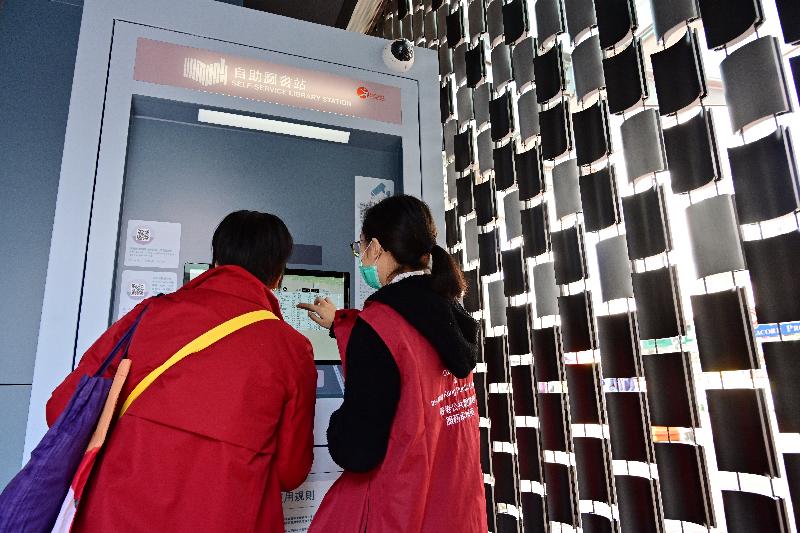
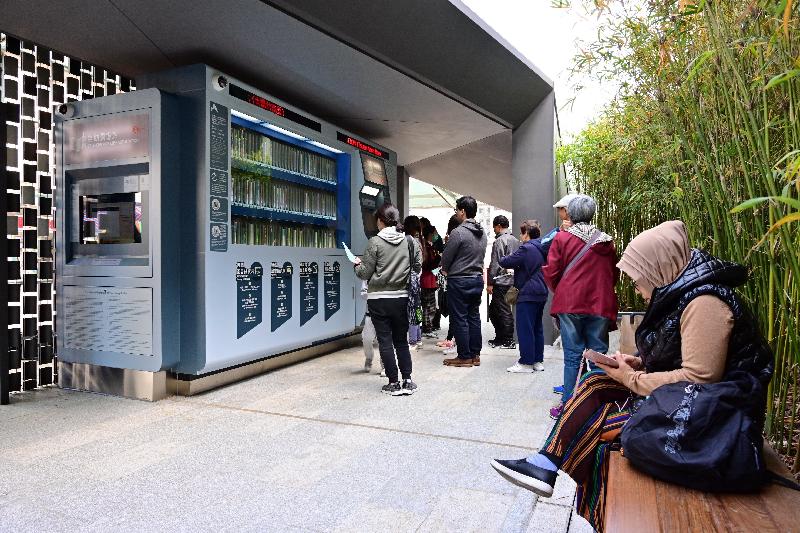
     This library station is located at 2 Tsuen Nam Road, Tai Wai (near Exit D of MTR Tai Wai Station and the public transport interchange), and stores about 300 Chinese and English books of various subjects. Using their library card or Hong Kong identity card, registered HKPL users can borrow and return library materials, pick up reserved library materials and pay library fees and charges with Octopus at the library station. The station’s stock will be replenished every day, during which services will be suspended temporarily.
 
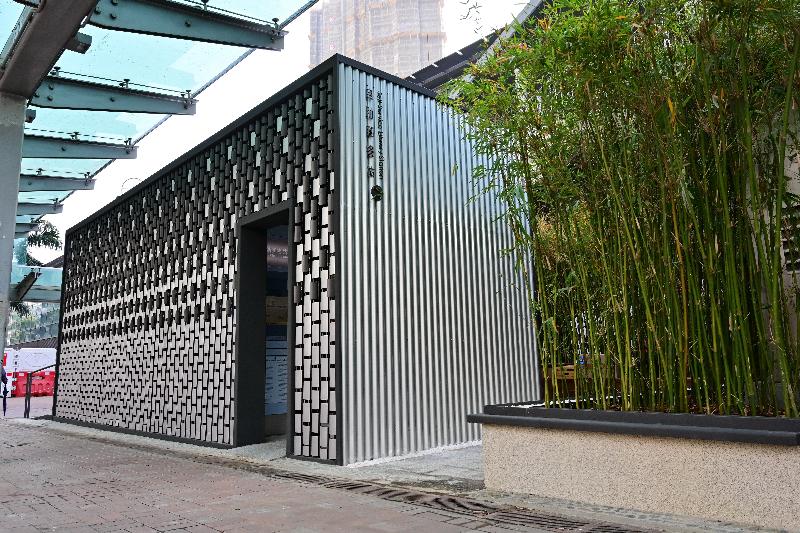
     The library station blends in with the neighbourhood by adopting a simple architectural style. A bamboo motif is employed to represent the Chinese notion of books and reading. Extruded aluminium tiles in a bamboo shape are fixed on wires and arranged in different directions to create textures and colours, forming an interesting pattern. The library station also includes a small landscaped garden to offer the public a relaxing and comfortable environment with seats for reading and resting.
 
     An LCSD spokesperson said, “The self-service library station scheme has been launched on a trial basis. The LCSD will evaluate the effectiveness of the trial scheme taking into account the utilisation, cost-effectiveness, feedback from users, sustainability and complementarity with other library services.”
 
     The other two self-service library stations are located at Island East Sports Centre Sitting-out Area and the Hong Kong Cultural Centre.
 
     For details of library station services, please visit www.hkpl.gov.hk/libstation.

Photo  Photo  Photo  Photo  
read more