Tag Archives: China

image_pdfimage_print

Film Archive to present Cantonese opera film classics in reruns at North District Town Hall (with photos)

     The Cantonese opera film programme “Celebrating Inheritance and Integration – 10th Anniversary of Inscription of Cantonese Opera onto the Representative List of the Intangible Cultural Heritage of Humanity” presented by the Hong Kong Film Archive (HKFA) of the Leisure and Cultural Services Department several months ago received an enthusiastic response from the audience. The HKFA has selected 12 classics from the series for reruns in “Cantonese Opera Gems@North District Town Hall”, which will be held from February 15 to March 22 at the Auditorium of North District Town Hall.
 
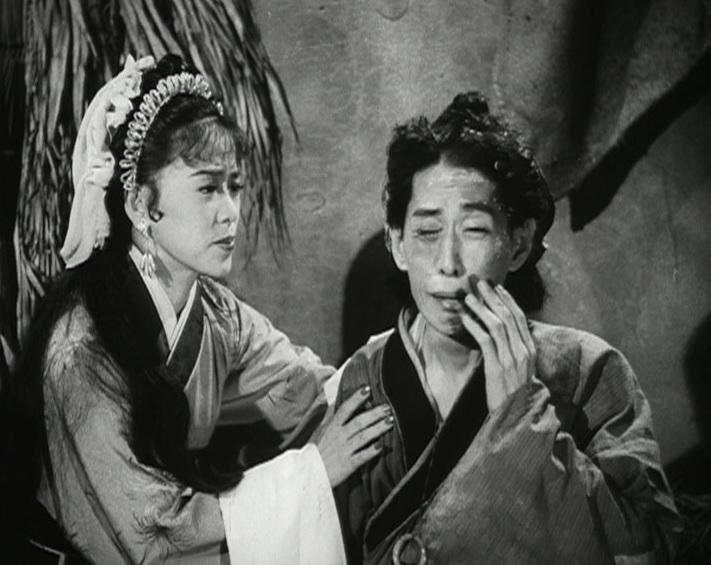
     The HKFA’s restored version of “Butterfly and Red Pear Blossom” (1959) centres on a courtesan played by Pak Suet-sin and a scholar played by Yam Kim-fai, who fall in love as they exchange poems. Their romance is thwarted, however. Director Lee Tit’s mise-en-scène and Tong Tik-sang’s libretto and script as well as the performances of Yam and Pak, Lan Chi Pak and Leung Sing-por have made this a masterpiece of Cantonese opera film.
 
     In “The Legend of Purple Hairpin” (1959) starring Yam Kim-fai and Pak Suet-sin, the directing style of Lee Tit showcased vividly the cinematic structure and rhythm contained in Tong Tik-sang’s script as well as the singing, gestures and stylised traditional Cantonese operatic movements of the star-studded opera cast. Over a decade later, Lee made a new version, “The Legend of Purple Hairpin” (1977), featuring Lung Kim Sung and Mui Suet-si. In this film, he often zoomed in on the actors and cut between close-ups of each character. This all-colour version also allowed Lee to further express the characters’ emotions.

     In “Princess Chang Ping” (1976), starring Lung Kim Sung and Mui Suet-si, John Woo incorporated the act “Negotiating with the Qing Emperor” into his work to make the film closer to the original play than the preceding film adaptation. He also inserted action film elements in the “Princess’ Sufferings” act, demonstrating his directorial style.

     “The Revenge Battle” (1964) showcases the symbolic gestures of Lan Chi Pak’s portrayal of an arch villain. The final scene, in which Lam Kar-sing and Chan Ho-kau are trapped by fire, features a series of specially arranged acrobatic moves such as hair-flinging in unison and round-walking together holding hands.
 
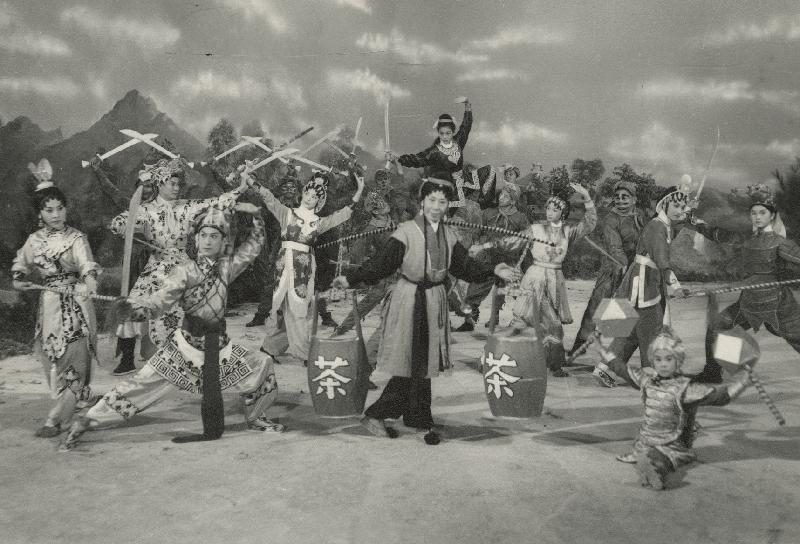
     Renowned Peking opera diva Fen Ju Hua and her disciples give remarkable performances in “The Capture of the Evil Demons” (1962). Playing a tea-selling lady who conquers demons in the final scene, Fen impresses the audience with her legendary water bucket balancing acrobatics – a performance rarely shown on-screen.
 
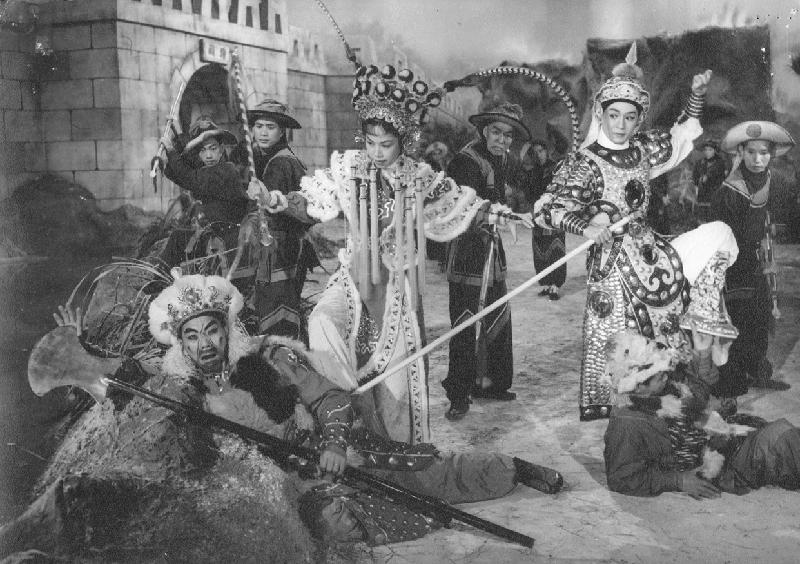
     “Drums along the Battlefield” (1963) was adapted from the Cantonese opera work in which Lam Kar-sing played his first male leading civil and military role. The same opera cast performed in this cinematic adaptation as well. In the showdown, Lam fully displayed his northern fighting style and dazzling skills, clearly cementing his place as a serious leading man of Cantonese opera.

     “The Great Red Robe” (1965) depicts Hai Rui accusing the corrupt Prime Minister Yan Song of 10 major crimes. The scene of Yam Kim-fai and Lan Chi Pak’s one-on-one debate, with righteousness contrasting with stateliness, has a clean and fast-paced flow that reaches a heart-pounding climax. Although the existing cut is an incomplete version, it captures the most climactic scenes.
 
     Ho Fei-fan stars as Jia Baoyu in his representative work “The Romantic Monk” (1956), in which he delivers a knockout 12-minute singing performance of “Baoyu Leaves Home for Monkhood” to charm the audience.
 
     Dubbed the “Queen of Huadan (female lead)”, Fong Yim-fun played dual roles as twin sisters in “Spring’s Joyous Blessings” (1958). She switches perfectly between acting that is physical and dramatic to portray the incompatible personalities of the two characters. Fong further demonstrates her versatility later when she cross-dresses as a brave warrior to save Ho Fei-fan, who plays a general.
 
     “Lust is the Worst Vice” (1963) uses two classic songs of Sun Ma Si-tsang, “Begging for Food” and “Lament of the Jade Sheng”, as recurring motifs to convey the film’s moral message. Sun Ma’s mastery of falsetto singing, his impressive vocal range and the clarity of his notes are unparalleled to this day.

     “The Story of Heroine Fan Lei-fa” (1968) was a novelty for audiences at the time for its pairing of the popular huangmei rhythms of the 1960s with Cantonese lyrics. Connie Chan Po-chu not only sings solo in a higher-pitched voice, but even makes a breakthrough by taking up the female warrior role for the first time as the Tang dynasty female general Fan Lei-fa.

     All films are in Cantonese. “Butterfly and Red Pear Blossom” and “Princess Chang Ping” are with Chinese and English subtitles; other films only have Chinese lyrics displayed on-screen.
 
     Tickets priced at $30 are now available at URBTIX (www.urbtix.hk). For credit card telephone bookings, please call 2111 5999. For programme details, please call 2739 2139 or visit www.filmarchive.gov.hk/en_US/web/hkfa/programmesandexhibitions/programmes/2020ndth/index.html.
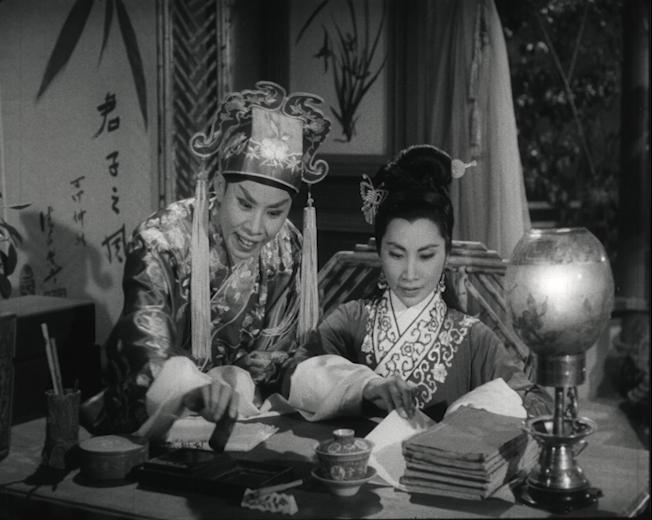
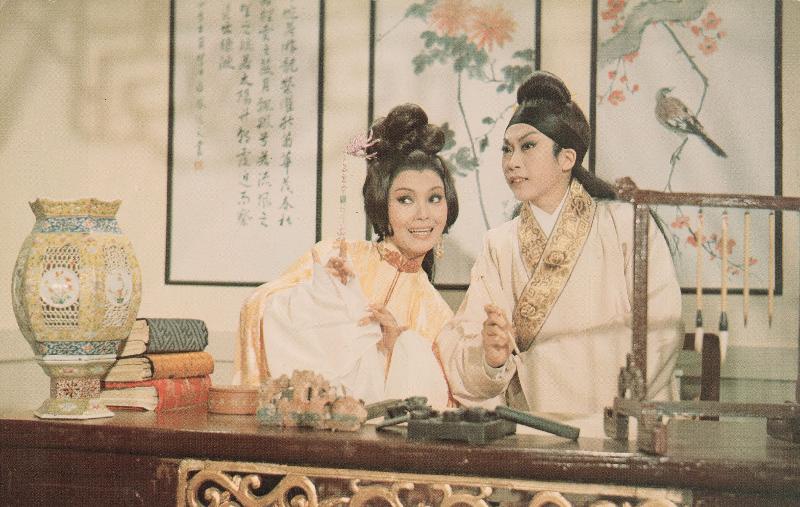
Photo  Photo  Photo  Photo  Photo  Photo  
read more

HKSAR Government responds to foreign NGO report

     In response to media enquiries, a spokesman for the Hong Kong Special Administrative Region (HKSAR) Government made the following response today (January 15) to parts of a report related to Hong Kong issued by Human Rights Watch, a foreign non-governmental organisation:
 
     “Since the return to the Motherland, the HKSAR has been exercising ‘Hong Kong people administering Hong Kong’ and a high degree of autonomy in strict accordance with the Basic Law of the Hong Kong Special Administrative Region of the People’s Republic of China. The ‘one country, two systems’ principle has been fully and successfully implemented. The HKSAR Government will continue to implement the ‘one country, two systems’ principle resolutely in accordance with the Basic Law.
 
     “Safeguarding human rights and freedoms is a constitutional duty of the HKSAR Government. Article 4 of the Basic Law stipulates that the HKSAR shall safeguard the rights and freedoms of the residents of the HKSAR and of other persons in the Region in accordance with law. Human rights and freedoms in Hong Kong are fully protected by the Hong Kong Bill of Rights Ordinance and other legislation, in addition to the Basic Law. The HKSAR Government attaches great importance to human rights and freedoms and is determined to safeguard them.
 
     “In respect of the Fugitive Offenders and Mutual Legal Assistance in Criminal Matters Legislation (Amendment) Bill 2019, the Chief Executive announced on September 4, 2019, that the HKSAR Government would formally withdraw the Bill when the Legislative Council resumed business and the Secretary for Security withdrew the Bill at the Legislative Council meeting on October 23, 2019.
 
     “From June 2019 until now, there have been over 1 200 public demonstrations, processions and public meetings in Hong Kong. Unfortunately, many ended in violent and illegal confrontations, seriously endangering personal safety, public order and public safety. In fact, the report also mentioned various violent acts committed by protesters, such as throwing petrol bombs, setting roadblocks on fire and attacking other people. In response, the Police have been carrying out enforcement actions in strict accordance with the law in order to protect life and property and restore order to society. If members of the public could express their views in a peaceful and rational manner, there would be no need for the Police to use any force.
 
     “As for constitutional development, universal suffrage of ‘one person, one vote’ for selecting the Chief Executive and electing all members of the Legislative Council is enshrined as an ultimate aim in the Basic Law. To achieve this aim, the community needs to engage in dialogues, premised on the legal basis and under a peaceful atmosphere with mutual trust, with a view to narrowing differences and attaining a consensus agreeable to all sides. The HKSAR Government will assess the situation carefully and take forward constitutional development in accordance with the Basic Law and the relevant Interpretation and Decisions of the Standing Committee of the National People’s Congress. As a matter of fact, the HKSAR Government took forward constitutional development in accordance with law between 2013 and 2015, and put forward a practicable proposal for selecting the Chief Executive by universal suffrage. However, the proposal was vetoed by Members of the Legislative Council who claimed to strive for democracy.”
 
     The spokesman reiterated that foreign organisations should not interfere in any form in the internal affairs of the HKSAR.
  read more

LCQ11: Appropriation for police

     Following is a question by the Hon Alvin Yeung and a written reply by the Secretary for Security, Mr John Lee, in the Legislative Council today (January 15):

Question:
 
  The controlling officer for Head 122 (Hong Kong Police Force) of Government expenditure is the Commissioner of Police (CP). In this connection, will the Government inform this Council of the following information in respect of each of the financial years from 2015-2016 to 2019-2020:
 
(1) (i) the original estimates of expenditure, (ii) the revised estimates of expenditure and (iii) the actual expenditure (except for the current year) under Head 122, and set out in Table 1 a breakdown by subhead;
 
Table 1

Financial year Subhead (i) (ii) (iii)
2015-2016 000      
     
Total      
       
 
(2) (i) the amount of supplementary appropriation sought for Head 122 by the authorities by introducing a Supplementary Appropriation Bill into this Council, and (ii) the main reasons for seeking the appropriation (except for the current year) (set out in Table 2);
 
Table 2
Financial year (i) (ii)
2015-2016    
   
 
(3) the number of applications made by the authorities to the Finance Committee of this Council for making changes to the approved estimates of expenditure under Head 122, and set out in Table 3 the following information in respect of each of such applications: the (i) approval date and commencement date of the changes, (ii)  subhead(s) involved, (iii) nature of the change(s) (i.e. (a) creation of new subhead(s), (b) supplementary provision in approved or new subhead(s), (c) variation(s) in the establishment(s) of post(s), (d) increase(s) in the limit to the commitments which might be entered into for non-recurrent expenditure and (e) others), (iv) purpose and (v) amount;
 
Table 3
Financial year (i) (ii) (iii) (iv) (v)
2015-2016          
         
Total  
         
 
(4)  the number of changes that the Financial Secretary made, in accordance with the power delegated to him by the Finance Committee of this Council under section 8(3) of the Public Finance Ordinance (Cap 2), to the approved estimates of expenditure under Head 122, and set out in Table 4 (of the same format as Table 3) the following information in respect of each of such changes: the (i) commencement date, (ii) subhead(s) involved, (iii) nature of the change, (iv) purpose and (v) amount;
 
(5)  the total amount of urgent expenditure incurred by CP under section 15 of Cap 2, and set out in Table 5 the following information in respect of each of the occasions on which such expenditure was incurred: the (i) date, (ii) subhead(s) involved, (iii) purpose and (iv) amount;
          
Table 5
Financial year (i) (ii) (iii) (iv)
2015-2016        
       
  Total  
       
 
(6)  the number of allocation warrants signed, under section 14(4) of Cap 2, by other controlling officers for authorising CP to incur expenditure under the subheads of the heads controlled by such officers, and the following information in respect of each of such allocation warrants: the (i) date of signing, (ii) commencement date, (iii) the controlling officer and department concerned, (iv) head and subhead(s) involved, (v) purpose, and (vi) amount (set out in Table 6); and
          
Table 6
Financial year (i) (ii) (iii) (iv) (v) (vi)
2015-2016            
           
Total  
           
 
(7)  the channels, apart from the aforesaid channels, through which the Hong Kong Police Force receive funding?
 
Reply:
 
President,
 
  Having consulted the Financial Services and the Treasury Bureau, my reply to various parts of the question is as follows:
 
(1) The original estimates, revised estimates and actual expenditures under Head 122 (Hong Kong Police Force) in the past five financial years are given in Annex 1.
 
(2) According to section 8 of the Public Finance Ordinance (PFO), the Government may, before the close of a financial year to which the Appropriation Ordinance relates, seek the approval from the Finance Committee of the Legislative Council (LegCo) or exercise the power delegate to it to approve the supplementary appropriation for a subhead under any head of expenditure.  According to section 9 of PFO, if at the close of account for any financial year it is found that the expenditure charged to any head is in excess of the sum appropriated for that head by an Appropriation Ordinance for that financial year, the Government shall introduce a Supplementary Appropriation Bill (the Bill) to LegCo as soon as practicable after the close of the financial year.  The submission of the Bill is mainly technical in nature.
 
     Information concerning Head 122 (Hong Kong Police Force) in the Bills submitted by the Government to LegCo in the past five financial years is given in Annex 2. 
 
(3) Information concerning Head 122 (Hong Kong Police Force) in the applications approved by the Finance Committee of LegCo in the past five financial years is given in Annex 3.
 
(4) According to section 8(3) of PFO, the Finance Committee may delegate to the Financial Secretary the power to approve changes subject to such conditions, exceptions and limitations as are specified in the delegation.  Section 8(4) of PFO also states that the Financial Secretary, where a delegation by the Finance Committee under subsection (3) so provides, and subject to such conditions, exceptions and limitations as are specified in the delegation, may further delegate his power to approve changes to any public officer.
 
     Under the above delegation, the more commonly exercised delegated authority includes:

(a) supplementary provisions for salaries and allowances in accordance with approved scales and rates in respect of personal emoluments and subventions;
(b) supplementary provisions up to $10 million for each subhead without approved commitment (i.e. Operating Account recurrent subheads and Capital Account block vote subheads);
(c) supplementary provisions for subheads with approved commitments provided that the unexpended balances of the approved commitments are not exceeded;
(d) creation of new commitments up to $10 million each;
(e) for commitments approved under delegated authority, increases in commitment which do not cause the approved commitment to exceed $10 million; and
(f) for commitments approved by the Finance Committee, increases in commitment up to $10 million.  
     
     â€‹According to section 8(8)(a) of PFO, the Financial Secretary shall at the end of each quarter of the financial year or as soon as practicable thereafter report to the Finance Committee changes made to the approved estimates of expenditure in that quarter upon approval by him or by any public officer pursuant to a delegation under section 8(3) or (4). 
 
     Information on the changes made to the approved estimates of expenditure under Head 122 (Hong Kong Police Force) with the power delegated by the Finance Committee under section 8 of PFO in the past five financial years is given in Annex 4.
 
(5) No urgent expenditure was incurred by the Commissioner of Police under section 15 of PFO in the past five financial years.
 
(6) Under section 14 of PFO, a controlling officer may, in respect of any subhead for which he/she is the controlling officer, authorise by an allocation warrant issued by him/her any other controlling officer to incur expenditure for the former’s subhead.  The purpose of the expenditure involved in the allocation warrant must conform with the purpose within the ambit of the payment subhead. For example, department A which rents private premises as office via the Government Property Agency (GPA) will issue an allocation warrant to GPA to pay for the rent and related fees. The power of the allocation warrant comes from PFO instead of the Financial Committee’s delegation. 
 
     It is a common arrangement for government departments to use allocation warrants to incur expenditure for each other. The total amount of funding received via allocation warrants by the Hong Kong Police Force (HKPF) during the financial years from 2015- 16 to 2019-20 is given in Annex 5. Allocation warrants received involved items such as receiving from the Treasury compensation for work-related injuries, receiving from the Civil Service Bureau subsidies for studies programmes, receiving from the Office of the Government Chief Information Officer fees for installing the administrative computer systems and employing consultants to conduct feasibility study and system development, receiving from the Security Bureau the salaries for police officers on secondment to the bureau, etc.
 
     In response to the public order events in recent months, some departments need to strengthen premise security, and have issued allocation warrants to HKPF, incurring expenditure from their own subheads, for measures to enhance the security of government premises and public facilities such as the procurement of huge water barriers and other equipment. The purpose of which is to maintain their daily operations and to ensure that public services are not affected. These allocation warrants have not been used for meeting expenses of HKPF’s personal emoluments subhead.
 
(7) As for funding received from LegCo, apart from the channels mentioned in paragraphs (1) to (6) above, like other government departments, HKPF can also seek funding from the Capital Works Reserve Fund (CWRF) according to the established mechanism. There are altogether 11 heads of expenditure under CWRF, covering Land Acquisition (Head 701), Public Works Programme (Heads 702 to 707, 709 and 711), Capital Subventions and Major Systems and Equipment (Head 708) and Computerisation (Head 710). read more

Hong Kong Customs steps up enforcement against illicit cigarette smuggling activities before Lunar New Year (with photo)

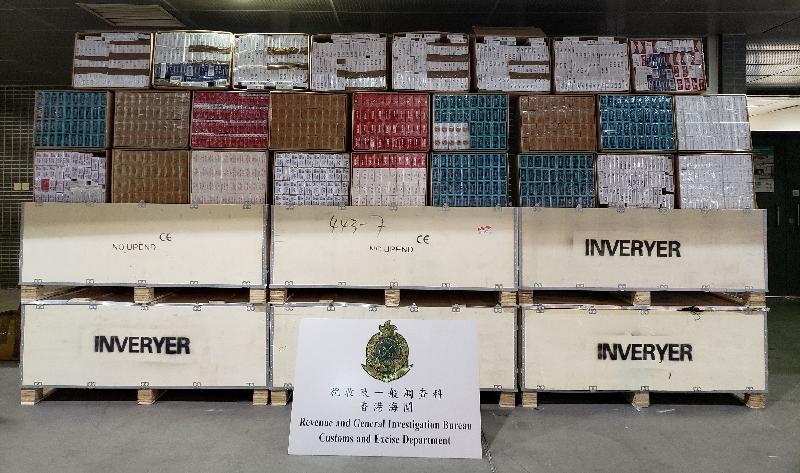
     Hong Kong Customs will step up enforcement against cross-boundary illicit cigarette activities before the coming Lunar New Year holiday. About 1 million suspected illicit cigarettes as well as about 17 litres of suspected duty-not-paid liquor with an estimated market value of about $2.9 million and a duty potential of about $2 million were seized at Shenzhen Bay Control Point yesterday (January 14).

     Customs officers yesterday intercepted an incoming truck declared as carrying assorted goods at Shenzhen Bay Control Point and found the batch of suspected illicit cigarettes and suspected duty-not-paid liquor inside 122 cartons mix-loaded with other goods on board the truck. The 42-year-old male driver was then arrested.

     Coupled with the two cases effected at Shenzhen Bay Control Point and Yuen Long early this month, Customs has seized a total of about 5 million suspected illicit cigarettes with an estimated market value of about $14 million and a duty potential of about $9.6 million.

     Investigations of the abovementioned cases are ongoing.

     Customs has all along striven to combat different kinds of illicit cigarette smuggling activities and will step up enforcement before and after holidays.

     Smuggling is a serious offence. Under the Import and Export Ordinance, any person found guilty of importing or exporting unmanifested cargo is liable to a maximum fine of $2 million and imprisonment for seven years.

     Under the Dutiable Commodities Ordinance, anyone involved in dealing with, possession of, selling or buying illicit cigarettes commits an offence. The maximum penalty upon conviction is a fine of $1 million and imprisonment for two years.

     Members of the public may report any suspected illicit cigarette activities to Customs’ 24-hour hotline 2545 6182 or its dedicated crime-reporting email account (crimereport@customs.gov.hk).

Photo  
read more