Tag Archives: China

image_pdfimage_print

Hong Kong Customs alerts public on two models of unsafe hot water bottles (with photos)

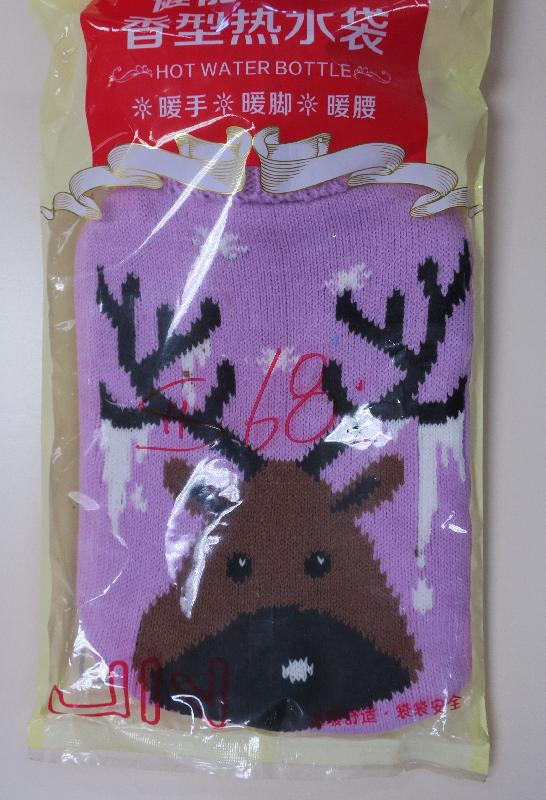
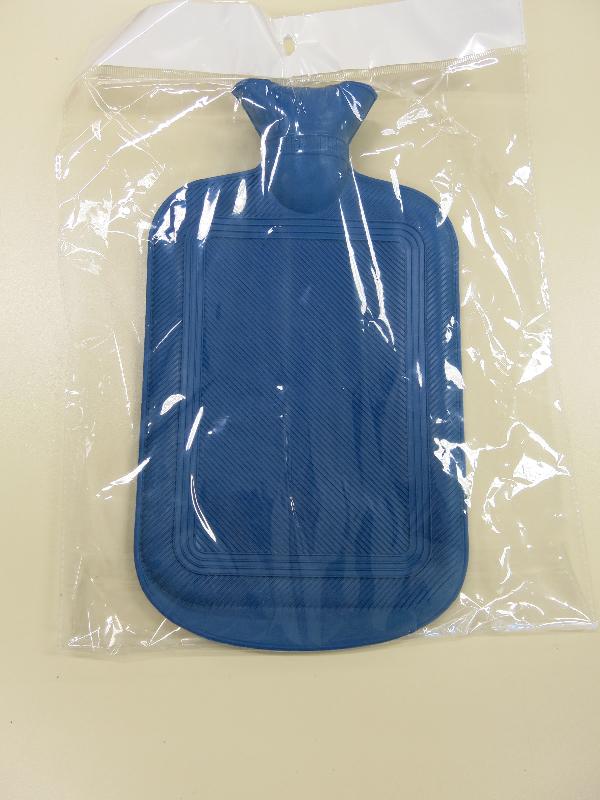
     â€‹Hong Kong Customs today (January 16) alerted members of the public to potential scalding hazards posed by two models of hot water bottles.

     Customs earlier conducted a test-buy operation on nine models of hot water bottles from retailers in the market for safety testing according to relevant European standards. Test results revealed that the seams of two models of hot water bottles could break and pose a risk of scalding.

     Prohibition notices were served on the retailers concerned, prohibiting the continued sale of the relevant hot water bottles. Investigation is ongoing.

     Customs reminds members of the public to observe the following safety tips when using hot water bottle products:
 

  • Check hot water bottles carefully every time before use and stop using them immediately if there is any sign of damage in the seams;
  • Firmly hold the neck of the hot water bottle and remain its vertical position. Pour hot water with caution slowly to avoid overflow;
  • Do not pour boiling water (100 degrees Celsius) into the hot water bottle;
  • Do not pour hot water up to the bottle neck level, considerable space should be left; and
  • Do not fold the hot water bottle.

     Customs has been committed to the protection of consumer interests and regularly conducts spot checks and safety tests on consumer goods to ensure that they are reasonably safe for use by consumers.

     Under the Consumer Goods Safety Ordinance, it is an offence to supply, manufacture or import into Hong Kong consumer goods unless the goods comply with the general safety requirements for consumer goods. The maximum penalty upon conviction is a fine of $100,000 and imprisonment for one year on first conviction, and $500,000 and imprisonment for two years on subsequent conviction.

     Members of the public with information relating to unsafe consumer goods may make a report via Customs’ 24-hour hotline 2545 6182 or its dedicated crime-reporting email account (crimereport@customs.gov.hk).
Photo  Photo  
read more

Volume and price statistics of external merchandise trade in November 2019

     Further to the external merchandise trade statistics in value terms for November 2019 released earlier on, the Census and Statistics Department (C&SD) released today (January 16) the volume and price statistics of external merchandise trade for that month.
 
     In November 2019, the volume of Hong Kong’s total exports of goods decreased by 1.3% over November 2018. Concurrently, the volume of imports of goods decreased by 5.9%.
 
     Comparing the first eleven months of 2019 with the same period in 2018, the volume of Hong Kong’s total exports of goods decreased by 5.8%. Concurrently, the volume of imports of goods decreased by 8.1%.
 
     Comparing the three-month period ending November 2019 with the preceding three months on a seasonally adjusted basis, the volume of total exports of goods increased by 1.2%. On the other hand, the volume of imports of goods decreased by 1.7%.
 
     Changes in volume of external merchandise trade are derived from changes in external merchandise trade value with the effect of price changes discounted.
 
     Comparing November 2019 with November 2018, the prices of total exports of goods decreased by 0.2%. On the other hand, the prices of imports of goods increased by 0.1%.
 
     As regards price changes in the first eleven months of 2019 over the same period in 2018, the prices of total exports of goods and imports of goods both increased by 1.3%.
 
     Price changes in external merchandise trade are reflected by changes in unit value indices of external merchandise trade, which are compiled based on average unit values or, for certain commodities, specific price data.
 
     The terms of trade index is derived from the ratio of price index of total exports of goods to that of imports of goods. Compared with the same periods in 2018, the index decreased by 0.3% in November 2019 and 0.1% in the first eleven months of 2019.

     Changes in the unit value and volume of total exports of goods by main destination are shown in Table 1.
 
     Comparing November 2019 with November 2018, double-digit declines were recorded for the total export volume to the USA (-22.6%) and Japan (-14.9%). On the other hand, the total export volume to India (1.7%), Taiwan (2.0%) and the mainland of China (the Mainland) (3.8%) increased.
 
     Over the same period of comparison, the total export prices to India (-1.6%), Taiwan (-1.4%), Japan (-1.2%) and the USA (-0.1%) decreased. On the other hand, the total export prices to the Mainland increased by 1.2%.
 
     Changes in the unit value and volume of imports of goods by main supplier are shown in Table 2.
 
     Comparing November 2019 with November 2018, the import volume from Singapore (-8.1%), the Mainland (-7.7%) and Japan (-3.4%) decreased. On the other hand, the import volume from Korea (6.6%) and Taiwan (19.4%) increased.
 
     Over the same period of comparison, the import prices from Japan increased by 0.4%. On the other hand, the import prices from the Mainland (-0.3%), Taiwan (-0.5%), Korea (-1.1%) and Singapore (-1.7%) decreased.
 
Further information
 
     Details of the above statistics are published in the November 2019 issue of “Hong Kong Merchandise Trade Index Numbers”.  Users can download the publication free of charge at the website of the C&SD (www.censtatd.gov.hk/hkstat/sub/sp230.jsp?productCode=B1020006).
 
     Enquiries on merchandise trade indices may be directed to the Trade Analysis Section (1) of the C&SD (Tel: 2582 4918). read more

Revised edition of “Hong Kong Filmography Volume I” put on sale (with photo)

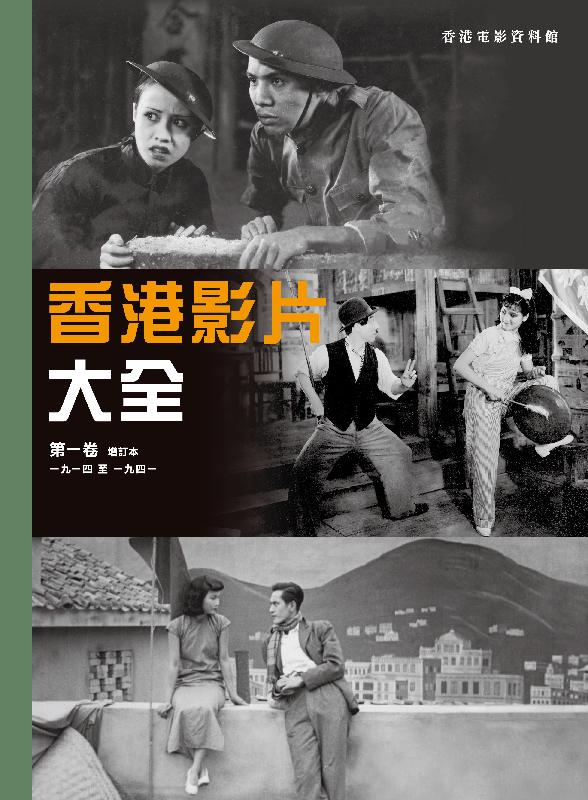
     The revised edition of “Hong Kong Filmography Volume I” produced by the Hong Kong Film Archive (HKFA) of the Leisure and Cultural Services Department is now on sale.

     Featuring a total of 670 Hong Kong movies from 1914 to 1941, the revised edition of “Hong Kong Filmography Volume I” offers important reference material for film studies experts and lets readers explore Hong Kong’s pre-war movies. It provides information on 582 fiction films and 88 documentaries, including film release dates, languages, genres, cast and crew, synopses, directors’ notes, remarks and songs, as well as a film list and three indices. 

     The content of “Hong Kong Filmography Volume I” has been revised based on the first edition published in 1997, and includes amendments and additions from the HKFA’s latest research. Apart from including information extracted from Chinese and overseas newspapers, publications and online databases, the HKFA has enriched the content of the revised edition through different new sources, such as the HKFA’s newly acquired film brochures and stills, film copies from the 1930s and 1940s found in the US, and classification documents submitted to the US authorities before films were released there.

     The revised edition of “Hong Kong Filmography Volume I” (printed in Chinese), priced at $255 and with 352 pages including 24 pages of full-colour brochure covers, is now available at the box office of the HKFA. For more details on the publication and the sales outlets, please visit www.lcsd.gov.hk/CE/CulturalService/HKFA/en_US/web/hkfa/publications_souvenirs/pub/hkfilmographyseries/hkfilmographyseries_detail_revised01.html.

Photo  
read more

Monthly ovitrap index for Aedes albopictus of December 2019 remains at low level

     The Food and Environmental Hygiene Department (FEHD) today (January 16) announced that the monthly ovitrap index for Aedes albopictus for December 2019 dropped to 0.1 per cent from 1.1 per cent in November last year, indicating that the infestation of Aedes albopictus in the areas surveyed was not extensive and the ovitrap index remained at a low level.

     After months of enhanced collaborative efforts by various departments in mosquito prevention and control work, no area has recorded an Area Ovitrap Index (AOI) exceeding the alert level of 20 per cent since August last year. Moreover, the FEHD’s year-end clean-up operation, during which mosquito preventive and control work has been enhanced, commenced on December 31 last year. The district offices of the FEHD have also targeted places which have drawn particular concern, such as old tenement buildings, rear lanes, village houses and construction sites, to intensify anti-mosquito work according to each district’s circumstances.

     A spokesman for the FEHD said, “Aedes albopictus is a kind of mosquito that can transmit dengue fever (DF) as well as the Zika virus infection. DF is commonly found in tropical and subtropical regions of the world, and has become endemic in many countries in Southeast Asia. The World Health Organization also issued warnings that the number of DF cases recorded in Asia last year was higher than before. Since Hong Kong recorded one local DF case last year and the dengue activity in neighbouring areas has remained high, while the breeding and activity of mosquitoes also continue in the winter season, the community must stay vigilant and continue to carry out effective mosquito prevention and control measures. The FEHD and relevant government departments will continue their mosquito preventive and control work covering areas under their purview.”

     Among the 57 areas surveyed last month, positive ovitrap indices, ranging from 0.8 per cent to 2.1 per cent, were recorded in five areas. As for the port areas, the monthly ovitrap index for Aedes albopictus for December fell to zero from 0.1 per cent in November.

     The spokesman added that as Aedes albopictus breeds in small water bodies, members of the public should carry out effective mosquito prevention and control measures, including inspecting their homes and surroundings to remove potential breeding grounds, changing the water in vases and scrubbing the inner surface as well as removing the water in saucers under potted plants at least once a week, properly disposing of containers such as soft drink cans and lunch boxes, and drilling large holes in unused tyres. He also advised public and estate management bodies to keep drains free of blockage and level all defective ground surfaces to prevent accumulation of water. They should also scrub all drains and surface sewers with an alkaline detergent at least once a week to remove any mosquito eggs.

     In addition, rural areas and the vicinity of shrubby areas are natural habitats for mosquitoes, other insects and animals. Members of the public living in rural areas may install mosquito screens on windows and doors if necessary. Those staying in the natural environment should take appropriate personal protective measures against mosquitoes, such as avoiding staying in the vicinity of shrubby areas for a long time, wearing light-coloured long-sleeved clothes and trousers, and applying DEET-containing insect repellent. Members of the public are reminded to make reports to relevant government departments via 1823 if mosquito problems are detected.
     ã€€
     The spokesman reminded travellers to take the following precautionary measures when visiting areas where mosquito-borne diseases are prevalent during the Lunar New Year holidays:

* Wear light-coloured, long-sleeved clothes and trousers;
* Use insect repellents over exposed parts of the body when outdoors; and
* Use mosquito screens or nets when a room is not air-conditioned.

     Travellers returning from these places should seek medical advice if they have symptoms such as fever, severe headache or muscle and joint pain. They should also inform their doctor of their travel history.
     ã€€
     The ovitrap indices for Aedes albopictus in different areas and information on mosquito prevention and control measures are available on the department website at www.fehd.gov.hk. read more