Tag Archives: China

image_pdfimage_print

CHP provides latest information on pneumonia cases of novel coronavirus infection in Mainland and Korea and revises reporting criteria

     The Centre for Health Protection (CHP) of the Department of Health (DH) today (January 20) received notification from the National Health Commission (NHC) on the latest information on the pneumonia cases of the novel coronavirus infection detected in the Mainland. The public is again urged to maintain strict personal, food and environmental hygiene both locally and during travel.
 
     According to the information from the NHC, from January 18 to 10pm yesterday (January 19), 136 additional pneumonia cases of the novel coronavirus infection in Wuhan were reported. The patients comprised 66 males and 70 females, aged 25 to 89, who developed symptoms before January 18 this year. Most presented with fever, cough or chest tightness, and shortness of breath. According to the newly revised treatment plan, patients’ medical conditions are classified as either stable, serious or critical. Among the additional cases, 100 are in stable condition, 33 are in serious condition, and three are in critical condition, with one of them having died.

     As of 10pm yesterday, the total number of novel coronavirus infections in Wuhan was 198 cases. Among them, 25 patients have been discharged, and three have died. Currently, 170 are still hospitalised. Among them, 126 patients are in stable condition, 35 are in serious condition and nine are in critical condition. A total of 817 close contacts have been identified. All have been put under medical surveillance, with 727 of them having completed the surveillance. No related cases have been detected so far.
 
     Separately, according to the information from the NHC, a medical institution in the Daxing District of Beijing yesterday received two patients who had been to Wuhan. Both patients have presented with fever but with no respiratory symptoms at the moment. Upon testing and evaluation, both were confirmed pneumonia cases of the novel coronavirus infection. They are currently receiving treatment in isolation and are in stable condition. Medical surveillance against close contacts has been initiated, and no abnormalities such as fever have been detected among them so far.
 
     The Health Commission of Guangdong Province also reported that the first imported pneumonia case of the novel coronavirus infection was confirmed yesterday. The patient is a 66-year-old man residing in Shenzhen, who travelled to Wuhan on December 29 last year and developed symptoms including fever and generalised weakness on January 3 this year. He sought medical attention in Shenzhen on January 4 and was transferred to receive treatment in isolation on January 11. Upon laboratory testing, he tested positive for the novel coronavirus. The Guangdong Province has commenced relevant contact tracing against close contacts.
 
     In addition, the CHP has been closely monitoring the first confirmed case of infection of the novel coronavirus in Korea. According to the information from the Korea Centers for Disease Control and Prevention, the case involved a 35-year-old female, who came from Wuhan, Hubei Province. She arrived in Korea on January 19 and was detected to be having a fever. She subsequently tested positive for the novel coronavirus upon laboratory testing.
 
     In view of the latest situation and risk assessment, the CHP will enhance surveillance of suspected cases and revise the reporting criteria of Severe Respiratory Disease associated with a Novel Infectious Agent. Details are as follows:
 
     Medical practitioners are requested to make a report to the CHP for further investigation if they encounter an individual with fever and acute respiratory illness, or pneumonia, and who had experienced one of the following within 14 days prior to the onset of symptoms: (a) visited Hubei Province (regardless of whether the individual had visited wet markets or seafood markets there); or (b) visited a medical hospital in the Mainland; or (c) had close contact with a confirmed case of the novel coronavirus while that patient was symptomatic.
 
     After reviewing the latest situation, the DH would impose a health declaration form system on inbound travellers by air from Wuhan under the Prevention and Control of Disease Regulation (Cap 599A) starting from midnight tomorrow (January 21). These travellers will be required to complete and submit a health declaration form. If they are found to have fulfilled the reporting criteria of identifying Severe Respiratory Disease associated with a Novel Infectious Agent, they will be compulsorily referred to public hospitals for isolation, treatment and follow-up.
 
     A spokesman for the CHP said, “The CHP will issue letters to doctors and private hospitals to inform them of the revised reporting criteria. The CHP will continue to maintain its liaison with the NHC, the World Health Organization and overseas health authorities, and closely monitor the situation for risk assessment.”
 
     The spokesman reminded the public to avoid close contact with persons with fever or respiratory symptoms in countries/areas with possible transmission of the novel coronavirus infection. If it is unavoidable to come into contact with them, put on a surgical mask and continue to do so until 14 days after returning to Hong Kong.
 
      A dedicated webpage (www.chp.gov.hk/en/features/102465.html) has been set up by the CHP to provide relevant information and health advice on Severe Respiratory Disease associated with a Novel Infectious Agent. Information on the affected countries/areas is available from the following webpage: www.chp.gov.hk/files/pdf/statistics_of_the_cases_novel_coronavirus_infection.pdf.
 
     To prevent pneumonia and respiratory tract infection, members of the public should always maintain good personal and environmental hygiene. They are advised to:
 
• Perform hand hygiene frequently, especially before touching the
mouth, nose or eyes; after touching public installations such as handrails or door knobs; or when hands are contaminated by respiratory secretions after coughing or sneezing;
• Maintain drainage pipes properly and regularly (about once a week) pour about half a liter of water into each drain outlet (U-traps) to ensure environmental hygiene;
• Wash hands with liquid soap and water, and rub for at least 20 seconds. Then rinse with water and dry with a disposable paper towel. If hand washing facilities are not available, or when hands are not visibly soiled, performing hand hygiene with 70 to 80 per cent alcohol-based handrub is an effective alternative;
• Cover your mouth and nose with tissue paper when sneezing or coughing. Dispose of soiled tissues into a lidded rubbish bin, then wash hands thoroughly; and
• When having respiratory symptoms, wear a surgical mask, refrain from work or attending class at school, avoid going to crowded places and seek medical advice promptly.
 
     The public should take heed of the health advice below when travelling outside Hong Kong:
 
• Avoid close contact with persons with fever or respiratory symptoms in countries/areas with possible transmission of the novel coronavirus infection. If it is unavoidable to come into contact with them, put on a surgical mask and continue to do so until 14 days after returning to Hong Kong;
• Avoid visiting hospitals. If it is necessary to visit a hospital, put on a surgical mask and observe strict personal and hand hygiene;
• Avoid touching animals (including game), poultry/birds or their droppings;
• Avoid visiting wet markets, live poultry markets or farms;
• Avoid making close contact with patients, especially those with symptoms of acute respiratory infections;
• Do not consume game meat and do not patronise food premises where game meat is served;
• Adhere to food safety and hygiene rules such as avoiding consuming raw or undercooked animal products, including milk, eggs and meat, or foods which may be contaminated by animal secretions, excretions (such as urine) or contaminated products, unless they have been properly cooked, washed or peeled;
• If feeling unwell when outside Hong Kong, especially if experiencing a fever or cough, wear a surgical mask, inform the hotel staff or tour escort and seek medical advice at once; and
• After returning to Hong Kong, consult a doctor promptly if experiencing a fever or other symptoms, take the initiative to inform the doctor of any recent travel history and any exposure to animals, and wear a surgical mask to help prevent spread of the disease. read more
Hong Kong Customs spares no effort to combat dangerous drug activities between Hong Kong and Macao (with photos)

     â€‹Hong Kong Customs is sparing no effort to combat dangerous drug activities between Hong Kong and Macao and a total of 65 cross-boundary drug trafficking cases were detected last year through intelligence exchanges and joint operations. Various types of dangerous drugs with a total weight of 5.6 kilograms were seized and 68 persons were arrested.

     The cases happened at Hong Kong International Airport, the Hong Kong-Zhuhai-Macao Bridge Hong Kong Port, the Hong Kong-Macau Ferry Terminal and the China Ferry Terminal. Of the 65 cases detected, 56 were outbound cases and the rest were inbound ones.

     The arrested persons comprise 60 men and eight women aged between 15 and 61. Of them, seven were under 18. 

     The drugs seized included 3.7kg of cocaine, 1.4kg of heroin, 147 grams of ketamine, 206g of methamphetamine, 92g of cannabis and 115 tablets of ecstasy. The drugs seized carried a market value of around $5.5 million in total.

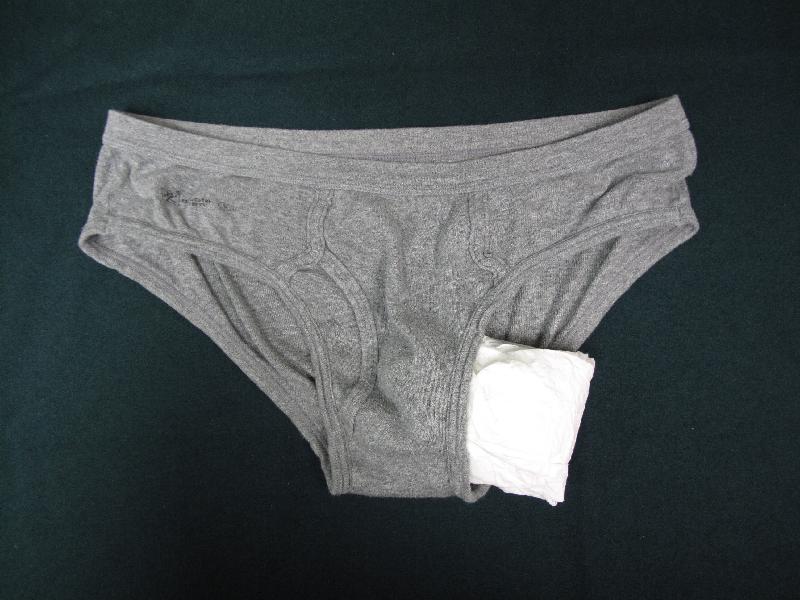
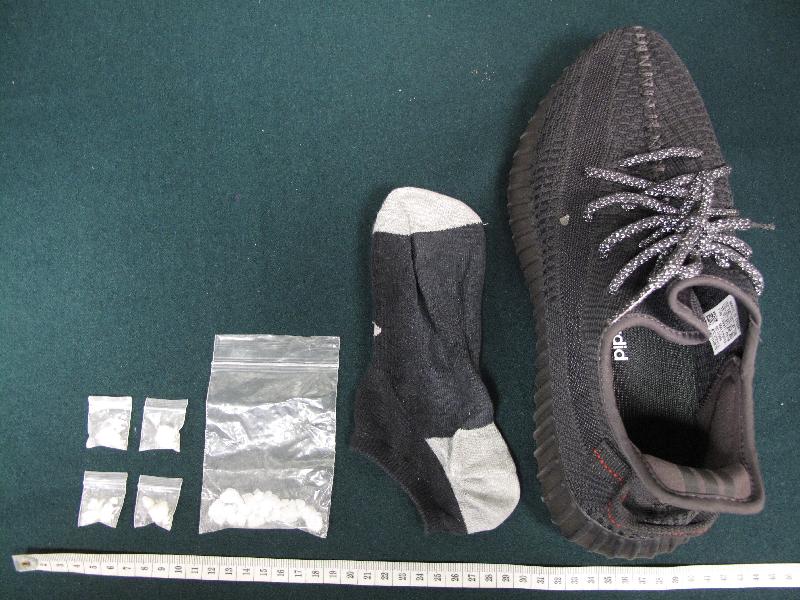
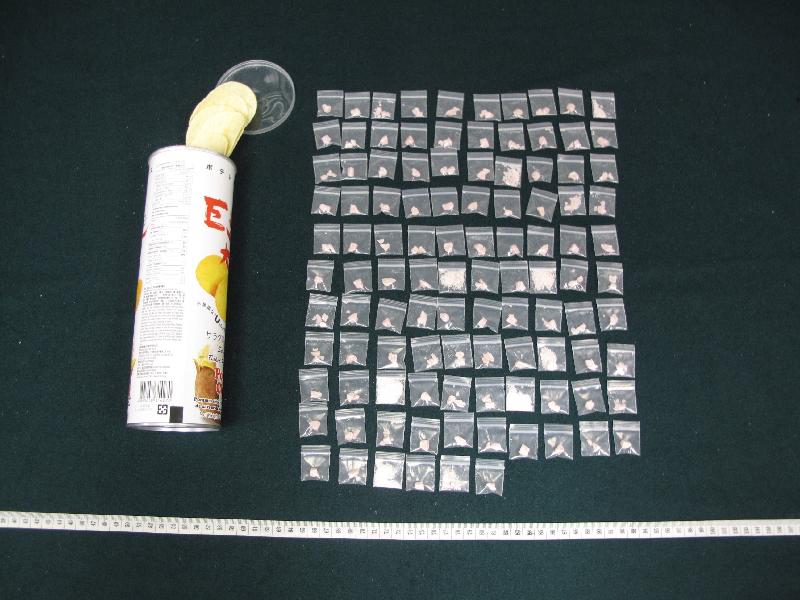
     The traffickers attempted to transport the drugs in various ways. Apart from hiding drugs in apparel and backpacks, some also used suitcases and food containers. Small amounts of suspected drugs were involved in most cases. In one case, one pack of suspected cocaine with a weight of 1.9kg was found inside the false compartment of a luggage case of a traveller at the Hong Kong-Macau Ferry Terminal.

     Compared with the 2018 figures, 30 more trafficking cases across the two places were detected in 2019, representing an increase of about 85.7 per cent. In terms of the number of arrests, 31 more were made, making for an increase of about 83.8 per cent. There was also a 49.8 per cent jump in terms of the seizure quantity.

     An upward trend was seen in the cross-boundary drug trafficking cases across the two places. Hong Kong Customs will continue its risk profiling and intelligence analysis strategy, as well as step up intelligence exchanges and joint operations with its Macao counterpart in order to intercept drugs in both inbound and outbound channels.

     The Lunar New Year is just around the corner and the department has stepped up its deployment at all control points to hit drug activities before and during the festive period.

     Members of the public are once again reminded that criminals may post recruitment advertisements on unknown websites and social media platforms to lure citizens into carrying dangerous drugs or various controlled items. They should stay alert and not carry unknown items for other people.

     Under the Dangerous Drugs Ordinance, trafficking in a dangerous drug is a serious offence. The maximum penalty upon conviction is a fine of $5 million and life imprisonment.

     Members of the public may report any suspected drug trafficking activities to Customs’ 24-hour hotline 2545 6182 or its dedicated crime-reporting email account (crimereport@customs.gov.hk).

Photo  Photo  Photo  
read more

Update on cases of Legionnaires’ disease

     The Centre for Health Protection (CHP) of the Department of Health today (January 20) reported the latest number of cases of Legionnaires’ disease (LD), and stressed the importance of using and maintaining properly designed man-made water systems, adding that susceptible groups should strictly observe relevant precautions.
 
     From January 12 to 18, two community-acquired LD cases were reported:

1. A male patient, aged 67 with underlying illnesses, who lives in Kwai King House, Siu Shan Court, Tuen Mun; and
2. A male patient, aged 88 with underlying illnesses, who lives in Block C, Sunway Gardens, 989-991A King’s Road, Quarry Bay.
 
     “Epidemiological investigations are ongoing to identify potential sources of infection, high-risk exposure and clusters, if any,” a spokesman for the CHP said. 
 
     As of January 18 this year, three LD cases had been reported. In 2019 and 2018, there were 105 cases each year.
 
     “Men, people aged over 50, smokers, alcoholics and persons with weakened immunity are more susceptible to LD. Some situations may also increase the risk of infection including poor maintenance of water systems leading to stagnant water; living in areas with old water systems, cooling towers or fountains; using electric water heaters, whirlpools and spas or hot water spring spas; and recent stays in hotels or vessels,” the spokesman said.
 
     Legionellae are found in various environmental settings and grow well in warm water (20 to 45 degrees Celsius). They can be found in aqueous environments such as water tanks, hot and cold water systems, cooling towers, whirlpools and spas, water fountains and home apparatus which support breathing. People may become infected when they breathe in contaminated droplets (aerosols) and mist generated by artificial water systems, or when handling garden soil, compost and potting mixes.
 
     Immunocompromised persons should:
  

  • Use sterile or boiled water for drinking, tooth brushing and mouth rinsing;
  • Avoid using humidifiers, or other mist- or aerosol-generating devices. A shower may also generate small aerosols; and
  • If using humidifiers, or other mist- or aerosol-generating devices, fill the water tank with only sterile or cooled freshly boiled water, and not water directly from the tap. Also, clean and maintain humidifiers/devices regularly according to manufacturers’ instructions. Never leave stagnant water in a humidifier/device. Empty the water tank, wipe all surfaces dry, and change the water daily.

    The public should observe the health advice below:
 
  • Observe personal hygiene;
  • Do not smoke and avoid alcohol consumption;
  • Strainers in water taps and shower heads should be inspected, cleaned, descaled and disinfected regularly or at a frequency recommended by the manufacturer;
  • If a fresh water plumbing system is properly maintained, it is not necessary to install domestic water filters. Use of water filters is not encouraged as clogging occurs easily, which can promote growth of micro-organisms. In case water filters are used, the pore size should be 0.2 micrometres (µm) and the filter needs to be changed periodically according to the manufacturer’s recommendations;
  • Drain and clean water tanks of buildings at least quarterly;
  • Drain or purge for at least one minute infrequently used water outlets (e.g. water taps, shower heads and hot water outlets) and stagnant points of the pipework weekly or before use;
  • Seek and follow doctors’ professional advice regarding the use and maintenance of home respiratory devices and use only sterile water (not distilled or tap water) to clean and fill the reservoir. Clean and maintain the device regularly according to the manufacturer’s instructions. After cleaning/disinfection, rinse the device with sterile water, cooled freshly boiled water or water filtered with 0.2 µm filters. Never leave stagnant water in the device. Empty the water tank, keep all surfaces dry, and change the water daily; and
  • When handling garden soil, compost and potting mixes:
     1. Wear gloves and a face mask;
     2. Water gardens and compost gently using low pressure;
     3. Open composted potting mixes slowly and make sure the opening is directed away from the face;
     4. Wet the soil to reduce dust when potting plants; and
     5. Avoid working in poorly ventilated places such as enclosed greenhouses.

     The public may visit the CHP’s LD page, the Code of Practice for Prevention of LD and the Housekeeping Guidelines for Cold and Hot Water Systems for Building Management of the Prevention of LD Committee, and the CHP’s risk-based strategy for prevention and control of LD. read more

Suspected MERS case reported

     The Centre for Health Protection (CHP) of the Department of Health today (January 20) reported a suspected case of Middle East Respiratory Syndrome (MERS), and again urged the public to pay special attention to safety during travel, taking due consideration of the health risks in the places they visit. The case is detailed below:
 

Sex Male
Age 21
Affected area involved Saudi Arabia
High-risk exposure Nil
Hospital Yan Chai Hospital
Condition Stable
MERS-Coronavirus preliminary test result Negative
 
     “Travellers to the Middle East should avoid going to farms, barns or markets with camels; avoid contact with sick persons and animals, especially camels, birds or poultry; and avoid unnecessary visits to healthcare facilities. We strongly advise travel agents organising tours to the Middle East to abstain from arranging camel rides and activities involving direct contact with camels, which are known risk factors for acquiring MERS Coronavirus (MERS-CoV),” a spokesman for the CHP said.

     Locally, the CHP’s surveillance with public and private hospitals, with practising doctors and at boundary control points is firmly in place. Inbound travellers and members of the public who recently visited the Middle East and developed relevant symptoms within 14 days will be classified as suspected MERS cases. They will be taken to public hospitals for isolation and management until their specimens test negative for MERS-CoV.

     Travellers to affected areas should maintain vigilance, adopt appropriate health precautions and take heed of personal, food and environmental hygiene. The public may visit the MERS pages of the CHP and its Travel Health Service, MERS statistics in affected areas, the CHP’s Facebook Page and YouTube Channel, and the World Health Organization’s latest news for more information and health advice. Tour leaders and tour guides operating overseas tours are advised to refer to the CHP’s health advice on MERS. read more