Tag Archives: China

image_pdfimage_print

CE and Principal Officials kick off distribution work of donated surgical masks (with photos/video)

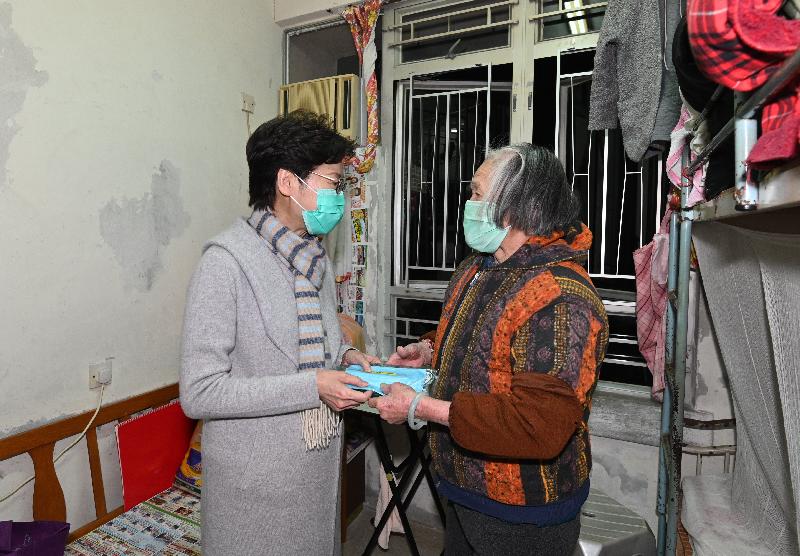
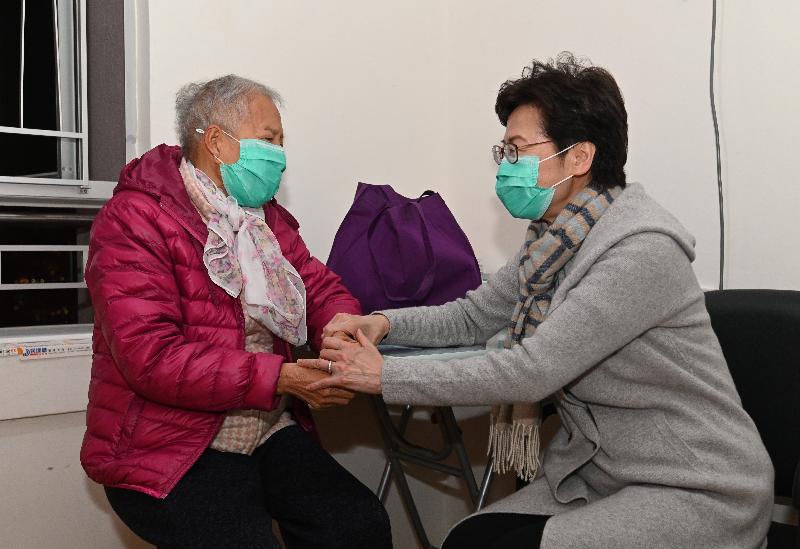
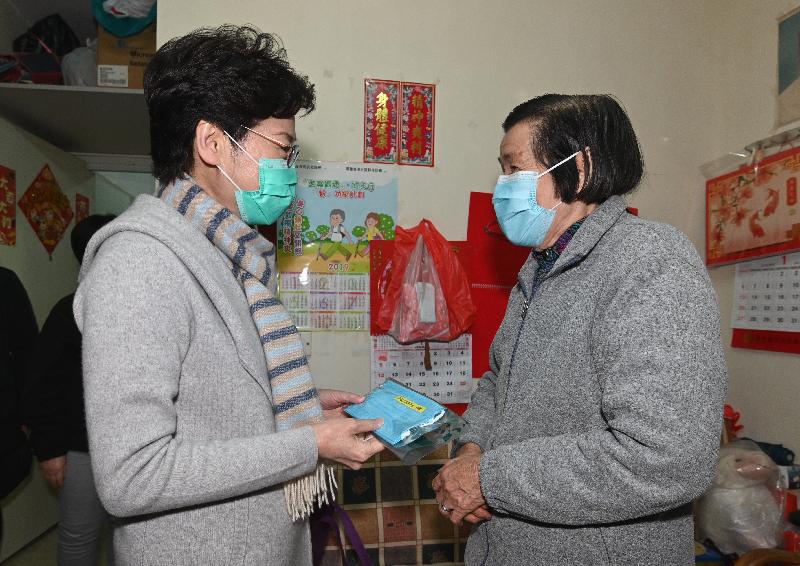
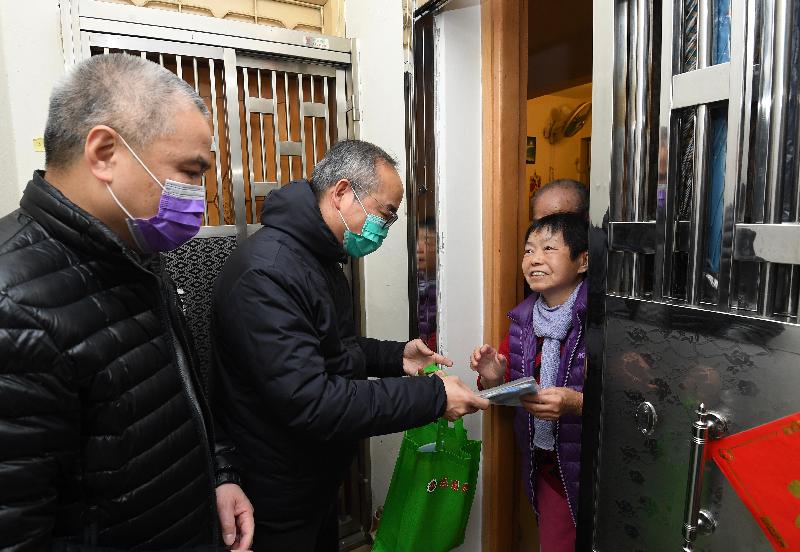
     The Chief Executive, Mrs Carrie Lam, the Secretary for Home Affairs, Mr Lau Kong-wah and the Secretary for Labour and Welfare, Dr Law Chi-kwong, yesterday evening (February 17) joined various non-governmental organisations (NGOs) to distribute surgical masks to the elderly and grassroots families in need at different districts. The surgical masks were donated by private organisations to the Government earlier. Other Principal Officials will later join other NGOs to conduct visits and distribute surgical masks.

      Together with Po Leung Kuk, Mrs Lam went to Tak Tin Estate in Lam Tin to distribute surgical masks, food, leaflets with health information and other goods to a few Comprehensive Social Security Assistance recipients who are also elderly living alone, conveying to them their warmest regards. Mrs Lam then visited the social housing units of Lok Sin Tong in Kowloon City and some subdivided units in the vicinity. While distributing surgical masks with the staff of Lok Sin Tong to the grassroots families, Mrs Lam also learned about their living conditions.

      Meanwhile, Mr Lau and Dr Law went to Mong Kok and Tai Kok Tsui with the Mong Kok Kai Fong Association Limited and the Tung Wah Group of Hospitals respectively to distribute to the elderly and the grassroots families anti-epidemic bags with surgical masks, alcohol-based handrub and cleansing products.

      Due to the disease, the global supply of surgical masks remains tight and members of the public have difficulty in buying masks. The Chief Executive has therefore decided to pass several batches of surgical masks donated by the Ng Teng Fong Charitable Foundation and other persons to the Hong Kong Special Administrative Region Government to NGOs so that they can re-distribute them to the underprivileged, especially the elderly. There are in total about 1.6 million such surgical masks. The move is aimed at sharing the relatively scarce resources with the community so as to fight the disease together. The Government will continue to increase the overall supply of surgical masks in Hong Kong through a multi-pronged approach and has substantially suppressed the usage of surgical masks by government departments. Priority will continue to be accorded to healthcare staff and other officers providing emergency public services in the distribution of surgical masks.

      Mrs Lam said, “I appeal to the whole community to stay united and fight the disease together. Members of the public can support the Government’s disease prevention and control efforts by staying at home as much as possible and reducing social contacts so as to minimise the risk of the spread of the disease and reduce the consumption of surgical masks.”     
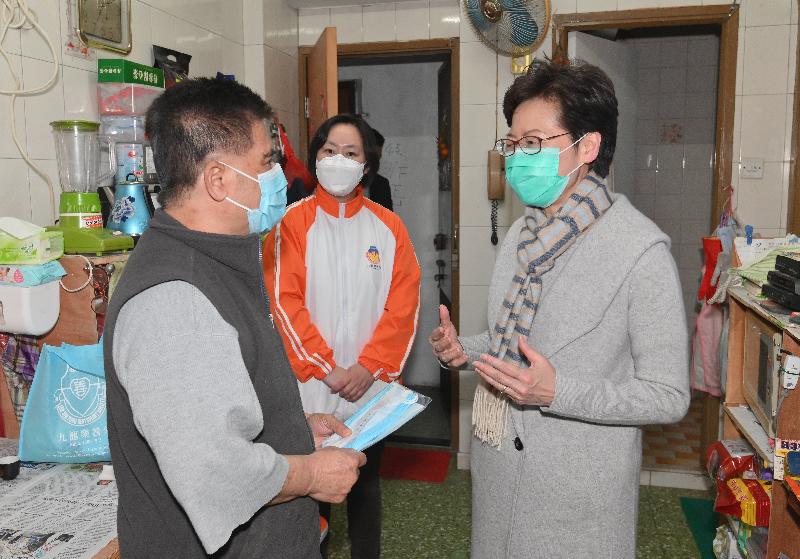
Photo  Photo  Photo  Photo  Photo  Photo  Photo  Photo  
read more

CHP investigates cluster of Legionnaires’ disease

     The Centre for Health Protection (CHP) of the Department of Health is today (February 17) investigating a cluster of Legionnaires’ disease (LD) cases involving 12 patients and stressed the importance of using and maintaining properly designed man-made water systems and that susceptible groups should strictly observe relevant precautions.
      
     Further to the CHP’s announcements on a cluster of LD cases on February 1, 3, 6, 7, 10,11 and 13, one additional LD case relevant to the cluster has been recorded today, accumulating a total of 10 male and two female patients aged 65 to 84.

     The male patient, aged 72 with underlying illness, lives in Kam Shek House, Ping Shek Estate, Kwun Tong. The patient’s sample tested positive for Legionella pneumophila.

     “Epidemiological investigations revealed that the patient developed symptoms on February 4 and had no travel history in the incubation period (IP). The CHP is following up on the collection of environmental and water samples and continuing its investigation. Investigations are ongoing,” a spokesman for the CHP said.

     “Men, people aged over 50, smokers, alcoholics and persons with weakened immunity are more susceptible to LD. Some situations may also increase the risk of infection including poor maintenance of water systems leading to stagnant water; living in areas with old water systems, cooling towers or fountains; using electric water heaters, whirlpools and spas or hot water spring spas; and recent stays in hotels or vessels,” the spokesman said.
      
     Legionellae are found in various environmental settings and grow well in warm water (20 to 45 degrees Celsius). They can be found in aqueous environments such as water tanks, hot and cold water systems, cooling towers, whirlpools and spas, water fountains and home apparatus which support breathing. People may become infected when they breathe in contaminated droplets (aerosols) and mist generated by artificial water systems, or when handling garden soil, compost and potting mixes.
 
     Immunocompromised persons should:

• Use sterile or boiled water for drinking, tooth brushing and mouth rinsing;
• Avoid using humidifiers, or other mist- or aerosol-generating devices. A shower may also generate small aerosols; and
• If using humidifiers, or other mist- or aerosol-generating devices, fill the water tank with only sterile or cooled freshly boiled water, and not water directly from the tap. Also, clean and maintain humidifiers/devices regularly according to manufacturers’ instructions. Never leave stagnant water in a humidifier/device. Empty the water tank, wipe all surfaces dry, and change the water daily.
 
     The public should observe the health advice below:
 
• Observe personal hygiene;
• Do not smoke and avoid alcohol consumption;
• Strainers in water taps and shower heads should be inspected, cleaned, descaled and disinfected regularly or at a frequency recommended by the manufacturer;
• If a fresh water plumbing system is properly maintained, it is not necessary to install domestic water filters. Use of water filters is not encouraged as clogging occurs easily, which can promote growth of micro-organisms. In case water filters are used, the pore size should be 0.2 micrometres (µm) and the filter needs to be changed periodically according to the manufacturer’s recommendations;
• Drain and clean water tanks of buildings at least quarterly;
• Drain or purge for at least one minute infrequently used water outlets (e.g. water taps, shower heads and hot water outlets) and stagnant points of the pipework weekly or before use;
• Seek and follow doctors’ professional advice regarding the use and maintenance of home respiratory devices and use only sterile water (not distilled or tap water) to clean and fill the reservoir. Clean and maintain the device regularly according to the manufacturer’s instructions. After cleaning/disinfection, rinse the device with sterile water, cooled freshly boiled water or water filtered with 0.2 µm filters. Never leave stagnant water in the device. Empty the water tank, keep all surfaces dry, and change the water daily; and
• When handling garden soil, compost and potting mixes:
    1. Wear gloves and a face mask;
    2. Water gardens and compost gently using low pressure;
    3. Open composted potting mixes slowly and make sure the opening is directed away from the face;
    4. Wet the soil to reduce dust when potting plants; and
    5. Avoid working in poorly ventilated places such as enclosed greenhouses.

     The public may visit the CHP’s LD page, the Code of Practice for Prevention of LD and the Housekeeping Guidelines for Cold and Hot Water Systems for Building Management of the Prevention of LD Committee, and the CHP’s risk-based strategy for prevention and control of LD. read more

Hospital Authority’s follow up on two visitors confirmed with novel coronavirus infection

The following is issued on behalf of the Hospital Authority:

     In response to media enquiry, the spokesperson for Hospital Authority (HA) replies as follows:
 
     The HA noted that two confirmed cases of novel coronavirus infection had visited and participated in the meetings held at the HA Building on February 6 and 7.
      
     The HA will work with the Centre for Health Protection (CHP) on contact tracing. Both meetings were held before symptom onset of the concerned patients. All participants of the meetings have worn face masks. Investigations of the CHP are ongoing.
      
     One of the staff members participated only in the meeting on February 7 has sore throat this evening (February 17). He will be sent to the hospital for the test of novel coronavirus. No other staff members have expressed feeling discomfort.
      
     Since the commencement of the epidemic, the HA Head Office has arranged contractor to perform thorough cleansing and disinfection, and reminded colleagues to pay attention to personal hygiene, including wearing masks and washing hands frequently. The HA will further enhance cleansing in the building’s common areas and meeting rooms. Video-conference will be arranged to reduce social contact where feasible.
      
     The HA will continue to work with the CHP to follow up the cases.
  read more