Tag Archives: China

image_pdfimage_print

Hong Kong Customs detects largest smuggling cigarettes case in past two decades through international co-operation (with photo)

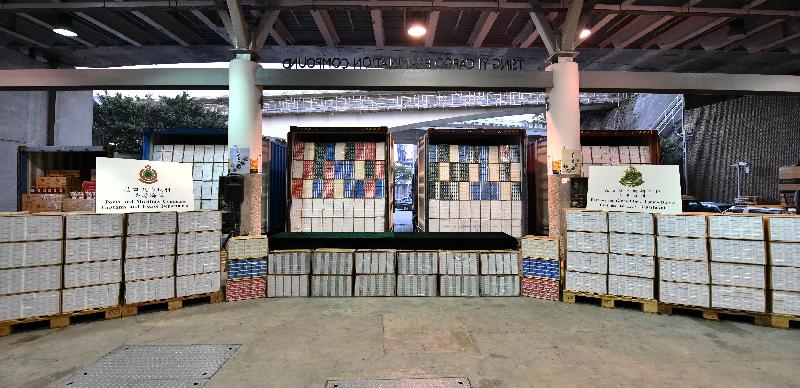
     Through the international co-operation plan “Project Crocodile”, Hong Kong Customs detected a smuggling case with the largest amount of illicit cigarettes. During the operation conducted on February 17 and February 18, a total of about 31 million suspected illicit cigarettes with an estimated market value of about $85 million and a duty potential of about $59 million were seized in Yuen Long, Man Kam To and Tuen Mun respectively. About 2 500 litres of suspected duty-not-paid liquor with an estimated market value of about $3 million and a duty potential of about $1 million were also seized. The total market value and duty potential of the seizures is about $88 million and about $60 million respectively.

     During an anti-illicit cigarette operation conducted at two logistics sites in Yuen Long and a container terminal in Man Kam To on February 17, Customs officers first seized about 22 million suspected illicit cigarettes and about 2 500 litres of suspected duty-not-paid liquor.

     Later, Customs officers inspected a 40-foot container declared to be carrying furniture arriving in Hong Kong at the Customs Cargo Examination Compound of the River Trade Terminal in Tuen Mun on February 18, and seized about 9 million suspected illicit cigarettes inside the container.

     During the operation, Customs officers arrested four men, aged between 24 and 41, and detained a truck suspected to be in connection with the case and five containers arriving in Hong Kong.

     Investigation is ongoing.

     Hong Kong Customs has started to participate in the “Project Crocodile” international co-operation plan in 2004 to jointly monitor with other participating Customs Administrations the movement of all suspicious cigarette shipments when they are imported, re-exported or transshipped across Customs territories. Through intelligence exchanges under the immediate notification system, Hong Kong Customs will take appropriate enforcement actions.

     Smuggling is a serious offence. Under the Import and Export Ordinance, any person found guilty of importing or exporting unmanifested cargo is liable to a maximum fine of $2 million and imprisonment for seven years.

     Members of the public may report any suspected illicit cigarette activities to Customs’ 24-hour hotline 2545 6182 or its dedicated crime-reporting email account (crimereport@customs.gov.hk).

Photo  
read more

CHP reminds public on precautions against cold weather

     The Centre for Health Protection (CHP) of the Department of Health (DH) today (February 19) reminded the public, particularly the elderly and people with chronic illnesses, to adopt appropriate measures to protect their health in view of the cold weather.

     A spokesman for the CHP said that cold weather can easily trigger or exacerbate diseases, especially among the elderly and persons suffering from heart disease, respiratory illness or other chronic illnesses.

     “Elderly people have less insulating fat beneath their skin to keep them warm and their body temperature control mechanism may be weaker. Their body may not be able to appropriately respond to the cold weather,” the spokesman said.

     Some senior persons may have decreased mobility, which can in turn slow down their ability to generate and conserve body heat. Chronic illnesses, such as hypertension, diabetes and endocrine disorders, may undermine the health of elderly people and lower their metabolic rate, subsequently causing their body to generate less heat.

     The CHP reminds the public, in particular the elderly and persons with chronic illnesses, to adopt the following preventive measures:
 

  • Take note of the weather forecast. Wear warm clothing, including hats, scarves, gloves and socks accordingly;
  • Consume sufficient food to ensure adequate calorie intake;
  • Perform regular exercise to facilitate blood circulation and heat production;
  • Stay in a warm environment and avoid prolonged outdoor exposure;
  • Use heaters with care and maintain adequate indoor ventilation; and
  • Seek medical advice if feeling unwell.

     In addition, the public should avoid alcoholic beverages.

     “Drinking alcohol cannot keep you warm. Alcohol accelerates the loss of body heat through dilated blood vessels, resulting in chilling instead,” the spokesman said.

     “Parents should ensure that babies are sufficiently warm, but it is also important to keep babies lightly clothed to avoid overheating them,” the spokesman added.

     Parents should observe the following safety measures when putting their children to bed:
 
  • Keep the room well ventilated and with a comfortable temperature;
  • Always place babies on their back to sleep. Babies usually sleep well without a pillow;
  • Place babies on a firm and well-fitted mattress to sleep. Avoid soft objects and loose bedding;
  • Leave their head, face and arms uncovered during sleep; and
  • Let babies sleep in a cot placed in the parents’ room and near their bed.

     Members of the public are advised to take heed of the following advice to reduce the risk of getting influenza and respiratory tract infections:
 
  • Maintain adequate rest, a balanced diet and regular physical activity, and avoid stress and do not smoke;
  • Maintain good personal and environmental hygiene;
  • Maintain good hand hygiene via proper handwashing or use of alcohol-based handrub;
  • Ensure good ventilation;
  • Wear a face mask in the event of influenza-like symptoms, while taking care of patients and when visiting hospitals or clinics;
  • Cover the nose and mouth while sneezing or coughing. Dispose of soiled tissue paper in a lidded rubbish bin and wash hands immediately afterwards;
  • Seek medical advice when feeling unwell, and stay at home;
  • Receive seasonal influenza vaccination, which is recommended for all persons aged 6 months or above except those with known contraindications; and
  • Persons at higher risk of getting influenza and its complications, including the elderly and persons aged 50 to 64, should receive seasonal influenza vaccination early. Please see details of the Vaccination Subsidy Scheme on the CHP’s website.

     Food-borne diseases, particularly those linked to hot pot cuisine, are also common in cold weather. The following preventive measures should be taken:
  • Wash hands before handling and consuming food;
  • Do not patronise unlicensed vendors or those with poor hygienic standards while selecting food;
  • Wash and cook all food thoroughly;
  • Vegetables should be washed thoroughly in clean running water before cooking and consumption. When appropriate, scrub vegetables with hard surfaces with a clean brush to remove dirt and substances, including pesticide residues and contaminants, from the surface and crevices;
  • Shrimps should be fully cooked by cooking them until the shells turn red and the flesh turns white and opaque;
  • For shellfish like scallops and geoduck, scrub the shells thoroughly and remove internal organs;
  • Most hot pot ingredients should be stored in a refrigerator at 4 degrees Celsius or below, while frozen food should be stored in a freezer at -18 degrees C or below;
  • Never use raw eggs as a dipping sauce for hot pot; and
  • Use different sets of chopsticks to handle raw and cooked food to avoid cross-contamination.

     In addition, the public should not use charcoal as cooking fuel in poorly ventilated areas, especially indoors, to avoid harmful exposure to carbon monoxide (CO) and prevent CO poisoning. While using other kinds of fuel, the public should also ensure adequate ventilation.

     For more health information, the public may call the DH’s Health Education Hotline (2833 0111) or visit the CHP’s website and Facebook Fanpage.

     The public may also call Dial-a-Weather (1878 200) or visit the website of the Hong Kong Observatory for the latest weather information and forecast, or its page on Weather Information for Senior Citizens. read more

Second batch of officers of HKSAR Government fly to Japan for taking back Hong Kong residents on board the Diamond Princess cruise (with photos)

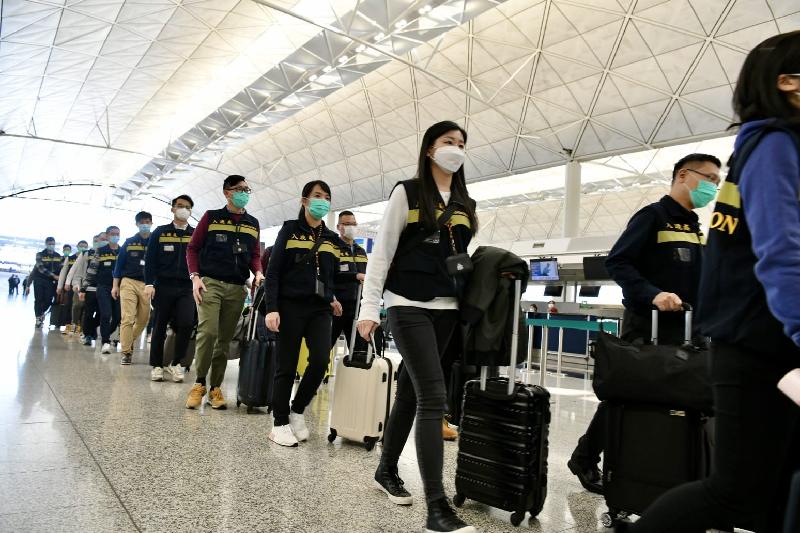
     The second batch of 36 officers of the Hong Kong Special Administrative Region (HKSAR) Government participating in the operation for taking back the Hong Kong residents on board the Diamond Princess cruise to Hong Kong flew to Tokyo, Japan bringing with them the necessary protective gears yesterday afternoon (February 18). They joined the advance team led by the Under Secretary for Security, Mr Sonny Au, and the Director of Immigration, Mr Erick Tsang, with 30 officers arriving Tokyo on February 17 to get prepared for today’s operation for taking back the affected Hong Kong residents to Hong Kong by free chartered flights.

     The HKSAR Government attaches great importance to this operation. It is personally led by Mr Tsang, with support of 50 officers from the Immigration Department (ImmD). A total of eight medical and nursing professionals from the Department of Health (DH) and the Hospital Authority (HA) would also participate in the entire operation to ensure that the operation goes smoothly and the health needs of the Hong Kong residents are being well taken care of during the journey.

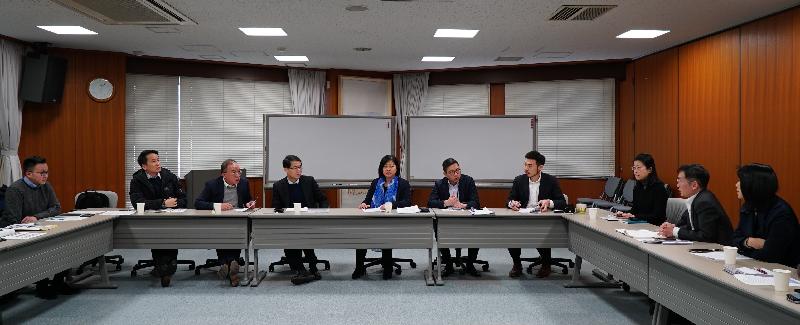
     The advance team held a meeting with the Hong Kong Economic and Trade Office in Tokyo (Tokyo ETO) yesterday morning, and they met with the Embassy of the People’s Republic of China in Japan in the afternoon to discuss collaboration for this operation. Thereafter, the HKSAR Government also met with the cruise operator and the representatives of the Ministry of Foreign Affairs of Japan to learn more about the arrangements and schedules of the disembarkation of the passengers. They also made concrete demands to the Japanese authority, including seeking early confirmation as to whether the Hong Kong residents tested negative for the virus could be released as a whole group on February 19, and the list of Hong Kong residents who are close contacts of the confirmed cases thereby subject to extended quarantine period and their quarantine dates and arrangements. In the event that the concerned Hong Kong residents cannot leave as a whole group on February 19, we have requested the Japanese authority to prioritise those who have opted to take the chartered flight back to Hong Kong for disembarkation on February 19.

     Mr Tsang as the commander of this operation said, “Colleagues of ImmD together with Tokyo ETO, DH and HA have got prepared, and the two chartered flights arranged by the HKSAR Government would be ready today. However, up till now, there are still many uncertainties on the arrangements of the Japanese side, including whether the Japanese authority can have the results of the virus tests for all passengers ready by today as planned, and whether the Hong Kong residents on board are permitted to disembark as a whole group on February 19. We have made our demands to the Japanese authority and pending their response. In the meantime, we are preparing for different possible scenarios. We will make our best effort to take back the affected Hong Kong residents to Hong Kong as early as possible and provide support to those who cannot leave for the time being. In all circumstances, we will do our best to take care of the Hong Kong residents who are permitted to disembark; and for those who are subject to quarantine for further periods or have to stay in Japan for medical treatment, I will arrange officers of ImmD to stay behind to provide them with any assistance as practicable.”

     As of February 18, a total of 542 passengers on board the Diamond Princess cruise docking in Yokohama, Japan have been confirmed infection with the novel coronavirus. There are 352 Hong Kong residents on board, including 260 holding a HKSAR passport and 92 holding a foreign passport, among them there are about 50 confirmed cases of infection with the novel coronavirus.

     Although the Japanese Government has already placed all passengers under quarantine on board the Diamond Princess cruise for 14 days as from February 5, as new confirmed cases of novel coronavirus continue to emerge on board, the DH of the HKSAR Government will have to subject the passengers on board to a 14-day compulsory quarantine at a quarantine centre immediately upon their return to Hong Kong in accordance with the Prevention and Control of Disease Regulation (Cap. 599A). This is an imperative for safeguarding the health of the passengers concerned and the health of their families and for preventing and controlling the spread of the epidemic. This arrangement has been endorsed by the members of the Expert Advisory Group to the Chief Executive (including Professor Gabriel Leung; Professor Yuen Kwok-yung; Professor David Hui Shu-cheong and Professor Keiji Fukuda). According to the professional advice of the experts, the virus remains very active on board and it is prudent for the returning passengers to stay at the quarantine centre upon their return to Hong Kong in order to minimise the health risks to their families and the community. 

     Upon arrival in Hong Kong, transportation will be arranged to transfer the passengers from Hong Kong International Airport to the quarantine centre. For any individual who does not take the chartered flight to Hong Kong, the person will be referred to the Port Health Division for assessment as soon as returning to Hong Kong. The person may be subject to a maximum of 14 days’ quarantine in a designated quarantine centre depending on the situation.

Photo  Photo  
read more