Tag Archives: China

Inspection of aquatic products imported from Japan

     In response to the Japanese Government’s plan to discharge nuclear-contaminated water at the Fukushima Nuclear Power Station, the Director of Food and Environmental Hygiene issued a Food Safety Order which prohibits all aquatic products, sea salt and seaweeds originating from the 10 metropolis/prefectures, namely Tokyo, Fukushima, Ibaraki, Miyagi, Chiba, Gunma, Tochigi, Niigata, Nagano and Saitama, from being imported into and supplied in Hong Kong.
 
     For other Japanese aquatic products, sea salt and seaweeds that are not prohibited from being imported into Hong Kong, the Centre for Food Safety (CFS) of the Food and Environmental Hygiene Department is conducting comprehensive radiological tests to verify that the radiation levels of these products do not exceed the guideline levels before they are allowed to be supplied in the market.
 
     From noon on November 5 to noon today (November 6), the CFS conducted tests on the radiological levels of 236 food samples imported from Japan, which were of the “aquatic and related products, seaweeds and sea salt” category. No sample was found to have exceeded the safety limit. Details can be found on the CFS’s thematic website titled “Control Measures on Foods Imported from Japan” (www.cfs.gov.hk/english/programme/programme_rafs/programme_rafs_fc_01_30_Nuclear_Event_and_Food_Safety.html).
 
     In parallel, the Agriculture, Fisheries and Conservation Department (AFCD) has also tested 50 samples of local catch for radiological levels. All the samples passed the tests. Details can be found on the AFCD’s website (www.afcd.gov.hk/english/fisheries/Radiological_testing/Radiological_Test.html).
 
     The Hong Kong Observatory (HKO) has also enhanced the environmental monitoring of the local waters. No anomaly has been detected so far. For details, please refer to the HKO’s website (www.hko.gov.hk/en/radiation/monitoring/seawater.html).
 
     From August 24, 2023, to noon today, the CFS and the AFCD have conducted tests on the radiological levels of 273 291 samples of food imported from Japan (including 170 098 samples of aquatic and related products, seaweeds and sea salt) and 58 162 samples of local catch respectively. All the samples passed the tests. read more

Cross-boundary forgery and illegal worker syndicate shut down by Immigration Department (with photos)

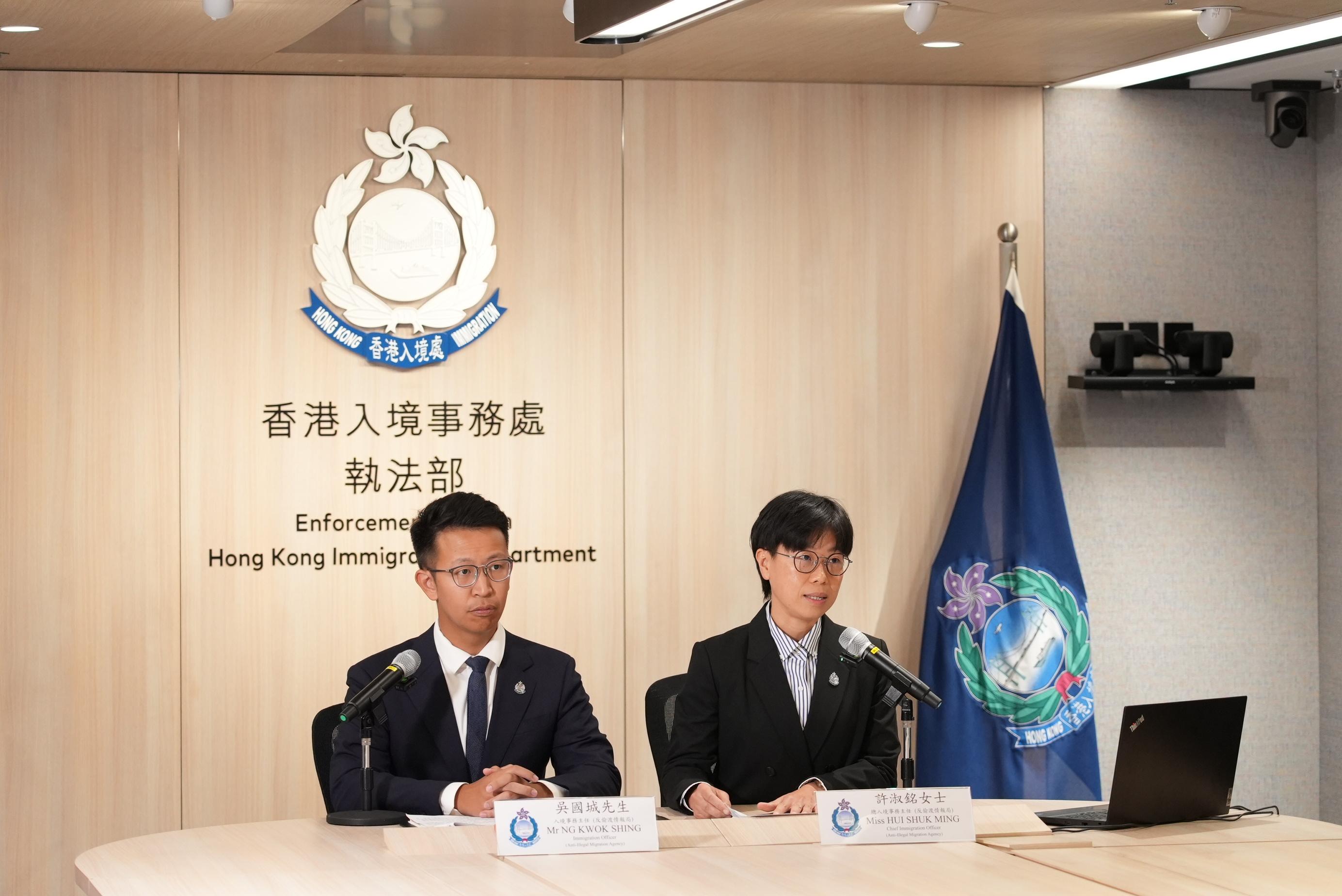
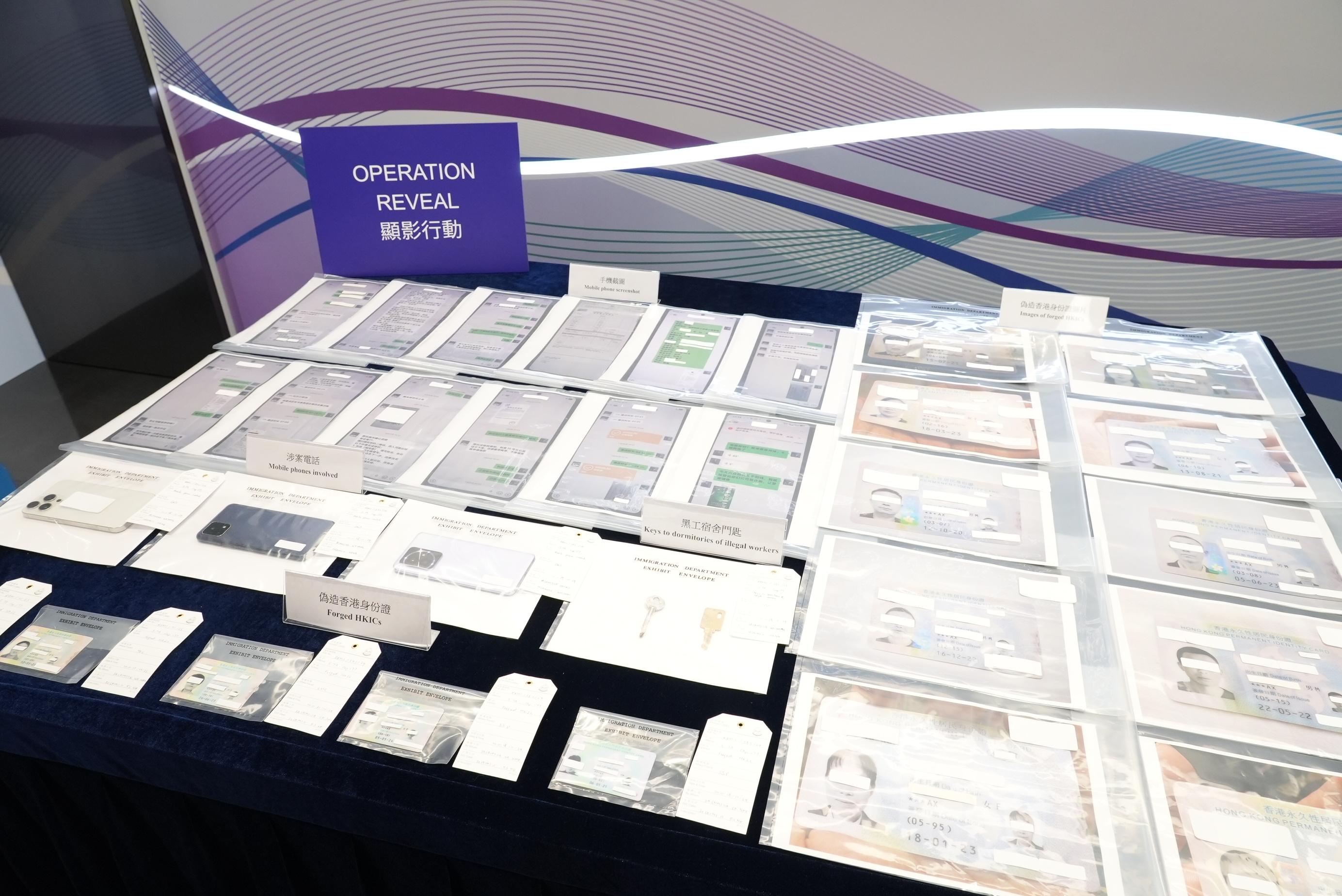
     The Immigration Department (ImmD) neutralised a cross-boundary forgery and illegal worker syndicate, resulting in the arrest of a total of 15 persons, comprising two masterminds, a syndicate member, 11 illegal workers, a suspected Hong Kong resident employer, and the seizure of a large amount of forged Hong Kong identity cards, images and copies of forged Hong Kong identity cards.

     In January 2024, ImmD officers intercepted a Mainland visitor at the Lok Ma Chau Spur Line Control Point and seized a forged Hong Kong identity card from the visitor. The Anti-Illegal Migration Agency of the ImmD immediately conducted a follow-up investigation and revealed that the Mainland visitor had taken up dishwashing duties at a restaurant during her stay in Hong Kong, which involved syndicate control. Through intelligence analysis and a comprehensive investigation, investigators successfully identified a cross-boundary forgery and illegal worker syndicate specialising in recruiting Mainlanders to take up illegal employment in Hong Kong. The syndicate recruited Mainlanders on the Mainland via social media to take up illegal employment in Hong Kong, and then arranged for them to come to Hong Kong. The syndicate provided the illegal workers with forged Hong Kong identity cards and accommodation to assist them in taking up dishwashing and cleaning duties in Hong Kong. The syndicate charged the illegal workers intermediary fees, costs for the forged Hong Kong identity cards, and rent for accommodation, with the cumulative amount exceeding $1 million.

     ImmD investigators launched an operation code-named “Reveal” from January 2024 to November 2026. Fifteen persons were arrested during the operation, comprising three men and 12 women aged 37 to 64, consisting of one suspected Hong Kong resident employer with the remaining arrestees being Mainland residents. Additionally, five forged Hong Kong identity cards, along with 44 images and copies of forged Hong Kong identity cards, were seized during the operation.

     The two syndicate masterminds were earlier charged with offences including conspiracy to make a false instrument, conspiracy to transfer a forged Hong Kong identity card, and aiding and abetting others to breach their conditions of stay. They were sentenced to 29 and 42 months’ imprisonment respectively. The syndicate member and illegal workers in the case were also sentenced to imprisonment ranging from 12 to 15 months for offenses including breach of condition of stay, using or possessing a forged Hong Kong identity card and making false representation to an Immigration officer. The investigation is ongoing, and more persons involved in the case may be arrested and prosecuted.

     An ImmD spokesman said, “Under the laws of Hong Kong, anyone who uses or possesses a forged identity card commits an offence. Offenders are liable to prosecution and, upon conviction, a maximum penalty of a fine of $100,000 and 10 years’ imprisonment. Any person who without lawful authority or reasonable excuse transfers to another person a Hong Kong identity card commits an offence. Offenders are liable to prosecution and, upon conviction, a maximum penalty of a fine of $100,000 and 10 years’ imprisonment. Moreover, any person who contravenes a condition of stay in force in respect of him or her shall be guilty of an offence. Also, visitors are not allowed to take employment in Hong Kong, whether paid or unpaid, without the permission of the Director of Immigration. Offenders are liable to prosecution and upon conviction face a maximum fine of $50,000 and up to two years’ imprisonment. Aiders and abettors are also liable to prosecution and penalties.”

     The spokesman warned, “As stipulated in section 38AA of the Immigration Ordinance, an illegal immigrant, a person who is the subject of a removal order or a deportation order, an overstayer or a person who was refused permission to land is prohibited from taking any employment, whether paid or unpaid, or establishing or joining any business. Offenders are liable upon conviction to a maximum fine of $50,000 and up to three years’ imprisonment. As stipulated in section 20(1)(a) of the Immigration Ordinance, the Chief Executive may make a deportation order against an immigrant, prohibiting the immigrant from being in Hong Kong at any time thereafter if the immigrant has been found guilty in Hong Kong of an offence punishable by imprisonment for not less than two years.”

     The spokesman stressd that it is a serious offence to employ people who are not lawfully employable. Under the Immigration Ordinance, the maximum penalty for an employer employing a person who is not lawfully employable, i.e. an illegal immigrant, a person who is the subject of a removal order or a deportation order, an overstayer or a person who was refused permission to land, has been significantly increased from a fine of $350,000 and three years’ imprisonment to a fine of $500,000 and 10 years’ imprisonment to reflect the gravity of such offences. The director, manager, secretary, partner, etc, of the company concerned may also bear criminal liability. The High Court has laid down sentencing guidelines that the employer of an illegal worker should be given an immediate custodial sentence.

     According to the court sentencing, employers must take all practicable steps to determine whether a person is lawfully employable prior to employment. Apart from inspecting a prospective employee’s identity card, the employer has the explicit duty to make enquiries regarding the person and ensure that the answers would not cast any reasonable doubt concerning the lawful employability of the person. The court will not accept failure to do so as a defence in proceedings. It is also an offence if an employer fails to inspect the job seeker’s valid travel document if the job seeker does not have a Hong Kong permanent identity card. Offenders are liable upon conviction to a maximum fine of $150,000 and to imprisonment for one year. In that connection, the spokesman would like to remind all employers not to defy the law by employing illegal workers. The ImmD will continue to take resolute enforcement action to combat such offences.

     Under the existing mechanism, the ImmD will, as a standard procedure, conduct an initial screening of vulnerable persons, including illegal workers, illegal immigrants, sex workers and foreign domestic helpers, who are arrested during any operation with a view to ascertaining whether they are trafficking in persons (TIP) and/or forced labour victims. When any TIP and/or forced labour indicator is revealed in the initial screening, the ImmD officers will conduct a full debriefing and identification by using a standardised checklist to ascertain the presence of TIP and/or forced labour elements. Identified TIP and/or forced labour victims will be provided with various forms of support and assistance, including urgent intervention, medical services, counselling, shelter or temporary accommodation and other supporting services. The ImmD calls on TIP and/or forced labour victims to report crimes to the relevant departments immediately.

     For reporting illegal employment activities, please call the dedicated hotline 185 185, by fax at 2824 1166, email to anti_crime@immd.gov.hk, or submit the “Online Reporting of Immigration Offences” form at www.immd.gov.hk.

Photo  Photo  
read more

CE meets Mayor of Shanghai (with photos/video)

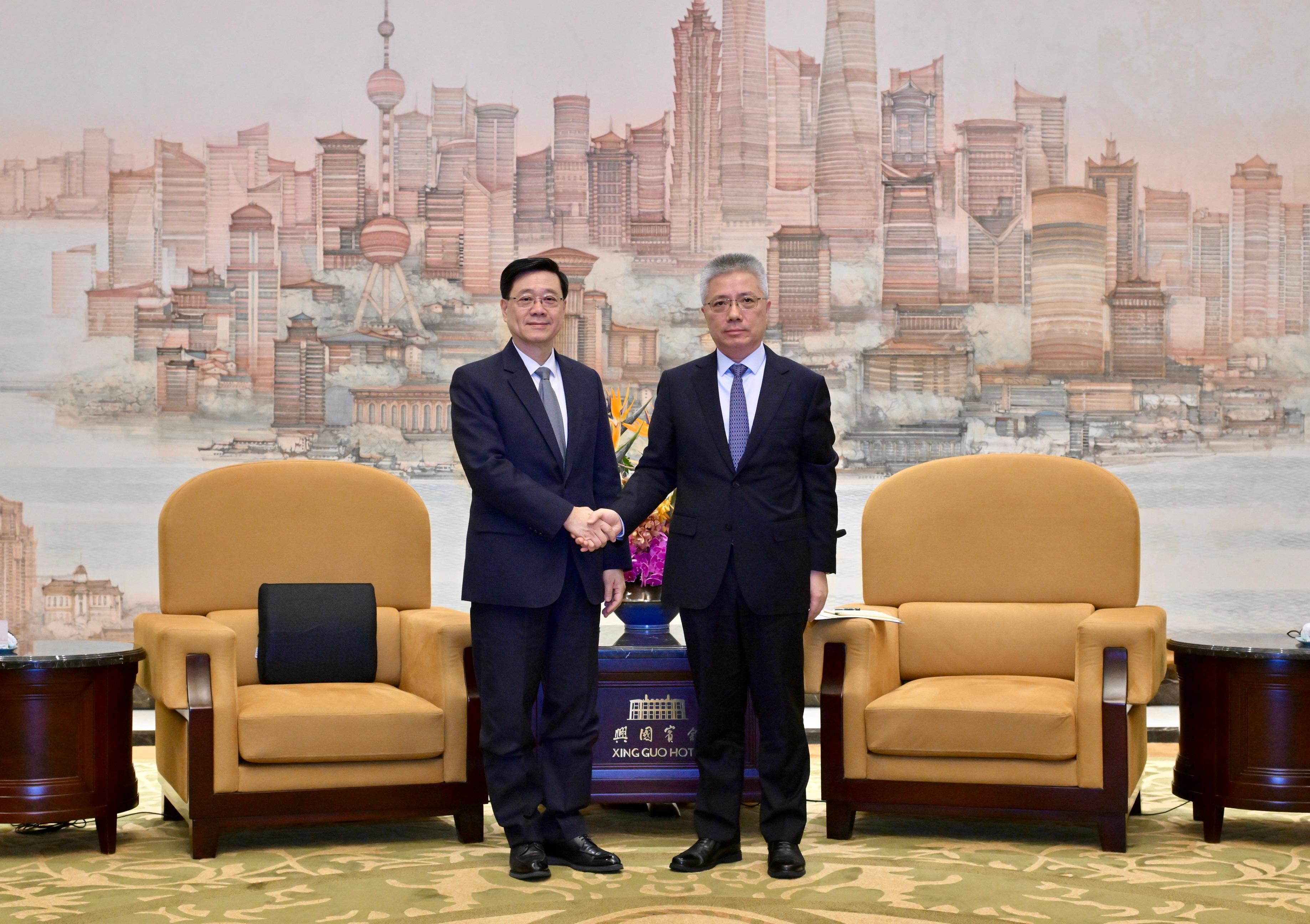
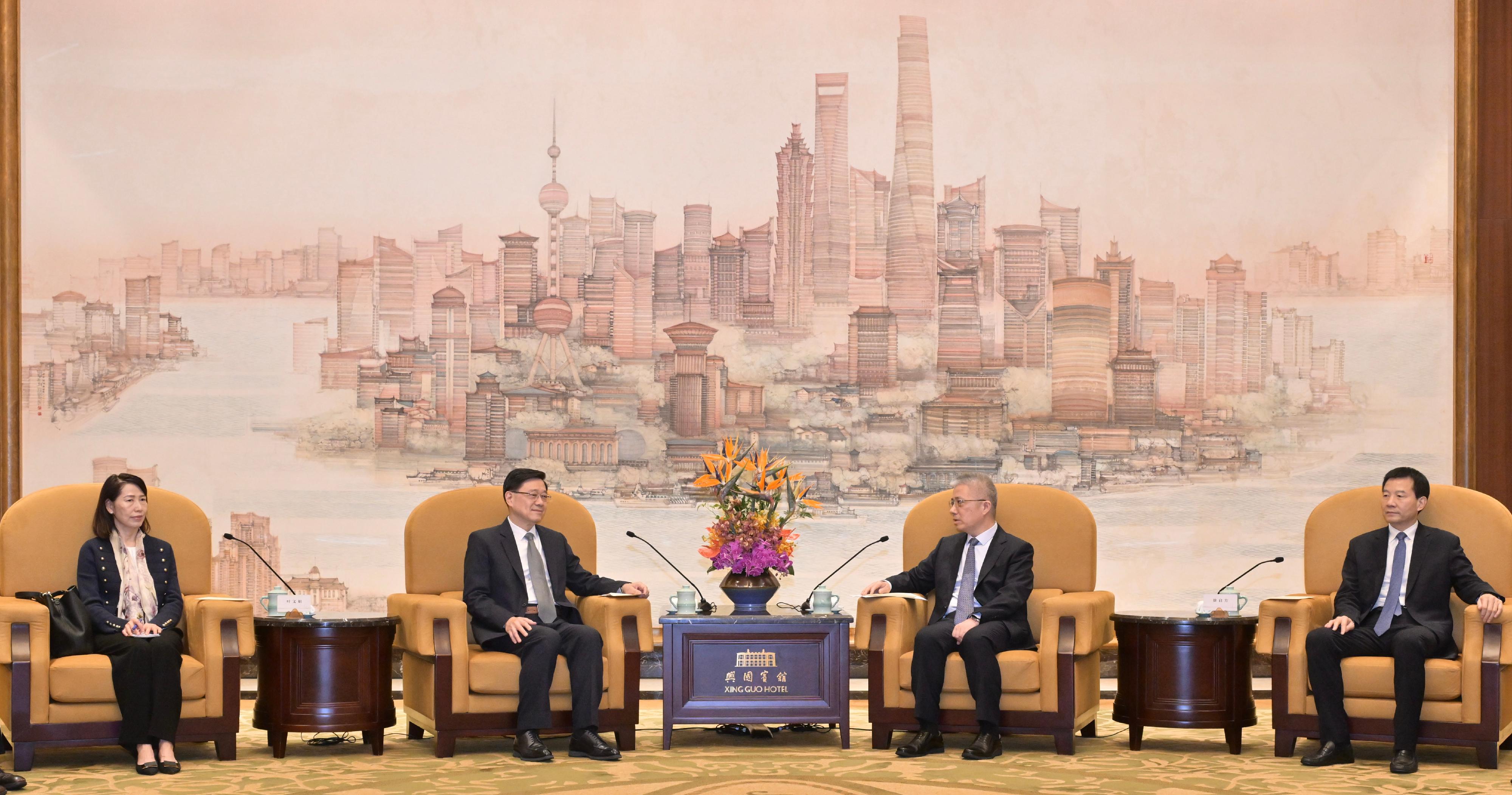
     The Chief Executive, Mr John Lee, continued his visit to Shanghai today (November 6) and met with the Mayor of Shanghai, Mr Zhu Zhongming, to exchange views. The Executive Deputy Director of the Hong Kong and Macao Work Office of the Communist Party of China Central Committee and the Hong Kong and Macao Affairs Office of the State Council, Mr Xu Qifang, also joined the meeting
      
     Mr Lee said that Hong Kong and Shanghai have long maintained close co-operation. Since the establishment of the Hong Kong/Shanghai Co-operation Conference mechanism in 2003, the two places have engaged in frequent exchanges and achieved fruitful results in areas including economy and trade, finance, innovation and technology, education, culture and youth exchanges. This year, more than 400 Hong Kong enterprises took part in the ninth China International Import Expo (CIIE), which is the highest number on record. In addition, the Hong Kong Parallel Session under the Hongqiao International Economic Forum was successfully held during the CIIE, featuring an in-depth discussion on Hong Kong’s new opportunities during the 15th Five-Year Plan period, and promoting to Mainland enterprises Hong Kong’s unique advantage of connecting the Mainland and the world under the “one country, two systems” principle. He thanked the Shanghai Municipal Government for its support, wished the CIIE a full success, and expressed the hope that the two places would continue to deepen co-operation and make greater contributions to the country’s high-quality development.
      
     Mr Lee said that Shanghai is the leading city of the Yangtze River Delta Economic City Group, while Hong Kong is one of the central cities in the Guangdong-Hong Kong-Macao Greater Bay Area, and both are engines driving regional economic prosperity. The Hong Kong Special Administrative Region Government is actively implementing Hong Kong’s First Five-Year Plan and pressing ahead with the development of the “four centres and one hub”, which aligns closely with Shanghai’s direction of developing its “five centers”, thereby further realising the complementary advantages of the two engines. Hong Kong will continue to play its roles as a “super connector” and a “super value-adder”, deepen the work of Task Force on Supporting Mainland Enterprises in Going Global, and provide comprehensive support for more Mainland enterprises, including those from Shanghai, to expand into new markets.
      
     Mr Lee thanked the Shanghai Gold Exchange for supporting Hong Kong’s development into an international gold trading centre. He said that the Hong Kong Precious Metals Central Clearing Company Limited and the Shanghai Gold Exchange had launched the initial phase of Delivery Connect this year, while Hong Kong’s central clearing and settlement system for gold will be officially launched in the first quarter of next year. The two places will continue to promote connectivity between their gold markets for mutual benefits and win-win outcomes.
      
     Mr Lee concluded his visit to Shanghai and departed for Hong Kong in the afternoon.

Photo  Photo  
read more

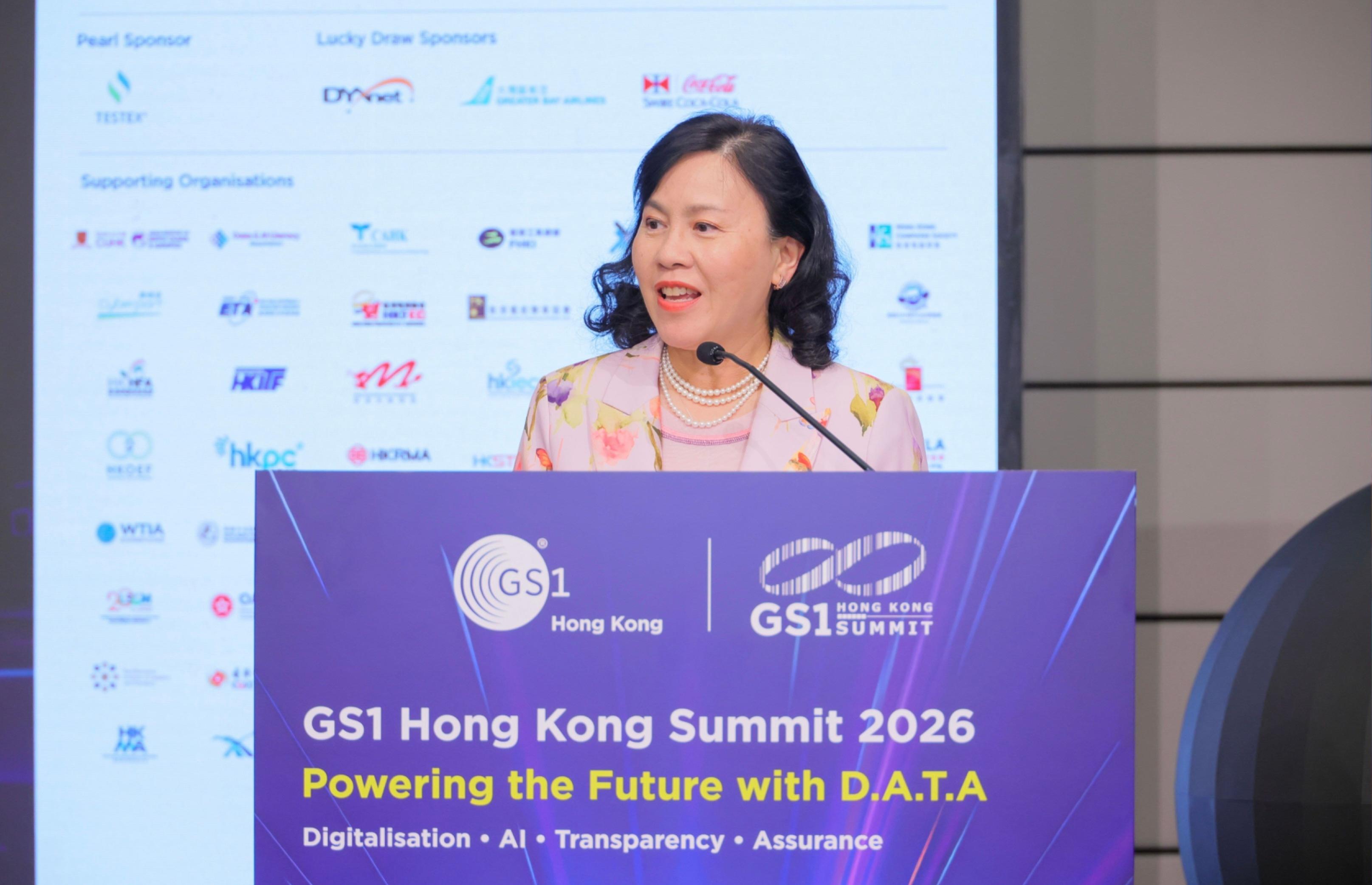
Opening address by STL at GS1 Hong Kong Summit 2026 (English only) (with photo)

     Following is the opening address by the Secretary for Transport and Logistics, Ms Mable Chan, at the GS1 Hong Kong Summit 2026 today (November 6):

Roy (Chairman of GS1 Hong Kong, Mr Roy Ng), Peter (Legislative Council Member Mr Shiu Ka-fai), Captain Lam (Legislative Council Member Mr Lothair Lam), Anna (Chief Executive of GS1 Hong Kong, Ms Anna Lin), 夏巡視員 (Second-level Inspector, Commercial Office of the Economic Affairs Department of the Liaison Office of the Central People’s Government in the Hong Kong Special Administrative Region (HKSAR), Ms Xia Qing), distinguished guests, ladies and gentlemen,

     It is a pleasure to join you all at the GS1 Hong Kong Summit. First of all, to our overseas guests, a very warm welcome to Hong Kong.

     The Summit this year neatly packs the current hottest buzzwords into one focal point: DATA (Digitalisation, AI, Transparency and Assurance). Needless to say, data gives life to digitalisation and AI, making transparency and assurance indispensable in conducting business in today’s digital world.

     In the realm of logistics, data itself is gaining greater importance as the world demands goods to be delivered at record-breaking speeds and hyper efficiency. Without digitalisation and AI, e-commerce could never have blossomed to the current stage. Our host today, GS1, is practically the byword for data, having pioneered data-based technologies and standard for retail and logistics over the years.

     Equally reliant on data is environmental, social and governance (ESG) compliance, which has climbed corporate agendas as the EU (European Union)’s requirements for emission disclosure and the Digital Product Passport started to bite. With the world scrambling to master ESG data collection and reporting, guaranteeing the credibility of such data has become the holy grail of the entire logistics industry.

     Against this backdrop, we in the Government stands ready to help the logistics industry embrace these waves of change. In Hong Kong’s First Five-Year Plan as well as the Chief Executive’s 2026 Policy Address, we have outlined very concrete and a series of actions to make this a reality. To mirror GS1’s choice of its bread and butter – DATA – as the theme of today’s Summit, I will use an acronym from my own line of work: C-A-R, which literally means CAR, a vehicle to carry the logistics trade to this data-powered future. I would like to make use of my 10-minute slot to elaborate a little bit more on CAR.

Data connectivity

     Let me start with the “C” – connectivity. Digitalisation has been transforming the logistics sector for the past two decades, yet widespread data silos continue to hinder supply chain transparency. I’m also aware of silos within the Government and among our entities in the transport and logistics sectors. While initial efforts have been made to bridge these gaps, truly comprehensive data connectivity remains out of reach.

     This is why we took up the challenge and launched the Port Community System, or PCS in short, which is also mentioned in the Chairman’s speech just now, this year to provide one-stop, round-the-clock, real-time cargo tracking across sea, land and air. It’s an attempt to bridge the silos. The transparency PCS delivers, alongside value-added services such as One-Data-Multiple-Declarations, explain the exponential growth – now nearly 10 000 corporate subscribers have joined the PCS to benefit from our service. Next, we are looking beyond logistics by exploring the immense potential of a cargo tracking data-trade finance crossover. Now finance always crossovers with different kinds of pillar industries, with logistics or maritime being the topmost. Through the CargoX Project in collaboration with the Hong Kong Monetary Authority, PCS cargo data is already powering credit assessment for PCS’ users across more than 20 use cases by now. Our vision is to develop PCS from a logistics data platform into a trade data platform that will attract shippers to choose Hong Kong as their transshipment hub and trading centre of choice, backed by impeccable logistics data connectivity that supports their financial needs.

Encourage AI development in the logistics industry

     Now let me turn to “A” – AI. We really need to encourage more AI developments in the logistics industry. We need to help our logistics sector, in particular the SMEs (Small and medium enterprises), to properly procure the right products, using AI to help lower their cost, achieve efficiency and reduce reliance on manpower. AI is the key concept that is deeply linked with data today. Yet a fundamental challenge of the AI era remains: how can we encourage and help SMEs embrace AI? For the logistics sector, our answer is FILAS – the Future Innovative Logistics Acceleration Scheme, our government scheme for subsidy, for dishing out money to help SMEs. 

     FILAS is a scheme designed to subsidise logistics SMEs in adopting pre-approved innovative IT onboarding solutions. These tools help them digitalise their operations and use public logistics data platforms like the PCS. Since its launch in June this year, three such solutions have been pre-approved, all of which are AI-based. This is hardly surprising as no technology can help turn paper-based information into digital assets as efficiently as AI. These pre-approved solutions leverage AI for everything from optimising shipping routes using real-time shipping data to calculating carbon emissions, among many other applications.

     The first batch of logistics SMEs have already benefitted from the scheme, and I hope this is just the start of digitalisation of the logistics industry at scale. We will monitor and keep track of the trends, demand and the effects of adoption and application, to give us more justification for ramping it up or extending the coverage of the scheme to cover even more.

Roadmap for ESG Development for logistics industry

     Lastly, let’s talk about “R” – our Roadmap for ESG Development for the logistics industry. As I mentioned earlier, ESG is no longer a nice-to-have, it is a regulatory requirement in the EU with ripple effects across the entire supply chain. It is actually not very distant from us, just right at our doorstep. Our country is also gearing up and is widely expected to announce its own set of ESG disclosure standards next year, with mandatory application to cover companies of all sizes by 2030. As an economy deeply integrated into global trade, Hong Kong cannot afford to lag behind in ESG adoption. This is why we announced our first Roadmap in June last year. The aim was to particularly equip logistics SMEs with the skills to collect and report ESG data through a three-stage approach: first, getting to know the ESG principles and international ESG requirements; second, learning how to collect and record logistics ESG data; and finally, mastering ESG reporting.

     We are now two years into this three-year Roadmap. I hope you would agree with me that the Government has spared no effort in rolling out measure after measure to help logistics SMEs to embark on their ESG journey, including an online ESG resource centre, a set of ESG data collection toolkit, and free training sessions to teach SMEs how to use the toolkit. All these are very practical and down-to-earth. We are here to help the frontline staff, as SMEs usually do not have a full team – there is no ESG Director or ESG Subcommittee under the Board. In reality, we have to count on that one and only person, grooming that expert into an ESG master. Like the global ESG trend, the Roadmap also needs to evolve. With the current Roadmap expiring very soon next year, we are now preparing its review and renewal, so that it continues to serve as a guide for our trade to remain ESG compliant and hence to maintain their competitiveness in the global logistics market. Speaking of which, I would like to take a minute to thank my team, who are the forerunners in driving ESG, for their dedication and hard work.

Concluding remarks

     We in the Government lay out the policy but it takes the industry to work with us to take it forward. It is why I am glad that for years we have GS1 on our side, making incredible efforts to turn our logistics vision into reality through standard setting, advocacy and industry promotion on platforms like today’s Summit. I am sure that the subsequent sessions today will involve significant advocacy and provide a lot of research pieces, which will help enrich the HKSAR Government’s knowledge of the real issues behind the logistics trade’s journey towards ESG, data digitalisation and AI. I note from the agenda that exciting topics like end-to-end data visibility in regional distribution and supply chain automation will be discussed. Most importantly, awards will also be given to companies with outstanding ESG commitments as incentives and means of promotion. All these echo our logistics policy imperatives, and I would like to thank GS1 for the admirable work of your tiny yet sustained secretariat that makes it all happen.

     Lastly, I wish today’s Summit every success. Hope to see you all very soon, thank you.
Photo  
read more

Police pay tribute to fallen police officers (with photos)

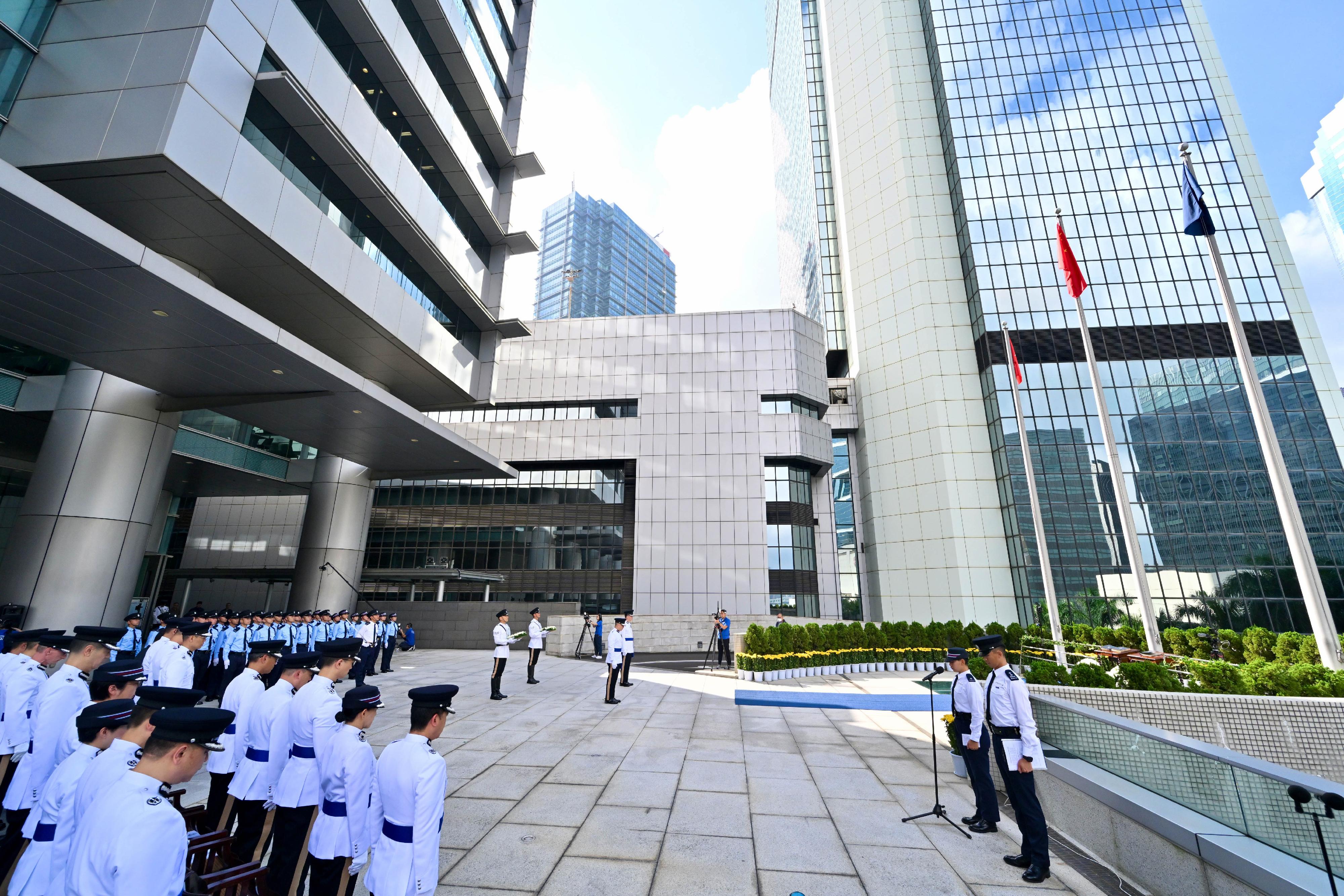
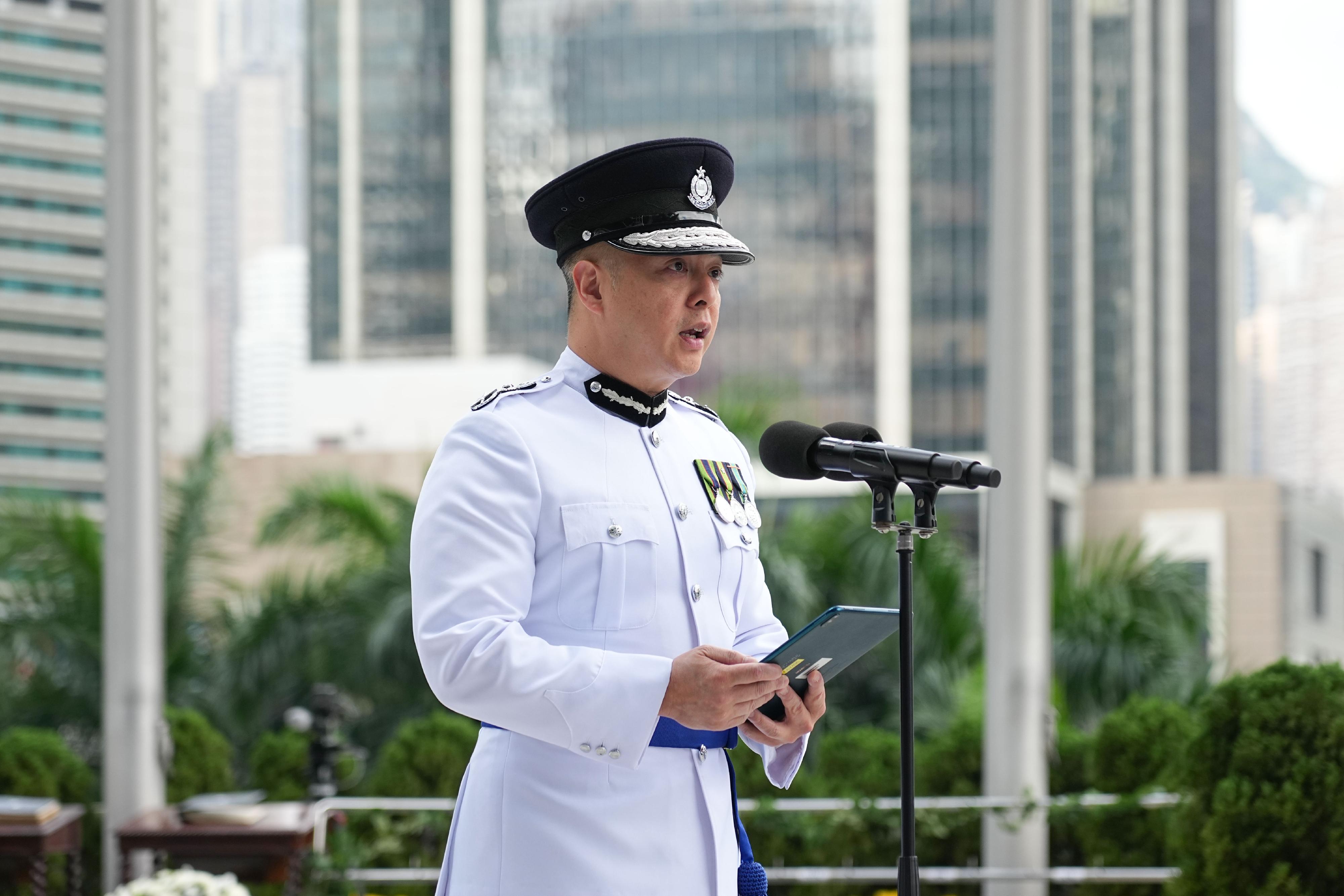
     The Commissioner of Police, Mr Chow Yat-ming, this morning (November 6) led police representatives to attend the Force Remembrance Day ceremony, where they paid solemn tribute to regular and auxiliary police officers who made the ultimate sacrifice in the line of duty.
           
     Speaking at the ceremony, Mr Chow said fallen police officers dedicated their precious lives to safeguarding the security and stability of Hong Kong, and to helping forge and shape the Force that everyone is proud of today. At the same time, their sacrifices remind every police officer to carry forward their enduring beliefs and missions.
           
     Paying tribute to Senior Police Constable Mr Chu Chun-kwok, who was attacked while on duty in 2005 and remained in hospital until his passing in September this year, Mr Chow said that the legacies of Mr Chu and all other fallen officers bear testament to their unwavering commitment to safeguarding the community, protecting the lives and property of the people, and driving the Force forward in fulfilling its vision. Their stories of dedication guide the Force’s path to continuously innovate and pursue excellence, empowering itself to overcome every challenge as it strives to remain Asia’s finest. 
           
     Mr Chow said that the sacrifices of those who came before had laid a solid foundation for the Force and society today. He encouraged colleagues to continue to stand united as one Force and devote themselves to safeguarding the community today and into the future. 
           
     During the ceremony, the Police Band’s bugler sounded the “Last Post” to signal a two-minute silence. Wreaths were separately laid by Mr Chow, the Commandant of the Hong Kong Auxiliary Police Force, Dr Leung Sai-kwong, as well as representatives of various police formations and associations, in front of the Books of Remembrance bearing the names of the fallen.

Photo  Photo  Photo  Photo  
read more