News story: Voluntary sector’s contribution to the Lammy Review event

Community event to explore the voluntary sector’s contribution to the Lammy Review, Friday 14 July 2017 9:00am to 1:00pm.

Learning from each other to improve outcomes for BAME people in the criminal justice system.

Supported by Clinks, this half day event explores how the voluntary sector has contributed to David Lammy’s Independent Review into race in the criminal justice system.

Delegates will hear from David Lammy about how his review is progressing, and will also hear from organisations about the work they are doing to address some of the disproportionalities identified.

This will be an opportunity to discuss the review’s interim findings and consider how we can work together to build on the progress made.

To register please visits the Clinks website.

China bans evidence by force from court

China on Tuesday released a regulation on exclusion of illegally-obtained evidence in criminal cases, banning confessions by torture and forced self-incrimination.

The document was jointly issued by the Supreme People’s Court (SPC), the Supreme People’s Procuratorate, the Ministry of Public Security, the Ministry of State Security, and the Ministry of Justice, in a bid to curb wrongful convictions and safeguard human rights.

According to the regulation, it is illegal for police or prosecutors to extort confessions through torture, threats or cheating. Forced self-incrimination is also prohibited.

Confessions, witness testimonies and depositions of victims obtained by force will no longer be accepted as evidence.

Audio and visual recordings must be made of interrogations of those implicated in serious criminal cases, in which death penalty or life imprisonment could be meted out, the regulation said, adding that all original recordings should be kept intact.

Criminal suspects and their defenders are allowed to apply for illegal evidence to be ruled out during the investigation, it said.

Prosecutors are required to inquire suspects in major cases and examine whether they have been forced to confess or confronted illegal evidence collection before the conclusion of investigation, the document said.

Judges should ensure all evidence held up in court is legitimate and valid, according to the regulation.

The regulation will help judicial organs collect, examine and use evidences in accordance with law, said the SPC.

“Remove the 1% pay cap and give us the money to give NHS Wales staff the pay rise they deserve” – Vaughan Gething

Welsh Health Secretary Vaughan Gething has called on the UK Government to remove the pay cap and make funds available to the Welsh Government so NHS Wales staff get the pay rise they deserve.

Tuesday 27 June 2017

Vaughan Gething said:

“I’ve today written to the Secretary of State for Health, Jeremy Hunt, urging him to make the case to the UK Treasury to remove the cap on pay and make funds available across the UK to allow hard working NHS staff to receive a pay uplift of greater than 1%.

“Yesterday, the UK Government found more than £1bn to effectively end austerity in Northern Ireland. I fully expect them to make money available so that we can give our hardworking health service staff the pay rise they deserve. They deserve nothing less.”

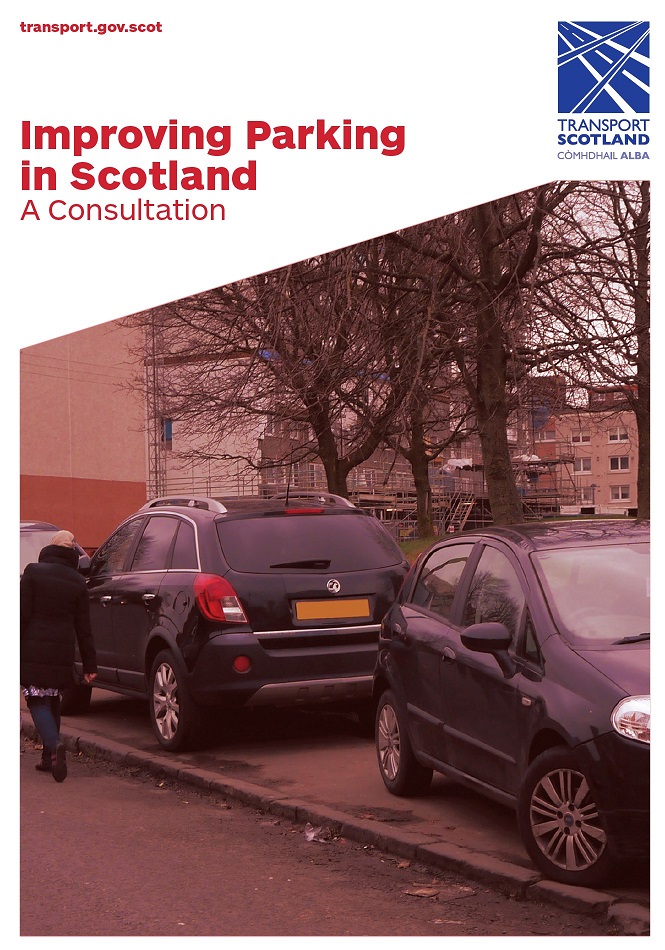
Footway parking and double parking – a consultation

The Scottish Government’s consultation on footway parking and double parking closes on Friday.   The consultation document can be downloaded here.

As the issue of parking on pavements and across dropped kerbing is a subject of many constituent complaints, I have already submitted a response.

It takes only a few minutes to do so and I would urge any West End resident with views on this to submit a response – you can do this here.

I raised this matter at the council’s City Development Committee last night.   It was suggested that the consultation may be being extended to 31st August.   However, as the Scottish Government website still indicates a 30th June deadline, I would urge people wishing to respond to do so as soon as possible.

UNEP: China’s desert greening inspires world

China’s success in reforesting a major desert, which was once the source of frequent sandstorms in north China, has provided ideas for other countries battling desertification, a senior UN official said.

United Nations Environment Programme (UNEP) executive director Erik Solheim said Sunday the main inspiration was that instead of looking at desertification as a problem, it should be viewed as an opportunity for economic development and for jobs.

He was referring to Kubuqi Desert, the seventh largest desert in China that lies in Inner Mongolia Autonomous Region. Over the past three decades, a quarter of the desert has been reforested.

A UNEP policy report says the core of the success at Kubuqi is its sustainable business model, and the establishment of a system that incorporates policy instruments, investment from the private sector and active participation of locals.

“We need the government to have visions, to regulate the market, but we need the private sector to bring innovative ideas and create jobs,” said Solheim in an interview with Xinhua during his three-day visit to the desert from Saturday to Monday.

He said he was impressed by the large number of jobs created in new energy and eco-tourism as well as processes introduced by the private sector.

“We can use drones to spread seeds,” Solheim said. “For countries in Africa and Central Asia, they can learn from Kubuqi and use that to create their own models.”

UNEP on Saturday signed a cooperation memorandum with a foundation under Elion Resources Group, the company active in Kubuqi greening, to share information and boost innovation in fighting desertification.

Solheim said UNEP is also working with China to set up an International Coalition for Green Development on the Belt and Road to promote renewable energy, encourage greener infrastructure, industries and tourism.

The UNEP chief will again visit Kubuqi this September to attend a meeting of United Nations Convention to Combat Desertification, which is expected to draw a roadmap to end desert expansion by 2030.

“I’ll come again, …and tell the world about the Kubuqi model,” Solheim said.