Radio Interview with Clairsy, Matt & Kymba – Mix 94.5 FM

DEAN CLAIRS:

We have the Prime Minister Malcolm Turnbull joining us for the very first time on our show ever. Great to see you in the West, Mr PM.

PRIME MINISTER:

Great to be here.

MATT DYKTYNSKI:

Oh thank you so much for coming in Prime Minister. Now I have to be open, I didn’t vote for you but I have great respect for the office of Prime Minister and had I known you were coming in I would have worn shoes. I simply did not know.

KYMBA CAHILL:

And socks and thongs are the standard.

PRIME MINISTER:

I’ve got to tell you, the socks are very attractive.

MATT DYKTYNSKI:

They’re nice and thick and wintry. So we love those.

(Laughter)

PRIME MINISTER:

They appear to be – what do you think, have they been washed recently? There’s no evidence that they haven’t been.

KYMBA CAHILL:

He’s quite a clean man is our Matthew. That’s the only reason he gets away with the socks and thongs combo.

PRIME MINISTER:

Well that’s fantastic, well done.

MATT DYKTYNSKI:

Thank you, now before we get to the serious political analysis –

PRIME MINISTER:

I’m glad you washed your socks.

MATT DYKTYNSKI:

Oh, I always wash my socks.

DEAN CLAIRS:

Yes.

MATT DYKTYNSKI:

It’s a metaphor for life really. Now we should check, are you an Australian citizen? Because we don’t want to waste any time here.

(Laughter)

DEAN CLAIRS:

True.

PRIME MINISTER:

No question about that – absolutely.

KYMBA CAHILL:

Okay.

PRIME MINISTER:

Very Australian.

KYMBA CAHILL:

Good start, now Prime Minister, there were Sydney terror raids on the weekend.

PRIME MINISTER:

Yes.

KYMBA CAHILL:

And now of course we’re expecting updated security at our airports, and it’s easy to say: ‘Don’t let the terrorists win – get on with your lives, get out there.’ But there is genuine fear out there. Is this indicative now of how our lives are going to be? Are we getting any closer, do you think, to an attack on our shores?

PRIME MINISTER:

We are constantly vigilant Kymba. We’ve disrupted 13 terrorist plots since 2014 – this one being the latest. We have the best security, police, intelligence services in the world. They work very closely together. They work very closely with international partners.

You see, in the age of the internet, as we all know, borders have been overcome in terms of information so places that we used to think were a long way away – and still are in terms of kilometers – are very close in real time.

KYMBA CAHILL:

Yeah.

PRIME MINISTER:

So we have to be swift, we have to be seamless, we have to constantly upgrading and improving our security services and our whole operation.

See that’s why I always say we don’t ‘set and forget’. We are never complacent. Yes, we’ve got great people but we want them to do even better work.

So the government, I’ve been working very closely on this operation with our security services over the last several days, since last week. This has been a very successful operation so far. It’s not yet completed.

The increased security measures at the airports are a response to that. They’re in response to an increase in the threat level as assessed by ASIO for aviation.

What we will do obviously, is our agencies will review that as the operation is completed, as the investigation is complete.

DEAN CLAIRS:

Malcolm, I know you’re here in the west and you’re going out to the regions, you’re seeing lots of people. Wherever you go, you’ll get asked the question, but what about the cutting up, the dividing of the GST pie? We’re getting hungry we want more in the West.

MATT DYKTYNSKI:

We want more!

(Laughter)

PRIME MINISTER:

Well I can understand that, I do.

Look, it is past a joke. As I said last night with Christian Porter in the pub in Mindarie, it doesn’t pass the pub test and it certainly doesn’t pass the test in that pub.

Look, 34 cents in the dollar, 30 cents in the dollar as it was the year before, is just not good enough. It isn’t fair. The formula is not delivering a fair and defensible outcome.

Now I’m the first Prime Minister that has actually recognised that and set out to do something about it.

So the commitment that I made was to get the other states and territories around the table – and I’ve already done this, I have taken up West Australia’s cause at COAG in a way that no other Prime Minister has done before.

DEAN CLAIRS:

True.

PRIME MINISTER:

We’ve got the Productivity Commission looking at this grants formula that, you know, the black box that allocates, determines who gets what, to see whether it’s fit for purpose any longer. What I also said was, – I made this commitment last year – was that when the WA share rose back up naturally to a more defensible level –

DEAN CLAIRS:

Yep.

PRIME MINISTER:

I think the figure we had in mind at that time was coming up to about 75 cents in the dollar by 2019, that would be a good time to set a floor below which no states allocation would fall. The argument for that of course – and this was something that I originally came up in discussions with Colin Barnett when he was the Premier and my other federal colleagues here, Mathias Cormann, Julie and the others – was because you’ve got to try to achieve a political settlement so that the other states don’t feel that they’re losing. You’ve got to try to get to a point where you can set the floor at a point in time when nobody is going to be out of pocket. Because otherwise you’ve got states fighting with each other.

Now I’m not suggesting the politics is straightforward but it’s really important to remember this, and for your listeners to recognise this, I am the first Prime Minister to seek to tackle this. It is very difficult politically.

The Labor Party did nothing about this during all the time they were in government as WA’s share slid, they did nothing about it.

Bill Shorten has attacked me for endeavouring to take this on. The West Australian Members of the Federal Parliament made a submission to the Productivity Commission and it was just waffle. There was no proposal, no actionable proposal in it at all. Because the fact of the matter is the Labor Party is not going to put its prospects on the east coast at risk by trying to strike a fairer deal for Western Australia.

Now what I’m trying to do as Prime Minister of Australia, of all of Australia is make sure that we get a fair deal for the West and persuade the other jurisdictions, the other states and territories that the GST has to be seen to be fair everywhere. It has got to pass the pub test everywhere.

DEAN CLAIRS:

Everywhere – nationwide. 

PRIME MINISTER:

It has got to pass the pub test in Hobart, in Sydney, in Brisbane, in Perth, in Mandurah, in Broome. It has got to pass the pub test everywhere and at the moment, as you know, I believe it does not.

MATT DYKTYNSKI:

Prime Minister will you be meeting with Premier Mark McGowan?

PRIME MINISTER:

Yes – I will be seeing him later in the week.

MATT DYKTYNSKI:

And chatting MetroNet stuff?

PRIME MINISTER:

Yes, yes, I certainly will be. And we are putting a lot of money into MetroNet already, just under $800 million already and I am open to more investment here.

The point that I have raised with Mark and with the other premiers is that if we can find opportunities for us to co-invest as opposed to simply making grants so that we can have an ownership interest, an investment interest in economic infrastructure then we can do a lot more. 

See some of the big projects we’ve got underway elsewhere in Australia – Snowy Hydro 2.0, the Western Sydney Airport, the Inland Rail – are examples of projects where we are investing.

DEAN CLAIRS:

Yeah.

PRIME MINISTER:

So in other words, yes we spend the money but I can put an asset on the other side of the balance sheet and that enables us to do a lot more.

I want us to invest more in infrastructure in Western Australia and so what I’m saying to Mark is: ‘You’ve got to come up with some great ideas. Let’s work as partners. Yes, you’re Labor, I’m Liberal – all that stuff. We’ve got all that off our chest. Let’s focus on getting a great outcome for Western Australia.’

If he, I heard he or maybe it was Ben Wyatt was trying to channel Jerry Maguire and was saying –

MATT DYKTYNSKI:

Show me the money!

(Laughter)

PRIME MINISTER:

Well, you know, but I mean that doesn’t really help.

DEAN CLAIRS:

No.

PRIME MINISTER:

That’s a one-liner. What we need, what Australians want their leaders to do, is to work together.

MATT DYKTYNSKI:

Oh desperate for it.

PRIME MINISTER:

Correct. Now, I’m doing that.

You know, we’ve got a new concept, completely new concept in cities. And when I say cities this can apply to regions as well. We’ve called it City Deals. And for the first time we’re setting up agreements with state and local governments where we work together on a particular city, part of a city, and we say: ‘Right we are going to coordinate our investment. We’re going to agree on what we want to achieve – greater accessibility to recreation, to schools, to jobs, to housing affordability. Agree on your objectives and then coordinate your investment.’

So we’ve already got a City Deal in Townsville, in Launceston and in Western Sydney and what I’ve offered to Mark McGowan is to do one in Perth. What we would aim to do then is work as a team – instead of the attitude being from the state side how much money can we get out of the Feds?

DEAN CLAIRS:

Right.

PRIME MINISTER:

You know in a sort of zero sum approach, to work to say: ‘Let’s look as partners how we’re going to maximise the amenity for the people of Perth’, because at the end of the day your listeners don’t care whether a particular piece of economic infrastructure is owned by the state government, the federal government – they want it to be built. Isn’t that right?

MATT DYKTYNSKI:

Yes, it is.

PRIME MINISTER:

They want it to be built and delivered.

DEAN CLAIRS:

True.

PRIME MINISTER:

And that’s my commitment. We’ve got to be more creative in these tough fiscal times, you know where dollars are scarce. We’ve got to be more creative and more imaginative in the way we invest our money.

DEAN CLAIRS:

Mr Prime Minister, before you go – are you aware of a friend of ours by the name of Lawrence Mooney? He loves walking around the country talking about my Lucy, Sangiovese and Christopher Pyne!

(Laughter)

PRIME MINISTER:

I have heard of this fellow. He sounds very entertaining.

MATT DYKTYNSKI:

He’s pretty good.

DEAN CLAIRS:

We call him ‘Big Mal’.

PRIME MINISTER:

‘Big Mal’? Is he ‘Big Mal’?

DEAN CLAIRS:

We had to start calling him that because we were calling him Prime Minister and people were getting very confused.

MATT DYKTYNSKI:

They were!

DEAN CLAIRS:

Some of the satire was –

PRIME MINISTER:

They used to call Malcolm Fraser ‘Big Mal’ – gee he was a big guy.

DEAN CLAIRS:

He was a big man.

PRIME MINISTER:

He was a ‘Big Mal’.

KYMBA CAHILL:

We had to explain today that you were completely legitimate and not Lawrence Mooney.

(Laughter)

PRIME MINISTER:

If he’s saying warm and affectionate things about Lucy, that’s good. 

KYMBA CAHILL:

He’s always warm! He’s always warm about Lucy.

MATT DYKTYNSKI:

He’s on message.

KYMBA CAHILL:

Last week he solved your housing affordability crisis by just telling everybody to stop complaining and go out and buy a house.

(LAUGHTER)

DEAN CLAIRS:

In Point Piper I should mention.

PRIME MINISTER:

Well I can tell you it is interesting how important of course transport is to housing affordability. That is absolutely critical. That is one of the points I raised in the letter I’ve sent Mark McGowan about this. It is vitally important to make sure that as you expand your urban transport net that you also increase density around railway stations and near transport hubs because that way you can get a better mix of housing at different levels of affordability for families at different stages.

DEAN CLAIRS:

Yeah.

PRIME MINISTER:

You know from singles through to couples with lots of kids to people who retire. 

DEAN CLAIRS:

You’re off to Mandurah today and I know you’re doing Busselton and Broome over the next few days – enjoy our wonderful weather.

(LAUGHTER)

PRIME MINISTER:

Yes, it’s looking a bit dark in the skies there – anyway, it’s good to be with you.

DEAN CLAIRS:

Good to see you.

MATT DYKTYNSKI:

Thank you for coming in.

KYMBA CAHILL:

Thank you. 

PRIME MINISTER:

Thanks very much.

[ENDS]

China utilizes AI technology to prevent crime

Face recognition display screen. A smart traffic system launches at a crossroad in Shenzhen, Guangdong on April 17, 2017. [Photo/VCG]

China is looking to predict and prevent crime with the help of AI technology, according to a Financial Times report.

Facial recognition company Cloud Walk is helping police develop a system that tracks individuals’ movements and behavior to assess their chances of committing a crime.

The big-data rating system warns police of highly suspicious groups based on where someone goes and what he or she does, a company spokesperson told FT.

Risks arise if a person “frequently visits transport hubs and goes to suspicious places like a knife store,” the spokesperson added.

The vice-minister of science and technology, Li Meng, said that AI will be a key function in crime prediction for the government.

“If we use our smart systems and smart facilities well, we can know beforehand…who might be a terrorist, and who might do something bad,” said Li.

The crime-prediction technology is dependent on several AI techniques, like behavioral recognition and gait analysis, to identify people from surveillance footage.

In addition, “crowd analysis” can be used to detect “suspicious” patterns of behavior in crowds, for example singling out thieves from normal passengers at a train station.

From shaming jaywalkers to keeping intruders out of university dorms, China continues to embrace facial recognition and other AI technologies in public spheres.

The State Council declared on July 20 that the country plans to build a world-leading AI industry worth $150 billion by 2020.

Radio Interview with Sabra Lane

SABRA LANE: Joining us now to discuss the terror plot is the Prime Minister, Malcolm Turnbull, who is on the line from Perth. Good morning, Mr Turnbull. Welcome back to AM. 

PRIME MINISTER: Thank you very much. Good to be with you. 

SABRA LANE: It’s now more than 24 hours since the nation was alerted to this plot. How close was this group to carrying it out?

PRIME MINISTER: They were advanced. I can’t say precisely how far they were advanced at this stage, because that’s a matter that’s being investigated. But I can say that certainly the police will allege they had the intent and were developing the capability. This is a very fine example of the way in which intelligence was acted upon – very, very swiftly – by our agencies working together. The Government working with our agencies, swiftly, to put measures in place and then to move to a quick investigation and operation as I described with the two police commissioners and the Justice Minister yesterday morning.  So there will obviously be more to say over coming days, but right at the moment the investigation is continuing. 

But Australians should be reassured that we have the finest security and intelligence agencies in the world. This is now the 13th terrorist plot that has been disrupted by our agencies since 2014. 

SABRA LANE: There are conflicting reports, Prime Minister, that this was an alleged bomb plot, or a plan to gas passengers . Can you clarify?

PRIME MINISTER: I won’t go into any further detail on that, Sabra. I’ve noticed there’s been a number of reports in the press speculating about the method of attack. But again, forgive me, I have to respect the integrity of the investigations.  Again, Australians can be assured that we have very fine intelligence services and we moved extremely quickly on this one and – as you can see – with the right outcomes.

SABRA LANE: The information that triggered the arrests came from an overseas intelligence agency. How concerned are you that on home soil, it appears that our agencies weren’t aware of it?

PRIME MINISTER: Well, I wouldn’t comment on that.  Again, I’m not going to go into details and I think Australians will understand the importance of me being circumspect about the sources of intelligence. But I just want to make this observation, and I’ve made it many times in recent days: Intelligence is a function of collaboration. We cooperate with other agencies within Australia. We cooperate with members of the community, with business. We cooperate with international agencies. So it is absolutely seamless. You need to be picking up pieces of information – they may seem unrelated – stitching them together, making connections, creating that fabric that then leads you, in this case, to an alleged conspiracy.

So, you know, we have very fine intelligence services. But, every nation, every nation depends on the work of others. We’re all in this together and this is one of the key themes of the G20. We are intensifying, all the time, our collaboration with other countries and other agencies. Because, you know, the threat, there are no borders; I mean, nowhere is far away from anywhere else nowadays. In an age of the internet and the age of social media and the age of over-the-Internet messaging applications, Syria is not a long way away from Sydney. 

So that’s the criticality of it, seamless cooperation. 

SABRA LANE: On that theme of the interconnectedness, are you able to tell us whether this group was being guided by someone overseas?

PRIME MINISTER: Again, I won’t go into further commentary on that at this point, but I can assure you it was, as the Federal Police Commissioner said yesterday, it’ll be alleged that this was an Islamist extremist terrorist motivation. 

SABRA LANE: How long will the additional checks at airports be required, or will they become a permanent feature for travellers?

PRIME MINISTER: They’ll be required for as long as the threat is assessed as requiring them. I’ve been discussing these matters this morning with the Federal Police, with ASIO and we continue to discuss them with our Office of Transport Security, of course, who act on the advice of ASIO. We will be working closely with all of these agencies. 

This has been a very, very, very rapid response. I am very proud of the professionalism and the dedication of our security and intelligence agencies. 

But just over the last few days we’ve seen, since last week, we have seen a rapid response, as I said, seamless cooperation, integration. The way in which all of the agencies, including with the state police, are pulling together, to ensure that we move swiftly on this, on this threat.  And at the same time of course, ensure that they gather all the evidence to deliver successful prosecutions, because clearly disruption is a critically important objective, but also we want people that are planning conspiracies like this to be prosecuted and be imprisoned. 

SABRA LANE: Prime Minister, security experts have told AM that they’re worried about vulnerabilities in freight and catering services to airports. Do those things worry you?

PRIME MINISTER: Well as I always say, Sabra, there is no place for ‘set and forget’. I am constantly seeking to improve and optimise our security arrangements. That’s why I’m bringing our domestic security agencies at the federal level into one Home Affairs department, so as to make that close integration and cooperation of which I just spoke, even closer.  Now, as far as airports are concerned, we have very robust security measures in place, including the vetting of people who work at airports. Changes that have been put in place that we’re talking about at the moment, the changes that we’re asking passengers – and again, I want to thank the travelling public for their forbearance, having to get to the airport earlier and wait longer to get through security –  but all those changes have been put in place on the advice of ASIO and the Federal Police and the Office of Transport Security. So we are constantly reviewing our security measures. 

Again, my message to the agencies that work for the Federal Government and to all security agencies around the nation, is that there is no place for complacency; you have to be constantly improving what we’re doing. 
So, that’s my mission. You can see that I’m delivering that, whether it’s in new legislation, whether it is in new resources – everything I’m doing every day, is designed to keep Australians safe.

SABRA LANE: Prime Minister, Labor has detailed a policy to crack down on disbursements of some family trusts. It might well prove to be popular with the electorate, will you match the policy?

PRIME MINISTER: Well, Bill Shorten doesn’t have any policies for jobs, or any policies for investment. He’s got just one attack on business after another. He hasn’t provided any details for this crackdown he’s talking about. It’s just –

SABRA LANE: On the substance itself though –

PRIME MINISTER: Well, Sabra, you say “on the substance itself”. Mr Shorten has provided no substance. All he provides every day is another outburst about inequality and the targets for his outbursts are invariably hard-working Australians in small businesses. He wants to make it harder for small businesses to invest –

SABRA LANE: Well sorry for my skepticism, but the Coalition previously derided Labor on its taxation policies on superannuation and tobacco and yet you ended up unveiling your own policies. 

PRIME MINISTER: Well Sabra, let’s just focus on what he’s talking about; he wants to increase the tax on small businesses. He’s now threatening changes to tax on trusts – which again, he’s got to provide the details – but it’s perfectly clear that most of those affected will be small businesses. He has got not one policy to encourage anyone to invest a dollar. When your fellow ABC journalist, Fran Kelly asked him about what he had to do to encourage employment and investment, he started talking about investing in public transport. Well, that’s a very worthy objective and we have plenty of programs to do that too. But what does he have to encourage business? Nothing.

He wants to increase taxes on business. He wants to reduce the opportunity for people to invest and get ahead. Whereas, for our part, what are we doing? We are reducing business taxes. We’ve reduced personal income tax on middle-income Australians by increasing the tax-free threshold from 80, the second tax threshold up to $87,000, before it begins. That has, as you know, reduced tax for 500,000 middle-income Australians, that was a vital reform. We’re also reducing and right now taxes have been reduced for small and business businesses. Bill Shorten wants to increase all those. 

SABRA LANE: Okay, Mr Turnbull, thank you very much for joining AM this morning. 

PRIME MINISTER: Thank you so much. 

Missing Chinese teacher leaves note for parents

The handwritten letter is found in the missing Chinese teacher Wei Qiujie’s hotel room in Japan. [Photo/dzwww.com]

The father of a Chinese teacher, Wei Qiujie, who went missing in Japan last week has been shown a handwritten letter in her hotel room, saying farewell, reports China Daily quoting Japanese media Hokkaido News.

Accompanied by police officers, her father went to the room in central Sapporo, where they found the note, in which Wei thanked her parents for years of parenting. She went on to write that she wasn’t happy with her previous life and wanted to start a new one.

The 27-year-old primary school teacher from Fujian Province was last seen on the morning of July 22, when she left the guesthouse leaving her luggage in her room. She had arrived in Japan just a few days earlier.

Wei Qiujie’s father arrived in Japan on Friday and was briefed by the police on the ongoing investigation, and confirmed that the handwriting in the letter was that of his daughter.

He told reporters that she had no friends in Japan, couldn’t speak the language and that this was the first time she had visited Hokkaido.

Wei’s friends have reportedly also said that she showed no signs of wanting to start a new life.

The search for the young teacher continues.

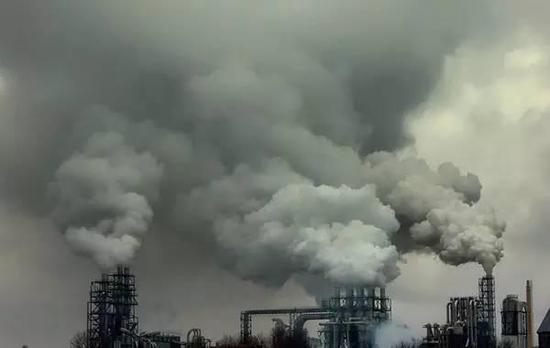
Pollution inspectors sharply criticize Tianjin, Anhui, Shanxi

About 10,000 polluting companies were ordered to suspend production or shut down by the end of June. [File Photo]

Environmental inspectors sent by the central government uncovered severe problems in Tianjin and the provinces of Anhui and Shanxi during a monthlong review and said slack leadership has led to environmental degradation in some areas.

The inspectors transferred 11,527 pollution-related cases to the provincial-level governments, following the highest-level environmental inspection since late April.

The governments are required to submit improvement plans within 30 days and make them public.

In the three provincial-level areas, 1,686 government officials had been held accountable for pollution as of the end of June. Officials from Shanxi were the most numerous-more than 1,000. Another 136 were detained, according to Ministry of Environmental Protection statements on Saturday and Sunday.

About 10,000 polluting companies were ordered to suspend production or shut down by the end of June, the ministry said. Of those, about half (4,331) were from Tianjin. Environmental authorities have issued fines totaling 1.25 billion yuan ($185 million).

The common thread in these cases was that leadership was weak and officials failed to give sufficient attention to pollution control.

Tianjin received an unusually harsh evaluation.

“There is a clear gap in Tianjin in meeting the requirements from the central government to match its position as a municipality and meet the expectations of the public,” inspectors said on Saturday.

Some leaders did not insist on adherence to tough measures on air pollution, and air quality actually worsened in some periods. Likewise, the bureaus responsible for agriculture and urban greening did not work together, but evaded their duty to build a garbage processing plant, said Jiang Jufeng, head of the inspection team.

In Shanxi, inspectors also found that insufficient attention had been paid by provincial and city leaders, as the concentration of major airborne pollutants increased in 2016 and continued to worsen this year.

Leaders in Lyuliang, Shanxi Province, were summoned to talk with the ministry twice because of severe pollution. But they did not pay sufficient attention, and measures to correct problems lagged behind schedule, said Yang Song, the team leader in Shanxi.

For example, 966 small coal-fired boilers in the city, which should have been phased out by the end of 2014, were still in operation at the end of 2016, hurting air quality.

In addition, six coal mines continued to operate illegally inside a natural protection zone in Jinzhong.

In Anhui, inspectors found that the provincial water resources bureau did not supervise drains, and that wastewater contained excessive pollutants. Also, officials in Hefei’s Binhu New District allowed construction waste to pile up and harm wetland, they said.

In some places in the three areas, half the sewage was discharged without treatment.