Press Releases: 10th Ministerial Meeting of the Lower Mekong Initiative: Joint Statement


Media Note

Office of the Spokesperson

Washington, DC

August 6, 2017


Following is the text of a joint statement issued at the conclusion of the 10th Lower Mekong Initiative Ministerial Meeting:

Begin text:

On August 6, 2017, the Foreign Ministers of Cambodia, Lao PDR, and Thailand, the Deputy Prime Minister of Viet Nam, the Minister of State for Foreign Affairs of Myanmar, the Secretary of State of the United States, and the Secretary-General of ASEAN met in Manila for the 10th Lower Mekong Initiative (LMI) Ministerial Meeting. The Ministers of the Mekong countries welcomed Secretary Tillerson’s chairmanship of the Lower Mekong Initiative.

The Secretary and Ministers re-affirmed their commitment to LMI as a primary driver of Lower Mekong sub-regional economic integration and sustainable development, pledging to continue their collaborative efforts toward peace, stability and prosperity in Southeast Asia. The Secretary and Ministers lauded the on-going work under each of LMI’s six Pillars – Agriculture and Food Security, Connectivity, Education, Energy Security, Environment and Water, and Health, and charged the Pillars to redouble their efforts to advance regional priorities most effectively and successfully implement the LMI Plan of Action 2016 – 2020. The Ministers also emphasized the need for the LMI to work in tandem with and complement other country and regional plans of action, including ASEAN 2025: Forging Ahead Together.

The seven participants praised the effective implementation of the Sustainable Infrastructure Partnership, announced at the 2016 LMI Ministerial, noting its success in equipping LMI member states in the management and development of regional infrastructure projects. Through the Partnership, the United States committed to further practical cooperation with the Friends of the Lower Mekong and more unified and sustainable engagement with the LMI members.

The Secretary and Ministers congratulated the progress of the LMI Education Pillar, and its engagement among young scientists and academics to identify areas of regional cooperation in education and establish national focal points to coordinate joint scientific research projects, which will contribute to prosperous and sustainable development in the Mekong sub-region.

The Ministers applauded the new Mekong Water Data Initiative proposal and hailed it as an important step in developing science-based decisions of their shared river system. The Ministers concluded that enhancing the Mekong River Commission’s technical capabilities would help to facilitate data gathering and sharing in the region and requested their respective ministries to coordinate efforts to implement the Water Data Initiative effectively. The LMI members pledged to continue their close collaboration with the Friends of the Lower Mekong and the Mekong River Commission to support inclusive, sustainable and environment-responsible growth in the Mekong river basin.

The LMI partners determined to continue discussions on the restructuring of the LMI Pillars at the upcoming Regional Working Group meeting in Laos and committed to work together to improve efficiencies, reflect evolving priorities in the sub-region, and devise a results-oriented way forward.

The Secretary and Ministers arranged to reconvene for the 11th LMI Ministerial meeting in 2018 in Singapore.

Heads of Delegations:

H.E. Prak Sokhonn, Senior Minister, Minister of Foreign Affairs and International Cooperation of the Kingdom of Cambodia

H.E. Saleumxay Kommasith, Minister of Foreign Affairs, Lao People’s Democratic Republic

H.E. Kyaw Tin, Minister of State, Republic of the Union of Myanmar

H.E. Don Pramudwinai, Minister of Foreign Affairs of the Kingdom of Thailand

H.E. Rex Tillerson, Secretary of State, United States of America

H.E. Pham Binh Minh, Deputy Prime Minister, Minister of Foreign Affairs of the Socialist Republic of Viet Nam

H.E. Le Luong Minh, Secretary-General of ASEAN


More Chinese women travel alone than men: report

Chinese women are more likely to travel alone than men, according to a recent report by China’s biggest online travel agency, with female travelers urged to pay close attention to security on trips.

The report by ctrip.com said 58 percent of customers in the agency’s self-guided and group tours are women. In the first six months of this year, 14 percent of women chose to travel alone, compared to 10 percent of men, the report said.

Women’s top destinations included Beijing, Shanghai, Shenzhen, Guangzhou and Chengdu.

“It means Chinese women are more economically independent. On the other hand, women have accumulated more travel experience,” said an expert with Ctrip. “Many female travelers in their 20s can speak English and can manage by themselves during trips.”

But women travelers may face higher security risks, especially in overseas trips, the report added. Ctrip launched four new services: Global travel SOS, local guides, travel companions and insurance to help reduce travel risks.

Ctrip’s global travel SOS system has dealt with about 570 cases since it was launched at the beginning of this year. Sixty-five of those seeking help were women and 82 percent were overseas. Over 90 percent of cases were solved successfully, the agency said.

Ctrip’s local guide app covers over 80 countries and 800 cities with 8,000 local guides that provide Chinese language services.

“I am lost. How can I get a ride?” was the most frequently asked question on Ctrip’s system. Other common questions included those about scenic spots and food.

Ctrip also reminded travelers to remember its 12308 hotline and turn to local embassies if they encounter danger on overseas trips. It also suggest travelers avoid going to unsafe places alone such as Afghanistan, Pakistan and India.

Some HK reports on flu called misleading

Concern has risen in Hong Kong over the outbreak of seasonal influenza, but officials said that reports comparing it to the outbreak of severe acute respiratory syndrome in 2003 are misleading.

In Hong Kong, 324 summer flu-related deaths were recorded from May 5 to Aug 6, according to the Centre for Health Protection under the special administrative region’s Department of Health.

The number of deaths during winter flu season reached 442 in 2015 and 171 in 2016, according to CHP records.

Some news reports last weekend said that the summer flu in Hong Kong had killed more people than the SARS epidemic did in 2003.

But Guan Yi, director of State Key Laboratory of Emerging Infectious Diseases and the Center of Influenza Research at the University of Hong Kong, said the two numbers are not comparable, and added that such coverage “exaggerated the situation” and would create unnecessary public fear.

Guan said the deaths caused by summer flu often involve senior citizens, a high-risk demographic, many of whom have chronic diseases and a weak immune system. Summer flu can trigger other complications that can cause death, he added.

During the SARS epidemic, however, the virus was much more potent and killed people of all ages, Guan noted.

In 2003, SARS claimed 299 lives from March 10 to June 23 in Hong Kong, killing 17 percent of those who got sick, official data show.

The CHP estimated that the death rate for summer flu this year would be less than 2.1 percent, given that most patients would recover in two to seven days. The death rate in past flu seasons has ranged from 1.9 percent to 3.3 percent, according to the CHP.

The summer flu season is expected to continue for the next few weeks, CHP officials said.

In Shenzhen, meanwhile, the disease control and prevention department issued its highest-level alert for the past three weeks for seasonal flu, and it warned that the situation bears watching this week since the number of infections is still expected to increase at a high rate.

However, Song Tie, deputy director of the Guangdong Provincial Center for Disease Control and Prevention, said the situation this year is similar to that of previous years, except that the peak has come later.

Seasonal influenza usually breaks out between May and July in southern Guangdong province, but the peak may come earlier or later depending on the particular strain of the virus, said Kong Dongfeng, associate senior physician of the communicable disease control and prevention division of Shenzhen Center for Disease Control and Prevention.

The most prevalent influenza virus this year is the H3N2 virus, accounting for 75 percent of the cases in Guangdong, with children, pregnant women, the elderly and those with chronic diseases being the most vulnerable groups, officials said. No statistics on deaths were released.

Last month, 1,468 influenza cases were detected at Shenzhen ports of entry, compared with 848 cases in June, both representing significant growth compared with a year earlier, according to the Shenzhen Entry-Exit Inspection and Quarantine Bureau.

Influenza-like illnesses represented 4.64 percent of all the outpatient cases in the city from July 26 to Aug 1, according to official statistics. The figure for the previous week was 4.98 percent.

Guan, from Hong Kong, suggested that people take Tamiflu, an antiviral medication used to treat and prevent influenza A and influenza B, once they experience such symptoms as runny nose, coughing, fever and other flu symptoms.

Beijing builds regional senior care network

Beijing is currently building a network of regional senior care centers. Today, there are 208 senior care centers throughout the capital city, as well as 259 community senior service dispatch stations. By the end of 2017, each of Beijing’s districts will complete construction on its senior care guidance center, which will direct operations in the senior care network.

Wang Xiao’e, deputy director of the Office of Beijing Municipal Working Committee on Aging, said in a speech at the 6th China International Senior Service Expo that Beijing has set a budget of 1.28 billion yuan (US$190.55 million) for senior care in 2017, a year-on-year increase of 17.7 percent. The city also plans to invest 400 million yuan to establish a senior care fund with 1.6 billion yuan in initial equity in order to build its senior care network.

Each district’s senior care guidance center will serve as the command hub for its local network, overseeing senior care centers that will provide long-term clinical care, and dispatch stations that will deliver services straight to the homes of senior citizens. Of the 350 senior care dispatch stations constructed in Beijing in the last two years, 259 are currently operating. The city plans to increase the number to 1,000 by 2020.

A part of the infrastructure for the regional senior care network is provided by the city as donation, and its operation is entrusted to private service providers. In addition, Beijing is mulling over new policies to support the growth of the senior service industry. Officials said they have learned through surveys that there are 4,104 locations throughout the city that could be turned into senior care centers. Meanwhile, the city will also reclaim vacant factory buildings and schools and transform them into senior care facilities.

New high-speed railway opens in NE China

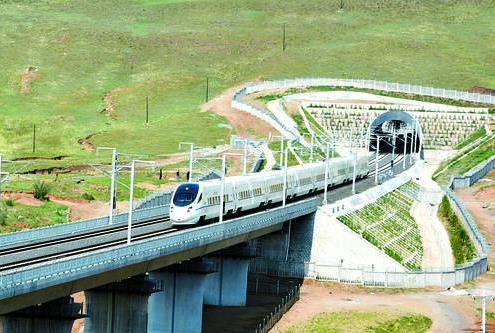
A new high-speed rail line that connects Jilin province to Inner Mongolia Autonomous Region is set to open this Tuesday.

The project is part of the broader efforts to revitalize the economy of the rust belt region.

The high-speed rail way connecting Jilin province to Inner Mongolia Autonomous Region runs from Changchun to Ulanhot. [Photo/sina.com] 

It is also the first trans-regional high-speed railway for Inner Mongolia.

The more than 400-kilometer railway runs from Changchun, the capital of Jilin province, to the city of Ulanhot, which is located next to Inner Mongolia’s border with Jilin.

Baicheng, a city on the Jilin side of the border, will serve as the largest stop along the route.

Renovation of the original railway through the area began in late 2014 in order to accommodate high-speed trains.

Cao Like, a railway official with the Jilin Provincial authority, says the renewal project is a big step forward in both speed and capacity.

“The new railway has a 60-million-ton load capacity for cargo, whereas the old railway could only accomodate 10 million tons. Cities along the route are now closer to each other. For example, from Changchun to Baicheng now only takes 2 hours and 40 minutes. Before today, it would have taken more than 4 hours.”

Xia Fan with the China Railway Corporation was the head of the team that renovated the railway.

He says they’ve made changes which should allow for even faster trains on the line in the future.

“We conducted an electrification-based renovation to the railway, as well as an upgrade to its communication systems. Speed of trains now will be limited to 160-kilometers per hour. But we’ve made the electrification of the line at a very high standard. So in the future, it will be feasible to raise the maximum speed to 200 kilometers per hour.”

The railway is bringing high-speed train services to the western part of Jilin for the first time.

Songyuan, a small city along the route, is home to Chagan Lake.

Residents near the lake are renowned for their thousand-year-old tradition of fishing during the winter.

Yan Liang, a local villager, has decided to expand his fish restaurant after hearing news about the new railway.

“We’re going to have a growing number of tourists coming. My previous restaurant was just a small courtyard. It can’t meet the demands of my customers, many of whom now need a place to stay overnight. So I decided to rent a big house for my business earlier this year.”

The renovated railway connects to the current high-speed line running from Harbin, the capital of Heilongjiang, and Dalian, which is located at the bottom of the Liaodong Peninsula in Liaoning.

China’s northeast, a combination of the provinces of Liaoning, Jilin and Heilongjiang, is more than twice the size of Japan.

Authorities are planning to establish a high-speed railway network in the northeast by 2025 which will cut travel times throughout most cities in the region to no more than 2-hours.

Interconnection is viewed as a critical step in pulling the so-called ‘rust belt’ out of its current economic woes.

The three northeastern provinces have undergone the worst economic slowdown across the nation over the last few years, dragged by industrial overcapacity and inefficient state-owned businesses in the region.

Both the central and local authorities have been implementing plans to revitalize the local infrastructure, as well as tap the region’s natural beauty and ruggedness as a draw for tourists.