Prevention of Bribery Ordinance (Amendment of Schedule 1) Order 2026 gazetted

     The Prevention of Bribery Ordinance (Amendment of Schedule 1) Order 2026 (the Order) was gazetted today (November 6) to subject the Hung Shui Kiu Industry Park Company Limited (Park Company) to more stringent anti-corruption control than a private organisation through having it being specified as a public body defined in the Prevention of Bribery Ordinance (Cap. 201) (POBO).
      
     The Order specifies the Park Company as a public body. Consequentially, all directors of the Board of Directors and employees of the Park Company will become public servants under the POBO, who will be subject to more stringent controls in the dealings relating to their work in the Park Company including prohibition from soliciting or accepting any advantage. Furthermore, persons having dealings with the Park Company will be subject to the relevant sections of the POBO which make bribery and corrupt dealings in connection with public bodies and public servants under various circumstances an offence.
      
     A spokesperson for the Development Bureau said, "The Park Company is wholly owned by the Government through the Financial Secretary Incorporated, and is responsible for the development and operation of the Hung Shui Kiu Industry Park with a view to bringing in more industries in an accelerated manner to the Northern Metropolis (NM). In the light of the Park Company's public function of attracting enterprises and promoting investment in the NM and the need for it to interact with external parties, it is in the public interest to regulate it as a public body under the POBO. In fact, Schedule 1 of the POBO currently specifies over 140 public bodies, including some similar organisations responsible for driving industry development."
      
     The Order will be tabled before the Legislative Council (LegCo) at its sitting of November 11, 2026 (Wednesday). Subject to the negative vetting by the LegCo, the Order will commence operation from January 29, 2027.

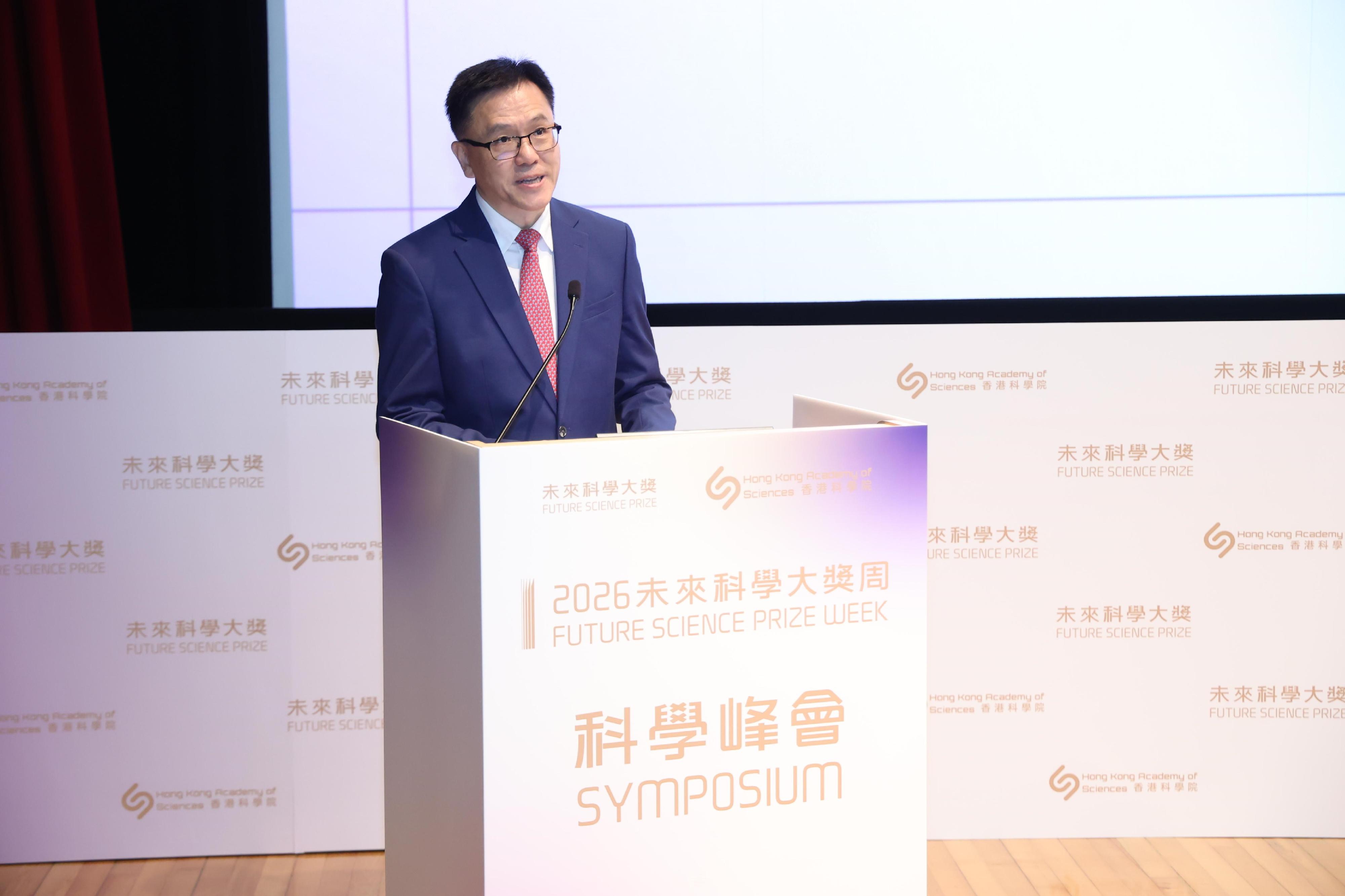
Speech by SITI at Opening Ceremony and Science Symposium of 2026 Future Science Prize Week (English only) (with photo)

     Following is the speech by the Secretary for Innovation, Technology and Industry, Professor Sun Dong, at the Opening Ceremony and Science Symposium of 2026 Future Science Prize Week today (November 6):

Professor Dennis Lo (President of the Hong Kong Academy of Sciences), Professor Vivian Yam (Co-chair of the Programme Committee of 2026 Future Science Prize Week Professor Yam Wing-wah), Professor Yaghi (2025 Nobel Laureate in Chemistry, Professor Omar Yaghi), distinguished guests and speakers, ladies and gentlemen,

     Good morning. I am delighted to join you all today at the Opening Ceremony and Science Symposium of the 2026 Future Science Prize (FSP) Week in Hong Kong.

     Over the years, the FSP Week has brought world-renowned scientists to share their scientific discoveries and bring cutting-edge topics to a wider community. I am pleased to witness Hong Kong hosting the Prize Week for the fourth consecutive year. In the fields of chemistry, physics and mathematics, I believe the Symposium today will demonstrate the far-reaching potential of fundamental research, not only in expanding the boundaries of human knowledge, but also in opening up new possibilities for technological innovation.

     Hong Kong is working at full steam to advance our innovation and technology (I&T) development. The Government's First Five-Year Plan targets to establish Hong Kong to become an international I&T centre based in the Guangdong‑Hong Kong‑Macao Greater Bay Area, serving the entire country and connected to the world, after 2030. We will continue to consolidate the research strengths of our universities, the State Key Laboratories and InnoHK research clusters, supporting them in conducting basic and applied research for the needs of Hong Kong, our nation and the world. We also encourage real-life application and commercialisation of research outcomes. By exploring the establishment of the Hong Kong Innovation and Technology Application Scenario Promotion Centre, we aim to match the application scenario needs of both public and private sectors, and the innovative technological solutions provided by I&T enterprises, helping companies align with industry standards and go global.

     Meanwhile, Hong Kong is steadfast in its vision to develop frontier and future technologies. We will set up a new Task Group on Frontier Technology to plan for the development of technologies covering AI, quantum, aerospace and other emerging areas to explore technology and industry development.

     International co-operation and talent attraction also play a part. We are strengthening support for recruitment of R&D (research and development) talent through the Research Talent Hub Scheme. To foster international co‑operation and attract top overseas scientists to Hong Kong, we have launched the Frontier Technology Research Support Scheme. Through these efforts, we are building a vibrant and internationally connected research community where scientific talent can pursue their long-term research careers in Hong Kong.

     Ladies and gentlemen, scientific discovery often begins with an individual question, but progress depends on curiosity, perseverance and collective efforts of scientists across generations. This is precisely the value of the FSP Week. I hope the discussions over the coming days will stimulate fresh perspectives, foster meaningful research collaboration and inspire further scientific discoveries.

     I wish the 2026 Future Science Prize Week every success and all participants a rewarding and fruitful exchange. Thank you.

Photo  

Speech by FS at International Bio-Computing Innovation Summit 2026 (English only)

     Following is the speech by the Financial Secretary, Mr Paul Chan, at International Bio-Computing Innovation Summit 2026 today (November 6):

Liu Wei (Co-founder and Chief Executive Officer of BioMap), Clara (Chief Executive Officer of the Hong Kong Investment Corporation Limited, Ms Clara Chan), distinguished speakers and guests, ladies and gentlemen, 

     Good morning. It is a pleasure to open the third International Bio-Computing Innovation Summit. To everyone joining us from overseas and the Mainland, a very warm welcome to Hong Kong.

     Let me begin with two laws that tell very different stories about scientific progress.

     Many of you will be familiar with Moore's Law. In computing, we have come to expect more computing power for lower cost every year or two. It is the kind of progress we would all like to see in other fields.

     Yet medicine has followed a very different path. For some 70 years, even as the science grew more sophisticated, the cost of bringing a new drug to patients doubled roughly every nine years.

     This is known as Eroom's Law: Moore's Law in reverse, even in its name. There is a little humour, but none in the consequences. Behind that rising curve are promising treatments that were never able to secure funding, and patients waiting for better medical options.

     That is why this summit matters. Can advances in computing and biology help reverse the pattern of Eroom's Law so that treatments can be brought to patients sooner? And what will it take to translate that aspiration into tangible benefits for patients?

     I am optimistic, and there are good reasons for optimism. There are three forces that could help us bend the curve, and Hong Kong can contribute in the process.

     The first force is the power of computing to transform biological research.

     Over the past two decades, gene sequencing has become far cheaper. We have learnt to "read" the code of life. With AI (artificial intelligence), we are now learning to "model" how life works. And we are beginning to "write" that code—to design molecules, antibodies and enzymes, rather than relying on trial and error in the laboratory alone.

     The progress is pleasing. This year, a drug discovered by generative AI has entered phase three clinical trials. This is a late stage trial on patients. The company behind it is listed in Hong Kong. 

     Regulators are also beginning to accept evidence from computer models. They are recognising AI tools for specific tasks in drug development. They are also allowing alternatives to animal testing for safety checks. Wider acceptance of these methods could help reduce the cost of bringing new drugs to patients.

     But we must also be realistic. AI cannot eliminate clinical risk: some AI-designed drug candidates failed in late-stage trials. What AI has achieved is to shift the bottleneck from discovery to validation. The progress will depend on the quality of the data, the speed of the trials and the approach of regulators. Solving that bottleneck can be an important next step in bending the curve.

     The second force is the changing geography of drug innovation, and the opportunity to connect it better.

     Drug development is a global endeavour, and China now is no longer just a market for global pharmaceutical companies. It has become an indispensable part of their global research and development network.

     Last year, overseas licensing deals for innovative drugs from China reached nearly US$140 billion in total value, almost 10 times the level in 2021. Recently, valuations of many Chinese companies developing innovative medicines have also surged substantially.

     But the point is not about that China is rising. It is that we have more sources of promising innovation, and more opportunities to bring the resources needed to develop them. If we can connect them better, we can reduce duplication and help promising medicines move more quickly from laboratories to the the market.

     The third force is capital – not just how much we invest, but how well we put it to work. 

     Global venture funding for biopharma has fluctuated in recent years. But AI-driven drug development platforms still attract substantial investment. This year, one such company raised over US$2 billion in just a single round. At the same time, investors are asking for stronger clinical evidence and clearer paths to market. The opportunity is to combine the ambition to fund new approaches with the discipline to test whether they work.

      In Hong Kong, the Government is also making these industries a priority, with a commitment to supporting their growth. Under the national 15th Five-Year Plan, our country has identified biopharma as an emerging pillar industry, and will develop biomanufacturing and brain–computer interfaces as future industries.

     All these call for public-private partnership, supported by patient capital that crowds in private investment. The aim is not simply to spend more on drug development. It is to give promising science the time to prove itself – and direct more resources towards what works.

     Ladies and gentlemen, against this backdrop, Hong Kong's role is increasingly clear: to bring models, patients, markets and capital together—and help reduce the time and cost in bringing new treatments to the market.

     Let me begin with the patient, because a promising molecule still has to be proven safe and effective. We want researchers to find the clinical trial infrastructure, expertise and regulatory framework here in this city.

     That is why we are establishing the Hong Kong Centre for Medical Products Regulation, building our own capacity to independently assess medicines and medical devices.

     That is why, in Hetao, or the Loop, we are working to make it easier for data and biosamples to move across the boundary. We are also linking laboratory research, clinical trials and real-world studies in Hong Kong and Shenzhen.

     And that is why we are establishing the Life and Health Technology Research Institute, as well as building a third medical school with HKUST (The Hong Kong University of Science and Technology), which will have a strong focus on clinical research from the outset.

     Beyond clinical research, we also help connect medicines with markets and investors. Global pharmaceutical companies and international investors want to access China's new medicines in development through a familiar and trusted platform. This is exactly what Hong Kong offers. 

     Our capital market shows the strength of that role. Since the listing reforms for pre-revenue biotech firms back in 2018, we have become the world's second-largest fundraising centre for biotechnology. Last December, when an AI drug developer listed in Hong Kong, its cornerstone investors included a global pharmaceutical company and a Chinese technology group. This is Hong Kong's super connector role in action: bringing together drugmakers, technology companies and investors from both the Mainland and around the world.

     Finance has a role to play long before a company is ready to list. Our complete fundraising chain supports innovators from start-up all the way through as their businesses grow. And through the Hong Kong Investment Corporation, we are bringing in patient capital, long-term investors, partners and expertise.

     Clara will talk more about this shortly, but let me highlight one partnership that began at the very first edition of this summit: the collaboration between the Hong Kong Investment Corporation and BioMap.

     Today, BioMap's Hong Kong InnoHub is working with our universities to establish start-ups, train students to develop AI models that learn the language of proteins, and turn such models into tangible outcomes in biology. That is "Finance+" in action: finance supports and empowers what happens in the laboratory.

     Ladies and gentlemen, let us return to the summit today. The "world models" to be discussed reminded me of economics. Economists have spent a century building models to explain how economies work – but only with very mixed results. I hope those who work on modelling living systems in biology will do better. Because if they do, we could see better treatments—and longer, healthier and happier lives for us all.

     Eroom's Law describes the past. It needs not dictate the future. If this is the decade in which we finally bend that curve, let Hong Kong play a part in making it happen.

     Thank you, and I wish you a successful summit.
Red flag hoisted at Big Wave Bay Beach

Attention TV/radio announcers:

Please broadcast the following as soon as possible:

     Here is an item of interest to swimmers.

     The Leisure and Cultural Services Department announced today (November 6) that due to big waves, the red flag has been hoisted at Big Wave Bay Beach in Southern District, Hong Kong Island. Beachgoers are advised not to swim at the beach.

Hongkong Post unveils new stamp issues for January to June 2027

     Hongkong Post announced today (November 6) that a set of Hong Kong Definitive Stamps (new denominations) and five sets of special stamps on various themes will be issued from January to June 2027. Each stamp issue has its own ingenious design and distinctive style, making the stamps valuable collectables for philatelists and the public.
 
     Hongkong Post will issue six definitive stamps with new denominations. The designs of these new stamps are in line with the "2025 Hong Kong Definitive Stamps", featuring Hong Kong landmarks including the Kai Tak Sports Park, the Hong Kong night view, the Three-Runway System of Hong Kong International Airport, Lion Rock, the Peak Tower, and Sha Lo Tung to showcase the vibrancy and cultural richness of the city from multiple perspectives.
 
     Long used to mark years in China, the 12 Chinese zodiac signs have a profound history and carry great significance in traditional Chinese culture. To usher in the Year of the Ram in 2027, Hongkong Post will release the fourth issue of the fifth Lunar New Year special stamp series. Comprising four stamps and two stamp sheetlets, the stamp set features rams in various poses, with the rams and backgrounds embellished with a blend of flowers and festive motifs to celebrate the Year of the Ram. Hongkong Post will also present a gold and silver stamp sheetlet on Lunar New Year Animals – Horse/Ram to extend warm festive greetings and best wishes for a blessed and prosperous year ahead. The horse and the ram on the stamps are adorned with silver and 22-carat gold hot foil stamping respectively, lending them an aura of dazzling grandeur. In addition, Hongkong Post will launch the first issue of a new Lunar New Year stamp series, the "Pearlescent Ink Embossed Lunar New Year Animal Stamps – Dragon/Snake/Horse/Ram", which features a classic design of elegance and sophistication. Themed around the dragon, snake, horse and ram, this stamp set employs pearlescent ink printing with an embossing technique to produce a warm and gentle pearlescent lustre, which beautifully complements the poses of the zodiac animals, adding an atmosphere of rejoicing in celebration of the Spring Festival. Moreover, China Post, Hongkong Post and Macao Post and Telecommunications will jointly present the "Year of the Ram" joint souvenir pack, which contains the souvenir sheet co-issued by the three postal administrations, demonstrating that the three places share the same roots and cultural lineage. Relevant details and sales arrangements will be announced in due course.
 
     As a new engine for the future development of Hong Kong, the Northern Metropolis will inject fresh economic impetus into the city and promote its development into an international innovation and technology centre. Hongkong Post will issue a set of four stamps on the theme of "Northern Metropolis", with the focus on the "Four Zones", namely High-end Professional Services and Logistics Hub, the Innovation and Technology Zone, the Boundary Commerce and Industry Zone, and the Blue and Green Recreation, Tourism and Conservation Circle, to showcase the vision and future development of this metropolitan area.
 
     The National Security Education Day on April 15 each year aims to raise public awareness of national security and deepen the public's sense of national identity. Hong Kong's first National Security Exhibition Gallery, which opened in August 2024, offers a comprehensive overview of the holistic approach to the national security concept. Hongkong Post will release a commemorative stamp issue on the theme of "National Security Education" to convey national security messages, allowing the public to understand through philately the importance of safeguarding the prosperity and stability of the nation and Hong Kong.
 
     Subsequent to the "Development of Public Housing in Hong Kong" special stamps released in 2003, Hongkong Post will issue a set of four special stamps on the theme of "Development of Public Housing in Hong Kong II". This set of stamps vividly showcases how diverse concepts of well-being are applied to create more comfortable living environments and public spaces, thereby enhancing public housing residents' sense of wellness.
 
     Hiking is a healthy activity that brings both physical and mental benefits. Hongkong Post released special stamps on the theme of the Lantau Trail, the MacLehose Trail and the Wilson Trail in 2016, 2019 and 2025 respectively. Hongkong Post will issue the "Hong Kong Hiking Trails Series No. 4: Hong Kong Trail" special stamps as the finale of the series, with the aim of deepening the public's familiarity with this urban hiking trail while showcasing its unique landscapes.
 
     Customers may place advance orders for the above new stamp products from today on Hongkong Post's online shopping platform ShopThruPost (shopthrupost.hongkongpost.hk). Customers may also visit the Facebook page "郵票.郵趣@Hongkong Post Stamps" (www.facebook.com/HKPStamps) for more details. Customers who place orders by November 23 (Monday) will receive attractive gifts and bonus points. Further information about placing orders can be obtained from the Hongkong Post Stamps website (stamps.hongkongpost.hk) or by calling the Hongkong Post Philatelic Bureau hotline at 2785 5711.