Fatal traffic accident in North Point

     Police are investigating a fatal traffic accident happened in North Point today (November 9), in which a man died.    

     At about 8.13am, a bus driven by a man was travelling along King’s Road eastbound. When approaching the junction of Tin Chong Street and King’s Road, it reportedly knocked down a man.

     Sustaining serious head and multiple body injuries, the 61-year-old man was rushed to Pamela Youde Nethersole Eastern Hospital in unconscious state and was certified dead at 8.54am.

     The 57-year-old bus driver was arrested for dangerous driving causing death and is being detained for further enquiries. 

     Investigation by the Special Investigation Team of Traffic, Hong Kong Island is underway.   
      
     Anyone who witnessed the accident or has any information to offer is urged to contact the investigating officers on 3660 6848. 

Speech by FS at Surgical Futures Forum (English only) (with video)

    Following is the speech by the Financial Secretary, Mr Paul Chan, at the Surgical Futures Forum today (November 9):

Professor Samuel Au (Founder and Chief Executive Officer of Cornerstone Robotics), Clara (Chief Executive Officer of the Hong Kong Investment Corporation, Ms Clara Chan), Geoff (Chairman and Chief Executive Officer of Medtronic, Mr Geoffrey Martha), distinguished guests, ladies and gentlemen, 

     Good morning. It is a pleasure to join you at the inaugural Surgical Futures Forum, organised by Cornerstone Robotics. With leaders from the industry, academia and medicine from Hong Kong and around the world, there is much to look forward to in the discussions today. 

     The theme, "Redefining Access to Surgical Care Through Robotics and Innovation", is well chosen, and it is a demanding one. It asks not only what robot-assisted surgery can achieve, but how many surgeons can perform it, and how many patients can benefit from it.

     Twenty-five years ago, a single operation changed our understanding of what surgery could achieve. A surgeon in New York removed the gall bladder of a patient in Strasbourg, France. That was in 2001, when many of us were still using dial-up internet, and opening a photograph on a computer took long enough to make a cup of coffee. 

     A quarter of a century later, millions of robot-assisted operations are performed every year, and their precision is beyond question. Yet access tells a different story: the industry's own figures show that global adoption remains in single digits.

     Surgical robotics has spent 25 years proving what is possible. The next 25 should be about making it accessible to all. Put simply, the first chapter was about precision. The next must be about access.

     The challenge now goes beyond the science. Design and cost remain major barriers. Today's mainstream systems are built for the best-resourced hospitals. Their price, their footprint and their training requirements limit where they can be installed and how widely they can be used. That helps explain why global penetration remains below 5 per cent.

     If we believe innovation should serve humanity, progress in surgical robotics must mean more than better technology. It must mean reaching more patients. Because behind these barriers are countless people still waiting to benefit. That is why the partnership we celebrate today matters far beyond this room.

     In September, Medtronic announced a strategic investment of about US$700 million in Cornerstone Robotics. It also secured distribution rights for the Sentire Surgical System in selected international markets, complementing its own platform. Such a commitment from a global leader in medical technology is a powerful endorsement of Hong Kong's innovation sector. For decades, advanced surgical technology has reached the world from a handful of centres. Today, a new source is on the map. And that is Hong Kong. 

     This partnership shows that technology developed here can earn the confidence of industry leaders and, through collaboration, reach international markets. It is a milestone for both companies, and another example of Hong Kong's innovation going global. 

     I was pleased to note that, shortly after the announcement, Sentire was installed at IRCAD (Institut de Recherche contre les Cancers de l'Appareil Digestif) in Strasbourg, one of the world's leading centres for surgical training. Twenty-five years ago, Strasbourg was where the patient lay in that pioneering transatlantic operation. Today, the robotic system developed in Hong Kong is there, ready to train surgeons from around the world. Having proven the technology, the task now is to spread it, and that work is gaining momentum.

     Hong Kong is known for connecting capital from the Mainland and the rest of the world. In medical technology, our role goes further: we help bring new treatments to patients and open markets for innovators. Let me explain. 

     The journey from laboratory to operating theatre can easily take a decade, with each stage calling for a different kind of capital. The Hong Kong Investment Corporation is our flagship for patient capital, helping promising businesses grow. 

     Our listing regime for biotech companies also enables businesses still at research and development stage to raise funds from global investors. Since the reform in 2018, more than 90 such companies have listed here, making Hong Kong the world's second-largest centre for biotechnology fundraising. Surgical robotics companies are among them. From the first cheque to the ringing of the listing bell, Hong Kong supports innovators every step of their journey. 

     Our regulatory framework is also advancing. Within this year, the Hong Kong Centre for Medical Products Regulation will be established, bringing us a step closer to independent assessment of drugs and medical devices. Under the Medicine and Equipment Connect, 100 medical devices used in Hong Kong have been approved for use at 71 designated institutions across the Greater Bay Area, and this is only the first step. Clinical data generated here are now accepted by the National Medical Products Administration. In other words, a product validated in Hong Kong has a bridge to go to the Greater Bay Area and a pathway to international markets as well as our own national recognition. 

     At Hetao, the Greater Bay Area International Clinical Trial Institute and the Shenzhen Park have jointly established a cross-boundary platform for clinical trials. It enables the use of data and biological samples on both sides of the boundary, helping to accelerate research on drugs and medical devices.

     None of this is possible without people. Our two medical schools both rank among the world's top 30. The Hong Kong University of Science and Technology is establishing the third one, with research and innovation at its core. Capital, regulation, clinical expertise and talent reinforce one another. Together, they are helping to build Hong Kong into an international hub for medical device innovation.

     Hong Kong is determined to bring medical innovations to more patients, and artificial intelligence has an important part to play. AI can guide surgeons and help them sharpen their skills. Today's forum will also explore how we train the next generation of surgeons, an area people and technology can achieve much together.

     Last year, our country launched its AI+ Initiative, and people's well-being is one of six priorities; and the initiative calls for AI to strengthen primary healthcare. "AI+" was also featured prominently in Hong Kong's own Five-Year Plan, with healthcare among the first sectors targeted for co-ordinated action. Our public hospitals are already using AI to analyse pathology slides and medical images, and to identify patients at risk so that care teams can act earlier.

     Surgical robots have their strengths. They do not ask for a day off, and they do not tire, don't even need to go to the toilet. But they cannot – at least not yet – bring together insights from different medical disciplines or make judgements that take full account of a patient's feelings and concerns. Surgical robotics can be a model of people and technology working together. And one measure of success will be whether patients, wherever they live, can benefit from the same high standard of surgical care. 

     Innovation is not an end in itself. Its purpose is to improve the lives of patients. I look forward to working with you towards that goal. I wish the inaugural Surgical Futures Forum every success, and all of you a rewarding day, and the best of health and wishes. Thank you.  

Tenders invited for licence of fee-paying public car park at To Kwa Wan Market and Government Offices

     The Government Property Agency (GPA) is inviting tenders for a three-year licence of a fee-paying public car park on portions of the Basement of To Kwa Wan Market and Government Offices, 165 Ma Tau Wai Road, To Kwa Wan, Kowloon, Hong Kong.

     The premises should only be used to operate a fee-paying public car park for the parking of private cars and motor cycles.

     The tender notice was uploaded today (November 9) to the GPA Property Portal. Tender documents are available for collection at the GPA, 9/F, South Tower, West Kowloon Government Offices, 11 Hoi Ting Road, Yau Ma Tei, Kowloon, during 9am to 6pm from Monday to Friday, except public holidays. The documents can also be downloaded from the GPA Property Portal.

     Interested tenderers who wish to conduct a site inspection of the premises should make a prior appointment with the GPA by calling 3842 6777 by November 20.

     Tenderers must submit their tenders by placing them in the Government Logistics Department Tender Box located on the Ground Floor, North Point Government Offices, 333 Java Road, North Point, Hong Kong, before noon on November 30. Late tenders will not be accepted.

Speech by SITI at Hong Kong International Computer Conference 2026 (English only) (with photo)

     Following is the speech by the Secretary for Innovation, Technology and Industry, Professor Sun Dong, at the Hong Kong International Computer Conference (HKICC) 2026 today (November 9):

尊敬的陳副部長 (Deputy Director-General of the Department of Economic and Financial Affairs II of the Liaison Office of the Central People's Government in the Hong Kong Special Administrative Region (HKSAR), Mr Chen Dali), Dave (President of the Hong Kong Computer Society, Mr Dave Chen), Charlotte (Conference Chairperson of the HKICC 2026, Ms Charlotte Wong), Tony (Programme Chairperson of the HKICC 2026, Mr Tony Wong), Professor Cui (Deputy General Secretary of the China Computer Federation, Professor Cui Peng), distinguished guests, ladies and gentlemen,

     Good morning. It is my honour to join you all today again at the Hong Kong International Computer Conference 2026. This year's theme, "Hong Kong's Next 5 Years: from AI+ to Competitive Advantage", is timely as artificial intelligence (AI) has become the core engine reshaping our industries and the world.

     In tandem with our country's "AI+" Initiative, the HKSAR Government is accelerating "industries for AI" and "AI for industries" to power high-quality development. Guided by Hong Kong's First Five-Year Plan and the 2026 Policy Address, we aim to establish Hong Kong as an international innovation and technology centre, harnessing "AI+" to build enduring competitiveness. As such, I would like to share our focus on three fundamental pillars over the next five years.

     First, we are building world-class infrastructure and institutional capability to support "AI+". The Sandy Ridge Data Facility Cluster currently under construction will substantially expand Hong Kong's computing capacity and is expected to provide 180 000 PFLOPS (peta-floating point operations per second) of computing power after 2030, a 36-fold increase from the current capacity. Alongside, the Hong Kong Artificial Intelligence Research and Development Institute will promote frontier AI research and transformation of research outcomes, while our InnoHK research clusters continue to bring together leading local and international research expertise. In addition, through further injection of $1 billion into the Artificial Intelligence Subsidy Scheme, we will support the use of high-performance computing power for frontier research and accelerating innovative breakthroughs.

     Second, we are accelerating AI adoption across industries and society. Our Digital Transformation Support Pilot Programme encourages small and medium-sized enterprises to adopt AI-related solutions to enhance their daily operations. The Government is also leading by example. We are optimising our public services with AI technologies to enhance operational efficiency and service quality. Meanwhile, we are upskilling our local talent pool through the "AI for All" Inclusive Programme so that all of us, no matter whether we are from the business sector or the general public, may deploy various AI tools to help our business or make our lives more convenient.

     Third, we are ensuring safe and responsible AI development. As set out in the 2026 Policy Address, the Government will adopt a multipronged approach to advance our AI risk management. The DPO (Digital Policy Office) will select pilot departments to require bidders for public-facing AI projects to submit safety and ethics compliance declarations for AI technologies used. We will also drive industry-led development of their governance frameworks and also promulgate safety-management guidelines for AI agents. We hope these measures will foster public trust, safeguard citizens' rights, and make Hong Kong a secure place for global AI deployment.

     World-class research must be connected with industrial application in order to convert technological breakthroughs into economic competitiveness. As much as government policies may catalyse this transformation, the true driving force lies in cross-sectoral collaboration. We appeal to universities, businesses, industries, as well as every one of you here to join hands with us to reap the benefits brought by AI in this technological transformation of our time.

     Thank you, and I wish you all a fruitful experience. 

Photo  

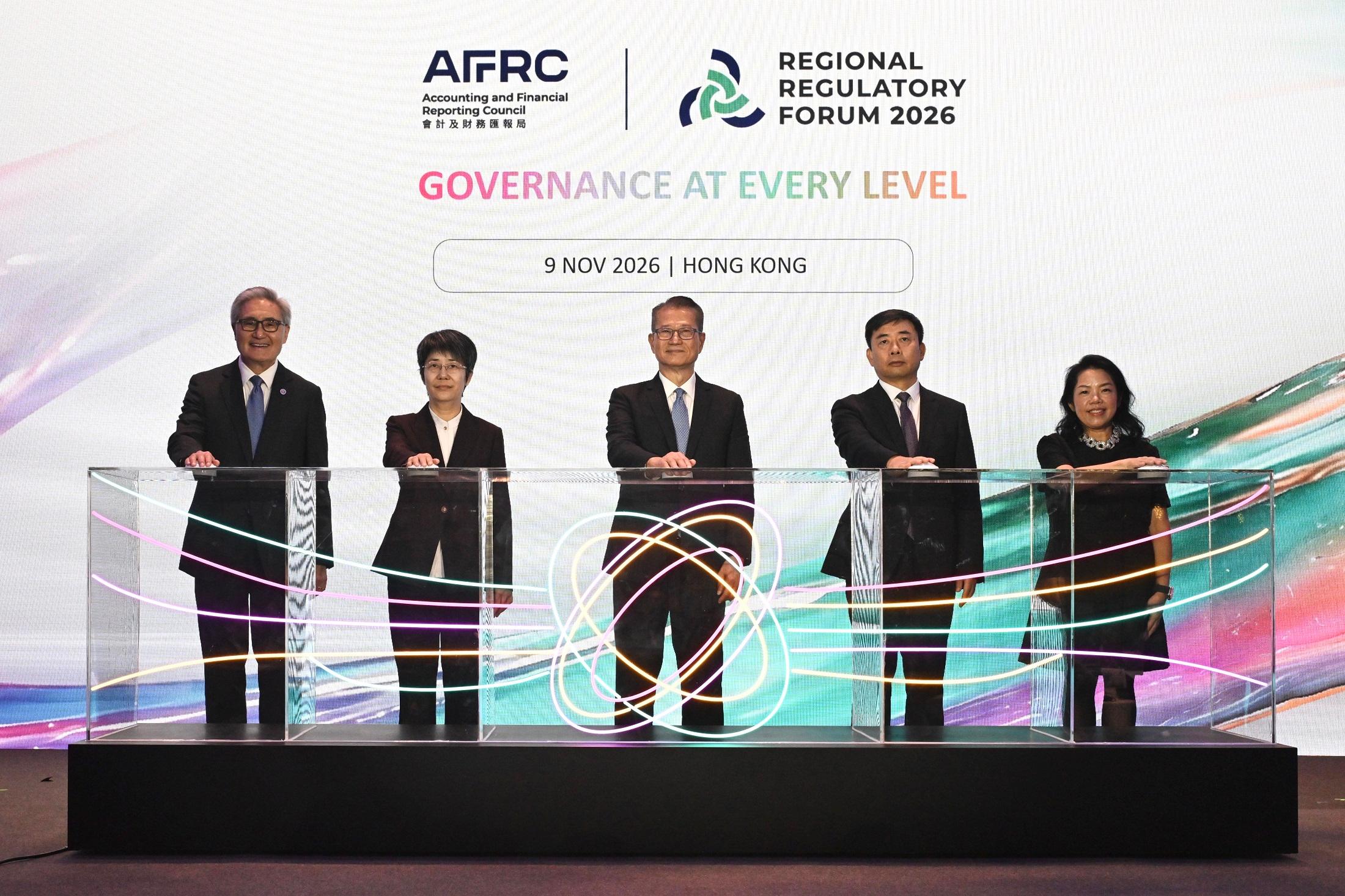
Speech by FS at Accounting and Financial Reporting Council Regional Regulatory Forum 2026 (English only) (with photos)

     Following is the speech by the Financial Secretary, Mr Paul Chan, at the Accounting and Financial Reporting Council Regional Regulatory Forum 2026 today (November 9):

尊敬的郭婷婷副部長 (Vice Minister of the Ministry of Finance Ms Guo Tingting), 朱文部長 (Director-General of the Coordination Department of the Liaison Office of the Central People's Government in the Hong Kong Special Administrative Region, Mr Zhu Wen), David (Chairman of the Accounting and Financial Reporting Council (AFRC), Dr David Sun), Janey (Chief Executive Officer of the AFRC, Ms Janey Lai), Kelvin (Chairman of the Securities and Futures Commission, Dr Kelvin Wong), distinguished guests, ladies and gentlemen,

     Good morning. It is a pleasure to join you at the third Regional Regulatory Forum. I thank David, Janey and the AFRC team for bringing us together, and I warmly welcome our friends from the Mainland and from overseas.

     David has spoken about the five Cs and the theme of this Forum, governance at every level. Let me take a step back and look at the trends shaping business across our region, and what they mean for Hong Kong, for the accounting profession and for regulators.

A changing business landscape

     The most visible trend is diversification amid geopolitical uncertainty. Businesses are building supply chains across several countries, and investors are spreading their holdings across more markets and currencies. At the same time, regional ties are deepening. More than half of the trade in Asia now takes place within the region. ASEAN (Association of Southeast Asian Nations)’s role as a trading entity is also expanding, with its total merchandise trade growing by 14 per cent last year to US$4.4 trillion. 

     Our country is an important player in this process. High-level opening up is a central theme of the National 15th Five-Year Plan, and that continued opening up runs in both directions. More Mainland companies are going global. Last year, Chinese outbound direct investment rose by 11 per cent to US$214 billion, strengthening supply-chain links and industrial development co-operation with the Global South. 

     At the same time, our country continues to welcome international businesses, products and services. All foreign investment access restrictions in manufacturing have been removed, while service sectors such as telecommunications and healthcare are opening up further through pilot schemes. 

     What can we expect from all this? More investment, more partnerships, and more companies concurrently operating in several markets. With that comes a growing demand for credible financial information that can be trusted across borders.

     Technology is changing business just as profoundly, with AI and digitalisation leading the way. Worldwide spending on AI is projected to approach US$2.7 trillion this year. For many businesses, AI has become a major investment priority, changing how they operate and their business model, as well as how investors assess their value. For accountants, AI is both a tool and an asset: a tool that is transforming how work is done, and a fast moving asset that must be measured, valued and reported upon like any other major investment.

     Then there is green transition. Climate policy priorities may shift, but the need to finance the transition remains. In an assessment in 2024, the IMF (International Monetary Fund) estimated that emerging and developing Asia needed at least US$1.1 trillion a year for climate mitigation and adaptation, while the actual investment was only around 30 per cent. Mobilising more private capital for the transition is absolutely essential, and investors need reliable information on both the financial performance and environmental impact of such projects. 
     
Opportunities and challenges

     These developments in trade, technology and green transition are creating new opportunities as well as new demands for trust and accountability. And Hong Kong is experiencing them first-hand.

     For example, diversification and opening up mean more fund-raising and cross-border investment flows. In the first 10 months of this year, there were 121 new listings in Hong Kong, and they raised more than HK$400 billion, 40 per cent more than in the whole of last year. Companies across the AI value chain are adding new depth to our market. Meanwhile, around 60 per cent of the new issuers in Hong Kong had international business operations, and some in their prospectus have earmarked proceeds for overseas expansion. More international companies from Southeast Asia, the Middle East and Central Asia are also choosing Hong Kong to list equities or to issue bonds. 

     The challenge follows. The work of accountants straddles jurisdictions and regulatory systems. Financial information of a company prepared in one jurisdiction may be audited in another and relied upon by investors in many others. Every link in that chain has to hold.

     AI tells a similarly challenging story. 

     For the profession, AI is already making its mark. An AFRC study published last month found that four of the five large audit firms surveyed had begun implementing AI capabilities, although progress in broader audit automation was uneven among small- and medium-sized firms. 

     AI can take on routine work super efficiently. But the limitation of their output and the validity of the assumptions need to be carefully scrutinised with professional judgement. The risk of AI-fabricated documents makes it all the more important to challenge the reliability of evidence. Therefore the profession must find new ways to discharge its duty and to train and upskill its management and staff.

Three thoughts for the profession

     All these point to three priorities. 

     First, uphold integrity at the heart of your work. Technical expertise matters, but so does the integrity behind your signature. Never compromise quality and integrity. This goes without saying for auditors. But I would like to remind accountants in business that this is your primary responsibility, because it is the output of your work that forms the very basis of your financial statements.  Besides, the Board relies on your information and your advice, all the way from establishing internal control and internal audit to external financial reporting. 

     Second, not just build AI skills, but become AI native. Every firm, whatever its size, needs people who can apply these tools and recognise their limitations. Firms will value even more those who can use AI to help transform their business or reinvent their business model. 

     Third, keep investing in people. We need professionals who understand both technology and business, exercise sound judgement, uphold integrity and work effectively across markets and cultures. AI may reduce some routine work, but firms must still give young professionals the training, experience and exposure they need. The leaders of your firm in the 2030s may well be the trainee you hire today. 

An invitation to fellow regulators

     Ladies and gentlemen, these priorities are not for the profession alone. Regulators also have a role to play, too. Here in Hong Kong, I have given our financial regulators a dual mandate: prudent regulation and market development facilitation. We see these responsibilities as complementary and essential to the continued development of our financial markets. 

     Regulators can learn from one another. To our fellow regulators from the region, I extend an invitation. Let us compare notes on the global development and challenges of the profession, share regulatory experiences, and promote staff exchanges and secondments with one another.

     This Forum provides a valuable opportunity to advance that dialogue. I thank the AFRC once again for organising this Forum and bringing all of us together. I wish you a stimulating and productive day. Thank you.
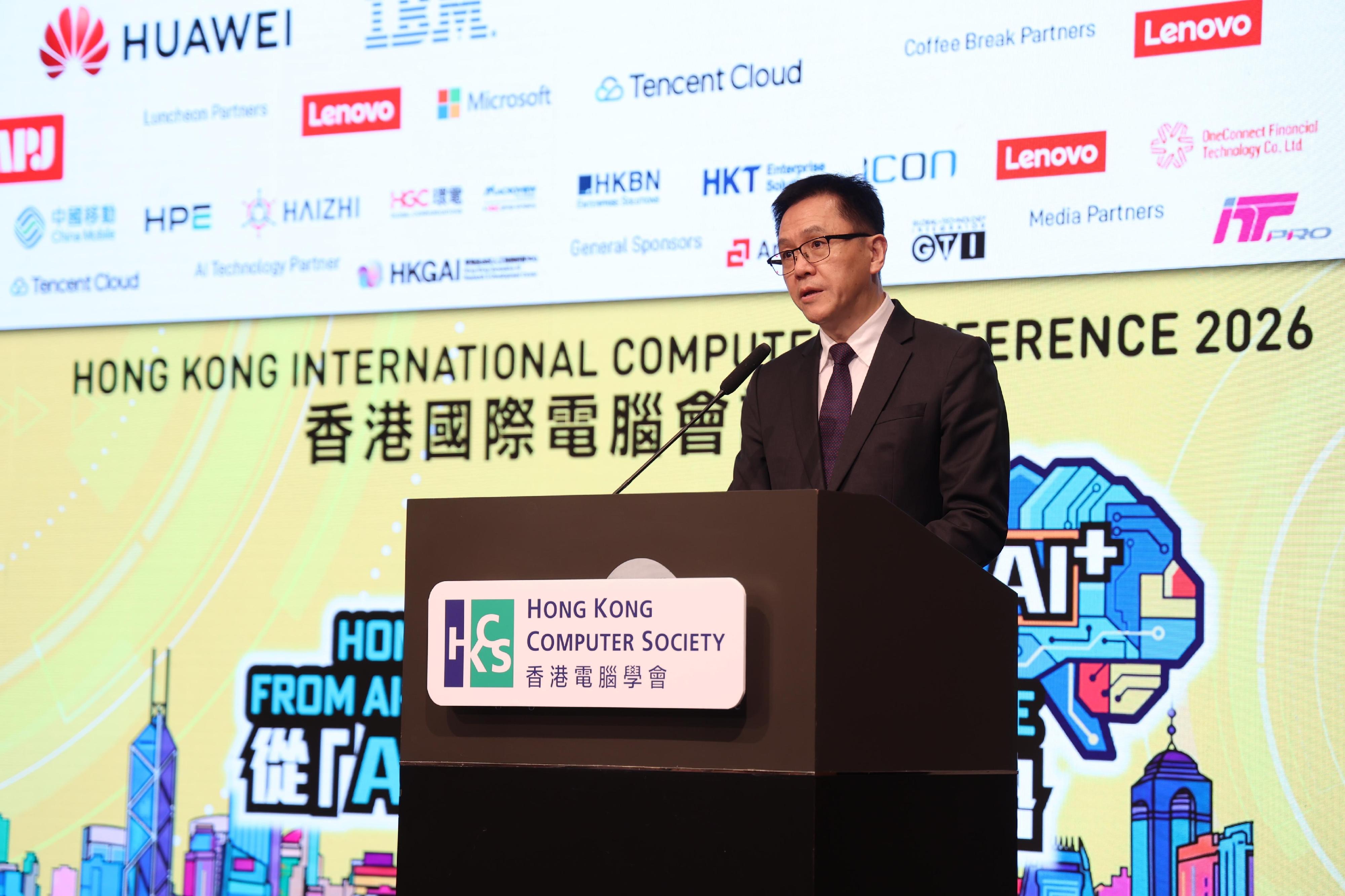
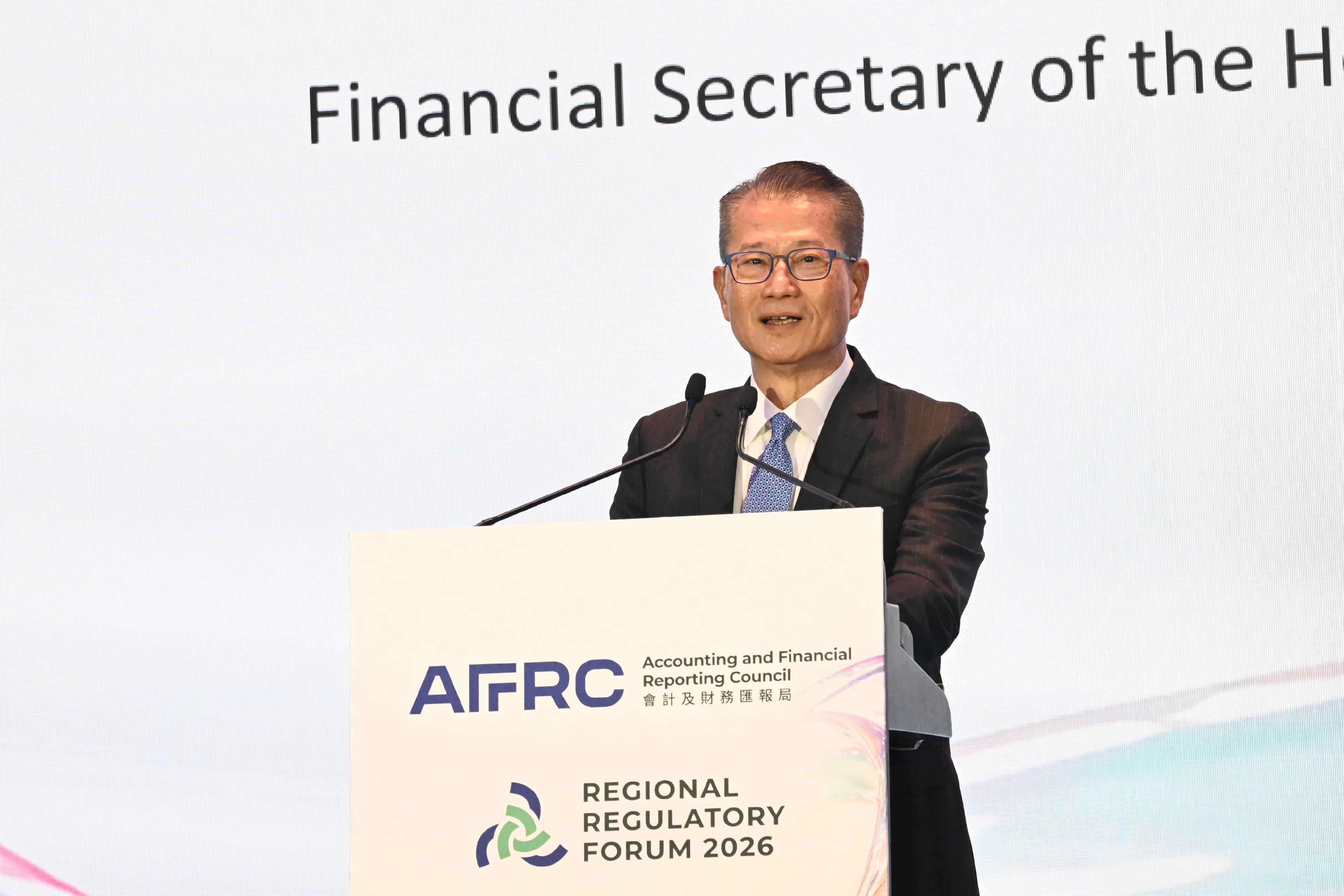
Photo  Photo