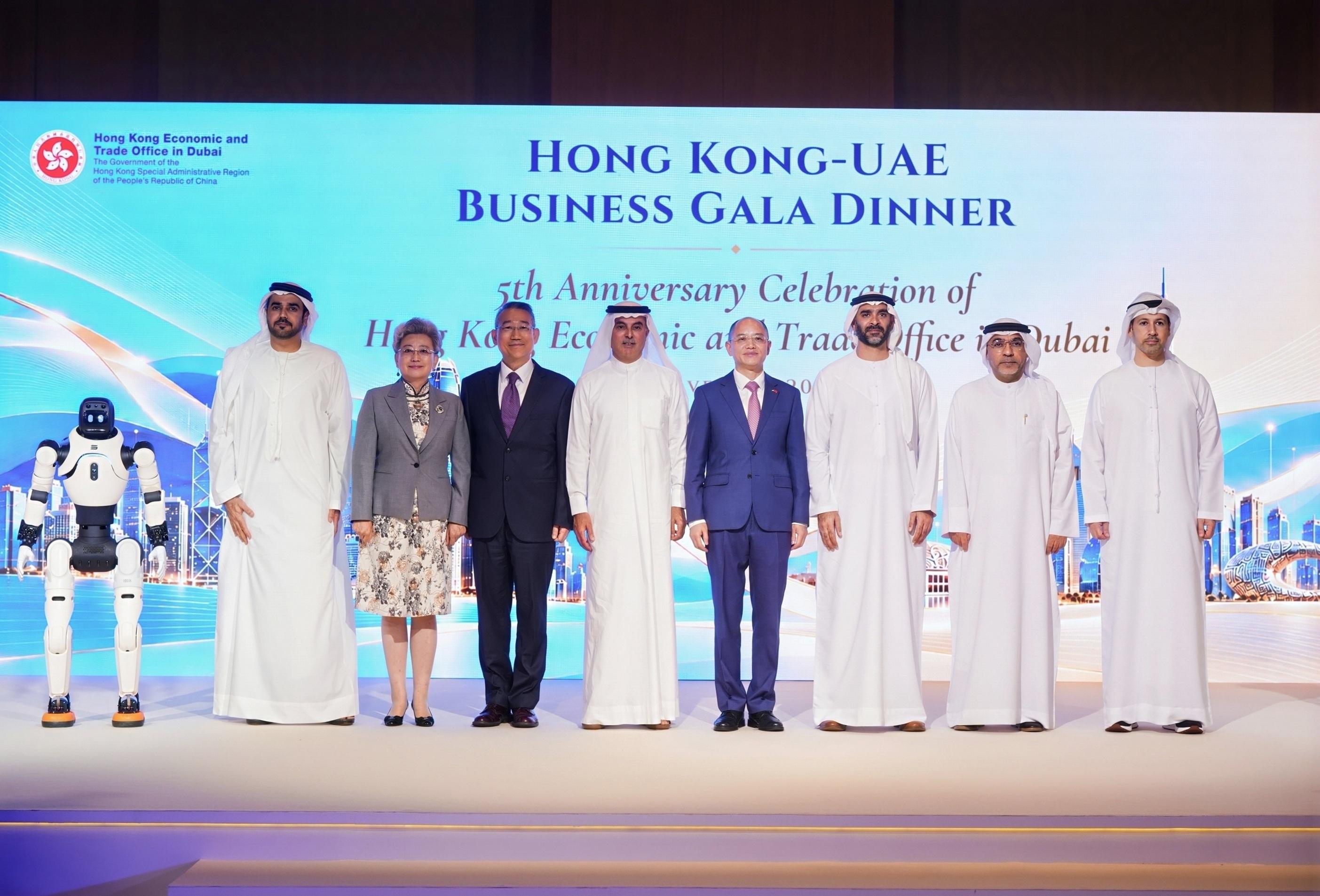
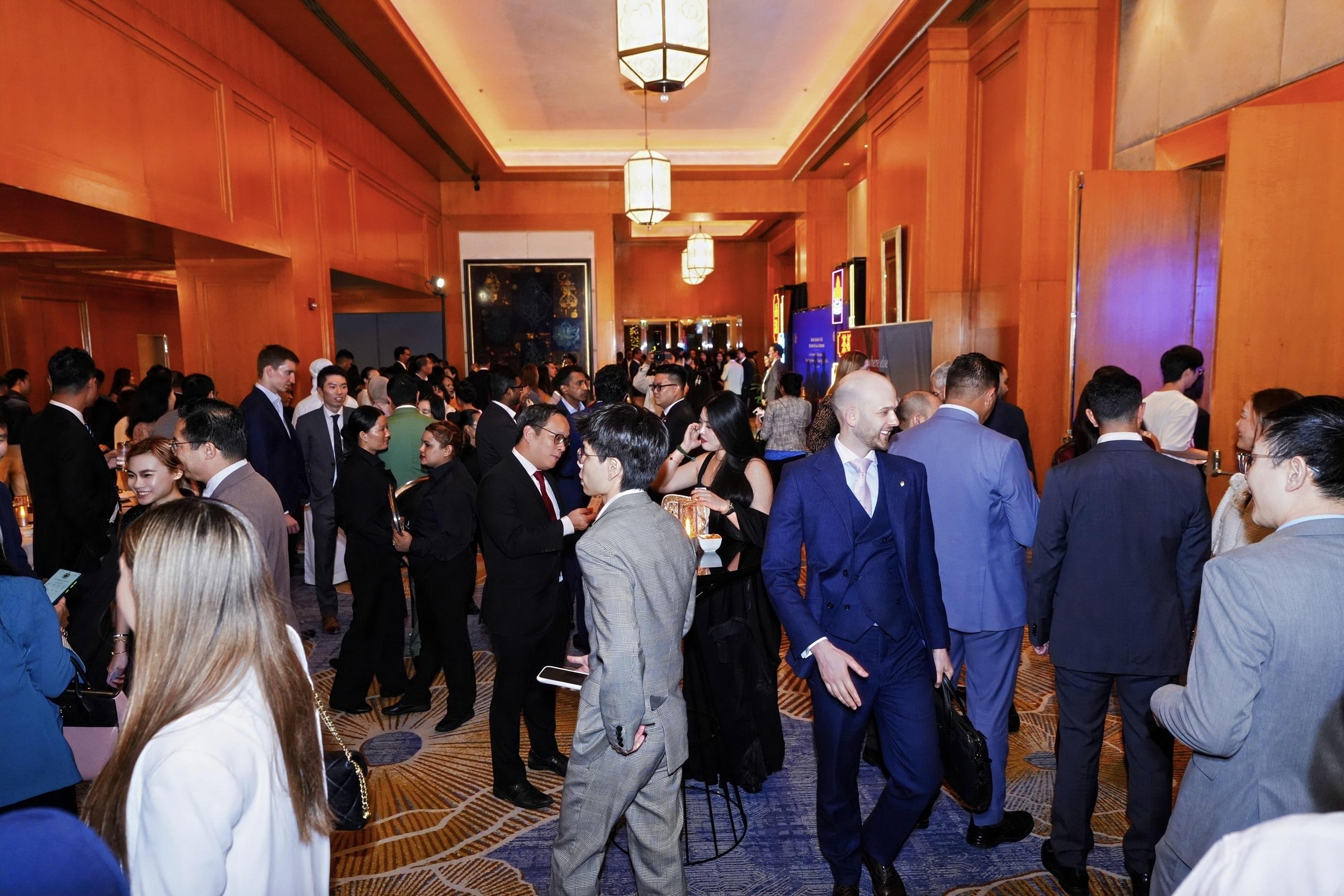
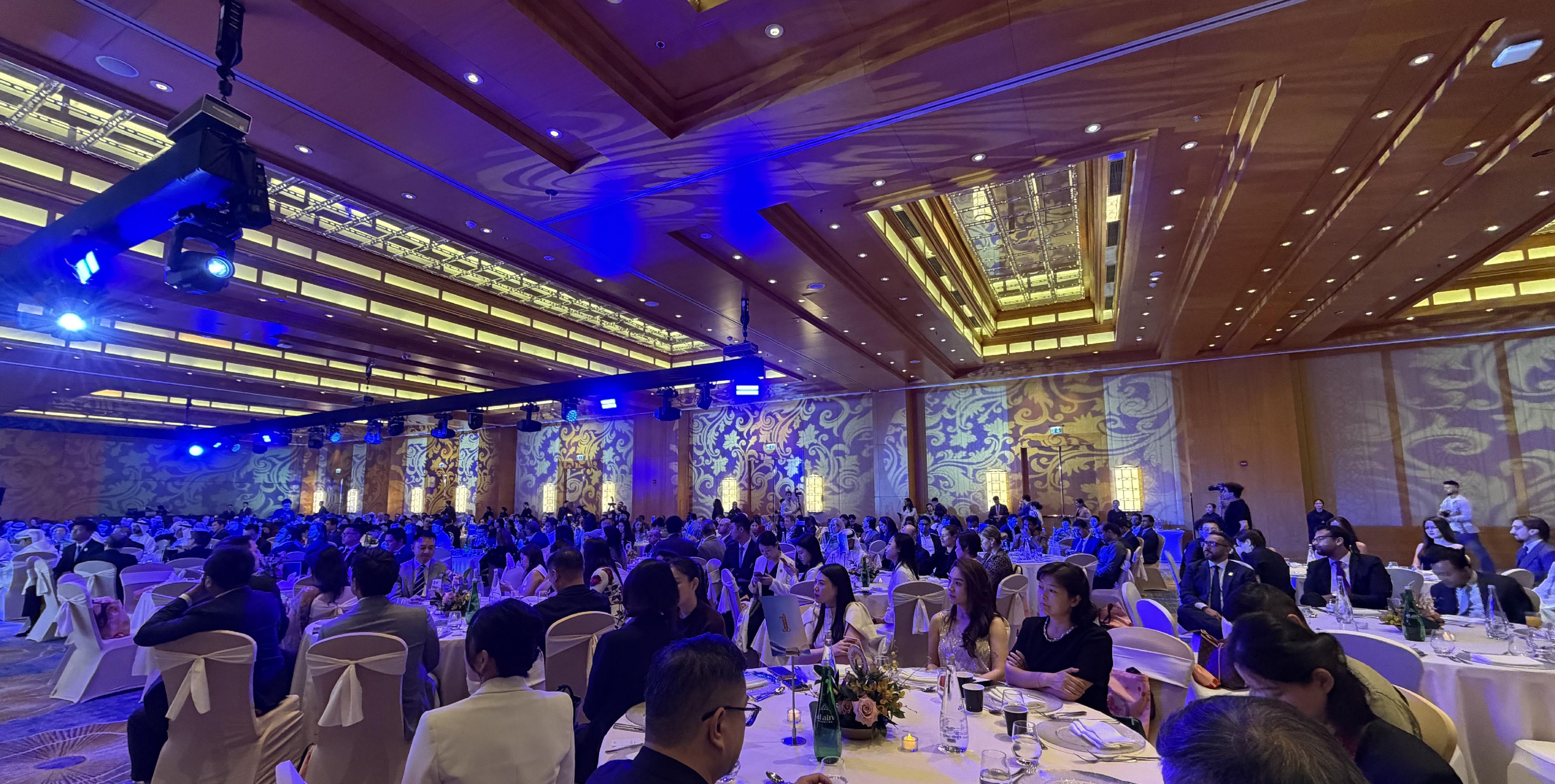
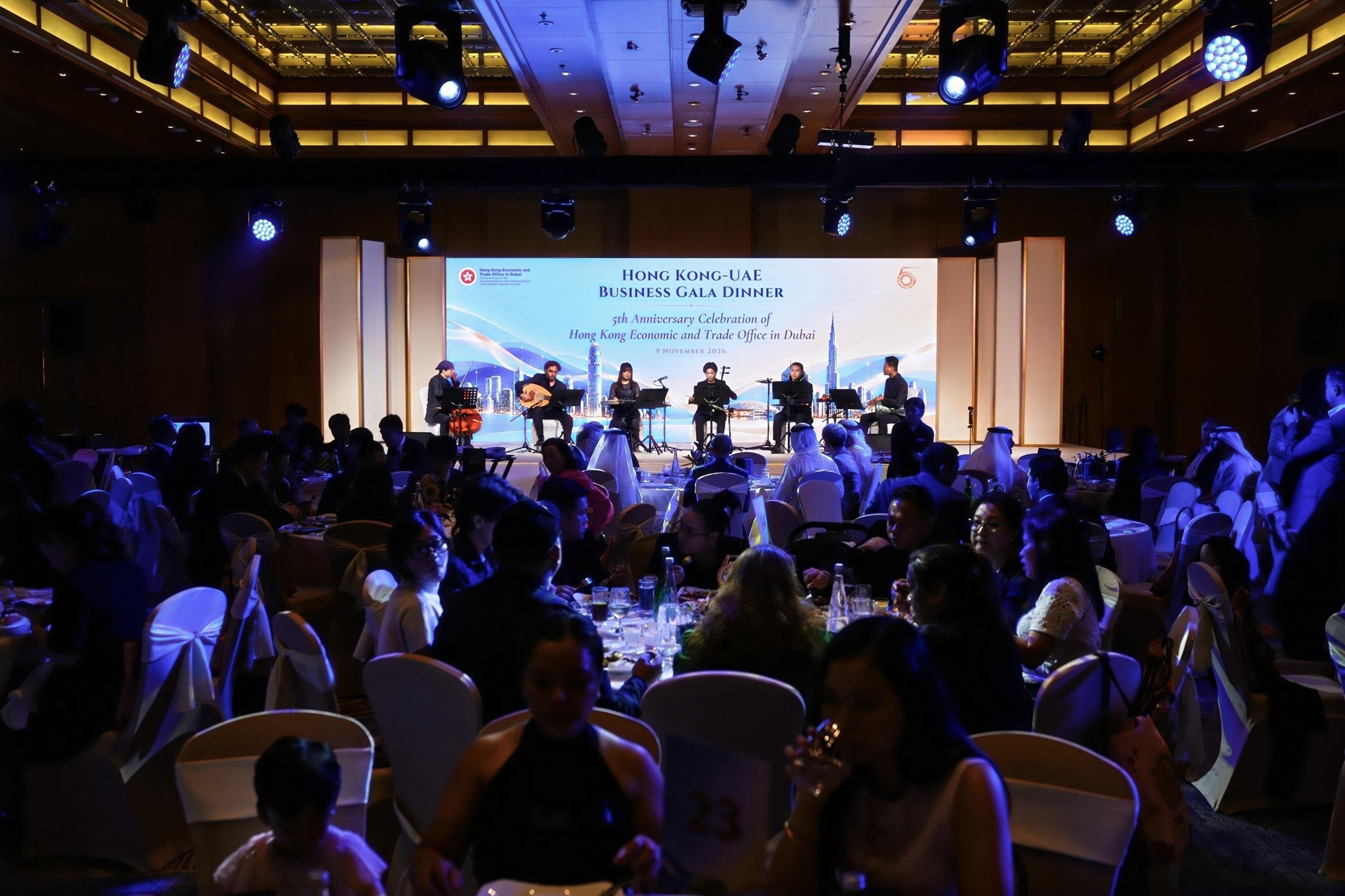
The Hong Kong Economic and Trade Office in Dubai (Dubai ETO) hosted a gala dinner in Dubai, United Arab Emirates (UAE), on November 9 (Dubai time) to celebrate the fifth anniversary of its establishment, a milestone underscoring the growing friendship and partnership between Hong Kong and the Middle East region, in particular the UAE and the Cooperation Council for the Arab States of the Gulf (GCC). The event welcomed more than 350 guests fromvarious sectors, including government bodies, Chinese and foreign embassies and consulates, business associations and leaders, and members of the Hong Kong community in the UAE.
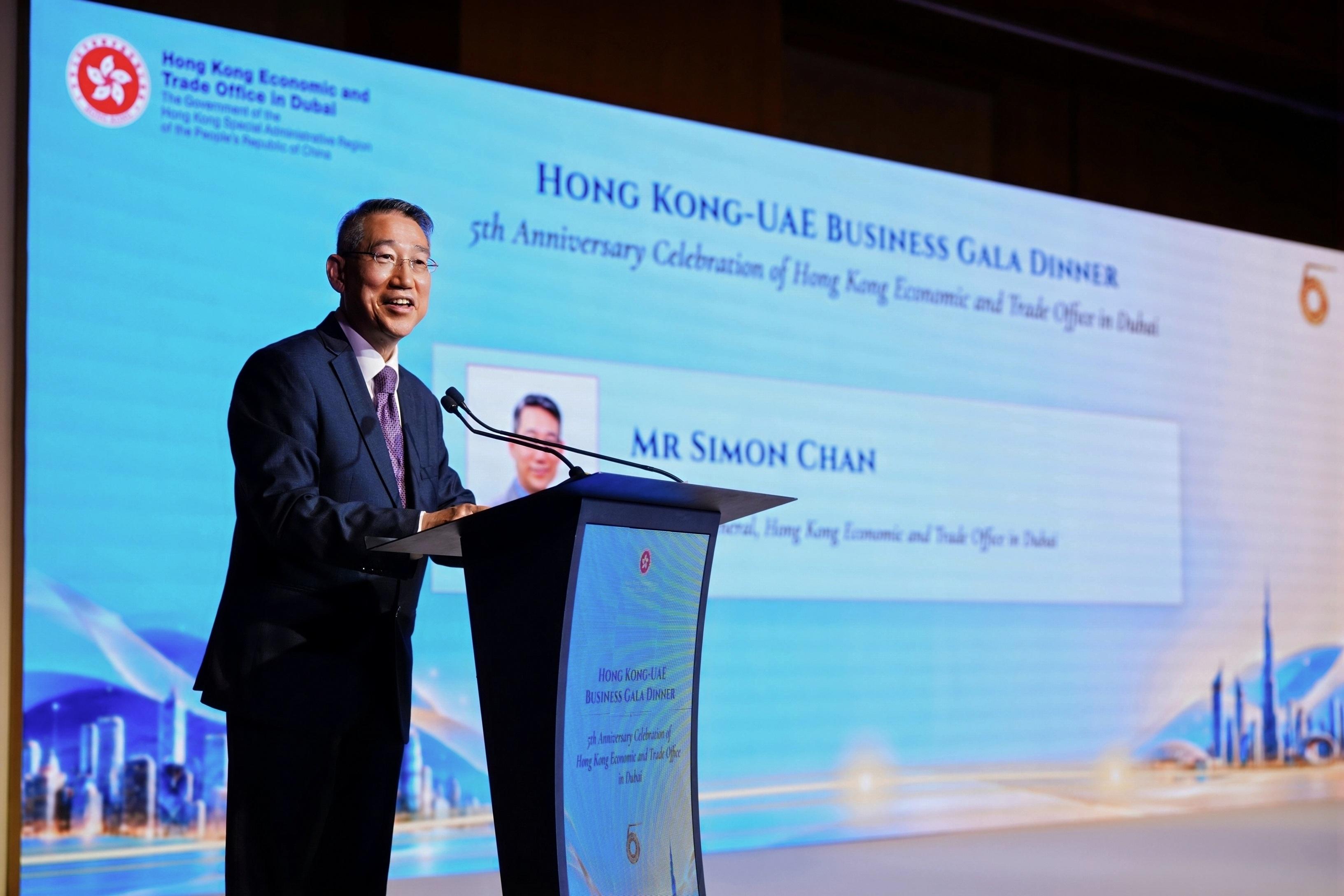
Speaking at the event, the Director-General of the Dubai ETO, Mr Simon Chan, noted that the Dubai ETO is the Hong Kong Special Administrative Region (HKSAR) Government's first ETO in the Middle East region, covering the UAE and member states of the GCC and dedicated to fostering economic, trade, and cultural ties between the two regions. Over the past five years, the ETO has served as a vital bridge connecting Hong Kong and the Gulf region through facilitating visits by high-level officials and business delegations, and organising a variety of business and cultural events, and has strived to explore the Middle East market and tell the good stories of Hong Kong.
"Since the establishment of the Dubai ETO, the Chief Executive and various Principal Officials from the HKSAR have visited the Middle East, while senior officials from various Gulf states have also travelled to Hong Kong each year to attend major economic, trade, and financial events. These increasingly frequent exchanges have propelled bilateral relations to new heights. Over the past five years, bilateral trade between Hong Kong and the UAE has seen a robust average annual growth rate of 8.2 per cent. The UAE is Hong Kong's largest trading partner in the Middle East, and Hong Kong has emerged as one of the fastest-growing markets for the UAE’s non-oil exports." Mr Chan said.
He highlighted that Hong Kong and the UAE are both the trade and logistics hubs of their respective regions. The UAE is Hong Kong and Chinese Mainland businesses' important gateway to the Middle East, while Hong Kong has the distinctive advantages of enjoying strong support of the motherland and being closely connected to the world under "one country, two systems" to serve as a "super connector" and "super value-adder" linking the Middle East with the Mainland and Asian markets. As the premier international platform for the Belt and Road Initiative, Hong Kong actively supports our nation's close co-operation with the UAE and the GCC countries, thereby unlocking more opportunities for collaboration between Hong Kong and the Middle East region.
In addition to economic and trade co-operation, Mr Chan shared the flourishing cultural and people-to-people exchanges, such as the UAE's participation in the Hong Kong Book Fair and youth exchanges and mutual visits, between the two regions. The Dubai ETO also hosted a Hong Kong film festival in the UAE for five consecutive years, and this year's Dubai Creek dragon boat challenge which attracted 62 teams from all seven emirates of the UAE, thereby deepening the bonds between the two communities. He expressed his gratitude to local free trade zones, chambers of commerce, businesses and partners from all sectors for their continued support, and looked forward to working hand -in- hand with all parties to write a new chapter in Hong Kong-UAE co-operation and shared prosperity.
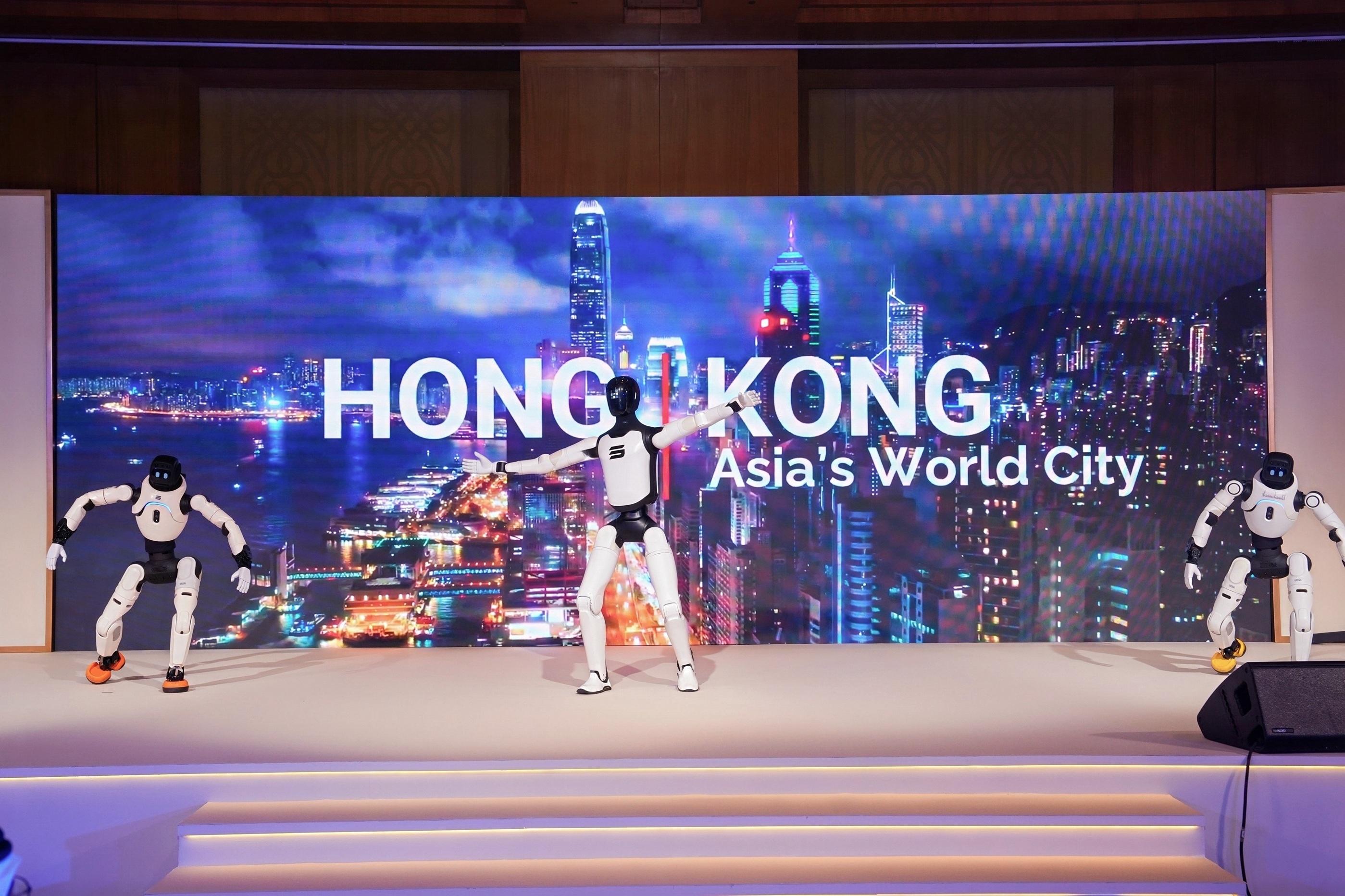
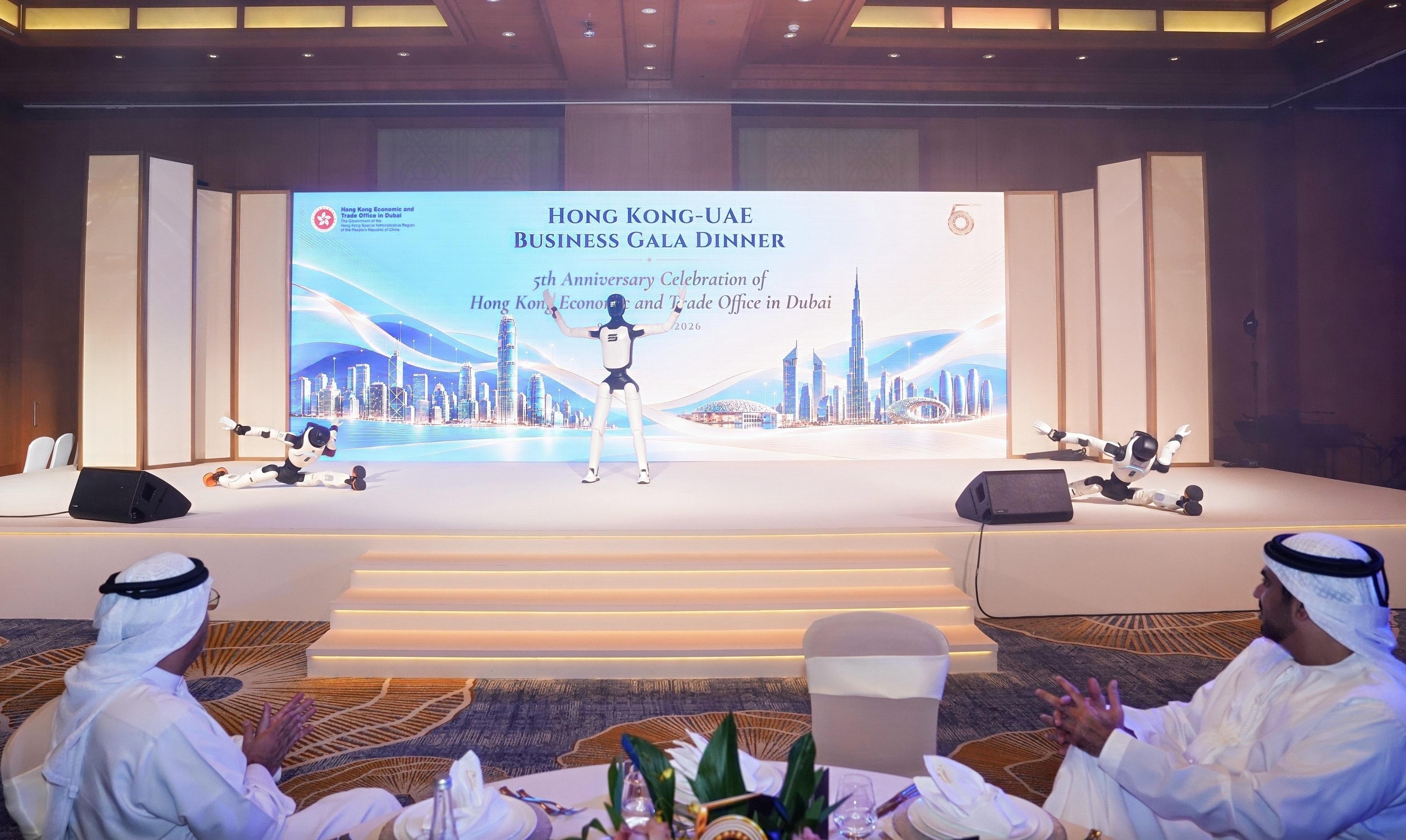
The gala dinner illuminated various milestones in Hong Kong-UAE co-operation through a short film, underscoring the remarkable evolution of the partnership across high-level engagement, financial and trade collaboration, and people-to-people exchanges since the inception of the Dubai ETO. The dinner also featured an array of exciting entertainment. Adding a touch of futuristic flair, humanoid robots from an innovation technology company with its international research and development headquarters in Hong Kong delighted the audience with a synchronised group dance, showcasing Hong Kong's vitality as an international innovation and technology centre. Guests were also treated to captivating performances by The Saffron, a Hong Kong-based Middle Eastern music ensemble, whose renditions of Arabic and Chinese pieces by blending traditional Chinese, Western and Middle Eastern instruments into cross-cultural sounds beautifully illustrated Hong Kong's charm as an East-meets-West centre for international arts and cultural exchanges. Traditional Hong Kong drinks and snacks were also served, allowing guests to savour the authentic flavours of Hong Kong.
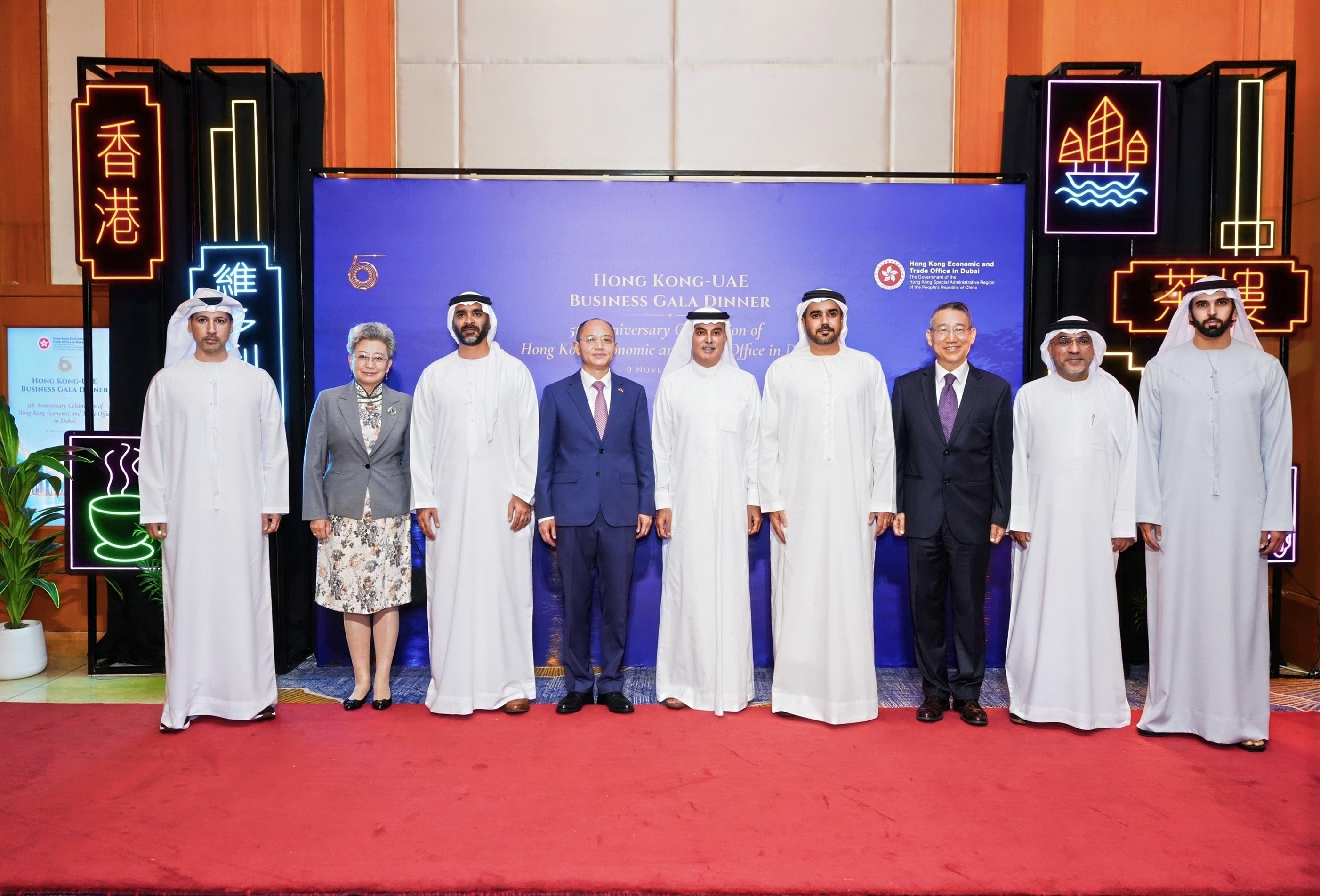
Among the distinguished guests attending the dinner were the Ambassador Extraordinary and Plenipotentiary of the People's Republic of China to the UAE, Mr Zeng Jixin; the Consul-General of the People's Republic of China in Dubai, Ms Ou Boqian; the Assistant Undersecretary for International Financial Relations Sector of the UAE Ministry of Finance, Mr Ali Abdullah Sharafi; the Chairman of the UAE Banks Federation and Former Speaker of the UAE Federal National Council, Mr Abdul Aziz Abdulla Al Ghurair; the Director of the Dubai Office of the UAE Ministry of Foreign Affairs, Mr Rashid Abdulla Al Qaseer; the Chief Executive Officer of the Dubai International Financial Centre Authority, Mr Arif Amiri; and the Chief Executive Officer of the Sharjah Research, Technology and Innovation Park, Mr Hussain Mohammed Al Mahmoudi.
The Dubai ETO commenced operations in October 2021 to strengthen Hong Kong's partnership with the UAE and the five other member states of the GCC. The ETO will continue to leverage its role as a bridge to promote economic and trade co-operation and people-to-people exchanges between Hong Kong and the Gulf region.