Women’s Health Programme aims to support innovation in women’s health and better understand how the risks and benefits of medicines and medical devices may differ for women.
Nov162026
Nov162026
The effective exchange rate index for the Hong Kong dollar on Monday, November 16, 2026 is 100.4 (same as last Saturday's index).
The effective exchange rate index for the Hong Kong dollar on Saturday, November 14, 2026 was 100.4 (same as last Friday's index).
Nov162026
Following is the speech by the Chief Executive, Mr John Lee, at the Opening Ceremony of Hong Kong Maritime Week 2026 cum World Maritime Merchants Forum 2026 today (November 16):
Honourable Vice-Chairman C Y Leung (Vice-Chairman of the National Committee of the Chinese People's Political Consultative Conference), Vice Minister Li Xinghu (Vice Minister of Transport of the People's Republic of China), Deputy Director Zhang Yong (Deputy Director of the Liaison Office of the Central People's Government in the Hong Kong Special Administrative Region (HKSAR)), Chairman Miao Jianmin (Chairman of the China Merchants Group), Deputy Head Lin Jiandong (Deputy Head of the Office for Safeguarding National Security of the Central People's Government in the HKSAR), Deputy Commissioner Li Yongsheng (Deputy Commissioner of the Office of the Commissioner of the Ministry of Foreign Affairs of the People's Republic of China in the HKSAR), Vice Governor Yang Guoqiang (Vice Governor of the People's Government of Hainan Province), ambassadors, distinguished guests, ladies and gentlemen,
Good afternoon. Welcome to Hong Kong, a global maritime capital, and the 10th anniversary edition of Hong Kong Maritime Week, as well as the sixth World Maritime Merchants Forum.
I'm grateful to the organiser and co-organisers, the Hong Kong Shipowners Association and the Hong Kong Maritime Museum, for bringing together the vitality and professionalism of our maritime cluster for this grand opening. Your laudable efforts reflect our shared ambition – to sustain Hong Kong as a renowned and reform-minded global maritime hub.
Over the past years, Maritime Week cum World Maritime Merchants Forum has grown into a world-class event, an annual coming together of industry leaders, a showcase of our maritime prowess, and a proven springboard for global maritime business.
This year's theme, "Trusted Resilience Powering Global Maritime Trade", reflects the pivotal juncture we find ourselves at today. International shipowners and shipping enterprises are navigating daunting headwinds, powered by complex geopolitical shifts, supply chain fragmentation and heightened market volatility. Such testing waters demand steady hands and decisive leadership.
In times of complexity, we look for certainty. Under the enduring principle of "one country, two systems", Hong Kong stands proudly as the international shipping community's "safe harbour". We are deeply supported by our country's economic development and national strategies, and we are globally connected. Hong Kong maintains its own common law system, a simple and competitive tax regime, free port status and the unimpeded flow of capital and information. For international shipowners seeking stability and predictability, along with a secure jurisdiction to anchor their operations and capital, Hong Kong is truly the port in a storm.
Our international standing reflects these attributes. Hong Kong ranked fourth, globally, in this year's International Shipping Centre Development Index, marking our seventh consecutive year in the top tier. Around 1 200 port and maritime-related enterprises call Hong Kong home, offering world-class expertise across the high value-added maritime services chain.
That said, the global maritime community faces shared problems, challenges that no single economy can resolve alone. On this, our stance is clear and unwavering: global shipping thrives on openness, seamless connectivity and an unyielding commitment to the rules-based international trading system.
Protectionism and fragmentation threaten the global economy. A staunch champion of free trade and multilateralism, Hong Kong firmly rejects isolationism. The future of maritime trade depends on keeping shipping lanes open, upholding international maritime law and standards, and promoting unhindered economic co-operation across East and West, South and North.
That, ladies and gentlemen, is the purpose of Hong Kong Maritime Week cum World Maritime Merchants Forum – bridging divides, building networks and keeping channels open and welcome. That's also why the HKSAR Government is working to steer Hong Kong from a regional port to a pre-eminent global maritime hub.
Hong Kong's First Five-Year Plan, introduced two months ago, will help us get there. It fully aligns with the National 15th Five-Year Plan, deepening our integration into the national strategies. Guided by this strategic blueprint, my 2026 Policy Address outlines concrete measures to shift our growth focus from volume to value.
Our primary emphasis is on high value-added maritime services, building closer collaboration with our sister cities in the Greater Bay Area, and nurturing industry talent. We will also participate in the development of autonomous ships for use in Hong Kong waters, contributing to the national "water-to-water transshipment" initiative, and enhancing our "rail-sea-land-river" intermodal transport system.
Decarbonisation and digitalisation are mandatory co-ordinates for the future of global shipping. And Hong Kong is ready to lead this transition. To unlock the full commercial potential of the green transition, we are advancing from physical bunkering to a market-driven, globally oriented and diversified green fuel-trading platform.
Just before this session, we announced the formation of the dedicated Task Group on the Development of the Green Fuel Trading Platform. To secure broad backing, it brings together leading industry experts. They will advise on strategic direction, infrastructure set-up and market-tailored operating rules.
The initiative will integrate the entire value chain. It will leverage Hong Kong's advantage as a "super-connecter" and "super value-adder", forging partnerships to promote green fuel trading. And that will help establish Hong Kong as an international hub for green maritime fuel trading.
We are already building partnerships. Last month, we signed an agreement with Shanghai to create a "brother port" partnership. That follows last year's "partner port" agreements with Guangxi and Dalian, as well as Chile's San Antonio Port. Today, I am pleased to announce another agreement, the establishment of a green shipping corridor between Hong Kong Port and the Port of Piraeus in Greece. This landmark collaboration is a significant step forward in driving decarbonisation along major Asian-European shipping routes.
There's more. We will soon witness MOU (Memorandum of Understanding) signings with Hainan and Guangdong's Zhanjiang. The Hainan MOU establishes a partner port relationship with Yangpu Port. The Zhanjiang MOU focuses on our first green energy corridor. It will reinforce our commitment to end-to-end, low-carbon, green-fuel supply chains, connecting green fuel produced in the Chinese Mainland with global maritime markets.
These new partnerships with our Mainland maritime partners show how closely our industry is connected. And I am delighted that so many Mainland friends are here with us today. So, before I close, let me say a few words in Putonghua.
各位,我很高興今天與全球航運界領袖一同出席香港海運週2026開幕典禮暨世界航商大會。當前,國際航運業正處於前所未有的變革期。面對地緣政治變局與供應鏈重塑,全球航運業比以往任何時候都更需要確定性和戰略協同,而香港正是國際航運界可靠的「避風港」。
緊接開幕典禮舉行的世界航商大會,是凝聚全球航運界共識的高層次對話平台。我感謝招商局集團發揮帶領作用,提供這個交流機會。我們應善用這平台,廣拓朋友圈,讓所有同坐一條船的四方好友,充分利用香港在「一國兩制」下「背靠祖國、聯通世界」的獨特優勢,乘國家發展的東風,共同開拓合作共贏的廣闊空間。
Ladies and gentlemen, I wish you all a rewarding Hong Kong Maritime Week, the best of business at the World Maritime Merchants Forum, and an enjoyable stay in Hong Kong. To all guests, fair winds and following seas on every journey. Thank you.
Nov162026
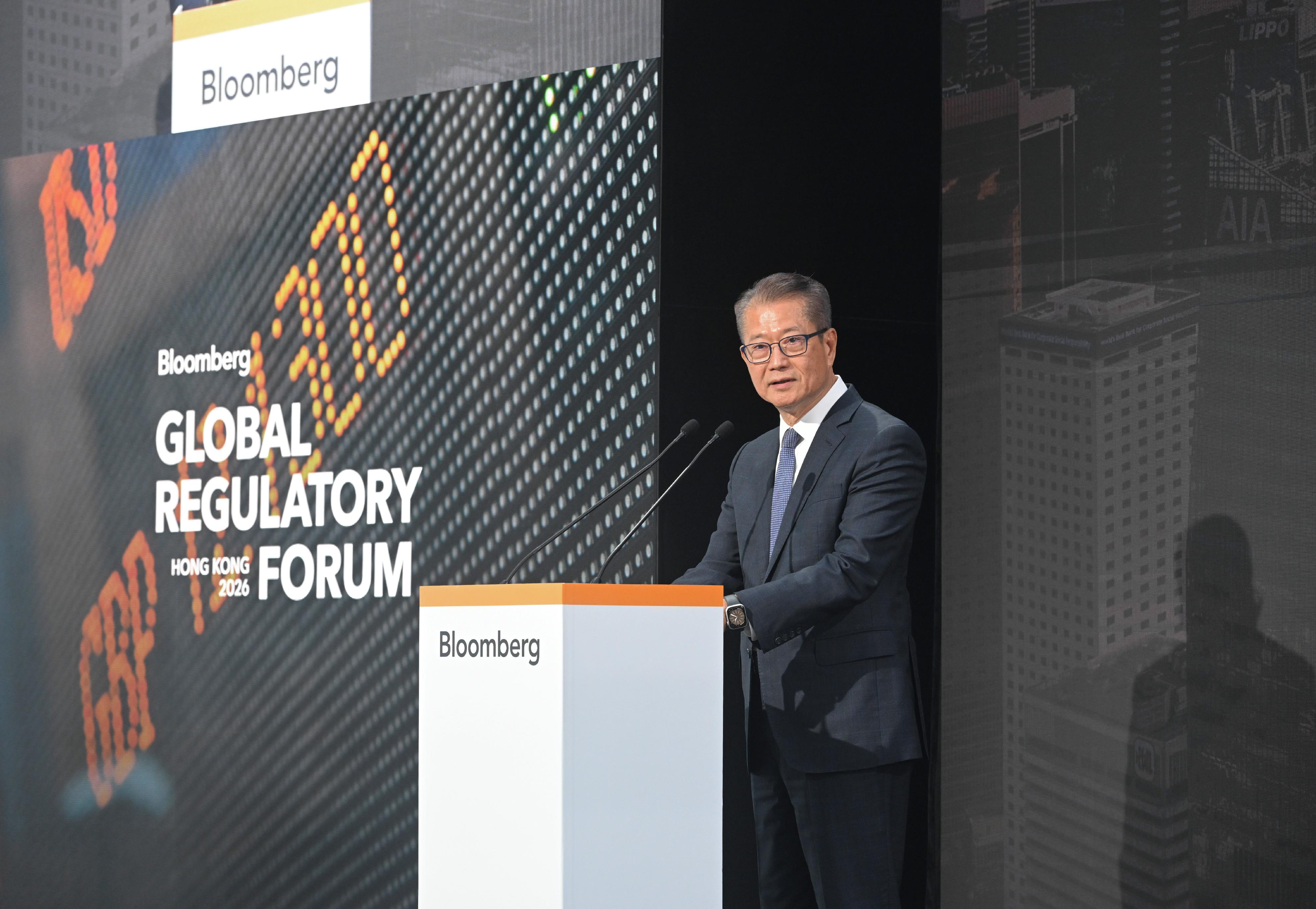
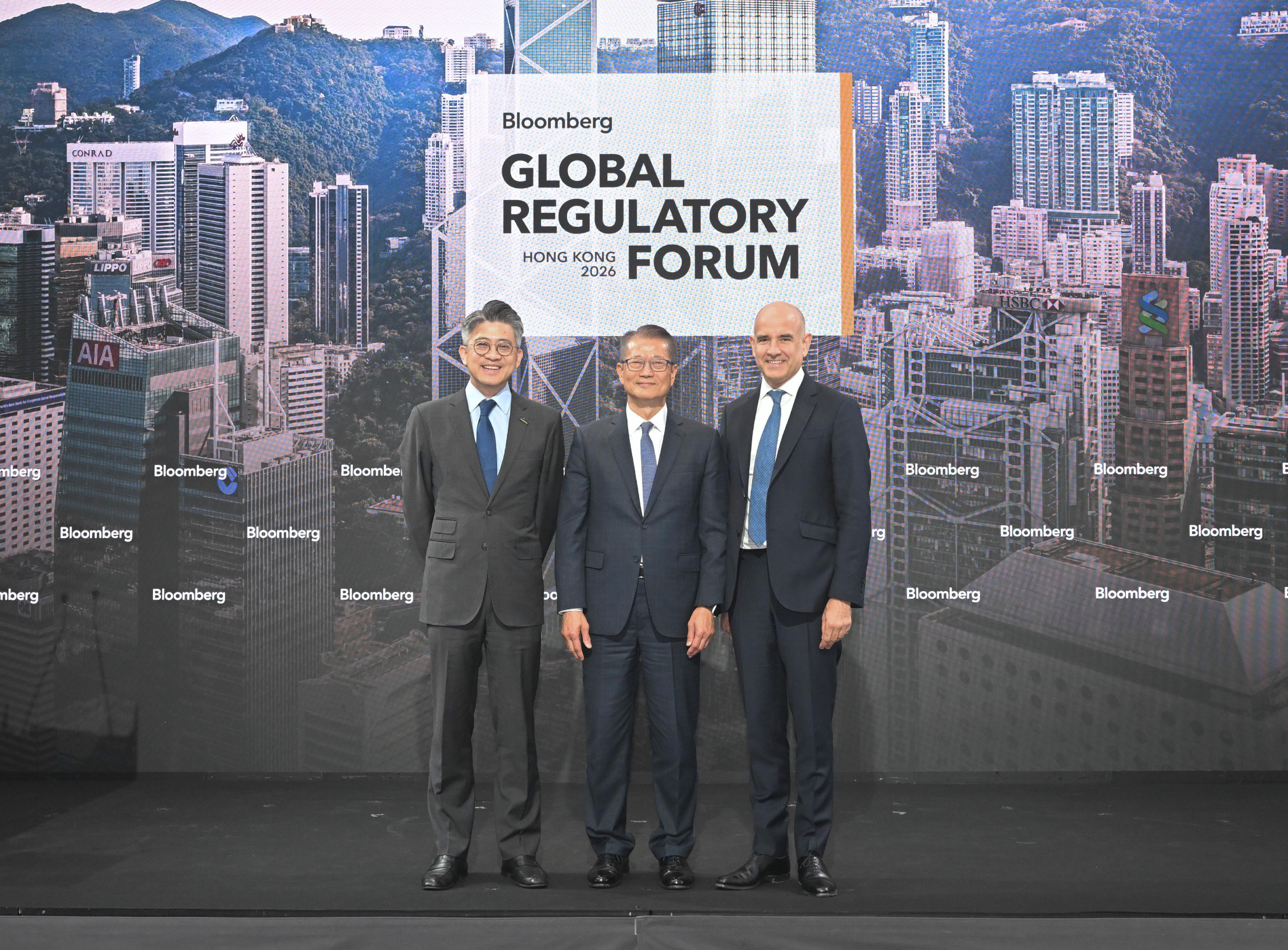
Following is the keynote speech by the Financial Secretary, Mr Paul Chan, at the Bloomberg Global Regulatory Forum 2026 today (November 16):
Constantin (European Director and Global Head of International External Relations of Bloomberg, Mr Constantin Cotzias), Bing (Asia Pacific Chairman at Bloomberg, Mr Bing Li), distinguished guests, ladies and gentlemen,
Good afternoon. It is a pleasure to see the Bloomberg Global Regulatory Forum back in Hong Kong after two editions in New York. To our friends who have travelled from afar, a very warm welcome.
A changing landscape
We meet at a time when the global financial landscape is fast changing and becoming increasingly complex. Interest rates in major economies have turned higher again, and geopolitics continues to reshape trade, supply chains and investment. When money is no longer cheap and the map is no longer simple, investors ask two questions of every market. Is my capital safe here? And where is the growth potential?
At recent international meetings, from the IMF/World Bank Annual Meetings in Bangkok to the Global Financial Leaders' Investment Summit here in Hong Kong, one message came through again and again: diversification across markets, currencies and asset classes, and in particular rebalancing towards Asia.
In Hong Kong, we see this happening.
Our total bank deposits grew by 7.7 per cent in the first nine months of this year, to nearly $21 trillion. In the first 10 months, more than 120 new listings raised over $400 billion, some 40 per cent more than the whole of last year. And international cornerstone investors have taken part in more than 80 per cent of our IPOs this year. Together, these figures reflect a considered choice: Hong Kong.
Two reasons
Why Hong Kong? There are at least two reasons. First, Hong Kong is a safe harbour, built on openness and consistency: the common law, the free flow of capital and information, a stable currency and regulation aligned with international standards. None of this is new, but that is precisely what investors value.
Second, growth. Chinese Mainland enterprises are making breakthroughs in artificial intelligence and robotics, biotechnology, new energy and advanced manufacturing. Many are now global leaders in their respective fields. I have met the founders of some of these firms, and I was impressed by their creativity, innovation and ambition. Hong Kong is the gateway through which global investors can access these opportunities. In the first three quarters of this year, technology enterprises together accounted for more than half of IPO funds raised in Hong Kong.
The principle to uphold
Indeed, all these are underpinned by the dual mandate of Hong Kong's approach to financial regulation: prudent regulation and market development facilitation. I said so at this Forum three years ago, and it remains our guiding principle.
On regulation, take our stock market for example. More than 500 listing applications are in the pipeline. We welcome them, and will continue to uphold the quality of our listings. Applicants come not only from the Chinese Mainland, but also from Southeast Asia and, increasingly, the Middle East and Central Asia. That is why our regulators work closely with their counterparts on the Chinese Mainland and overseas, stepping up cross-boundary co-operation in information exchange, supervision and enforcement. Investors come here because they trust what is listed here. That reputation, built over many years, is our most valuable asset.
The Five-Year Plan and Finance+
That is the regulatory side of our mandate. The other side is development, and it is continuous development that drives us forward. This thinking runs through Hong Kong's first Five-Year Plan, published in September. Finance is a key pillar of our "Four Centres, One Hub" development strategy, and our vision for it is "Finance+": leveraging finance to empower other sectors of the economy, from innovation and technology to trade, shipping and green development.
Consider innovation, which needs capital. Our task is to offer a complete fund-raising chain, so that a technology company can raise capital here at every stage of its growth. Beyond private equity, venture capital and public markets, an important link is patient capital. Through the Hong Kong Investment Corporation, we are building an ecosystem to support emerging and future industries.
Deeper markets
As an international financial centre that serves the real economy, we must also offer a broader range of services. That is why we are developing our fixed income, currency, gold and commodities markets, where we see considerable potential to grow.
Offshore RMB business is our unique competitive advantage. The RMB is being used more widely around the world, and our country has set a clear objective of advancing its internationalisation. At the same time, international investors are increasingly interested in holding RMB-denominated assets with better liquidity. In response, we are broadening the product offerings, strengthening the related infrastructure and deepening market liquidity. The latest addition came this morning, with the launch of the Offshore RMB Bond Index, which will pave the way for new RMB index-tracking products and ETFs (exchange-traded funds).
We are also moving forward quickly in the commodities market. In gold, we are increasing storage capacity, and a central gold clearing system connected with the Shanghai Gold Exchange has been in trial operation since July. On the trading side, the HKEX (Hong Kong Exchanges and Clearing Limited) is preparing RMB gold futures with physical delivery.
By the way, two of our recent initiatives share the same partner. HAU, the new reference price for gold in Asian trading hours, and the RMB Bond Index launched this morning were both developed with Bloomberg. Bing, Bloomberg follows the data. In gold and in RMB bonds, the data says Hong Kong. I expect it will keep saying so.
Newer ground: AI
So far, I have spoken of familiar ground. AI and digital assets are newer ones, where regulators everywhere are still working out the answers.
AI is clearly reshaping finance. In a recent survey of large financial firms by our Securities and Futures Commission, 95 per cent of respondents expect their use of AI to accelerate within a year. Three in 10 already use AI agents. In time, I expect more financial institutions to become AI-native, that is, institutions whose services and operations, even business models, are designed and built around AI.
These changes raise the question of accountability. When an AI agent acts, who answers for what it does? Our position is clear. AI agents may carry out tasks, but the responsibility remains with the institution that deploys them and the people who oversee them. An algorithm has no licence to lose and no reputation to protect. The institution has both.
The more challenging task is making that principle hold in daily operations. Banks have long been required to know their customer. They will now need to know their agent as well: who it is, what it is authorised to do, and how a person steps in when something may go wrong. This month, the Hong Kong Monetary Authority brought together experts from finance, technology and academia to work through these questions, in an initiative known as Project SAGE. And in the joint supervisory sandbox of our four financial regulators, 36 projects on AI agents have been selected for testing.
AI is also changing the threats we face. The model that helps a bank detect fraud can help a criminal find a weakness in its systems. Our regulators have therefore asked firms to review their defences, on the assumption that attacks will become faster, more frequent, more automated and launched on multiple fronts at the same time.
Digital assets
Meanwhile, digital assets raise a different question: that is, where the boundary of regulation should lie. Our principle is simple: same activity, same risks, same regulation.
On stablecoins, we have moved forward step by step. Of the 36 applicants in the first round, two received licences in April, and both have since launched Hong Kong dollar stablecoins. Our emphasis is on genuine use cases and credible business models: stablecoins should address pain points in business operations and in financial activities. Cross-border payment is a good example.
On tokenisation, the market is moving from pilots to regular use. In Hong Kong, tokenised funds offered to the public have grown about seven-fold in a year, and since last month two tokenised money market funds have traded around the clock on a licensed platform. Our approach is consistent: the same requirements as for conventional products, with additional safeguards for the new risks.
Before the end of this year, we will introduce a bill to complete the regulatory perimeter, extending licensing to those who deal in, advise on, manage and act as custodians of digital assets.
Above all, we are firm on one point: Decentralisation does not mean less accountability.
Close
Ladies and gentlemen, capital, data and code now cross borders in seconds. Rules travel more slowly, and no regulator can supervise these markets alone. Hong Kong will share what we learn, and we look forward to learning from you and working with you.
Technology will go on changing how finance works. It will not change what finance rests on, which is trust. Maintaining trust remains the work of institutions and regulators, and of the people in this room.
For our part, we will keep to the approach that has served us well: open to innovation, clear about responsibility and firm on standards.
I wish you all a rewarding Forum and, for those visiting, a most enjoyable stay in Hong Kong, Asia's world city. Thank you.
Nov162026
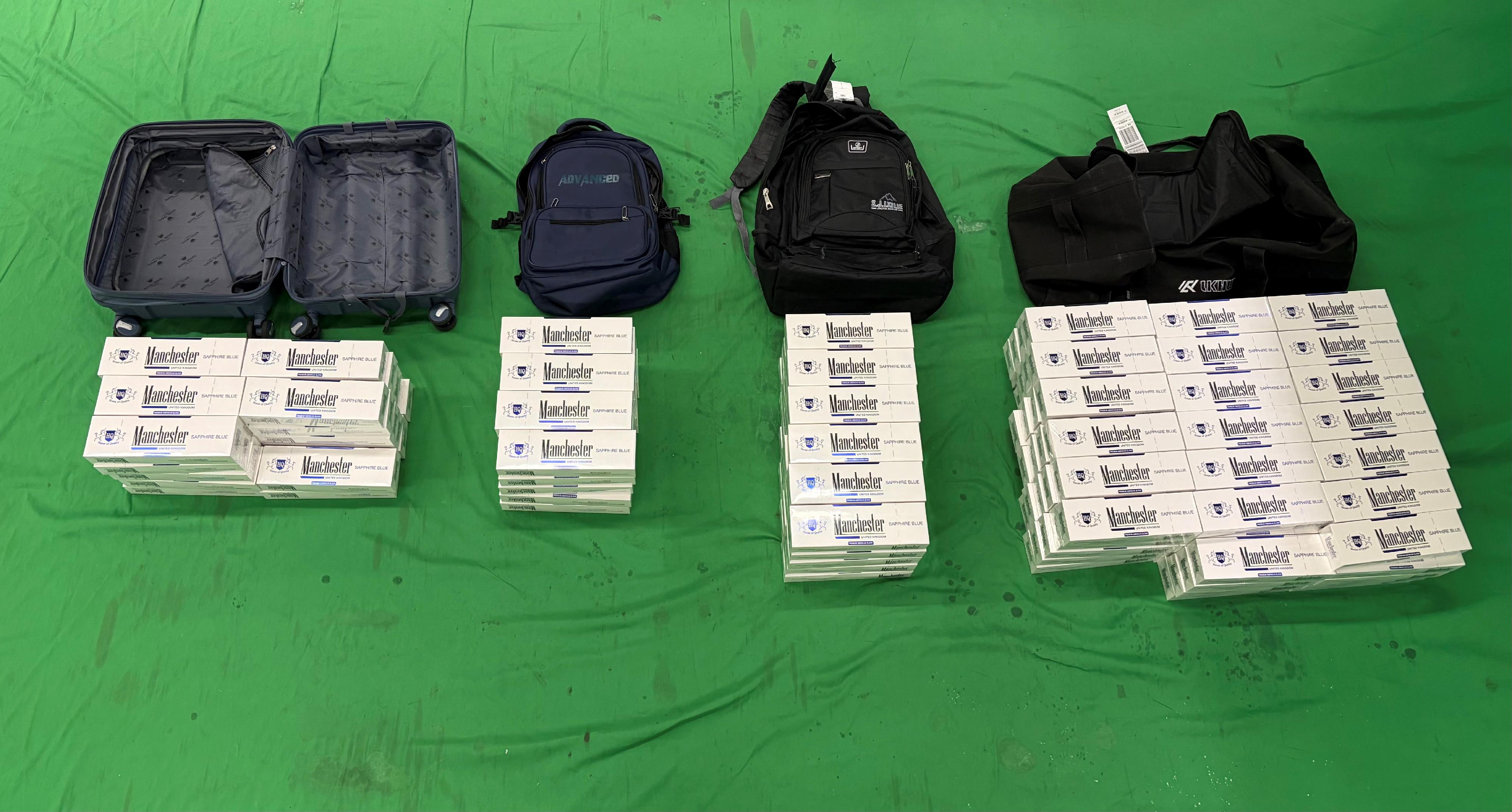
An incoming male passenger was sentenced to six months' imprisonment and fined $2,000 by the West Kowloon Magistrates' Courts today (November 16) for importing duty-not-paid cigarettes and failing to declare them to Customs officers, in contravention of the Dutiable Commodities Ordinance (DCO).
Customs officers intercepted a 41-year-old Mainland male passenger arriving in Hong Kong from Dubai, the United Arab Emirates, at Hong Kong International Airport on November 14 and seized about 35 000 duty-not-paid cigarettes, with an estimated market value of about $144,000 and a duty potential of about $116,000, from his personal baggage. The passenger was subsequently arrested.
Customs welcomes the sentence. The custodial sentence has imposed a considerable deterrent effect and reflects the seriousness of the offences.
Customs reminds members of the public that under the DCO, cigarettes are dutiable goods to which the DCO applies. Any person who imports, deals with, possesses, sells or buys illicit cigarettes commits an offence. The maximum penalty upon conviction is a fine of $2 million and imprisonment for seven years.
Members of the public may report any suspected illicit cigarette activities to Customs' 24-hour hotline 182 8080 or its dedicated crime-reporting email account (crimereport@customs.gov.hk) or online form (eform.cefs.gov.hk/form/ced002).