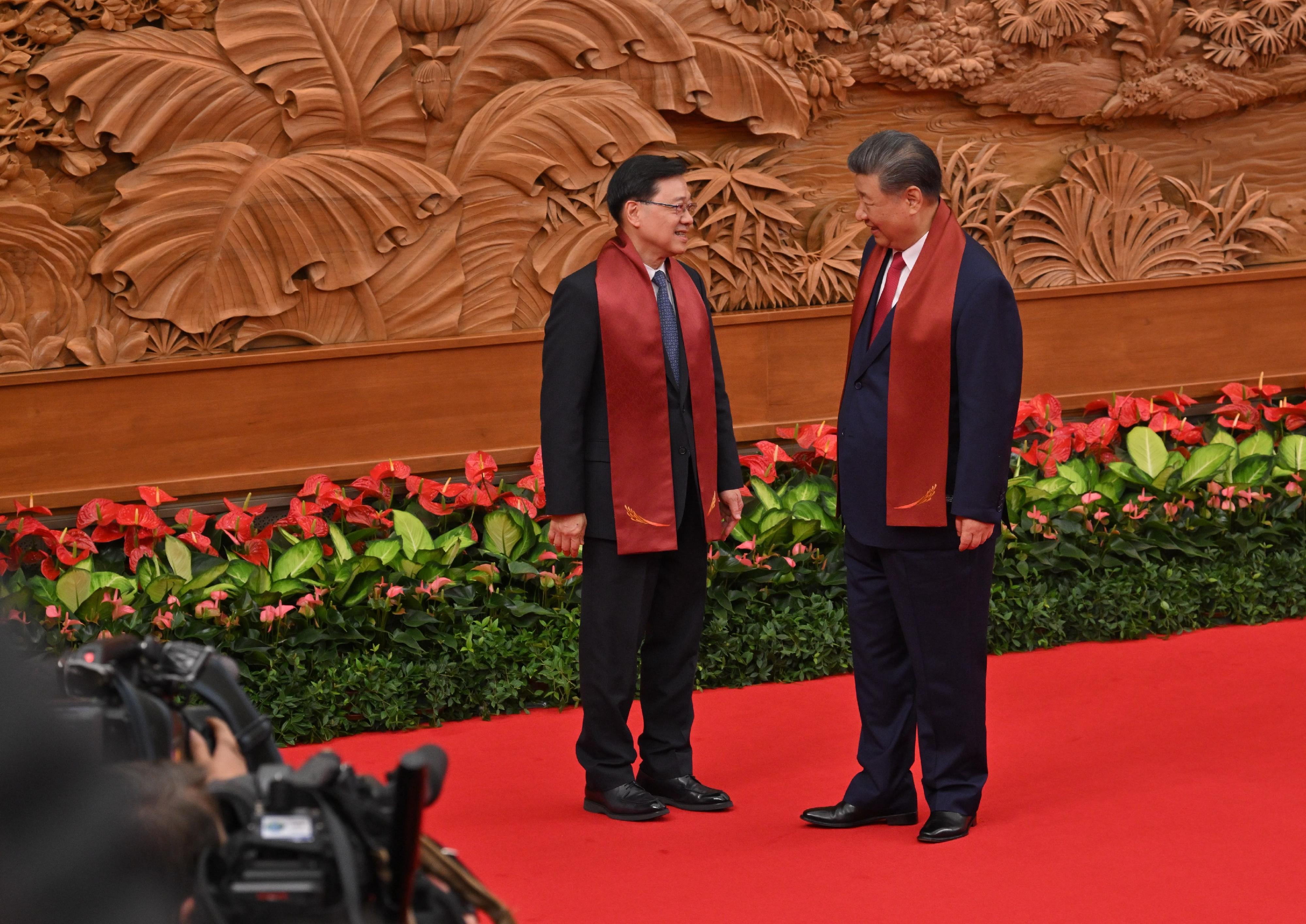
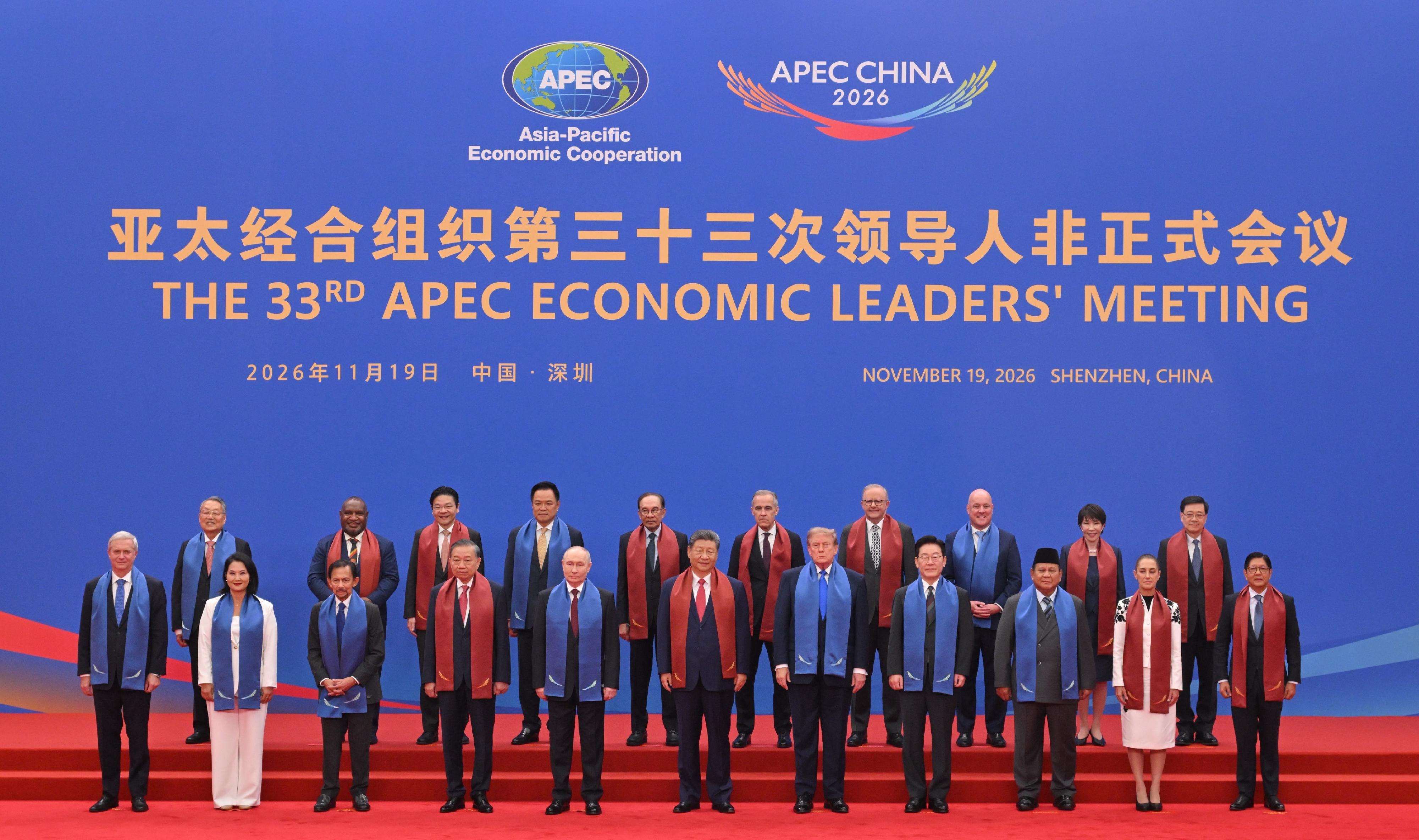
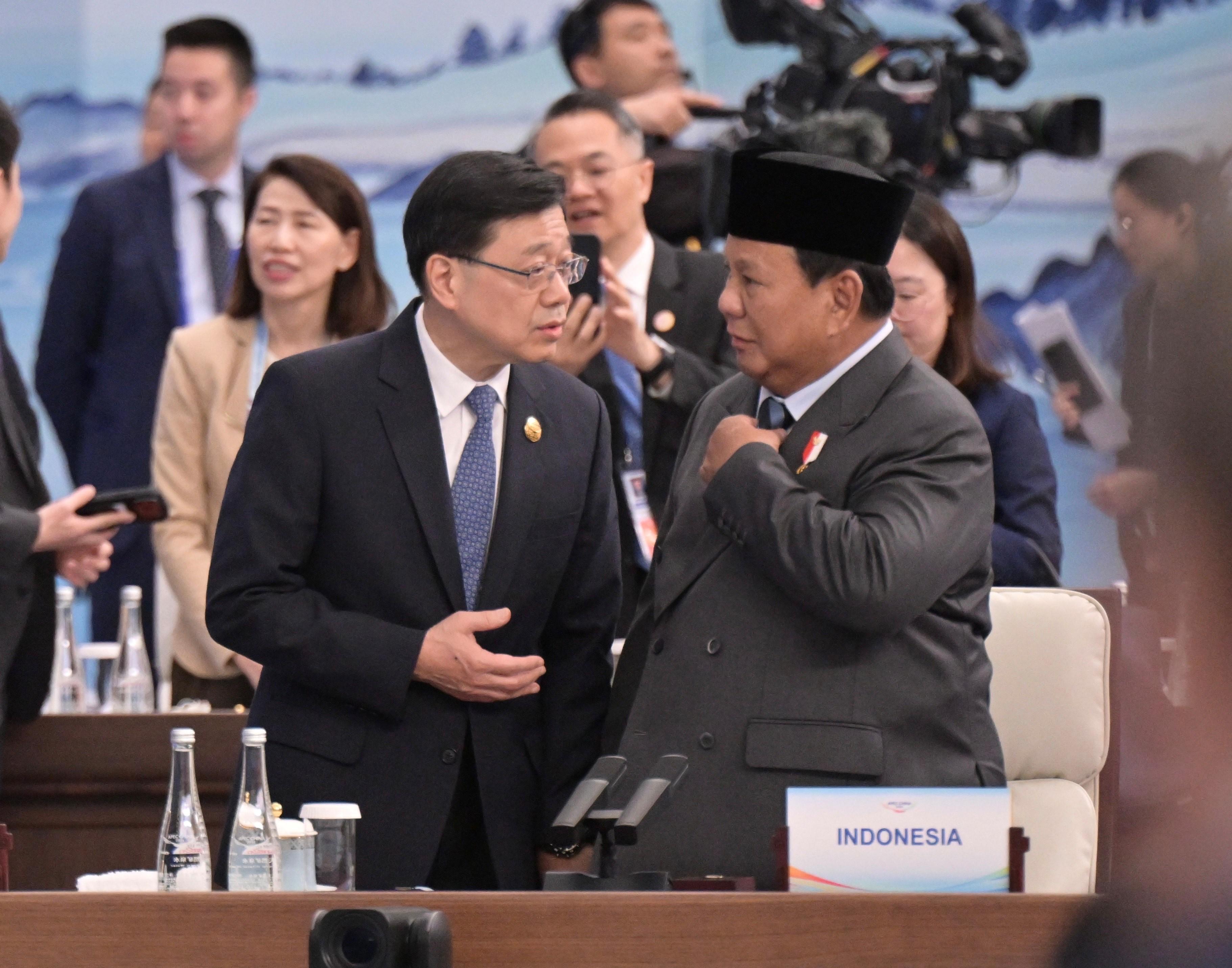
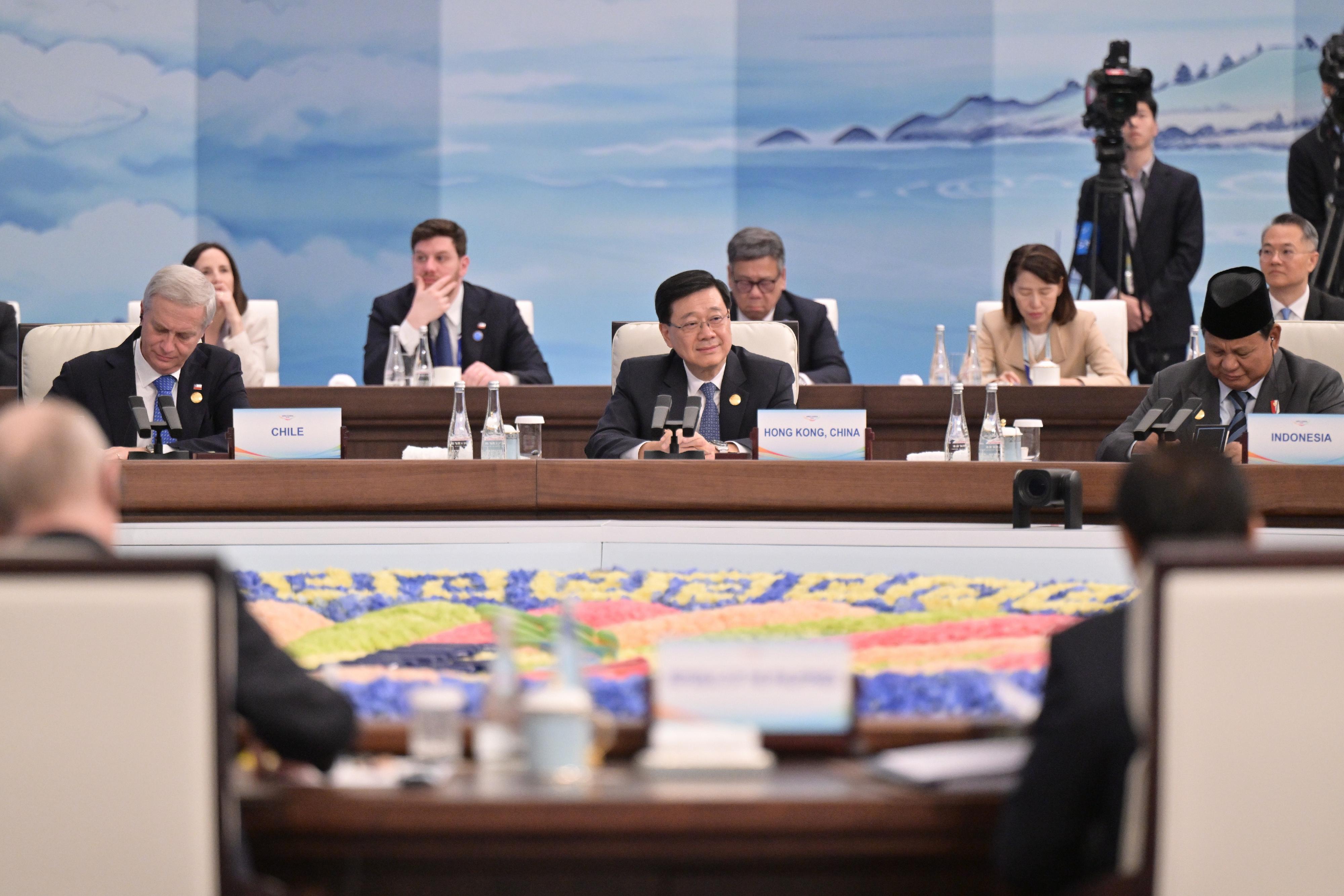
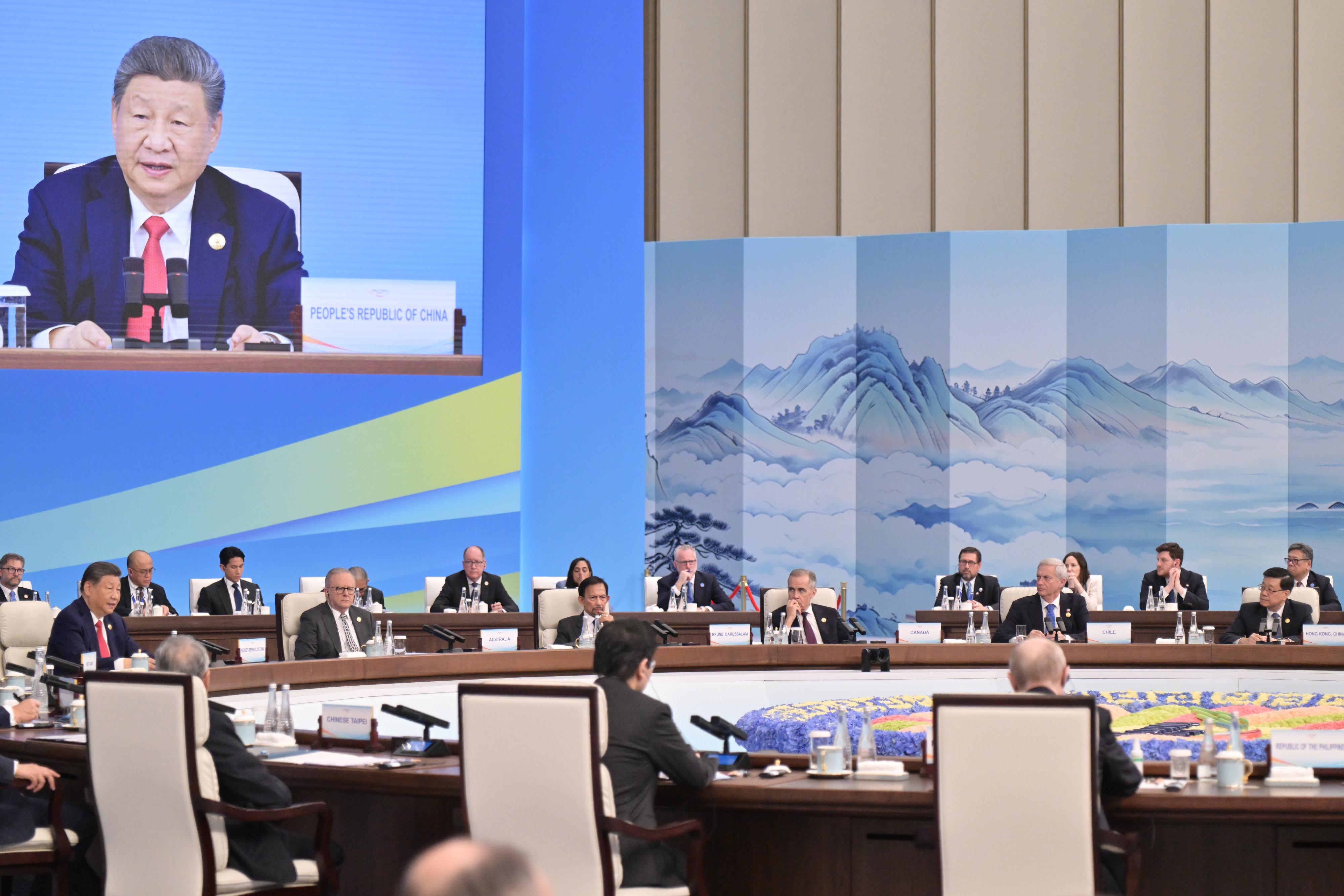
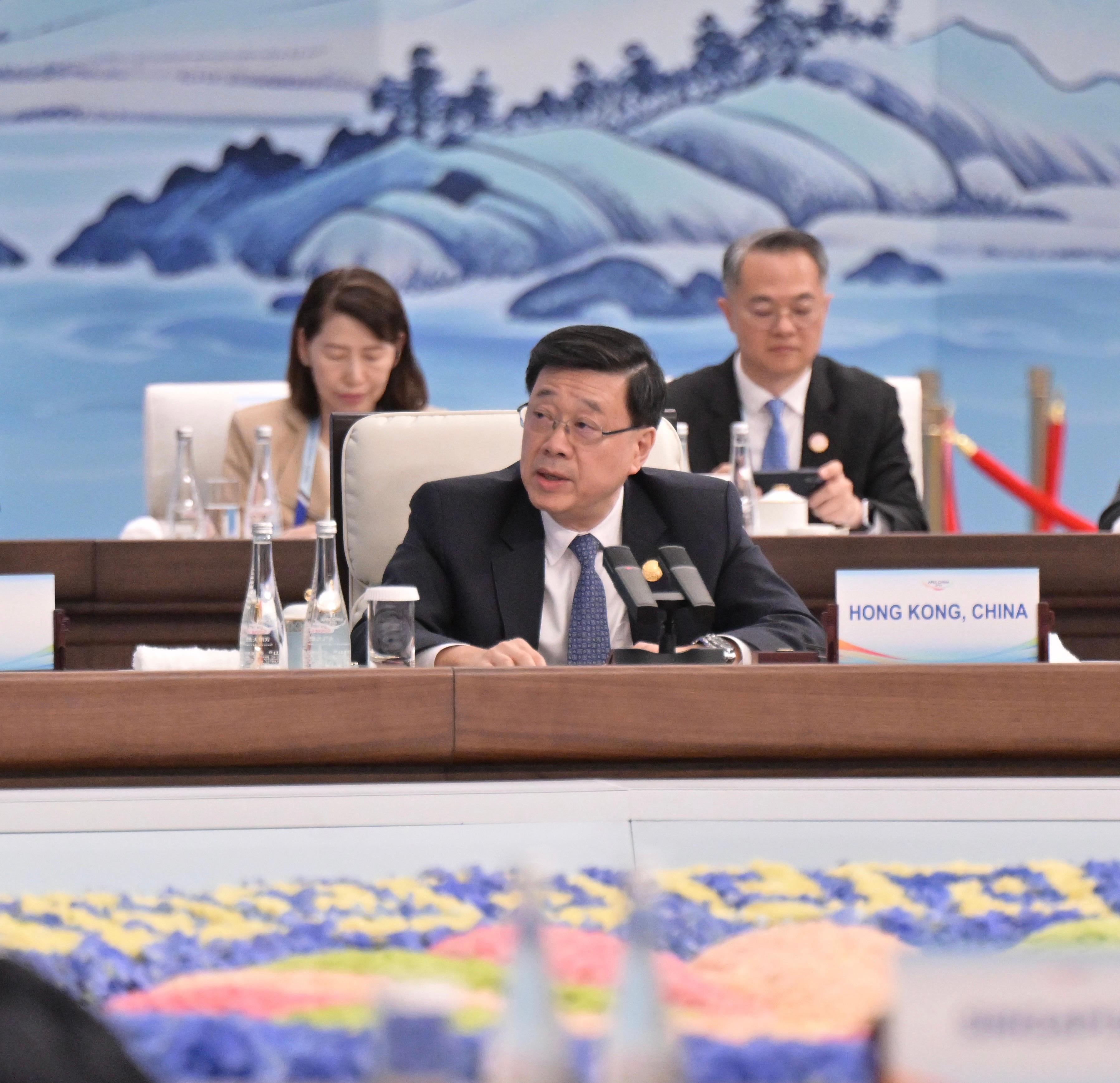
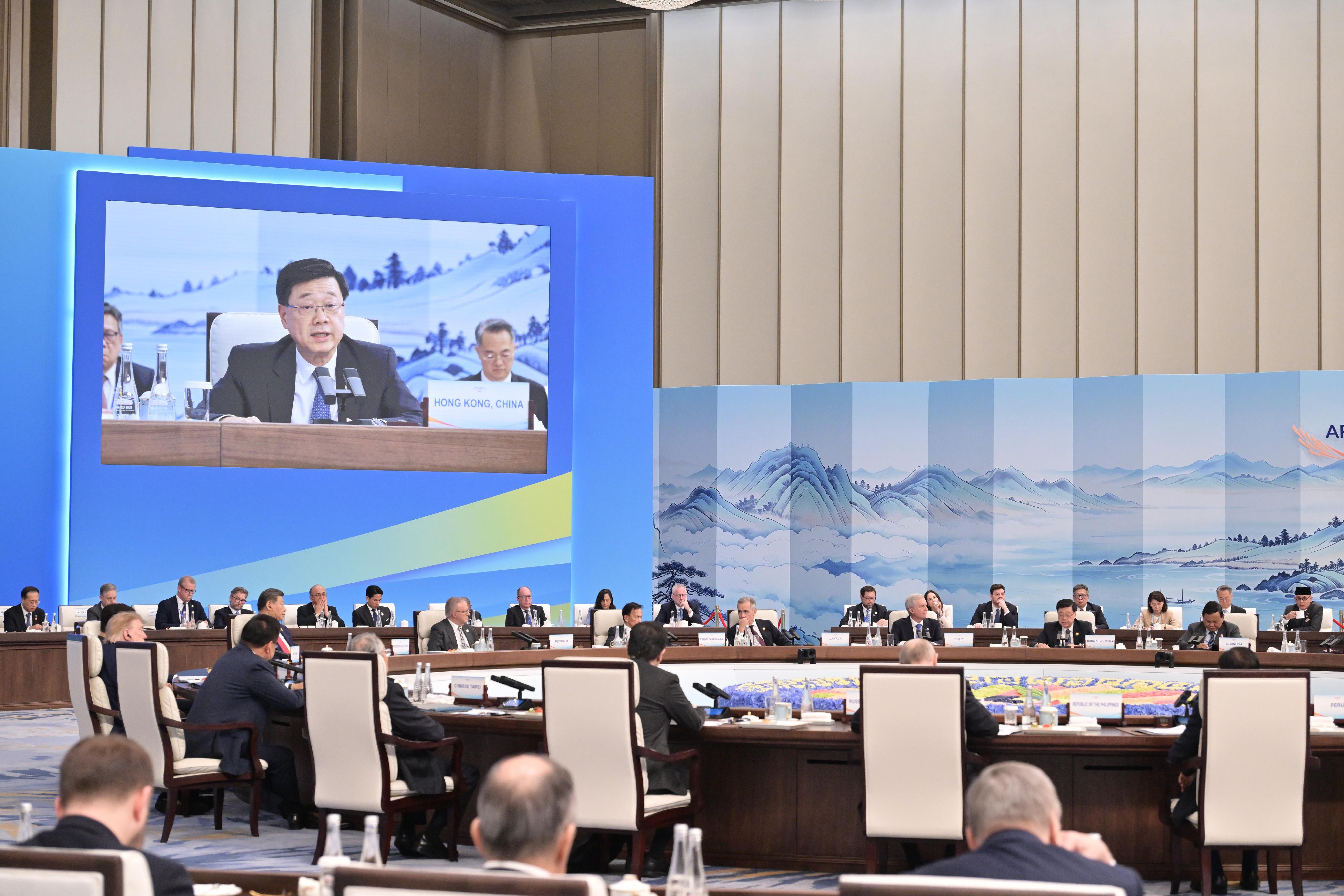
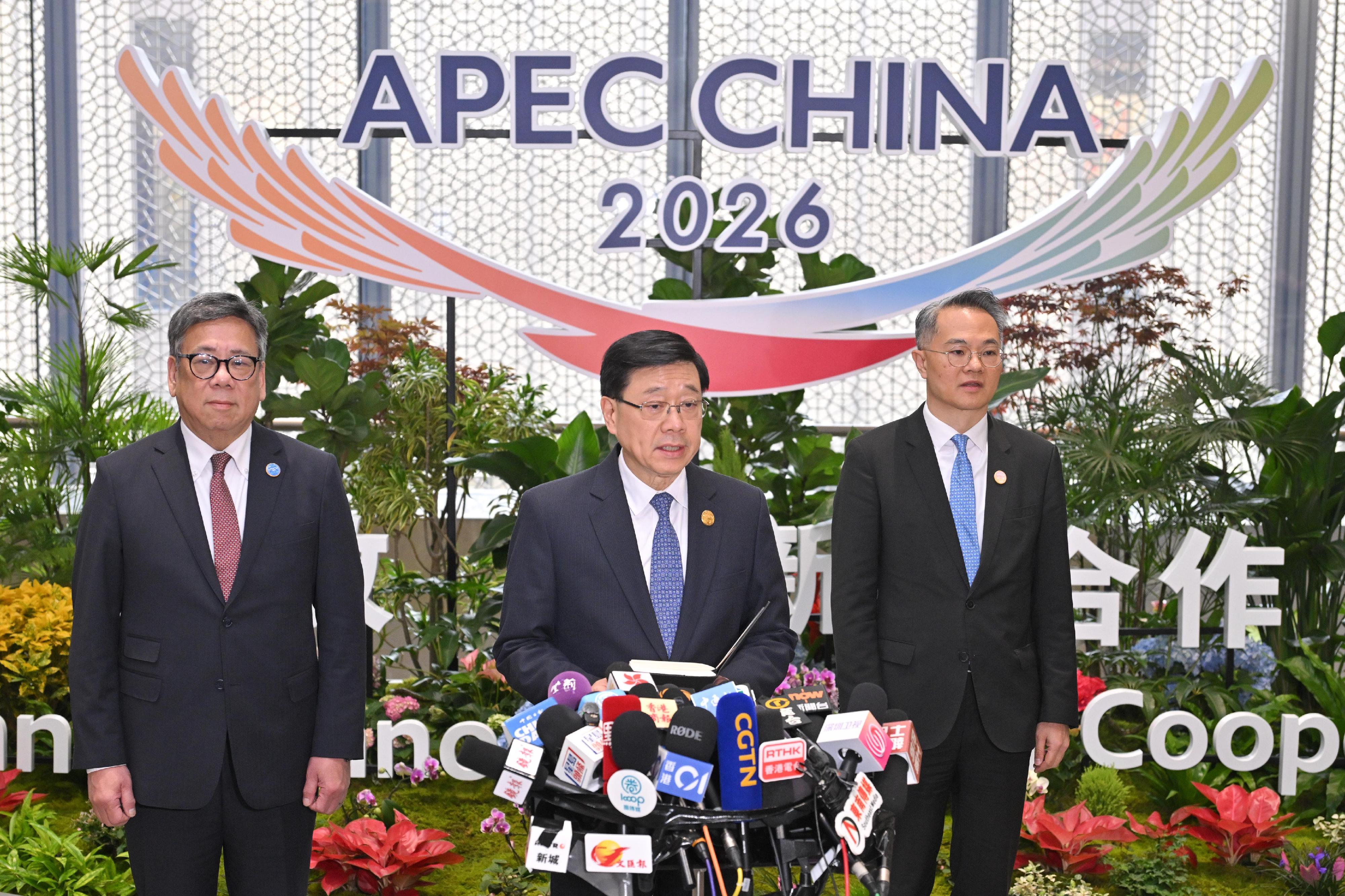
The Chief Executive, Mr John Lee, today (November 19) attended the 33rd Asia-Pacific Economic Cooperation (APEC) Economic Leaders' Meeting in Shenzhen, exchanging views with leaders of other economies on deepening regional co-operation and expanding into diversified markets.
Speaking at the meeting, Mr Lee said that the Asia-Pacific region is today's economic growth engine, providing two-thirds of global growth. As an international finance, trade and innovation centre, and benefitting from the national support, the Hong Kong Special Administrative Region will give full play to its significant role as a "super connector" and "super value-adder". Hong Kong will continue to maintain a free and open market, embrace the rules-based multilateral trading system, and look forward to expanding its co-operation with APEC, to continuously contribute to the region and work hand in hand towards shared prosperity.
Mr Lee said that the Guangdong-Hong Kong-Macao Greater Bay Area is an important platform for open co-operation and high-quality development. The 33rd APEC Economic Leaders' Meeting is taking place in Shenzhen, and the APEC Finance Ministers' Meeting was held in Hong Kong for the first time last month, demonstrating the Greater Bay Area's international relevance and competitiveness. In the top 100 innovation clusters of the Global Innovation Index 2026, the Shenzhen-Hong Kong-Guangzhou cluster ranks first globally for two consecutive years, demonstrating the fruitful results of mutually beneficial co-operation among sister cities in the Greater Bay Area in the field of innovation and technology. Innovation is central to future competitiveness. Hong Kong's world-class universities and research institutions, together with the manufacturing and commercial strength of the Guangdong-Hong Kong-Macao Greater Bay Area, jointly promote the transformation and applications of research and development outcomes. Hong Kong is actively promoting the broad-based application of artificial intelligence to promote high-quality development.
APEC member economies reached a consensus on the Leaders' Declaration, and adopted leader-level outcome documents on trade digitalisation, digital economy, emerging technologies, and connectivity. Mr Lee said these forward-looking outcomes play a crucial role in advancing practical co-operation in the Asia-Pacific region, deepening regional economic integration and promoting high-quality development.
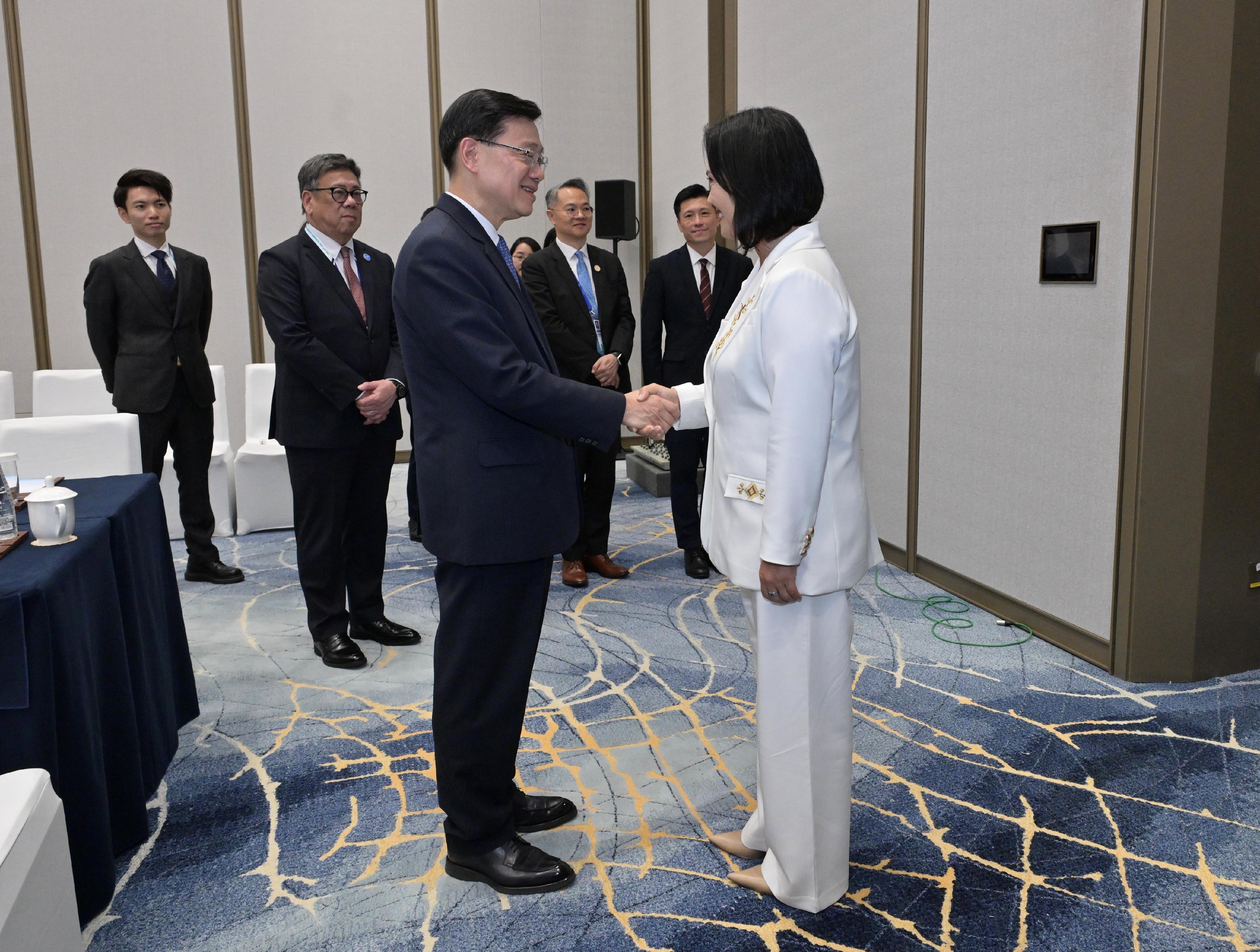
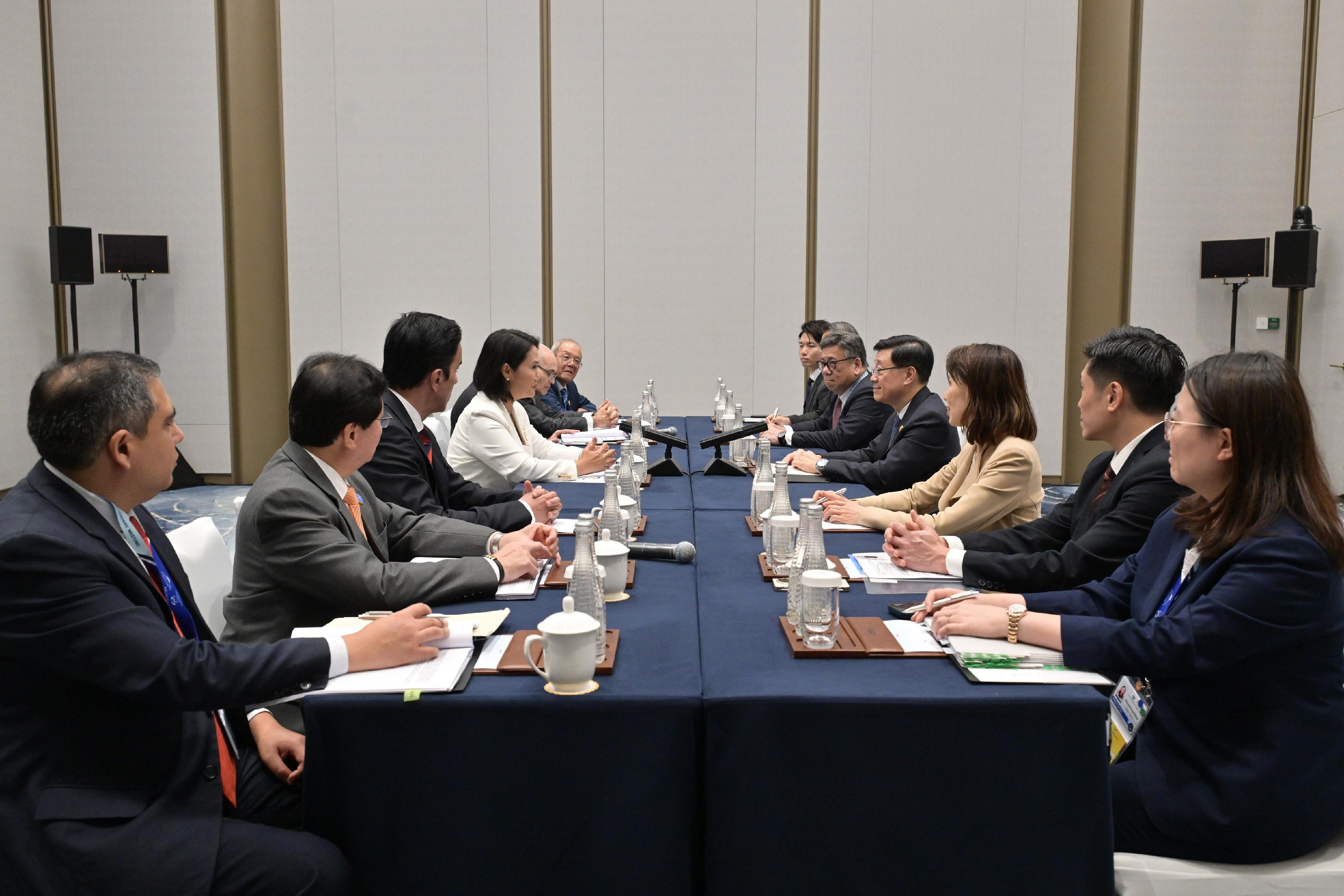
In the afternoon, Mr Lee met and held bilateral meetings with leaders of other economies. During his meeting with the President of Peru, Ms Keiko Fujimori, Mr Lee said that Peru is Hong Kong's sixth-largest trading partner in Latin America, and he was pleased to have personally witnessed the signing of a Free Trade Agreement between Hong Kong and Peru in Lima, Peru, in 2024, covering areas such as trade in goods, trade in services and investment. The Agreement officially entered into force on September 1 this year, further promoting bilateral trade and investment and marking a new milestone in economic and trade relations between the two places. He encouraged more Peruvian enterprises to make good use of Hong Kong's international trading platform and professional services, and to use Hong Kong as a springboard to enter the Mainland and Asian markets and explore more business opportunities. Hong Kong will continue to expand into emerging markets, give full play to its roles as a "super connector" and "super value-adder", and pursue more co-operation with Peru in different areas for mutual benefit and win-win outcomes.
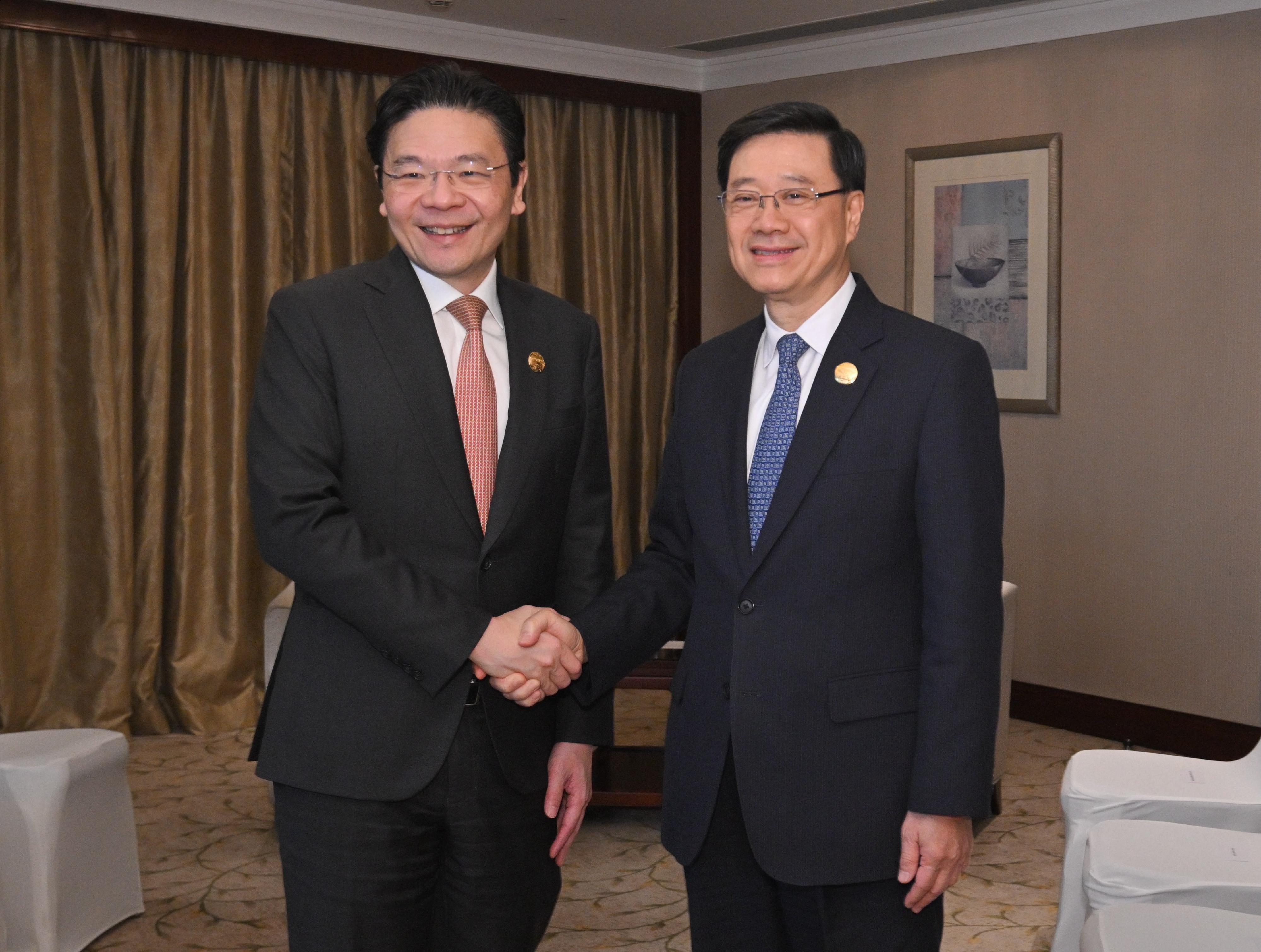
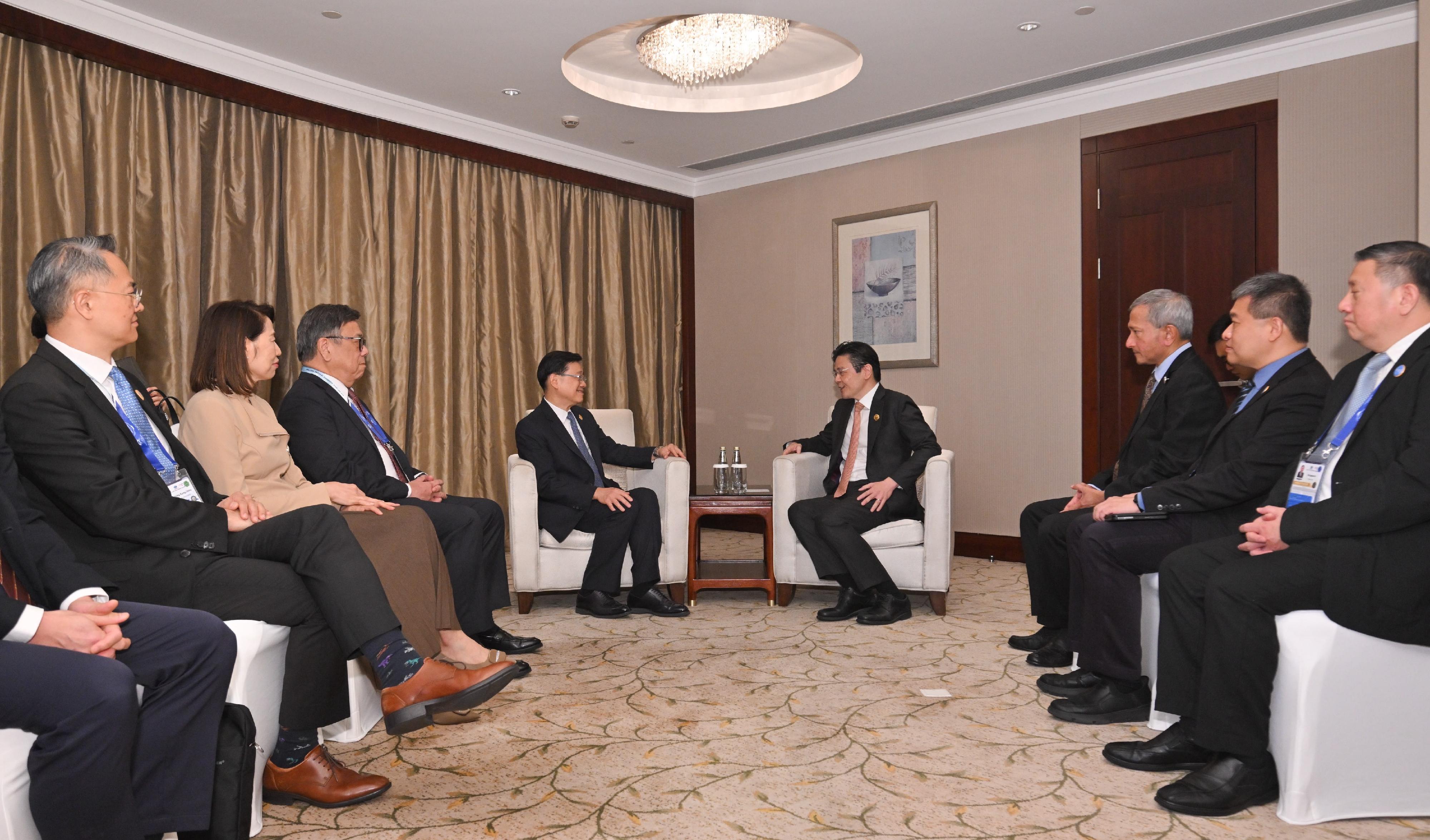
Mr Lee afterwards met with the Prime Minister and Minister for Finance of Singapore, Mr Lawrence Wong. Mr Lee said he was pleased to meet Mr Wong again in Shenzhen following their meeting in Hong Kong in March this year. Mr Lee said that both Hong Kong and Singapore are highly externally oriented international financial and trade centres. The two places enjoy frequent economic, trade and people-to-people exchanges and maintain close co-operation. The Hong Kong Special Administrative Region Government is accelerating the development of the Northern Metropolis and the Hong Kong Park of the Hetao Shenzhen-Hong Kong Science and Technology Innovation Co-operation Zone. Mr Lee encouraged Singaporean enterprises with strengths in innovation and technology to establish a presence in the Northern Metropolis and tap into the Mainland market by leveraging Hong Kong's advantages in bringing together global talent and frontier research. He was also thankful to Singapore for its continued support for Hong Kong's early accession to the Regional Comprehensive Economic Partnership, and expressed the hope that, with Singapore assuming the Association of Southeast Asian Nations chairmanship next year, the two sides would continue to deepen collaboration and jointly promote regional economic development.
Mr Lee concluded the meetings and related events in Shenzhen and returned to Hong Kong in the evening.