- Apprentice engineer Conor Moseley, 20, died when a fire suppression system unexpectedly activated, filling the engine room with toxic gases.
- HSE investigation found no safe system of work existed for coordinating multiple contractors working in the cramped engine room, and no effective emergency plan was in place.
- Company fined after pleading guilty to two charges under the Health and Safety at Work etc. Act 1974.
One of Britain’s leading fishing industry firms has been fined £100,000 after an apprentice engineer died in the engine room of a trawler in Newlyn Harbour.
Conor Moseley, aged 20, died when fire extinguisher gases left him unable to escape the engine room of a trawler on 15 November 2019.
Conor and three other workers were carrying out work on the Resurgam, a fishing vessel owned and operated by W. Stevenson & Sons Limited, when a fire suppression system being installed by Ocean Engineering (Fire) Ltd unexpectedly activated. It filled the engine room with hot, toxic gases, creating dangerous conditions and making it difficult to see.

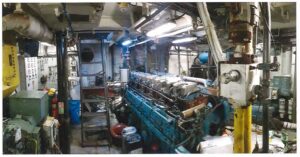
The small, enclosed engine room had only one way in and out. Workers had to climb a ladder and pass through a hatch one at a time, passing through a gas jet in excess of 75°C. The other workers managed to climb out, but Conor was overcome by carbon monoxide and other substances, leaving him unable to escape.
His colleagues tried to rescue him, putting themselves at risk in the process, but they were unable to reach him. Cornwall Fire and Rescue Service later rescued Conor from the engine room, but he could not be revived.
Tracy Moseley, Conor’s mother, reflected on her son’s life and the impact his death has had on them.
“Growing up Conor loved nothing better than helping out on his dad’s boat.
“Conor always made himself available to help his father when he came in from sea and would be ready to help him land his catch even after a full day’s work. Now for Steve, my husband, there is just an empty place that cannot be filled.
“All we have now are his ashes which are kept in his bedroom. Every morning I go in and say, ‘morning little man I love you’ and blow him a kiss. I never say ‘good morning’ as it can never be a good morning without him.
“At night I blow him a kiss and say ‘night night little man, I love you’.”
An investigation by the Health and Safety Executive (HSE) found that the risks created by several contractors working in the cramped engine room had not been properly considered. One contractor described the room as a mess, with poor lighting and trip hazards, and said that at one point six or seven people were working in the space. One witness described it as chaos.
There was no safe system of work for installing the fire suppression system and no effective emergency plan. A permit-to-work system could have been used to coordinate the different activities and ensure they were carried out safely. HSE’s Safety in Docks Approved Code of Practice highlights the need for parties to work together and have an overall written plan covering responsibilities, shared risks and emergency arrangements.
At Truro Crown Court on 15 October 2026, W. Stevenson & Sons Ltd entered guilty pleas to two charges under the Health and Safety at Work etc. Act 1974, sections 2(1) and 3(1). The company was fined £100,000 and ordered to pay full costs of £27,906.
HSE principal inspector Helena Allum said:
“This was a particularly complicated case requiring significant HSE specialist and scientific input. A number of duty holders played a part in the circumstances leading to the death of Conor; all were investigated.
“While W. Stevenson & Sons Ltd was not responsible for the fire suppression system going off unexpectedly, it was responsible for considering what could go wrong during the installation and maintenance activities, and coordinating them so that as few people as possible were put at risk.
“They had not considered how workers could be quickly rescued in an emergency and receive prompt medical attention. This should be a key consideration when people are working in a restricted space.
“Conor’s death was a tragedy. He need not have been in the engine room at the time. When the worst happened, they couldn’t get him out in time to save him.”
This HSE prosecution was brought by HSE senior enforcement lawyer Jon Mack and paralegal officer Mike Millman.
Further information:
- The Health and Safety Executive (HSE) is Britain’s national regulator for workplace health and safety. We are dedicated to protecting people and places, and helping everyone lead safer and healthier lives.
- More information about the legislation referred to in this case is available.
- Further details on the latest HSE news releases is available.
- HSE does not pass sentences, set guidelines or collect any fines imposed. Relevant sentencing guidelines must be followed unless the court is satisfied that it would be contrary to the interests of justice to do so. The sentencing guidelines for health and safety offences can be found here.