- Structural collapse caused release of around 2,400kg of highly flammable liquid petroleum gas.
- HSE investigation found long-standing corrosion of steel tower was not dealt with.
- Workers exposed to risk of serious injury and burns in major incident.
Esso has been fined £1 million after a major gas leak at Fawley Oil Refinery in Hampshire, following an investigation and subsequent prosecution by the Health & Safety Executive.
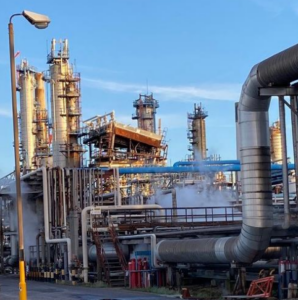
On 8 November 2022, there was a partial collapse of a large steel tower at the Fawley Refinery, causing the structure to slew and rupture pipework, resulting in the uncontrolled release of liquefied petroleum gas (LPG).
The incident led to a loss of containment of approximately 2,400kg of LPG over a 33-hour period. It took just over 30 minutes for around 400kg of the gas to be released following the collapse.
Workers were in the vicinity at the time of the collapse and were exposed to the risk of serious injury from falling debris, as well as the potential for burns had the gas ignited. Fortunately, no injuries were reported.
Emergency measures, including the use of water curtains, were implemented to reduce the spread of the extremely flammable vapour. It took approximately 33 hours to isolate the affected process and safely vent the remaining substances to the flare system.
An investigation by the Health and Safety Executive (HSE) found that the structural collapse was caused by corrosion of the steel tower that had developed over many years. This corrosion had been identified as early as 2010, but the company failed to take appropriate action to control the risk.
HSE regulates major hazard industries, including oil refineries, under a range of specialist regulations aimed at preventing major accidents involving dangerous substances. This includes oversight of asset integrity, inspection regimes and the management of risks such as corrosion, which can lead to loss of containment if not properly controlled.
HSE guidance states that dutyholders must ensure the integrity of plant and pipework is maintained and that equipment is kept in a safe condition. This includes identifying and managing risks such as corrosion to prevent loss of containment of hazardous substances. Further information can be found here: Corrosion under insulation of plant and pipework v3
ESSO Petroleum Company Limited, of Ermyn House, Ermyn Way, Leatherhead, Surrey, pleaded guilty to breaching Section 3(1) of the Health and Safety at Work etc. Act 1974. The company was fined £1 million and ordered to pay £12,277 in costs at Southampton Magistrates’ Court on 12 June 2026.
Amanda Huff, an Inspector in HSE’s specialist Chemicals, Explosives & Major Hazards Division, said: “This incident resulted in the uncontrolled release of a large quantity of flammable gas, which exposed workers to very real and potentially life-threatening risks.
“The underlying cause was a failure to properly manage the integrity of plant and equipment, despite corrosion being identified many years earlier.
“Workers and the wider public have every right to assume that sites processing large quantities of highly flammable chemicals are being properly managed – and it is vital for companies to make sure robust systems are in place to maintain critical infrastructure safely.
“This incident could have been far worse, and today’s sentence reflects the seriousness of the breaches our investigation uncovered.”
This HSE prosecution was brought by enforcement lawyer Andrew Siddall and paralegal officer Stephen Grabe.
Further information:
- The Health and Safety Executive (HSE) is Britain’s national regulator for workplace health and safety. We are dedicated to protecting people and places, and helping everyone lead safer and healthier lives.
- More information about the legislation referred to in this case is available.
- Further details on the latest HSE news releases is available.
- Relevant guidance on corrosion under installation of pipe plant and pipework: https://www.hse.gov.uk/foi/internalops/hid_circs/technical_general/spc_tech_gen_18.htm.
- HSE does not pass sentences, set guidelines or collect any fines imposed. Relevant sentencing guidelines must be followed unless the court is satisfied that it would be contrary to the interests of justice to do so. The sentencing guidelines for health and safety offences can be found here.