- Worker suffered a partial finger amputation when he reached into an inadequately guarded saw.
- HSE investigation found the company had failed to take effective measures to prevent access to dangerous moving parts.
- Company fined after pleading guilty to breaching PUWER 1998.
An engineering company has been fined £20,000 and ordered to pay £15,000 in compensation after a worker suffered a partial finger amputation when he reached into an inadequately guarded automatic saw.
Thomas Davies, 21, was working for Dlinexsign Ltd when the incident occurred. Having reached into the machine to retrieve a cut piece of material, his hand came into contact with the moving saw blade, resulting in him losing part of his finger.
The incident occurred at the company’s premises at Buckingham Road Industrial Estate, Brackley. The machine was used to cut lengths of material, and Mr Davies was able to reach into the machine and access the dangerous moving parts while it was operating.
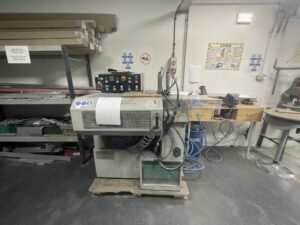
An investigation by the Health and Safety Executive (HSE) found that Dlinexsign Ltd had failed to take effective measures to prevent access to the dangerous parts of the machinery.
HSE guidance states that employers must take effective measures to prevent access to dangerous parts of machinery. This will normally be achieved using fixed guarding, but where access is required, other protective measures such as interlocked guards may be necessary to ensure dangerous movement has stopped before a person can reach the danger zone.
Further guidance can be found on HSE’s website on the safe use of work equipment: Introduction to machinery safety – HSE.
Dlinexsign Ltd, of Shires Road, Brackley, pleaded guilty to breaching Regulation 11(1) of the Provision and Use of Work Equipment Regulations 1998. The company was fined £20,000 and ordered to pay £15,000 in compensation to Mr Davies, and £9,064.34 in prosecution costs at Milton Keynes Magistrates’ Court on 23 October 2026.
HSE Inspector Dulanjala Kandana-Arachchige said:
“This incident demonstrates the serious consequences that can result when access to dangerous parts of machinery is not effectively prevented.
“Employers must ensure that machinery is properly guarded and that effective measures are in place to prevent workers from reaching dangerous moving parts.
“This was a preventable incident. Employers have a responsibility to ensure that work equipment can be used safely and that workers are protected from dangerous machinery.”
This HSE prosecution was brought by HSE enforcement lawyer Tom Ledden-Rocks and paralegal officer Natalie Ellis.
Further information:
- The Health and Safety Executive (HSE) is Britain’s national regulator for workplace health and safety. We are dedicated to protecting people and places and helping everyone lead safer and healthier lives.
- More information about the legislation referred to in this case is available.
- Further details on the latest HSE news releases is available.
- Guidance on machinery safety can be found here: Introduction to machinery safety – HSE
- HSE does not pass sentences, set guidelines or collect any fines imposed. Relevant sentencing guidelines must be followed unless the court is satisfied that it would be contrary to the interests of justice to do so. The sentencing guidelines for health and safety offences in England can be found here and those for Scotland here.