China’s new generation of military pilots starts training

More than a thousand new cadets have been inducted into China’s Air Force Aviation University.

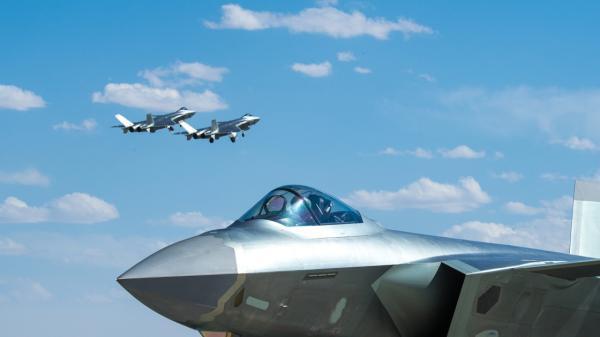
China’s new generation of military pilots starts training with the changing face of the Chinese air force. [Photo/Xinhua] 

They’ll go on to be the next generation of pilots, and fly the J-20 jet fighter and Yun-20 transport aircraft.

During a ceremony on Friday, September 1, the PLA’s air force commander, Ding Laihang, inspected more than 2,000 trainee pilots, including the new recruits who come from 31 different provinces in China, and who were selected from 120,000 high school graduates who applied for the air force program.

In a speech, Ding said unprecedented changes had taken place in China’s air force, and he encouraged the new cadets to play their part in creating a more powerful Chinese air Force.

With the changing face of the Chinese air force, so too the training regimen for cadet pilots has been upgraded. Changes to education requirements, and earlier access to flight training, has dramatically shortened the training cycle of tomorrow’s pilots.

CPC national congress to chart out China’s future development

The 19th Communist Party of China (CPC) National Congress is expected to open on Oct. 18, where the new leadership for the next five-year term will be elected.

The congress is an important meeting to be held when China is striving towards achieving a moderately prosperous society in an all-round way, and at a critical time in the development of socialism with Chinese characteristics.

The 19th CPC National Congress will analyze the present international and domestic situations, and draw out guidelines and policies that respond to the call of the times.

“Whether we can raise comprehensive, strategic and foresighted guidelines [at the congress] concerns the development of the causes of the Party and the nation, the destiny of socialism with Chinese characteristics as well as the fundamental interests of the overwhelming majority of the Chinese people,” said President Xi Jinping, at a high-profile workshop in late July, which was regarded as setting the tone for the congress.

The CPC must explicitly declare “what banner to hold, what road to take, in what state of mind, what historic mission to shoulder and what target to achieve,” said Xi, who is also general secretary of the CPC Central Committee.

The answer was given at the tone-setting meeting. The Party will hold high the banner of socialism with Chinese characteristics, and have firm confidence in the path, theory, system and culture of socialism with Chinese characteristics to ensure the causes of the CPC and the nation are always advanced in the right direction.

At the congress, the Party’s work over the past five years will also be reviewed.

Xi has hailed “the historic changes” in development over the past five “extraordinary” years, saying China’s development is standing at a new historical starting point, and socialism with Chinese characteristics has entered a new development stage.

There is every reason to be confident about the country’s growth. Last year, China contributed about 15 percent of global GDP, and GDP per capita reached 53,980 yuan (8,011 U.S. dollars).

Remarkable progress has been made in deepening reforms, enhancing the rule of law, improving the environment and building a strong army. The fight against corruption has also gained crushing momentum.

Such major achievements mean that after experiencing tribulations and hardships since modern times, China has made a historic leap from standing-up to becoming better-off to getting stronger.

Despite progress made in the past five years, the president repeatedly warned the Party against resting on its laurels, as the country still faces many daunting challenges, ranging from corruption to poverty and pollution.

China has set 2020 as the target year to complete the building of a moderately prosperous society, which requires the eradication of poverty.

To achieve this goal, it needs to lift more than 10 million people out of poverty every year.

However, it is the CPC’s solemn promise to the people, and that promise must be kept, as it has been over the past decades.
Hong Kong Airlines takes delivery of A350 XWB

Hong Kong Airlines has taken delivery of its first A350-900, making it the 15th airline worldwide to operate the newest model of twin-aisle aircraft, Airbus China confirmed Saturday.

Hong Kong Airlines will acquire 21 Airbus A350 XWB, including 15 purchased directly from Airbus and six on lease from third party lessors, said Airbus China.

Hong Kong Airlines has configured the A350-900 with a three-class layout. It has a total of 334 seats, made up of 33 in business class, 108 in premium economy and 193 in economy class.

After initially flying regional routes, Hong Kong Airline’s A350-900 will begin long haul operations in December 2017, starting with the carrier’s non-stop service to Los Angeles.

The A350 XWB features the latest aerodynamic design, carbon fibre fuselage and wings, plus new fuel-efficient Rolls-Royce engines, which offer the model with operational efficiency, according to Airbus.

To date, Airbus has recorded a total of 848 firm orders for the A350 XWB from 45 customers worldwide.

With 287 firm orders for the A350 from carriers in Asia-Pacific, the region represents over a third of total sales for the aircraft to date.

According to Airbus Global Market Forecast 2017-2036, the number of passenger aircraft with more than 100 seats will increase to 40,000 planes in the next 20 years, with Asia Pacific identified as the main “engine”.

China activates emergency response mechanism for Typhoon Mawar

Chinese authorities activated a national disaster alert and response mechanism for Typhoon Mawar Saturday to help local civil affairs departments prepare for relief work.

Civil affairs departments in southern provinces including Fujian and Guangdong should remain on duty around the clock, according to a notice issued by China National Commission for Disaster Reduction, in coordination with the Ministry of Civil Affairs.

The notice asked local authorities to publicize forecasts regarding Mawar and its predicted routes to enable residents to move to safe places and ships to return to harbor.

Local departments should inform residents to stockpile enough daily necessities for one to three days, it said, adding relief materials and funds should also be prepared to guarantee the basic requirements of disaster-hit residents.

By Saturday afternoon, more than 4,600 fishermen had been evacuated from near-sea areas, another 21,700 people were evacuated from low-lying areas, sheds and areas prone to landslide in Fujian.

A total of 159 scenic spots along the coast in Fujian have been closed. More than 4,600 fishing vessels returned to harbor in the province. Several express train services have been canceled.

The neighboring Guangdong province, where Mawar is expected to make landfall on Sunday afternoon or night, has also made preparations.

Mawar is the 16th typhoon to hit China this year.

Press release: Domestic Abuse survivors given a voice to vote.

Under existing legislation, domestic abuse survivors must provide a court order or have their application supported by a senior independent witness, such as a police superintendent, in order to appear anonymously on the electoral register.

These strict requirements have deterred many from registering at all – prompting a campaign by charities and survivors to make it more accessible.

The Government’s changes will increase the number of people who can act as witnesses, including medical and healthcare professionals and refuge workers, and expand the type of evidence which can be put forward.

Chris Skidmore, Minister for the Constitution, said:

Ensuring every eligible person is able to vote is a matter of social justice. Every voice matters and this Government will continue to encourage our record levels of democratic participation by ensuring we have a democracy that works for everyone.

Women’s Aid estimates that up to 12,000 women are receiving support in their refuges at any one time.

The changes are expected to be of particular benefit to these women or those who have left a refuge but continue to be in hiding from their perpetrators.

Welcoming the move, Katie Ghose, Chief Executive of Women’s Aid, said:

The changes announced today will help survivors of domestic abuse to regain their voices. For too long these women have been silenced because it was too dangerous for them to sign up to an electoral register, which would reveal their location, and too difficult for them to register anonymously.

We are proud to have worked in partnership with the courageous Mehala Osborne and other partners to bring this issue onto the political agenda. We also want to thank the Government for their decisive action on this. The new measures send out a clear message to all survivors of domestic abuse: that their voices matter, and their right to vote should never be taken away.

To complement the legislative changes, the Cabinet Office will launch further research to identify and explain other barriers to electoral registration faced by survivors of domestic abuse. This research will be critical in shaping new policies, projects and future engagement.

It forms part of ongoing work across Government to tackle domestic violence and abuse and violence against women and girls.

Sarah Newton, Minister for Crime, Safeguarding and Vulnerability said:

Domestic abuse has a devastating and often lifelong impact on victims, their children, family and friends.

These changes come at a time when the Government is bringing forward a landmark Domestic Violence and Abuse Bill which will protect and support victims, recognise the devastating impact domestic abuse can have on young people, and ensure agencies respond effectively.