UNAIDS asks Chinese to produce drugs

The head of the Joint United Nations Programme on HIV and AIDS has called on China to boost prevention and control in Africa by encouraging the country’s drugmakers to open production hubs on the continent.

Michel Sidibe, executive director of UNAIDS, said the central government should use the China-Africa Development Fund to mobilize key pharmaceutical companies to invest in manufacturing hubs covering many African countries, which will help create a “viable and sustainable” market.

At the same time, medicines for HIV and AIDS produced in China and used by Chinese should be prequalified by the World Health Organization for use in Africa, he added. “We need to create a policy space to make sure those products can be prequalified by the WHO. That is one of the major challenges for the African countries to have easy access to these medicines,” said Sidibe, who also is under-secretary-general of the United Nations.

Shortages of drugs and grassroots healthcare workers pose a major challenge for the control and prevention of HIV/AIDS in Africa, he said, while China also has experience and knowledge in the field that can be passed on.

“Ninety-seven percent of the medicine consumed in Africa is from other continents,” Sidibe said. “We are happy that we have a very good relationship with the Chinese.”

President Xi Jinping proposed intensifying cooperation with Africa in a number of areas, including industrial development, agriculture, finance, poverty alleviation and healthcare, at the 2015 summit of the Forum of China-Africa Cooperation in South Africa.

According to a 10-point action plan, the central government will encourage Chinese enterprises to collaborate with Africa in drug research, development and production, and encourage them to produce drugs in Africa to aid the sustainable development of the local pharmaceutical industry.

Globally, countries are making unprecedented progress in the control and prevention of HIV. For the first time, the world has more people with HIV receiving treatment than people waiting for treatment, and for the first time, HIV transmission from mother to babies is under control.

Moreover, China is committed to improving public health services, Xi said, noting that government health expenditures have increased by 80 percent over the past 10 years, and that it is helping to provide wider access to health services.
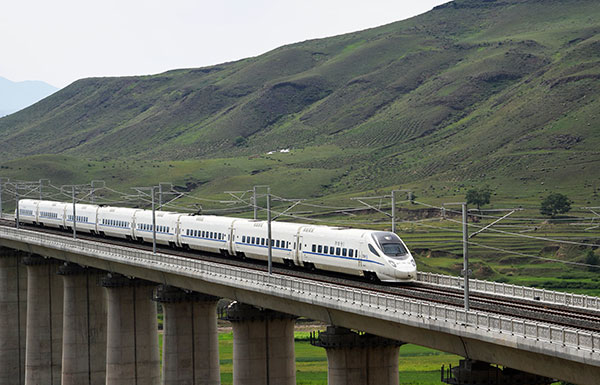
High-speed rail trips get easier as network expands

Passengers can now reach most of China’s major cities by bullet train, thanks to a network that includes linkages of a number of rail routes, as well as efficient major transfer hubs.

A high-speed train heads to Ulanqab from Hohhot in the Inner Mongolia autonomous region in August, marking the openning of the region's first high-speed railway. [Tang Zhe/For China Daily]

A high-speed train heads to Ulanqab from Hohhot in the Inner Mongolia autonomous region in August, marking the openning of the region’s first high-speed railway. [Tang Zhe/For China Daily] 

According to China Railway Corp, the national rail operator, direct high-speed train services have been arranged between cities with a large number of passengers, including Beijing-Kunming, Harbin-Shanghai and Chengdu-Guangzhou. Those direct services link big cities in different regions by taking more than one rail route.

Service between Dalian, Liaoning province, and Xi’an, Shaanxi province, involves eight high-speed rail routes that link 18 medium-size and large cities.

Running the network is no easy task. A high-speed rail route must not only carry out bullet train services running only on a single line but also on multiple lines.

The major transfer hub design allows easy transfers to other bullet trains. Passengers can make travel plans and buy connected tickets in advance. When they arrive at the transfer station, they can use a transfer gateway to board the next service, with no need to exit the gate and enter again. The major transfer hub design offsets the lack of direct service in some areas, providing more convenient travel choices.

Lanzhou West station, the major transfer hub linking the Xinjiang Uygur autonomous region with the rest of China, is expected to receive more than 5,000 transfer passengers a day, said Wang Jian, the deputy head of the station. The Baoji-Lanzhou rail route opened in July, and Wang estimates daily passengers will reach 25,000. The route links Lanzhou with the high-speed rail network.

No direct service links Xinjiang with most cities beyond Lanzhou. A passenger from Beijing can take a direct service to Lanzhou and then transfer at Lanzhou West station to Xinjiang.

China’s high-speed rail network has surpassed 20,000 kilometers, spanning all provincial level regions except Tibet and the Ningxia Hui autonomous region. Hub cities are scattered around the country and linked by the high-speed network.

The world’s longest high-speed rail service in operation is the 2,760-kilometer Beijing-Kunming service, according to China Railway Corp. Beijing has a distinct spring, summer, fall and winter, whereas Kunming has been called “the spring city” because the weather never gets very cold.

Like the Beijing-Kunming service, departure and arrival cities are different, requiring a different model of bullet train to adjust to diverse local environment.

In the northeastern region’s winter, when the lowest temperature can hit -40 C, bullet trains need to adjust. In the northwest region’s deserts, featuring strong winds and sandstorms, such as along the Lanzhou-Xinjiang line, bullet trains have stormproof designs.

According to a plan released by the National Development and Reform Commission in July 2016, China will expand the high-speed rail network to 30,000 km by 2020, linking 80 percent of major cities. By 2030, the network will link all cities with populations of more than 500,000.

Riding China’s rails

China’s high-speed rail network stretched 22,000 kilometers as of 2016, accounting for 65 percent of the world’s total high-speed railway.

The world’s longest bullet train service reaches 2,760 kilometers from Beijing to Kunming, Yunnan province.

The world’s longest continuous high-speed rail track reaches 2,298 kilometers between Beijing and Guangzhou, Guangdong province.

China is the only country with trains running at 350 km/h. Service on several Chinese lines have reached that speed, including Beijing-Tianjin, Beijing-Shanghai and Shanghai-Ningbo.

Chinese scientists planning jumbo launched rocket

A new solid fuel rocket, launchable from the Yun-20 transport plane is being developed by Chinese scientists, reports China Central Television (CCTV).

The Y-20, or Transport-20 is China’s first domestically made jumbo air freighter, designed to be used as a workhorse by the Chinese air force. It’s capable of carrying out various long-distance air transportation tasks involving both cargo and passengers. 47-meter in length, 15 meters high, and with a 50-meter wingspan, the Y-20 has maximum take-off weight of over 200 tons and a maximum payload of 66 tons.

In addition to being used as a transport plane, the Chinese air force makes it available as a test platform for new technology. According to experts at the China Academy of Launch Vehicle Technology (CALVT), they are developing a new solid fuel rocket which could be launched by the Yun-20 in flight, sending a 100-kg load into near-earth orbit. Military expert, Wang Mingliang, says it’s also possible the Yun-20 will be used to carry drones in the future.

It’s anticipated that the Yun-20 could be refitted as refueling plane carrying over 90 tons of fuel, as well as airborne early warning aircraft with larger radar and a cabin for passengers.

Press release: Historic signing seals world’s first compound semiconductor cluster in Wales

An historic signing ceremony took place today (Monday, September 11) to ratify the development of a compound semiconductor industry cluster in South-East Wales.

The signing followed an agreement in May by the Cardiff Capital Region (CCR) Regional Cabinet to contribute £37.9 million from the CCR City Deal’s Wider Investment Fund towards the establishment of a major, cutting edge facility, as an anchor in the region for high end production of compound semiconductors.

The aim being to support the development of a compound Semiconductor Industrial cluster in the region, with the potential to:

  • lever £375m of private sector investment,
  • create up to 2,000 high skilled jobs,
  • return the investment for use on other regional schemes, and
  • create hundreds more jobs in the wider supply chain cluster

It is the first such investment since the £1.2 billion CCR City Deal programme was formally signed by the leaders of the ten local authorities in the region on March 1.

The facility at Newport will be owned by the 10 Councils in the Regional Cabinet under the special purpose vehicle ‘CSC Foundry Limited’ / ‘LDC Ffowndri’ and the space leased to IQE plc for compound semiconductor manufacturing and applications development, helping the establishment of the world’s first Compound Semiconductor Cluster, CS connected, in the region.

The project is not a grant or a loan – it is a commercial investment with ownership of the foundry shared between the 10 Councils. The proposal seeks to return the original investment plus interest over the life of the project.

The project was formally confirmed in a signing ceremony today at IQE’s headquarters in Cardiff by Secretary of State for Wales, The Right Hon. Alun Cairns MP, Welsh Economy and Infrastructure Secretary Ken Skates, CSC Foundry directors Councillors Bob Greenland (Monmouthshire) and Andrew Barry (Merthyr), and IQE chief executive Dr. Drew Nelson.

The CCR City Deal seeks to position the region as the global leader in compound semiconductor-enabled applications, which was initiated by a £12 million investment from the Welsh Government.

In 2016, Innovate UK – the UK Government’s innovation agency – announced a £50million investment to establish a new Compound Semiconductor Applications Catapult in South-East Wales. This new Catapult will build on existing investment by Cardiff University, IQE, and Welsh Government.

Councillor Peter Fox, Leader of Monmouthshire County Council, and Deputy Chair of the CCR City Deal Regional Cabinet, said:

The objective of this commitment is to create a complete compound semiconductor eco-system in South Wales to take advantage of the growing prominence of compound semiconductor technologies.

The opportunity this investment creates, to help the establishment of the world’s first compound semiconductor cluster in South East Wales, should not be underestimated

It has the potential to place our region at the heart of this cutting edge sector and will require the development and integration of a compound semiconductor supply chain in South Wales, with the economic and social benefits that will bring.

Secretary of State for Wales Alun Cairns said:

Compound semiconductors are at the heart of many devices we use today, from smart phones to tablets and satellite communication systems. It is an area of UK strength and today’s confirmation of the development of a cluster of excellence in Wales reinforces our own strong position in the growth of this important and growing technology.

Of course, government does not create innovation, but it can be a catalyst to getting the scientists and engineers, the designers and the entrepreneurs together to make it happen.

This collaboration is important because innovation is a shared endeavour and I look forward to seeing the cluster take shape and create a lasting engineering and manufacturing legacy in Wales.

Economy Secretary Ken Skates said:

It is hugely encouraging that Welsh Government’s initial £12m investment in developing the cluster back in 2015 has been the catalyst for today’s announcement that IQE plans to expand into the City Deal’s new facilities. Not only is it extremely exciting news for the Welsh economy, securing additional jobs and investment, but it further cements Wales as a world leader in this state of the art technology.

With the world’s first compound semiconductor cluster located here in South East Wales, we are punching well above our weight in developing technology which not only plays an increasingly vital role in the way we live our lives today but will drive innovation which will shape the world we live in tomorrow.

Dr Drew Nelson, Chief Executive of IQE plc said:

Compound semiconductors are rapidly defining 21 century technologies and Wales is uniquely positioned to be centre stage of this global, high-tech industry sector.

This dedicated compound semiconductor facility between Cardiff and Newport will act as a key component of the burgeoning cluster that is already cementing Wales reputation for for technology leadership.

The initiative is a shining example of what can be achieved through collaboration. The Welsh and UK governments, along with the ten councils that form the Cardiff Capital Region, have worked closely with academic institutes and industry to build an innovation infrastructure that will support and nurture the region as a true global player in new and emerging technologies.

The facility will become the base for a number of compound semiconductor related activities, including IQE, where we expect to rapidly expand our production capacity to meet increasing demand for our technology.

Notes to editors:

  • The Compound Semiconductor Cluster builds on Wales’ recognised company strengths to create critical mass and commercial value in the supply chain by bringing together next-generation semiconductor materials and end-user applications such as 5G smart phones, the Internet of Things, tele-health and autonomous vehicles
  • Compound semiconductors are more complex than silicon technology and offer lower power consumption, higher operating speeds and temperatures, light-emitting and detecting properties
  • Four translational infrastructure pillars are already operational and bridge the so-called “valley of death”, pulling through early stage academic research into commercial activity. They include:

    1. Institute for Compound Semiconductor Technology, at Cardiff University, part-funded by Welsh Government.
    2. Compound Semiconductor Centre – a joint venture between IQE plc and Cardiff University
    3. Compound Semiconductor Applications Catapult, funded by InnovateUK
    4. Future Compound Semiconductor Manufacturing Hub at Cardiff University, funded by EPSRC
    5. The Cardiff City Deal is a £1.2 billion deal to unlock significant economic growth across the Cardiff Capital Region (CCR)
    6. The specific aims of the CCR City Deal can be summarised to: improve productivity; tackle worklessness; build on foundations of innovation; invest in physical and digital infrastructure; provide support for business; and ensure that any economic benefits are felt across the region
  • The Shadow Regional Cabinet comprising the leaders of the 10 local authorities in south east Wales was set up in 2016 to provide the leadership, vision and strategic direction for the Cardiff Capital Region; help shape and manage the City Deal programme and structure; integrate and align the City Deal agenda with the Metro; prioritise projects which demonstrate the potential to achieve real economic improvements across the region; establish a secure platform for development encouraging alignment of relevant functions and activities and strategic application of funds as part of a fully integrated City Region approach; engage with wider stakeholders to encourage and support a collaborative approach to make the Cardiff Capital Region a success.

  • The ten local authorities are: Blaenau Gwent, Bridgend, Caerphilly, Cardiff, Merthyr Tydfil, Monmouthshire, Newport, Rhondda Cynon Taf, Torfaen, The Vale of Glamorgan.

  • The City Deal includes funding of £734m for the South Wales Metro, of which over £500 million is provided by the Welsh Government and £125m from the UK Government.

  • The CCR Deal was formally signed on March 1, 2017, and the Regional Cabinet came out of shadow, and the programme entered a transition phase

  • The Cardiff Capital Region Transition Plan will detail key activity to be undertaken, including establishing a Regional Office to drive the delivery of the Regional Cabinet’s work programme in anticipation of receiving proposals. This includes the creation of a bespoke impact assessment model for those proposals.

  • The transition phase will also see the creation and development of three advisory bodies to the Regional Cabinet – the CCR Economic Growth Partnership, a region-wide business representation organisation, and an Employment and Skills Board, and one delivery body, the Regional Transport Authority.

  • The ten partnering Councils approved the Cardiff Capital Region City Deal (CCRCD) Wider Investment Fund (WIF) totalling £495 million, consisting of £375 million grant from HM Treasury, passported via Welsh Government over the next 20 years. The remaining £120 million will be contributed by the ten partnering councils based on their respective population base and is currently modelled as being 100% capital in nature.

EIB provides USD 15 million for Egypt Mid-Cap fund

Sorry, but the page you requested cannot be found. The page you are looking for might have been removed, had its name changed, or is temporarily unavailable.

Please try the following:

  • Consult our Site Map.
  • Make sure that the page address in the Address bar is spelled correctly.
  • Use the navigation menu on the left to find the link you are looking for.
  • Click the Back button to try another link.
  • Consult our Search Page to look for the information you require.

If you still cannot find the information you are looking for please send your query to InfoDesk.

http://www.eib.org/tools/jsp/sitestat.jsp?infocentre.page-not-found&ns_http_status=404